
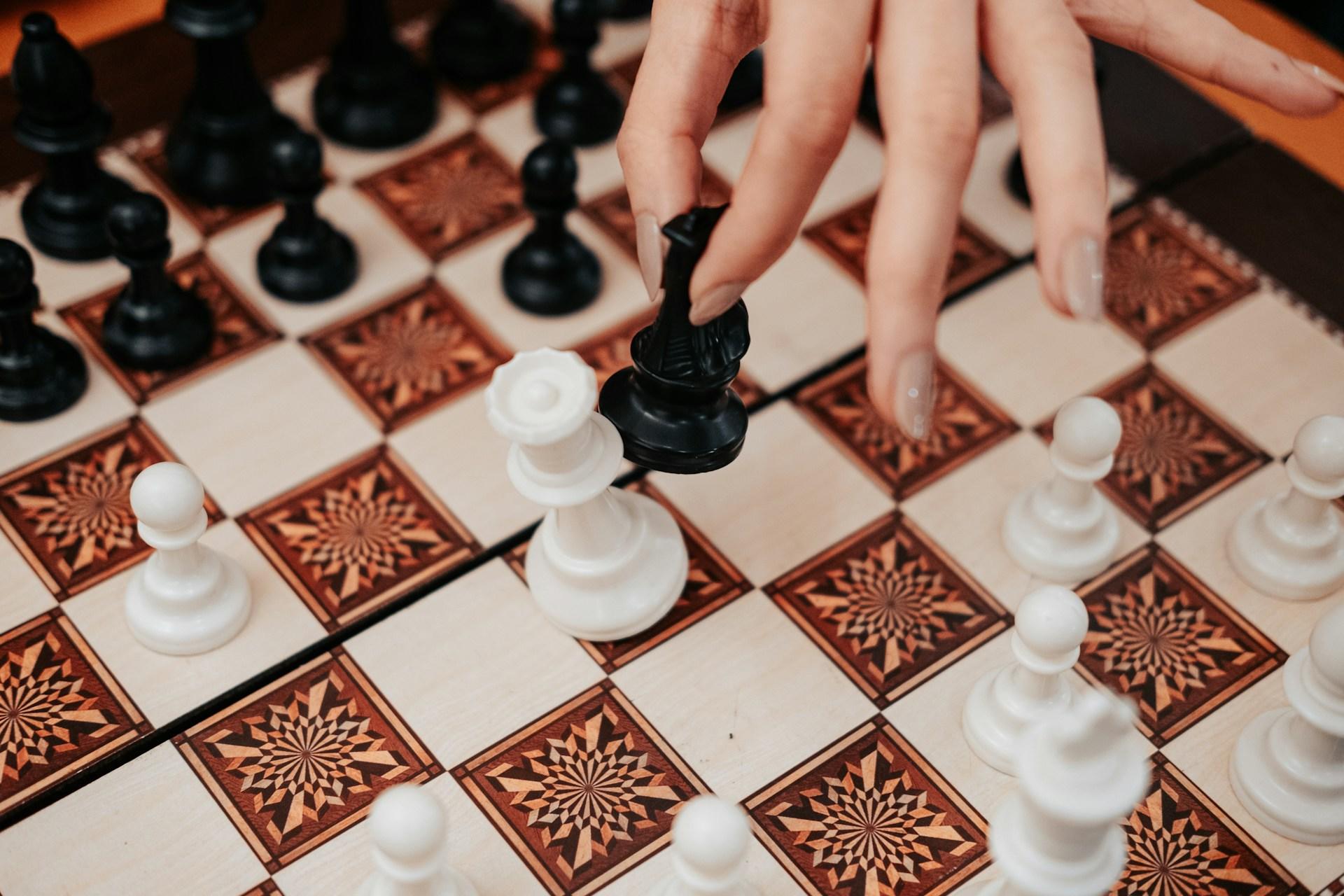

Ranking the greatest chess players of all time is no simple task, after all, “the best” is always tinted by personal opinion, and the game’s history stretches far beyond the modern systems we use to measure skill. Elo, Chessmetrics, Warriors of the Mind, national ratings like the CFC and ECF, and even online platforms such as chess.com each paint a different picture of excellence. Federation Internationale des Echecs (FIDE) may preside over it all, yet the challenge remains: how do we compare legends who never faced each other across the board, or whose careers unfolded before today’s ratings even existed? To cut through the noise, we’re looking strictly at the numbers, spotlighting the 15 greatest chess players in history and explaining exactly how we defined “greatness” once the list is revealed.
| ♛ Name | 🌎 Nationality | ♟ Elo Rating | 🗓️ Age When They Became a Grandmaster |
|---|---|---|---|
| Magnus Carlsen | Norweign | 2988 | 13 |
| Vladimir Kramnik | Russian | 2982 | 16 |
| Garry Kasparov | Russian | 2971 | 17 |
| Viswanathan Anand | Indian | 2962 | 18 |
| Bobby Fischer | American | 2916 | 15 |
| Anatoly Karpov | Russian | 2813 | 19 |
| Jose Capablanca | Cuban | 2786 | N/A |
| Mikhail Tal | Latvian-Russian | 2734 | 20 |
| Boris Spassky | Russian | 2708 | 18 |
| Mikhail Botvinnik | Russian | 2706 | 38 |
| Vasily Smysolv | Russian | 2685 | 28 |
| Alexander Alekhine | Russian-French | 2642 | N/A |
| Tigran Petrosian | Armenian-Russian | 2642 | 23 |
| Max Euwe | Dutch | 2637 | 48 |
| Emanuel Lasker | German | 2604 | N/A |






Magnus Carlsen
🇳🇴 Nationality: Norweign
♟ Estimated Elo Rating: 2988
The current World Chess champion is a chess prodigy who started winning tournaments when he was just 13 years old. A few months later he was dubbed a chess grandmaster and, two years after that, he won his first championship. When he was 19 years old, he reached the top FIDE rank; he was the youngest chess player ever to do so.
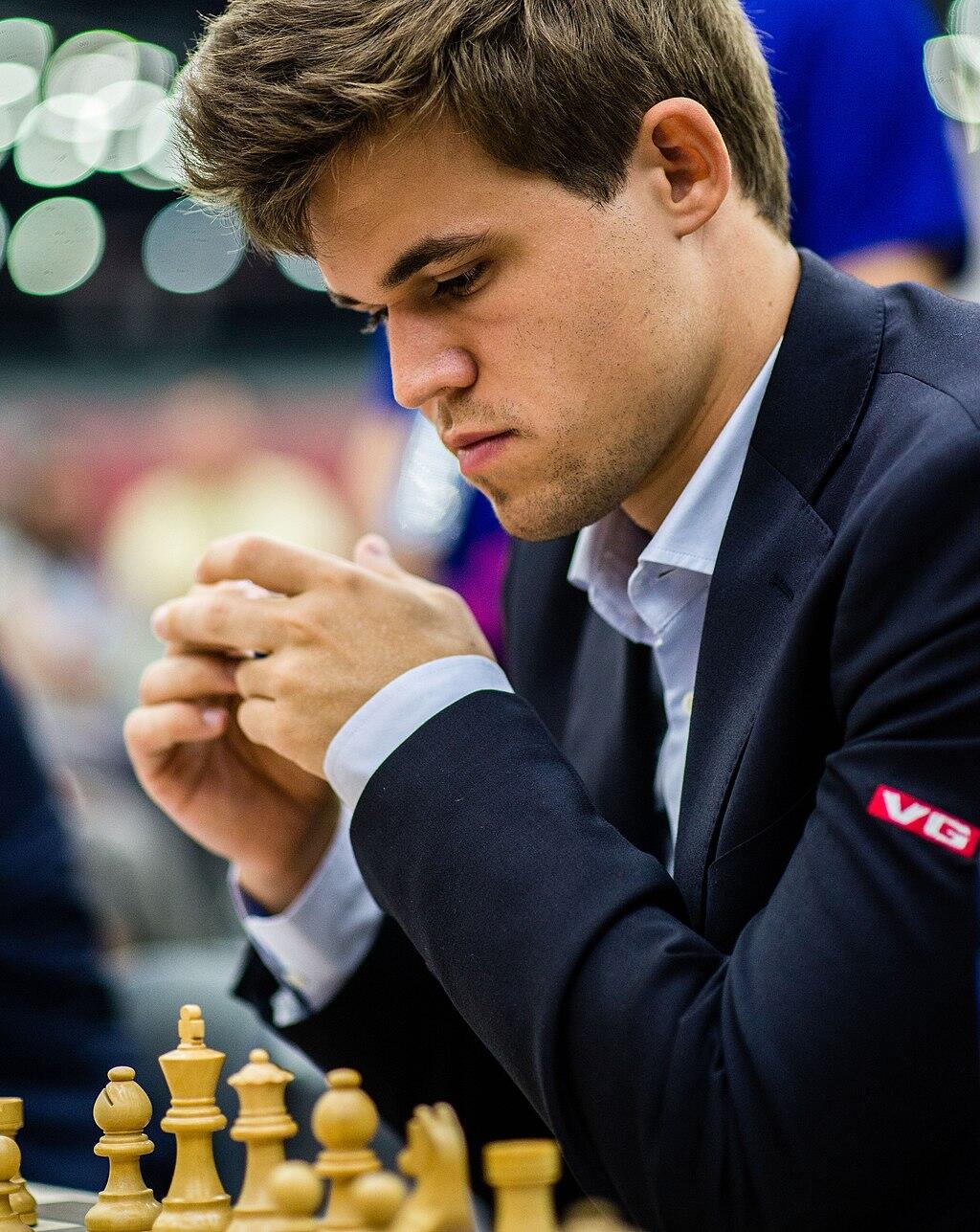
He is also the first person to hold three world championship titles at the same time. Besides World, he holds the World Rapid Chess and World Blitz Chess titles.
As a younger player, he was known for his aggressive style but now, with more experience, he has diversified his game. He uses a variety of openings to throw his opponents off but the middlegame is when he most enjoys himself.
Searching for chess classes near me? Find experienced teachers here.
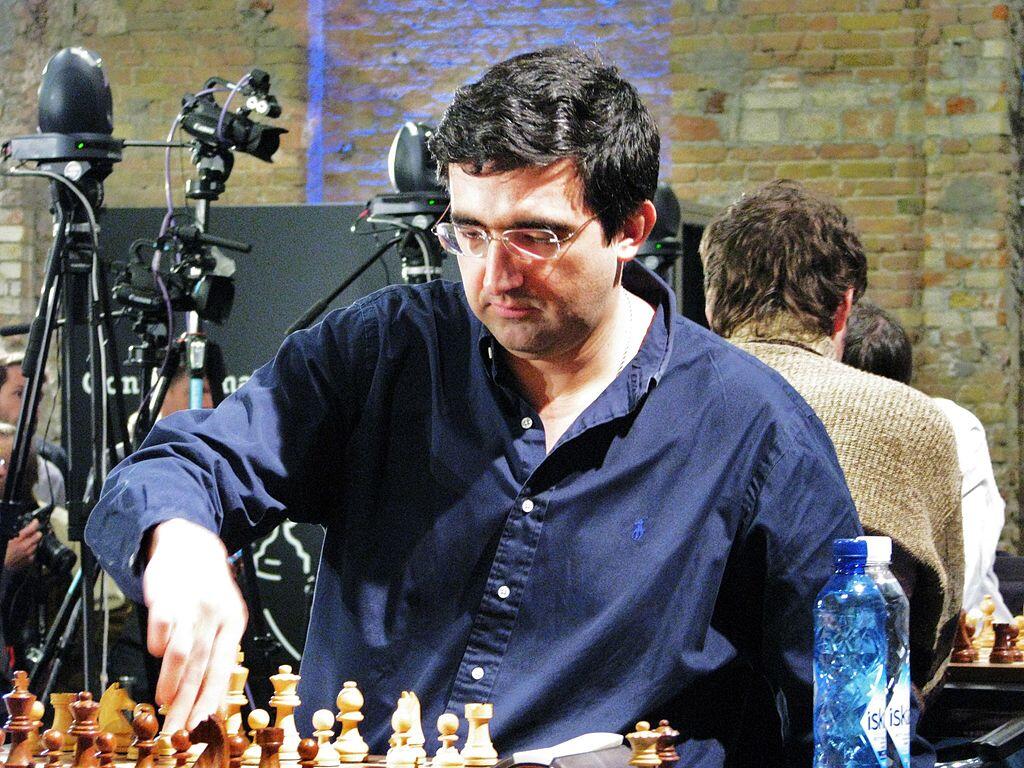
Vladimir Kramnik
🇷🇺 Nationality: Russian
♟ Estimated Elo Rating: 2982
With a playing style reminiscent of Anatoly Karpov, Kramnik takes a pragmatic approach to chess. As he is rather a 'head down and just play' type, his opponents found it hard to predict what his next move might be. So adept is he at misleading his opponents that he once went 80 consecutive games without a loss.
He even defeated the next player on our list during their World Championship match in 2000.
When playing, the endgame is Kramnik's forte but, since retirement, he's contributed greatly to chess opening theory.
Garry Kasparov
🇷🇺 Nationality: Russian
♟ Estimated Elo Rating: 2971
A god of the chess world, this player has racked up so many titles, championship wins and records that we'll describe a stunning upset as a defining benchmark instead of listing his most remarkable accomplishments.
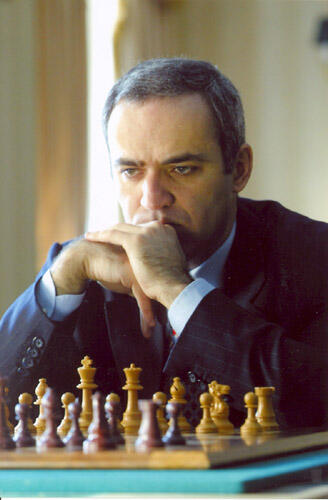
After a dispute with FIDE in 1993, he broke away to establish his own chess organization called The Professional Chess Association. It was a rather short-lived venture - it lasted only about three years, after which he played a series of six matches opposite the IBM computer Deep Blue, against which he ultimately lost.
Thus, Kasparov earned another accolade: the first world champion chess player to lose to a computer.
Garry Kasparov has been awarded eleven Chess Oscar Awards for the best chess player of the year during his career! He was awarded the honor in 1982-1983, 1985-1988, 1995-1996, 1999, and 2001-2002.
Viswanathan Anand
🇮🇳 Nationality: Indian
♟ Estimated Elo Rating: 2962
As though all of the other chess grandmasters weren't trailblazers in their own right, we have to describe this chess champion as a Man of Firsts.
FIDE recognized him as grandmaster in 1988, making him the first from India. In 1991-92, he became the first person to win the Rajiv Gandhi Khel Ratna award, a prize for sportsmanship established that year. He is also the first sports figure to win India's second-highest civilian award.
Indeed, many consider him the best rapid chess player of his time.
Bobby Fischer
🇺🇸 Nationality: American
♟ Estimated Elo Rating: 2916
Singlehandedly responsible for making chess appealing to the masses, this chess prodigy won what was later dubbed the Game of the Century when he was just 13 years old.
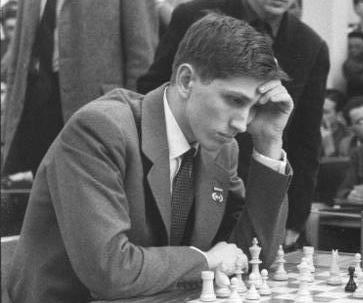
A year later, he was heralded the youngest US chess grandmaster and, a year after that, he became the youngest contender for the World Championship and the youngest ever chess grandmaster.
During the 1970s, at the height of his fame, Bobby Fischer's increasingly erratic and obstinate attitude cost him his world champion title.
It wasn't because he was outplayed; he simply refused to defend his title. Kasparov claimed it because of Fischer's default.
Also, find out where the Game of the Century ranks on the list of seven greatest chess matches ever played.
Anatoly Karpov
🇷🇺 Nationality: Russian
♟ Estimated Elo Rating: 2813
For 10 years, Karpov was the world chess champion. He was finally unseated by Kasparov, whom he faced off no fewer than five times to regain his title. It was only when Kasparov broke away from FIDE that Karpov reigned once again but he, too, got fed up with FIDE. He resigned his title in 1999.
As a player, Karpov was risk-averse but meticulous in spotting opponents' errors and merciless in exploiting their weaknesses. For that, he is often compared to the next player on our list.
Jose Capablanca
🇨🇺 Nationality: Cuban
♟ Estimated Elo Rating: 2786
He played fast and had a wicked endgame. This chess prodigy who, according to Bobby Fischer, played with a light touch, had no problem with changing his strategy if he saw an opportune move. He wasn't necessarily a tactical player; his defence was far stronger an asset for him. Indeed, many opponents walked away in defeat, ruing ever having attempted to attack.
He reigned as the World Chess champion from 1921 to 1927, losing his title to Alexander Alekhine. Those two always tried for a rematch but, over the years, their relationship grew bitter. Eventually, both gave up on the idea.
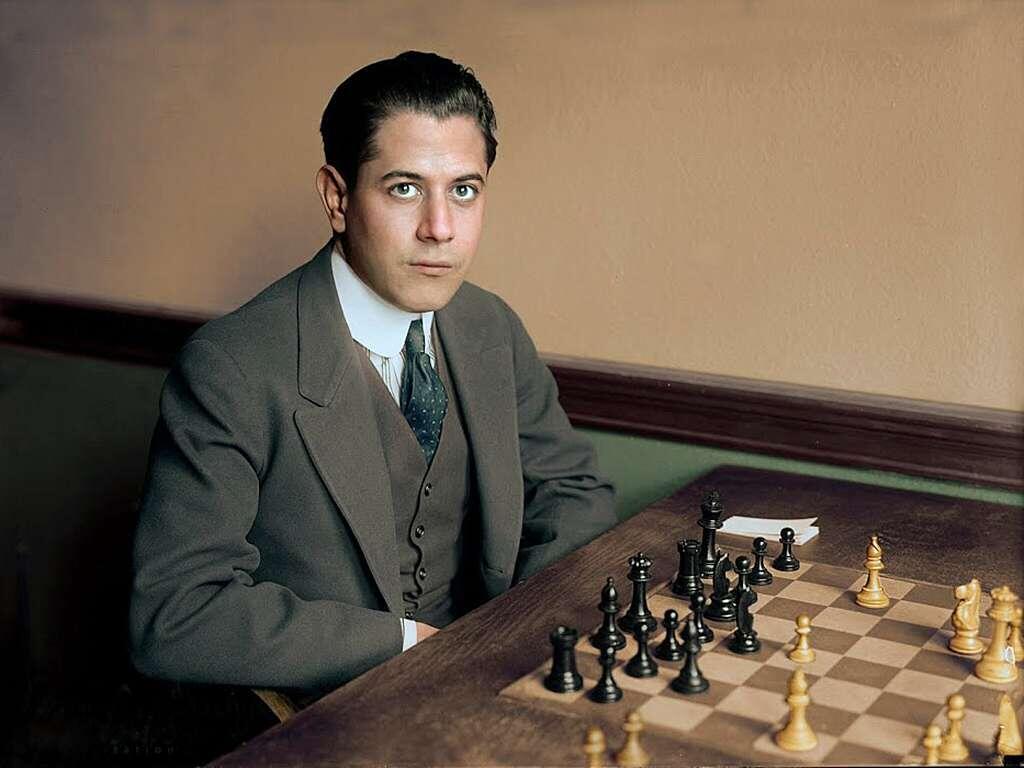
Where does Jose fit on your list of famous chess players?
Mikhail Tal
🇱🇻🇷🇺 Nationality: Latvian-Russian
♟ Estimated Elo Rating: 2734
Known as the Magician from Riga, Mikhail's playing style was anything but predictable. A brilliant attack player - some say the best there ever was, it was his unpredictability and creativity that drove his opponents mad. They simply could not out-think him!
He was the finest writer to become a world chess champion.
Andrew Soltis
This eighth World Chess champion also had a way with words. Not only was he lyrical in his speech but he wrote some of the best books about chess and his experiences in playing.
Boris Spassky
🇷🇺 Nationality: Russian
♟ Estimated Elo Rating: 2708
Looking over Boris' games statistically, his favorite openings were the Ruy Lopez (if he played whites) and the Sicilian Defence (blacks) - a particularly combative opening. That's rather odd, considering that he's pegged as a universal player with a fairly even temperament. His first tastes of chess might give us a clue as to why he favored aggressive openings.
He learned to play on a train when he was five years old; his family was fleeing Leningrad during the Second World War. At 10, he defeated Soviet chess champion Mikhail Botvinnik and went on to earn his Soviet Master rank at 15 years old. Shortly afterwards, he placed second in the Leningrad Chess championship.
Search for online chess lessons on Superprof.
Mikhail Botvinnik
🇷🇺 Nationality: Russian
♟ Estimated Elo Rating: 2706
Much of how the World Chess championship system is designed we owe to this engineer-cum-chess player.
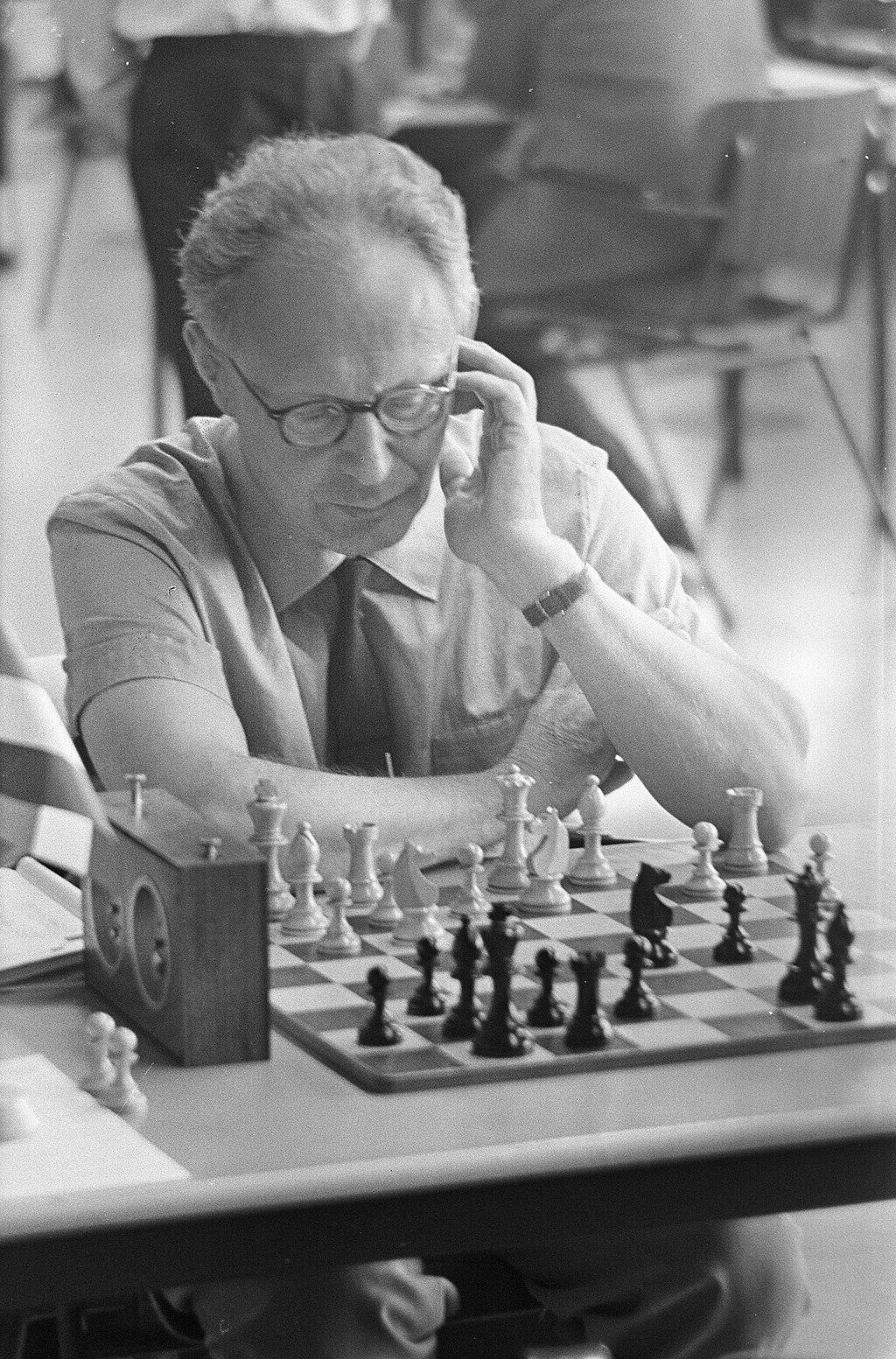
He was introduced to the game when he was 12 years old and developed an immediate affinity for it. He started playing in school chess tournaments, easily sweeping the tables. His reputation grew such that, when he lied about his age to gain membership in the Petrograd Chess Assembly, the admitting official allowed him in despite knowing he was three years too young to join.
As the Soviet Union's first world-class chess player, he was instrumental in shaping the coaching system that mentored other Soviet chess greats featured on this list.
And, thanks to his training as an electrical engineer and computer scientist, he was helped pioneer computer chess.
Other Mentionable Chess Players
As a chess aficionado, you likely know all of the names we've featured so far; these next five will be no less impressive despite not having an entire section dedicated to them in this article.
- Vasily Smyslov: grandmaster and World Chess champion 1957-58; estimated Elo rating 2685
- Alexander Alekhine: defeated Capablanca in 1927; estimated Elo rating of 2647
- Tigran Petrosian: known for his impenetrable defences; estimated Elo rating 2642
- Max Euwe: fifth World Chess champion and former president of FIDE; estimated Elo 2637
- Emanuel Lasker: the longest reign of any World Chess champion (27 years); estimated Elo 2604
Now, let's talk about the most prestigious chess tournament ever.
Summarize with AI:
Did you like this article? Leave a rating!

 Loading...
nice
Hi!
I /ex chess player/ not agree with your list.
Bobby Fisher/1/ Anatoly Karpov/2/ Harry Kasparov/3/ are the best chess players,but maybe Mikhail Botvinnik gave the chess more through his famous chess school.
It’s btw. no method realistic to be compared 2 players from 2 generations.
Example”how you can compare Lasker with Kasparov?
Anamd in your top is very wrong
Vishi is one good player like Carlsen and similar, but no base for comparison with biggest.
Which of these GM’s defeated six other GM’s in a row with a score of 6-0 in a World Champion Candidate tournament? Has any GM done it since then?