
ASL interpreters do work that most people don't think much about until they need it.👂 They make it possible for Deaf and hard-of-hearing individuals to access education, healthcare, legal proceedings, and everyday conversations on equal footing. In the US alone, millions are Deaf or hard of hearing, and qualified interpreters remain in consistent demand.
It's estimated that approximately 11 million Americans are deaf or hard of hearing.
If you're considering this career path, know that it involves more than learning sign language. Becoming a certified interpreter in ASL takes formal training, hands-on experience, and professional credentials. This guide walks through each stage.





Understanding the Role of an ASL Interpreter
Before getting into the steps, it helps to understand what the job actually involves. ASL interpreters aren't just translating words between two languages. They're navigating two distinct linguistic systems with different grammar structures, cultural contexts, and communication norms.
American Sign Language is a fully independent language with its own syntax and grammar, not a signed version of English. That distinction matters, because it shapes everything from how interpreters train to how they work in the field. Misunderstanding it is one of the more common misconceptions outsiders have about the profession.
What Does an ASL Interpreter Do?
In practice, an ASL interpreter converts spoken English into American Sign Language and vice versa, in real time. The goal is to preserve not just the words, but the meaning, tone, and intent behind them. That includes idioms, humor, emotional nuance, and technical terminology, all of which require language fluency well beyond conversational level.
Most professional interpreting is simultaneous, meaning the interpreter is working while the speaker or signer is still going. Some settings use consecutive interpretation, where there's a brief pause between source and target message. Either way, the cognitive load is high and accuracy is non-negotiable.

Settings Where ASL Interpreters Work
The range of settings is wider than most people expect. Educational interpreting is one of the most common entry points, covering everything from K-12 classrooms to university lectures. But demand extends across many other sectors too, driven in large part by the Americans with Disabilities Act (ADA), which requires many public and professional environments to provide interpreter services.
Many settings include education institutions, hospitals, mental health settings, legal proceedings, public services, conferences, concerts, and live events.
Steps to Becoming an ASL Interpreter
The path to becoming a working ASL interpreter in the US doesn't follow a single template, but most people move through the same general stages. It starts with language fluency, builds into formal education, moves through real-world practice, and eventually reaches professional certification.
How long it takes depends on where you're starting from and which programs you choose. Some people come from Deaf families and already have near-native ASL fluency. Others are starting from scratch. Either way, the process typically spans several years, and skipping steps tends to catch up with you later.
Achieving Fluency in American Sign Language
Everything else builds on this, so it genuinely can't be rushed. For professional interpretation, you need more than conversational ASL. You need fluency in the grammar, syntax, and regional variation of the language, plus a solid grounding in Deaf culture and community norms.
Many aspiring interpreters start with community college ASL courses or classes offered through Deaf service organizations. From there, immersion is essential. Spending time in Deaf spaces, whether through community events, Deaf clubs, or volunteer work, accelerates fluency in ways that classroom instruction alone can't replicate. It also helps you build relationships within the Deaf community, which matters a lot in this field.

Pursuing Formal Education in Interpreting
Most professional roles and certification bodies expect at minimum a bachelor's degree, and more specifically, completion of an interpreter training program (ITP). These programs combine ASL coursework with interpreting theory, professional ethics, and supervised practice.
The Commission on Collegiate Interpreter Education (CCIE) accredits ITPs across the US. Graduating from a CCIE-accredited program signals that your training met recognized professional standards. If you want to compare accredited programs before you commit to one, the differences in focus, location, and format are worth looking into.
Gaining Practical Experience
Practicum hours are built into most ITPs, but they're a starting point, not a finish line. The more varied your real-world experience before you sit for certification, the better prepared you'll be for the performance portion of the exam.
Volunteering at community events, Deaf social gatherings, religious services, or local nonprofits all count toward building that base. Some interpreters begin working as K-12 educational interpreters before they're fully certified, since many states maintain separate certification pathways for that specific setting. That can be a practical way to gain experience and earn income while still working toward the main credential.

Obtaining Professional Certification
The main certification body in the US is the Registry of Interpreters for the Deaf (RID). RID certification is the widely accepted professional standard and is commonly required by employers, agencies, and educational institutions.
The core credential is the National Interpreter Certification (NIC), which requires a bachelor's degree, a written knowledge exam, and a performance exam. RID also offers specialty certifications for interpreters working in legal or K-12 educational settings. The National Association of the Deaf (NAD) previously issued its own certification levels, which are still recognized in some contexts but are less commonly required since the NIC became the primary credential.
| Certification | Issuing Body | Requirements | Notes |
|---|---|---|---|
| NIC | RID | Bachelor's degree + written exam + performance exam | Most widely recognized US credential |
| NIC Advanced | RID | NIC + higher performance score | Demonstrates advanced proficiency |
| NIC Master | RID | NIC Advanced + highest performance score | Top-tier credential |
| CDI (Certified Deaf Interpreter) | RID | Deaf/HoH status + written exam + performance exam | For interpreters who are Deaf or hard of hearing |
| NAD Level 3 | NAD | Skills-based assessment | Still recognized; less commonly required |
| NAD Level 4 | NAD | Advanced skills-based assessment | Above-average proficiency |
| NAD Level 5 | NAD | Exceptional skills-based assessment | Highest NAD level |
| SC:L (Specialist: Legal) | RID | NIC or equivalent + legal interpreting exam | Specialty certification for legal settings |
| Ed:K-12 | RID | NIC or equivalent + educational interpreting exam | Specialty certification for K-12 education |
Skills and Qualities That Help You Succeed
Technical fluency is the foundation, but it doesn't cover everything you need to do this job well. The interpreters who build lasting careers tend to combine linguistic ability with a set of professional skills that take time and experience to develop, such as:
- Cognitive flexibility
- Cultural competence
- Neutrality
- Stamina and concentration
- Professional ethics
Interpreters serve all parties in the communication exchange. While we often think of the deaf person as the consumer of interpreter services, the reality is, all parties involved have an equal and mutual need for the interpreter.
National Deaf Center on Postsecondary Outcomes (nationaldeafcenter.org)
Work Opportunities and Earning Potential
Once certified, ASL interpreters have real flexibility in how they structure their careers. Some work full-time for schools, hospitals, or government agencies. Others build a freelance practice across multiple sectors. The ADA keeps institutional demand stable, and the growth of Video Remote Interpreting (VRI) has opened up remote work options that didn't exist a decade ago. If you're still figuring out which type of role fits your goals, it helps to look at the range of settings and contracts available before you start applying.
California, Texas, New York, Florida, and Washington
Full-time positions tend to offer more stability and benefits, which makes them a common first step for newly certified interpreters. Educational interpreting in particular is one of the steadier entry points, with consistent hours and a structured environment. Freelance work, on the other hand, gives you more control over your schedule and the types of assignments you take on, but it comes with the usual tradeoffs around income consistency and self-promotion.
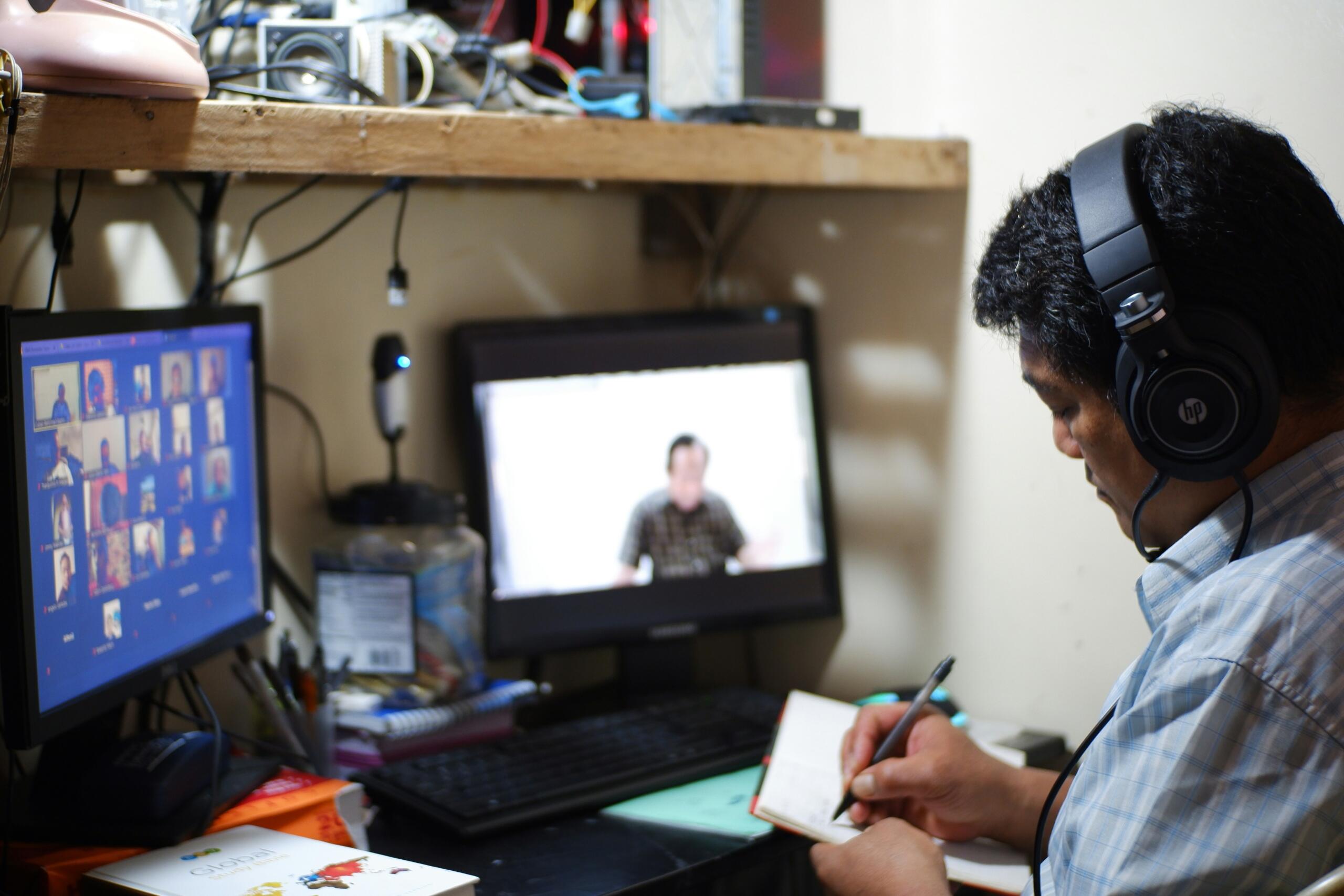
VRI platforms have changed things considerably for interpreters who want location flexibility. Companies like Purple Communications, Sorenson, and ZVRS hire remote interpreters to handle calls through video relay services, which means you can work from home while still serving clients across the country. It's a growing segment of the market, and one that didn't really exist as a viable full-time option until relatively recently.
According to the Bureau of Labor Statistics, employment of interpreters and translators is projected to grow faster than average in the coming years. If you want a clearer sense of what you can realistically expect to earn at different stages of your career, the numbers vary more than most people expect depending on setting and specialization.
Experienced/specialized interpreters
Sources
- Center, National Deaf. “How Many Deaf People Live in the United States?” National Deaf Center Knowledge Base, help.nationaldeafcenter.org/article/51-how-many-deaf-people-live-in-the-united-states. Accessed 23 Mar. 2026.
- “Interpreting.” National Deaf Center, 28 Oct. 2025, nationaldeafcenter.org/resources/access-accommodations/coordinating-services/interpreting/.
- “Interpreters and Translators.” U.S. Bureau of Labor Statistics, U.S. Bureau of Labor Statistics, 28 Aug. 2025, www.bls.gov/ooh/media-and-communication/interpreters-and-translators.htm.
- “Occupational Employment and Wage Statistics (OEWS) Tables.” U.S. Bureau of Labor Statistics, U.S. Bureau of Labor Statistics, www.bls.gov/oes/tables.htm. Accessed 23 Mar. 2026.
- “Home - Registry of Interpreters for the Deaf, Inc..” Registry of Interpreters for the Deaf, Inc. - Education. Standards. Excellence., 11 Mar. 2025, rid.org/.
Summarize with AI:
Did you like this article? Leave a rating!

 Loading...