
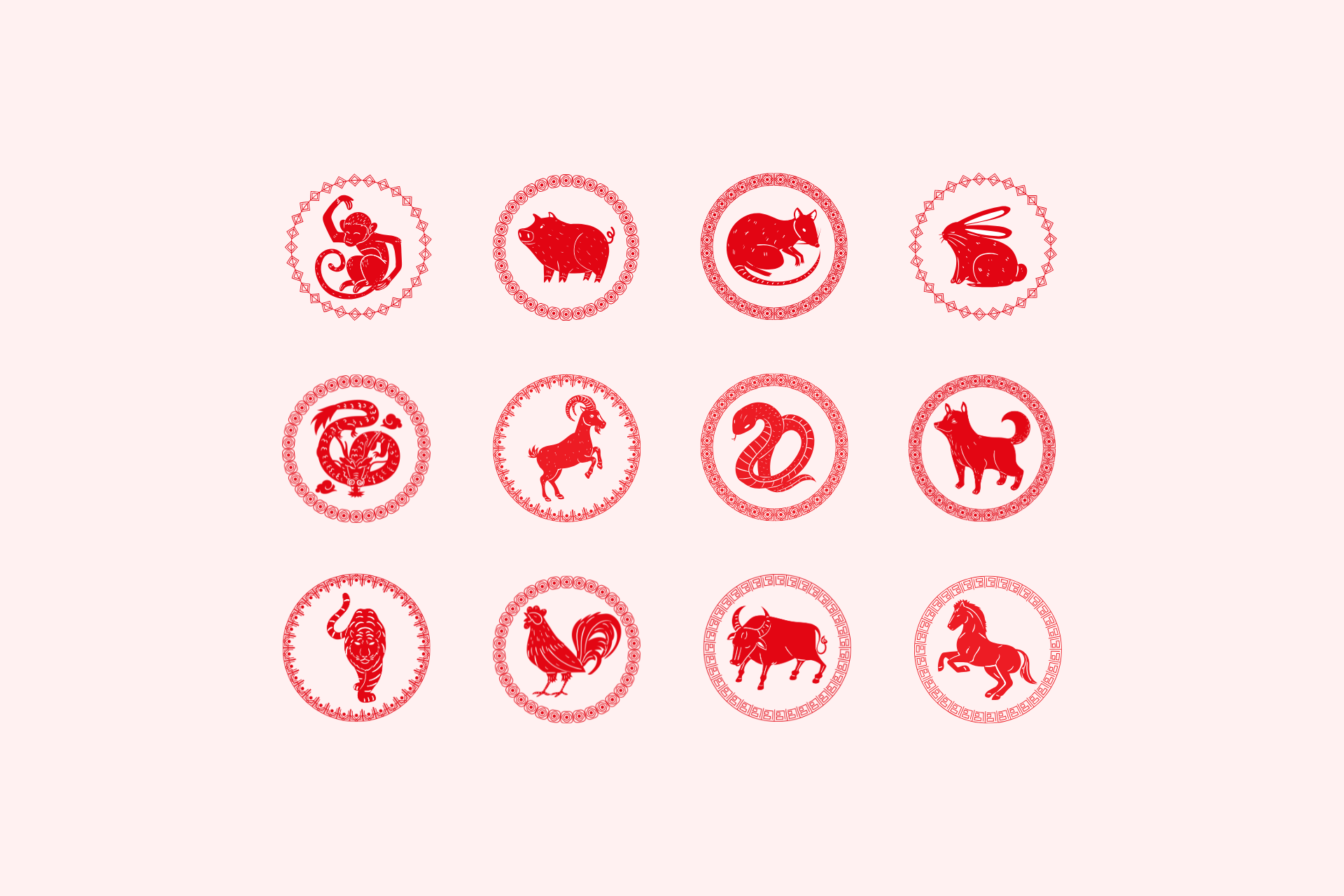

In the West, we have our eyes fixed on the Sun. In China, they observe the dance of the Moon and Jupiter. This is the fundamental difference between our two visions of the sky. While in the United States your sign depends on your month of birth (the position of the sun in a constellation), in the Middle Kingdom it is the entire year that colors your destiny. But to reduce Chinese astrology to a simple list of 12 animals would be a monumental mistake.
Much more than an entertaining column at the end of a magazine, this discipline is a true cultural pillar dating back several millennia. In China, even today, it is consulted not only out of curiosity, but as a strategic tool. It influences the date of a wedding to ensure harmony between the couple, the launch of a business to ensure its prosperity, and even plays a role in traditional Chinese medicine diagnoses.
Understanding the Chinese zodiac means delving into a complex system that combines Taoist philosophy, the lunisolar calendar, and imperial legends. Chinese astrology is rich and complex. For your Chinese lessons, Superprof has put together a little memo for you!


The History of Chinese Astrology
Chinese astrology did not originate in magazines, but at the court of the emperors.
2637 BC
The Founding Myth
According to legend, the Yellow Emperor (Huang Di) invented the first calendar and established the first 60-year cycle. This is the traditional “zero point” of Chinese chronology.
4th century BC (Warring States period)
Theoretical Contribution
Development and integration of the Wu Xing theory (the five elements: Wood, Fire, Earth, Metal, Water) into the astrological system and medicine.
104 BC (Han Dynasty)
Codification
Promulgation of the Taichu (“Great Beginning”) calendar by Emperor Wu. This marked the true birth of the organized calendar system as we know it today, combining solar and lunar cycles.
618–907 (Tang Dynasty)
The Popularization of Animals
Although animals already existed, it was during this cultural golden age that the association of the 12 animals with the years of birth became popular and spread widely throughout society and to neighboring countries (Japan, Korea).
1912
Modern Duality
With the fall of the Empire and the birth of the Republic of China, the country officially adopted the Gregorian (solar) calendar for administrative purposes, but retained the lunar calendar for festivals and astrology.
From Imperial Roots to Popular Beliefs
As early as the Zhou dynasty (1046-256 BC), observing the sky was a matter of state. The Emperor, considered the “Son of Heaven,” was the guarantor of harmony between the celestial and terrestrial worlds. He alone had the right to consult the stars to predict harvests or the outcome of a war.
It was during the Han dynasty (206 BC–220 AD) that the system was truly codified, incorporating the famous lunisolar calendar. While imperial astronomers monitored eclipses (seen as bad omens), astrology gradually permeated the daily lives of the people. It became indispensable for setting the dates of major traditional festivals, such as New Year or the Lantern Festival, thus punctuating the social and agricultural life of the whole of China.
The Influence of Chinese Philosophy
This system is not based solely on mathematical calculations; it is the result of a unique blend of Taoism, Confucianism, and Buddhism.
At the heart of this mechanism lies the principle of Yin and Yang. This fundamental duality classifies each sign and each year (the Rat is Yang, the Ox is Yin, etc.), creating a dynamic balance.
A symbol of universal harmony, this concept does not oppose black and white, but rather complements them. Yin (shadow) evokes the feminine, coldness, and receptivity. Yang (light) embodies the masculine, warmth, and action. In the zodiac, each animal is intrinsically Yin or Yang.
But the most fascinating concept remains that of destiny. Chinese astrology distinguishes between two concepts:
- Ming (命): This is destiny, the “map” received at birth, which is immutable.
- Yun (运): This is luck, the “journey” we take.
According to Chinese sages, understanding your astrology allows you to navigate your Yun as best as possible in order to fulfill your Ming.
The Foundations of the Chinese Astrological System
Chinese astrology is not just about knowing which animal you are. It is a complex cosmic clockwork that superimposes time, elements, and lunar cycles.
Lunar (Chinese) Astrology vs. Solar (Western) Astrology
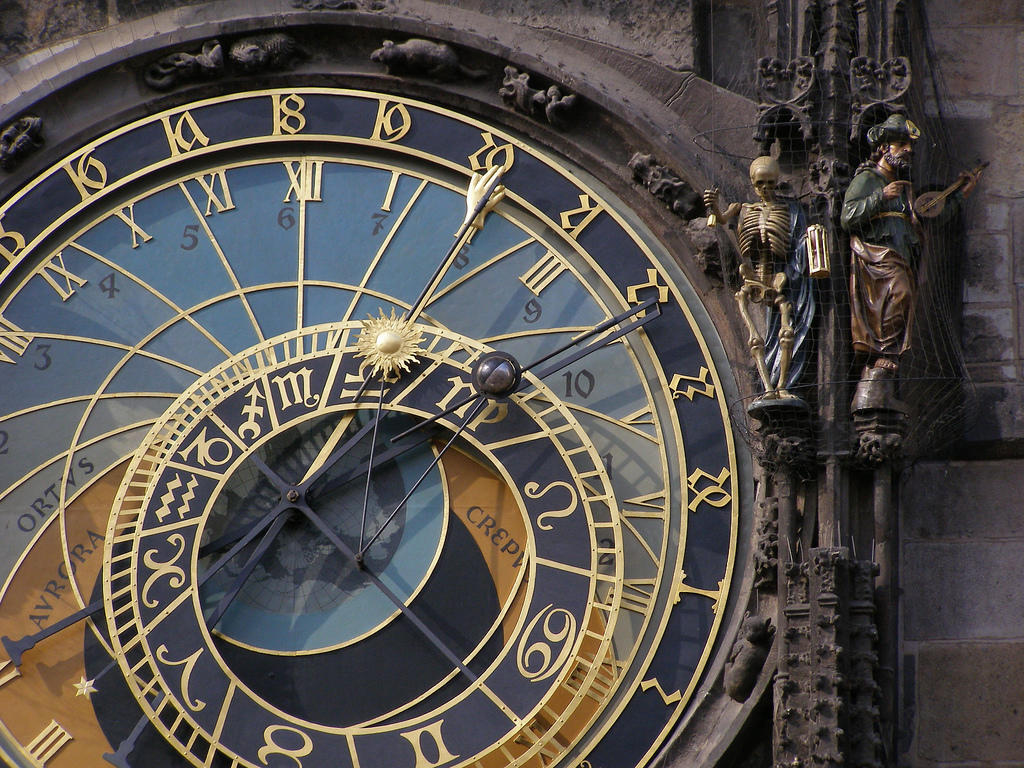
The main difference lies in the calendar. Whereas the West divides the solar year into 12 signs (Aries, Taurus, etc.), China uses 12-year lunar cycles. However, astrology enthusiasts will find familiar archetypes.
In both astrologies, the planets are believed to influence the moment of birth as well as the individual's entire life, criteria that must be taken into account when calculating the Chinese sign.
Both astrologies also have twelve signs of the zodiac. While in Western astrology, the sign is determined by the month of birth, or rather the arrival of the new moon (Aries, Taurus, Gemini, Cancer, Leo, Virgo, Libra, Scorpio, Sagittarius, Capricorn, Aquarius, Pisces), in Chinese astrology, it is determined by the year of birth.
We often compare:
- 🐉 The Dragon to the Lion for its charisma and inner fire,
- 🐀 The Rat to Gemini for its quick wit and social ease,
- 🐍 The mysterious and strategic Snake shares the intensity of the Scorpio,
- 🐐 The dreamy and artistic Goat recalls the sensitivity of Pisces.
These are only symbolic echoes. One is calculated on a monthly basis, the other on an annual basis: you can very well be a Leo at heart and a Capricorn!
The 5 Elements (Wu Xing): The Essential Nuance
The five main planets, in the era of ancient Chinese astronomers, are associated with the five elements:
- Jupiter is Wood 🪵
- Mars is Fire 🔥
- Saturn is Earth 🌍
- Venus is Metal ⚙️
- Mercury is Water 💧
The position of the planets in the sky, as well as that of the Sun (Yang) and the Moon (Yin) and the passage of comets at the moment of birth, are said to influence our destiny.
Jupiter is particularly important, as it was this planet that was used to count the years until the Han dynasty.
Chinese astrology also has symbolic colors linked to the five fantastic animals (totems) of the five elements theory:
- ⚪ White is the color of Metal ⚙️. It is linked to Venus and the White Tiger of the West,
- 🔵 Blue and Black are attributed to Water 💧. They are linked to Mercury and the Black Turtle of the East,
- 🟢 Green corresponds to Wood 🪵. It is linked to Jupiter and the Green Dragon of the East,
- 🔴 Red, attributed to Fire 🔥, is linked to Mars and the Red Bird of the South.
- 🟡 Yellow, linked to Earth 🌍, is associated with Saturn and the Snake. It represents balance. Yellow is also the color of the Emperor.
Regarding the sexagesimal cycle (60 years), we can combine the animal cycle (12 years) with the binary cycle of Yin and Yang. Each animal is always associated with a year of the same type. For example, the Dragon is always Yang, while the Goat is always Yin. In our calendar, even years are Yang and odd years are Yin.
A sign never comes alone; it is always “colored” by an element that changes every year. This is the theory of Wu Xing. It is not about “chemistry,” but about movement and transformation.
The secret lies in the cycle of generation:
- 🪵 Wood nourishes Fire 🔥
- 🔥 Fire creates Earth (through ashes) 🌍
- 🌍 Earth carries Metal ⚙️
- ⚙️ Metal enriches Water 💧
- 💧 Water nourishes Wood 🪵
A “Fire Dragon” will thus be more impulsive and domineering than a “Water Dragon,” who is calmer and more thoughtful. The element balances or exacerbates the nature of the animal.
Combined with the cycle of the five elements (metal 金, jīn), wood (木, mù), water (水, shuǐ), fire (火, huǒ), and earth (土, tǔ)), this results in a cycle of sixty different years. It is possible to be a Metal Rat, Fire Tiger, Water Rabbit, or Wood Goat.
They nuance your personality. Wood, Fire, Earth, Metal, and Water follow each other every two years. They interact in cycles (e.g., Wood nourishes Fire). So, being a “Tiger” is not enough: a Fire Tiger (impulsive) is completely different from a Water Tiger (calm).
Bazi: Much More Than a List of Animals
Saying “I am a Horse” is an extreme simplification. In reality, the animal of your birth year represents only 1/8th of your astrological chart3.
The complete system is called Bazi (八字) or the “Four Pillars of Destiny.” Each moment of your birth corresponds to a pillar:
Year
Month
Day
Hour
This is where the time of birth becomes crucial (like the ascendant in Western astrology). It determines your “secret animal,” the one that governs your inner self. For a serious analysis, an astrologer will look at the complex interaction between these four animals and the five elements.
Founding Legends and Popular Stories of the Chinese Horoscope
Why does the Rat precede the powerful Dragon? The order of the Zodiac is no coincidence. It is based on a founding myth known to every child in China, combining cunning, strength, and loyalty.
The Great Race of Animals: Why Is the Rat First?
According to the most widespread legend, the Jade Emperor (or Buddha, depending on the version) invited the animals to a New Year's banquet. To get there, they had to cross a turbulent river. The order of arrival would determine their position in the cycle.
The Rat, clever but a poor swimmer, asked the Ox to carry him. The Ox, a symbol of kindness, hard work, and naivety, agreed to carry the rodent on his head. But just before reaching the shore, the Rat jumped to the ground and crossed the finish line first, leaving the Ox in second place.
This story defines the characters:
- The Rat is the sign of strategic intelligence (and sometimes opportunism).
- The Ox embodies perseverance.
- The Tiger, competitive and powerful, came third on the strength of his muscles, exhausted by the current.
Other Symbolic Stories and Associated Myths
Another legend concerns the Pig (or Boar). It is said to have convinced the Jade Emperor to be the arbitrator to judge the value of the other animals:
- He placed the Rat and the Ox ahead of the Tiger and the Dragon, which made them very angry
- The Monkey, to appease the Tiger, drew the character for “king” on its forehead
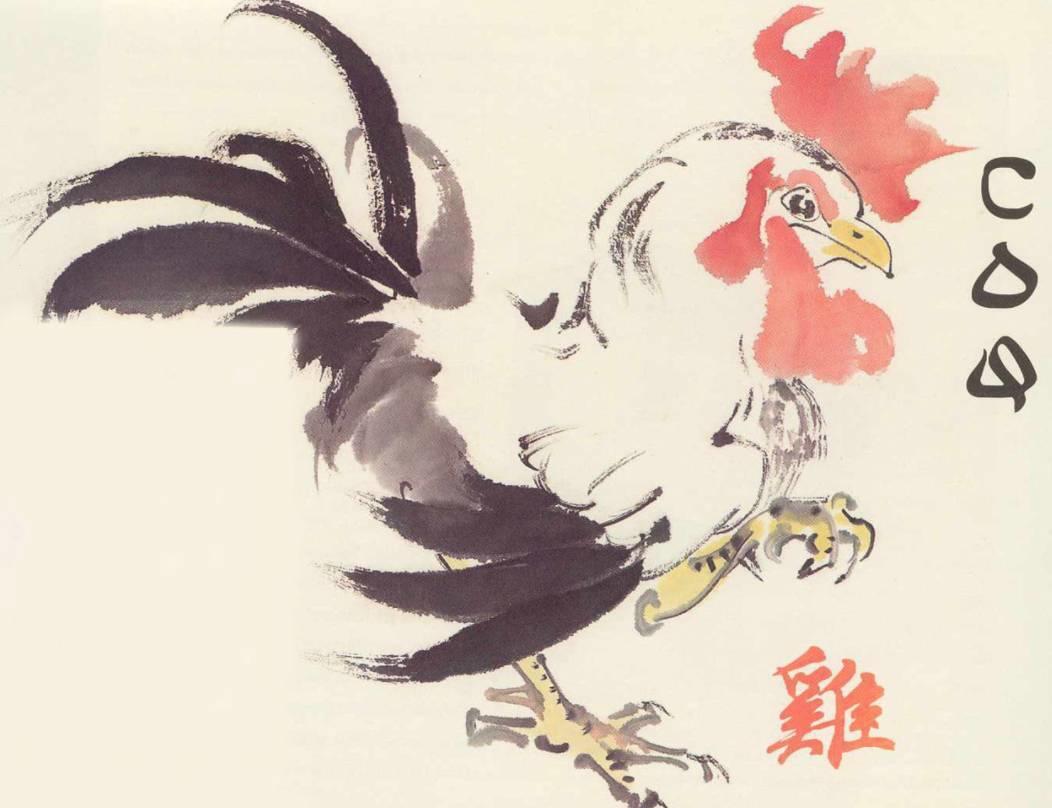
- The Rooster, to appease the Dragon, offered it its horns as a crown to proclaim it “king of aquatic animals”
- The Rabbit (or Hare) challenged the Dragon to a race. He won when the Dragon got his horns stuck in the branches of a tree. The Rooster was held responsible and, offended, demanded the return of his horns. But the Dragon told him that he would give them back when the Sun rose in the West. Since that day, every morning the Rooster begs the Sun to rise in the West
- It was partly thanks to the Dog that the Rabbit won, as he had advised him to cut off his tail. But when he came to congratulate him, hoping for a little gratitude, the Rabbit denigrated him and the Dog bit him. He was therefore placed in last position as punishment
- The Pig wrote himself at the top of the list before handing his ranking to the Jade Emperor. The latter, having heard of the incidents, placed him in last position.
The Jade Emperor is often cited as the organizer in order to anchor astrology in the celestial administrative structure of Taoism.
But one question often arises: where is the Cat?
Legend has it that the Cat and the Rat were friends. The Rat promised to wake the Cat for the race, but he “forgot” (or, according to other versions, pushed him into the water or lied about the day of the race).
Arriving too late, the Cat was excluded from the cycle. Since that day, cats have hated rats.
The Cat did get its revenge in Vietnam, where it replaces the Rabbit in the local zodiac!
These animals are not just fables: they dictate New Year's rituals. To attract good luck (Fu), people decorate their homes with representations of the animal of the coming year and wear red underwear if it is their year (Ben Ming Nian) to ward off bad luck4.
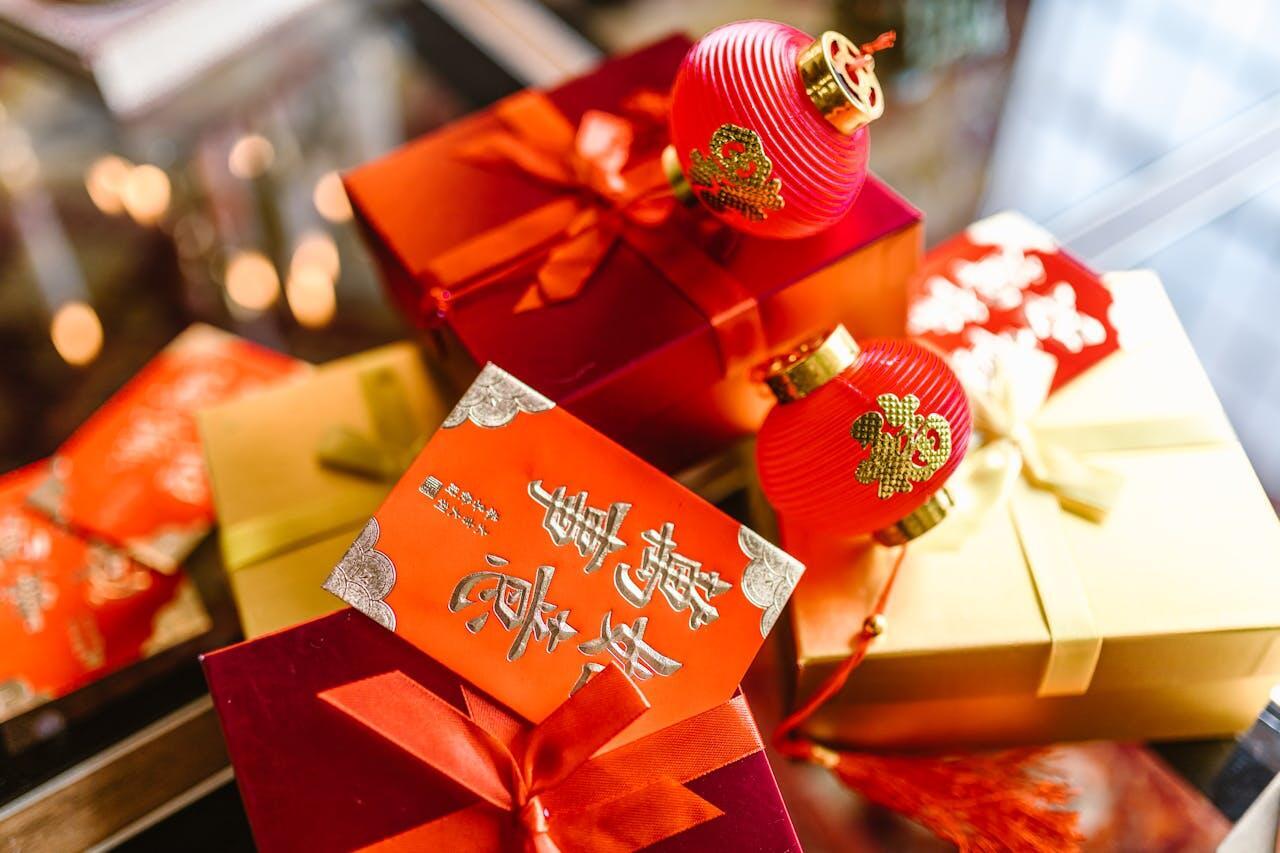
Cultural Symbols Associated with Animals5
| Sign | Main Theme | Symbols | Why / Origin |
|---|---|---|---|
| Rat (Shǔ) | Abundance and savings | Material wealth, fertility | Rapid reproduction and food storage, historical sign of abundance |
| Ox/Buffalo (Niú) | Prosperity through hard work | Spring, agriculture, reliability | Driving force of rice paddies, wealth acquired through effort |
| Tiger (Hǔ) | Protection and bravery | King of animals, protection against spirits | Stripes forming the character 王 (King) |
| Rabbit (Tù) | Longevity and peace | Eternal life, grace | Jade Rabbit preparing the elixir of immortality on the Moon |
| Dragon (Lóng) | Imperial power and luck | Authority, Yang, rain, success | Benevolent mythical animal bringing rain |
| Serpent (Shé) | Rebirth and wisdom | Healing, feminine wisdom | Shedding symbolizing regeneration, called Little Dragon |
| Horse (Mǎ) | Quick success and travel | Speed, perseverance, social status | Symbol of immediate success |
| Goat/Buck (Yáng) | Harmoney and filial piety | Peace, art, filial respect | Kid kneeling to suckle, symbol or respect |
| Monkey (Hóu) | Intelligence and promotion | Malice, social advancement | Homophony with Marquis |
| Rooster (Jī) | Punctuality and protection | Reliability, demon hunter | Announcement of sunrise chasing away spirits |
| Dog (Gǒu) | Loyalty and protection | Faithfulness, guardian of the home | The arrival of a dog brings prosperity |
| Pig (Zhū) | Wealth and happiness | Abundance, easy luck | Becomes rich without apparent effort |
Find your Chinese language course to learn more about the legends of animals in Chinese astrology.
Why Is Chinese Astrology Still Fascinating Today?
Far from being a relic of the past, the Chinese zodiac survived the Cultural Revolution and rapid modernisation because it offers a reassuring framework for interpreting uncertainty.
A Tradition That Adapts to the Modern World
Chinese astrology has migrated from temples to smartphones. Today, we no longer necessarily consult the village sage, but rather dedicated apps for:
Checking Romantic Compatibility:
On Asian (and Western) dating apps, displaying your zodiac sign is an effective filter. People want to know if the Rat will get along with the Rabbit before even going on a first date.
Launching a Business and Thinking About Strategy:
In Hong Kong or Shanghai, it is not uncommon for major contracts to be signed on an “auspicious” date calculated according to the lunar calendar. Astrology becomes a risk management tool.
The rise of online Bazi calculators allows anyone to access their complete astrological chart in just a few clicks, democratizing knowledge that was once reserved for the elite.
Can We Believe in Chinese Astrology?
The question divides opinion: is it archaic superstition or ancient wisdom? For many modern practitioners, it is not a matter of blind “belief” or fatalism. Chinese astrology is seen as an energy forecast.
While Western astrology is often psychological (who am I?), Chinese astrology is relational and temporal (how do I interact with others? When is the right time to act?).
It persists because it serves as a tool for introspection and decision-making, allowing us to navigate the cycles of life with greater awareness, whether we consider it a cosmic truth or a simple psychological placebo effect.
Note that the Chinese horoscope does not claim to predict the future. Rather, it offers a rich symbolic system, inspired by tradition, that allows for a lighthearted exploration of character traits and relationship dynamics.
If you only need to remember four key points before shining in society (or in Chinese class):
🌙 It's a matter of years (and the Moon): unlike the Western solar system, which changes signs every month, the Chinese zodiac governs an entire lunar year.
🔥 Don't overlook the elements: Being a “Dragon” is not enough. Are you Wood, Fire, or Metal? The element significantly influences your character.
🕰️ Time counts double: Your “true” animal self is hidden in your hour of birth (the hour pillar in Bazi).
🧭 A compass, not a prison: The purpose of the zodiac is not to suffer your fate (Ming), but to use this information to better navigate the cycles of luck (Yun).
Which aspect of Chinese astrology intrigues you the most?
Sources
- Wilkinson, Endymion. Chinese History: A New Manual. 4e éd., Harvard University Asia Center, 2015. Available at: https://archive.org/details/chinesehistoryne0000wilk. Accessed December 15th, 2025
- Granet, Marcel. La Pensée Chinoise. Albin Michel, coll. "L'Évolution de l'Humanité", 1934 (rééd. 1999). Available at: https://classiques.uqam.ca/classiques/granet_marcel/A12_la_pensee_chinoise/la_pensee_chinoise.pdf. Accessed December 15th, 2025
- Lau, Theodora. The Handbook of Chinese Horoscopes. 40th Anniversary Edition, HarperCollins, 2019. Available at: https://ia902800.us.archive.org/6/items/Book1964LouisMacNeiceAstrology/Book_1988_Theodora%20Lau_The%20handbook%20of%20Chinese%20horoscopes.pdf. Accessed December 15th, 2025
- Pimpaneau, Jacques. Chine : Mythes et Dieux. Éditions Philippe Picquier, 1999.
- Eberhard, Wolfram. A Dictionary of Chinese Symbols: Hidden Symbols in Chinese Life and Thought. Routledge, 1986. Available at: https://archive.org/details/dictionaryofchin00wolf. Accessed December 15th, 2025
Summarize with AI:
Did you like this article? Leave a rating!

 Loading...
Muchas gracias, llevo 40 años explorando este universo Bazi (八字) y sigo fascinada