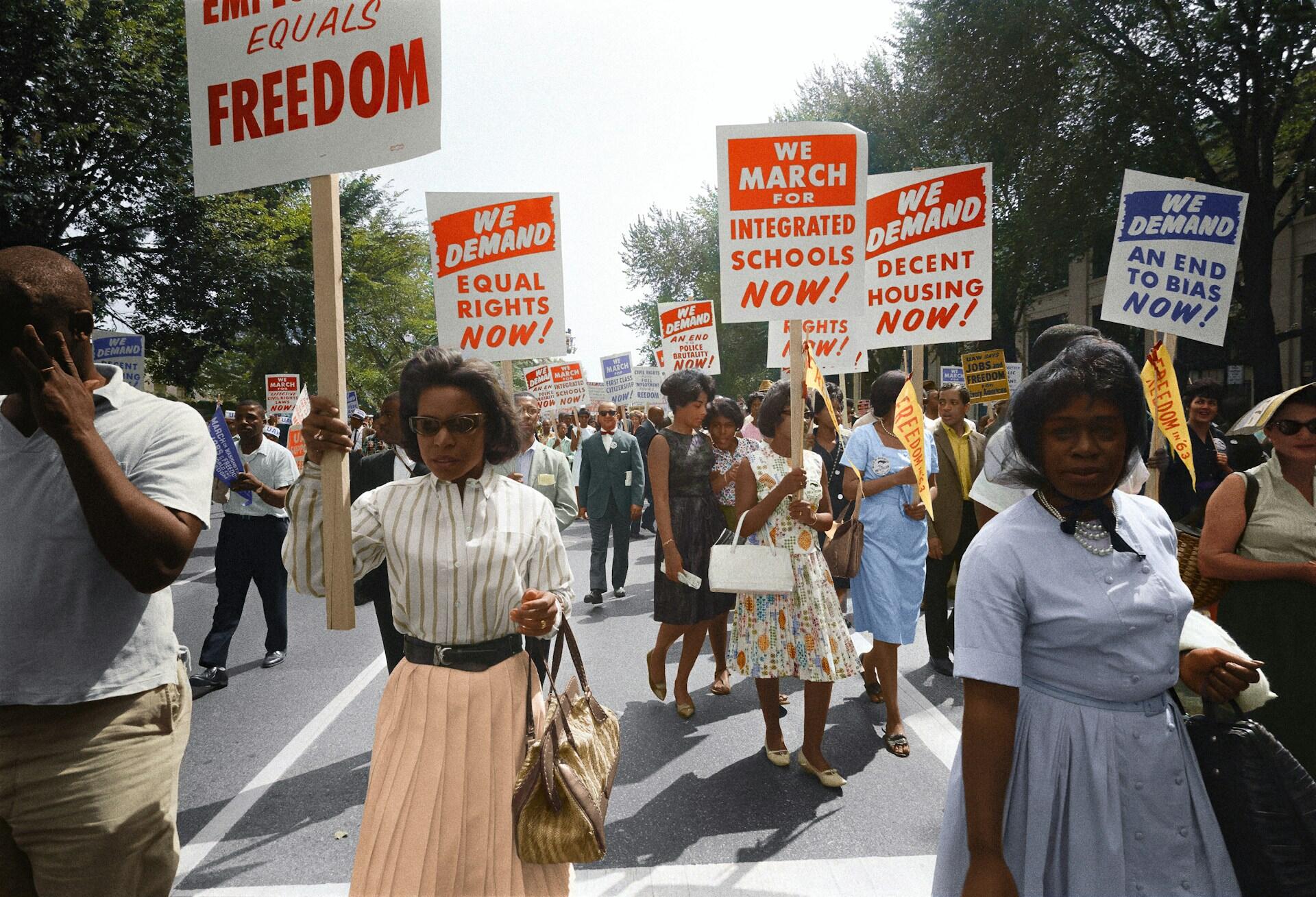

The Civil Rights Movement took place from the 1940s to the 1960s, beginning as a response to lingering racism and segregation in a post-slavery society. The movement succeeded in improving conditions for Black Americans and set the stage for further advancement. Several notable figures were pivotal in the Civil Rights Timeline. Read on to find out more about major events that happened during the Civil Rights Movement!
📌 Key Takeaways
- The Civil Rights Movement began in response to centuries of hostile social attitudes towards Black people in the United States
- The main figures in the movement were Rosa Parks, Martin Luther King, Jr, President JFK, and President Lyndon B. Johnson
- The Civil Rights Movement was made up of hundreds of minor events and dozens of major events
- The Civil Rights Act of 1957 and the 1964 act were major achievements for equality





What Was the Civil Rights Movement?
The Civil Rights Movement was a period of time when there was a country-wide coordinated effort from individuals and organizations (notably many Black organizations) challenging unjust laws and social norms that perpetuated inequality and oppression in American society, specifically against Black people.
People from all over the country banded together intending to create real social and political change, mostly in the form of changing the Constitution to forbid discrimination based on things like race, ethnicity, and religion.
While Black people and groups led the charge, people of all ethnicities joined in the cause. Likewise, people of all ethnicities also resisted the movement and wanted to uphold the laws. Most of the people who fought against civil rights were motivated by personal prejudice, fear of social change, and/or maintaining their social, economic, and political advantages.
What Started the Civil Rights Movement?
From the early colonial days in North America, there had been a pattern of colonists (mostly white Europeans) setting up systems that led to the oppression of non-white people also residing in North America. It began with Indigenous Americans and expanded to Africans brought over in the slave trade, as well as Mexicans and immigrants from places like China and even Ireland and Italy.
Even as slavery ended, “free” Black people were not treated fairly. In 1857, the infamous Supreme Court case Dred Scott v. Sandford declared that Black people were ineligible for US citizenship and did not have any Constitutional rights.
After slavery was abolished in 1865 (13th Amendment), Black Americans were still legally considered second-class citizens and were treated as such. The 1868 14th Amendment and 1870 15th Amendment attempted to give more freedoms and liberties to Black people by law, but those laws were ignored in many places by many people; overall it wasn’t enough to resolve the situation.
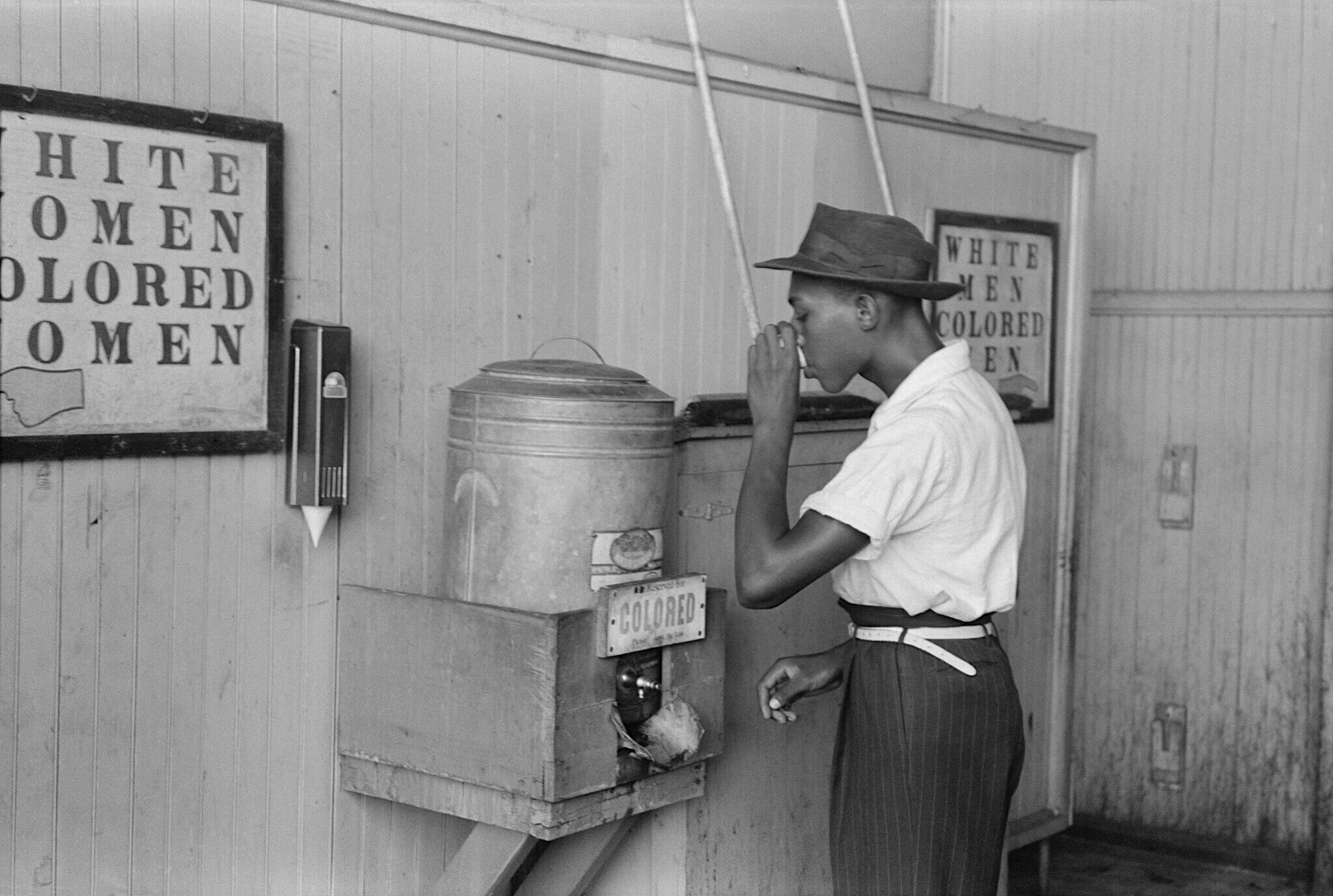
The 1896 Plessy v. Ferguson case even reinforced that segregation was not unconstitutional, and in fact emphasized the notion of “separate but equal.” This doctrine was the reasoning used for excluding Black people from the important parts of society, mostly education, public accommodations, and voting.
This doctrine, on the surface, was intended to mean that enforcing segregation was legal and right, as long as both Blacks and Whites were given the same treatment and access, in their respective areas.
Small things like segregated restrooms and drinking fountains gave the appearance that the doctrine was mildly inconvenient to Black people, but ultimately benign. In reality, it meant exclusion from economic and political circles, including education, social accommodations, and voting.
It was only after thousands of Black people threatened to march on Washington demanding equal employment rights in the 1940s (at the height of the WWII economy boom) that President Franklin D. Roosevelt issued an executive order to allow Black people to work in government and national defense jobs. It was only at this time that Black people were given the ability to work in non-military government jobs, despite the fact that Black people had been serving in the military since the Civil War, with over 700,000 joining the military to serve in WWI. Black veterans were still treated with hostility upon returning home.
All of these long-standing hostile societal and cultural functions created a population who were tired of dealing with all these overt forms of racism and oppression. Even though several times in history attempts were made (and sometimes successful) to create change (such as the Streetcar boycotts in 1900-1905 and the Southern Tenant Farmers Union), overall not enough was improving at a reasonable rate.
- Black slaves not being told they were granted emancipation in 1863 despite President Lincoln’s Proclamation
- The rise of “Black Codes” during Reconstruction
- The advent of Jim Crow laws
- The establishment of the Ku Klux Klan
- The legalization of segregation in 1896
- Redlining and zoning laws
- The Supreme Court’s unwillingness to take initiative in creating a more unified society
As the Great Depression brought much of American society to its knees, it was even more obvious that Black communities were never going to be able to survive if they were excluded from the amenities of white society. Attitudes towards and within the Black community began to change among some people, creating a collective of people willing to do the work to make change.
The Great Depression wasn't the only time in US history that negatively impacted American society; in 2001 another devastating event changed the way Americans lived.
Many notable figures in the Black community had already been working on what they could to improve the situation; they just didn't have the support needed to make big moves.
In 1948, President Truman (likely inadvertently) set the stage for the Civil Rights Movement to develop when he passed Executive Orders 9980 and 9981 to desegregate the government and armed forces. Motivated by this political change, Americans with the same vision of achieving equality were able to band together and continue the momentum, launching the Civil Rights Movement.
What Did the Civil Rights Movement Want to Achieve?
The Civil Rights Movement as a whole had a few key aims and goals.
- Create Constitutional reform
- Use the courts to enforce desegregation
- Abolish legalized racial segregation, discrimination, and disenfranchisement
- Create more freedom for Black people, ideally creating a society where people of all ethnicities are treated equally
- Create a society where Black people can live without fear of being targeted
Ultimately, the Civil Rights Movement was largely successful in pushing society towards a more tolerant and safe climate in a short period of time. Of course, at the “end” of the movement (in 1968 when MLK was assassinated), there was still a lot more progress that needed to be made, even though huge strides had been taken.
Since then, some more progress has been made in terms of racial and ethnic equality, equality and protections for Indigenous Americans, equality for women, equality and accommodation for disabled people, and more, all of which fall under the umbrella of civil rights.
Civil Rights Movement: Key Leaders
The Civil Rights Movement was dependent on many, many actors. Listing them all would be an entire essay on its own (and that’s only for the people who are named and remembered in the annals of history)! Thousands of people all acted together to create change. Many people acted only in the capacity of what they could do in their daily life without risking their jobs or safety.
But, of course, there are a handful of notable names we can look to and learn about to understand the general flow of how the Civil Rights Movement happened.
Early Figures (Pre-Brown v. Board of Education)
Booker T. Washington, W.E.B. Du Bois, and Marcus Garvey were key figures in the years leading up to the Civil Rights Movement. Each of them contributed to the idea that Black people should be treated better and, indeed, should be able to be as self-sufficient as whites in American society (and beyond).
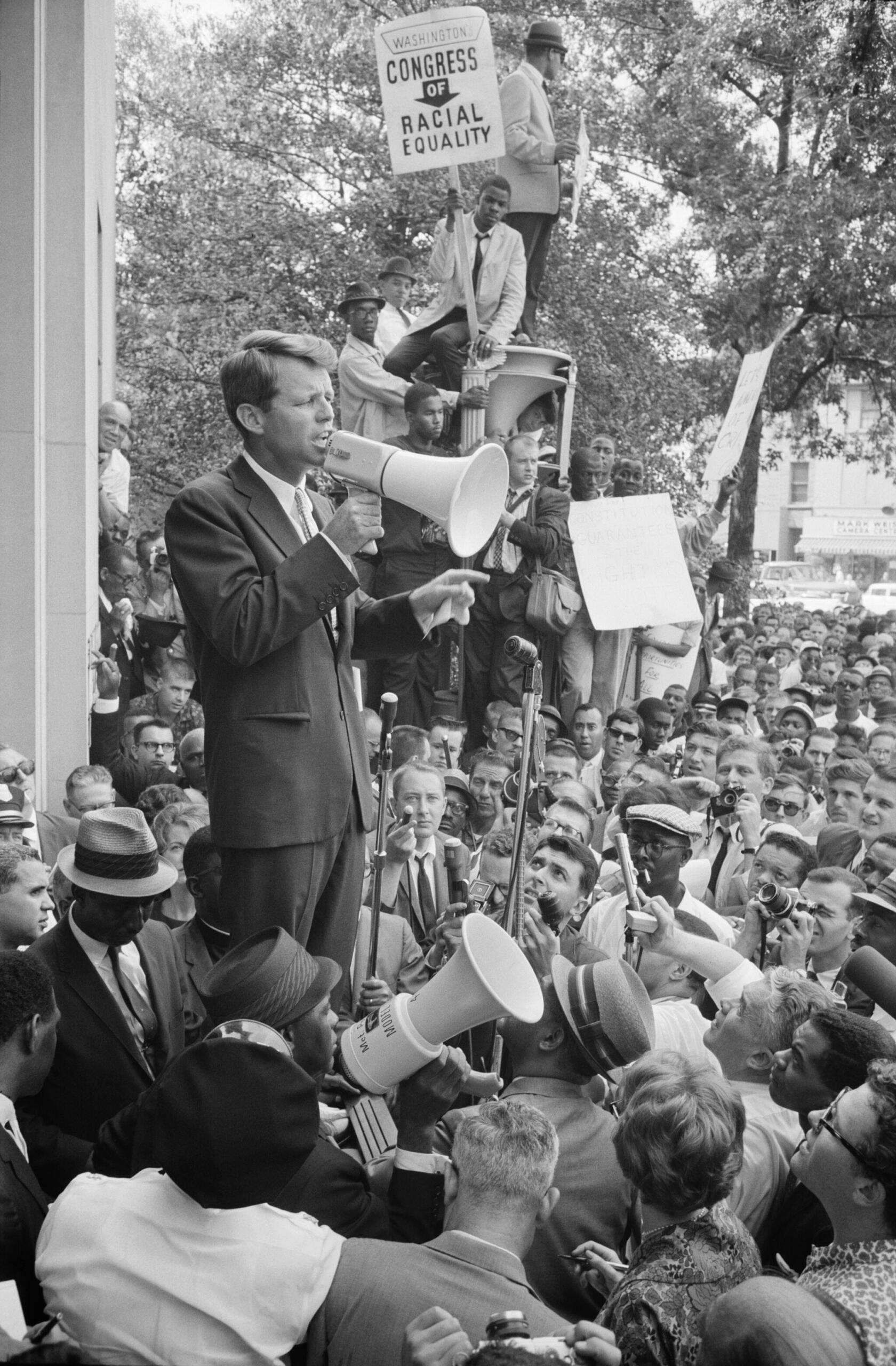
Building from their foundations, other early actors were able to add to the snowball of change.
In 1942, the Congress of Racial Equality (CORE), a racially-diverse group in Chicago, sought to use tactics promoted by Gandhi to peacefully protest and essentially shame the powers-that-be into behaving ethically.
They endeavored to use direct action to expose segregation and call out injustice.
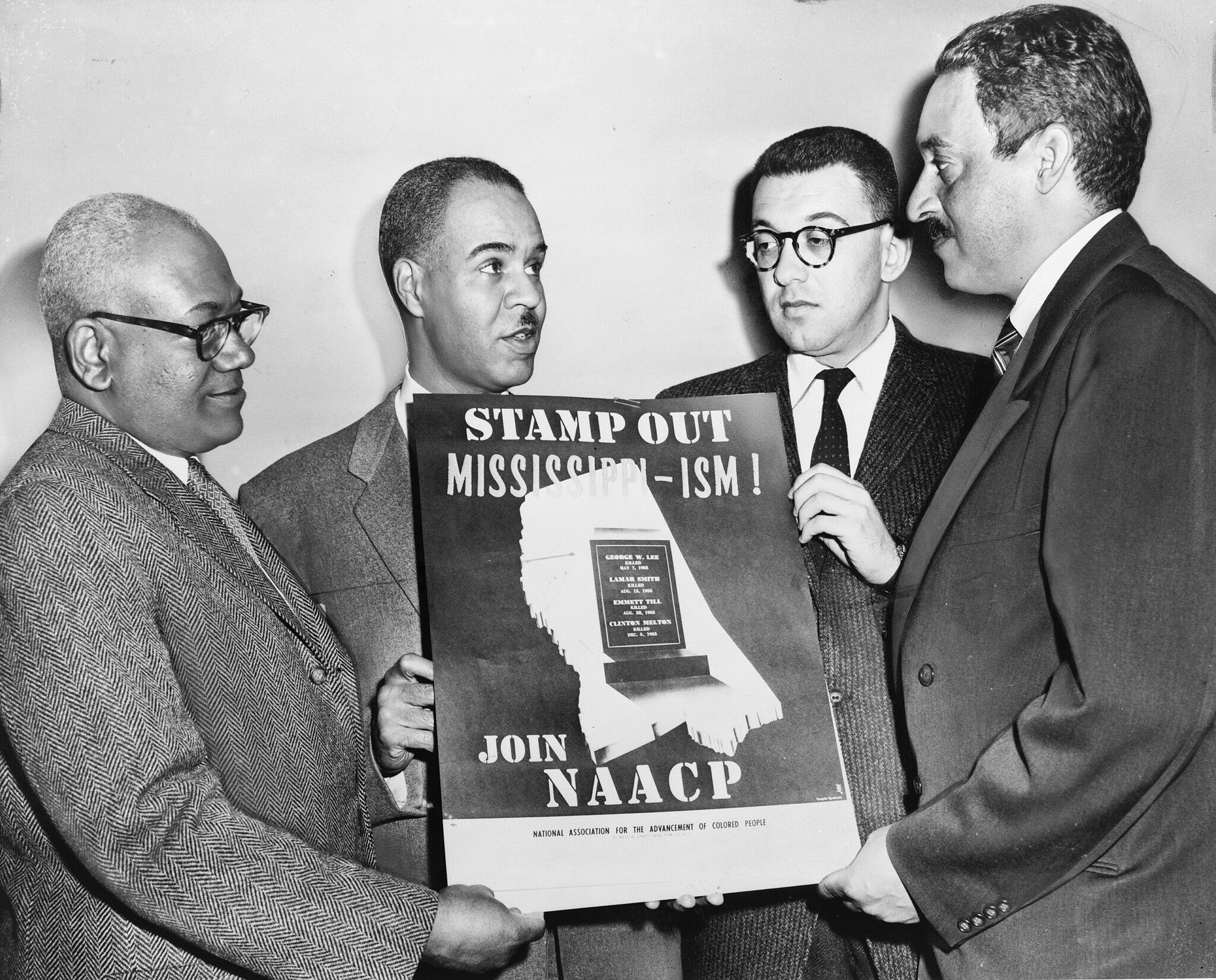
Thurgood Marshall was a lawyer for the NAACP who sought to make change from within by proving in court that “separate was never equal.”
He and his team aggressively sued for violations of rights. Marshall was one of the lawyers involved with Brown v. Board of Education as well as several other high-profile cases at the time. He later became the first African-American Supreme Court Justice in 1967.
I was not tired physically, or no more tired than I usually was at the end of a working day. I was not old, although some people have an image of me as being old then. I was forty-two. No, the only tired I was, was tired of giving in.
Rosa Parks, "Rosa Parks: My Story"
Civil Rights Leaders in the Height of the Movement
When the Movement hit its stride is where we find most of the iconic figures in the Civil Rights Movement that most of us have heard of.
Rosa Parks
Rosa Parks wasn’t the first Black woman to sit on a bus and refuse to change her seat, but her particular incident gained public interest because of her connections. Parks had been part of the NAACP and the Civil Rights Movement for several years before the bus incident.
She knew her rights and how to act to avoid escalating the situation herself. The debacle led to the boycott of the Montgomery buses by about 42,000 Black residents and cost the company far more in lost fares than the $14 fine given to Parks for “violating the segregation law.”
The successful boycott led to the creation of the Montgomery Improvement Association (MIA) and the election of Reverand King as its president.
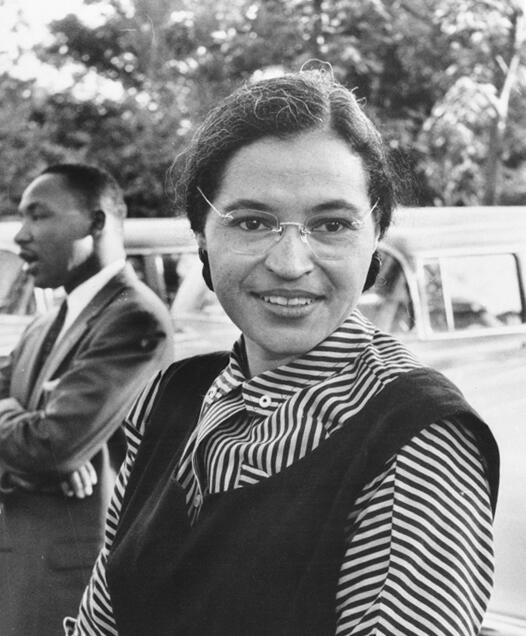
Her arrest was the action that pushed the first domino and triggered the Civil Rights Movement to rapidly take shape.
Rosa Parks Timeline
1943
Parks joins the Montgomery NAACP
She becomes the secretary and learns how to be effective in civil disobedience. She also founded the NAACP Youth Coincil in Montgomery.
1949
The Woman’s Political Council (WPC) is formed
1955
Rosa Parks is arrested
Spurred by anger over the acquittal of Emmitt Till’s murderers, Parks decides not to give in to the bus driver’s demands. She is arrested for not giving up her seat on a bus. A few days later, the Montgomery bus boycott is launched by the WPC, and the MIA is formed.
1957
Rosa and Raymond leave Montgomery
Parks and her family move to Detroit to escape death threats, but she remains an active member of the NAACP and worked to help find housing for homeless people.
1987
The Rosa and Raymond Parks Institute for Self-Development is established
The Institute offers job training for Black youth.
1999
Parks is Awarded
Parks receives the Congressional Gold Medal of Honor and the Rosa Parks Freedom Award is established.
2005
Rosa Parks passes away
She was 92 years old.
Martin Luther King, Jr.
King is undoubtedly the most famed member of the Civil Rights Movement. He studied theology extensively before becoming a pastor at a church in Montgomery. Not long after he joined the church there, Rosa Parks was arrested and the movement kicked off.
He became the president of the MIA even though he was a little hesitant, having only been in the area for a few years. His natural charisma and speaking skills made him an incredibly inspiring and motivating leader who helped all the boycotters and civil rights activists keep their resolve. King was even able to use his words to talk an angry, armed mob down and convince them to leave his front lawn after they had bombed his house, with his wife and infant daughter inside.
After the success of the bus boycott, King joined some other activists to create the Southern Christian Leadership Conference (SCLC) to help other local organizations in the South carry out civil rights activities. As part of his activism, King was arrested in Birmingham, where he wrote his famous “Letter from a Birmingham Jail” explaining his philosophy of nonviolence.
For years now I have heard the word ‘Wait!’ It rings in the ear of every Negro with piercing familiarity. This ‘Wait’ has almost always meant ‘Never.’
MLK, Letter from a Birmingham Jail
We must come to see, with one of our distinguished jurists, that ‘justice too long delayed is justice denied.’ We have waited for more than 340 years for our constitutional and God given rights. . . . [and] we still creep at horse and buggy pace toward gaining a cup of coffee at a lunch counter.
After his release, he and some other organizers conducted the March on Washington, where more than 200,000 people met and demonstrated civil disobedience, demanding Congress end discrimination in education, housing, employment, and more. Here, King gives his famous “I Have a Dream” speech.
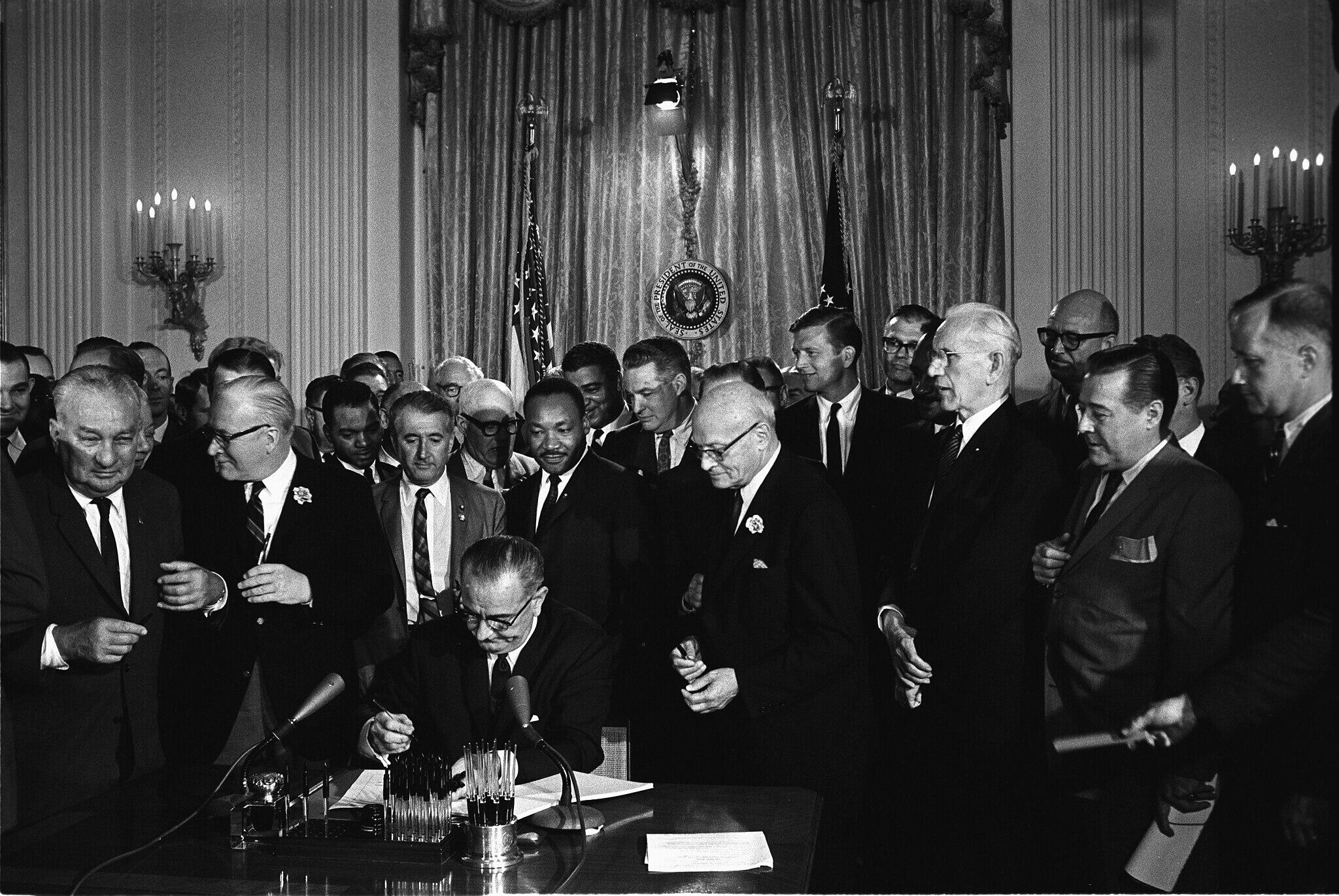
King collaborated with and led others through many other civil rights protests in the following years. His actions directly led to the passing of the Civil Rights Act of 1964, which banned segregation on the grounds of race, religion, national origin, and gender for public places and employers, and the Voting Rights Act of 1965, which prohibited discriminatory measures that prevented Black people (and poor whites) from voting.
Later, King was involved with the Selma March, which was a political march made of 25,000 participants in Alabama intended to help enroll Black voters. It was finally accomplished two weeks after “Bloody Sunday” when law enforcement and a citizen “posse” beat 600 marchers with clubs and sprayed them with tear gas as they were confined to a bridge crossing, which resulted in one death.
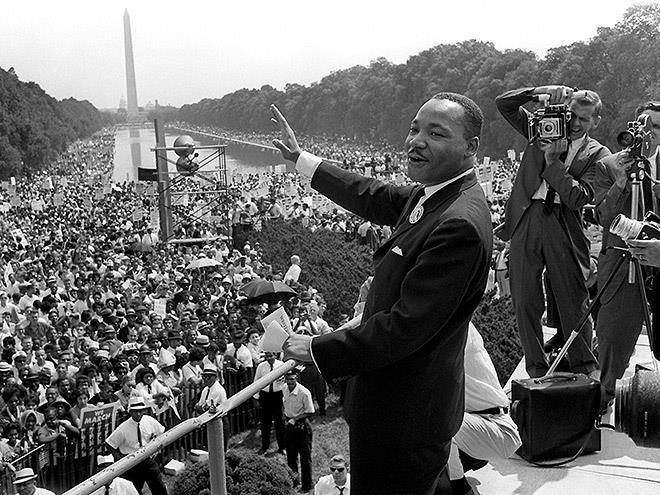
Sadly, the Martin Luther King timeline ended on April 4, 1968, when he was assassinated in Memphis, Tennessee. This motivated Congress to pass the Fair Housing Act to quell the resulting civil unrest.
King’s followers remained dedicated to creating political change through organization, demonstration, and nonviolence. They would go on to continue to fight for racial equality as well as the anti-war, women’s, and labor movements. However, many others reasoned that since their opponents were not acting civil, it may be time to try new, more militant courses of action. Thus ended the height of the Civil Rights Movement as we know it.
For his involvement in civil rights, King was arrested a total of 29 times, typically on trumped-up charges, between 1956 and 1965.
It's astounding to think that at the same time all this was going on, NASA was simultaneously working on sending a man to the moon!
Martin Luther King Jr Timeline
1948
Religious background
King becomes an ordained pastor
1954
King moves to Montgomery
King and wife Coretta Scott move to Montgomery where King becomes the pastor of a local church
1955
King becomes the president of the MIA
The day the Montgomery bus boycott goes into effect, he leads an MIA meeting that strikes everyone in attendance with life-changing inspiration and awe because of his natural talent for speaking. He becomes a central figure in the MIA and is highly involved in community activities.
1956 (January)
King's home is attacked
WCC members bomb his home, but King is able to de-escalate the mob and convince them to put down their guns and go home.
1956 (March)
King is arrested for boycotting the buses
King (along with about 100 others) is indicted and charged with “conspiracy” by Montgomery officials (it was illegal to boycott businesses in Alabama).
1957
King and some other activists form the SCLC
1960
The Kings leave Montgomery
King and his family move to Atlanta (King’s hometown). He becomes more involved with civil rights.
1963
"Letter from a Birmingham Jail" and the March on Washington
King is arrested in Birmingham for his involvement in a campaign to end lunch counter segregation. He writes his famous “Letter from a Birmingham Jail.” Later, King and others lead the March on Washington.
1964
King wins the Nobel Peace Prize
1965
King helps lead the Selma March
Despite two instances of violence against marchers, King and others still held the march, which was successful on the third attempt
1968
King is assassinated
He was 39 years old.
Malcolm X
Often left out of the Civil Rights discussion because his ideals were at odds with MLK, Malcolm X was a proponent of armed self-defense and advocated against integration, believing that trying to fit into white society was servile.
As a child, his family was terrorized by the KKK, and they were forced to move a lot to avoid harm. His father was killed in what was presumed to be a racist attack when Malcolm was just six years old. These events radicalized Malcolm to reject white society.
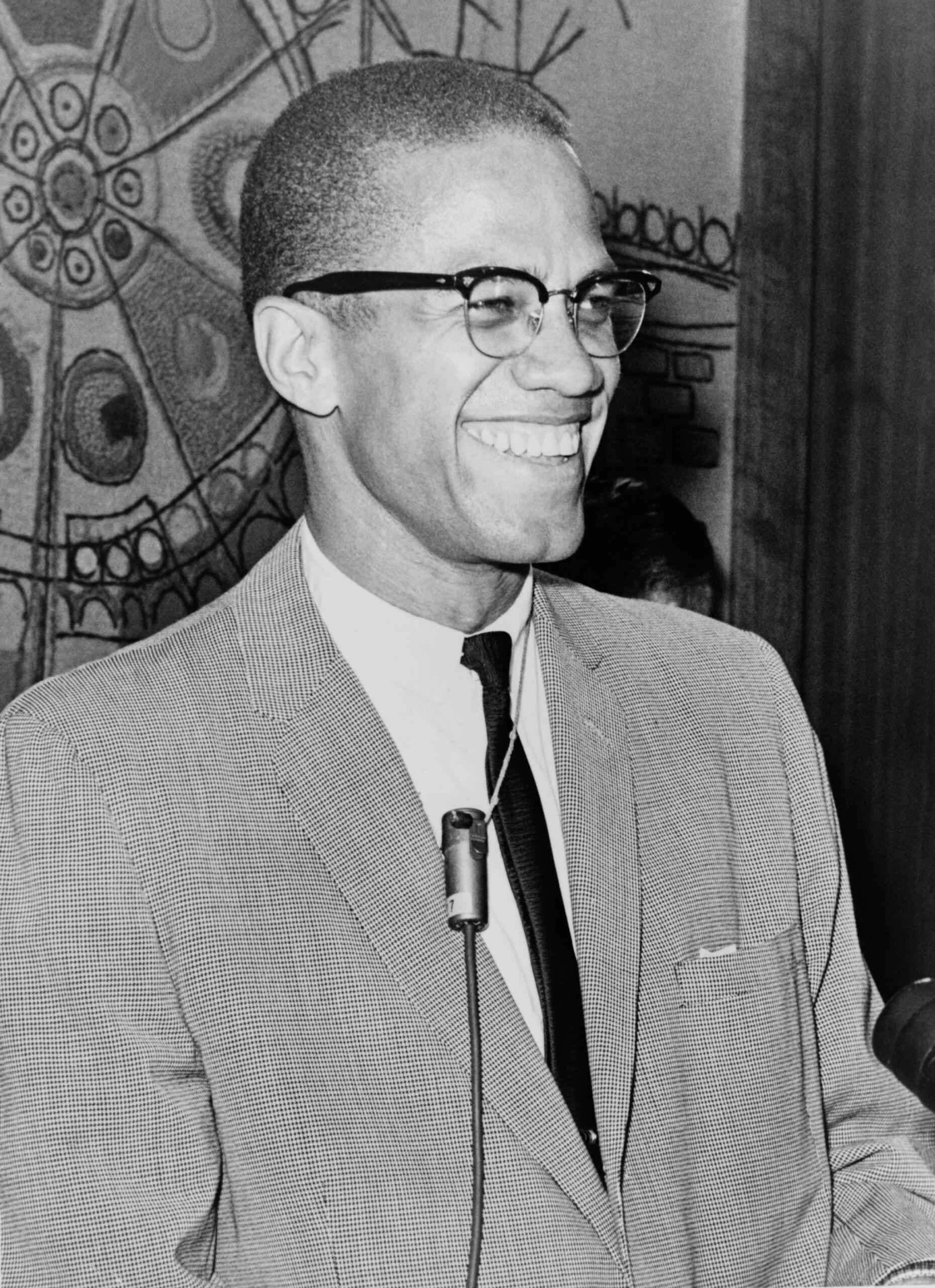
He was the most prominent Black Nationalist in the US, having joined the Nation of Islam (NOI), which believed in Black supremacy, in 1952 and becoming its spokesperson by the late 50s. He wanted to establish a nation just for Black people, rather than trying to fit into a society built by and for whites. Eventually, Malcolm had a falling out with the NOI and left the group, but remained Muslim. After taking pilgrimage to Mecca, he returned to the US willing to work with MLK and other peaceful civil rights leaders.
While Malcolm X and King didn’t agree in their methodologies for bringing about peace and freedom, they were highly respectful of one another as brethren in the same cause. However, King warned that if progress was not made, then many would probably choose to join Malcolm’s cause and more violence would surely break out.
When Malcolm was assassinated, King called his murder a “great tragedy” and said the world was deprived of a “potentially great leader,” since he had begun to embrace more peaceful tactics just about a year before his death.
Timeline of Civil Rights Movement
The Civil Rights Movement was made up of many events in a relatively short amount of time. It's important to remember that for every major event listed, dozens of minor events occurred that also contributed to the general process of widespread acceptance and support of civil rights. Surely, there were thousands of interactions at the time, even just between two people, that created change little by little.
1896
Jim Crow Era begins
The Plessy v. Ferguson case establishes the "separate byt equal" doctrine
1909
The NAACP is founded
W.E.B. Du Bois co-founds the National Associate for the Advancement of Colored People
1948
Executive Order 9981
President Truman passes this order, setting the stage for the Civil Rights Movement
1949
The Woman’s Political Council (WPC) is formed
1954
The End of Jim Crow
Brown v. Board of Education rules that segregation in schools was unconstitutional. This overturned the “separate but equal” doctrine. The WPC considers boycotting the public bus service in Montgomery.
1955
The Movement begins in earnest
14-year-old Emmett Till is lynched for allegedly flirting with a white woman and his murderers are acquitted. Rosa Parks is arrested for not giving up her bus seat to a white man. Her arrest sparks the 13-month-long bus boycott in the same town (Montgomery, AL) arranged by the WPC. The White Citizens’ Council (WCC) is formed by pro-white-supremacists who want to keep the status quo. The bus company is pro-integration (to avoid bankruptcy) but the town’s commissioners and the WCC refused to give in to the Black community’s demands. Instead, police harassed carpools (which had replaced buses) and even jailed MLK for going 5 MPH above the speed limit.
1956
The Movement spreads beyond Montgomery
WCC members bombed King’s house, as well as the homes of two other notable members of the MIA. Civil Rights attorney Fred Gray files a federal lawsuit against Montgomery for its unconstitutional enforcement of bus segregation. Montgomery city leaders indict nearly 100 boycott leaders on “conspiracy” charges, which causes nationwide negative publicity towards the city of Montgomery. The Supreme Court bans segregated public transportation in Browder v. Gayle as a result of the bus boycott. The bus boycott ends, about one year after it started.
1957
Violence against students
The SCLC is formed. The Little Rock School integration crisis occurs when nine Black students (known as the Little Rock Nine) attempt to go to the newly-desegregated Central High School. The Arkansas National Guard, on orders from the Governor, and an angry mob prevented the students from attending. Eventually, President Eisenhower ordered the troops to protect the students and they were able to attend class, albeit while still receiving harassment. Eisenhower signs the Civil Rights Act of 1957, the first civil rights legislation to pass since Reconstruction (the Civil Rights Act of 1875). This action broke the dam, leading the way for more legislation.
1960
Sit-ins sweep the nation
The sit-in at Woolworth’s lunch counter takes place when four Black college students refused to leave the counter before they were served. This act leads to the Greensboro sit-ins and the mobilization of students in dozens of cities to participate in sit-ins and other civil rights activism. After a few months, many lunch counters were de-segregated. The Student Nonviolent Coordinating Committee (SNCC) is launched and Stokely Carmichael joins, who later coins the phrase “Black power.” Six-year-old Ruby Bridges is escorted to a newly desegregated school by armed federal marshals. Her ordeal inspires the Norman Rockwell painting "The Problem We All Live With" (1964).
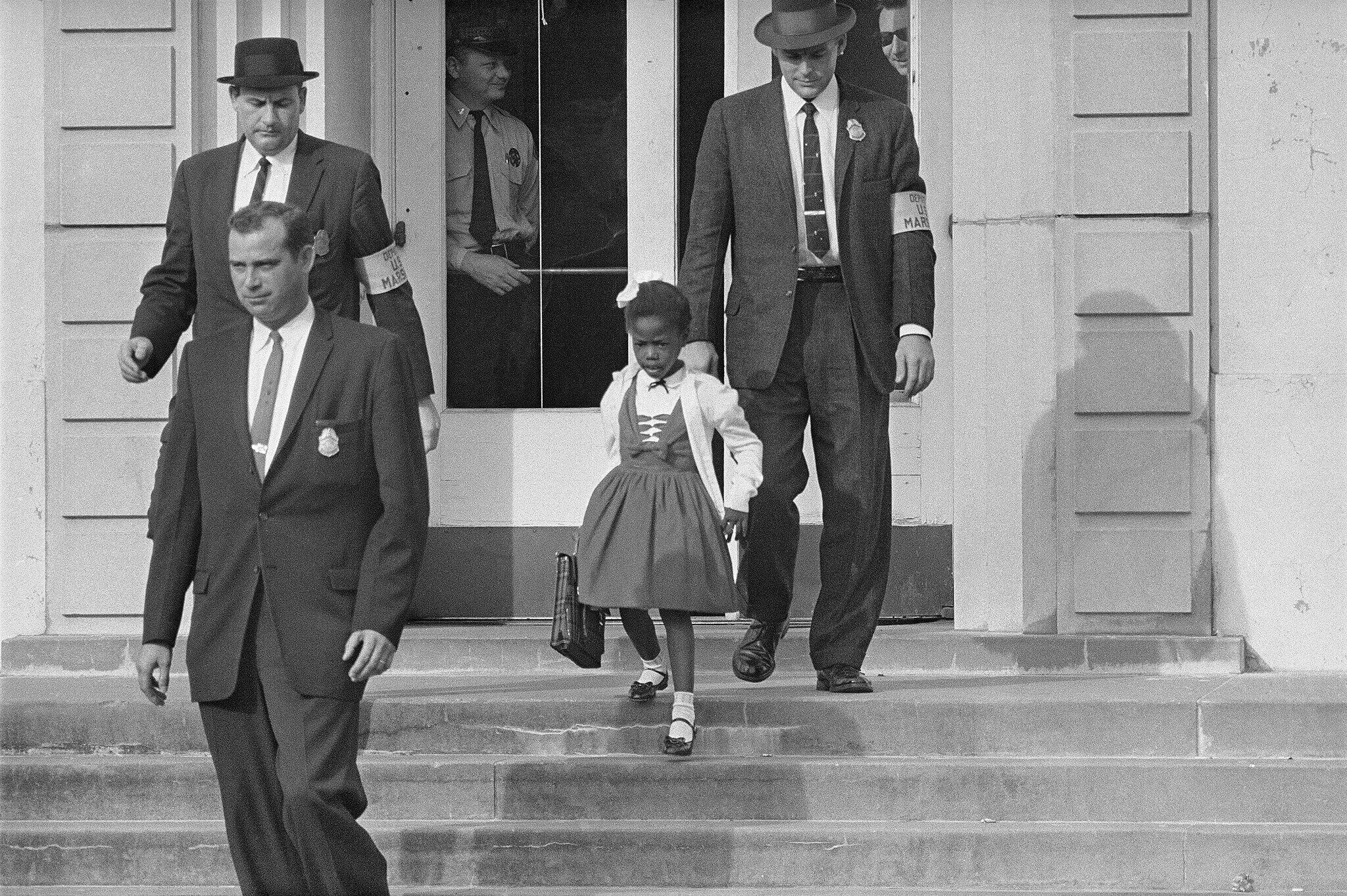
1961
Freedom Riders
JFK becomes President. He quickly becomes a proponent of civil rights despite initially being hesitant to support anti-discrimination measures. The “Freedom Riders” test the enforcement of the 1960 Boynton v. Virginia ruling which bans segregation on interstate transportation. They are attacked by white protesters and police several times on their tour, even enduring a bus bombing. Nevertheless, hundreds of other Freedom Riders were inspired to participate in Rides, especially after the Supreme Court ruled in their favor, which resulted in the Interstate Commerce Commission issuing regulations against segregation at interstate bus terminals.
1963
The Movement reaches a peak as violence against protesters highlights the deep-seated prejudice still gripping much of the country
King pens his famous “Letter from a Birmingham Jail” after being arrested for “parading without a permit” during a march against segregation during the Birmingham Demonstrations, which consisted of sit-ins, boycotts, and peaceful protests. After several weeks of these protests, including the “Children’s Crusade,” the commissioner ordered the protesters be attacked with fire hoses and police dogs. Despite receiving national negative attention, the WCC continued to attack the protesters, even killing 4 and injuring 14 with a church bombing. Eventually, an agreement is made that desegregates lunch counters, businesses and restrooms, and improves job opportunities for Black people in Birmingham. After his release, King and some other leaders including Bayard Rustin organize the March on Washington. The entirely peaceful March pressured Congress to make quick and substantive changes in civil rights legislation. Leaders meet with President John F. Kennedy and MLK gives his “I Have a Dream Speech.” As a result, JFK proposes the Civil Rights Act, and because of that, he is soon assassinated.
1964
Notable progress is made
King wins the Nobel peace Prize. The Civil Rights Act of 1964 is passed by President Lyndon B. Johnson despite opponents’ attempts to sabotage the bill.
1965
More bloodshed occurs as white supremacists resist progress
The Selma March takes place after two failed attempts known as “Bloody Sunday” and “Turnaround Tuesday,” when law enforcement violently attacked the peaceful marchers en route. The march is a political statement to help get Black voters registered and show that they will not be stopped or intimidated. The violence against the peaceful marchers was televised, revealing to people across the nation the type of resistance being wielded against activists, and thus causing people across the nation to support the cause. As a result, LBJ passes the Voting Rights Act. Malcolm X is assassinated. The Watts Riots break out in Los Angeles in response to a violent police arrest of a Black man suspected of driving while intoxicated. Violence, fires, and looting break out in a community pushed to the brink by economic challenges, highlighting the ongoing plight of Black communities.
1966
More voting rights are secured
Poll taxes are declared unconstitutional in Harper v. Virginia State Board of Elections. The Black Panther Party is founded, which seeks to protect Black neighborhoods from police violence and provide services like tuberculosis testing and legal aid, among others.
1967
Interracial marriage is declared a Constitutional right
Prohibiting interracial marriage is deemed unconstitutional in Loving v. Virginia. Riots break out in Detroit after police raid and arrest 83 Black patrons at an illegal drinking club. An angry community resorts to violence, vandalization, looting, and fire-setting, resulting in death and injury.
1968
The Civil Rights Movement effectively ends
MLK is assassinated, sparking civil unrest across the nation. Congress is pushed to pass the Fair Housing Act of 1968 just days afterward, which outlawed housing discrimination on any basis other than financial.
The Civil Rights Movement was a pivotal time in recent US history that paved the way for even more social and political justice and freedom for all. There is so much more to learn about the movement and its leaders!
References
- Civil Rights Act of 1964 ‑ Definition, Summary & Significance. (2024). In HISTORY. https://www.history.com/topics/black-history/civil-rights-act
- Civil Rights Movement: Timeline, Key Events & Leaders. (2024). In HISTORY. https://www.history.com/topics/black-history/civil-rights-movement
- MADEO. (n.d.). Apr. 12, 1963. In Bull Connor Orders Violent Arrests of Dr. MLK Jr. and Dozens More. https://calendar.eji.org/racial-injustice/apr/12
- Malcolm X. (n.d.). In The Martin Luther King, Jr. Research and Education Institute. https://kinginstitute.stanford.edu/malcolm-x
- Malcolm X Day: Who was he and why was he important? (2020). In BBC Newsround. https://www.bbc.co.uk/newsround/52678571
- Martin Luther King, Jr. (n.d.). In Britannica. https://www.britannica.com/summary/Martin-Luther-King-Jr-Timeline
- Martin Luther King, Jr. Was Arrested 29 Times For These So-Called Crimes. (n.d.). https://www.blackhistory.com/2019/11/martin-luther-king-jr-was-arrested-29-times-crimes.html
- Martin T. Olliff. (2019). Civil Rights Before Brown. In YouTube. YouTube. https://www.youtube.com/watch?v=5ofLJ7FjiGA&ab_channel=MartinT.Olliff
- Rosa Parks. (n.d.). In NAACP. https://naacp.org/find-resources/history-explained/civil-rights-leaders/rosa-parks
- Rosa Parks, Martin Luther King Jr., Montgomery Bus Boycott, civil rights movement, segregation, nonviolent protest. (n.d.). In Bill of Rights Institute. https://billofrightsinstitute.org/essays/rosa-parks-martin-luther-king-jr-and-the-montgomery-bus-boycott
- The Civil Rights Movement. (n.d.). In Library of Congress. https://www.loc.gov/classroom-materials/united-states-history-primary-source-timeline/post-war-united-states-1945-1968/civil-rights-movement
- Timeline of the American Civil Rights Movement. (n.d.). In Britannica. https://www.britannica.com/list/timeline-of-the-american-civil-rights-movement
- Truman, Harry S. (n.d.). In The Martin Luther King, Jr. Research and Education Institute. https://kinginstitute.stanford.edu/truman-harry-s
Summarize with AI:
Did you like this article? Leave a rating!

 Loading...