


If you ask any college math student what topic they find most challenging, you can expect that the answer for an overwhelming majority will be calculus. It’s not at all uncommon for a student to get top grades in almost all of their exams, only to be disappointed by the result they receive in calculus. But why is this? In this article, we will examine some of the reasons why calculus tends to be so difficult for university students and how to overcome common obstacles.
Why Calculus is Hard (According to Students):
- Teachers don't explain the concepts well enough
- Student has poor foundations in algebra, geometry, trigonometry, and/or basic math
- New, complex concepts to learn
- Thinking about theoretical and non-tangible concepts is confusing for most students
- Student doesn't spend enough time studying and learning
- Students don't understand the real-world applications


What Makes Calculus so Hard?
If you have studied math in any capacity at college or even high school, then you have likely found yourself scratching your head, wondering why your grades seem to dip in this area of the subject.
Well, for one, it’s definitely one of the bigger topics that you can expect to cover in any math degree. In fact, the topic is often broken down into subsections. The sheer volume of material that is covered in the topic could be one justification for why so many perceive it to be so difficult.
That said, algebra is a much larger topic that is most commonly broken down into three components, and university students seem to do just fine in it. So, let's dig a little deeper!

Calculus is perceived even by those who teach it as a step up from most of the topics covered across university courses because it requires students to engage in multi-step problem-solving while also introducing some new symbols for the first time.
Students also find this kind of math to be difficult because of their unfamiliarity with the concepts they are aiming to calculate in their work. In calculus, students will be asked to examine rates of change by introducing concepts like limits, derivatives, and integrals.
Take another math topic that students will cover in a university math course, such as trigonometry, for example. You can begin to see how calculating distance would be easier for a student to conceptualize than a more intangible measure, such as the rate of change.
Not to mention that calculus also requires students to draw upon some ideas from algebra, geometry, and trigonometry when solving problems!
A study published in the Journal of Mathematical Behavior reported that approximately 30-40% of students found calculus to be the most difficult topic in their mathematics curriculum.
As with any subject, we all have our own set of strengths and weaknesses, so it is also rare that a student will excel in all three of these topics, as they are often required in exam questions.
If you take the time to study the module descriptor of any university math course, you will notice that calculus is one of the later topics introduced—and now you know why!
This high level of complexity, as well as the more intangible calculations you are trying to solve, makes calculus daunting for college-level math students. But how difficult is calculus really? Let's take a look at how calculus is different from other topics that you may study in your college course.
Calculus Includes Abstract Concepts That Are Hard to Grasp
The abstract ideas and concepts featured in a calculus class are also problematic for students. Many of the concepts in calculus are intangible and difficult to visualize.
A limit, for example, describes how a function behaves as it approaches a certain value, which provides a new way of abstract thinking for students.
Students need to think conceptually and deal with infinitesimal changes, which can be tricky to grasp initially. Then, you need to understand the reasoning behind these abstract concepts, which is more than simply memorizing formulas like you may have done in math classes beforehand.
Complex Formulas and Techniques
College calculus classes introduce students to various formulas and techniques, including the power, product, and chain rules for derivatives. These formulas include multiple variables and operations, and students typically need help memorizing and applying them correctly at first.

Calculus problems often include multiple steps with different mathematical operations.
Students need to recognize which method is used in certain problems and know both when and how to use these techniques.
Students in college calculus classes may feel overwhelmed by the sheer number of formulas, steps, and rules they need to follow.
Be sure to ask for additional help from professors or private calculus tutors for key concepts like Rolle's Theorem, the Mean Value Theorem, and integration techniques.
Starting with Weak Fundamentals in Math
Students who lack strong math fundamentals, particularly in algebra, trigonometry, and pre-calculus, will likely struggle in calculus.
For example, students will need a strong foundation and understanding of concepts like logarithms, sine, cosine, and tangent to solve calculus problems. A student who isn't particularly strong in these areas will find calculus particularly difficult.
As mentioned earlier, any gaps in your knowledge can lead to problems in later math classes, especially calculus. It's always worthwhile preparing for your calculus class by brushing up on these areas of math.
Despite being a fundamental subject in the field of mathematics, calculus is notorious for its difficulty. Many students struggle to learn calculus and find it to be a daunting subject. However, with the right approach, resources, and support from a Superprof tutor, it is possible to overcome these challenges and excel in this subject.
What do you think is the most difficult thing about calculus?
Strategies for Overcoming Calculus Difficulties
Learning more about calculus is, of course, the only way to master the math. However, simply studying without helpful strategies can lead to frustration without improvement. Utilizing these tactics can be a great way to improve your comprehension of calculus.
Spending Enough Time on Calculus
College calculus courses ask a lot of their students. It would be best if you regularly practiced and studied calculus to stay on top of what you'll learn in class.
Calculus involves memorization, but you also need to read and understand calculus, regularly referring to your notes from class to internalize the material.
Right from your first calculus class, you should review all your notes and study until you've understood everything. Even if your professor starts the course at a manageable pace, getting into this habit is a good idea for when the requirements start ramping up.
If you aren't regularly brushing up on your notes from class, it can be very easy to start falling behind. If you have to go back over things you should have studied in earlier classes when your schedule is busier, you'll likely struggle with more classes than just calculus.
studying calculus every week!
Not Overly Relying on Calculators
Calculators are helpful, and we're not here to say that you can't ever use them. However, there are a few pitfalls to overusing calculators, especially in a college calculus class.
Students who use calculators too much will start struggling to memorize some of the more essential math skills they need for calculus, such as memorizing special angles in trigonometry or recognizing the shapes of curves when graphing.
Many professors expect their students to solve problems by hand in a college calculus class without using calculators for basic math functions.
Master these skills, and you'll avoid the trap of becoming dependent on your calculator and succeed in your calculus class.

Understanding Real-Life Applications of Calculus
Calculus is hugely important because it has many practical applications. You can use calculus to understand and model real-world phenomena.
Calculus can be used for population growth, chemical reactions, computer science algorithms, and even video game design.
Students interested in a career in engineering, economics, physics, or computer science will quickly realize that calculus isn't an entirely abstract subject; they can use much of what they learn, which can help them when studying it.
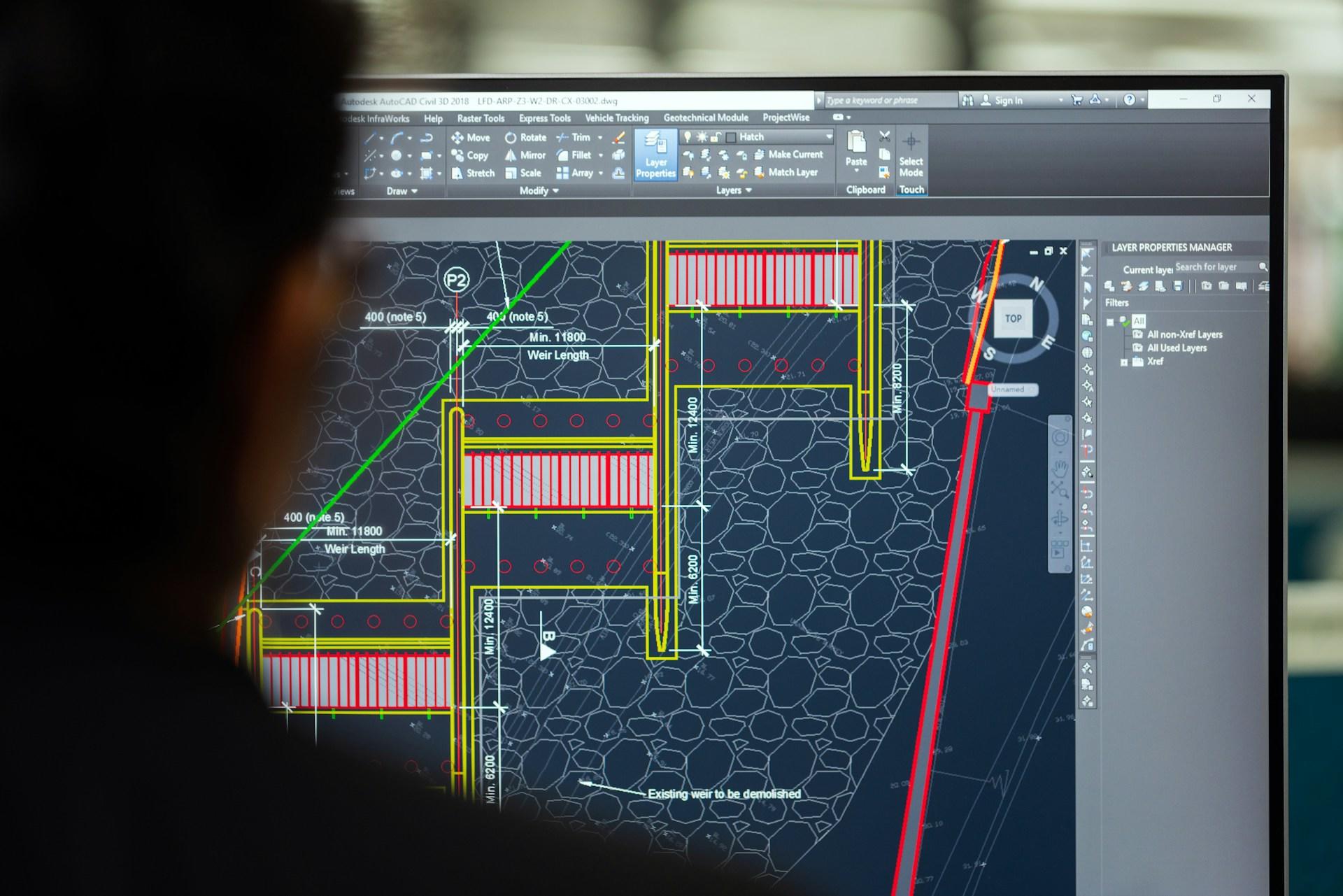
Here are just some of the areas where calculus is best used.
- Engineering: In civil engineering, differential equations model stress and strain on materials. Integral calculus computes the areas and volumes of the forces acting on structures.
- Economics: The maximum and minimum values of functions are used in economics to calculate marginal costs and marginal revenue and predict market trends.
- Physics: Calculus is used to model the motion of objects, and Newton's laws of motion, for example, are based on calculus.
- Biology and Medicine: Calculus can be used to model population growth, the spread of infectious diseases, the outcome of vaccination campaigns, etc.
- Computer Science: Computer scientists use calculus to design algorithms, model networks, and solve problems with data and artificial intelligence.
Here's a great video showing calculus being applied.
Make Calculus Easier with Superprof
Private tutoring is, without a doubt, the most optimal resource that you can implement when improving your skills in a complicated topic like calculus.
One of the main reasons why tutoring has such a strong correlation to exam performance is how personalized it is. Getting started with one of the math tutors over on Superprof will give you plenty of flexibility to learn around your university timetable.
A private tutor will allow you to approach your learning in any way you like. So if you have any past exam papers that you would like to go over or want a hand working through some of the resources that we discussed earlier, you can!
Why is calculus so hard? Calculus is generally more difficult than other types of math because it relies on the user to have strong skills in the foundations of calculus, like trigonometry, algebra, and abstract thinking. Memorization alone will not help a student understand calculus; you must have a deeper understanding of the why behind calculus.
Unlike in your lecture hall, where upwards of a hundred students may be listening to the math lecturer and have to keep up with a certain pace of learning while taking notes, a private tutor will walk you through concepts at a pace that suits you.
Not to mention that many of the math tutors listed on Superprof also specialize in teaching calculus at a college level. They will have worked with countless students just like you in the past and be able to help you improve your calculus skills and prepare for the looming assessments.
Getting started with your calculus learning is as simple as inputting the subject along with your location on the Superprof homepage and reaching out to one of the available tutors today!
Resources for Making Calculus Easier
Unfortunately, as much as one might wish, there is nothing that we can do to make calculus easier in its nature. However, there are plenty of resources and strategies that we can employ in our learning so that we can find the topic a lot easier to understand.

It can be difficult to find the energy and enthusiasm to get back to the books after a series of deflating calculus test results. But by staying consistent with your learning efforts, you will begin to get grades that will motivate you to push even further.
Mastering calculus may seem like a challenge, but if you incorporate the right tools and resources, you will find that you can navigate the learning process more smoothly.
Books and Lectures for Learning Calculus
You don't have to stick to calculus textbooks and other purely mathematical texts to improve your learning and understanding! One stand-out recommendation, especially for those who find calculus to be challenging at every turn, is "A Mind for Numbers" by Dr. Barbara Oakley, an engineer who used to struggle with math. The book teaches effective learning and studying techniques you need for learning calculus, like active recall (instead of memorization). She also has a variety of lectures and free courses about learning that can help you wrap your head around the subject material.
Other recommendations include:
Books
- "Calculus Made Easy" by Silvanus P. Thompson and Martin Gardner
- "Calculus" by Larson, Hostetler, and Edwards
- "The Hitchhiker’s Guide to Calculus" by Michael Spivak
Lectures on YouTube
- "MIT Calculus Revisited" video lecture series by MIT OpenCourseWare
- "Calculus" series by Professor Leonard
- "Essence of Calculus" by 3blue1brown
Interactive Resources
Utilize resources on the internet to learn calculus more effectively.
With websites like Khan Academy and MIT's free OpenCourseWare, you can learn in a more classroom-style manner even without being enrolled in the class.
Other options include sites like Quizplus, Paul's Online Math Notes, the Worldwide Center of Mathematics, and Wolphram|Alpha.
You'll always wonder "why is calculus difficult" as long as you rely solely on tools. The point of tools is to help you understand the reasoning behind solving a math or calculus problem. But, the only way to really master calculus is to be able to do all the calculations on your own because you understand why and how to do them. Then, the tools simply shorten the time it takes by performing the manual operations faster.
Private Tutoring
The most thorough solution for learning any subject is to work with a private tutor. Personal tutors can gauge where you are in your current understanding of the topic, decipher what aspects of calculus are causing you the most difficulty, and come up with a personalized learning plan to address those exact weak spots.
In school or university classes, group study sessions, on-your-own learning resources, and even group tutoring, you are unfortunately left without the individualized attention that many students need in order to make breakthroughs in subjects like math. When you have a knowledgeable tutor's undivided attention, they can help you understand topics in a new way that other teachers have never done before.

Preparing for University Calculus
Is college calculus hard? Undoubtedly, yes. However, one of the main reasons why students find calculus so much more difficult than it needs to be is due to the lack of preparation in high school. Many students enter college without a strong background in algebra and trigonometry, which are essential for understanding calculus concepts. This can make it difficult for students to keep up with the pace of undergraduate-level calculus classes, which assume a solid foundation in these areas.
to learn the basics of high school calculus
Preparing for university calculus requires a strong foundation in math, taking pre-calculus courses, practicing with homework and practice problems, seeking help when needed, and enrolling in Advanced Placement programs.
To succeed in your college calculus exams, you will need to start from the ground up. Since the problems that you will be required to solve at the university level rely on a foundation of algebra, trigonometry, and precalculus, focusing on these areas can help you prepare for whatever the academic year throws at you.
Filling any knowledge gaps in these areas will help you succeed and get the grades you deserve in university-level calculus. You can fill these knowledge gaps with resources beyond your college textbook or online courses.
Calculus Builds on Previous Math Courses
Calculus is a step from all the math you'll have studied. It builds upon core concepts from algebra, trigonometry, and geometry.
The area of math that deals with variables and numbers for solving problems, substituting letters for values.
The branch of math that is concerned mainly with triangles, their sides, their angles, and the relationships between them.
The field of math that studies the properties of points, lines, surfaces, solids, and higher-dimensional analogs.
Calculus requires a solid understanding of these areas of math and many other core mathematical concepts for you to understand it. Any student who struggled in any way with any of these is likely to find calculus challenging.
While students might continue to pass their math classes in high school, they'll likely end up with knowledge gaps in their math education. These gaps can be circumvented in certain areas, especially where students can excel in everything else to get a passing grade, but they may be essential components of calculus.
Students who have a weak or less-than-perfect understanding of polynomial expressions, quadratic equations, or trigonometric functions can face worse problems later on.
Remember that tutors can always help with gaps or areas of weakness, especially in math and calculus.
Review Past Exams
Regardless of what stage of the academic year you find yourself at, it is never too early to adopt an exam focus and begin reviewing past examination papers. This is the optimal method of ensuring that nothing is thrown at you when you get around to sitting down in the exam hall and working through your calculus assessment.

By familiarizing yourself with exam questions, you will gain valuable insights into the kinds of questions and problem-solving methods that are required in an exam scenario.
Working through these papers within time constraints will also help you with your time management. By becoming familiar with real exam settings, you will know exactly what to jot down in your answer booklet to be awarded partial credits. Working closely with the associated marking schemes will also help you know exactly what to jot down in your answer booklet to be awarded partial credits.
Enrollment figures for mathematics courses that reach calculus have grown over the years due to the increasing demand for STEM education.
If you are already late in your university calendar year, make sure to review math functions before jumping into your next class. Connect with a Superprof tutor today and ask how they can best help you prepare for your upcoming calculus class.
By following these tips, high school and college students can prepare for success in calculus and their future science, engineering, and technology studies. Those who have the will and time to dedicate themselves to this rigorous mathematics branch will find success!
If your university does not offer personal calculus tutors, you may find it worth it to work with a tutor one-on-one to understand the tactics used to solve more in-depth problems.
Summarize with AI:
Did you like this article? Leave a rating!


 Loading...
Good encourager
Why do you like coffee, because it contains alot of caffeine.It can increase your level of blood pressure in your body. Well caffeine is good and bad at the same time.