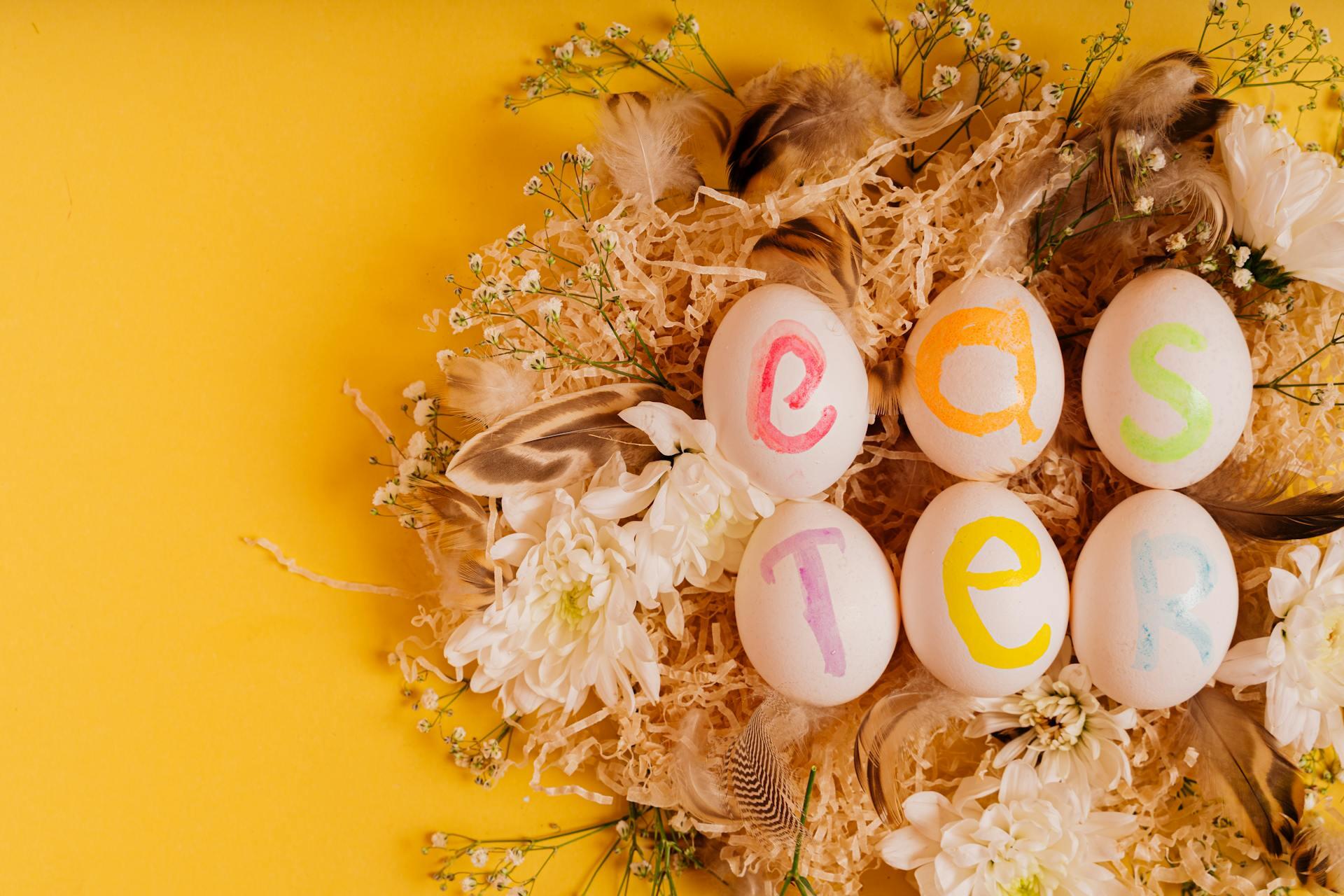

Christianity is a global religion, with roughly 2.6 billion devotees across the world. Most of these Christians celebrate Easter in one way or another, since it’s the most important holiday in the Christian calendar. The way different cultures and regions celebrate Easter varies, often incorporating local traditions. Find out how the Easter holiday is celebrated worldwide.
| 🌎 Country | ✝ Tradition |
|---|---|
| 🇺🇸 United States | White House Easter Egg Roll |
| 🇨🇦 Canada | Toronto Beaches Easter Parade |
| 🇬🇧 United Kingdom | Egg rolling, hot cross buns |
| 🇩🇪 Germany | Osterbaum and osterhase |
| 🇺🇦 Ukraine | Pysanky |
| 🇲🇽 Mexico | Burning of Judas |
| 🇧🇷 Brazil | Paixāo de Cristo |
| 🇨🇴 Colombia | Popayán |
| 🇪🇹 Ethiopia | Fast for Fasika |
| 🇳🇬 Nigeria | Worship and feasts |
| 🇵🇭 Philippines | Salubong |
| 🇮🇳 India | Processions, pilgrimage, feasts |
| 🇦🇺 Australia | Easter Bilby |
| 🇳🇿 New Zealand | Blessing of the Bikes |
| 🇨🇿🇸🇰 Czech Republic and Slovakia | Pomlázka |
| 🇧🇲 Bermuda | Easter kites |
| 🇬🇷 Greece | Botides throwing |





European Easter Traditions
Europe was one of the first places Christianity spread to after it was created. As such, it’s home to many Easter practices we now think of as ancient, since they were practiced beginning in the 1st century CE. But, Europe was also home to many different regional pagan religions. The mixture of local culture with Christian influence has created interesting Easter traditions.
United Kingdom
The UK’s typical Easter celebration combines reflection and cheerful community activities. One of the oldest traditions is the Easter egg rolling competitions.
Decorated, hard-boiled Easter eggs are rolled down a grassy hill. It’s said that the rolling eggs represent the rolling of the stone away from Jesus’s tomb, revealing his resurrection.
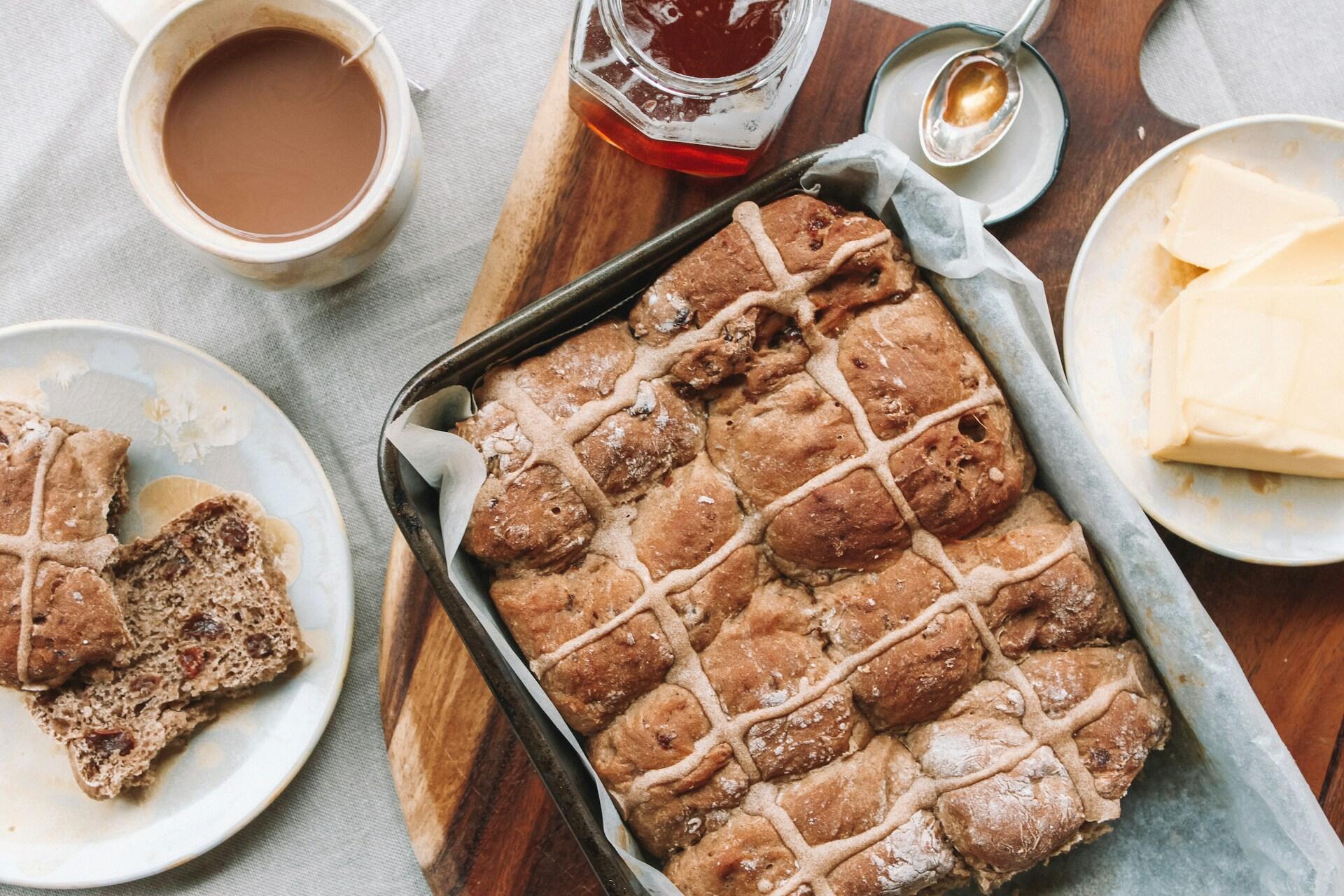
Hot cross buns are another hallmark tradition. These are spiced, sweet buns, marked with a cross. They used to be sold only on Good Friday, but now they are regularly available throughout the Easter season.
According to 'The Square Peg,' egg rolling was originally practiced in Scotland as a way to imitate the movement of the sun.
Andrew Smart, TheNational.scot
Germany
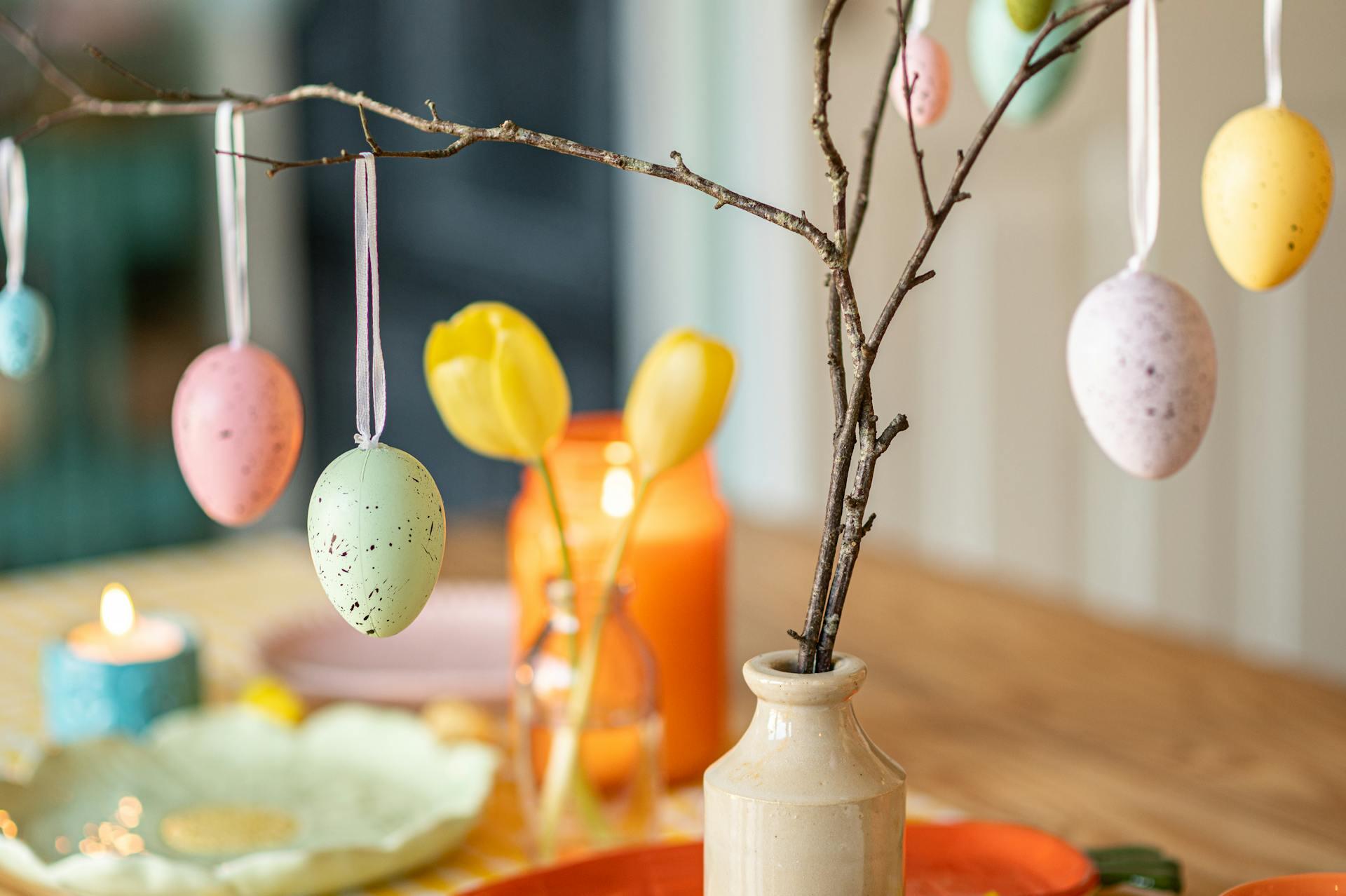
The Osterbaum is a tradition common in Germany. It’s usually a small tree or shrub outdoors, typically decorated with Easter eggs: an Easter tree!
Some families may have a small indoor tree or plant, or a faux tree, that they decorate instead. The eggs can be real decorated eggs (usually hollowed out), or faux eggs made of wood, paper, or any other material.
Germany is also home to the idea of the Easter bunny (Osterhase) and chocolate bunnies!
Discover other Easter symbols and their meanings.
Ukraine
Easter egg decorating is a common practice in many places. In Ukraine, the local culture had already been practicing a style of intricate egg decorating called pysanky for millennia. The eggs are decorated with a wax-resistant method, where artists draw fine lines and decorations with beeswax on the egg. The egg is dyed through several rounds, from the lightest to the darkest colors. At the end, the wax is removed to reveal the beautiful design.
Many Eastern European countries adhere to the Eastern Orthodox calendar for scheduling their Christian holidays, rather than the Gregorian calendar we use in the West. Ukraine is one such country, along with Russia, Serbia, Georgia, Poland, Belarus, Moldova, Montenegro, Macedonia, and Egypt.
North American Easter Traditions
Christianity spread to North America with the first European settlers. Additionally, waves of other European settlers, leading up to the present day, have mixed traditions from all over Europe into the budding local cultures.
United States
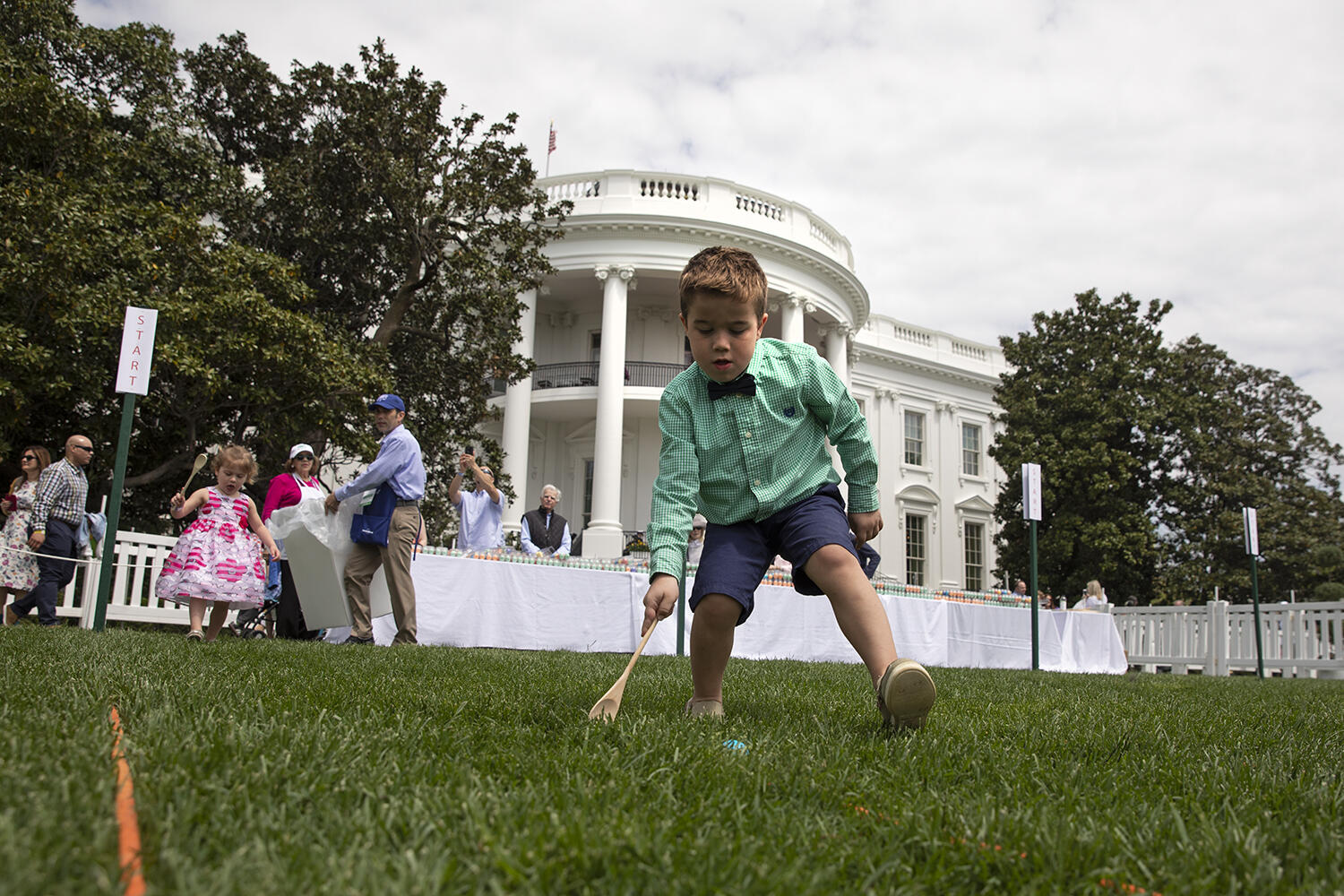
In the U.S., Easter is usually one of the biggest community-based occasions for Christians and secularists alike. The most famous activity is the White House Easter Egg Roll, which has been held annually on the South Lawn since 1878 (except for a few years around World War II). Children use wooden spoons to roll Easter eggs in a casual, friendly competition.
Across the country, millions of people attend Easter church services, participate in Easter egg hunts, and have a special family dinner. Families often host their own egg hunts, but communities also frequently stage large egg hunts for the local children.
Canada
One of the most prominent Easter traditions in Canada is the Toronto Beaches Easter Parade. Since its foundation in 1967, it has become one of the longest-running and biggest Easter parades in the world. Tens of thousands of spectators gather along Queen Street East to watch the marching bands, community floats, local groups, and the Easter Bunny.
Mexico
In Mexico, Easter is known by its Latin-derived name, Pascua. Since Mexico is heavily Catholic, which has blended with the local cultural roots, the Easter holiday has become a lively week-long festival called Semana Santa (Holy Week).
Processions during the week vividly reenact Jesus’s final days. After Easter Sunday, people usually burn effigies representing Judas (and sometimes other allegorical figures) in a custom known as the “Burning of Judas.” The act represents victory over betrayal and sin.
By exploding with rockets, evil and betrayal are symbolically destroyed.
Researcher Abraham Domínguez
South American Easter Customs
South America, like Mexico, is largely Catholic. Local passion and culture blend with Catholic traditions to create interesting and unique customs.
Brazil
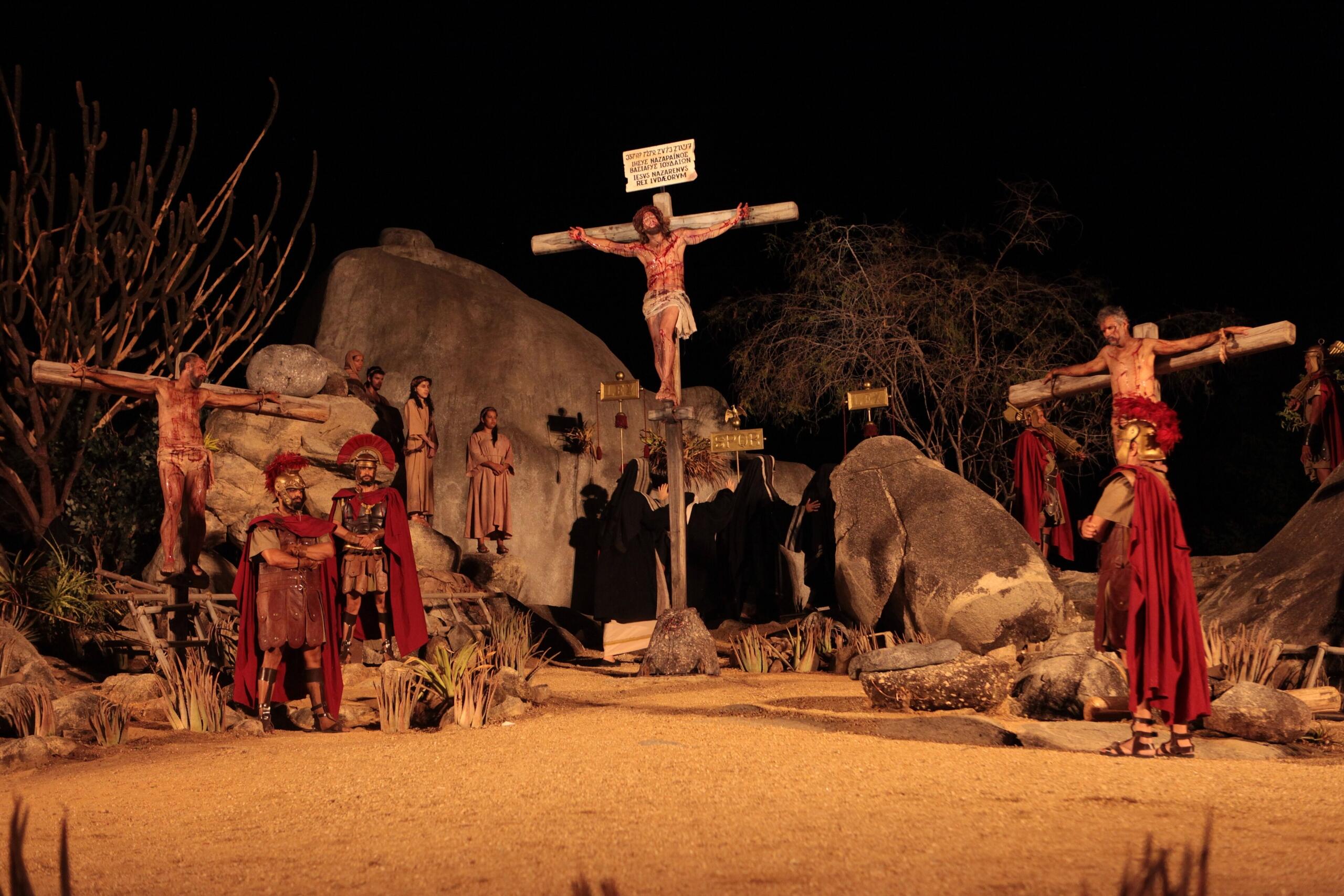
Brazil is one of the biggest hubs for Christian holiday traditions. In cities like New Jerusalem, the Paixão de Cristo (Passion Play) is performed at the largest outdoor theater in the world, the New Jerusalem Theatre.
Local actors portray the crucifixion of Christ with dramatic intensity. Thousands of spectators gather to watch the show.
Many Brazilians also eat traditional dishes like bacalhau (salted cod) and desserts made of condensed milk.
Colombia
In Popayán, elaborate processions take place from Tuesday to Saturday before Easter. The processions are devoted to a different holy figure or scene each night. In order, they are Mary, Jesus, the Cross, the Laying in the Tomb, and the Resurrection.
The processions feature ornately decorated floats and marchers, statues, music, and burning incense. Worshippers line the streets to take part in the ceremony as devotees.
The Holy Week processions in Colombia are recognized as an intangible heritage activity by UNESCO.
African Easter Customs
In early Christianity, from the 1st century CE, the religion spread across Northern Africa naturally. The rate of Christianity increased in other places, especially sub-Saharan Africa, after European traders and colonists started arriving on the continent regularly.
In the 19th and 20th centuries, missionary work spread the religion even more. This leads to an interesting mixture of ancient, antiquated, and newer Christian ideas mixed with localized African cultures across different time periods.
Ethiopia
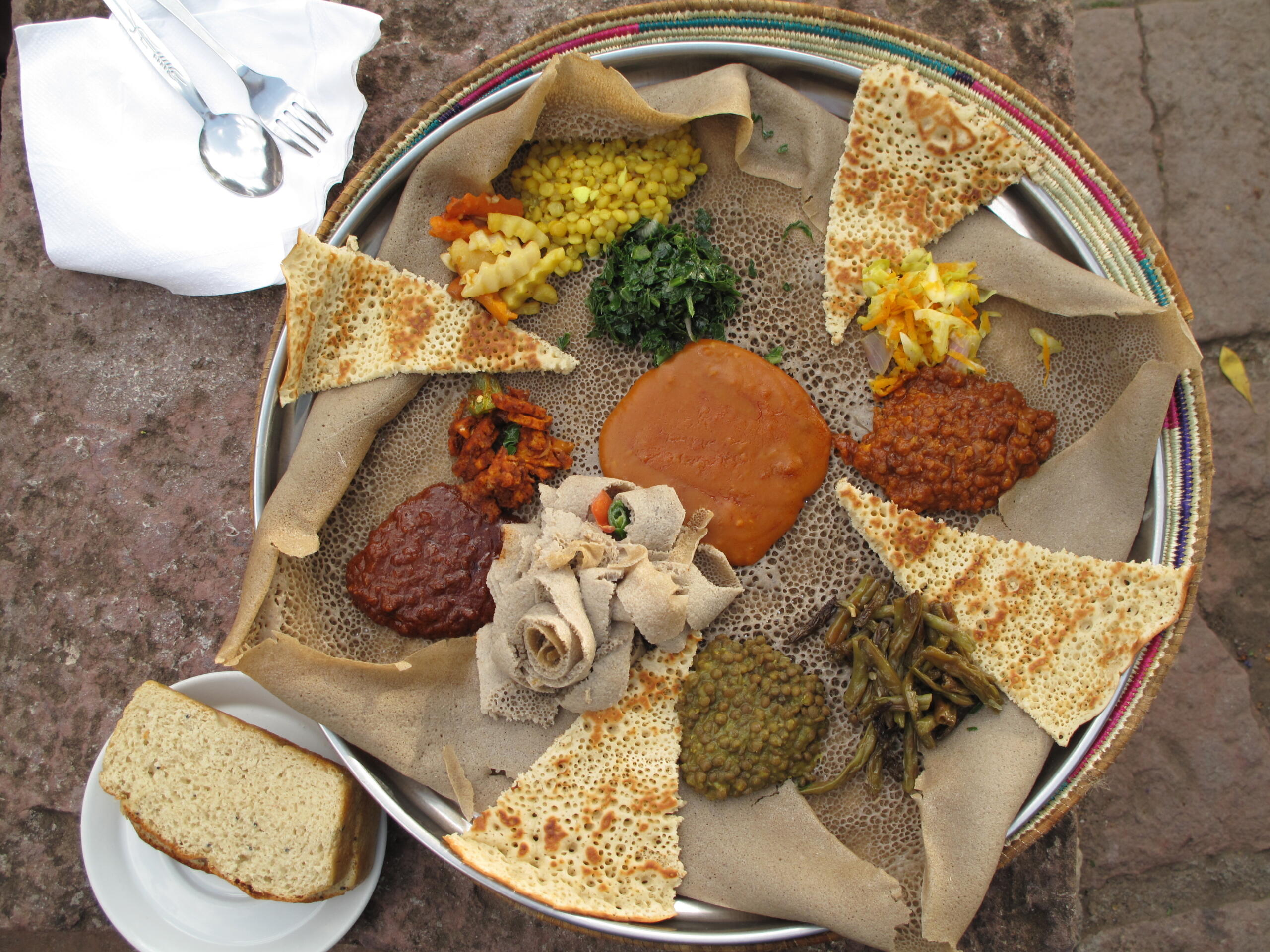
Easter is known as Fasika in Ethiopia. According to the ancient Ethiopian Orthodox calendar, it’s usually celebrated one or two weeks after the Western Easter. It involves a 55-day fast where devotees abstain from meat and dairy.
On Fasika, church services are usually held overnight into early morning. The services are full of drumming, chanting, and communal singing.
Afterward, there is usually a large community feast including doro wat (chicken stew) and fresh bread.
The festival provides a conducive environment for resolving family conflicts and problems through open and honest discussions, guided by the principles of forgiveness and reconciliation that are central to the Fasika celebration.
Henok H., ENA.net
Nigeria
Easter in Nigeria is a time for community and worship. Easter church services begin at dawn; the entire day is full of worship, festivities, shared meals, music, and traditional dances.
Traditional foods include jollof rice and goat stew.
Easter Traditions in Asia
Christianity spread across Asia in a similar way to Africa. Some early Christians introduced the religion through the Silk Road from the 1st century CE to the 15th century. Colonists, and later, missionaries, brought the religion to different parts of Asia, leading up to modern day.
Philippines
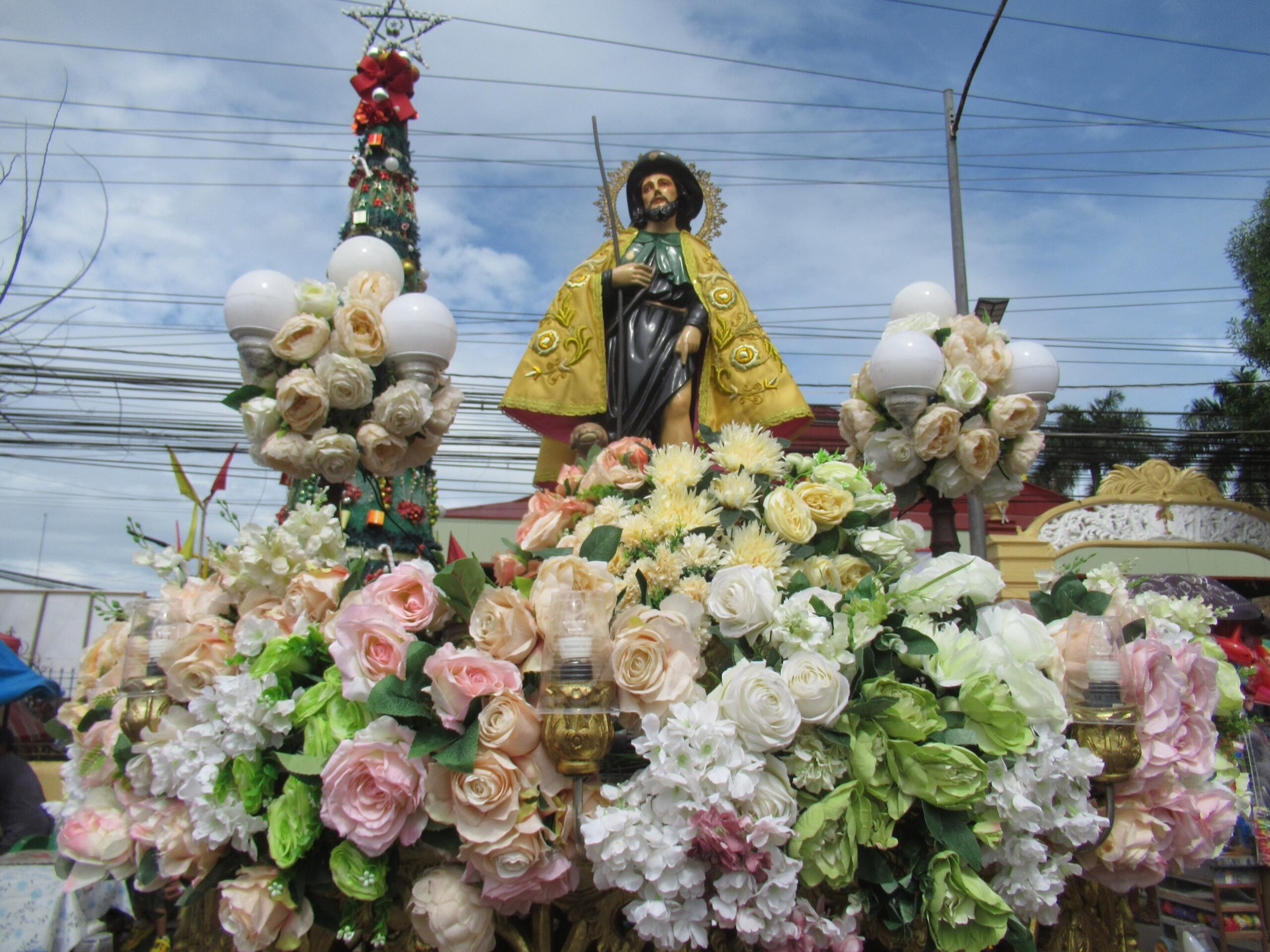
There is a deep Catholic heritage in the Philippines. The country celebrates Easter with lively ceremonies called Salubong, which are reenactments of the reunion between the risen Christ and his mother, Mary. This event is not mentioned in the Bible, but many Filipinos believe Mary must have been the first person to see Jesus after the resurrection; he was her son, after all!
Communities gather at the church before sunrise to put on the show. It includes candlelight, singing, and devotion, creating a solemn and joyful atmosphere.
India
Easter celebrations in India are usually only conducted in areas like Goa, Kerala, and the Northeast, where the largest populations of Christians are concentrated. Each region has its own traditions. In Goa, cultures blend together as the 40-day Lenten fast merges with Portuguese Carnival influences, as well as throwing coloured powder as part of the springtime Shigmo festival.
In Kerala, devotees wear red clothes, rosaries, and bear wooden crosses while chanting and walk up nearby hills as a pilgrimage.
In all places, special church services followed by feasting featuring locally traditional foods take place on Easter, breaking the Lenten fast.
India is a very large country, and the pockets of Christian communities are spread out in different regions. Each region has a distinct and unique history, resulting in different Easter customs in the modern day.
Easter Traditions in Oceania
Protestant and Catholic missionaries started visiting Oceania in the 18th century. Later, colonization spread the religion even further through the island nations. Much of Oceania is now Christian, but the local customs and culture shine through.
Australia
Instead of the Easter Bunny, Australia has embraced the Easter Bilby. Bilbies are small native marsupials. The movement to recognize the bilby raises awareness for endangered wildlife.
Since Easter takes place at the beginning of autumn in the Southern hemisphere, the weather is usually quite warm. Australians often celebrate with outdoor activities like egg hunts and barbecues at local beaches and parks, in addition to church services.
New Zealand
Easter in New Zealand closely resembles the United Kingdom’s festivities, but also incorporates the outdoor activities found in Australia. Hot cross buns and egg hunts are common, as well as barbecues. Community events like egg-and-spoon races are also popular ways to get involved with the local community.
Unique and Lesser-Known Easter Traditions
Many cultures have unique folk traditions, and some of them come through at Easter. These interesting habits make Easter in some countries quite different from other Christian areas in the world.
Czech Republic and Slovakia: The Easter Whip
In parts of the Czech Republic and Slovakia, men lightly whip women with pomlázka, which are decorated willow branches. The tradition is seen as playful and fun, rather than violent or hurtful. It’s practiced among friends and family, usually, with laughter. The gesture, according to folklore, is meant to bring vitality and fertility to the women in the year ahead. In some villages, the women then whip the men the next day as “payback.”
Pomlázka is a contentious custom. Many find the practice fun and harmless, but others see it as demeaning to women. Most of the time, the "whips" are gentle and not at all aggressive, but some men take it too far and end up hurting women. Some people want to see an end to the practice in light of modern-day sentiments.
Bermuda: Good Friday Kite Flying
On Good Friday in Bermuda, hundreds of people fly kites to represent the ascension of Jesus to Heaven. The kites are a family and community-bonding activity, with people making their own kites, including many natural materials available on the island.
The tradition is rumored to have begun when a Sunday school teacher used a kite to explain Christ’s ascension. No matter the origin, today it’s a beloved annual tradition.
Greece: Pot Throwing in Corfu
On Holy Saturday, at 11:00 AM, the streets are filled with pots, botides, being smashed on the ground. Residents throw the pots, filled with water, from balconies to celebrate the resurrection.
The exact reason behind the tradition isn’t known, but today, it’s generally thought that the loud smashing sounds drive away evil and bad luck while welcoming in the spring. It’s a popular spectacle for locals and tourists alike.
Modern Easter Celebrations and Commercialization
In ancient times, Easter was a completely reverent, deeply devotional religious observation. Over time, just like anything, the connotations and traditions evolved. Today, Christians balance the foundational roots of Easter with modern-day practices.
Evolution of Traditions
In the days of Early Christianity, Easter was easily the most holy of all the observances in the calendar. It was so important that it was even the centre of contention within the Church about what should be the right way to celebrate it. An important meeting was called, and a very complicated mathematical computation was invented to try to work out which day Easter should be each year.
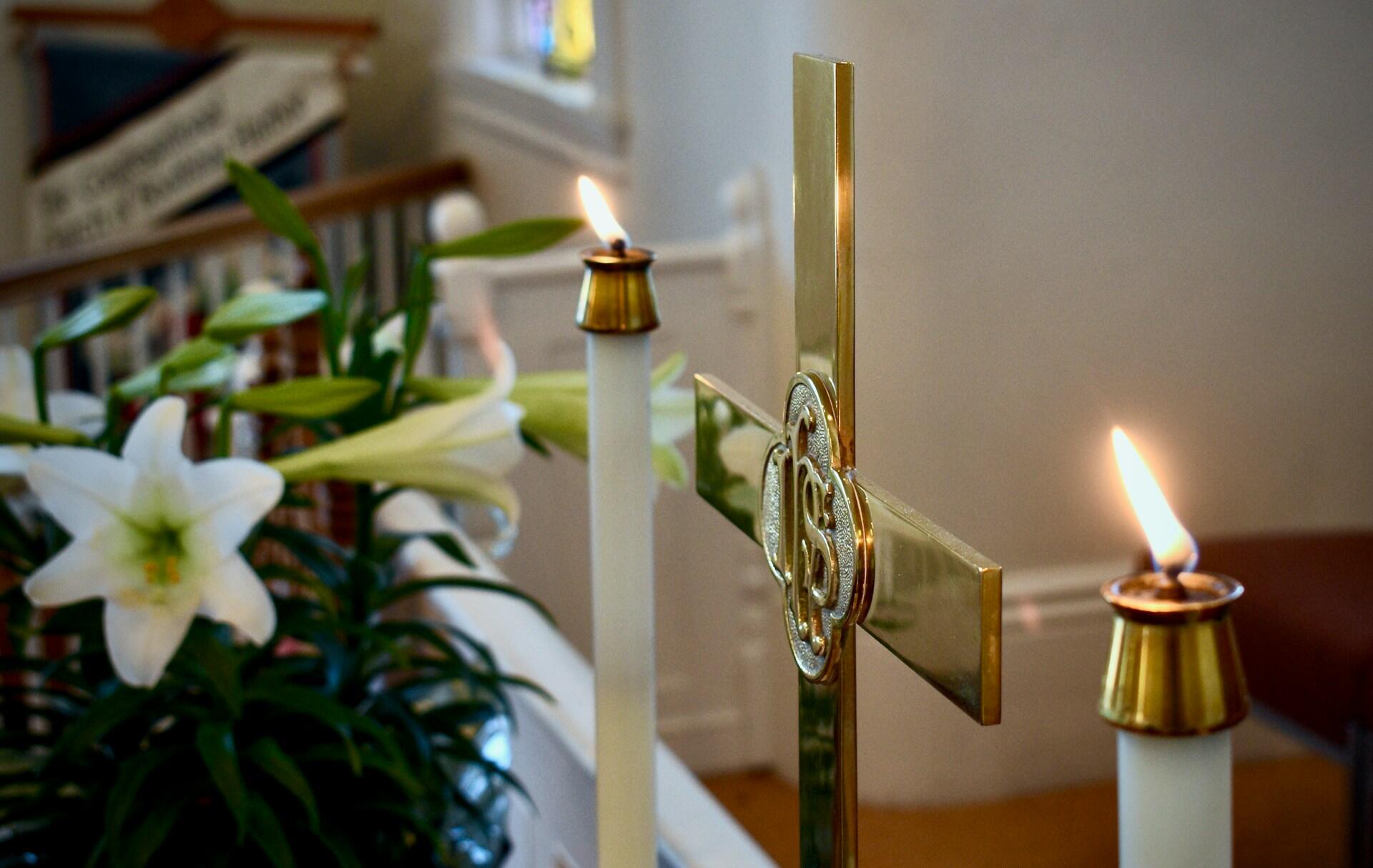
Over the centuries, the importance of the day has not been lost, but it has perhaps been softened. Nevertheless, devotees still attend church services for Easter, and many also incorporate ancient practices, like the Paschal candle, to remind everyone of the deep history associated with the holiday.
These days, Easter is also a great example of blending cultures. The strict early Christian traditions of the first Easters have been morphed with the pagan cultures that received Christianity later on. Christianity allowed people to continue many of their cultural traditions, requiring them to be devoted to Christ rather than pagan deities. This acceptance made Easter into a cultural bridge, welcoming various beliefs and practices.
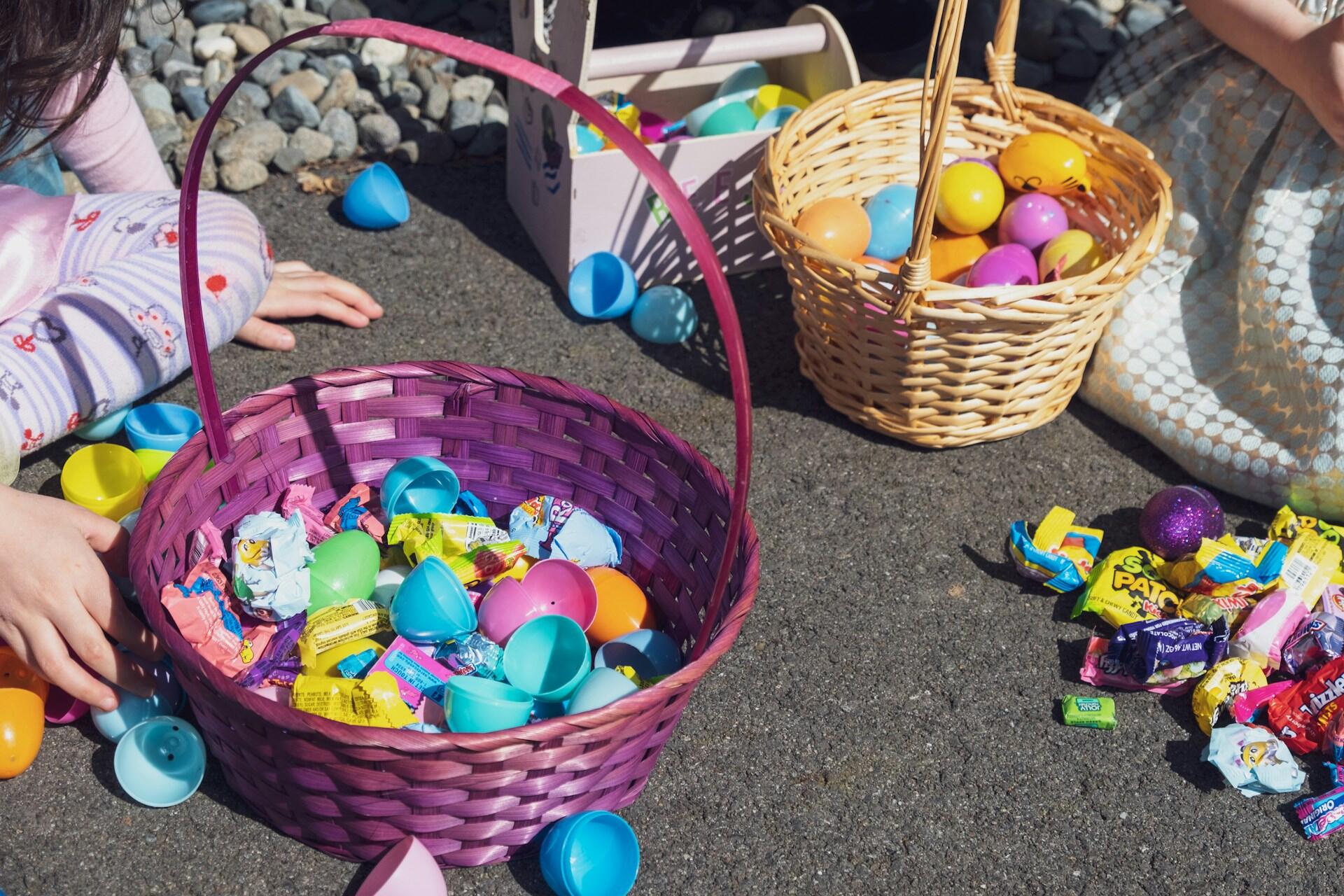
Today, even secular people often enjoy certain elements of Easter, like Easter baskets and egg hunts, connecting people of different beliefs together.
Commercial Aspects
Modern Easter is a very commercialized holiday. Chocolate bunnies, chocolate and candy eggs, marshmallow candies, gifts and toys, greeting cards, plastic eggs, and pastel décor line the shelves of just about every store months before the holiday even arrives. Ad campaigns often use religious symbols in their messaging.
Many see this as a dilution of the holiday and an encouragement to not take it seriously. Others see it as a way to incorporate Christianity in more places in everyday life, even for non-Christians. It can even be considered as a way for people to celebrate spring and community together.
For now, it seems like another stage of growth and evolution in the history of Easter in the context of the 20th and 21st centuries.
Balancing Tradition and Modernity
Creating a balance between faith and modern culture is important on an individual scale as well as a larger scale. Individuals can celebrate Easter in ways that suit their beliefs and lifestyles; there are many ways to celebrate. Your church or denomination might prescribe certain practices over others, but many churches would be happy if a member decided to participate in another way that suits them better.
You can choose to observe Lent (and you can choose what that means to you exactly), attend a Saturday night or Sunday morning church service, and participate in family or community activities. Many communities hold annual events like egg hunts, meals, and parades, so you have many options to choose from.
Some new strides being made for modern Easter traditions include eco-friendly egg hunts (not using plastic Easter grass, reusing plastic eggs each year, or using non-plastic eggs) and community service projects over consumer activities.
The main idea is to remember the reason for the season: Jesus’s sacrifice and resurrection, reminding Christians to embrace new beginnings and work to exemplify the triumph of love and faith over evil.
Discover the origins and history of Easter.
Though Easter is celebrated in unique ways around the world, at heart it is the same tradition uniting Christians together in devotion. Whether it’s decorating eggs, arranging an Easter basket, hunting for eggs, cooking or baking special foods, or attending church services, know that you’re connecting with people from around the world. Take time on Easter to remember the long history behind the day and the traditions, and feel connected to the centuries of people who came before.
🐇 What Easter tradition do you think is the most interesting?
References
- 6 British Easter Traditions. (n.d.). In UK Centre For Carnival Arts. https://www.carnivalarts.org.uk/post/6-british-easter-traditions
- Bermudas Easter Kite Flying Tradition. (2012). bernews.com. https://bernews.com/2012/04/bermudas-easter-kite-flying-tradition
- Easter in India. (n.d.). In Sahapedia. https://www.sahapedia.org/easter-india
- Giannopoulos, B. (2024). Easter in Corfu: A Unique Tradition of Smashing Pots Greek City Times. In Greek City Times. https://greekcitytimes.com/2024/05/04/easter-in-corfu-a-unique-tradition-of-smashing-pots
- Holy Week processions in Popayán - UNESCO Intangible Cultural Heritage. (n.d.). In ich.unesco.org. https://ich.unesco.org/en/RL/holy-week-processions-in-popayan-00259
- karenanne. (2015). What is an Osterbaum? Create Your OWN Easter Tree with Cute Ornaments that you Make or Buy! In A German Girl in America. https://germangirlinamerica.com/what-is-an-osterbaum-easter-tree
- Marivic Mercene. (2025). The Easter “Salubong.” In Missionary Society of St. Columban | Philippines. https://columbanmission.org.ph/the-easter-salubong
- Pomlázka: The Most Controversial Czech Easter Tradition. (2025). In Brno Daily. https://brnodaily.com/2025/04/19/lifestyle/pomlazka-the-most-controversial-czech-easter-tradition
- The White House Easter Egg Roll. (n.d.). In The White House. https://www.whitehouse.gov/white-house-easter-egg-roll
- Toronto Beaches Lions Easter Parade. (n.d.). In Toronto Easter Parade. https://www.beacheseasterparade.ca
- Waxman, O. B. (2023). The History Behind the Ukrainian Easter Egg Tradition. In TIME. Time. https://time.com/6166140/pysanka-ukraine-easter-egg-history
Summarize with AI:
Did you like this article? Leave a rating!

 Loading...