
As we go through our everyday lives and interact with the people around us, we find clever, colorful ways to express our ideas. Common idioms in English are phrases that relate to other experiences, applied to an unrelated situation you're currently experiencing. These 20 idioms have a distinct history; you can use them to make your English speaking richer.




A Lot on My Plate
Considering world hunger statistics, it would seem that having a lot on one's plate would be a good thing.

But this idiom has the exact opposite meaning. If you have a lot on your plate (or too much on your plate), you have no time, room, or appetite for anything else.
You might refuse an assignment if you're overwhelmed at work: "Sorry, boss. I have too much on my plate already." It's also a handy excuse for getting out of something you don't want to be involved in: "Sorry, I can't make it. I have a lot on my plate right now."
Note that we can't count it among the food-related idioms even though plates suggest food must be close.
Calling the Shots
This common English idiom has its roots in military and sports circles. In billiards, players call the shot by announcing which pocket they aim to hit the ball into. The military reference goes back to the American Civil War, where a spotter would 'call the shot' so soldiers could take cover.
1. Generally, a person in charge calls the shots.
2. Bosses, team leaders, and the occasional bully might say, "Hey, I'm calling the shots here!"
3. It means 'I make the decisions'.
4. Billiard players also call their shots; their usage is the same as the traditional meaning.
Clamp Down On
In these days of AI-generated content and alleged fake news, the public demands that governments clamp down on such practices. What does that mean?
Phrase
Clamp down on
Meaning
Get control over
Example
Teachers are clamping down on students using AI to do homework.
This phrase originated in the 1940s, a time of great social and political turmoil. It means 'a firm, oppressive action to prevent something'. It comes from the verb phrase 'clamp down', which means 'applying pressure to keep something under control'.
The Eleventh Hour
A deus ex machina will never appear in real life so you'd better make other arrangements.
Marisha Pessl, author
This common idiom comes from the Bible. In the Parable of the Laborers in the Vineyard, the landowner hired laborers throughout the day. Those he hired even an hour before sunset - the end of the workday, received the same pay and benefits as those who'd worked all day long.
Today, we use it more in the sense of deus ex machina, a sort of divine intervention. Somehow, whatever one is trying to accomplish will get done just before the situation gets critical. For example, a canceled class is an eleventh-hour save for students who didn't do their homework.
Hit the Nail on the Head
Anyone who builds, repairs shoes, or works with wood knows the satisfaction of driving a nail cleanly into their materials. In fact, the trades - blacksmithing and carpentry - gave the English language this idiom. Hitting the nail on its head means 'perfect', 'accurate', or 'correct'. English speakers typically use it to agree with something someone said.

Hold Your Horses
Watch the traffic in New York in 1899 (starting at 0:36 in the video below). Did you see how people, horses, and trams go whenever and wherever they want? It's scenes like this that gave us this and other idioms about a favorite animal, the horse.
In those days, policemen would shout "Hold your horses!" to make them stop so an important transport could use the road. 'Hold your horses' meant 'make your horses stand still' so the road would be clear. Today, it means roughly the same thing: 'stop, wait and be patient'. You might tell your younger sibling, "Hold your horses, I'm busy right now!" if they keep bothering you, for example.
In the Works
In English, 'the works' can mean 'the pipelines and machinery that produce something'. The idiom 'in the works' gets its meaning from that definition. When you tell your boss, "It's in the works", it means whatever they're asking about is in production.
Where's that report I asked for?
Is dinner ready? I'm starving!
It's in the works, boss! I'll get it to you soon.
It's in the works. Have a snack for now.
Movers and Shakers
Yet we are the movers and shakers / Of the world for ever, it seems.
Arthur O'Shaughnessy, poet
Movers and shakers are the people who shape society, either through their creativity or their ambition. You might consider Elon Musk a mover and shaker, along with the rest of the Silicon Valley crowd. The poet we quote above coined (invented) this phrase, but he meant poets and musicians, not the Musk crowd of his day.
No Strings Attached
Origins of this idiom range from divorce laws in Biblical times to puppets whose movements depend on attached strings. In all cases, this idiom means 'with no conditions' and 'fully free'. A no-strings-attached offer means you can enjoy the offer without any pressure to buy something. You can also invite someone to a meal or outing with no strings attached, meaning they don't owe you anything in return.
Off the Mark
On your mark, get set... GO!
Traditional call at the start of a race
The mark in question is the line that runners stand behind at the start of a race. This gives us an idea of this idiom's meaning and origin. Being off the mark means you are not on that line and ready to go. In fact, you're incorrect and, perhaps, even inappropriate.
Note that 'off the mark' isn't the same as 'beyond the pale', though these idioms are related.
Off the mark means 'slightly wrong'.
Beyond the pale means 'unacceptable'.
If you accuse someone falsely, they might answer you with, "You're so far off the mark you don't even know where the mark is! In fact, what you said is beyond the pale. Apologize right now!"
Off the Top of Your Head
Do you know that meme about a lightbulb over one's head that means having an idea? It originated in 1935, in the cartoon below (see it at 3:54). It is the inspiration for this English idiom.
When someone asks you for your opinion 'off the top of your head', they don't want you to put a lot of thought into your answer. Or how about if your mom asks if you want anything from the store? You can answer, "I can't think of anything, off the top of my head"
Out of the Loop
Loops are distinctive physical structures; you can be either inside or outside of a loop. This perspective helps explain this idiom's meaning.
In the loop
- You have insider knowledge
- You know about what's going on
Out of the loop
- You lack knowledge of the situation
- You don't know what's going on
Your boss might tell you to loop in a colleague so they can help you work on a project. That means sharing details with them so they can work alongside you. They might also tell you to keep them in the loop, which means they want to stay informed on your progress.
Picking Your Brain
"Let me pick your brain for a second" sounds weird and a bit disgusting, but it means you value a person's thoughts and opinions. When you have a problem you can't solve by yourself, you can ask for help with that sentence. It's a favorite among funny phrases that lets you ask for information informally.
"I need to pick your brain for a second. What should I do about [the situation I have trouble with]?"

Putting the Cart Before the Horse
This is a silly visual: horses should be in front, pulling the cart, they don't push carts from behind. So, if you put your cart before the horse, you're obviously doing things in the wrong order. That's what this idiom means. Can you tell which of these sentences are examples of putting the cart before the horse?
The Last Straw
The idiom "The straw that broke the camel's back" is well-known and used all over the world. It means 'the very last insult I can take before I break'. The shortened idiom, 'the last straw', comes from the longer sentence; its shortness makes it easier to use. But it also has slightly different uses.
With the Camel
- Use when you're retelling a story
- "That was the straw that broke the camel's back."
Only the Straw
- Use when you're warning someone
- "That's the last straw. Get out!"
The Long Haul
If you tell someone you're in it for the long haul, it means you are committed.
Relationships: "Love, I'm in it for the long haul. I hope we marry one day."
Work: "Boss, I'm in this for the long haul. Let me manage this project and I'll see it to completion."
We owe truck drivers a huge thanks for this idiom. Long-haul truckers spend days or weeks on the road, away from their homes and families, helping to keep our stores supplied with all the things we buy. That's the meaning behind this idiom.
Touching Base
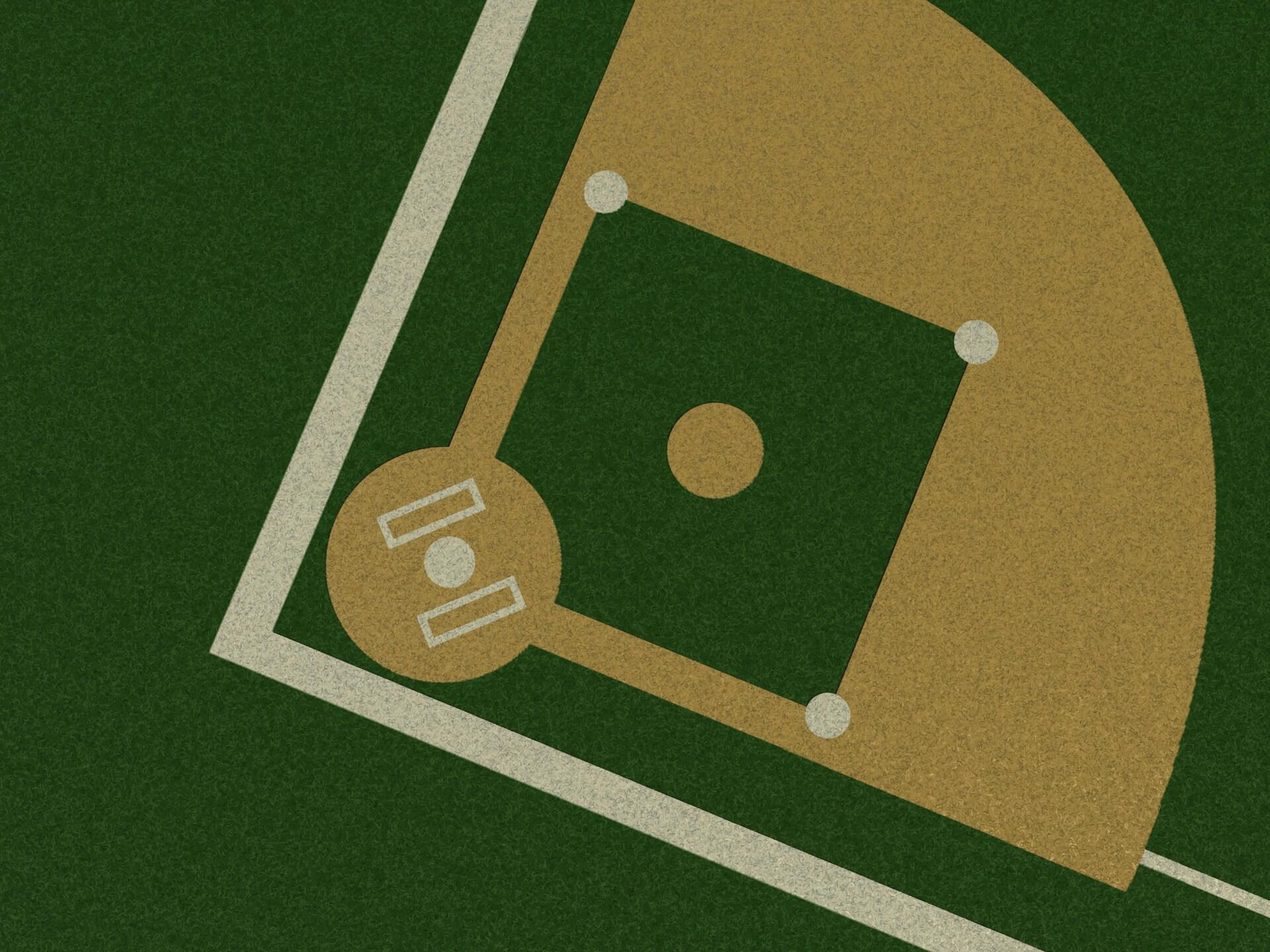
This sports idiom ties directly to baseball. After the player hits the ball, he throws the bat down and starts running. As he travels around the baseball diamond, his foot must touch each bases.
When you touch base with someone, you're engaging in brief contact, usually to provide an update on a situation. This idiom finds a lot of use in Business English: "I'll touch base with you next week to see if you have the proposal ready", for example.
The Writing on the Wall
And the sign said the words of the prophets are written on the subway walls ...
Paul Simon, from the Sounds of Silence
The writing on the wall is a rather scary idiom that means 'knowledge that everyone knows but nobody dares talk about'. In these times, we have many conditions that are written on the wall.
Tightening the Belt
"Tighten your belt" might be among the current writings on the wall. Tightening the belt means 'reduce spending'. It originated during the Great Depression, a time when people didn't have enough money to eat. So, they had to tighten their belts to keep their trousers from falling off.
People don't tighten their belts only when conditions are desperate, though. You might be a wise person who has decided to spend money only on things that matter to you. Or you might want to save money for a nice vacation: "If we tighten our belts this year, we can afford to go to Italy next spring."
Through the Roof
This idiom likely came from seeing someone's house explode, perhaps from a gas leak or from gunpowder stored unsafely. However, it does not mean 'an explosion', at least, not a physical one. It describes a person's reaction to news that made them angry.

Summarize with AI:
Did you like this article? Leave a rating!

 Loading...