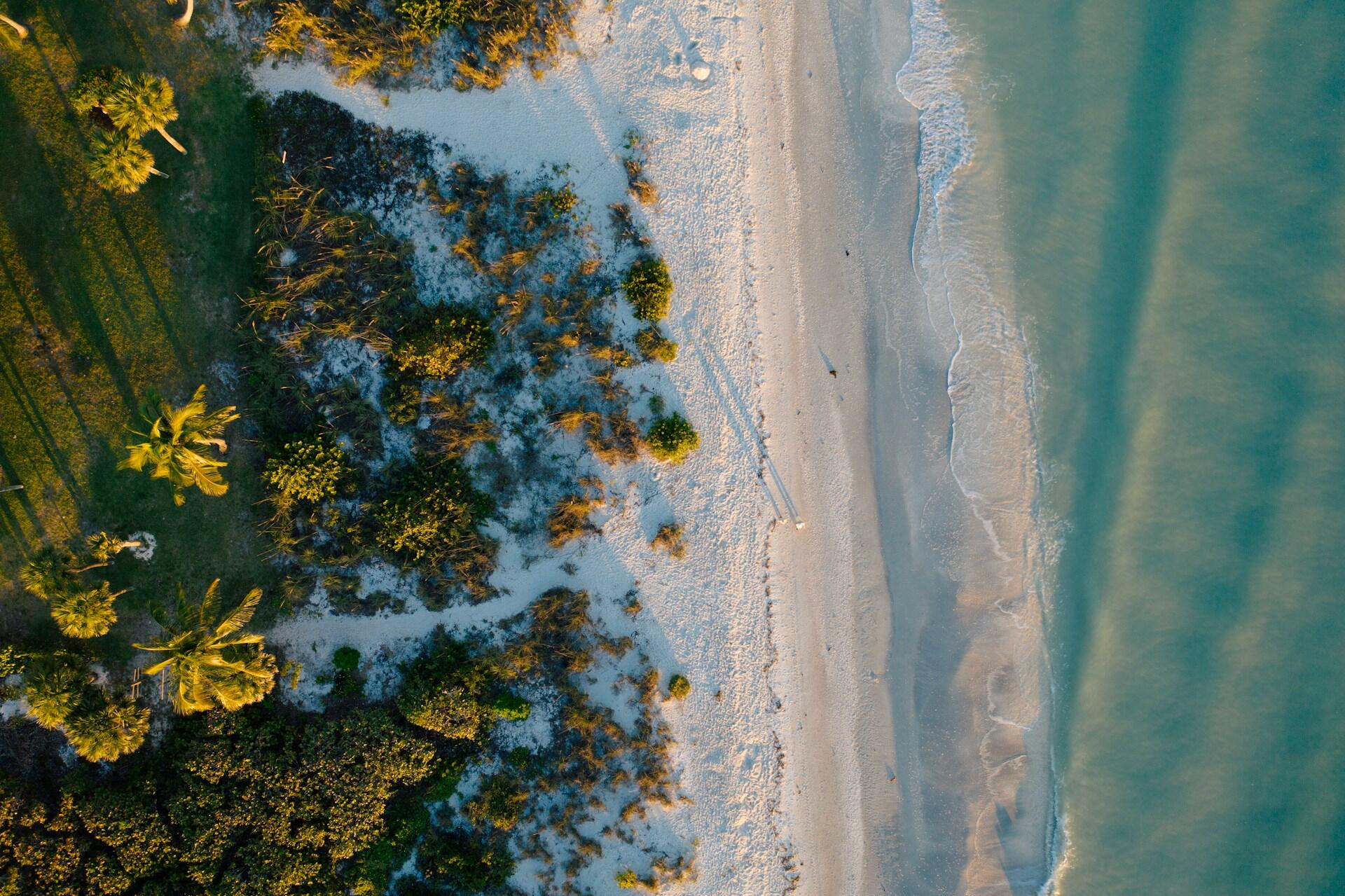

Florida’s wide array of national parks features a mix of environments, from wetlands to islands and beaches, to historic forts. They are some of the top places in the country to see rare wildlife and experience the beauty of nature and history. Find out what you need to know about each park so you can have a great visit!
What National Parks are in Florida?
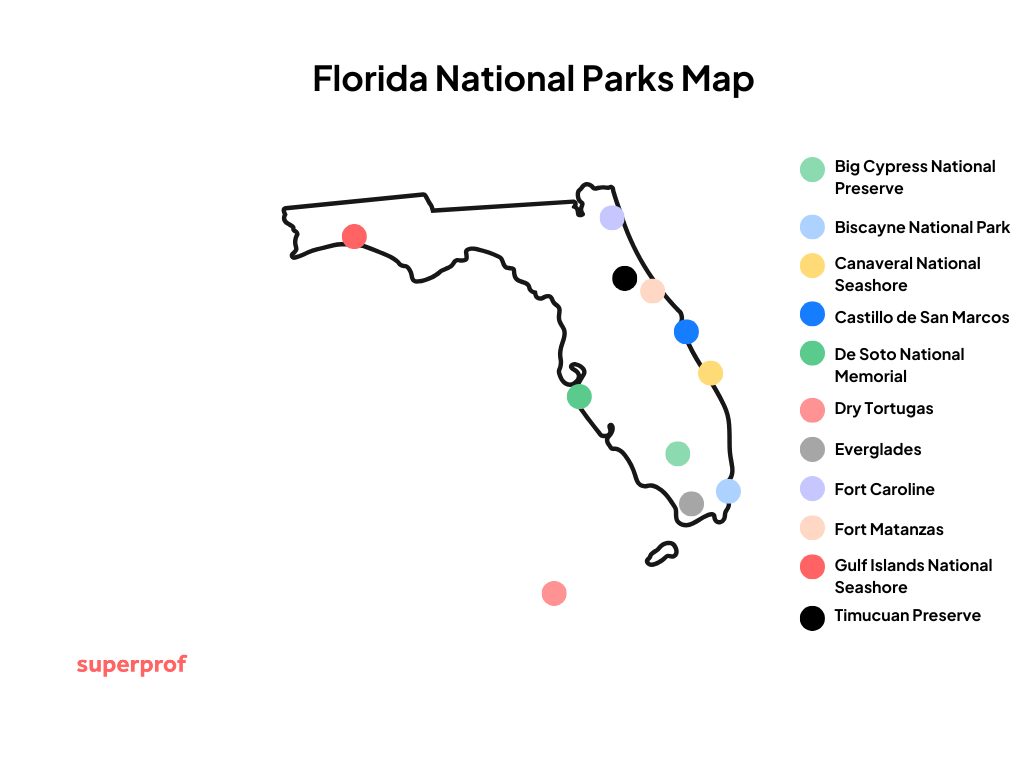
- Big Cypress National Preserve
- Biscayne National Park
- Canaveral National Seashore
- Castillo de San Marcos
- De Soto National Memorial
- Dry Tortugas
- Everglades
- Fort Caroline
- Fort Matanzas
- Gulf Islands National Seashore
- Timucuan Preserve


Big Cypress National Preserve
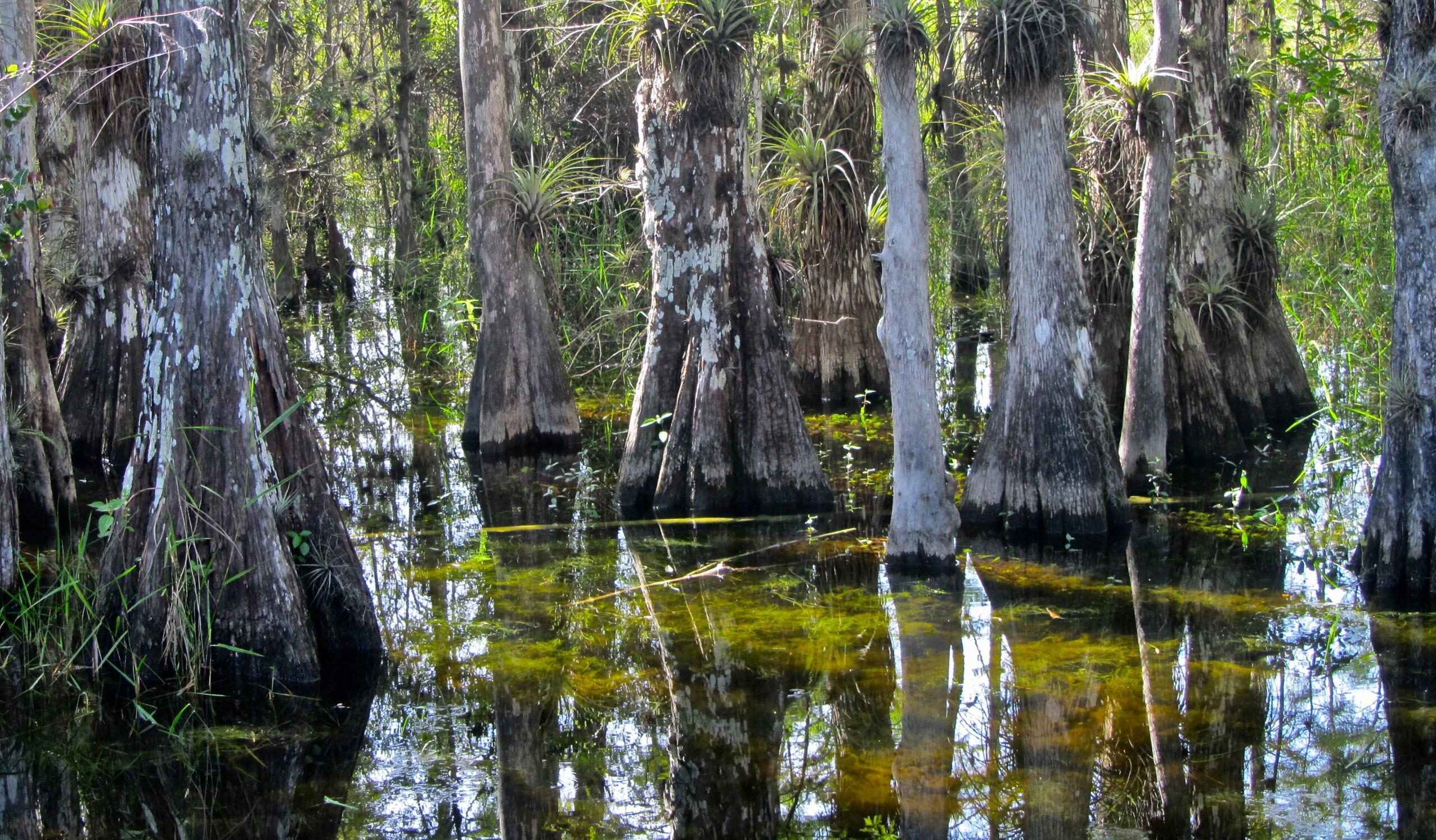
The expansive preserve covers 729,000 acres of cypress swamps and prairie in Southwest Florida (Ochopee) and provides vital freshwater for the Everglades closer to the coast. The park protects threatened wildlife such as the Florida panther, black bear, and a wide variety of birds.
Visitors can enjoy the Nathaniel P. Reed and Oasis Visitor Centers, which feature walking trails that offer perfect opportunities for wildlife viewing. Scenic drives on Loop Road, Turner River Road, and Wagonwheel Road allow visitors to see beautiful sites without much hiking required.
Fun park activities include paddling in the swamp, backcountry camping, bicycling, hiking, and birdwatching, along with ranger-led programs including stargazing.
Several drive-up campgrounds suitable for tent camping and RVs exist around the park and require reservations.
Discover other national parks across the United States!
Park passes are not available for purchase at Big Cypress. Visitors can go to Shark Valley Visitor Center (Everglades) to get passes.
Deep Lake Trail, Gator Hook Trail, Fire Prairie Trail, Florida Scenic Trail. Note that some trails may be flooded during the rainy season.
Check out the Swamp Heritage Festival in December!
Biscayne National Park
As you can see from the above national parks in Florida map, Biscayne is located off the coast of Miami, at the northernmost point of the Florida Keys. It’s a unique park: about 95% of the protected area is water! Most visitors arrive at the park via boat.
There are a few hiking trails, but more popular activities in this park include boating, canoeing and kayaking, camping, fishing, swimming, and snorkeling. Visitors can see plenty of wildlife on land and in the coral reefs in the water, as well as visit the shipwreck on the Maritime Heritage Trail. The park also hosts a monthly nature journal club, offering an opportunity for nature admirers to get together and create nature-inspired art while learning more about the flora and fauna.
There are two campgrounds in the park, located in Elliott Key and Boca Chita Key. They are only accessible by boat. Otherwise, visitors tend to stay in the nearby towns of Homestead, Florida City, or Miami.
Use reef-safe sunscreen to avoid damaging the delicate coral reefs.
Find SCUBA and snorkeling tours, boat tours, and kiteboarding lessons on the Biscayne National Park Institute website.
Canaveral National Seashore
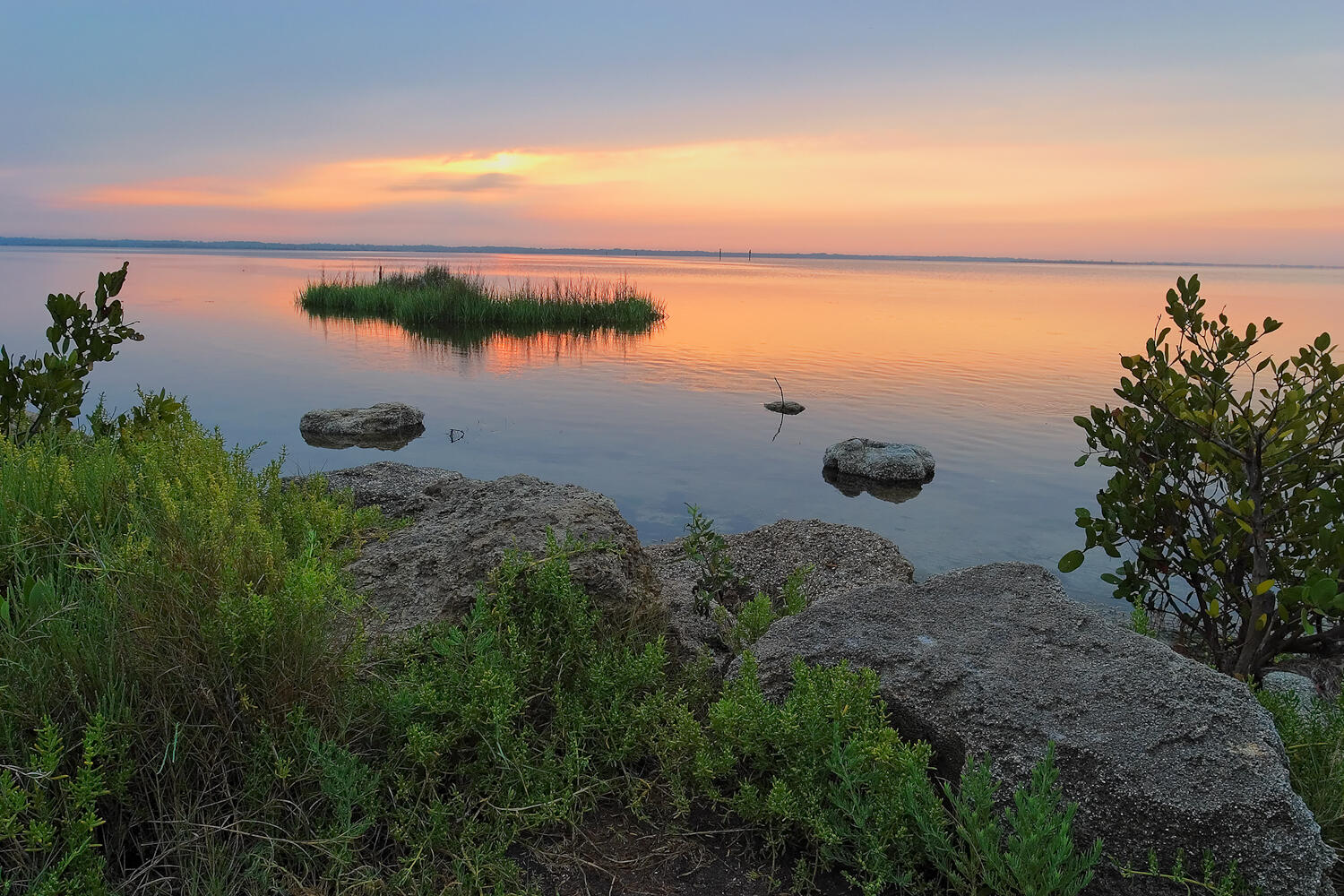
On the east coast, between New Smyrna Beach and Titusville, lies the longest stretch of undeveloped coastline in Florida. The protected seashore and barrier islands preserve habitats for nesting sea turtles, shorebirds, and delicate estuarine flora and fauna. Visitors often walk along the beach, sunbathe, swim, and fish. In the lagoons, popular things to do include paddling and viewing wildlife such as dolphins and manatees.
The only hiking trail, Castle Windy Trail, is an easy half-mile and takes hikers to a historic mound of seashells from the Timucuan people 1,000 years ago. The park features many ranger-led programs focusing on education and group beach cleanups.
Find out about the national parks in Colorado you should be sure to visit.
If a rocket is scheduled to launch from the Kennedy Space Center on Cape Canaveral during park operating hours, visitors can view the launch from inside the park.
There are only 14 backcountry camping areas throughout the Intracoastal Waterway and Mosquito Lagoon, so make sure you reserve your space well in advance! Sites are stationed on small islands accessible by boat or canoe/kayak.
Rent canoes from the Apollo Beach Visitor Center to get to your campsite or enjoy paddling around the park.
Castillo de San Marcos National Monument
The Castillo is the oldest masonry fortification in the United States, having been built by the Spanish in the 1670s. The fort is located in historic St. Augustine on the northeast coast of Florida, just a 20-minute drive away from nearby Fort Matanzas.
The monument doesn’t have many nature-based activities. Instead, visitors can walk the gun deck, explore the fort’s interior, and learn with exhibits about colonial and military history. Most of the fort can be seen through the self-guided walking tour and self-guided artillery tour. It’s a great stop on any road trip to see other nearby attractions!
Visitors can see historic weapons demonstrations several times throughout the day on the weekends.
Visitors are warned to walk carefully within the castle, which has many uneven surfaces and other dangers not up-to-date with current safety standards by its nature.
De Soto National Memorial
Near the mouth of the Manatee River in Bradenton, the De Soto National Memorial marks the landing area of Hernando de Soto’s expedition in 1539; the event was detrimental to the Indigenous Native American people. Beyond just a marker for this event, the memorial serves as a protector for local wildlife and delicate mangrove ecosystems.
The visitor center contains interesting interactive exhibits, including replica armor you can try on for yourself! It’s a nice stop for travelers and families exploring the Bradenton-Sarasota area.
Plan your next trip to the Montana national parks.
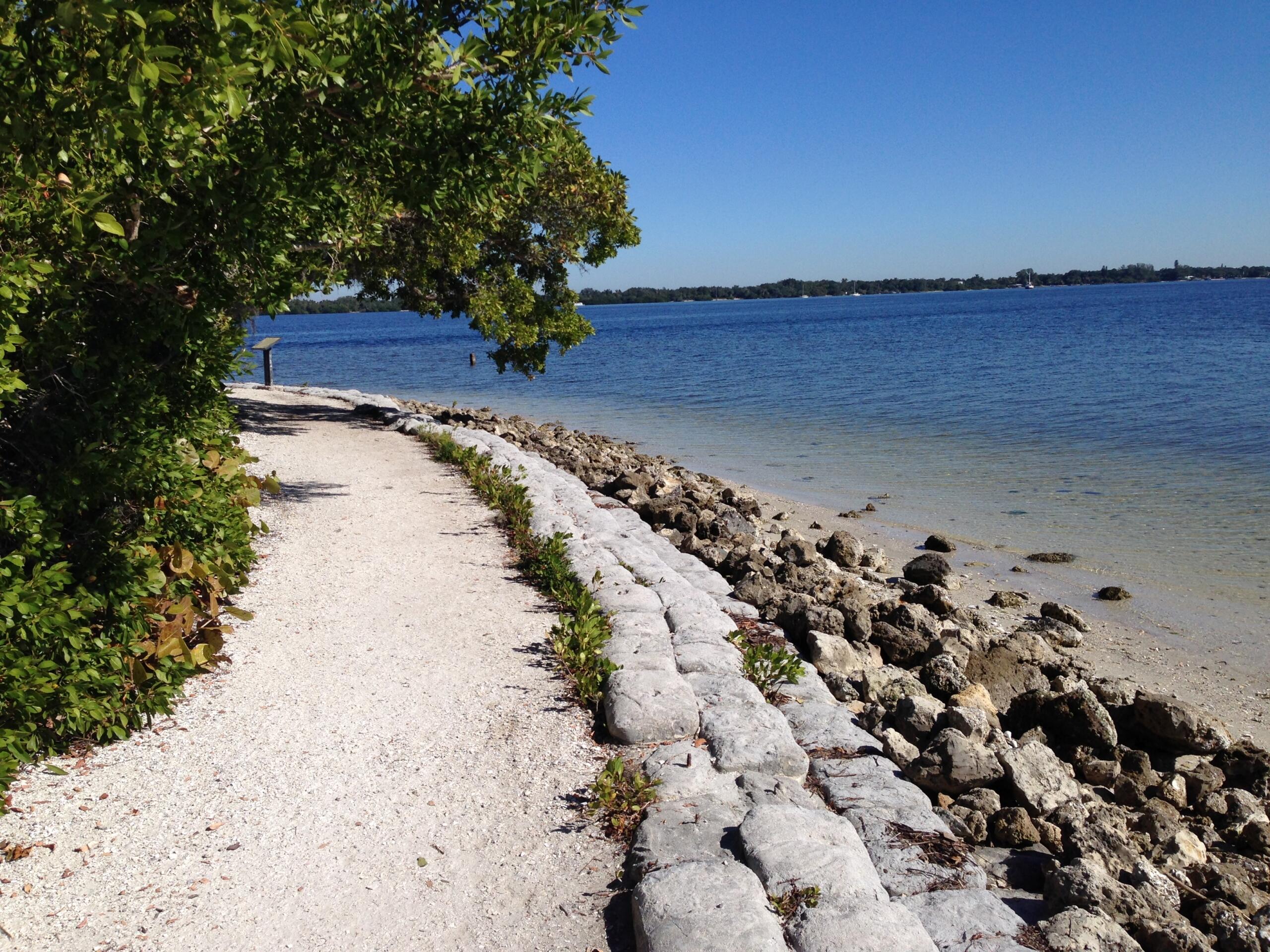
Catch historic weapons demonstrations, learn about Indigenous, European, and Floridian historical cultures local to the area, walk on the Nature Trail, and take a guided kayak tour. In the winter, living history events at Camp Uzita feature employees in historically accurate dress who demonstrate life in the area during the 16th century.
There are no camping areas at the memorial. Visitors can walk along the beach, enjoy the picnic area, spend some time fishing, and participate in the other activities available during operating hours.
As of early 2026, the website indicates that the visitor center is still closed after the 2024 hurricanes. Check the website before you go to get updated information about the visitor center’s status.
Dry Tortugas
The island park is located 70 miles west of Key West and is accessible only by boat or seaplane. It’s a veritable tropical paradise, featuring 100 square miles of picturesque open waters, magnificent coral reefs, sandy beaches, protected wildlife, and a 180-year-old Fort Jefferson, all spread over seven small islands.
Note that private vessels can moor at the visitor slips and mooring buoys for up to 2 hours. If you need to anchor your boat overnight, you must do so near the Garden Key lighthouse only.
Visitors can enjoy the water by swimming, snorkeling, scuba diving, paddling, boating, viewing wildlife, fishing, geocaching, and camping. Particularly interesting is Loggerhead Key: the island features a lighthouse, the site of the former Carnegie Laboratory for Marine Ecology, notable reefs, and the Windjammer Wreck that you can check out while snorkeling. Bush Key features an easy and enjoyable beach hiking trail.
Garden Key is the only island at Dry Tortugas with campsites. You must be fully prepared to camp on the island with sufficient food, water, and supplies.
The only way to the park is via the Yankee Freedom ferry (reservations required months in advance), the seaplane, private vessels, or permitted tour guides. Make sure you arrange proper transportation well in advance; the seaplane does not transport campers due to the weight of the required camping equipment.
As of early 2026, there is limited space for personal/private vessels due to damage from hurricanes. Be sure to check the website to see the latest information on facilities and functions.
Everglades National Park
The Everglades National Park is the largest subtropical wilderness in the U.S., covering over 1.5 million acres of wetlands across South Florida. It’s also a UNESCO World Heritage Site. The park’s primary objective is to protect a variety of vulnerable habitats, including sawgrass marshes, mangroves, cypress, and pine rocklands. Animals like alligators, manatees, roseate spoonbills, and Florida panthers live in these environments.
major national park sites
Shark Valley, Royal Palm, the Earnest F. Coe Visitor Center, and the Flamingo area are among the top things to do at the park. Visitors can enjoy birdwatching and wildlife viewing, boating and paddling, biking, stargazing, fishing, and camping. There are also several popular ranger-led programs focused on education, wildlife viewing, and outdoor activities, including wet walks (aka slough slogs).
The Everglades are very susceptible to weather-related changes and closures, so always check the website before you go to see if there are any ongoing events to be aware of.
Discover more about the beautiful national parks in Oregon.
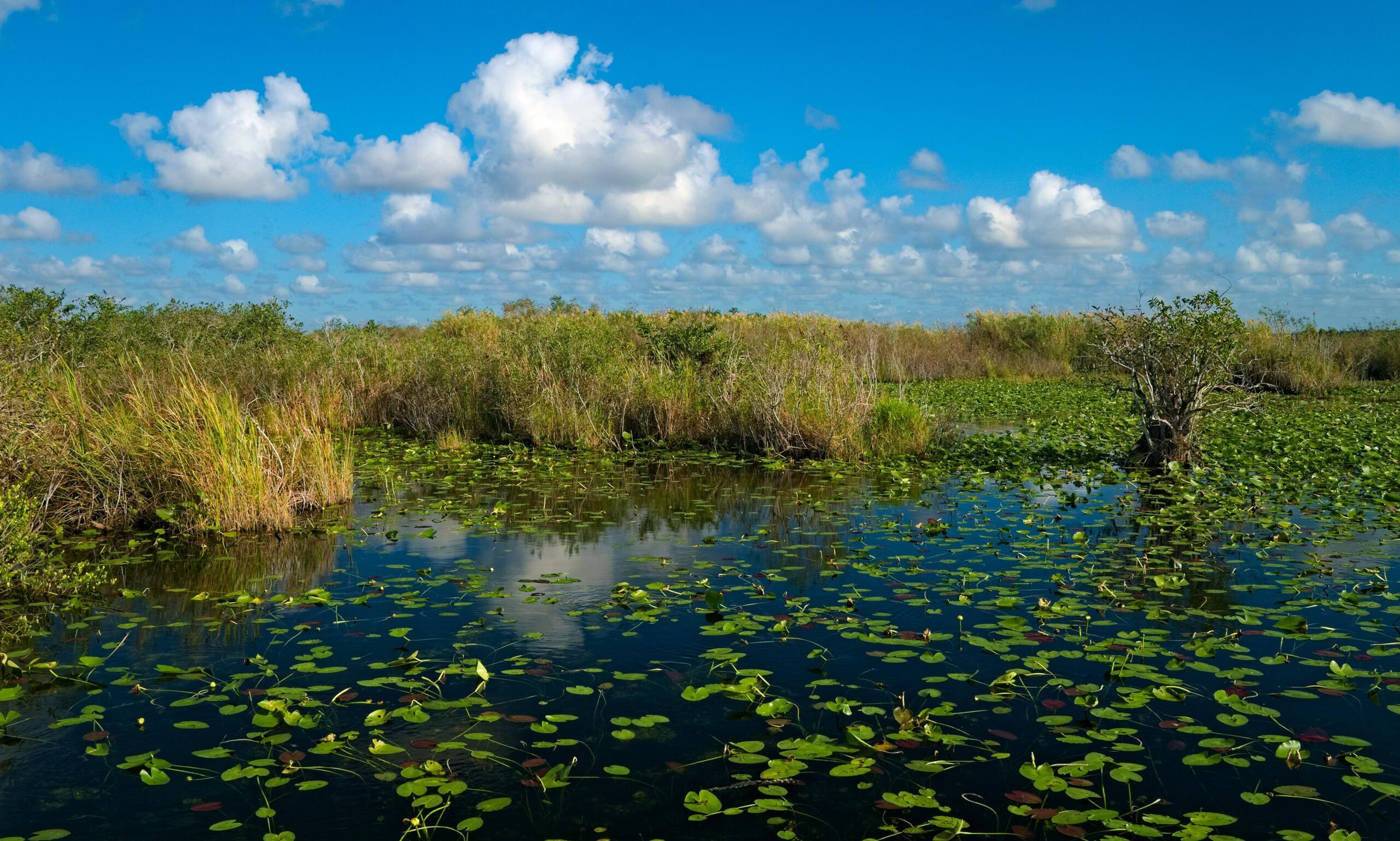
Anhiga Trail, Gumbo Limbo Trail, Pa-Hay-Okee Overlook, West Snake Trail, Snake Bight Trail, Otter Cave Hammock, Bobcat Boardwalk, Sandfly Island Trail.
There are an abundance of options for camping in the park, including staying at the Flamingo Lodge, renting a houseboat, camping, and glamping. Certain sites are open only seasonally, so check the sites and make your reservations well in advance.
Read the safety guides on the website to familiarize yourself with how to stay safe regarding alligators and crocodiles, poisonous plants, vultures, weather, and the physical fitness requirements for different activities.
Fort Matanzas National Monument
At the center of the park stands the fortified coquina watchtower, which defended the St. Augustine military settlement from the south. It was completed in 1742. The park is a preserve for important habitats, home to endangered wildlife. Key attractions at the park include the ferry ride to the fort, boardwalk trails and nature trails, picnic spots, and tours of the fort. You can even find re-enactors in 18th-century colonial garb at the fort ready to give demonstrations about life as a soldier.
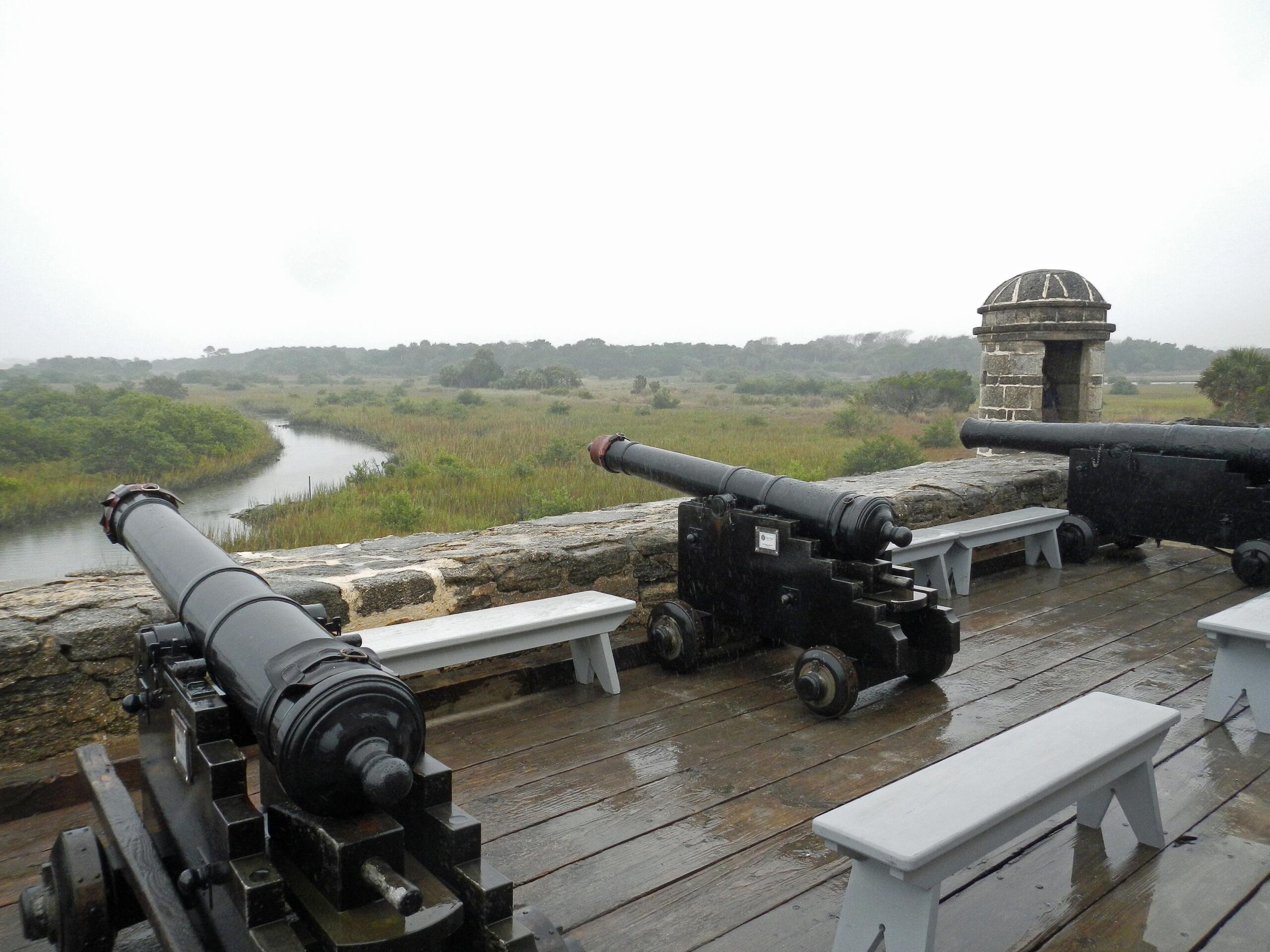
The free passenger ferry operates between the fort and the visitor center.
Fort Matanzas is operated in conjunction with Castillo de San Marcos National Monument.
The fort is only a 25-minute drive away from Castillo de San Marcos, about a one-hour drive away from the Timucuan Preserve and Fort Caroline, and a little over an hour away from Canaveral National Seashore, making it a perfect spot to stop along a road trip along the Florida east coast.
Gulf Islands National Seashore
The seashore extends from the Okaloosa Area in the Florida Panhandle to Cat Island in the Mississippi Sound. Included in the Florida seashore are Opal Beach in the Santa Rosa Area, Fort Pickens along the Santa Rosa Sound, and Rosamond Johnson Beach in the Perdido Key Area. Nearby beaches also include Langdon Beach and the Fort Pickens Area.
Always check the official website for each national park before you visit. You’ll find out about any closures or other warnings, operating hours, fees, pet policies, and specific rules.
Popular things to do include boating, swimming, snorkeling and diving, fishing, bird watching, biking, hiking, and camping. Note that the ocean is home to dangerous animals, such as jellyfish, stingrays, and sharks, so stay out of the water if there is a purple flag flying at the beach!
What national parks can you find in Wyoming?
There is one campground in the Florida part of the park, located at Fort Pickens. The campground is available for tents, pop-ups, trailers, and RVs.
Hike and bike along the Fort Pickens Trail. Hiking (not biking) is allowed in the Perdido Key Trails, the Santa Rosa Trails, the Naval Live Oaks Area, and the Fort Barrancas Trails.
The beaches along the Gulf are prone to rip currents. Be sure to check the status before entering the water, heed the warning flags posted at the beach, and learn how to spot and escape currents in case of emergency.
Timucuan Preserve
The Timucuan Ecological and Historic Preserve, located in Jacksonville, includes wetlands, parts of the St. Johns River estuary, islands, and historical sites. Some of the integral environments protected by the preserve include salt marshes, coastal dunes, and hardwood hammocks.
Some of the fun things to do are to kayak through the tidal creeks, visit the Kingsley Plantation and Ribault Club, swim at historic American Beach, and hike through the Theodore Roosevelt area and Cedar Point. Visitors also enjoy wildlife viewing and bird watching, fishing, picnicking, and camping. Campsites are located within the preserve, but are operated by state and local agencies, not the park.
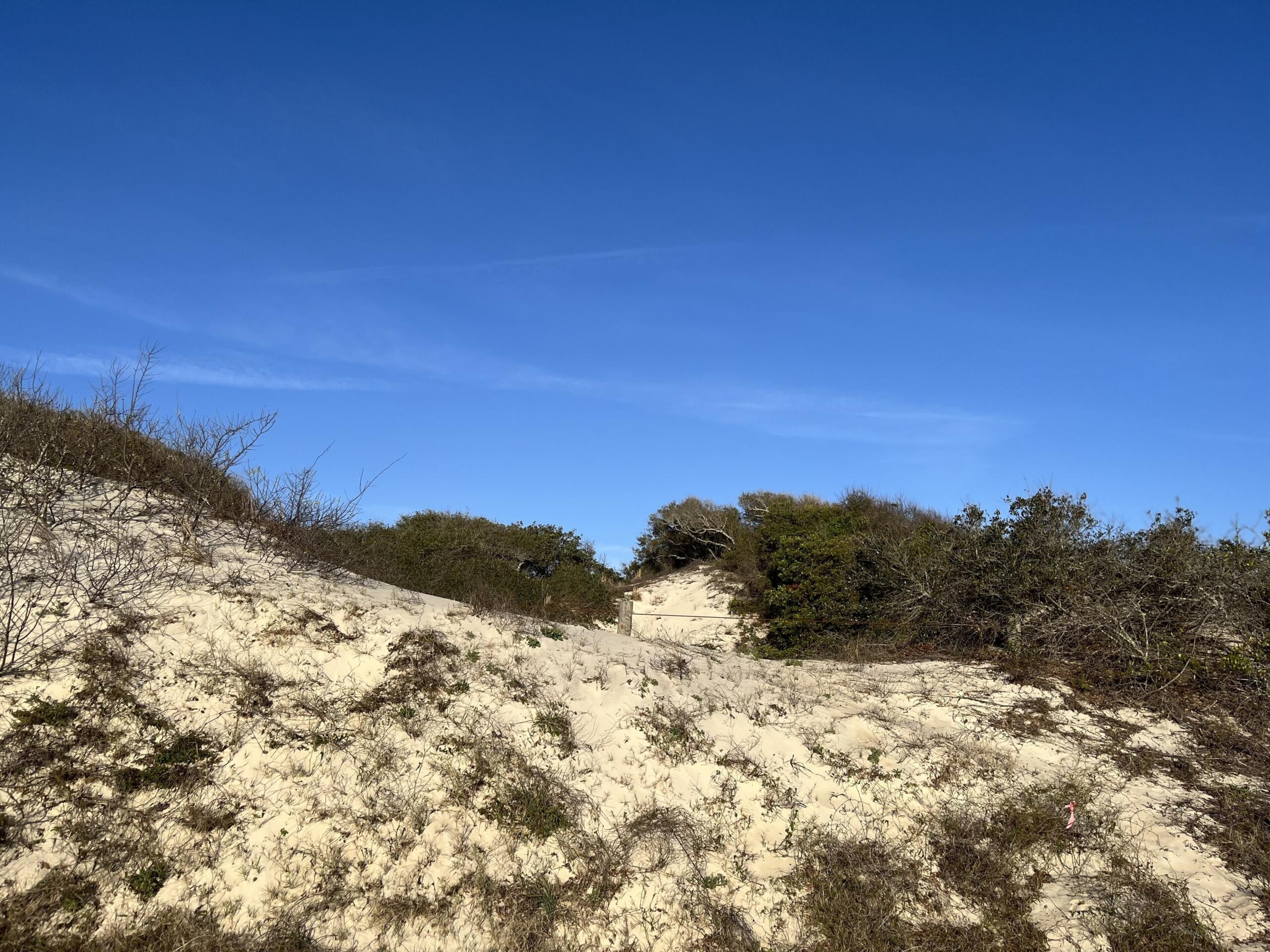
Visit American Beach and learn about how it was founded in 1935 as a beach access for African American people in the Jim Crow era. Also learn about MaVynee “Beach Lady” Betsch, who helped develop and maintain the beach as a historic and ecological cornerstone.
Explore the preserve with ranger-led activities including short presentations, longer hikes, junior ranger activities, and pop-up programs.
Before the Europeans arrived and before the Plantation era, the land was home to the Timucua people. Additionally, artifacts and evidence of human civilizations dating back to Archaic times are regularly found in the park.
Fort Caroline National Memorial
Within the Timucuan Preserve stands the Fort Caroline National Memorial, which commemorates the attempted French colonial settlement in 1564. The Timucuan Visitor Center is located near the fort, which is where the popular “Where the Waters Meet” exhibit is featured.
Popular things to do at the fort include hiking on trails, especially in the Theodore Roosevelt area, which is a 600-acre preserve. The trails at the park are generally one mile or shorter, but the park also abuts Cedar Point and JaxParks Cedar Point Preserve, which feature longer trails like the NPS loop and spur trails.
Discover why you should visit the national parks in Alaska.
The national park and memorial features many opportunities for visitors to get involved. Check the site for volunteer opportunities, artist-in-residence programs, and civic engagement opportunities.
The fort lies in the land of the Timucuan people, where French explorer Jean Ribault once landed, and René Goulaine de Laudonnière attempted to build a fort, but was later ousted by the Spanish governor Don Pedro Menéndez de Avilés.
Taking a road trip through the Sunshine State? There are lots of national parks to explore throughout each corner of the state, just waiting for you to discover them! With proper planning, you can experience all sorts of nature and history, from the bayous to hardwood forests to coral reefs.
References
- Big Cypress National Preserve (U.S. National Park Service). (n.d.). https://home.nps.gov/bicy/index.htm
- Biscayne National Park (U.S. National Park Service). (n.d.). In www.nps.gov. https://www.nps.gov/bisc/index.htm
- Canaveral National Seashore (U.S. National Park Service). (n.d.). In www.nps.gov. https://www.nps.gov/cana/index.htm
- Castillo de San Marcos National Monument (U.S. National Park Service). (n.d.). In www.nps.gov. https://www.nps.gov/casa/index.htm
- De Soto National Memorial (U.S. National Park Service). (n.d.). In www.nps.gov. https://www.nps.gov/deso/index.htm
- Dry Tortugas National Park (U.S. National Park Service). (n.d.). In www.nps.gov. https://www.nps.gov/drto/index.htm
- Everglades National Park (U.S. National Park Service). (n.d.). In www.nps.gov. https://www.nps.gov/ever/index.htm
- Fort Caroline National Memorial - Timucuan Ecological & Historic Preserve (U.S. National Park Service). (n.d.). In www.nps.gov. https://www.nps.gov/timu/learn/historyculture/foca.htm
- Fort Matanzas National Monument (U.S. National Park Service). (n.d.). In www.nps.gov. https://www.nps.gov/foma/index.htm
- Gulf Islands National Seashore (U.S. National Park Service). (n.d.). In www.nps.gov. https://www.nps.gov/guis/index.htm
- Timucuan Ecological & Historic Preserve (U.S. National Park Service). (n.d.). In www.nps.gov. https://www.nps.gov/timu/index.htm
Summarize with AI:
Did you like this article? Leave a rating!

 Loading...