


Are you preparing for the SAT and worried about the math section? Don’t be, because there isn’t anything that studying and putting in the time cannot fix. On average, those who put in the study time do better than the average SAT score and score up to 300 more points the second time around. The math sections of the SAT cover a wide range of topics, including geometry, algebra, trigonometry, statistics, and data analysis. But everything covered on the SAT is designed to test prospective college students' logic and readiness for college-level courses.
| Strategy | What It Helps With | How to Apply It |
|---|---|---|
| Time Management | Improving pacing and finishing all questions | Practice with timers, track slow questions, and aim to leave time for answer review. |
| Practice Makes Perfect | Identifying weaknesses and improving accuracy | Take full-length practice tests and carefully review incorrect answers. |
| Formula Memorization | Saving time and improving recall during geometry and trigonometry questions | Use formula sheets, flashcards, and apply formulas during practice problems. |
| Keep Mentally Calm | Maintaining focus and avoiding panic during difficult questions | Start with easier questions, skip challenging ones temporarily, and stay positive. |
| Use Your Calculator Strategically | Reducing calculation errors and improving efficiency | Use calculators for complex arithmetic but rely on logic or algebra when faster. |
| Master Core Algebra Concepts First | Strengthening problem-solving across multiple SAT math categories | Focus on equations, functions, and variable relationships through targeted practice. |
| Learn Common SAT Question Patterns | Recognizing recurring question structures quickly | Expose yourself to SAT-style questions and learn common solving approaches. |
| Plug in Numbers or Back-Solve Answer Choices | Simplifying complex algebra and multi-variable questions | Substitute answer options or easy numbers to test solutions efficiently. |


Understanding the SAT Math Section
Regardless of the math courses you’ve taken or are currently taking in school, you should be able to conquer the SAT math questions with the right SAT test prep schedule. Yet, if you feel like you need extra help on the math section of the SAT, get ready to study. The math portion of the SAT consists of two sections: one with a calculator and one without. The total time of both sections is 80 minutes and they are the last two sections of the exam unless you opted to also take the optional essay portion of the exam. The first math section is limited to students not allowed to use a calculator and consists of 20 questions and is timed at 25 minutes. Fifteen of the questions in this section are multiple-choice and five questions are grid-in questions. A grid-in question means that test-takers will have to produce their own answers and these questions account for 22% of the total 58 math questions in both math sections.

In the second math section, a calculator may be used, and it consists of 38 questions timed for 55 minutes. The questions consist of 30 multiple-choice questions and 8 grid-in questions, including a few “extended thinking” questions. Extended thinking questions are typically a set of questions organized around a single scenario, passage, or dataset. Graphs and data visuals should also be expected on the exam, as they test students' ability to read and interpret datasets.
questions across both modules. Managing time efficiently and minimizing careless mistakes is critical, as even a single incorrect answer can impact your scaled score.
The College Board sorts the math questions from the two sections into three main categories, including Heart of Algebra, Passport to Advanced Math, and Problem Solving and Data Analysis. These three categories account for 90% of the math questions, with the remaining 10% in the Additional Topics category.
Questions in the Heart of Algebra category, as you might already know, have to do with basic algebraic math. These questions will test your knowledge of linear equations, inequalities, graphing linear equations, interpreting functions, and linear function word problems.
Passport of Advanced Math questions might seem a little daunting because of the word “advanced”, but do not let these questions scare you off to the abyss. While the Heart of Algebra questions had to do with linear equations, Passport of Advanced Math questions deal with the knowledge to solve nonlinear expressions. Official question topics include solving quadratic equations, interpreting nonlinear expressions, solving quadratic and exponential word problems, working with radical and rational exponents, factoring polynomials, and isolating quantities.
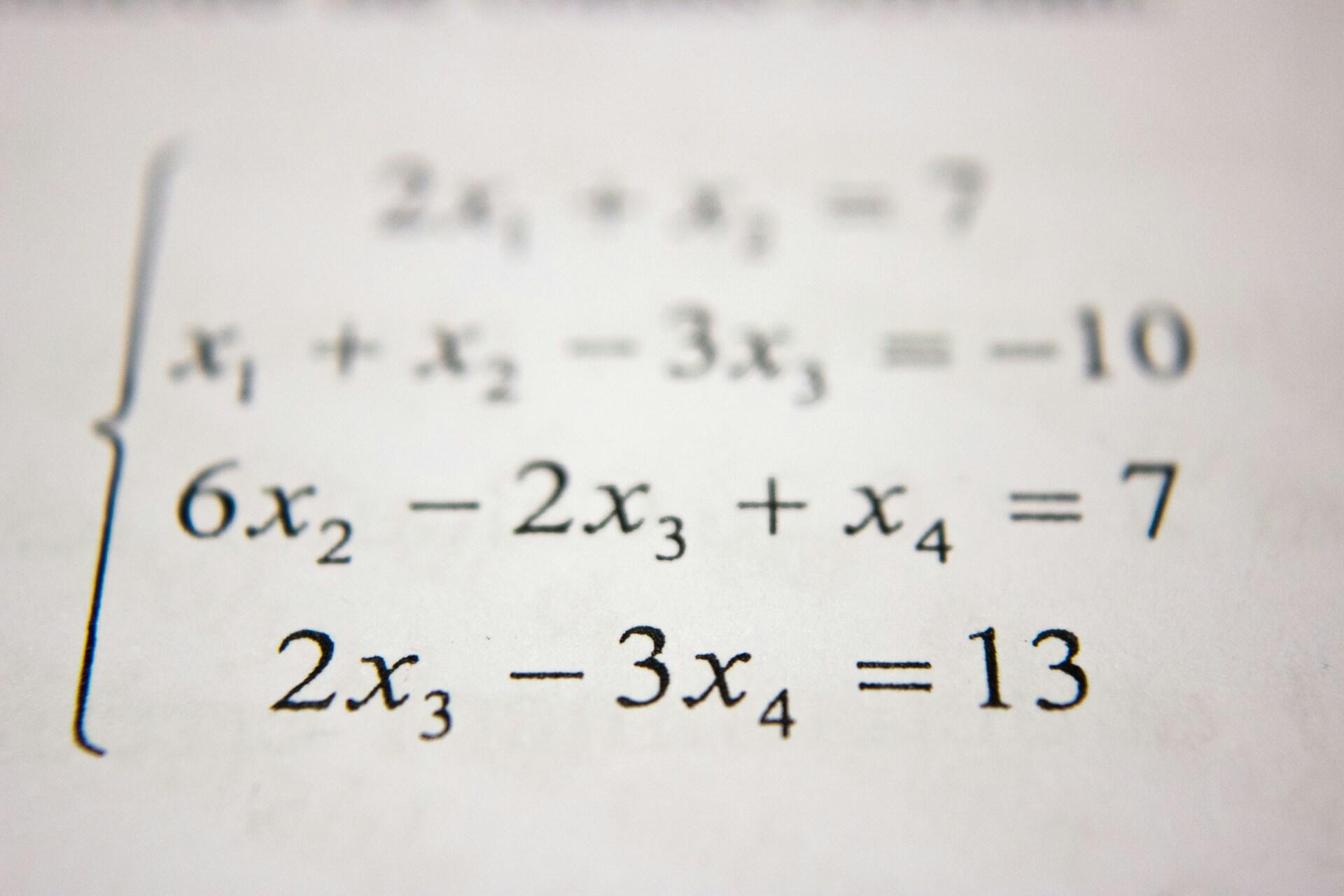
The third math category is Problem Solving and Data Analysis. These questions will ask you to work with percentages, ratios, rates, proportions, units, data tables, scatterplots, data inferences and conclusions, and shape center, spread, and distributions. These questions will test your ability to solve multi-step problems, calculate ratios, rates, and densities, and interpret various types of datasets and visuals.
The SAT math section is not only about knowing formulas or solving equations. Many questions are intentionally written to test logical thinking, problem interpretation, and real-world application skills. Students often lose points not because they cannot do the math, but because they misunderstand the question or overlook key details in data, graphs, or word problems. Developing strong reading and reasoning skills is just as important as mastering calculations.
Since these three categories account for 90% of the math questions, the remaining 10% are covered by the Additional Topics test, which includes geometry, trigonometry, and other problems with complex expressions. Most of these questions are testing your knowledge on determining the volume of shapes, your ability to apply properties to the area and angle measures, and to solve problems using sine, cosine, and tangent formulas. Now that you know the SAT math format, you are closer to determining which sections to focus more of your study time on in relation to your math strengths and weaknesses.
Effective Preparation Strategies
If you are aiming to achieve a perfect score of 800 on the math section or an average score of 527, the only way to get there is by putting in the work. Since the SAT cannot test students on AP Calculus problems and not all high school students reach that math level, it has to test students by presenting questions in a complex way rather than in layman’s terms.

From some perspectives, college students scoring highly on the math section is fairly important, depending on the type of university they might be applying to or the major they are applying for. First, it helps to determine what ballpark score you want to achieve in this section. There are 58 questions in the math portion of the exam, so each missed question is scaled by 800 points. The SAT math grading scale is fairly strict, which is why missing just one single question can drop your score to a 790. But that doesn’t mean you can’t get a perfect score or aim for a score higher than 750.
points, making it one of the most important components of the overall SAT score.
Now that you have determined your math section score range, it is time to work on strategies that will get you to your ideal score. Time management, constant practice, formula memorization, and keeping calm are a few SAT strategies that will mentally get you prepared for test day.
Time Management
Even if you are comfortable with the math material and topics being covered in the exam, most students struggle with the strenuous time constraints of the exam. That is where building your time management skills will come in handy. For every section, even when studying for the verbal portion, always use a timer and have it count down the allotted time you have for each section. Treat every practice question as a real question on test day. These time management exercises will only make you more comfortable working in a time-constricted environment.
Every time you take an SAT practice test, mark every question answered after the time was out with an extra time star. Once you move on to the next section and are ready to get your practice score, always give yourself two scores: an actual-time score and an extra time score. These two scores will help you evaluate your realistic score and the score you can work on achieving with just a few more timed practice questions and drills.
The starred questions and incorrect questions will also help you determine what math categories you need extra time with and which ones you need to brush up on. You might also realize that you scored higher with your extra timed answers, which means that you lack time management. This only clarifies that there might be a few math subjects that are slowing you down and need extra study time on those specific topics. You always want to time yourself and aim to finish every section with extra time on the clock. If you aim to finish with extra time, that means extra time to go back and check answers you might not been sure about.
Practice Makes Perfect
The SAT requires a significant amount of practice both for the verbal and math sections, to achieve a high score. Understanding your incorrect answers and the reasons why you got them wrong is the basis of practice makes perfect. You need to understand your weaknesses and strive to improve them. The only way to find those weak points is to take practice tests regularly.
Simply completing large numbers of practice questions does not guarantee improvement. Students who carefully review incorrect answers and identify why they made mistakes tend to improve faster. Analyzing whether errors occurred due to misunderstandings of concepts, rushing, or misreading questions helps students identify weak areas and build stronger long-term problem-solving skills.
A myriad of practice exams and official past test questions can be found with free online SAT practice tests or with SAT prep textbooks. These practice exams will allow you to know where your constant faults are and how to correct them before test day.
Formula Memorization
A great way to score extra time on the math sections is to memorize basic math formulas and concepts. Most of the formulas to memorize are easy and involve geometry and trigonometry.

The needed formulas include calculating the slope from two points, finding common right angles and sides, and formulas for volume, area, and surface area. There are complete lists of math formulas to memorize online and in your SAT prep textbooks.
Keep Mentally Calm
Now that you know the SAT math format and the top strategies to prepare for the exam, the final step is to keep mentally calm during the test. The only thing worse during an exam is to have your nerves get the best of you.
This means you might have to skip a few questions at the beginning, but it only means your mind needs time to adjust. Starting with easier problems at first will help your mind ease in. So, don't freak out if your mind can’t catch up when you first start the math section; just skip those questions and come back to them. If you have prepared yourself, you just need to maintain a positive mindset for the allotted time.
Use Your Calculator Strategically
A calculator can help. However, make sure you use it effectively rather than automatically for every question. Make sure you learn when mental math or logical shortcuts would be better than using your calculator.
Master Core Algebra Concepts First
Algebra is the foundation of most SAT math questions. By learning strong fundamentals, you can improve your performance. Study equations, functions, and variable relationships, as these will help you understand multi-step problems.
Learn Common SAT Question Patterns
With so many similar problem structures, if you learn the patterns, you can apply them to multiple questions. Exposure to a variety of SAT-style questions will help you become more comfortable interpreting the wording and instructions. As with most strategies, completing practice tests will help.
Plug in Numbers or Back-Solve Answer Choices
Put the numbers back into your answer. You can test answers by plugging the numbers in. Simplify complicated expressions and reduce the number of steps required to reach the correct solution. Use this strategically, as it may be quicker for certain questions, including variables, proportions, and multi-variable problems.
Which SAT math strategy helps you the most?
Summarize with AI:
Did you like this article? Leave a rating!

 Loading...

