

Most languages use distinctive expressions to make conversations more lively and fun. These idioms paint funny mental pictures that connect silly visuals with real-life situations. They help us express our feelings, mostly of frustration, scepticism, and disbelief. These funny English sayings focus on the silliness of life by being silly themselves.




A Few Sandwiches Short of a Picnic
Imagine inviting a crowd to a picnic where there isn't enough food for everyone. One would have to be crazy to host such an event, right? A picture of craziness is, in fact, this idiom's purpose. If someone is a few sandwiches short of a picnic, they lack common sense and intelligence. You can describe such a person with other fun idioms that mean the same thing:
- a few cards short of a deck
- a few beers short of a six-pack
- a few bricks short of a load
- a few points short of promotion
All Bark and No Bite
Barking dogs don't bite.
Folk wisdom
This 'wisdom' comes from the thought that dogs bark to warn people away; biting dogs don't warn you before sinking their teeth into your leg. It's not true that barking dogs don't bite, of course; plenty of dogs bark before biting. Still, this 'wisdom' is the root for this funny English idiom.
"Ah, don't mind him. He's all bark and no bite" means a person might say mean things or speak in a rough manner, but they're harmless. It's a good phrase to hear when you meet someone you're not sure about. "You're all bark and no bite!" is also a great way to tease a bully.
Between a Rock and a Hard Place
The mental picture this idiom draws is absurd, because rocks are hard, too. When you say you're caught between a rock and a hard place, you're communicating that you're stuck in an impossible situation. Any choice you make will have severe consequences. Imagine being in such a place as the singer below, or in one of these:
By the Skin of Your Teeth
Imagine how horrifying skin-covered teeth would look! Imagine having to care for such a set of teeth, including making sure they don't bleed every time you eat. Aren't we lucky our teeth have no skin covering them?
Luck (and not losing any skin) defines this idiom. "I passed my exam by the skin of my teeth" means luck was heavily involved in your exam results. 'Barely' is another one of its definitions. You can squeak out of any trouble by the skin of your teeth, which means you barely made it through a bad situation.
Cash Cow
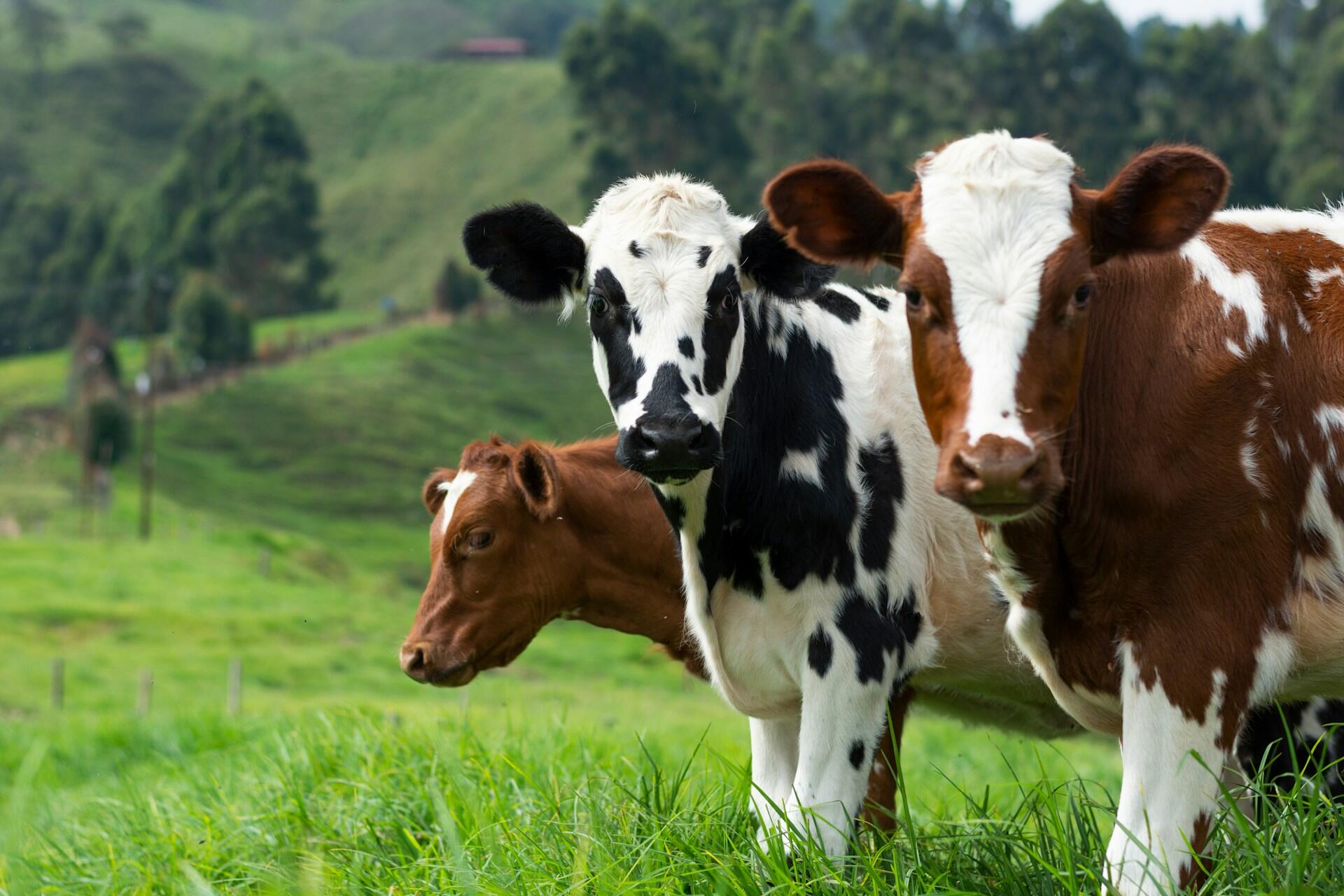
Cows are wonderful, docile beasts that have served humanity since the dawn of civilization. They've been our food and drink, our help in the fields, and a source of material for sturdy shoes and clothing. And, since the 1960s, they've been our bank machines.
Peter Drucker, a management guru, coined the term 'cash cow' to mean a product or business with high market value that helps the company earn a lot of money.
The 'cash cow' idiom is especially popular in Business English environments but many others use it too. 'Cash cow' can describe anything that delivers lots of benefits. "My grandma is my cash cow. She gives me all the food I want and some spending money, besides."
Everything but the Kitchen Sink
In many English-speaking countries, moving house means packing up everything; only the walls and fixtures (lights and plumbing) stay behind. That includes the kitchen sink, of course. From this, we can understand that this idiom means 'absolutely everything', even the most unimportant stuff. Try these sample sentences:
In Hot Water
This is one of the least funny idioms on our list, thanks to its dark history. During the Middle Ages, people accused of crimes or witchcraft were forced to put their arms in boiling water. If the burn healed, it meant you were innocent because God intervened and healed you.
Still today, being in hot water means being in trouble though, fortunately, nobody gets boiled alive anymore. Have you ever told your friends you have to be home by dark or you'll be in trouble? Next time, say it like this: "I'm going to be in hot water if I don't get home by dark!"

It's Not Rocket Science
Rocket science ranks among the most complex, intellectual disciplines. The opposite of rocket science is simplicity; something that doesn't need a lot of thought. When you tell someone, "It's not rocket science!", you're saying whatever they're trying to do is easy. The related idiom, 'It's not brain surgery', means the same thing.
- I don't know how to ride a bike.
- I'll never understand trigonometry!
- Can you cook spaghetti?
- How can people just climb mountains?
- Well, it's not rocket science!
- Geez, it's not brain surgery!
- Sure, it's not rocket science.
- Well, it's not brain surgery.
Lost Your Marbles
If your friend suddenly suggests doing something wild and dangerous, you should try to stop them. Shouting "Have you lost your marbles?" is a fun and effective way to do so. Losing one's marbles means the same thing as losing one's good sense.
Off Your Rocker
By contrast, being off your rocker is a more general expression of craziness. "You're off your rocker if you think I'm going to do that!" means you have no hope that that person will ever recover their good sense.
Losing one's marbles is generally temporary.
Being off one's rocker is a permanent condition.
On the Same Page
This idiom ranks among the most common phrases; it means "We're thinking the same thing; we agree." English speakers use it in work situations: "Just so we're on the same page, go over the plan again" and in therapy settings: "Let me get on the same page with you." Friends, families, and social groups use it, too: "Let's get on the same page. Are we going hiking this weekend or not?"
Out of the Blue
Have you ever seen lightning from a clear blue sky - the origin of this idiom? It's shocking, surprising, and completely unexpected; exactly what this phrase means. You can use it to express your emotion about something that happened that you did not plan on, as the Friends clip below demonstrates.
Pig Out
Humans have a close bond with animals, so it's no surprise that the English language has so many idioms featuring animals. This particular idiom does not paint a pretty picture, though. Imagine a grunting pig, nose in its food and smacking its lips. "Pigging out" means exactly that: eating a lot, with no decent manners, just like a pig.
English-speaking cultures believe pigs are fat, dirty, lazy, and stupid animals.
Any English idiom involving pigs tends to paint negative pictures.
"When pigs fly" is a good example. How can a fat, lazy pig fly?
The Pot Calling the Kettle Black
The joke here is that both the pot and the kettle are black.

This idiom paints a picture of the times when people cooked over an open fire. The fire's smoke turned everything black. If you know someone who's a pretender, a fraud - a hypocrite, this is the perfect answer to any claim they make.
Let's say your colleague loves to eat candy. One day, they see you eating a pastry and 'make a joke' about how you're going to get fat.
You should say, "Well, there's the pot calling the kettle black!"
Pulling Someone's Leg
Like other idioms on this list, this one has a dark history that traces back to London's pickpocket days. The thieves worked in teams; one (a child) would distract a passerby by pulling on their trousers to get their attention while the other slipped their fingers into the passerby's pockets.
Scam message: "You owe the tax office (a sum of money). Pay securely by tapping this link."
Your response: "Don't pull my leg! You're not the first 'tax office' to send me this message."
Put a Sock in It
It seems like the longer this list goes, the more terrifying these idioms become! 'Putting a sock in it' is what a kidnapper does to their victims to keep them quiet: they stuff a sock in their mouths. Luckily, you don't have to actually stuff a sock in someone's mouth. You can tell them to be quiet with this idiom.
Read Between the Lines
As an English student, you surely know that a lot of this language gets its meaning from context. Would you be surprised that situations also get their meaning from context? That's exactly what this idiom means.
'Reading between the lines' means understanding a situation not just because of the words used to describe it, but also because of other aspects. "Did she really say she likes you?" "No, but I can read between the lines. Her eyes were begging me to ask her out!"
Take a Load Off
Take a load off, don’t take everything so seriously.
Ariana Grande
The human body is an engineering marvel; how do our feet not crumble under the weight of our whole body? That's one meaning behind 'take a load off', which means 'sit down'. It can also mean 'don't let your troubles burden you', as Ariana suggests we all do. Do these sample sentences fit in your life?
"You can carry on shopping. I'm going to take a load off right here, on this bench."
"You're looking troubled, dear. Wanna tell me about it? Go ahead, take a load off."
Two Left Feet
Of all the idioms on this list, 'two left feet' has the most interesting history.
It used to be a compliment given to talented ballerinas because ballet dancers always lead with their left foot. If you had two left feet, you must be unusually talented!
Over time, social dancing became more popular and the idiom's meaning changed.
Now, it means a clumsy, uncoordinated person. It still relates to dancing: "With my two left feet, I'm no good at dancing."

But you can also describe someone who always trips over their own feet: "Don't walk too close to him; he'll bash into you with his two left feet."
Use Your Loaf
We end our list with a typically British idiom, which is also a common idiom about food. 'Use your loaf' means 'use your head' or, more specifically, your brain. It mirrors the slang used in American English: 'use your noodle'. You can use them when you want someone to think of a solution themselves.
How am I gonna figure that out?
How am I supposed to do that?
By using your noodle, like the rest of us do.
Use your loaf! Don't count on me to do your thinking.
Summarize with AI:
Did you like this article? Leave a rating!

 Loading...