


A people without the knowledge of their past history, origin, and culture is like a tree without roots.
Marcus Garvey, Jamaican activist
Studying American history is essential since it helps us to understand how the United States government, society, and civic values evolved. It shows us how these foundations shaped the country today. US history is taught in high schools with a focus on cause and effect, but history skills are useful for more than just AP US History; they also help you build essential skills like critical thinking, source analysis, and informed decision-making.





Understanding the Foundations of American History
It may not have been crucial for our ancestors to know the history of the Far East, but it is crucial for us to know it today. The shared experiences, events, objectives, and aspirations make a nation – these aspects can easily be understood through high school history lessons. Those who do not know their nation’s history would never understand their community. You wonder how? Because they would not know how and what has influenced their society over time.
American history in high school focuses on the key political, social, and economic developments that shaped the United States from its earliest foundations to the modern era. Students study major periods, including Indigenous societies before European contact, colonial settlement, the American Revolution, the formation of the new nation, and national expansion. Alongside historical events, courses emphasize skills like analyzing primary sources, understanding cause and effect, and evaluating how different groups experienced change over time.
The history of America is more significant than our personal experiences, and its magnitude can be understood by knowing the deeds, events, and hopes of fellow Americans, which helps us understand how our current government, society, technology, and race have evolved into what they are now. With that said, these are the most prominent eras/events in the history of America.
Before 1492
Pre-Columbian Era
Indigenous societies in North America before European contact, including diverse cultures, economies, and ways of life.
1600–1783
Colonial Settlement
European powers establish colonies in North America, shaping political systems, economies, and early conflicts.
1773–1783
American Revolution
Colonists challenge British rule, leading to independence and the creation of a new nation.
1783–1815
The New Nation
The United States forms its government, defines its Constitution, and navigates early political divisions.
1815–1850s
National Expansion and Reform
Territorial growth, social reform movements, and rising tensions that shape the nation’s future.
The Pre-Columbian Era
The pre-Columbian era includes all periods in American history before European contact. The periods range from the original settlement in the Upper Paleolithic to European colonization in the early modern period. Though it mentions the native people of America, the phrase doesn’t exactly refer to any known sophisticated cultures that have prospered in America (such as the Aztec, Maya, or Inka). Instead, it refers to the European explorer; hence, the term pre-Columbian is quite complicated, to say the least.
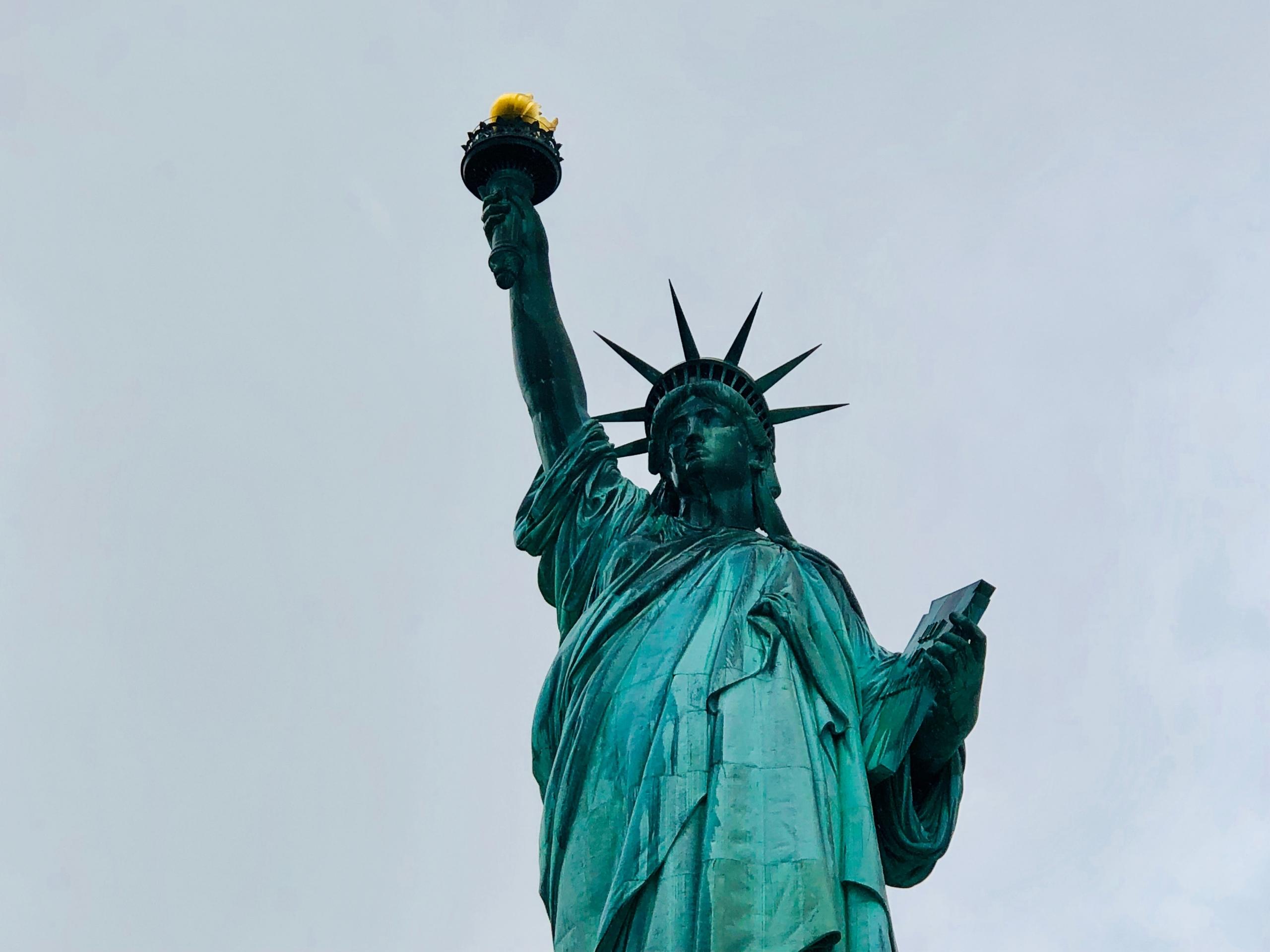
Colonial Settlement (1600–1783)
During the 1600s, England sought to rival the other European powers by establishing different colonies in North America. The English, Dutch, Spanish, and French immigrants established their colonies on the Atlantic coast. And the first colony established by English people was at Jamestown, Virginia, in 1607. The goal of colonists and their supporters was to bolster England’s territorial domination. This is why it is also crucial for students to understand European history since the history of the two continents becomes permanently intertwined at this point in time.
The American Revolution
The American Revolution is the period of events in which British colonists in America rebelled against British rule. The colonies and their leaders fought many battles to gain their freedom and, in 1783, became an independent country, the United States. This revolution played a significant role in unleashing powerful political, economic, and social forces that later transformed into large political parties and social communities. The American Revolutionary War lasted from 1773 until 1783. Finally, the British and Americans agreed on November 30, 1782. They signed a final treaty, the Peace of Paris, on September 10, 1783. And this agreement was quite favorable to the United States.
The New Nation (1783–1815)
The leaders miraculously pulled off the impossible and won their war against the British, securing a favorable national boundary in the 1783 peace treaty. These troubles surfaced in the new nation, and the country seemed to collapse as quickly as it had been established. The government was too weak to control the powerful state, unable to collect taxes, the constitution lacked its own revenue, and couldn’t maintain an army or navy. During this time, the Americans had two parties - the Republicans and the Federalists.
The Republicans
The leader of the Republicans was Alexander Hamilton. And the rest of the republicans favored states’ rights and wanted to execute the strict interpretation of the Constitution.
The Federalists
The leader of the Federalists was Thomas Jefferson. This political team encouraged manufacturing and commerce. However, the Federalists had a strong interest in a powerful central government and sought to interpret the Constitution loosely.
National Expansion and Reform
A small republic established by George Washington’s generation became the world’s largest democracy. The national expansion and reform led the Americans to feel optimistic about the future. Moreover, the political power reinforced by religious revivals led by American citizens supported the national development and social reforms. The reforms included improving the treatment of the poor, the insane, and prisoners, abolishing slavery, promoting temperance, attaining equal rights for women, and creating public school systems. However, this national expansion and reform declined in the 1850s due to a conflict between the North and South over the issue of slavery.
of American history.
Benefits of Learning History
History is not the past. It is the present. We carry our history with us.
James Baldwin, American writer and civil rights activist
Whether it’s world history or the American Revolution, history is dynamic and inconstant – meaning it changes over time as new information comes to light. Did you know that having knowledge about a nation’s history makes a considerable contribution to making an informed citizen, which cannot be attained in any other way? Acquaintance with your own history is essential to becoming a contributing stand-up American. The reason behind this belief can be reviewed under four main factors:

Role of American History in High School
Other subjects, such as high school social studies, geography, and civics, also help develop intelligent and loyal citizens. Specifically, art aids in creating sympathetic and well-rounded individuals. Hence, each subject taught in high school has a definite place in the curriculum. With that said, here are some specifics about high school American history.
Provides a Realistic Outlook of Life
The importance of history is not based on its ideas but on its material and methods. American history presents its people’s social and political experiences in a realistic, detailed view. Instead of dealing with specific events and objectives, American history focuses on the experiences of communities and the achievements of ordinary individuals.
It's Taught Like a Story, Helping Students Relate
History might sound boring to most students because the materials, events, and goals of American history are arranged in chronological order. It leads to stress in understanding the concepts, development, and continuity. Unlike other subjects, high school history lessons present the facts of social and political experiences in the same order and tone in which they have occurred.
Prepares Responsible Thinkers and Decision Makers
The value of American history in preparing future citizens and voters for intellectual participation in economics and politics is vital. A citizen with ample history knowledge makes an intelligent decision and votes as he is well-aware of the nation’s policies and their results. More important than knowing specific events and facts, studying American history enables students to think about historical development. A student acquainted with the history of America would realize the gradualness and certainty of a change.
Develops Critical Thinking Skills
Students would develop the critical thinking ability to understand the simplest social problems and the usefulness of a simple solution. The students may not all become historians or even forget the legendary events in a year, but they become more disciplined, considered, and rigorous thinkers through American history.
In addition, American high school history lessons train students to avoid extreme optimism, keeping men from identifying a problem. Therefore, learning history deepens and improves one’s ability to think. We all use history in making both individual and group decisions. Knowing American history is essential to every citizen as it greatly influences the life of the society and community we live in.
Ready to Become a Well-Informed Citizen?
Those who do not remember the past are condemned to repeat it.
George Santayana, Spanish philosopher and essayist
American history courses offer a comprehensive guide to American society, emphasizing social communities rather than individuals and solutions rather than problems. The high school history classes allow students to explore the record of human decisions and experiences. We, as citizens, must know our history if we want to understand our nation and deal with its problems. And to learn American history in your time, there is no better platform than Superprof. With over 800+ professional history tutors, the American history course offered by Superprof can be a standalone curriculum. Learn all about the history of the United States of America and its evolution of civilizations, politics, culture, art, and literature through time. Sign up for an online history course to start a fulfilling path of educational enrichment and a successful career.
Summarize with AI:
Did you like this article? Leave a rating!


 Loading...

