
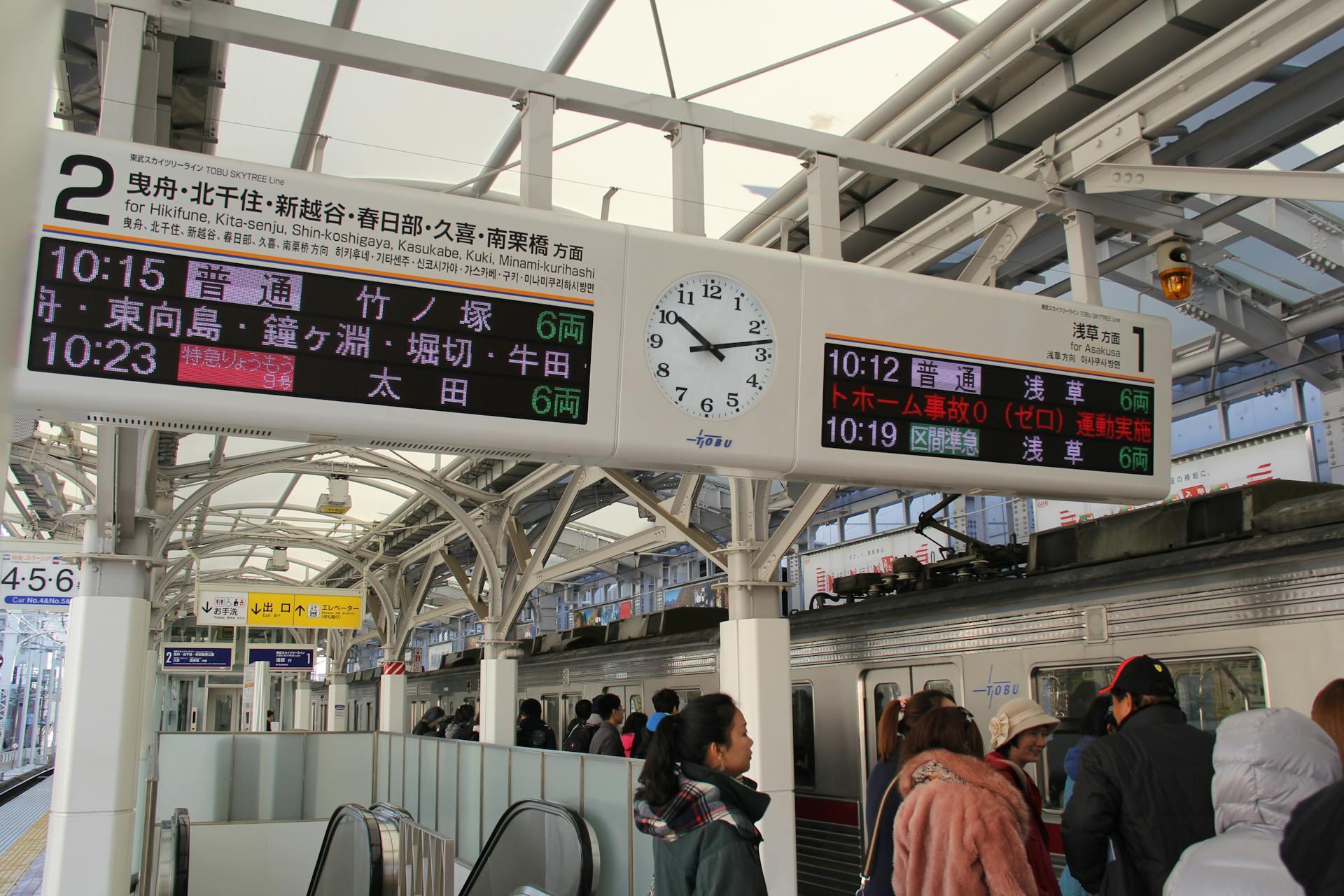

Numbers are a huge feature of any language, and it’s often taken for granted that they are easy to recognize when written, even in another language, because many places in the world use the Arabic numerals we are used to in English. However, even though many places in Japan do use these numerals, it’s also very common to write numbers in kanji. When learning Japanese, you’ll need to learn how to read (and write, listen to, and speak!) numbers in kanji!





An Overview of Japanese Numbers
If you've ever landed at any of Japan's 88 airports, traveled with their remarkably precise train system, or had any exposure whatsoever to Japanese films, shows, or books, you might be wondering why we're talking about numbers in Japanese.
They use Arabic numerals, just like the rest of the world, right?
Of course! Walk down any Japanese street and you'll see prices boldly listed in clearly legible numbers. That doesn't mean that numbers are pronounced the same way as elsewhere in the world, or even that they are consistently written the same way in every given instance.
Aside from everyday use, Japanese numbers are written in Kanji. You may also find them written in Hiragana.
Let’s take a look at how to write number in Japanese from 1-100 in Kanji.

How to Write 1-10 in Japanese Kanji
| Number | Kanji | Pronunciation |
|---|---|---|
| 1 | 一 | ichi |
| 2 | 二 | ni |
| 3 | 三 | san |
| 4 | 四 | shi / yon |
| 5 | 五 | go |
| 6 | 六 | roku |
| 7 | 七 | shichi / nana |
| 8 | 八 | hachi |
| 9 | 九 | ku / kyuu |
| 10 | 十 | juu |
There are a lot of superstitions and cultural idiosyncrasies in the Japanese language. Some of those quirks impact how to call numbers.
The number 4, “shi” is sometimes called “yon” instead because “shi” is also the word for “death.” Likewise, 7, “shichi” is sometimes called “nana” for the same reason, since it contains the syllable “shi.” The number 9, “ku,” sounds like the word for “suffering,” so it is often called “kyuu” instead.
Note that these numbers are still written the same way in kanji no matter the pronunciation, but they are written differently in Hiragana, which is akin to a Japanese alphabet.
How to Write 11-19 in Japanese Kanji
| Number | Kanji | Pronunciation |
|---|---|---|
| 11 | 十一 | juu ichi |
| 12 | 十二 | juu ni |
| 13 | 十三 | juu san |
| 14 | 十四 | juu yon |
| 15 | 十五 | juu go |
| 16 | 十六 | juu roku |
| 17 | 十七 | juu nana |
| 18 | 十八 | juu hachi |
| 19 | 十九 | juu kyuu |
Counting beyond 10 in Japanese is pretty simple! Just say the two numbers together to create a new number. Note that the “unlucky” number pronunciations are not used.
How to Write 20-99 in Japanese Kanji
| Number | Kanji | Pronunciation |
|---|---|---|
| 20 | 二十 | ni juu |
| 21 | 二十一 | ni juu ichi |
| 22 | 二十二 | ni juu ni |
| 23 | 二十三 | ni juu san |
| 24 | 二十四 | ni juu yon |
| 25 | 二十五 | ni juu go |
| 26 | 二十六 | ni juu roku |
| 27 | 二十七 | ni juu nana |
| 28 | 二十八 | ni juu hachi |
| 29 | 二十九 | ni juu kyuu |
| 30 | 三十 | san juu |
| 40 | 四十 | yon juu |
| 50 | 五十 | go juu |
| 60 | 六十 | roku juu |
| 70 | 七十 | nana juu |
| 80 | 八十 | hachi juu |
| 90 | 九十 | kyuu juu |
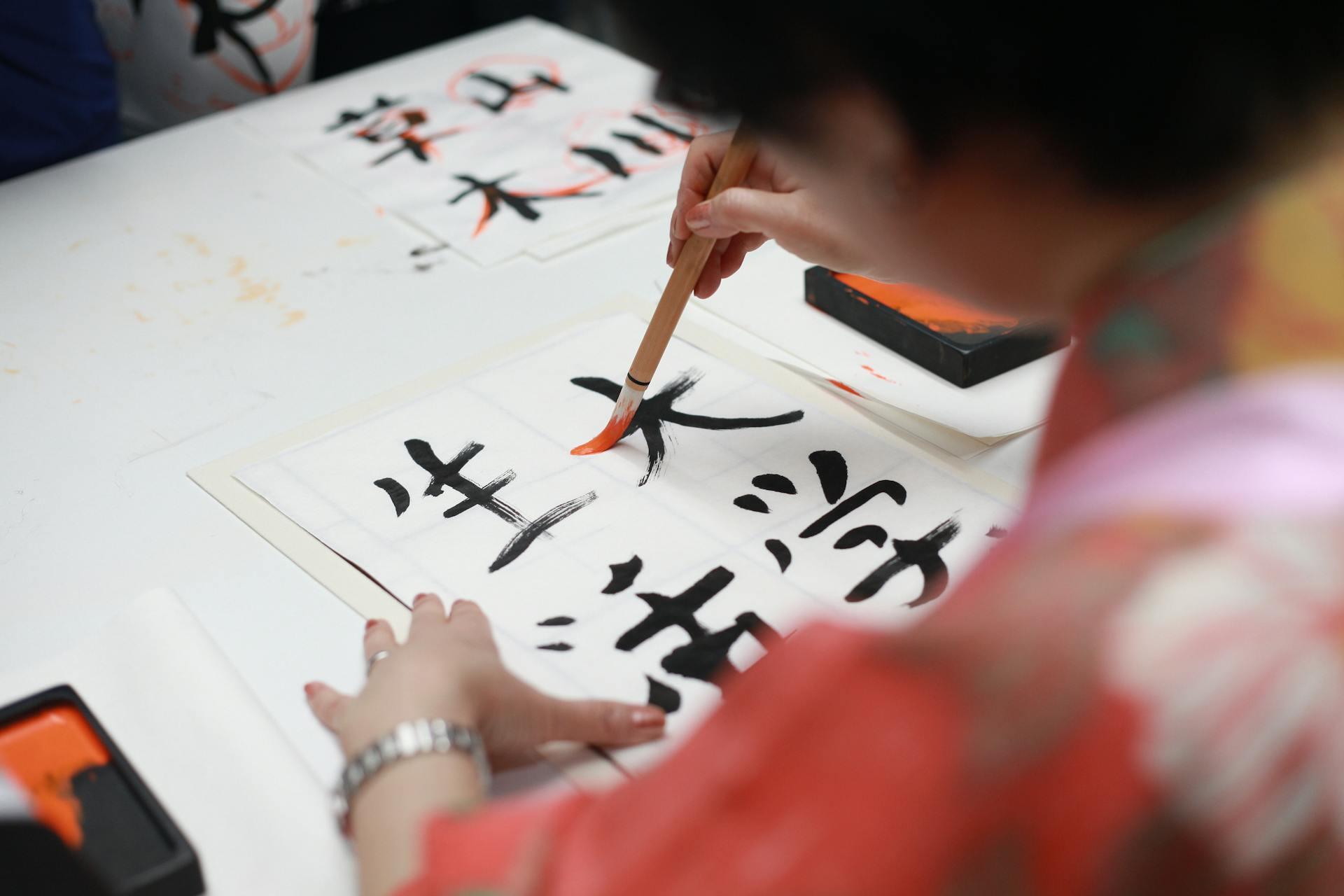
When you reach the number 20, you simply say “two tens” to indicate “twenty.” Then, you continue on the same way as you did with the numbers 11-19. The same pattern repeats when you reach 30, which is “three tens,” and so on.
Japanese numbers are very logical! You can also see a similarity between Japanese counting and Roman numerals, where symbols are combined to indicate a higher number.
The Japanese word for 100 is “hyaku” which is written as “百” in kanji.
Counting Past 99 in Japanese Kanji
How can you write numbers in Japanese when they are larger than 100? In Japanese, 100 is represented by 百 (pronounced “hyaku”). Counting beyond 100 follows the same technique as counting up to 100.
Let’s break down an example:
Here is a kanji for a big number: 二百三十七
二 is 2, and 百 is 100 ➡ written together they mean 200.
三 is 3, and 十 is 10 ➡ written together they mean 30.
七 is 7 ➡ when combined with 三十, it means 37.
So, all together, the number is 237!
Note that, even though the Japanese numbering system includes a character for zero, it is not often used. For instance, to write 101, you would simply write “百一,” which is literally “one hundred” and “one.” Unlike Arabic numerals, there is no tens place that requires a 0.
When broken down like this, the Japanese numbering system is simple and logical in the extreme. The only trouble might be for those who speak/read Mandarin since the numbers look exactly the same (and work the same way); they just don't sound the same.
In Japanese, the kanji characters for numbers are combined to represent another number. With Arabic numerals, we write "4" and "2" next to each other to create "42." Japanese you must write "four tens two," which is "四十二."
Differences Between Japanese and Western Numbers
On the surface, there doesn't seem to be much difference between how numbers work in English and in Japanese. While there are many similarities, there are also some key differences to understand.
For one, our 'tens' have different names: twenty, thirty, forty, and so on. By contrast, the Japanese numbers stay at 10, with a multiplier in front of it. Imagine how confusing learning numbers in English must be for Japanese speakers!
Some of our 'teen' values have different names, too, namely eleven and twelve. Only then are the numbers consistent from 13-19.
Compared to the Japanese way of saying 'ten-one', 'ten-two', and 'ten-three' - all the way to 'ten-nine', before turning into 'two-ten', the English method seems unnecessarily complex.
In English, depending on the situation, it's common to insert 'and' between the hundreds and tens values. For example, "That will be two hundred and three dollars, please.” You'll find no such 'and' anywhere in Japanese numbers, regardless of the situation.
One of the greatest differences between the Japanese numbering system and ours is how the numbers are grouped.
Think about how we would write a large number, say 356,521. Whereas we count off by the hundreds, most Asian cultures, including the Japanese count by the thousands (1000 is “千,” pronounced “sen”). The Japanese, writing in Arabic numbers, would express our sample number like so: 35,6521.
And, finally, another anchor value: 10,000 (万, pronounced “man”). This number certainly exists in our familiar number structures but it lacks the clear demarcation it enjoys in Japanese.
For instance, you might say "I bought a house for $67,000.” In Japan, that amount would be expressed as 六万七千 - six ten-thousands seven thousands. For someone unused to that system of counting, it could take a bit of mental configuration to arrive at the proper sum.
Fortunately, the more you study Japanese words and phrases, the better attuned you will become to this efficient counting system.
Lucky and Unlucky Numbers
As mentioned before, some numbers have alternate pronunciations to avoid invoking unlucky concepts in everyday speech.
The 'shi' pronunciation for the number 4 sounds very similar to the Japanese word for death. The number four is considered unlucky because of that connection; that's why you won't see many elevators with a button for the fourth floor, and many apartment buildinigs do not have a unit numbered 4.
You will also not find things being sold or gifted in groups of 4. Where it’s common to buy a set of dishes (for example) as a set of 4 in the US, you will likely only find sets of 5 or 6 in Japan.
Nine is also considered unlucky because its alternate pronunciation, “ku”, relates to torture and suffering - obviously not a concept anyone wishes to feature in their daily lives and transactions. Whenever possible, be sure to use the “kyuu” pronunciation.
Seven is spoken as "nana" when referring to someone or something's age or when saying numbers. Shichi is used to talk about time and date.
Sometimes, numbers act as talismans and using them in your business' name or occupying an apartment with such a number is said to be particularly fortunate. Would you be surprised to learn those numbers are all prime?
Numbers 3, 5 and 7 are said to have a particularly beneficial influence. If you're the third son in a family, it's thought you will be quite fortunate in life, especially if your name contains “三” as in Sanyu. If named thus, you will surely have a happy, prosperous life.
There are many such additional meanings in many Japanese names.
Measure Words in Japanese
For us, it's quite common to say we're “going for a coffee” or rattling off the number of people in our family - "There's six of us at home.” Doing so in Japan would return puzzled looks.
The Japanese language demands measure words anytime a number is used so, instead of “going for a coffee,” you would go for “a cup of coffee” (“一杯”; ippai - one cup of liquid). When describing your family, instead of assuming the 'us' in question is people, you have to actually say the word which means “(number of) people.”
- hitori: one person
- futari: two people
- sannin: three people
- yonin: four people
- gonin: five people
- rokunin: six people
- shichinin: seven people
- hachinin: eight people
- kyuunin: nine people
- juunin: ten people
Indeed, “-nin” is the suffix meaning “more than two people.”
For things other than people, measure words are generally assigned based on the physical appearance and/or function of the object in question.
For instance, thin, flat, and/or blade-like objects, including paper are designated “-mai” (枚) while long, round, or cylindrical objects are -hon (本).
Another example is the word “gatsu” (月) which means “month”. Example: ichigatsu - 一月 (January), “month one.”
If you're still learning the basics of Japanese, you might be relieved to know that there is a universal measure word you can use for just about everything: -tsu (つ). If you've newly arrived in Japan, nobody would mock you for asking for a “hitotsu” of coffee, meaning “a thing of coffee,” instead of a cup of coffee.

Learn Japanese with Superprof
Learning a language, especially one like Japanese which is very different from English and other closely-related languages, can be quite challenging. You can ensure that you learn the correct information with the right pronunciations easily when you study with a private tutor on Superprof!
Superprof teachers offer lessons both online and in-person, so you can take private classes with qualified teachers in whichever format suits your needs best. Get started today when you search for a Japanese tutor on Superprof!
Summarize with AI:
Did you like this article? Leave a rating!


 Loading...
