

Never forget that justice is what love looks like in public.
Cornel West,American philosopher
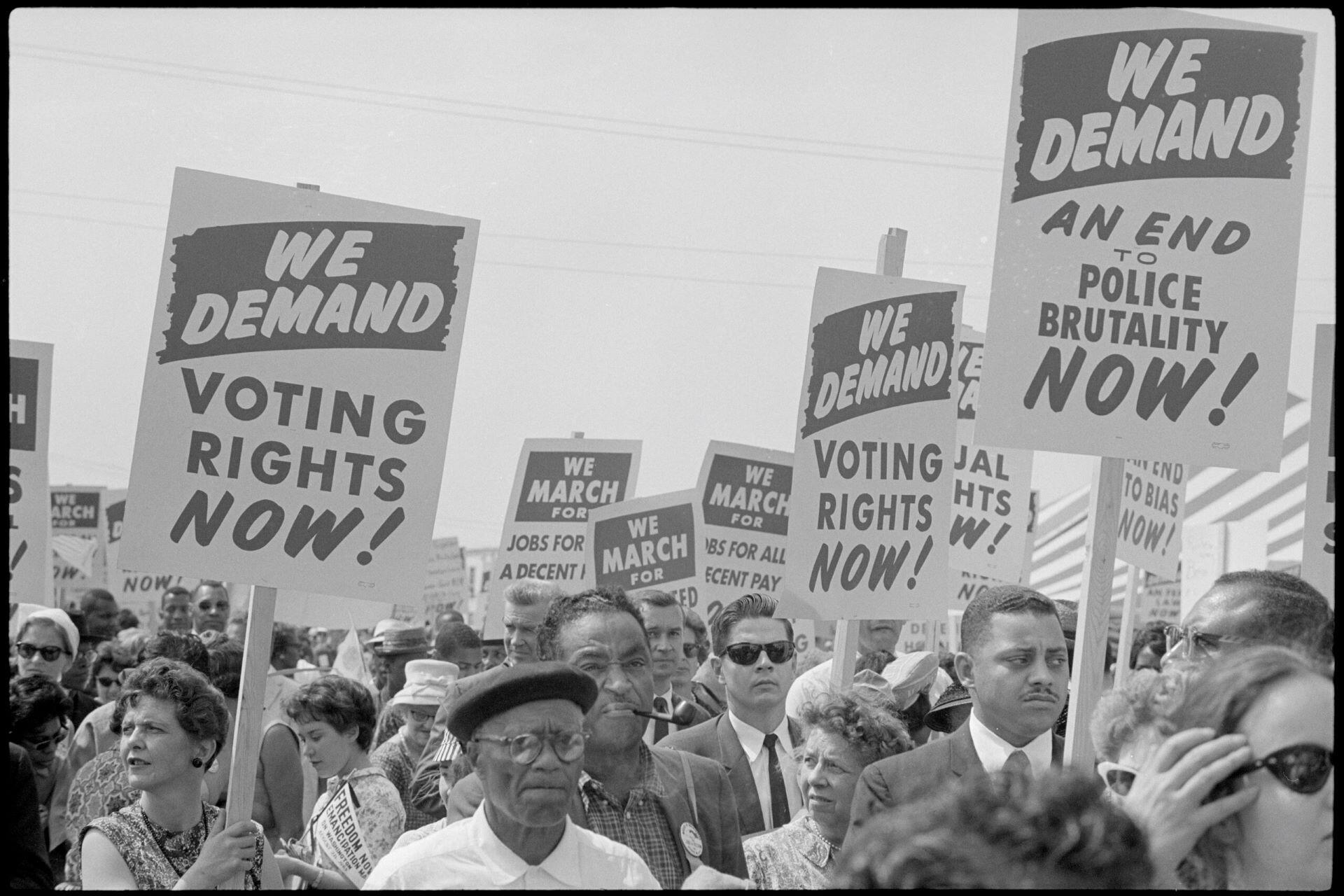
One of the most significant moments in the civil rights movement, the March on Washington in 1963, brought a quarter of a million people to the capital. The event featured powerful speeches and unprecedented national unity. From the iconic "I Have a Dream" address to the changes that followed, let's explore how the march came to be and what happened on the day.
Key Takeaways
- The March on Washington in 1963 brought more than 250,000 people to the National Mall, making it one of the largest peaceful civil rights demonstrations in American history.
- The event highlighted urgent issues, including segregation, discrimination, voter suppression, and economic inequality, amplifying national calls for reform.
- Led by major civil rights organizations such as the SCLC, NAACP, SNCC, CORE, the National Urban League, and Randolph’s Brotherhood of Sleeping Car Porters, the march represented a unified national coalition.
- The day featured historic speeches, most notably Martin Luther King Jr.’s “I Have a Dream”, which became a defining moment in the fight for racial justice.
- The march accelerated federal action that resulted in the Civil Rights Act of 1964 and later helped build momentum for the Voting Rights Act of 1965.
- Its peaceful, disciplined execution demonstrated the strength of nonviolent protest and set the blueprint for future civil rights and social justice movements.
- The legacy of the march continues to inspire activism for equality, voting rights, and justice across the United States.




Historical Context Leading to the March
By 1963, the civil rights movement was at a critical point. African American communities were confronting discrimination, voter suppression, racial segregation, and violent resistance to their peaceful protests. Freedom Rides, student-led sit-ins, the Albany Movement, and confrontations in Birmingham, Alabama, had made it clear that there was an urgent need for national action.
Leaders, including A. Philip Randolph, Bayard Rustin, Martin Luther King Jr., Roy Wilkins, John Lewis, and other key organizers, knew that the fight for equality needed to put massive pressure on the federal government. Even though President John F. Kennedy had proposed civil rights legislation, there was strong opposition, especially in the South, and progress was slow. To bring attention to the discrimination, a large-scale march was held in the nation's capital, Washington, D.C., was more than necessary.
Planning and Organization
The March on Washington in 1963 was the result of intense planning, negotiation, and collaboration. Civil rights leaders, labor advocates, student organizations, and religious groups in the country were all involved.
The original idea came from A. Philip Randolph. The labor leader had proposed a mass demonstration in Washington as early as the 1940s to protest discrimination in the defense industry. Two decades later, the idea was brought back with a powerful coalition including organizations and both key male and female civil rights activists to highlight segregation, racial violence, and the inequality still plaguing everyday American life for many.
Randolph appointed Bayard Rustin as the chief organizer. Rustin was famous for his logical expertise, nonviolent philosophy, and ability to coordinate large-scale action. Randolph and Rustin assembled the "Big Six" civil rights organizations.
Founded in 1957 by Black ministers, including Martin Luther King Jr., the SCLC coordinated church-based activism across the South and became one of the major engines of nonviolent direct action, voter registration, and public protests.
Established in 1909, the NAACP was by 1963 one of the most influential civil rights organizations, using legal challenges, political lobbying, and grassroots mobilization to confront segregation and racial discrimination.
SNCC brought youthful energy and grassroots organizing to the movement, mobilizing students to lead sit-ins, Freedom Rides, and voter-registration drives, expanding the movement's reach beyond traditional church leadership.1
Founded in the 1940s, CORE was an early pioneer of nonviolent direct action, leading sit-ins and Freedom Rides and helping shape the tactics that made later mass mobilizations like the March on Washington possible.
The Urban League played a key role in advocating for employment, housing, and economic equality for Black Americans, ensuring the civil rights agenda addressed economic opportunity alongside segregation and voting rights.
The first major African American labor union, led by A. Philip Randolph, the BSCP built strong labor and civil rights alliances, and Randolph used its influence to champion the idea of a mass march on Washington long before 1963.
The Day of the March
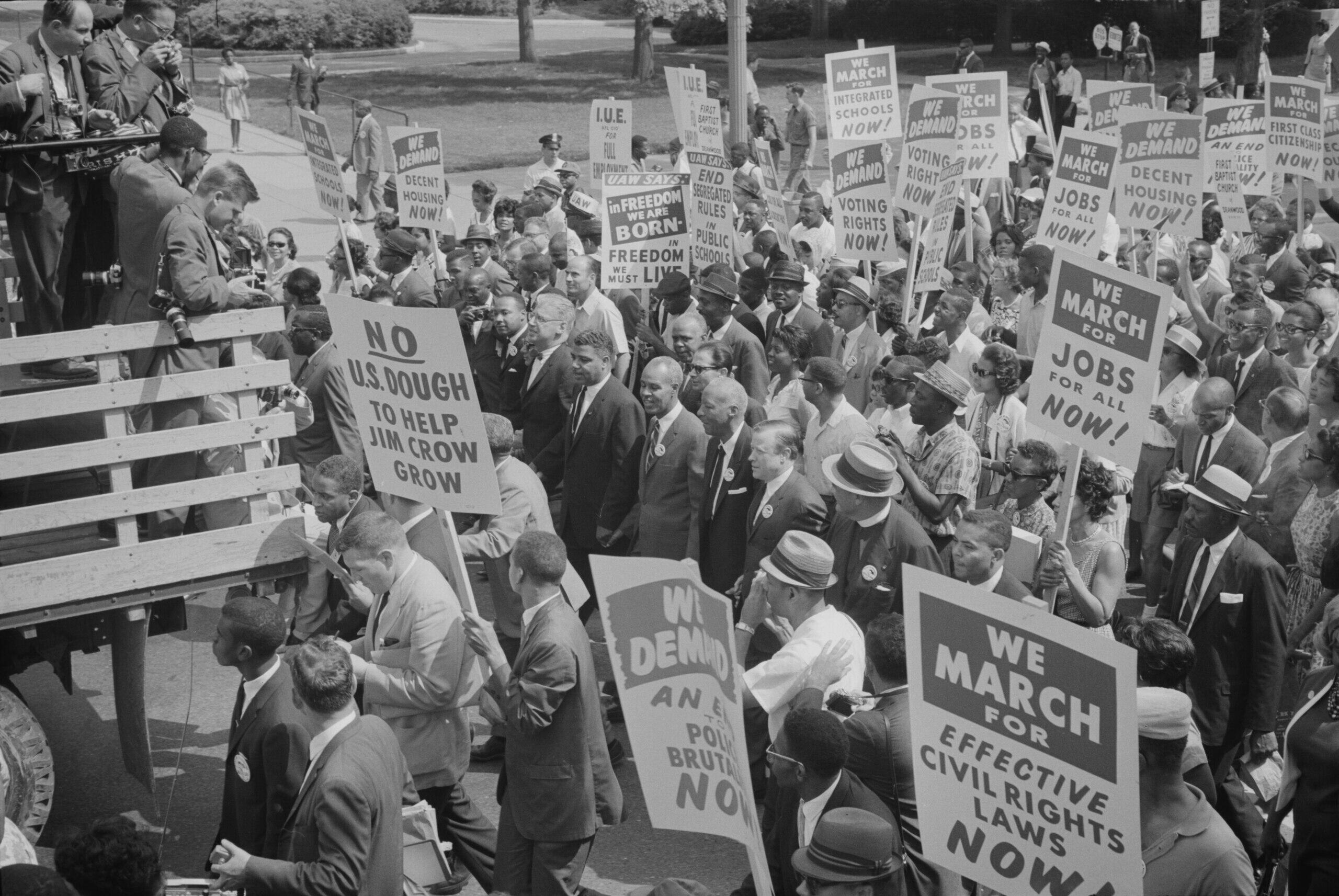
On the day, hundreds of thousands of people gathered peacefully at the National Mall. Families, students, workers, clergy, activists, and supporters showed their shared commitment to racial equality. It was one of the key events of the civil rights movement and a sign that the nation was ready for change.

people at the 1963 March on Washington.
Timeline of Events on August 28, 1963
The day was carefully planned. After all, massive fans had to move across the city. Organizers coordinated transport, volunteers, security, and sound equipment.
8:00 a.m.
Early Arrivals Begin Gathering
Marchers arrive by bus, train, and car, filling the area around the Washington Monument.
10:00 a.m.
Pre-March Music and Warm-up Program
Performers and speakers greet the crowd with early songs and messages as the crowd grows.
11:30 a.m.
Procession Toward the Lincoln Memorial
The march officially begins as participants walk from the Washington Monument to the Lincoln Memorial.
1:00 p.m.
Official Program Opens
Leaders welcome the crowd with prayers, music, and statements about civil rights, jobs, and racial justice.
1:30 p.m.
Speeches from Major Civil Rights Leaders
Representatives from the NAACP, SNCC, SCLC, CORE, and other organizations deliver addresses calling for national action.
3:00 p.m.
Martin Luther King Jr. Delivers "I Have a Dream"
King gives his historic speech, which becomes one of the most influential addresses in American history.
4:00 p.m.
Civil Rights Leaders Meet President Kennedy
A delegation visits the White House to discuss civil rights legislation and the goals of the march.
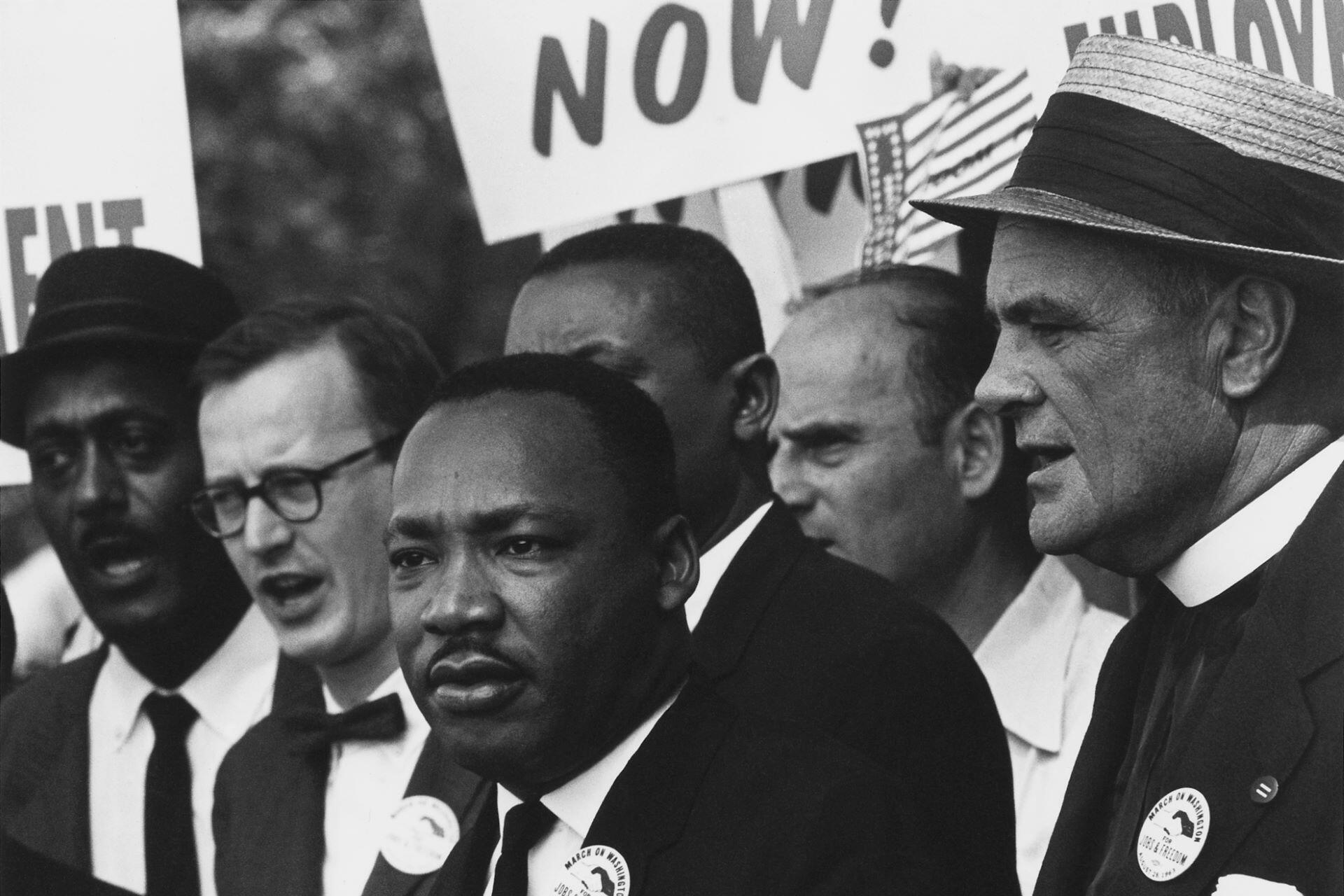
I have a dream that one day this nation will rise up and live out the true meaning of its creed.
Martin Luther King Jr.
Key Speeches and Performances
March is remembered for its turnout, but it's also known for its speeches. Key activists, clergy, labor leaders, musicians, and rising young voices all shared messages of hope and determination.
Martin Luther King Jr.
“I Have a Dream”
King speaks of racial equality, justice, freedom, and the dream of an integrated America.
John Lewis (SNCC)
Youth Demands for Action
Lewis delivers a forceful speech addressing voting rights, racial violence, and the urgency of change.
A. Philip Randolph
Economic Justice and Jobs
Randolph emphasizes the connection between racial equality and economic opportunity in America.
Roy Wilkins (NAACP)
Civil Rights Legislation
Wilkins highlights the need for strong federal laws to end segregation and protect Black citizens.
Whitney Young (National Urban League)
Economic Programs and Opportunity
Young calls for national investment in job creation and fair employment.
Mahalia Jackson
Musical Performance
Jackson sings gospel music that lifts the crowd and encourages hope during the long program.
Marian Anderson
Patriotic Performance
Anderson offers a performance symbolizing dignity, resilience, and the struggle for civil rights.
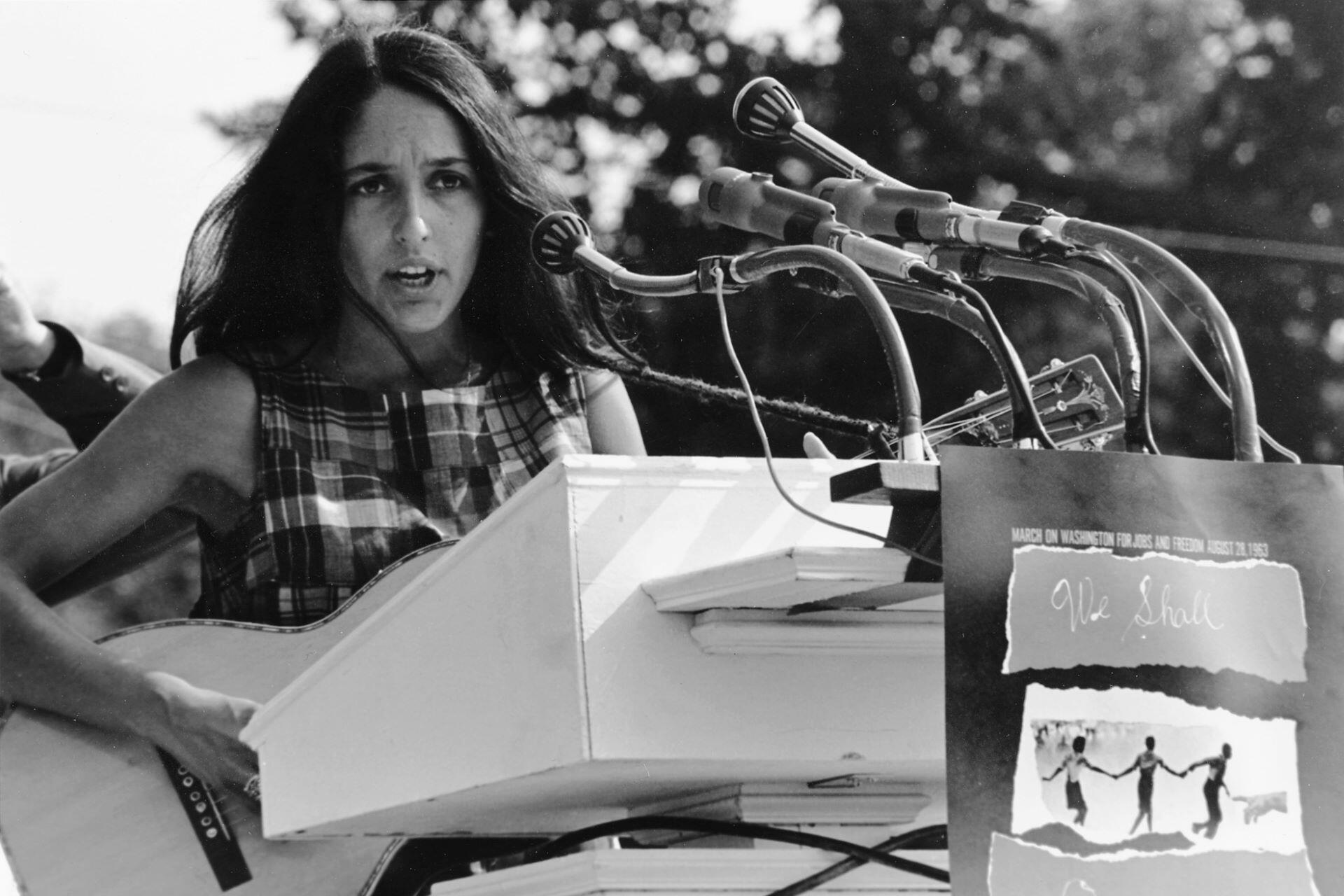
Bob Dylan, Joan Baez, and Other Artists
Folk and Protest Music
Performers use music to express solidarity with the movement and the fight against discrimination.
Impact and Legacy
The day influenced national politics, public opinion, and the ongoing direction of the civil rights movement nearly a decade after Rosa Parks' incident on the bus in Montgomery. This peaceful demonstration pushed the federal government towards meaningful change. Its legacy is still referenced today in movements for racial justice, voting rights, and equality across the United States.
The scale and unity of the march increased pressure on Congress to act on civil rights legislation.
The march highlighted the urgency of ending discriminatory voting laws across the South.
King’s “I Have a Dream” speech became a defining message of the civil rights movement.
Black and white Americans marching together demonstrated that support for equality was broad and diverse.
The peaceful nature of the event demonstrated the effectiveness of coordinated, disciplined activism.
Extensive television and newspaper coverage revealed the moral urgency of ending segregation and discrimination.
SNCC leaders and young marchers showed that students were essential to advancing civil rights.
The strategies used in 1963 influenced later demonstrations for racial justice, labor rights, gender equality, and LGBTQ+ rights.
The collaboration between churches, unions, and civil rights groups created a model for coalition-based activism.
The march is now remembered as a defining moment in American history, taught in schools and commemorated in national memory.
Summarize with AI:
Did you like this article? Leave a rating!

 Loading...
