
The Nobel Prize in Physics is the most prestigious honor in its field. It celebrated discoveries in physics and has been awarded annually since 1901. Let's explore the background of the accolade.



History and Significance of the Nobel Prize in Physics
The Nobel Prize is the highest recognition that physicists can achieve. The award is only granted to those whose discoveries fundamentally change our understanding of the natural world. It's the benchmark for groundbreaking achievements.
Fun Facts About the Nobel Prize in Physics
Origins and Establishment
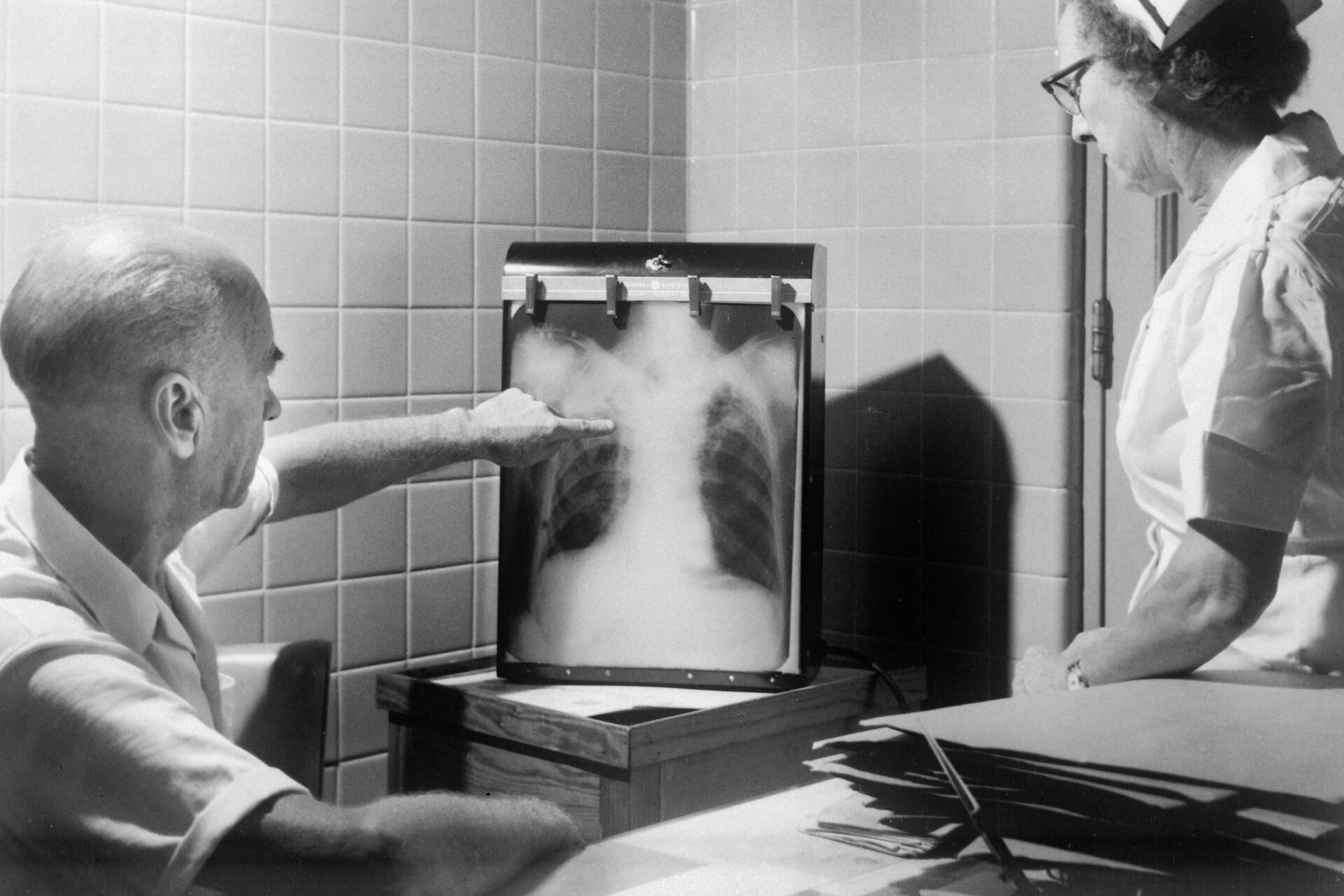
The Nobel Prize in Physics was established by Swedish chemist Alfred Nobel, who envisioned rewarding discoveries that bring the "greatest benefit to humankind". In his 1895 will, Nobel set aside the bulk of his fortune⁸, which he'd famously made from inventing dynamite, originally invented for construction but ultimately more lucrative as a weapon. While there isn't much evidence that Nobel had a guilty conscience, there are suggestions that he perhaps wanted to leave a legacy that honored human progress over destruction. The Royal Swedish Academy of Sciences was appointed to oversee the selection process. In 1901, the first Nobel Prize in Physics was given to Wilhelm Röntgen for his revolutionary discovery of X-rays⁹.
Key Milestones in the Nobel Prize in Physics
1895
Nobel’s Will
Alfred Nobel signs his will establishing the Nobel Prizes, including the prize in Physics.
1901
First Nobel Prize in Physics
Wilhelm Röntgen becomes the first laureate for the discovery of X-rays.
1921
Einstein Awarded
Albert Einstein receives the Nobel Prize for explaining the photoelectric effect¹.
1935
Bragg Becomes Youngest Laureate
William Lawrence Bragg wins at age 25, still the youngest Nobel laureate in any category.
1965
Quantum Electrodynamics Breakthrough
Feynman, Schwinger, and Tomonaga share the prize for advancing QED.
2018
Oldest Nobel Laureate Ever
Arthur Ashkin receives the prize at age 96 for optical tweezers.
2023
Attosecond Physics Recognised
Agostini, Krausz, and L'Huillier are awarded for pioneering attosecond science.
2024
Nobel Prize Goes to AI Foundations
John J. Hopfield and Geoffrey Hinton win for their statistical-physics-based neural network theory.
Evolution Over the Decades
The Nobel Prize in Physics has undergone a remarkable transformation since its inception over a century ago, mirroring the shifting landscape of scientific discovery. In its early years, the prize recognized foundational work in classical physics, honoring breakthroughs in electromagnetism, radiation, and thermodynamics that defined late 19th and early 20th-century science.
As our understanding of the physical world deepened, so too did the scope of the prize. The mid-20th century saw increasing recognition of quantum mechanics and nuclear physics, fields that revolutionized both theoretical understanding and practical applications.
More recently, the prize has celebrated advances spanning particle physics, cosmology, and condensed matter physics. The 2025 Nobel Prize in Physics continues this tradition, acknowledging cutting-edge contributions to quantum theory and demonstrating how the award adapts to honor the most pressing questions and profound insights of each scientific era.
Notable Nobel Prize Winners in Physics
I’ve already got the prize. The prize is the pleasure of finding the thing out, the kick in the discovery, the observation that other people use it.
Richard Feynman, American physicist
Understandably, the Nobel Prize has recognized some of history's most influential scientists. From earlier breakthroughs in classical physics to quantum mechanics, Nobel laureates are at the frontier of scientific knowledge. The awards reflect years of research, collaboration, and experimentation that ultimately shift the direction of global science.
Pioneering Laureates
Early Nobel Prize winners established the principles of modern science. While we won't name them all, some have become almost household names. Do you recognize any of these names?
Recent Laureates and Their Contributions
Modern physics Nobel Prizes increasingly reflect the collaborative, interdisciplinary nature of contemporary science. After awarding very few female laureates for decades, the prize has gradually expanded to recognize a more diverse range of scientists.
Today's winners typically lead large research teams working with advanced technologies and international facilities. Achievements often reflect decades of combined theoretical and experimental work, underscoring that modern physics breakthroughs require extensive collaboration, substantial resources, and sustained effort to address increasingly complex fundamental questions about our universe.

The Selection Process and Criteria
Nobel laureates are selected through a strict, confidential process. This process aims to recognize only the most significant scientific contributions. The internal discussions remain secret for fifty years¹¹!
Nomination and Evaluation Process
Each year, thousands of invitations are sent to qualified nominators worldwide¹⁰. University professors, Nobel laureates, members of the Royal Swedish Academy of Sciences, and researchers with expertise within the prize's scope all contribute to nominations. Self-nominations aren't allowed. The Nobel Committee for Physics reviews proposals and evaluates the scientific significance of each discovery.
September (Previous Year)
Nomination Invitations Sent
The Nobel Committee issues thousands of confidential invitations to qualified nominators worldwide, including professors, laureates, and academic institutions.
January 31
Deadline for Submissions
All nominations must be received by this date. Self-nominations are strictly prohibited.
February–March
Initial Review by the Nobel Committee
The committee screens all submissions, confirms eligibility, and prioritizes candidates whose work represents major scientific advancement.
April–August
Expert Assessments and Reports
External specialists are consulted to evaluate the scientific importance, originality, and impact of the nominees' discoveries.
September
Committee Finalises Its Proposal
The Nobel Committee prepares a detailed recommendation report for the Royal Swedish Academy of Sciences.
Early October
Final Decision and Announcement
The Royal Swedish Academy of Sciences votes and selects the laureates. The decision becomes public immediately after the announcement.
50-Year Rule
Permanent Confidentiality
All nominations, reports, and internal discussions remain sealed for fifty years to protect the integrity of the process.
Award Ceremony
The Award Ceremony takes place on December 10, where the Nobel Prize in Physics is formally awarded in Stockholm, Sweden. Laureates are given a Nobel medal, a diploma, and a monetary prize. Each laureate provides a Nobel Lecture to explain their research and its significance.
Controversies and Notable Omissions
While the Nobel Prize is the pinnacle of recognition for many, not everybody can win it. There have been several contentious decisions that have upset some people. Ultimately, they can't please everyone, and some scientists will feel that they were more deserving than the eventual winner.
Overlooked Contributions
The most controversial decisions are those where scientists who made essential discoveries were lost. The rule that no more than three laureates can win per award means that some contributors must be left out. With increasingly large research teams, not everyone gets a medal.

Debates Over Award Decisions
The committee often waits years before awarding a prize to ensure the discovery has a lasting impact. However, this can result in delayed or posthumous recognition. Then there's the question about who deserves the real credit.
Some prizes are awarded decades after the original discovery, long after the scientists made their most influential contributions. This delay can mean deserving candidates pass away before recognition is possible. Critics argue that the committee should modernize its assessment pace to reflect contemporary scientific timelines.
A few Nobel Prizes have been awarded for work initially considered speculative or not fully confirmed. These awards sometimes generated debate within the scientific community about whether the recognition was premature. Over time, some of these decisions have been vindicated, while others remain contested.
In multi-person discoveries, disagreements often arise about which contributors should be prioritized. The committee's choices occasionally emphasize high-profile scientists while overlooking foundational collaborators. As research becomes more interdisciplinary, assigning individual credit grows increasingly difficult.
References
- Nobel Prize Outreach AB. “Albert Einstein – facts.” NobelPrize.org. https://www.nobelprize.org/prizes/physics/1921/einstein/facts/
- Nobel Prize Outreach AB. “The Nobel Prize in Physics 1903.” NobelPrize.org. https://www.nobelprize.org/prizes/physics/1903/summary/
- Nobel Prize Outreach AB. “Ernest Rutherford – facts.” NobelPrize.org. https://www.nobelprize.org/prizes/chemistry/1908/rutherford/facts/
- Nobel Prize Outreach AB. “Donna Strickland – facts.” NobelPrize.org. https://www.nobelprize.org/prizes/physics/2018/strickland/facts/
- Nobel Prize Outreach AB. “Rainer Weiss, Barry C. Barish, Kip S. Thorne – facts.” NobelPrize.org. https://www.nobelprize.org/prizes/physics/2017/summary/
- Nobel Prize Outreach AB. “Pierre Agostini, Ferenc Krausz, Anne L’Huillier – facts.” NobelPrize.org. https://www.nobelprize.org/prizes/physics/2023/summary/
- Nobel Prize Outreach AB. “John J. Hopfield, Geoffrey Hinton – facts.” NobelPrize.org. https://www.nobelprize.org/prizes/physics/2024/summary/
- Nobel Prize Outreach AB. “Alfred Nobel’s will.” NobelPrize.org. https://www.nobelprize.org/alfred-nobel/alfred-nobels-will/
- Nobel Prize Outreach AB. “The Nobel Prize in Physics 1901.” NobelPrize.org. https://www.nobelprize.org/prizes/physics/1901/rontgen/facts/
- Nobel Prize Outreach AB. “Nomination and selection of physics laureates.” NobelPrize.org. https://www.nobelprize.org/nomination/physics/
- Nobel Prize Outreach AB. “50-year secrecy rule.” NobelPrize.org. https://www.nobelprize.org/nomination/archive/
Summarize with AI:
Did you like this article? Leave a rating!

 Loading...