
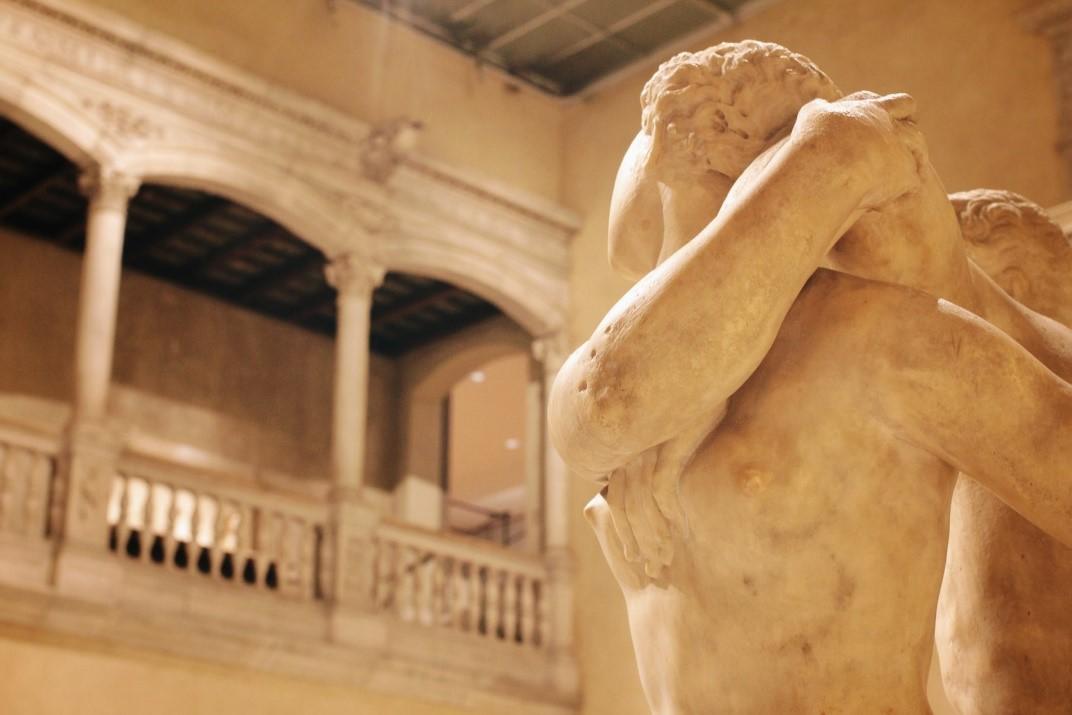

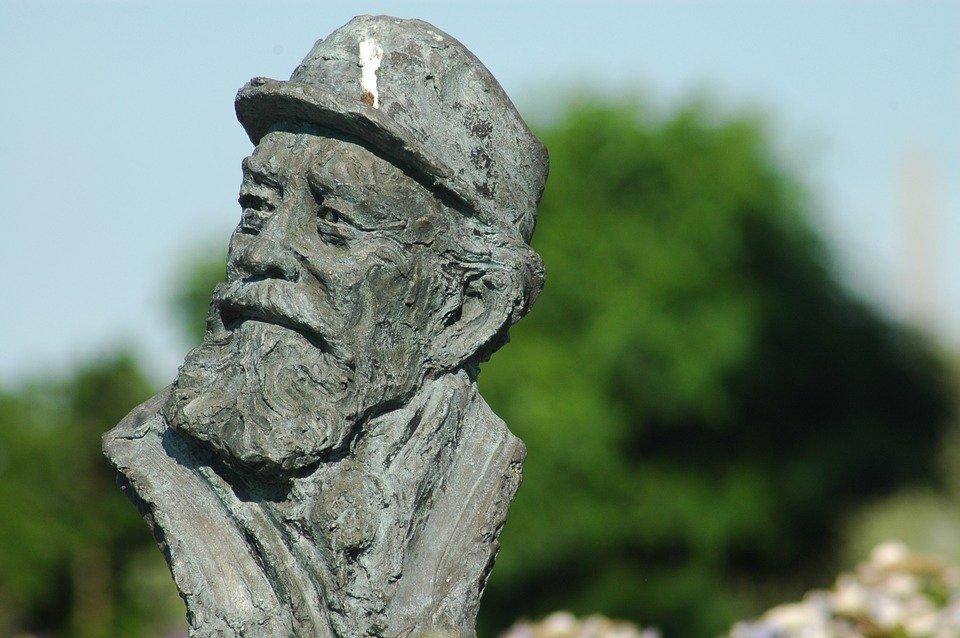
Sculpting is perhaps a one-of-a-kind artistic form where one works with hard materials to create three-dimensional art pieces.
Rubber, plaster, wood, fabric, metal, stone and wax, and objects are some materials used in sculpting.
The ambit of sculpting has widened in recent decades due to an expanding range of activities and the emergence of new types of projects.
Let's discuss everything you need to know if you want to take sculpting classes in Atlanta, Houston, or anywhere else.





Skills A Sculptor Must Possess
If you're considering becoming a sculptor, you need to have the following skills:
Composition Skills
Composition refers to the arrangement of visual elements in a work of art.
Space, texture, color, depth, form, tone are all aesthetic elements that can be used in various ways. But, visual layouts that follow compositional guidelines generally look better.
The following are some critical compositional principles in fine art:
- Proportions and shapes
- Symmetry
- Harmony of visual elements, balance, and orientation
- Stylization
- Tonal and contrast ratios
- Gamut and Rhythm
- Point of view
- Visual emphasis
A good composition follows these rules:
- The rule of thirds
- Rules of rabatment
- Rules for guiding a viewer's gaze
- Rules of symmetry
- The rule of golden proportions
Knowledge Of The Proportions Of The Human Head, Face, And Body
Without understanding the dimensions of the human head and form, it isn't easy to form a skilled, realistic, and detailed work of art from life or memory.
These proportions were known and employed by every great sculptor; therefore, if you want to create fine figurative art, you should learn them as well.
If you are looking for sculpture classes in Los Angeles or anywhere in the USA, check Superprof. The tutors at Superprof will provide you with the knowledge and skills required for sculpturing.
Knowledge Of Human Anatomy
Knowledge of human anatomy is crucial for figurative art. Sculptors aren't supposed to just imitate the outer form when sculpting a human figure.
They must understand what lies beneath the skin to create perfectly realistic sculptures and statues.
Art Provides Relief
According to some reports, trained artists with Alzheimer's disease who can make art again rediscover calm and contentment.
Even for those who aren't trained artists, the process of creating art feels wonderful and reduces stress.
Types Of Sculpting
To become good at sculpting, it is crucial to start with clay. It is an art to shape, cast, and carve a moldable material.
Your tutor would convey the fundamental information and the depth of sculpture-making as you begin to understand.
Sculpting was traditionally done with pottery, metal, wood, stone, and other materials. However, the procedures have no limitations or restrictions in the contemporary era.
Clay is one of several elements used in sculpting, and it stands out among them.
When you were in school, you might have utilized clay. So it's no surprise that there isn't only one type of clay used in sculpture; there are a variety of clay sculpting materials and techniques.
Don't waste any more time; just search for sculpture lessons near me in New York City, Houston, or wherever you reside, and head over to Superprof for the best clay sculpting classes near me if you want to master the art of sculpting.
Taking an interest in sculpting will allow your teacher to better understand the various sculpting styles accessible today.
Characteristic Of Clay Sculpting
There are specific characteristics your clay needs to make sculpting possible:
- It should be free of rocks and sand
- It should be bendable
- It must offer the needed stiffness for making sculptures
- It should be heat resistant
However, all clay types have different characteristics. So let's take a look at them.
Water-Based Clay
Its clay is diluted with water, as the name implies. As a result, it is both inexpensive and simple to use. It dries out quickly, however. Its ability to dry quickly is a crucial feature that contributes to its popularity.
The clay was known as WED when it was first used for Disney (Walter E. Disney).
Furthermore, the characteristics of this clay are comparable to those of oil-based clay.
It dries and hardens rapidly, making it appropriate for small projects. If you plan to save water-based clay for later use, make sure to seal it tightly in an airtight container and spritz it with mild water once a month.
Here are the benefits of this clay:
- It is inexpensive and can be softened easily
- It may be stored in a sealed plastic bag for a more significant duration of time
- It retains its shape well
Oil-Based Clay
Clay minerals, waxes, and oil are combined to make oil-based clay. As a result, it does not dry out even when left out in the open, dry air.
Because they are not ceramics, sculptures constructed of oil-based clay cannot burn. While heat strongly affects oil-based clay, adjusting the temperature can change the consistency and efficiency of the clay.
Furthermore, animation artists prefer oil-based clay because it can be repurposed and bends easily. You will need clay that doesn't contain sulfur if you want to build silicone molds.
Here are some benefits of this clay:
- The clay works well for detailed clay sculptures
- The oil clay does not stick to the skin or other surfaces
- It does not dry out in the air, and there is no need to hurry the project. You can take as much time as you wish.
Plasticine
The type of clay sculpting is an oil-based modeling material. The ingredients include clay, oil, and clay flour.
Moreover, it is a benchmark name of oil-based clay. Your tutor would assist in making it which would show it does not dry.
The Plastilina or Plasticine are its common names, while there are many generic terms for modeling clay today.
Some benefits of this kind of clay are:
- It is workable and soft, unlike water-based clay and wax
- It comes in various colors
- It does not stick to the hands or working surfaces
Polymer Clay
It is a sort of clay sculpting that is used to create manufactured objects. Until it is heated, this clay maintains its softness and flexibility.
However, it hardens indefinitely when heated. Artificial clay rarely dries out if it is not heated.
Whenever polyvinyl chloride is mixed with a stabilizer, plasticizer, lubricant, and various mixtures, it gives it a broad range of colors. Once dried, a vinyl solution that creates a dough becomes solid vinyl.
Polymer clay is suitable for usage by children and home enthusiasts, model makers, and professional sculptors.
Polymer clay is suitable for usage by children and home enthusiasts, model makers, and professional sculptors.
Polymer clay is used for manufacturing jewelry, decorative items like boxes and vases, and live sculptures.
Here are some benefits of this clay:
- It is mostly inexpensive
- You can bake it in a regular home oven
- It is convenient for any artist, from kids right up to professional sculptors
- The clay never dries out, so it can sustain lengthy projects
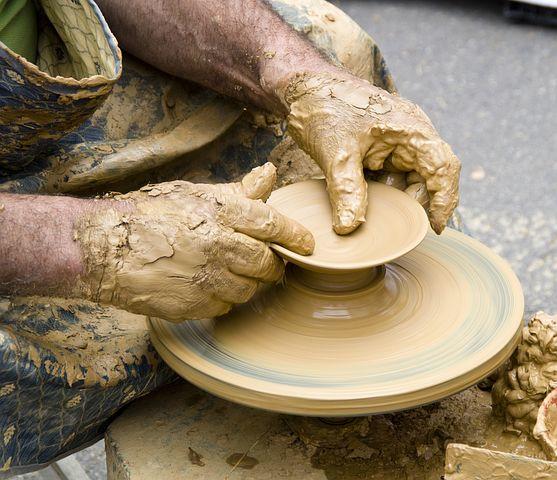
Epoxy Clay
Eposin resin and epoxy curing agents are the two elements of this sort of clay.
Epoxy clay does not become firm and solid until the two components are integrated. An exothermic reaction occurs during the mixing of the two components, which aids in the hardening of the clay.
Furthermore, epoxy clay is available in various colors, though not as many as polymer clay. As long as the two ingredients are not mixed simultaneously, polymer clay remains malleable.
It takes two to three hours for it to solidify.
Epoxy clay is one of the finest sculpting clays, with all of the enticing perspectives regarding Polymer.
It can be colored with nearly any paint, such as alcohol inks, acrylics, spray paint, and oil paint, and it has the greatest strength.
Moreover, epoxy clay is more costly than polymer clay, but it is well worth it.
Dough Clay
Another sort of modeling clay is dough clay, often known as playdough.
Furthermore, one can make this at home with everyday household items, including cream of tartar, water, flour, and oil. As a result, creating sculptures and models is the cheapest option.
However, this clay splits when it dries. So one cannot expect to mold lasting items and sculptures.
In contrast, you can bake the statue in an oven to preserve the sculpture you made using dough clay.
Ceramic Clay
Fundamentally, ceramics are made of clay to bake and heat for attaining a permanent shape.
Pottery clay only uses clay, while ceramic clay contains other materials along with the clay itself. Therefore, it is classified into five different classes, including:
- Ball clay: It is a plastic clay that fires white to light bluff. It also gives plasticity to clayware bodies containing short clays.
- Kaolin clay: It is also called china clay, which is essential for manufacturing China and porcelain. It is widely used to make rubber, paint, and many other products.
- Fire clay: This clay is capable of withstanding high temperatures. It is used for making firebricks.
- Stoneware clay: It is dense pottery fired at high temperatures to resist liquids and is non-porous.
- Earthenware clay: It is a high-fire and low-fire pottery clay range from sculpture and earthenware clay to stoneware, porcelain, and raku clay.
Paper Clay
This clay form is made up of cellulose fibers, the most common of which is paper fiber.
It also comes with a variety of options and opens up possibilities that previously appeared unachievable.
The tensile toughness of the clay is improved by using paper fiber.
If you've made sculptures before, you're probably aware of the importance of wet-to-wet joins and maintaining the depth of the clay throughout.
Wet-to-wet and wet-to-dry joins are possible with paper clay. You'll also never have to worry about maintaining the thickness of the sculpture.
You can also make sculptures out of lightweight materials. However, sculptures created with other materials will be incredibly heavy.
Paper clay allows sculptors to add more details and elements to their piece even after it has dried. There is always time for that.
Therefore, paper clay is undoubtedly a marvelous type of sculpting clay to play with.
Sculpting Techniques
Meanwhile, with all the important types of sculpting lessons, your tutor would expose you to the unique kinds of sculpting:
- Carving
- Casting
- Modeling
- Assembling
Become An Expert Sculptor In Houston
Whether you live in Houston, Chicago, or anywhere in the United States, if you search online for sculpture lessons near me, you will most definitely find Superprof at the top.
Superprof has a variety of tutors who specialize in sculpture and have years of experience. They can tell you several helpful tips and tricks of the trade.
Summarize with AI:
Enjoyed this article? Leave a rating!

 Loading...
