
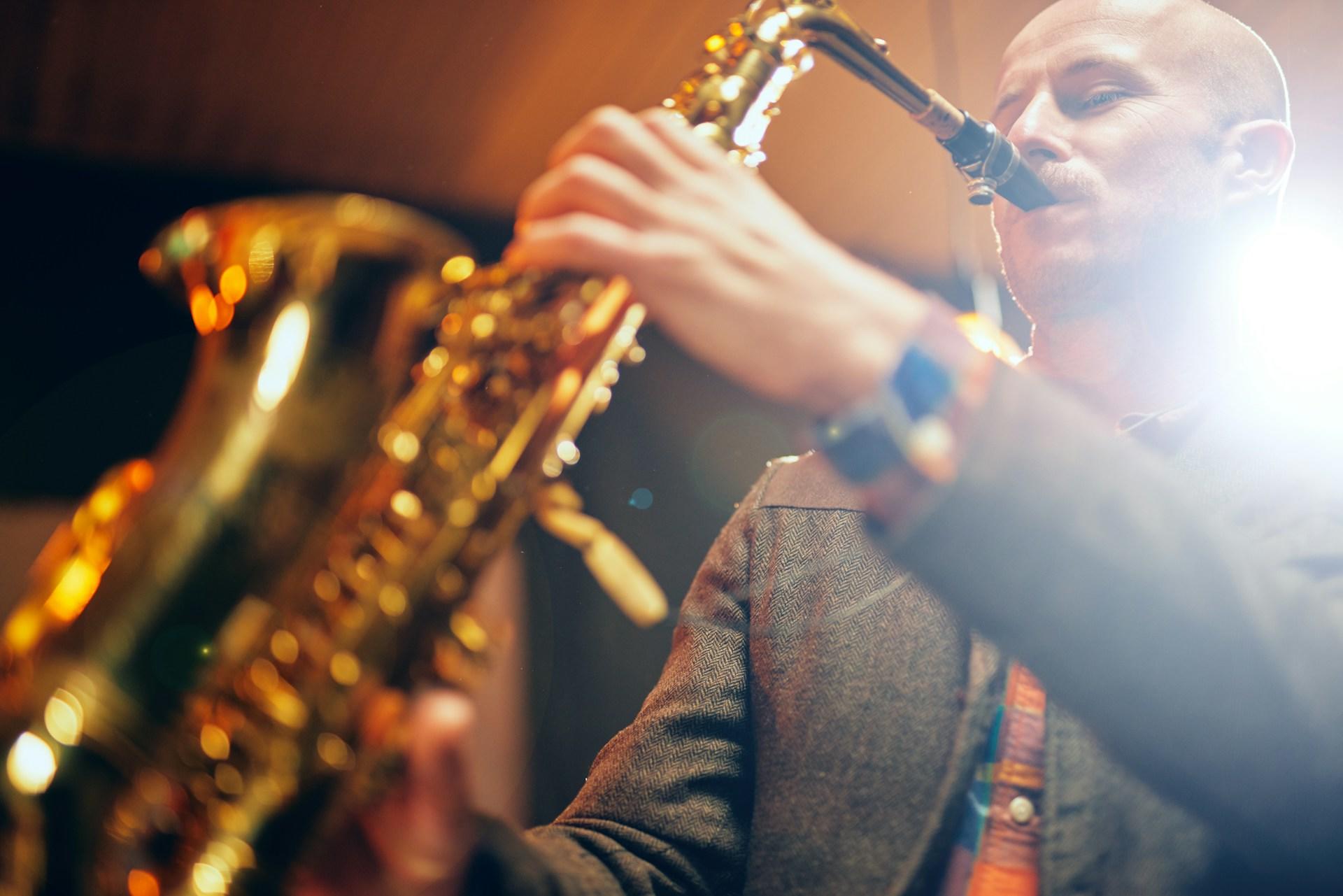

Jazz is often thought to be the root of most modern musical styles. It incorporates many interesting, complex features into one genre, creating a unique style of music not found anywhere else. But, what are the features of jazz music that make it so distinct? Find out how jazz achieves its one-of-a-kind style and what elements to look for in jazz music.
Elements of Jazz
- Improvisation
- Syncopating Rhythms
- Polyrhythms
- Swing Feel
- Blue Notes
- Call and Response
- Complex Chords




What Is Jazz Music?
Jazz is a unique style of music that combines elements from blues, ragtime, spirituals, hymns, marches, vaudeville song, and dance music together. It’s also heavily influenced by African rhythmic ritual song and West African musical traditions like biguinel, since it was invented by the African-American communities in 1910s New Orleans. It also incorporates certain European harmony music theory, such as French quadrilles.
And this intermingling of cultures, ideas, thoughts, and people is why jazz is considered so American!
Jazz washes away the dust of everyday life.
Art Blakey, American jazz drummer and bandleader
What makes jazz music unique is its hallmark use of improvisation. Jazz musicians expertly combine rehearsed parts with on-the-spot instrumentation. They might have an improvised solo or take cues from one another to create an improvised harmonic group performance (called “collective polyphonic improvisation”).
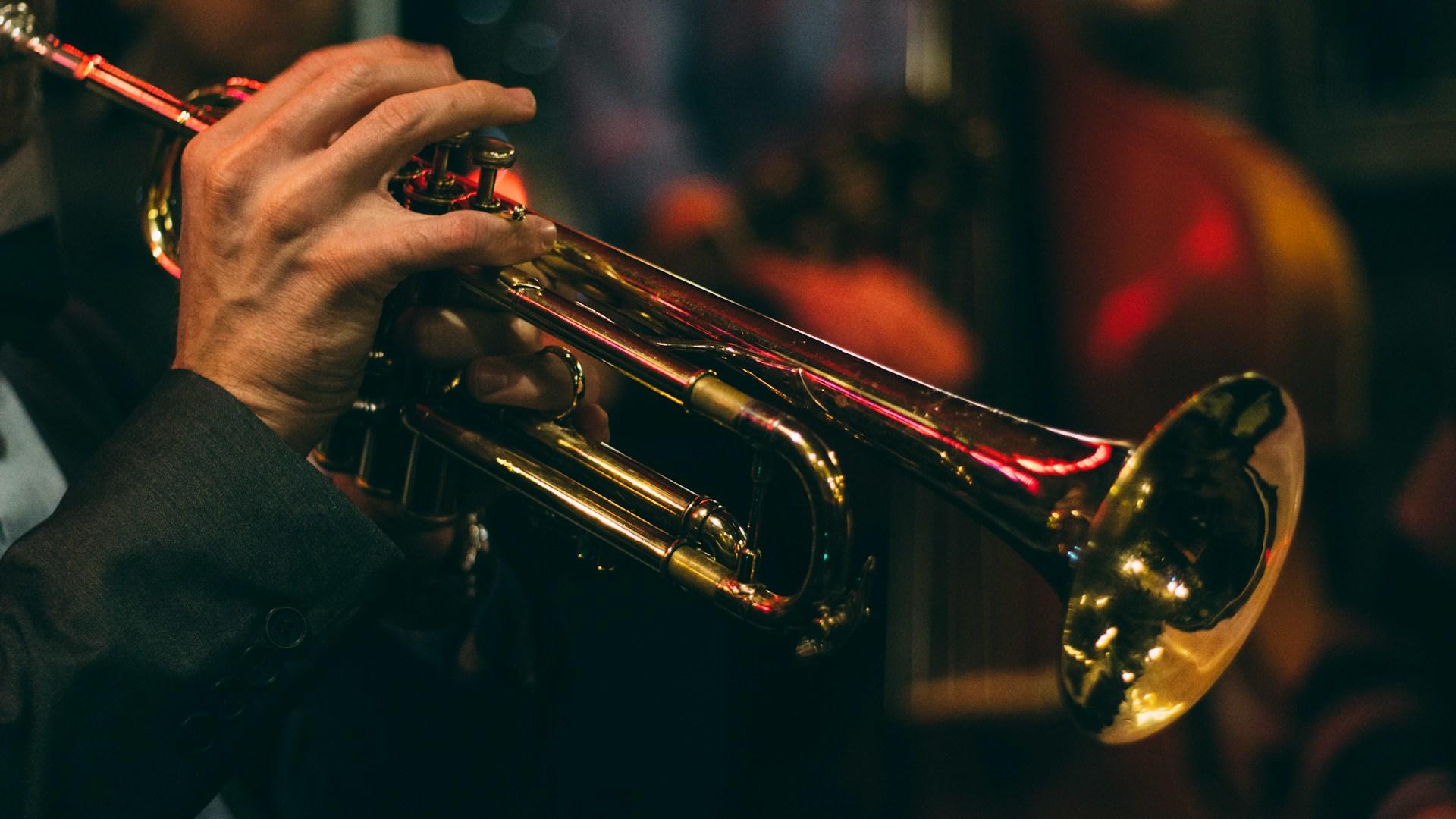
Some of the most common instruments used in jazz include the piano, saxophone, trumpet, bass guitar, vibraphone, tuba, clarinet, violin, drums, and vocals.
Core Elements of Jazz Music
Jazz has several notable qualities that make it distinct from other styles of music. It was borne from several influences and has some shared features found in other types of modern music. However, the unique combination of qualities, plus certain rare features, makes jazz a one-of-a-kind genre. These characteristics of jazz give it its soulful sounds and qualities.
Improvisation
Drawing from traditions in blues and field work songs, jazz musicians use established features of a piece as a guide to creating new rhythms, chords, and lyrics on the spot. Chord progressions, melodies, and tempos are used as a framework in which to build improvised music that fits in with the rest of the song.
Jazz music is the power of now. There is no script. It’s conversation. The emotion is given to you by musicians as they make split-second decisions to fulfil what they feel the moment requires.
Wynton Marsalis, American trumpeter and composer
Melodies, harmonies, and time signatures often change according to the musicians’ mood and the rapport with the audience. It creates unique experiences every time the musicians play, which is one of the reasons jazz fans love the genre so much.
In some types of jazz, the entire group may participate in improvisation. In other forms, the ensemble performs as rehearsed, but leaves space for a soloist to improv on top. Big band and bebop, for example, rely more heavily on rehearsed pieces with solo sections built-in.
Musicians and vocalists can improvise notes, chords, rhythms, and more throughout a jazz song. Usually, there will be sections of the song that facilitate improvisation, and other sections that need the musicians to perform as rehearsed. Vocalists might make up new lyrics or simply add their voice to the music through scat singing.
Syncopation
A syncopated beat is an accented upbeat. In jazz, the musicians and the singers switch between accenting the on-beat and off-beat. Think of the beat-keeping technique “ 1 and 2 and 3 and 4 and…” Syncopated rhythms incorporate the off-beats (“ands”) as well as the on-beat (1, 2, 3, 4).
This creates an intriguing effect unlike most other types of music. They create tension, surprise, and forward momentum within a song. It can create a playfulness, coyness, or even flirtiness. This is opposed to genres like rock and pop, which usually use strong on-beats for the entire song.
It’s utilized in a variety of ways in a jazz song to create interesting, varied rhythms. The ongoing push and pull between expected and unexpected notes draws the listener in.
Learn how to dance to jazz music with dance lessons near me!
Polyrhythms
Polyrhythms are one of the main concepts and what makes jazz different from other genres.
Polyrhythm just means using more than one rhythm at the same time. It’s hard to explain in writing, so see the video below with both an audio and visual demonstration.
It's common for one instrument to emphasize different rhythmic patterns simultaneously. For example, the summer might maintain a 4/4 beat on the cymbal, while the pianist plays triplet notes.
The two will not be synchronized all the time, but will match up at crucial moments to provide satisfying cohesion in the song. The effect is simultaneous complexity you can get lost in with a united overall feeling. The layers of rhythm give jazz its depth and sophistication. They allow the musicians to play “against” the beat, exploring “spaces” in the music that other genres would leave blank. Listeners can hear something new with every listen as they tune in to different instruments and rhythms.
The layering of polyrhythms in jazz is often much more complex than this simple example. The drummer alone can play two or three rhythms at once!
Swing Feel
Swing is an essential characteristic of jazz. Although it is hard to explain, swing adds a groove to jazz music. It’s found in other genres as well, but it’s a necessity in most every jazz song. Notes are slightly skewed to be less stiff, feeling more lively, casual, and approachable. Instead of uniform, perfectly even segments of notes, they are slightly delayed or stretched.
This is a major difference in jazz compared to classical music. In classical, notes must be performed precisely. Jazz rejects this, embracing its non-European traditions.
Sing allows musicians to inject their own personality and mood into a piece, making it sound much more human and expressive.
Blue Notes
Blue notes are played or sung at a slightly lower pitch than you’d expect, adding an interesting and soulful flavor to the song. It refers to “the blues scales” used in (you guessed it!) blues music. But, rather than adhere to the blues scale at all times, jazz songs use blue notes more sparingly.
It’s used as a way to convey expression in the music. Often, it can color a word in the lyrics, driving home a point. Blue notes can add emphasis, tension, melancholy, warmth, or even irony to sung or instrumental notes.
Call And Response
Call and response in jazz can happen with instruments or vocals. The musicians work together to create a “conversation” with notes and beats. It can be part of the song as rehearsed or improvised.
One musician can play a musical phrase (the call) and another can repeat it exactly the same way (the response). Or, the responding musician can play the phrase differently, changing the notes or rhythm, or they can play something entirely different yet complimentary.
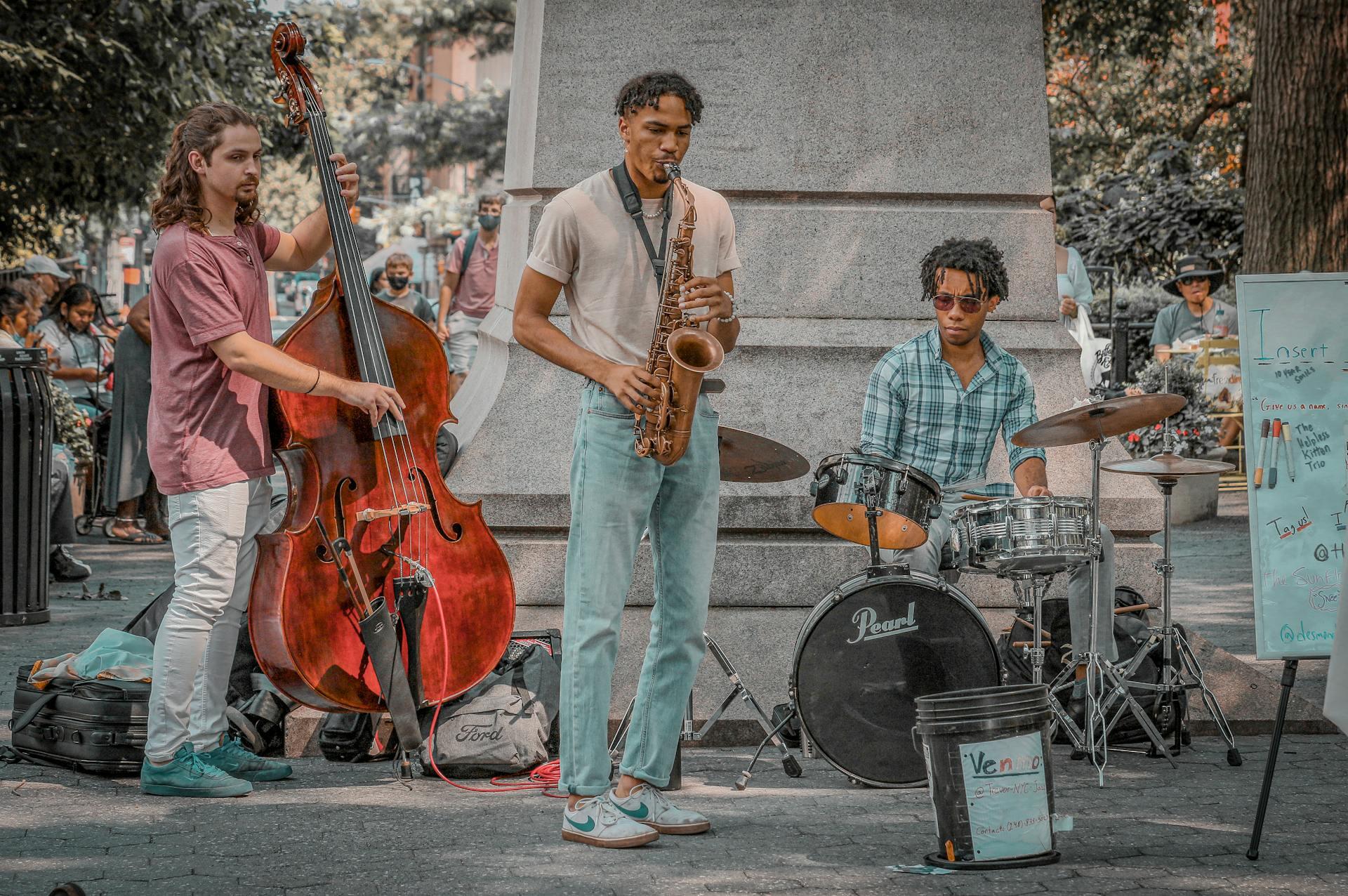
Unlike other genres that tend to have a lead instrument throught a piece, jazz uses call and response to give a sense of round-table equality and togetherness, rather than hierarchy. It feels more like a "jam session" and less like a perfectly-practiced, performance piece.
Find dance lessons near me here on Superprof.
Complex Chords
Jazz uses a variety of chords. While simple chords, like trids, are commonly used in jazz, the thing that makes jazz different is its frequent implementation of more complex chords. Jazz might utilize seventh, ninth, eleventh, and thirteenth chords, for example, to create a morelayered and lived-in sound.
The complexity of the chords utilized in jazz give it that bluesy, smooth, signature sound.
Putting It All Together
Each jazz element in isolation would leave the song feeling flat. That's why jazz music incorporates most or all elements in most songs. They are building blocks that suport one aother to make a distinctly jazz-sounding piece of music.
Notice how the elements in jazz make the music sound and feel more intimate and inclusive. The musicians converse with one another right there, in front of the audience. The listener is encouraged to listen between several different conversations at once. It's almost like sitting at a crowded family dinner table, tuning in and out of the conversations happening all around.
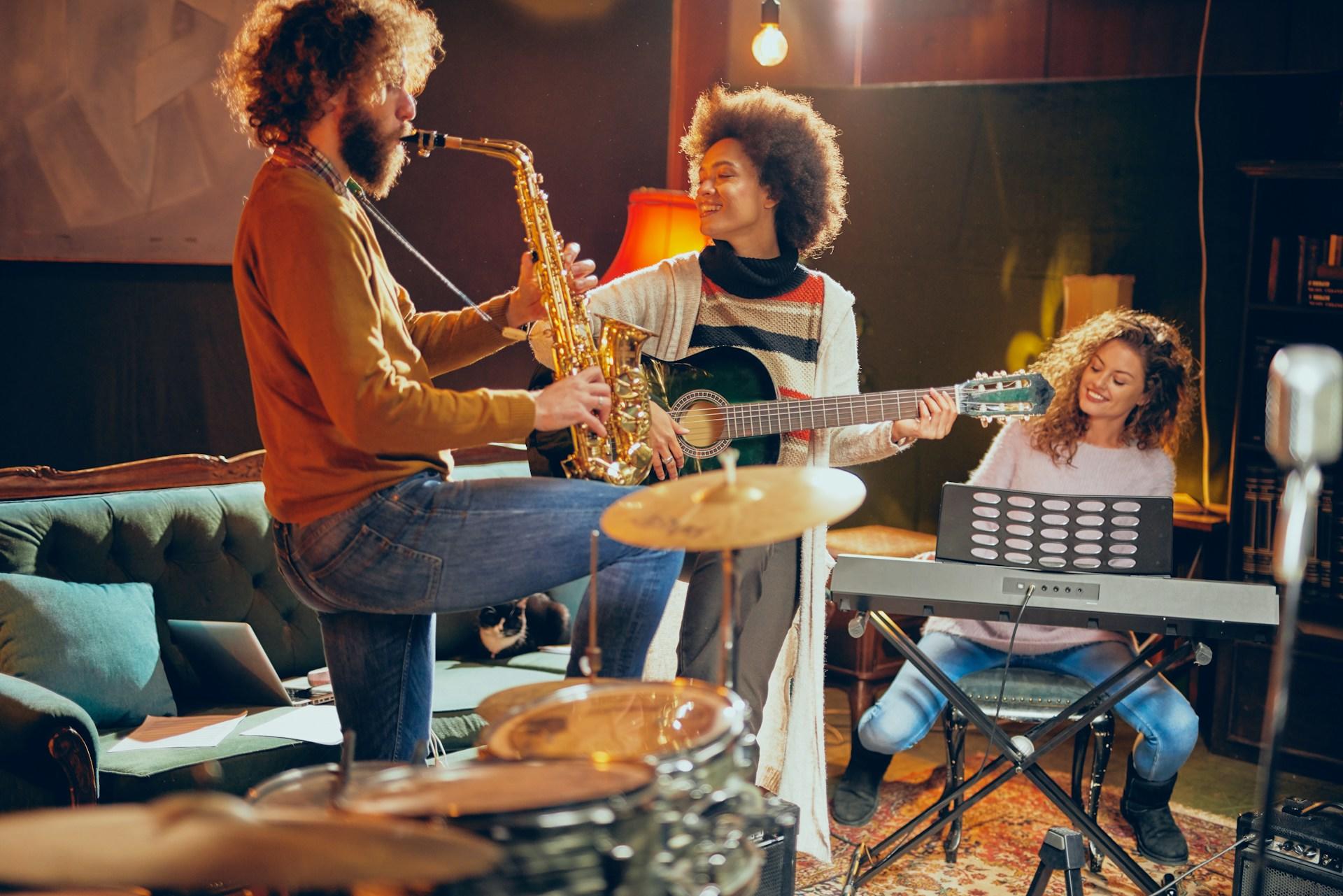
The Finest Platform to Learn Jazz Online
One such platform that provides top-quality online educational services is Superprof.
Superprof offers a broad range of subjects, including:
- Languages
- Arts
- Music
- Humanities
- Social sciences
- Mathematical studies
- Career development
- Health
- Wellbeing
- Sports
There are dozens of different types of jazz, just as there are different types of rock or pop music. Some of the most recognizable variations include big band, bebop, cool jazz, electro swing, Gypsy jazz, smooth jazz, swing, Indo jazz, hard bop, and acid jazz.
With Superprof, you can learn different types of music, including jazz, with a professional personal teacher. Discover how to perform music with proper jazz stylings on any instrument you want, or learn how to sing or scat for jazz songs!
Want to learn how to dance to jazz? Find a teacher who can teach you swing, foxtrot, quickstep, or any other blues dance you want to know!
Summarize with AI:
Did you like this article? Leave a rating!


 Loading...

thank you for this, it was easy and interesting