
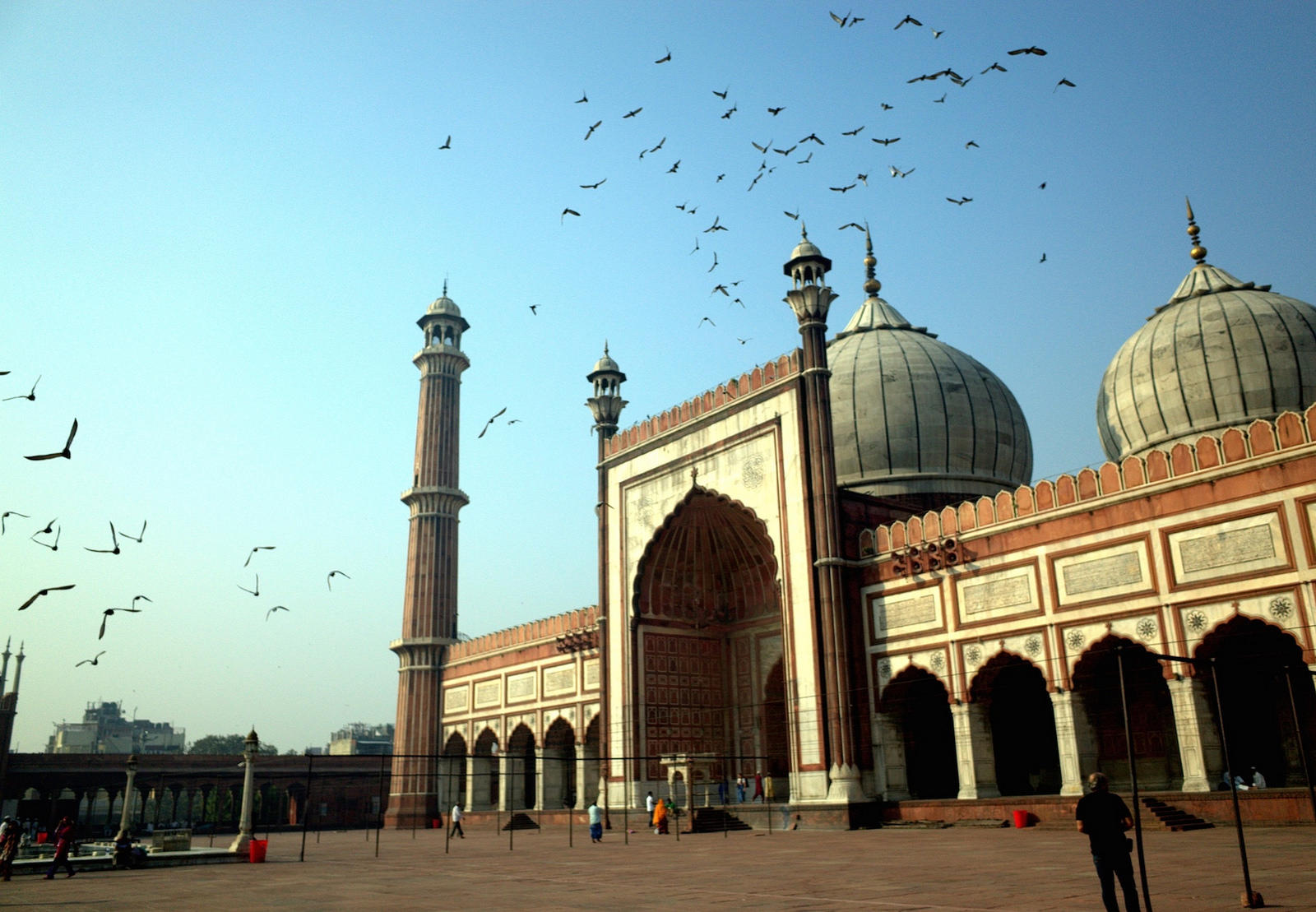

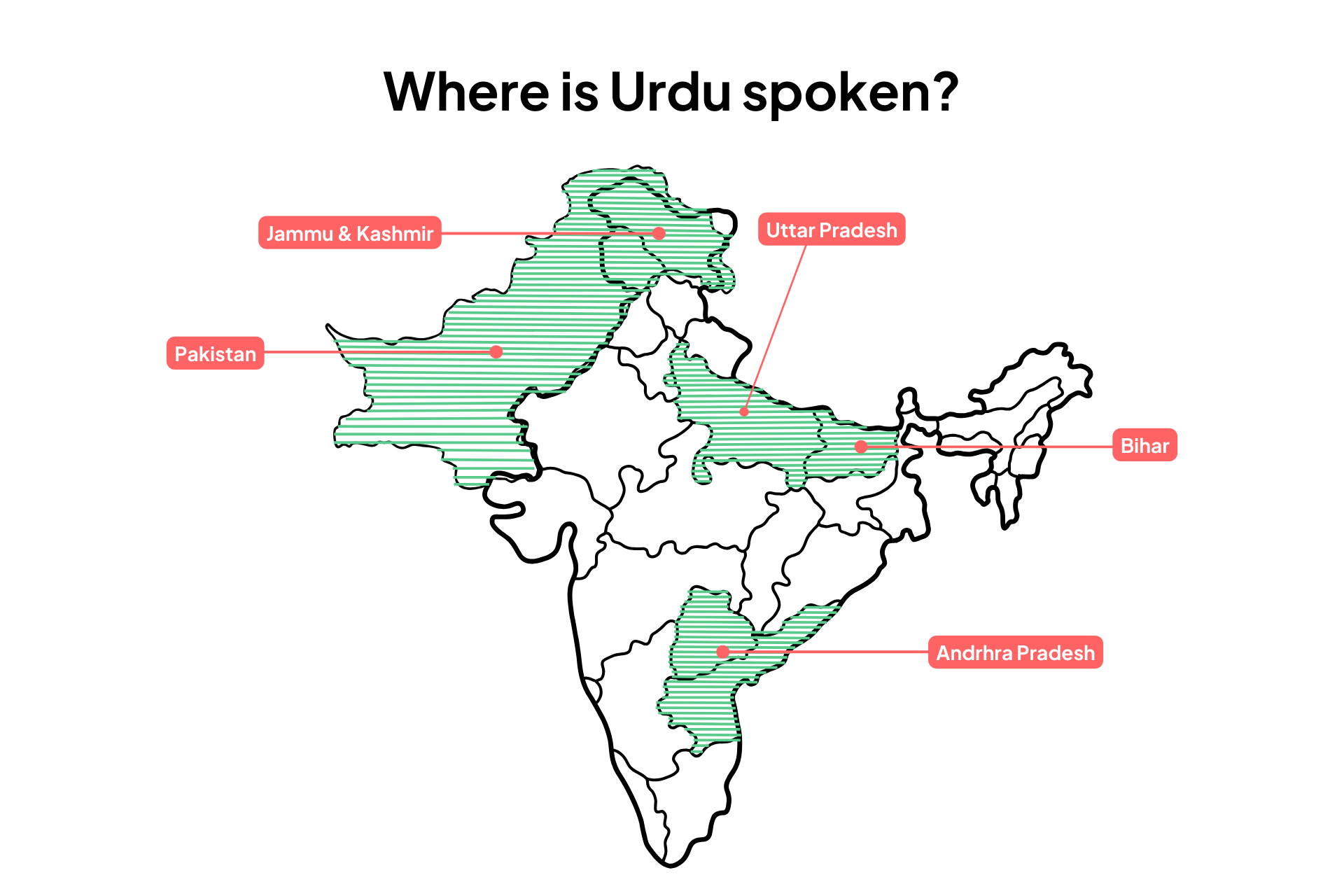
Urdu, a language deeply intertwined with India's history and cultural fabric, evolved under the influence of Persian, Arabic, and local dialects during the Mughal era. It holds official status in several Indian states, including Jammu & Kashmir, Telangana, Uttar Pradesh, Bihar, and West Bengal, and is widely spoken across the country, particularly in urban centers. Though primarily associated with India and Pakistan, Urdu has a global presence, with speakers in Afghanistan, Bahrain, Bangladesh, Botswana, Fiji, Germany, Guyana, Malawi, Mauritius, Nepal, Norway, Oman, Qatar, Saudi Arabia, South Africa, Thailand, the UAE, the UK, and Zambia. With its rich literary tradition, including the works of poets like Mirza Ghalib and Faiz Ahmed Faiz, Urdu continues to thrive as a language of poetry, prose, and cultural expression in India. Keep reading to discover the vast history of the Urdu language and the main differences between Urdu and Hindi.


The Origins and History of the Urdu Language
When India gained independence in 1947, it took nearly three years for the newly elected Constituent Assembly to draft and finalize a Constitution that satisfied representatives from all regions. On January 26, 1950, the Constitution of India (Bharat Ka Samvidhan) was ratified, officially recognizing 22 languages under the Eighth Schedule while designating Hindi and English as the government's official languages. With a vast linguistic heritage shaped by successive empires—the Hindu Maratha Empire, the Muslim Mughal Empire, and the British Raj—India is home to a diverse linguistic landscape, where Urdu holds a significant place. Influenced by Persian and English, Urdu has deep historical and cultural roots in India, evolving through centuries of literary and social development.
The origins of both Hindi and Urdu are the same. Many local dialects were spoken throughout the Indian sub-continent during the Middle Age. Most of these languages were grouped into the Prakrit family of Middle Indo-Aryan languages (more than 12 of them were commonly spoken by the Indian population, depending on their region and religion).
These languages co-existed with the main literary Indo-Aryan language, Sanskrit. All those languages and dialects started to mix with Persian when it was introduced in the Indian subcontinent. Persian came along with the Muslim Turco-Mongol Chagatai dynasty that ruled the Mughal Empire.
The Empire was founded in 1526 by Babur, and the Moguls rulers only managed to access power after conquering or submitting the many princely states that composed medieval India up to the middle of the 16th century.
The Mogul court adhered to the Indo-Persian culture and while the ruling family brought a lot of elements drawn from the Persian society they also adopted many local Indian traditions and customs. Hindustani dawned under their influence. The Persian language started to mix with several auraseni dialects that were spoken in central India, mainly Braj Bhasha, Awadhi and the dialect of Delhi. The Imperial court and the different waves of immigration coming from the West boosted the introduction of Persian and Arabic words into the local Indian Khari Boli (meaning "standing dialects", elevated to literary languages).
Another source of influence was the Muslim Imperial army, camping in and around the principal cities of the Empire, including the capital Delhi.
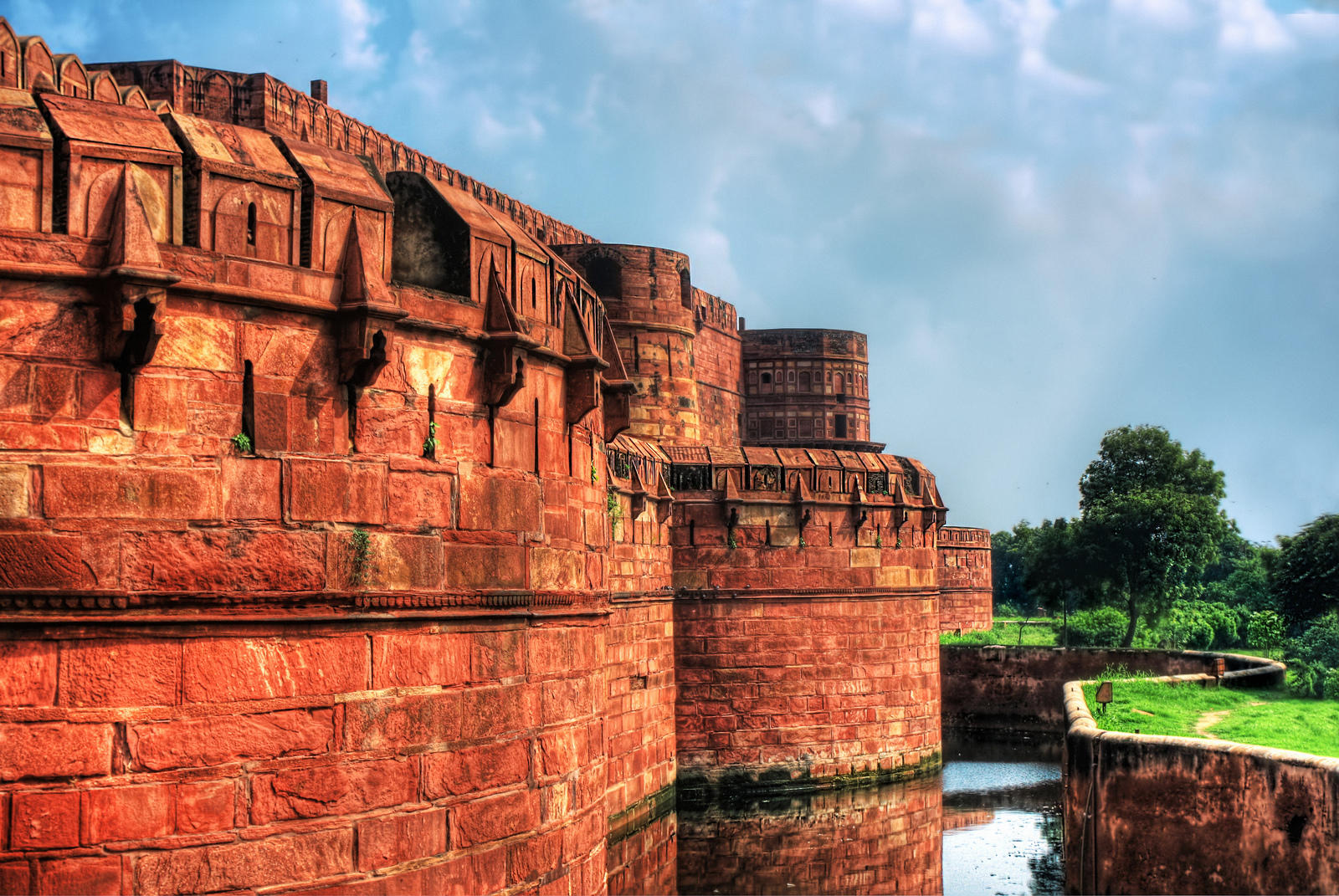
At the time, most of the soldiers were garrisoned in the Red Fort near which the Urdu Bazar (Urdu meaning army or camp, the word gave "horde" in English) developed.
Soldiers speaking Persian and local shopkeepers and residents mixed, and so did their languages. Although Persian was the official language, used at the Imperial court and within the socio-economic institutions of the time, Arabic remained as the official language of the Muslim religion in the Indian subcontinent. The integration of local dialects words into the Persian lingua franca, mainly conducted by merchants, soldiers, preachers and the local justice courts, meant that by the 17th century an early form of Hindustani had emerged, and though it was born from the Persian and Arabic languages, its base was slowly replaced with local Indian dialects words.
The Emergence of One Common Language
Hindustani became the universal language of Hindu and Muslim communities (even though not the official one) and showed how much both civilizations had influenced each other through more than 300 years of co-existence. Hindustani became two separate languages when it started to be Persianized during the 18th century (a form that became Urdu) and Sanskritized around 1800 (a style that became Hindi). However, the language remained as the common vernacular up until 1837, when Hindustani in the Persian script (i.e. Urdu) replaced Persian as the official language, a decision taken by the British rulers of the time. This change created a divide between Hindus and Muslims especially in the North of India where the Hindu majority argued that the government and official institutions should use the written native Devanagari script. Following years of lobbying and political games, Hindi in the Devanagari script eventually became the official language of the Indian nation in 1949 but only after British rule over the country ended.
Urdu vs Hindi
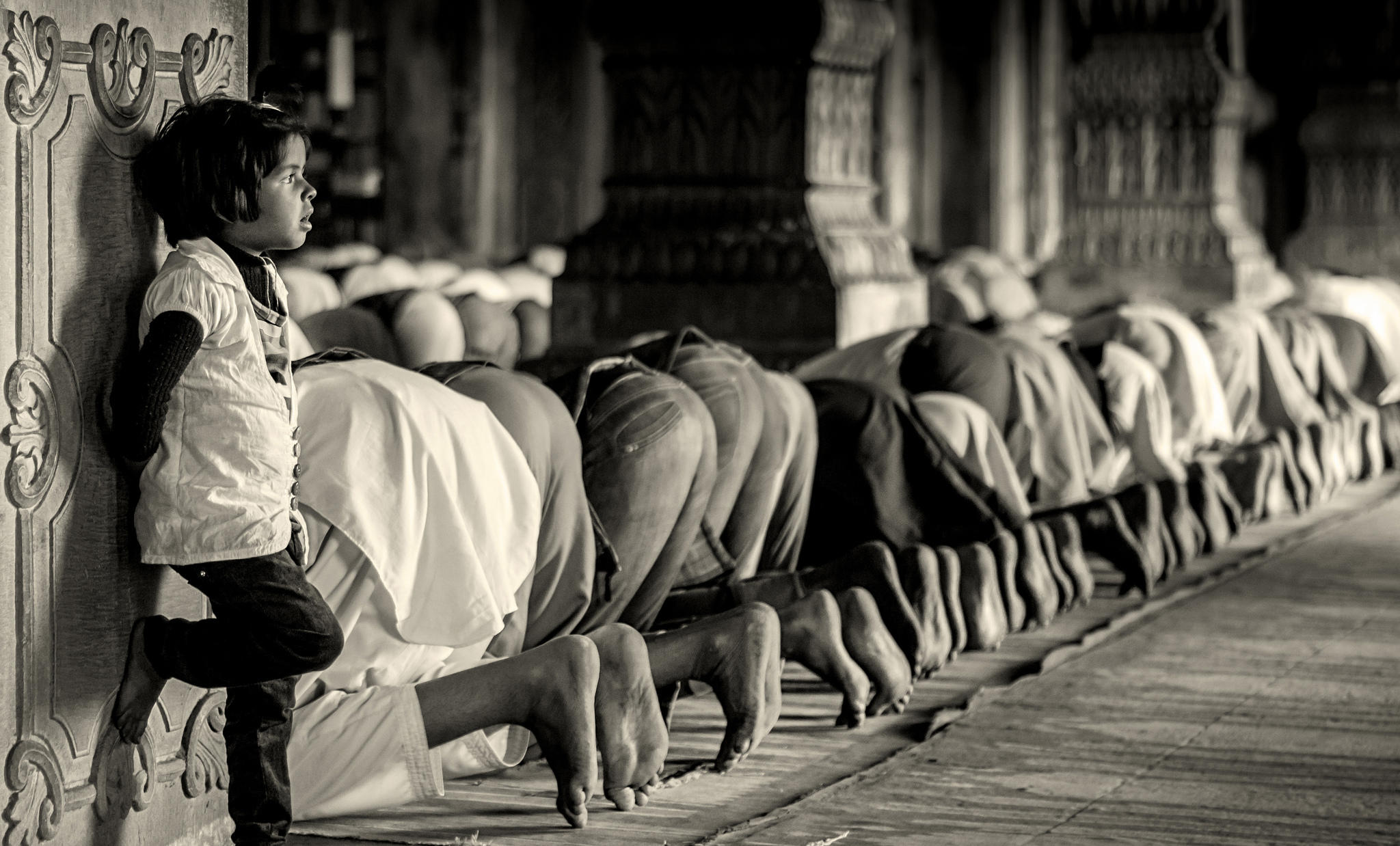
The difference between Urdu and Hindi, besides their writing system, is mostly socio-politic. Hindi has long been the universal language of the Hindu community while Urdu served as vernacular for the Muslim community. In Indian cities and towns, even where a majority of the population is Hindu, Muslim who co-exist peacefully often use Urdu, spreading the language beyond the states where it holds official status. These days, Hindi speakers are entirely comfortable with Persian-Arabic borrowed words while Urdu speakers have no problem using words drawn from Sanskrit. Even though differences remain in technical and literary texts, the barrier created between the two languages is slowly eroding.
- Right-to-left Nastalique script
- Derived from Persian and Arabic
- There are 10 vowels and 39-40 letters
- Left-to-right Devnagri script
- Developed from Sanskrit
- There are 11 vowels and 33 consonants
The Urdu Dialects in India
Urdu counts more than 50 million native speakers India, making it the 6th most spoken language of the country. As each state of the Union of India can legislate on the official languages recognized within their borders, Urdu was recognized as an official language of the Indian states of Jammu and Kashmir, Telangana, Uttar Pradesh, Bihar, Jharkhand and West Bengal. However, amongst those six states, only the state of Jammu and Kashmir recognizes Urdu as their only official language. In certain regions where, Urdu is locally spoken, the Bengali language is also used. Three main Urdu dialects enjoy an official status:
- Dakhni, a language that emerged during the rule of the Deccan sultanates in the 14th century. Initially very similar to Urdu, the language took on much more Marathi, Telugu and Kannada influences. Because of this incredible mix, it is often considered the familiar form of Hindi-Urdu and is used as a street language by many in big cities such as Hyderabad or Bangalore.
- Rekhta, an early form of Hindi and Urdu, is still used today as the most common form of Hindustani to write Urdu poetry.
- Modern Urdu Vernacular, the informal, colloquial form of Urdu spoken by all Urdu natives and understood by most (if not all) Hindi speakers. It is different from the Modern Standardised Urdu.
Urdu Outside of India
Urdu became the national language of Pakistan following the partition of British India in 1947. Only 8% of the Pakistani population speaks Urdu natively, though it is the second language of most of the people and is widely understood throughout the country. Urdu is also commonly spoken in some parts of Nepal and understood in Bangladesh and parts of the Middle East.
Worldwide Hindustani (Hindi + Urdu) is estimated to be spoken by more than 700 million people, making it the third most spoken language on the planet.
The Urdu Alphabet
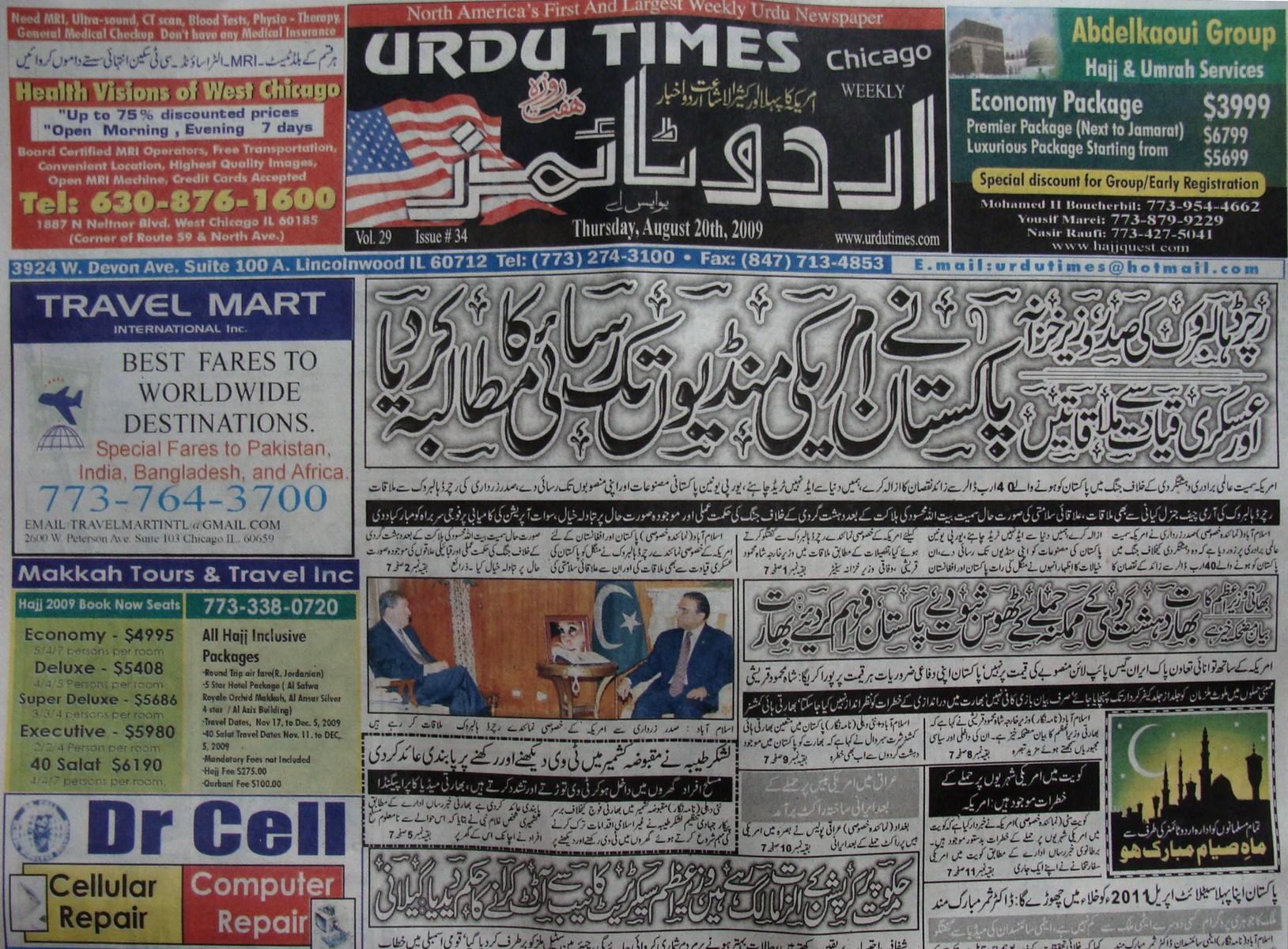
Urdu and Hindi are considered to be two dialects of one same language: Hindustani. The difference resides in the alphabet that both languages used. Unlike Hindi which uses the native Devanagari script (originating from Brahmic family language), Urdu uses the Persianized standard register that evolved from the Persian alphabet imported from the West by the Mogul rulers. Commonly written from right to left, in the calligraphic Nastaliq script, the Urdu alphabets count 58 letters and do not make a distinction between upper and lower case.
Urdu and Hindi are mutually intelligible meaning that Urdu and Hindi speakers can understand each other.
As the Urdu alphabet is an abjad, it means that it only has consonants and long vowels and that vowel sounds are left to the reader to fill out. From the 58 letters, 38 are basic signs while the additional 18 are digraphs representing an aspirated consonant. The Urdu alphabet does not have any vowels, but the Urdu language does. It might seem strange for Latin and Germanic language speakers, but vowels in Urdu can only be written in association with a consonant. Urdu counts ten vowels, and ten nasalized vowels, each of them can be written in four different way depending on its position (isolated, initial, middle or final).
With its rich linguistic heritage, distinctive Persianized script, and deep cultural significance, Urdu remains an integral part of India's diverse linguistic landscape. Its poetic elegance, historical depth, and widespread use across various regions make it a language worth exploring for both literary and academic pursuits. Whether for its calligraphic beauty or its vast literary tradition, learning Urdu opens doors to a deeper understanding of South Asian culture and history.
For those interested in mastering Urdu, working with a tutor on Superprof offers a personalized and effective way to develop reading, writing, and conversational skills with expert guidance. Get started learning Urdu on Superprof today!
Summarize with AI:
Did you like this article? Leave a rating!


 Loading...
Great work…Can I use the demographic map that is present in the blog for my research work ..
Hello Insha, thank you for the positive feedback. Yes, you can use our photo, but please cite Superprof as your source.😁