


Drawing and sketching are the foundation of many creative careers, from animators and architects to engineers and fashion designers.
Using a pencil and a piece of paper provides endless opportunities for creativity and self-expression.
Whether you've graduated from an art institution or have self-mastered drawing, there is always room left for improvement.
Moreover, learning some drawing tips can make it easier to exhibit your imagination and creativity.
If you are passionate about turning your mere hobby into a profession, taking drawing classes can be a great start.


Why Do Artists Have Different Art Styles?
Drawing is the most practiced art form across the world. Be it an exciting hobby of a child or a way to express one's self, drawing is an important part of everyone's life.
Moreover, pursuing a career related to sketching and drawing can build a keener sense of perception.
However, when drawing, people often tend to get stuck in a specific drawing style, which limits their creativity and learning potential.
As someone who loves drawing, it's important to be open to taking drawing courses that introduce you to new drawing styles and techniques.
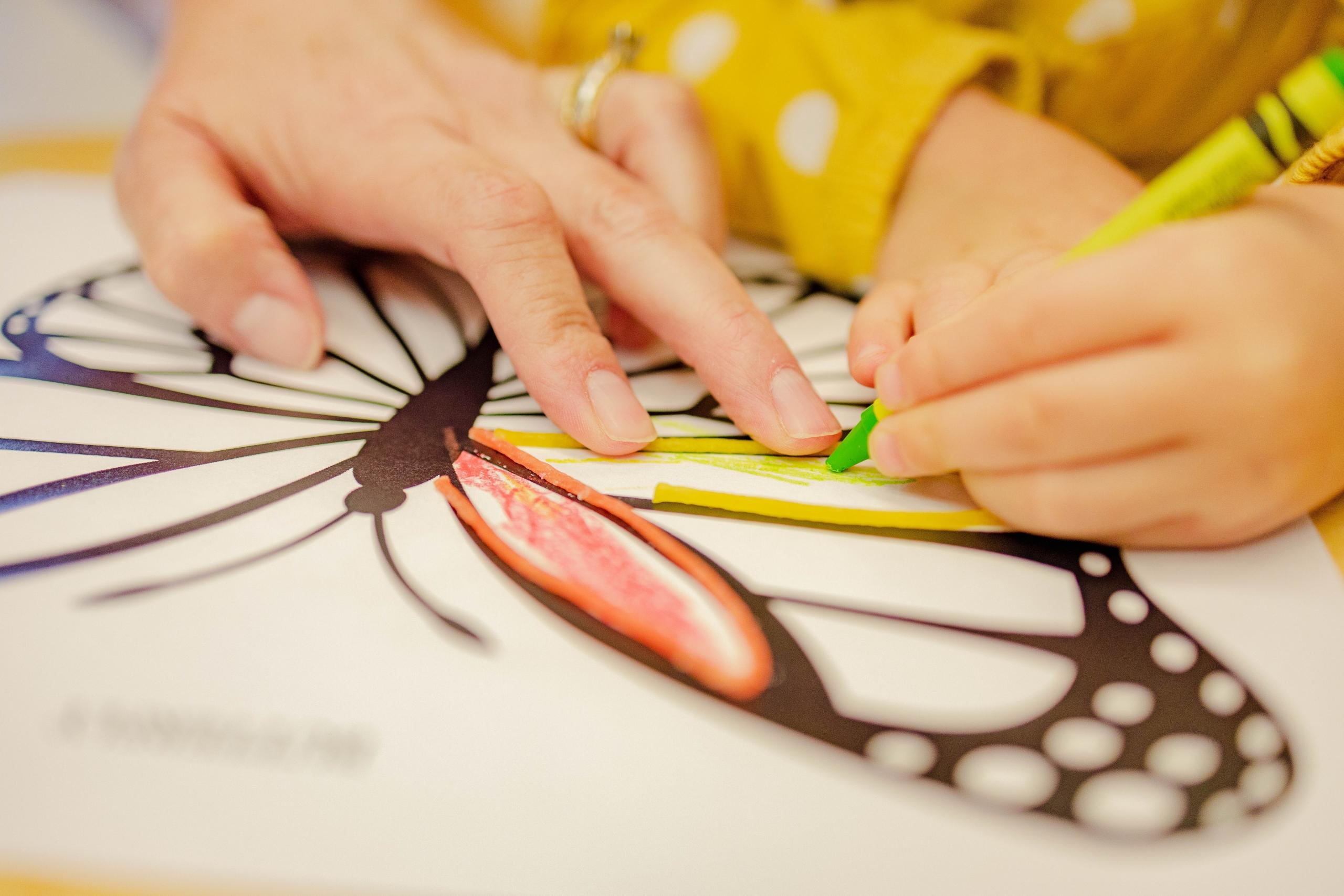
Even the most skilled artists shouldn't stick to just one drawing style. Of course, they may specialize or have mastered one particular drawing style, but experimentation helps hone the skills.
Standard drawing classes introduce learners to different drawing styles. Moreover, it is important to know the principles of drawing before learning about the styles.
Being flexible with several different drawing styles can help an artist create their own personal style and enhance their creative growth.
Some drawing styles are quite hard to grasp, requiring extreme patience and technique, while others allow for more freedom.
Four Popular Art Styles One Should Master
Learning the different styles can help you hone your skills and improve your ability to think out of the box.
But before we jump to describing some great drawing styles that every person in the art industry should know, let's look at their difficulty levels.
| Drawing Styles | Level |
|---|---|
| Doodling | Beginner |
| Line Art / Line Drawing | Intermediate |
| Geometric Drawing | Intermediate |
| Photorealism / Hyperrealism | Advanced |
1. Doodling, The Style That Helps You Learn Freedom Of Expression
The first drawing style one learns in a drawing course at college is doodling. It's one of the easiest and most fun ways to express yourself and learn how to draw.
Doodling is where the love for drawing begins. It's an informal style of drawing which allows the person's subconscious mind flow.
Doodling means rough sketches and scribbles of random thoughts and ideas. Anything is considered doodling, from drawing shapes to creating a character that brings life to the page.
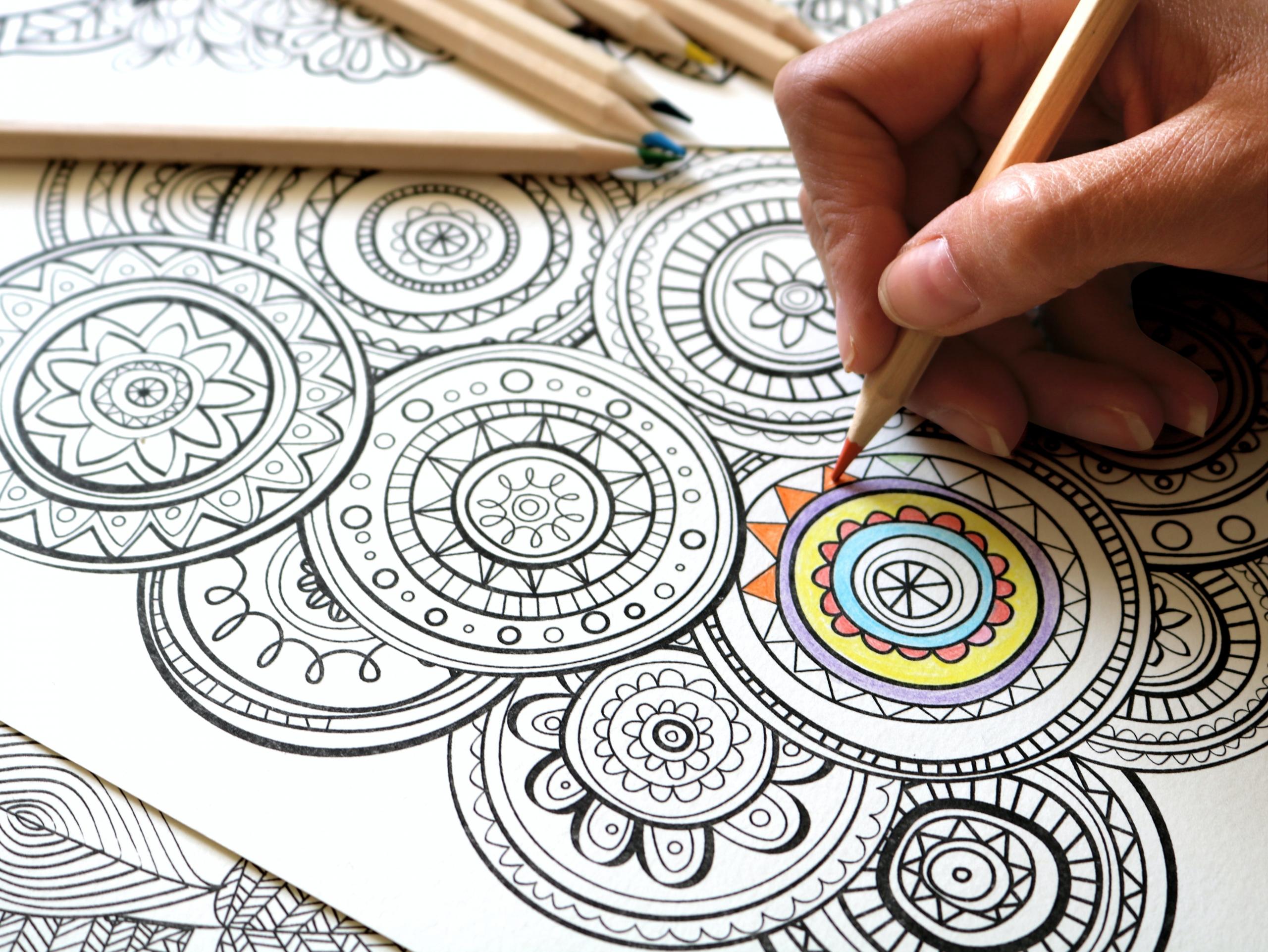
The section below demonstrates different types of doodling:
Zentangle
- Includes repetitive patterns
- The final image represents a flower, bird, or any geometric pattern
- No coloring required
Zen Doodling
- Similar to zentangle
- A doodling type which includes creating design to complete small areas of patterns, tangles
- These patterns and tangles are filled with a combination of lines, dots, curves, and orbs
- No restrictions in terms of patterns, color, and size
Stendoodling
- Using any stencil to create a doodle
Mandala
- An art form used for meditation and spiritualism
- An arrangement of random shapes in a circular pattern
- Each color represents a different trait. For example, Red – Strength, Passion. Yellow – Happiness, Laughter
The primary lesson of beginner drawing classes is doodling. Therefore, doodling has no set of artistic rules to follow. The uninhibited and playful approach makes doodling a great learning form for beginners.
2. Line Art, The Drawing Style That Helps You Understand 2 And 3 Dimensional Objects
Line drawing or line art is any drawing that consists of distinct straight or curved lines without any gradation in shade or hue to display two– or three–dimensional objects.
Line drawing is a great choice to master figures and illustration drawing skills. Line drawing is worth practicing and learning for anyone who wishes to improve their ability to show depth and light in their art.
It's one of the easy-to-learn drawing tips that trains the artist to describe a form by learning to balance white and black fields.
The key focus of line drawing is to draw any figure based on its outline. It uses contours without any shading or coloring.
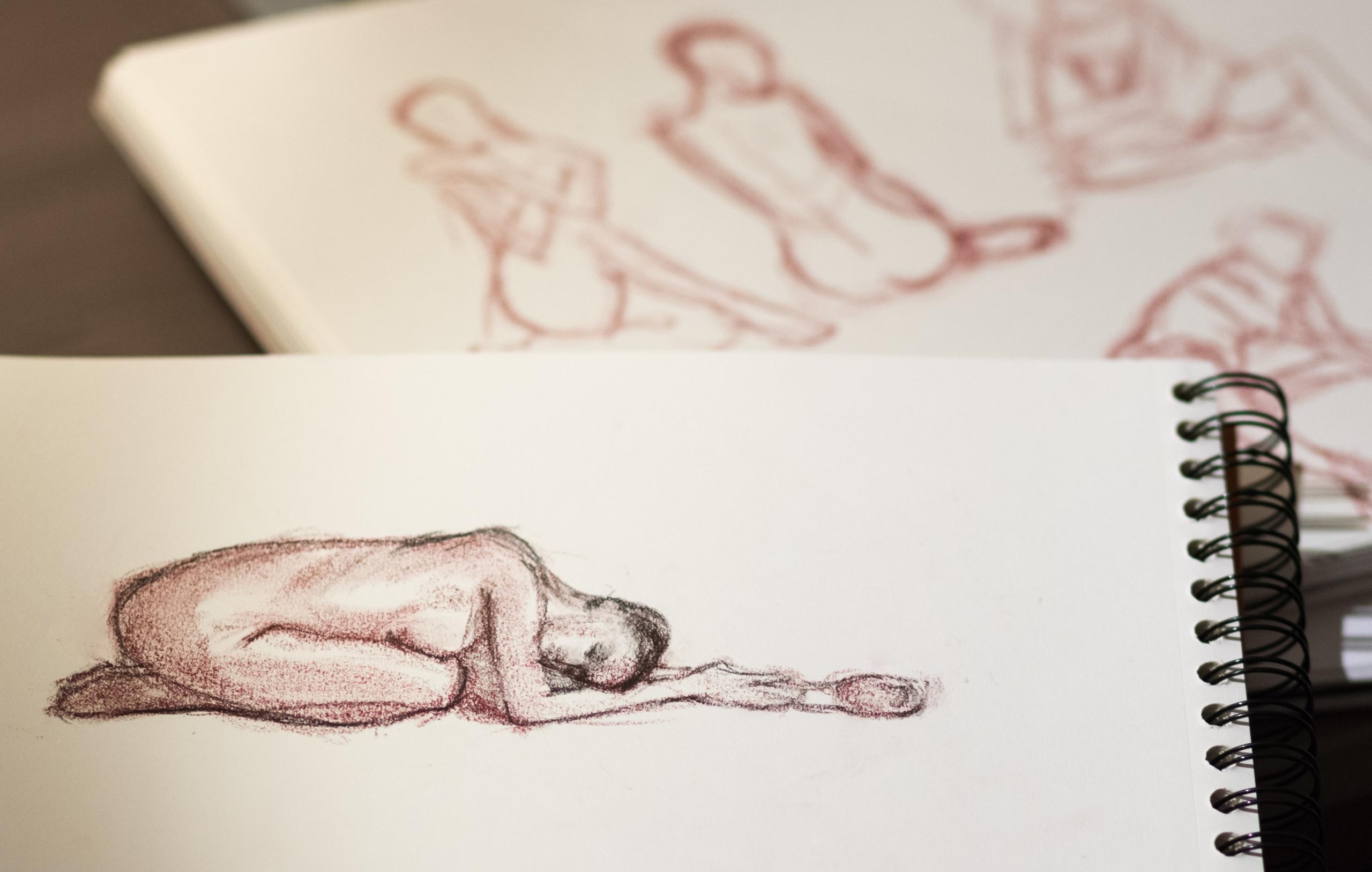
The unique rule of line drawing is that the pen or pencil never leaves the drawing paper until an end image is formed.
The chart below describes different types of line drawing. One can specialize in any of these types based on their preference. Each type has a different technique and thus, gives a unique final product.
| Line Drawing Types | Definition |
|---|---|
| Blind Contour Drawing | Blind contour drawing involves creating wobbly lines which bear little similarity to the chosen object. |
| Gesture / Movement Drawing | A gesture drawing is a type of line art in which the artist captures the laying of the form, action, or pose of an object, model, or any figure. |
| Continuous Line Drawing | This method is best for sketchbooks and real-life drawing. It's an excellent step-by-step drawing for beginners' learning method. |
| Contour Drawing | Contour drawing is a type with great emphasis on the outlines and edges of an object or scene. It aims to omit fine details, smooth lines, and surface texture. |
| Cross Contour Drawing | To learn this type of line drawing, you'll need an art teacher to teach you. Cross contour drawing is slightly challenging to learn, but it's an excellent way to familiarize yourself with volumes and dimensional forms or objects. |
Practicing line art from an art tutor can help you illustrate better lines to capture the shape and essence of an object. They also help you understand the intensity of light, texture, and composition.
3. Geometric Drawing: The Style That You Need To Perfect To Move To Advanced Ones
Geometric drawing may sound like a technical skill for engineers and architects. Furthermore, the term may turn off anyone with a passion for art but hatred of math.
Well, don't be fooled. Once you get into it, this form of drawing is a highly creative and skilled drawing style.
Geometric drawing, as the name implies - could be anything. From perspective sketching 2D shapes to drawing 3D shapes, this style poses endless opportunities.
It can be as simple as a doodle or as complex as an illustration. It's a mechanical drawing mainly used to design new patterns, machines, products, and designs.
You can choose from the patterns listed below – from easy to complex:
- Geometric Lining Art
- Isometric Cube
- Flat Circle, Semi-Circle
- Squares, Rectangle
- Parallelogram
- Rhombus
- Pyramid and Prism
- Trapezium
- Portrait / Figure Drawing
Once you've completed the beginner drawing course, the most important style to master is geometric drawing.
It focuses on drawing geometric shapes to create a particular object, pattern, design, or even complex artwork.
4. Photorealism / Hyperrealism, The Hardest Drawing Style To Master
As a person progresses through different drawing styles in drawing classes, the most complex is photorealism, also called hyperrealism.
It's a challenging style that requires a lot of patience and technique.
Photorealism or hyperrealism is a style of art that includes drawing, painting, and other graphic media.
An art tutor teaches students to study an object or photograph to execute this drawing style. Once observed, the artist attempts to reproduce it as realistically and originally as possible on a piece of paper.
It demands extreme practice, patience, and dedication to carry out this drawing style. Photorealism is a great style in terms of sharpening the focus and skills of an artist.
It allows an artist to capture both minute and prominent features in incredible detail.
However, all it takes to master this drawing style is observation and focus. It seems pretty easy – "draw what you see." It's a helpful suggestion.
Moreover, following are the below-described techniques that can help you become competent in photorealism. These techniques are specifically designed to draw drawings in a photorealistic manner.
| Helpful Techniques to Learn Photorealism / Hyperrealism |
|---|
| 1. Sighting / Measuring – The first step in drawing a photorealism portrait is to measure the proportion of your subject. Knowing the necessary measure of the subject can help you improve your accuracy. |
| 2. The Grid Technique – It's a professional approach that breaks down the drawing subject into "bite-sized" pieces to understand it better. Each grid provides visual information, helping an artist draw step up step. |
| 3. Linear Perspective – It is a technique that aims to identify basic shapes and the positive and negative spaces in a photograph. |
| 4. Facial Propositions – Every face is different, and it's hard to draw each of them with accuracy. However, to attain certain approximately, focusing on one feature at a time can help. |
If you want to improve your drawing skills, learning how to focus on the subject you are drawing is the first step.
How Can I Improve My Drawing Skills? Top Drawing Tips
Whether you've just enrolled yourself in beginner drawing classes or have been in the field for a long time, there is always room for improvement.
Moreover, if you are serious about pursuing a career in the art field, then venture to some of the top art cities in the US.
Drawing has always been a popular art form. With just a few tools and skills, one can draw a stunning and detailed work of art.
Ranging from simple, basic lines to complex, realistic drawings, you can master all the drawing styles with just a few tips in your head.
Read on to discover some top drawings tips and techniques to add refinement and detail to your artwork.
Hatching & Cross-Hatching – Hatching and cross-hatching are great ways to add depth and shade to your drawings.
It's a technique in which an artist draws numerous lines along the mainline to add depth and shadow. The closer the lines are, the darker the shade in your drawings.
Stippling – Like hatching, stippling is the art of adding dots and minute patterns to add shade to your drawings.
To master this technique, it's vital to use soft graphite to ensure the dots are prominent and give away a darker impact.
How Superprof Can Help You Become A Professional Drawing Artist
Advancement and improvement never go to waste. Take your drawing journey to the next level by enrolling yourself in a drawing course.
With the courses available at Superprof, one can explore and master a range of drawing and sketching tools, techniques, and themes.
These courses are designed to provide inspiration and fundamental skills to an artist.
Summarize with AI:
Did you like this article? Leave a rating!

 Loading...
