

Statistics and the study of statistics are some of the most important analytical tools we have.
The field of statistics refers to the collection of data as well as its analysis and presentation. This can be applied to a variety of different areas. Statistics are crucially important in so many different fields including medicine, mechanics, and even society.
Statistics helps us to understand the world around us. Huge companies have been built on their ability to provide these statistics and researching a wide variety of different fields.
Statistics is the practice of collecting and analyzing large data.
In this guide, we will look at some of the applications of statistics as well as the actual statistic definition. Mathematics has a huge bearing on statistics, let's explore how statistics relates to math.





What Exactly Is Statistics?
You’re probably here wondering “What is a statistic?” and thinking about how it may relate to your daily life.
Is statistics math? Well, the two are certainly closely linked. Statistics involves gathering data, which can come from various sources like surveys, experiments, or observations. Once the data is collected, statisticians use different methods to analyze it. This might include calculating averages, determining probabilities, or finding patterns, before presenting this information to people.
Looking for a statistics class? Find a professional tutor on Superprof.

Data in statistics can vary hugely, and some are more scientific and mathematical than others. For example, taking data from an experiment may be very heavy in math. Statistics in math are accurate and often based on hard numbers. Other statistics could be based on questionnaires and surveys which can be more subjective.
Imagine you're trying to understand how many hours of sleep people get each night. You might survey a group of people, asking them how many hours they sleep. The numbers you collect are your data. Using statistical methods, you can find out the average sleep time, see if there are any common sleep patterns, and maybe even determine if factors like age or job affect sleep duration.
Companies that specialize in surveys can use them for a wide variety of different purposes. Scientific research, market research, and more. Ipsos Mori is one of the biggest companies in this field, and their revenue shows how important people consider this kind of data.
The massive 2023 revenue of Ipsos Mori, one of the biggest companies dealing with statistics and analytics
Understanding Descriptive and Inferential Statistics
The two main branches of statistics are descriptive statistics and inferential statistics. Let’s explore what each of these involves and how they differ from one another
Descriptive Statistics: Painting a Picture with Data
Descriptive statistics is all about summarizing and describing the features of a dataset. Imagine you have a pile of information and you need to make it understandable at a glance. That’s where descriptive statistics comes in.
The main goal here is to present data in a way that’s easy to understand for people. This involves calculating key figures that give a snapshot of the data including:
- Mean: the central value
- Median: the middle value when all numbers are sorted
- Mode: the most frequent occurring value in the dataset
Beyond central values, descriptive statistics also looks at variability, which tells you how spread out the data is. Measures like the range, which is the difference between the highest and lowest values, and the standard deviation, which shows how much the values typically deviate from the mean, are crucial. These numbers help you understand the consistency or diversity within the data.
Inferential Statistics: Making Predictions from Data
When we define statistics, we need to consider its uses too. If you’re wondering what statisticians do and what the uses of statistics are, you may consider inferential statistics. While descriptive statistics is about describing data, inferential statistics takes it a step further. It’s about making educated guesses and predictions based on a sample of data and potentially understanding more about the future.
Suppose you want to know the average height of all teenagers in a city, but you can’t measure every single one. Instead, you measure a representative sample and use inferential statistics to estimate the average height for the entire population.
Inferential statistics are the kind used to predict things like who the next President will be or the results of other votes, for instance.
Discover an amazing statistics tutor on Superprof.
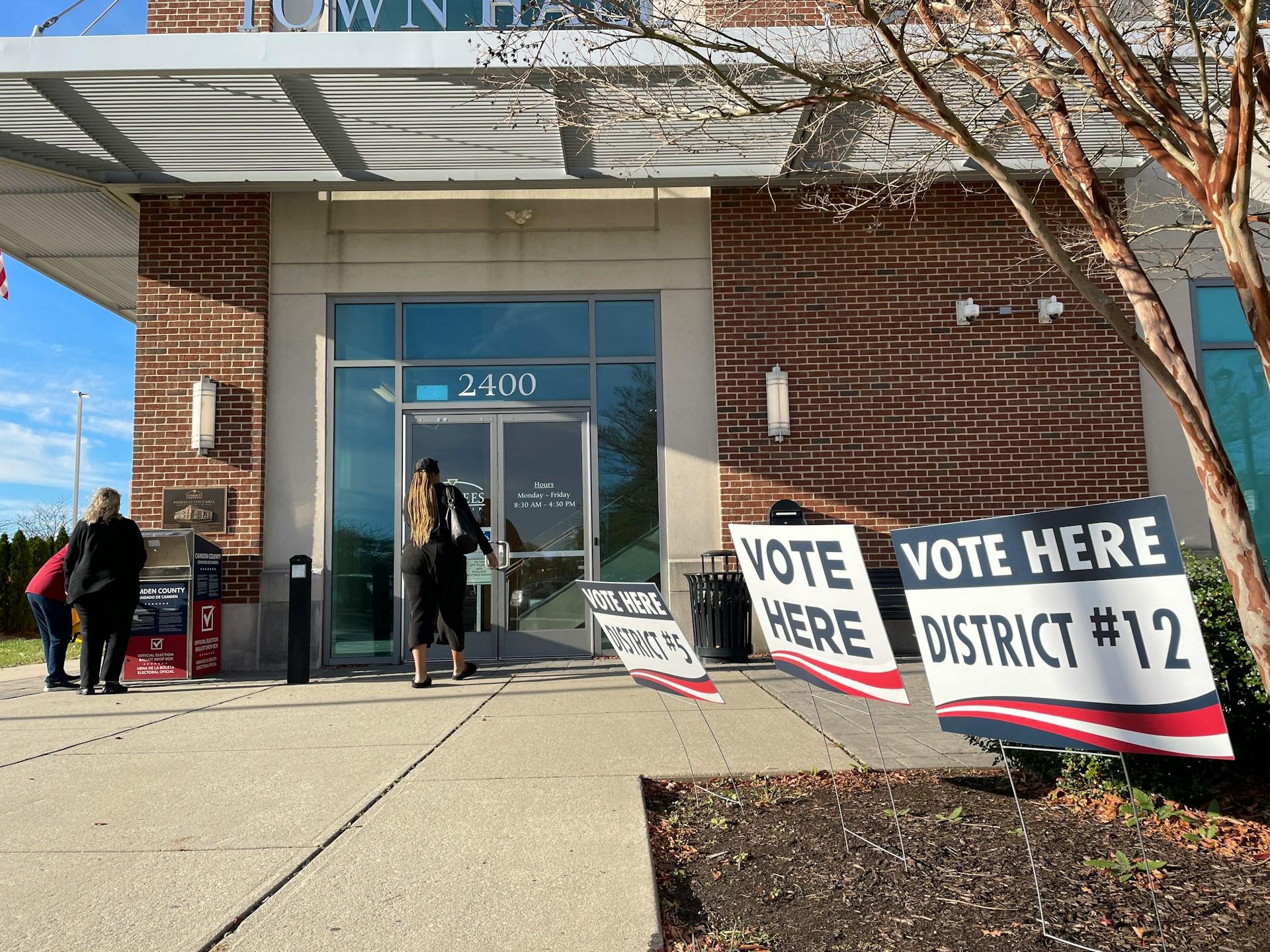
A key aspect of inferential statistics is hypothesis testing. This involves making an assumption (the hypothesis) and then using data to test whether it’s likely to be true. For example, if a new teaching method is supposed to improve student performance, you could use hypothesis testing to see if students taught with this method score significantly higher than those taught with traditional methods.
Election polling is one of the top examples of inferential statistics. The results of polling questionnaires can be used and fed into analytical, statistical models. This shows that data and statistics can be key to making vital predictions.
Statistical Questions
Often, the need for statistics starts from a statistical question. This is one that you can answer using statistics and data.
Non-Statistical Question
“How many cars are in my household?”
Statistical Question
“What is the average number of cars per household in my county?”
The statistical question definition is one that can be answered by using statistics, collecting data, and using the two types of statistics.
If you were to take the example further and ask “How many cars will be in each household in 10 years?” then you could use inferential statistics and surveys to help gather the data and provide an estimate.
What Do You Learn When Studying Statistics
Before choosing to study statistics, you might have a lot of questions. Is statistics math? Does it involve a lot of science? What do statisticians do? Is it worth learning statistics? Let’s try to answer some of the questions about what happens when studying statistics.
At the time of writing, there are thought to be 448 Statistics Bachelor Degree courses available. These may be in Applied Statistics or a variety of other fields, such as Mathematics and Statistics combined.

Studies can vary depending on which field you want to go into.
Generally speaking, one of the first things you’ll learn in statistics is the role of data and how to collect data effectively. This involves designing surveys, experiments, and observational studies that yield reliable and accurate information. You’ll discover how to choose representative samples, ensuring that the data you gather truly reflects the larger population. It’s about asking the right questions and using the right methods to get the answers you need.
Descriptive statistics teaches you how to summarize data using measures like the mean (average), median (middle value), and mode (most frequent value). You’ll also learn about variability, which includes concepts like range (the difference between the highest and lowest values) and standard deviation (how spread out the values are).
Begin taking online classes statistics when you search for a tutor on Superprof.
Visualizing data is another key aspect. You’ll become proficient in creating and interpreting graphs and charts, such as histograms, bar charts, and scatter plots. These tools help you see patterns and trends at a glance, making complex data more accessible.
Of course, you’ll also probably learn how to use a sample to make inferences about a larger population. This involves understanding concepts like confidence intervals, which provide a range within which you expect the true population parameter to fall, and hypothesis testing, which helps you determine whether your assumptions about data are likely to be true.
Statistical models may be another important area. Studying math and statistics people will learn how to create models that describe relationships between variables. Linear regression, for instance, helps you understand how one variable affects another. You’ll also delve into more complex models that can handle multiple variables and non-linear relationships. These models are powerful tools for analyzing data and making predictions.
One of the most important things to learn is how all of this relates to our daily lives. Stats are involved in healthcare, business, politics, sports, or social sciences, and have a crucial role in decision-making and problem-solving.
Students will study a lot of statistic resources in order to understand mathematical ideas, and math is part of statistics, but more importantly, they will learn how to do things like design clinical trials, analyze market trends, evaluate educational programs, and much more.
Learn More About Statistics with Superprof
A wide range of Superprof tutors all over the US can help you to learn more about statistics. Whether you need to learn the mathematical basics, or you are looking to get to grips with some of the more advanced aspects of predicting and understanding the world we live in, statistics tutors can help.
To find a statistics tutor in person or online, start your search on Superprof today and choose between many experienced tutors.
Summarize with AI:
Did you like this article? Leave a rating!

 Loading...