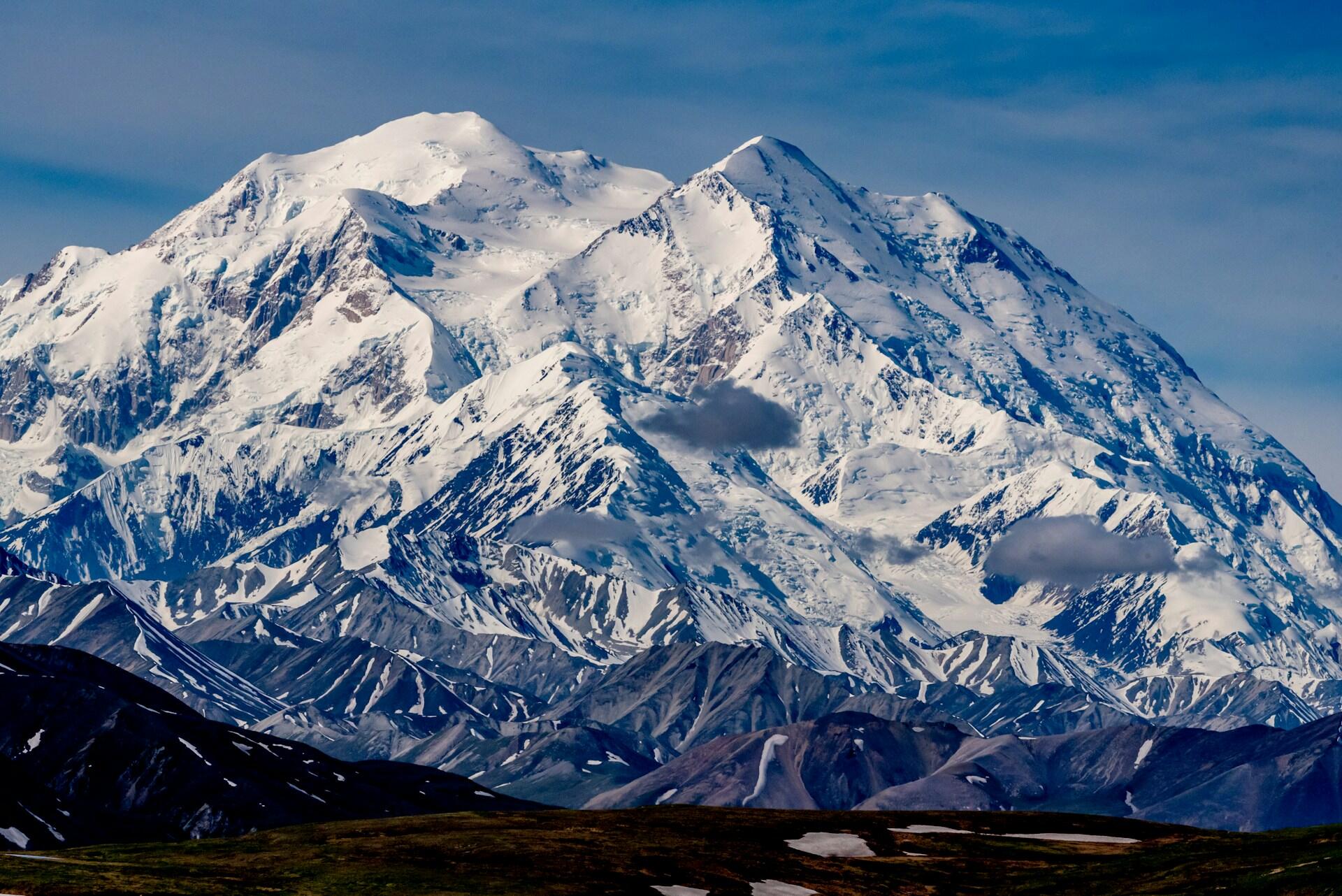

Alaska is home to some of the most remote wilderness on the planet, and taking the time to plan and execute a trip to visit yields rewards unseen anywhere else on earth. Across the enormous state, the parks encompass mountains, glaciers, wildlife, Indigenous histories, thick forests, fjords, and many other amazing sights. Discover the information you need to know to plan a smooth, full trip to Alaska’s national parks.
National Parks in Alaska
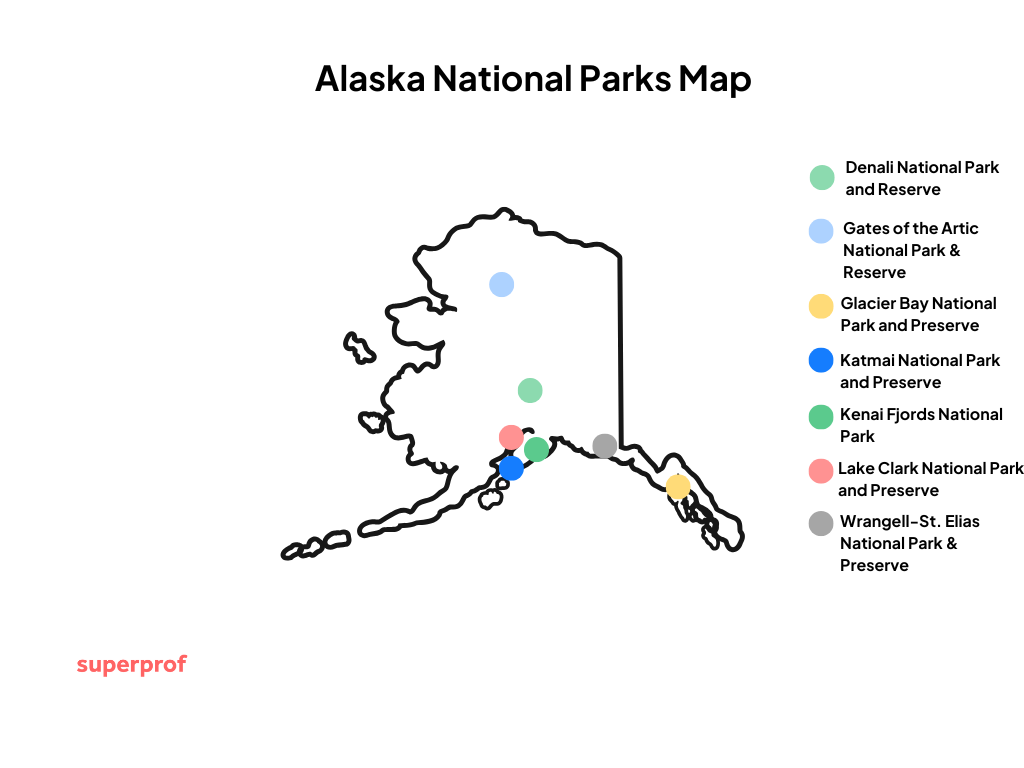
- Denali National Park and Preserve
- Gates of the Arctic National Park & Preserve
- Glacier Bay National Park and Preserve
- Katmai National Park and Preserve
- Kenai Fjords National Park
- Lake Clark National Park and Preserve
- Wrangell-St. Elias National Park & Preserve


Denali National Park and Preserve
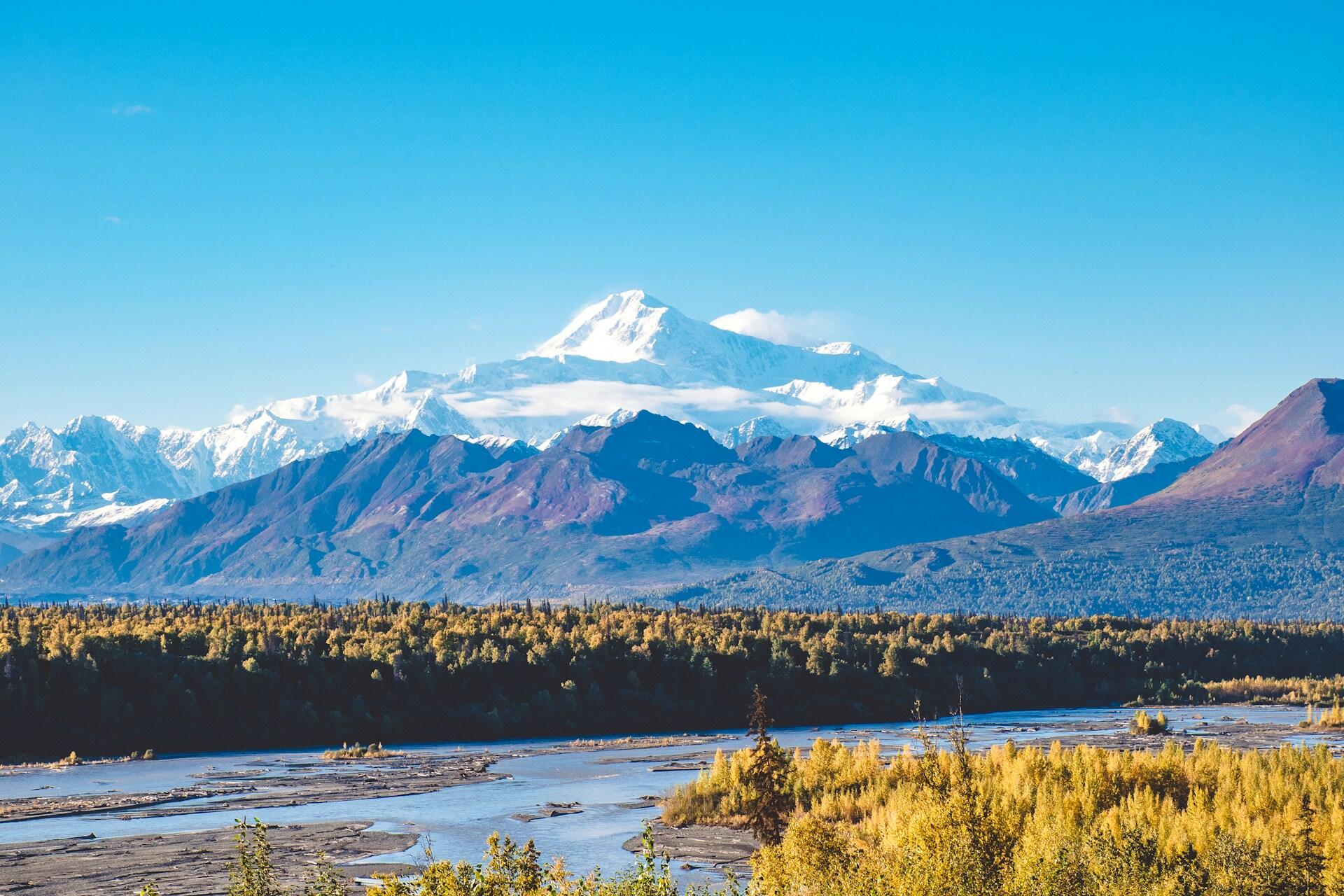
Denali is located in Alaska’s interior, 237 miles north of Anchorage and 120 miles south of Fairbanks. The only road leading to the park is Route 3, also called George Parks Highway or Parks Highway. The road within the park travels westward into the park’s interior for 92 miles, and is called Denali Park Road.
The tallest mountain in North America, Denali (aka Mt. McKinley), sits at the center with a peak elevation of 23,310 ft.
Within the park are many types of protected environments, including taiga forest, tundra, and glacial valleys. Many animals live within the park, like moose, caribou, bears, lynxes, and wolves.
Alaska is a rugged land. At any time of year, you must be prepared to take on the weather and local wildlife properly. Especially if you plan to camp outside of an established campground, be sure you research well, equip yourself with the proper equipment, and know how to handle yourself and any situations you might find on the trail.
And, if you’re visiting in winter, you need to be even more prepared. Ill-preparedness leads to death in the Alaskan wilderness. Always tell a few trusted people about your plans and what to do if you don’t make contact on the day you expect to re-enter an area with cell service.
Popular activities include sightseeing along Denali Park Road, hiking, backpacking, camping, wildlife viewing, photography, fishing, cycling, and unique winter activities such as mushing, skijoring, snowmobiling, and aurora borealis viewing.
The park is open all year, but it is substantially harder to get to and navigate in the winter (which also makes it perfect for avoiding crowds). Contact the park before your trip to get up-to-date information on road conditions if you plan to travel during late fall, winter, or spring.
acres of wild land
There are three main areas to visit in Denali: Mountain Vista, which is near mile 13; Savage River, at mile 15; and Wonder Lake, which is at the end of Denali Park Road at mile 85. Wonder Lake is only accessible via a hike. An ongoing landslide at mile 43 has cut off access to the rest of Denali Park Road indefinitely. This also means that Wonder Lake Campground is closed for the foreseeable future.
Discover other incredible national parks in the United States!
There are many hiking trails in Denali. Some trailheads are accessible via shuttles and cars, while others may require other means of travel.
Explore Horseshoe Lake Trail, McKinley Station Trail, Mount Healy Trail, Mountain Vista Loop, Rock Creek, Savage River Loop, and Triple Lakes Trail.
Similar to the trails, some camps are easily accessible, and some take more work. All campgrounds are open only in summer (May 20 to mid-September). All highly recommend reservations.
Prepare to tent or RV in one of these sites, but be sure to check which types of camping are allowed at each campground: Igloo Creek, Teklanika River, Sanctuary River, Savage River, and Riley Creek. Camping and backpacking in remote areas of the preserve require special preparation, registration, permits, and attending an information session. There are 87 established backcountry units.
At times, Denali Park Road and/or Parks Highway may be closed due to winter weather or other obstacles. Research what times of year to expect closures and what plans you should have in place to navigate closures. In the winter, some sites are accessible via snowmobile, skiing, biking, or hiking, even when the road is closed.
Visitors can opt to take a narrated bus tour or a transit bus to take them to different sites along Denali Park Road (up to mile 42). The transit shuttle is free to use with the purchase of an entry into the park. Note that buses do not run in the winter.
One shuttle bus route takes visitors to the Denali kennels, where you can see the sled dogs who work for the park and learn more about their stories and jobs.
Gates of the Arctic National Park & Preserve
The entire Gates of the Arctic National Park & Preserve lies north of the Arctic Circle, in the Brooks Range, the northernmost extension of the Rocky Mountains. The Eastern Unit (Itkillik) is the national park, while the Western Unit (Kobuk River) is the national preserve.
It’s also one of the most difficult parks to get to: there are no established roads or trails in the park, and most visitors arrive via small aircraft to nearby villages or airstrips. The best way to fly in is with a permitted charter company; they will be able to tell you all the things you need to account for in your travels to and from the park.
If you’re driving, prepare for an 8-12 hour long trip from Fairbanks or Anchorage, respectively. Visitors can utilize a shuttle from Fairbanks to the park border. The important part to remember is that if you’re arriving by wheeled vehicle, you’ll need to hike into the actual park on your own.
If you’re using a plane service to get out of the park, be sure to pack at least 2 days’ worth of extra food with you. If the weather on the day you’re meant to be picked up is too harsh for flight, you’ll need to wait in place until the air service can come out and retrieve you.
There are also no established campsites in the park. Hikers are responsible for making sure they’re properly prepared with food, water, gear, physical fitness, and wilderness proficiency to survive in the park for however long they plan to stay. You must be self-sufficient to have a successful trip.
Since there are no roads or buildings in the park, the only thing to do is enjoy nature while hiking, camping, and floating on the lakes. It’s also possible to fish and hunt on the land with the proper permits. Birding, wildlife viewing, and stargazing are unmatched in the wilderness found in the preserve.
If you still want to see the park but don’t want to participate in survival camping, you can take a flight-seeing trip in a plane, hike a day trip, or have a one-night campout.
Learn about the national parks in Colorado you should visit.
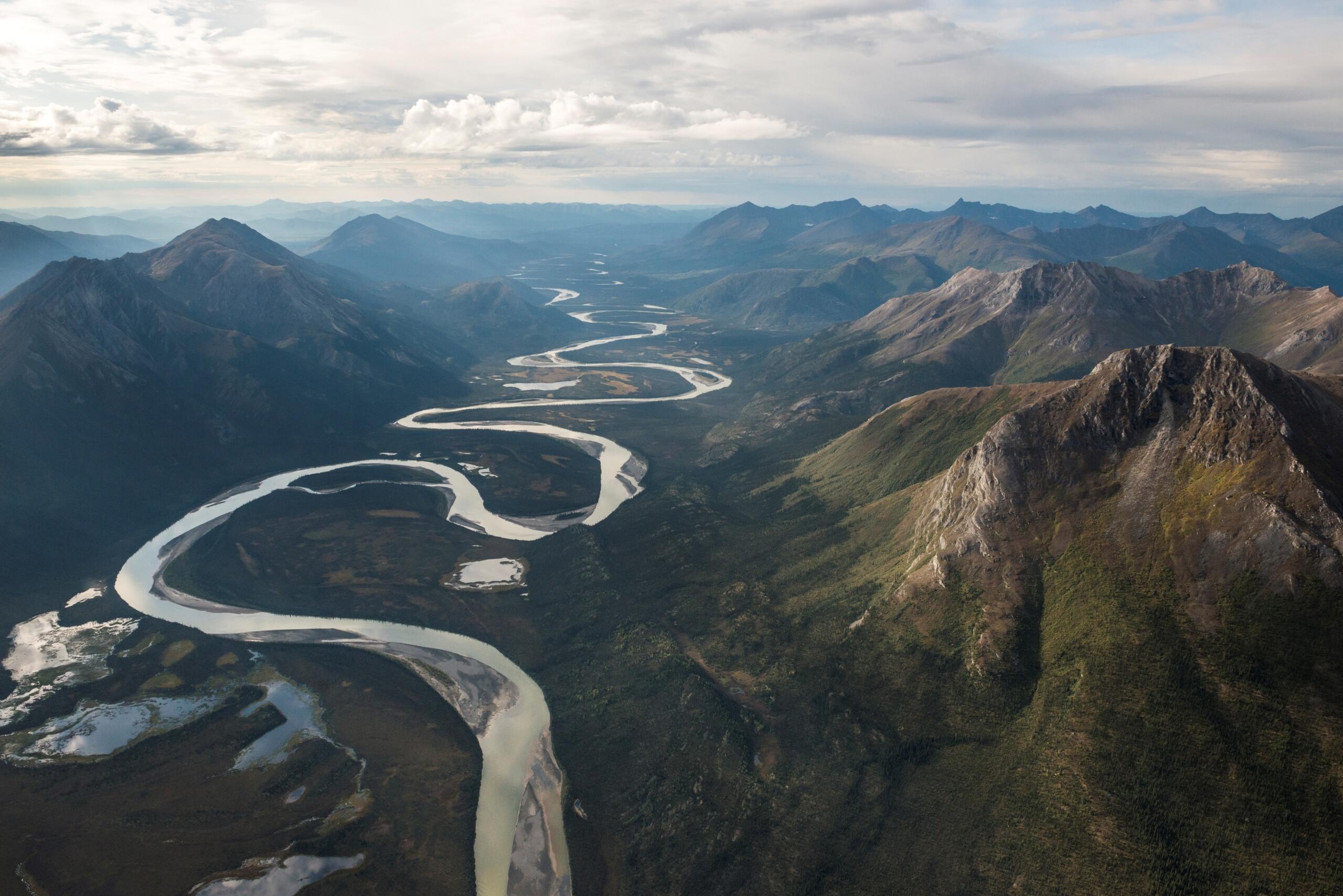
There are three ways to enter the national park and preserve: via driving to the Dalton Highway (the Eastern border of the park), via small airplanes (like bush airplanes) that can land inside the park, or via hiking. All ways require a lot of foresight, planning, and preparation to execute.
There are no hiking trails in Gates of the Arctic. Use a GPS system to plan your waypoints in advance so you can hike and enjoy the park without getting lost.
To preserve the park’s pristine natural state, be sure to practice all the principles of Leave No Trace.
Keep in mind you will not have any cell service, there are no amenities, and there are no emergency services readily available. Bear-resistant containers are required for overnight visits to the park. You can borrow a container to prevent bears from getting your food from a visitor center, but they are first-come, first-served. Be sure you know how to try to prevent bear encounters, and what to do if you do meet a bear in the wilderness.
Glacier Bay National Park and Preserve
In the southeast region of the state, west of Juneau, Glacier Bay National Park and Preserve is another park accessed by means other than driving. Visitors usually arrive on cruise ships, tour boats, or small aircraft. The community of Gustavus is the main gateway to the park.
The region is known as Homeland by the Huna and Yakutat Lingit peoples, and the preserve aims to protect the wildlife and wilderness both for nature’s sake and for the ancestral rights of the Indigenous people.
Key attractions in the preserve include the giant tidewater glaciers, Bartlett Cove, and the abundant marine wildlife, such as seals, whales, sea otters, and a variety of birds. Visitors in the preserve enjoy hiking, camping, kayaking, and flightseeing. Campers can even use kayaks to paddle to certain designated camping spots.
Alaska houses 8 national parks, second only to California, which has 9.
Visitors typically enjoy activities like guided boat tours, kayaking, hiking, and ranger-led activities. The Huna Ancestors’ House, known as Xunaa Shuká Hít, is a great resource for respectfully learning about the culture and history of the local people. The operating hours are irregular. Due to staff availability, it is sometimes closed to visitors for tribal use.
For many, Glacier Bay is a day-trip stop while on a cruise. Even with a short amount of time to work with, Glacier Bay is a magnificent experience that will create wonderful memories.
The park is open all year, but has very limited services in the winter season.
Looking for a summer vacation spot? Explore Florida's beautiful national parks.
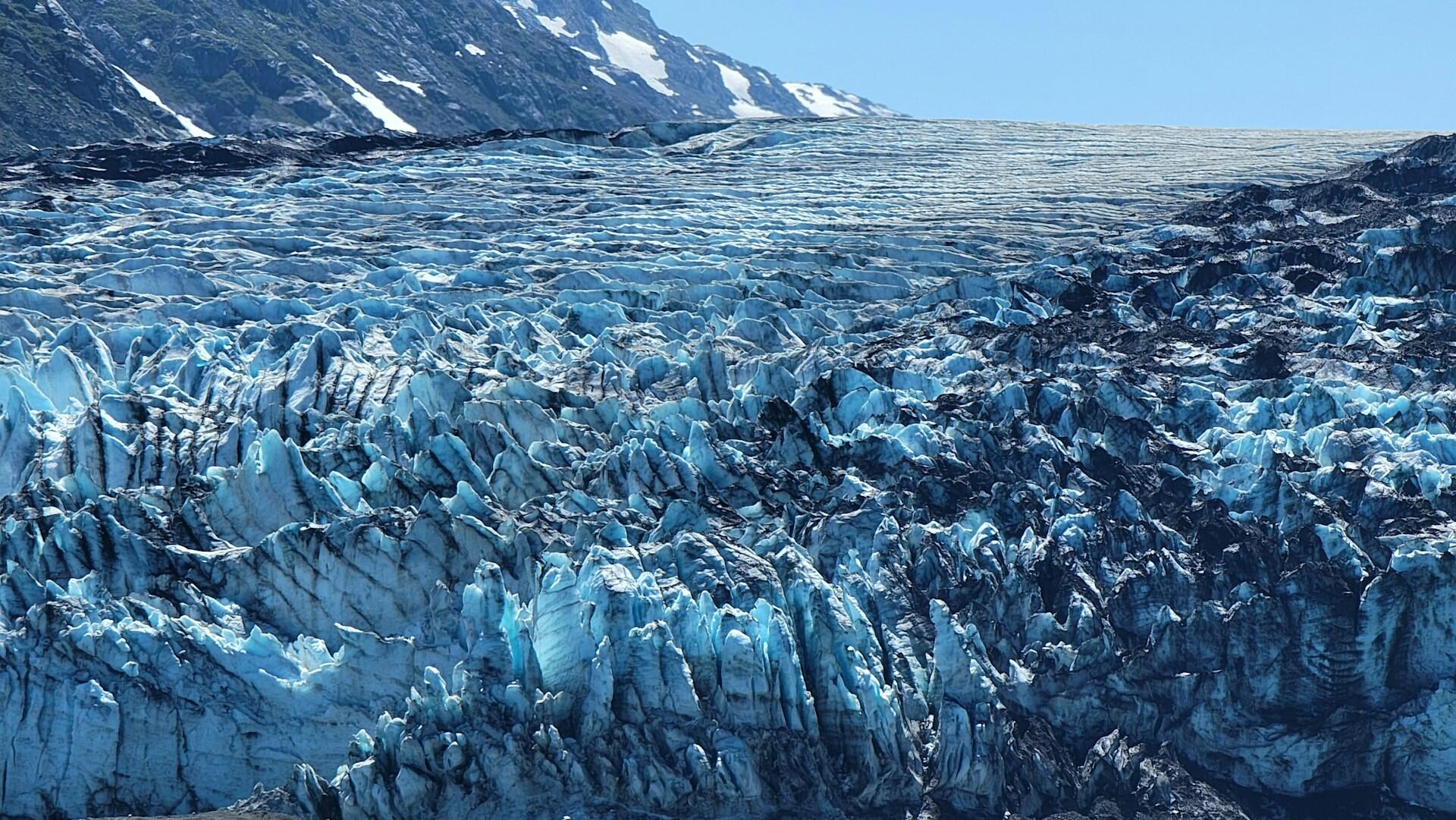
During the summer, you can take a guided day tour boat from Bartlett Cove and spend the entire day touring the tidewater glaciers. Campers and kayakers have the option to be dropped off at designated locations along the route. The tour is run by Glacier Bay Lodge & Tours.
Kayakers can arrange a rental with Glacier Bay Sea Kayaks for day use or overnight camping. Some local outfitters also offer guided kayak tours of the bay.
Bartlett Cove is the only developed portion of the park and hosts a few different trails: Forest Trail, Bartlett River Trail, Bartlett Lake Trail, and Tlingit Trail. Otherwise, visitors are free to wander the shore and the wilderness, as long as they’re prepared with the right gear and respect nature.
Bartlett Cove is the only official campground in the park, and campers must apply for a camping permit to stay there. All campers staying outside a designated campground must register and obtain a backcountry permit, including attending a backcountry camping info session.
Katmai National Park and Preserve
Known for the volcanic landscape of the Valley of Ten Thousand Smokes, Katmai was declared a preserve in 1918 in an effort to protect the lands devastated by the eruption of Novarupta in 1912. For context, Novarupta produced about 3 cubic miles of erupted magma, whereas Mt. Vesuvius in the historic Pompeii incident only produced 1 cubic mile. The ash traveled more than 100 miles away, covering the island town of Kodiak (among others) in a thick layer of ash a foot deep, devastating buildings, the water supply, and individuals who breathed the sulfurous gas.
The sight that flashed into view...was one of the most amazing visions ever beheld by mortal eye. The whole valley as far as the eye could reach was full of hundreds, no thousands--literally tens of thousands--of smokes curling up from its fissured floor…
Botanist Robert F. Grigg, on finding Valley of Ten Thousand Smokes after the eruption
Today, the site serves as a valuable outdoor laboratory for geologic and volcanic science.
Beyond the Novarupta eruption, Katmai is also a center of human civilization; people have been living in the area for at least 9,000 years.
The preserve is another location unreachable by car. Visitors must arrange commercial flights to a nearby area (usually the village of King Salmon), then take a small plane or boat to the park. Fixed-wing aircraft are allowed to land within the park, so many visitors opt to fly in directly from Anchorage.
Katmai is well known for its large population of brown bears, which live and fish in the area. You will likely see a bear if you hike in Katmai. Therefore, you must learn how to try to prevent bear encounters and what to do if you do see one. The Brooks Camp Developed area utilizes electric fences to deter bears, and it’s recommended that you bring a portable setup if you’re camping in the wilderness. Always use a Bear-Resistant Container for food and store it properly. Keep your cooking area away from your sleeping area.
Prime bear-viewing months are usually in the summer, when salmon runs are the strongest.
Learn about the national parks across Montana.
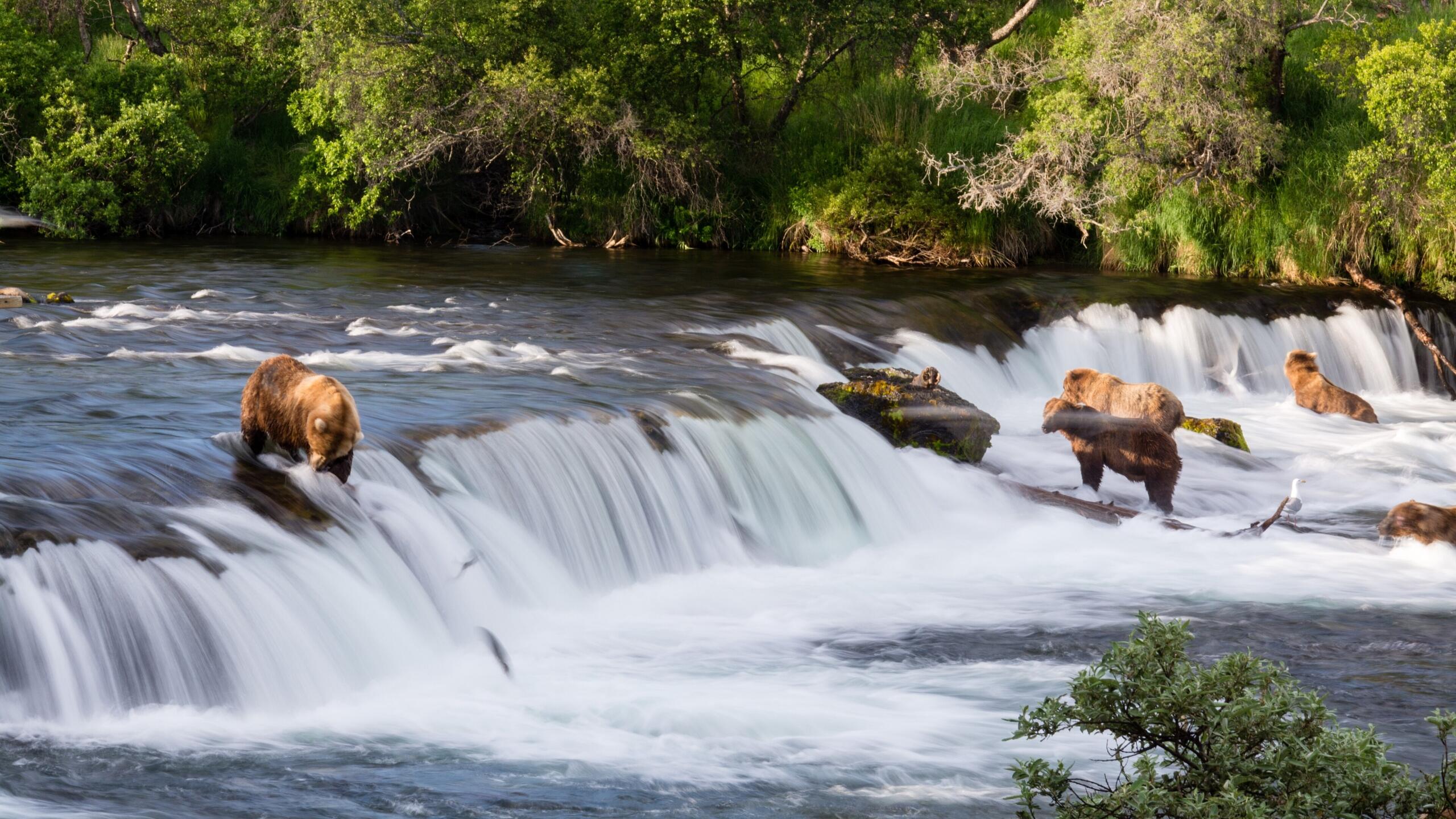
Like many parks on this list, visitors can enjoy flightseeing, backcountry hiking and camping, boating, fishing, hunting, and trapping. Katmai also hosts several ranger-led programs that focus on educational cultural walks, scenic tours, and talks.
Much of Katmai’s camping offerings are within the Brooks Camp Developed Area, at Brooks Camp Campground and Brooks Lodge. If those facilities are full, campers can stay at Fure’s Cabin on the north side of the bay, or in the wilderness near Dumpling Mountain or the Valley of Ten Thousand Smokes Road. All campers should keep their food items in a BCDA to deter bears.
The Brooks Camp area contains several hiking trails: Brooks Falls Trails, Cultural Site Trail, Lake Brooks Road, Valley of Ten Thousand Smokes Road, and Dumpling Mountain Trail. Other than that, many visitors explore the backcountry, making their way to destinations like American Creek and waterfall, Hallo Bay, Katmai’s Pacific Coast, Moraine and Funnel Creeks, Naknek Lake, Savonoski Loop, and the Valley of Ten Thousand Smokes.
Bear Country
Kenai Fjords National Park
Kenai is often called one of the best national parks in Alaska for its spectacular landscapes that combine mountains, oceans, and ice. It’s located about a half-day’s drive south of Anchorage, on the Kenai Peninsula, near the town of Seward.
Key attractions include the Harding Icefield, boat tours into Resurrection Bay, and Exit Glacier. Exit Glacier is the only portion of the park accessible by road. The rest of the park can only be seen via hiking and kayaking. Visiting this glacier offers an up-close view of how these powerful ice masses shape the landscape over time.
Unless you’re from Alaska or have visited before, you may not entirely know what to expect. The weather in the summer can reach as high as the 80s in the day, and as low as the 40s at night. Late fall to early spring typically sees temperatures well below freezing; hypothermia is a real concern. In the summer, mosquitoes are abundant; using extremely strong bug spray is necessary.
Popular activities in the park include boat tours, kayaking, flightseeing, mountaineering, hiking, cross-country skiing, snowshoeing, dog sledding, snowmobiling, and ranger-led programs. Local outfitters offer many different guided tours, including kayaking, backpacking, photography, and dog sledding tours.
Beyond Exit Glacier, backpackers often use kayaks to travel through the coastal fjords and camp along the coast at night. Well-prepared adventurers even trek on top of the Harding Icefields, though that requires a lot of planning!
It’s best to travel with a licensed outfitter for a guided backcountry tour if you’re not a survival backpacking expert.
Discover Oregon's many national parks.
The Canyon at the toe (bottom) of Exit Glacier is susceptible to sudden floods when ice, water, or rocks fall into the water. Staying on designated trails can help keep you safe from being swept away by these sudden and unpredictable surges.
Ever wanted to learn more about how Indigenous people live, and have lived, in the Kenai Peninsula? Find educational programs about subsistence, traditional relationships with seals, the history of qayaq-making, and more at the Kenai Fjords National Park Visitor Center and Exit Glacier Nature Center.
Guided boat tours are very popular in Kenai. Find a local outfitter to learn more about the different day tours available.
Lake Clark National Park and Preserve
West of Cook Inlet, Lake Clark National Park and Preserve is mainly accessible by small plane, usually from Anchorage, Kenai, or Homer. Known as Qizhjeh Vena in the local language of the Dena’ina Athabascan people, Lake Clark spans a massive 42 miles across.
The preserve protects salmon runs, brown bear habitats, and sensitive ecosystems across the coastal Chigmit Mountains to the interior tundra. Naturally, the lake is the top attraction in the park. Other notable attractions include bear viewing day trips by boat plane, fishing, rafting, kayaking, and backcountry hiking and camping. It’s common for visitors to take an organized day trip into the park and return to Anchorage in the evening.
Hikers and campers must be fully self-reliant or hire a guide with an outfitter to ensure a safe and meaningful trip.
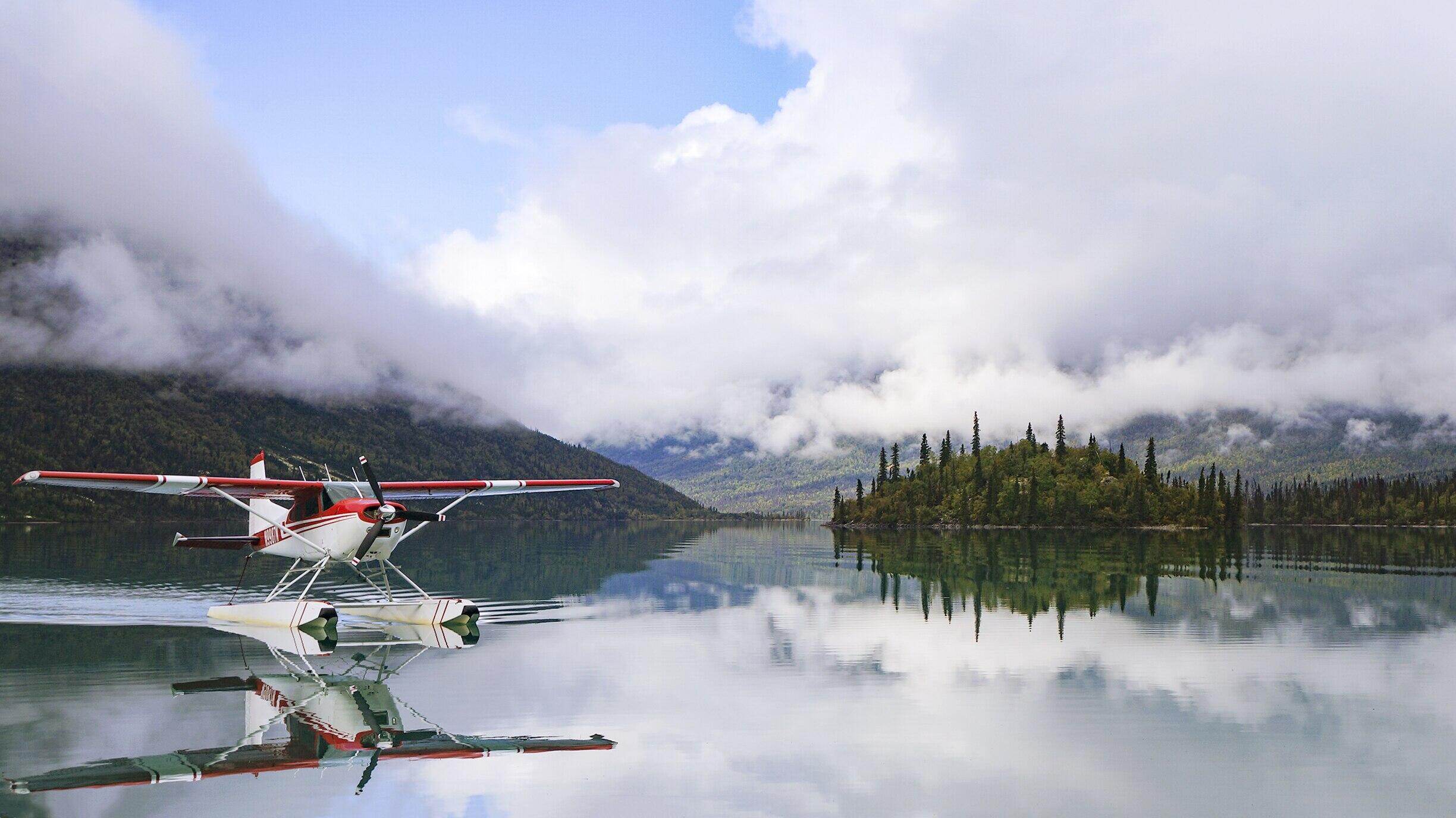
Specific landmarks visitors should try to see include Crescent Lake, Chinitna Bay, Port Alsworth, Upper Twin Lake & Proenneke Cabin, and Silver Salmon Creek.
Most of the sites listed above offer several cabins as lodging opportunities. Also see Tuxedni Bay and sites around Lake Clark outside of Port Alsworth. Campers can generally create camp wherever they like, since the park has no trails. Be aware that the sedge meadow is closed to humans from May 1 to August 31 due to bear activity.
Like many Alaskan national parks, Lake Clark is open 24/7 all year long. The biggest obstacle is the weather. In the winter, there are fewer facilities (visitor centers are closed), and there may be fewer transportation and tour options. The summer is very busy, so it’s best to plan your trip well in advance to secure all the transport, camping reservations and permits, and anything else you need.
Wrangell-St. Elias National Park & Preserve
Wrangell-St. Elias is the largest national park in the United States; it’s even larger than some countries!
It’s located along the eastern border of Alaska and Canada, and includes mountain ranges, active glaciers, wilderness, and historic mining towns.
Thankfully, the entrance to this park is reachable by car, specifically by Hwy 4 (Richardson Highway). The main visitor center is 200 miles northeast of Anchorage, and 250 miles south of Fairbanks. Getting to each district in the park requires a different approach, such as driving on dirt roads, using a 4-wheel-drive vehicle, or taking a ferry to bring your car over.
Note that there are no fuel options inside the park, so you must make sure to have enough gas to get where you need to go before you enter; it might even be a good idea to bring an extra canister of fuel, depending on your circumstances.
million acres
Other methods of arrival are via air travel and subsequent shuttle services to the visitor center. Or, you could fly a small, private plane directly to the park. Otherwise, there is a private shuttle bus service that takes visitors to different stops between McCarthy and Glennallen.
There are several districts of the park to know about: Kennecott, which houses the Kennecott Mines National Historic Landmark; Yakutat, the coastal area reachable by boat or plane; Nabesna, reachable by gravel road.
Throughout the park, management and preservation revolve around maintaining the wild landscape and supporting subsistence use.
Learn about the national parks to visit in Wyoming.
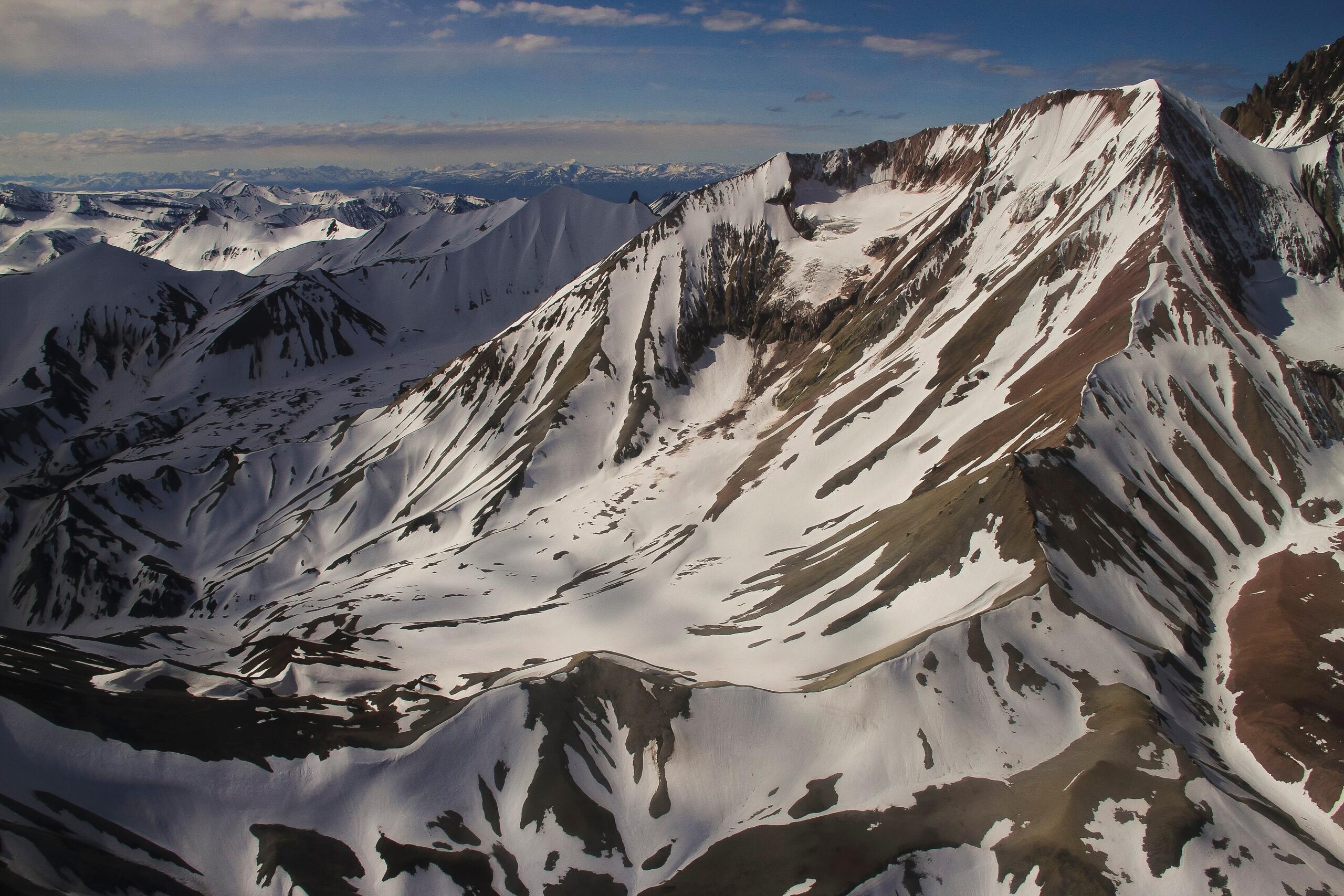
Main things to see include: Kennicott and Root Glaciers, Kennicott mining town, the peaks of the Wrangell and St. Elias mountain ranges, and the visitors center near Copper Center, which provides lots of valuable information.
Visitors can take day hikes, embark on mountaineering journeys, trek on glaciers, take river trips, and go flightseeing. Many visitors use tour services for these activities, but many others also prepare in advance and go it alone.
The park is home to several public-use cabins, most of which are only reachable by air taxi. Viking Lodge, Caribou Creek, Nugget Creek, and Esker Stream require reservations, while Chelle Lake, Orange Hill, Too Much Johnson, May Creek, Jake’s Bar, Hubert’s Landing, and Peavine do not.
Camping facilities in each district differ greatly, so it’s best to check the NPS website for more information. Wrangell-St. Elias also supports backcountry camping.
Alaskan national parks are very different from the parks you’ll find in the continental U.S. The landscape is much more wild and remote, with an emphasis on embracing nature while acknowledging its power. There are fewer amenities and accommodations, more extreme weather, and a higher risk of meeting dangerous wild animals. Rather than a drawback, those are the very qualities that bring millions of visitors to the national parks in Alaska every year. There’s simply no other experience like it!
References
- Denali National Park & Preserve (U.S. National Park Service). (n.d.). In www.nps.gov. https://www.nps.gov/dena/index.htm
- Gates Of The Arctic National Park & Preserve (U.S. National Park Service). (n.d.). In www.nps.gov. https://www.nps.gov/gaar/index.htm
- Glacier Bay National Park & Preserve (U.S. National Park Service). (n.d.). In www.nps.gov. https://www.nps.gov/glba/index.htm
- Katmai National Park & Preserve (U.S. National Park Service). (n.d.). In www.nps.gov. https://www.nps.gov/katm/index.htm
- Kenai Fjords National Park (U.S. National Park Service). (n.d.). In www.nps.gov. https://www.nps.gov/kefj/index.htm
- Lake Clark National Park & Preserve (U.S. National Park Service). (n.d.). In www.nps.gov. https://www.nps.gov/lacl/index.htm
- Wrangell - St Elias National Park & Preserve (U.S. National Park Service). (n.d.). In www.nps.gov. https://www.nps.gov/wrst/index.htm
Summarize with AI:
Did you like this article? Leave a rating!

 Loading...