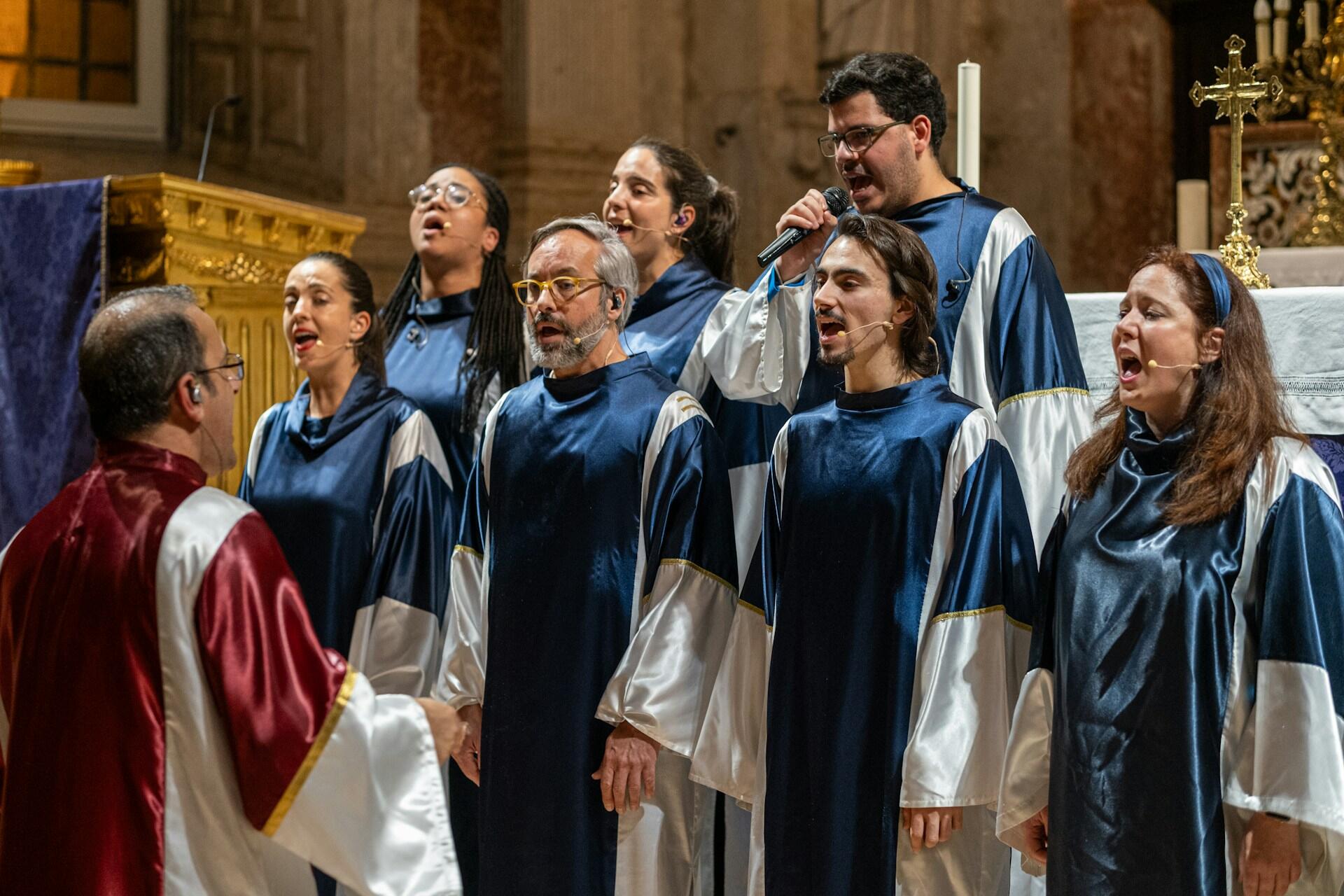

Church choirs are one of the oldest and most familiar institutions for people to make music together. Some singers have years of training and are on a professional level. Others join for the love of their faith and singing, and as a way to meet more people. Many secular people join simply because they love the music and the community aspect. No matter your motivations for joining a choir, it’s a worthy and fulfilling endeavor.



The Role and Evolution of Church Choirs
Church choirs evolved from a need to support worship through music. They also acted as a way to strengthen bonds, foster faith, and inspire hope in the churchgoers. Today, they are still a vital part of many congregations, acting as a community bonding point and sometimes even a feature during sermons.
Origins and Early Development
The idea of a formal singing group can be found back in at least the 2nd century B.C. in ancient Greece. Singing together was a long-standing tradition in many cultures all around the world for hundreds of years.
The earliest examples of church singing groups can be traced to the first centuries of Christianity, drawing inspiration from existing Jewish traditions. At that time, the arrangements were very simple. The “lyrics” were mostly spoken hymns set to specific tones, almost like chanting.
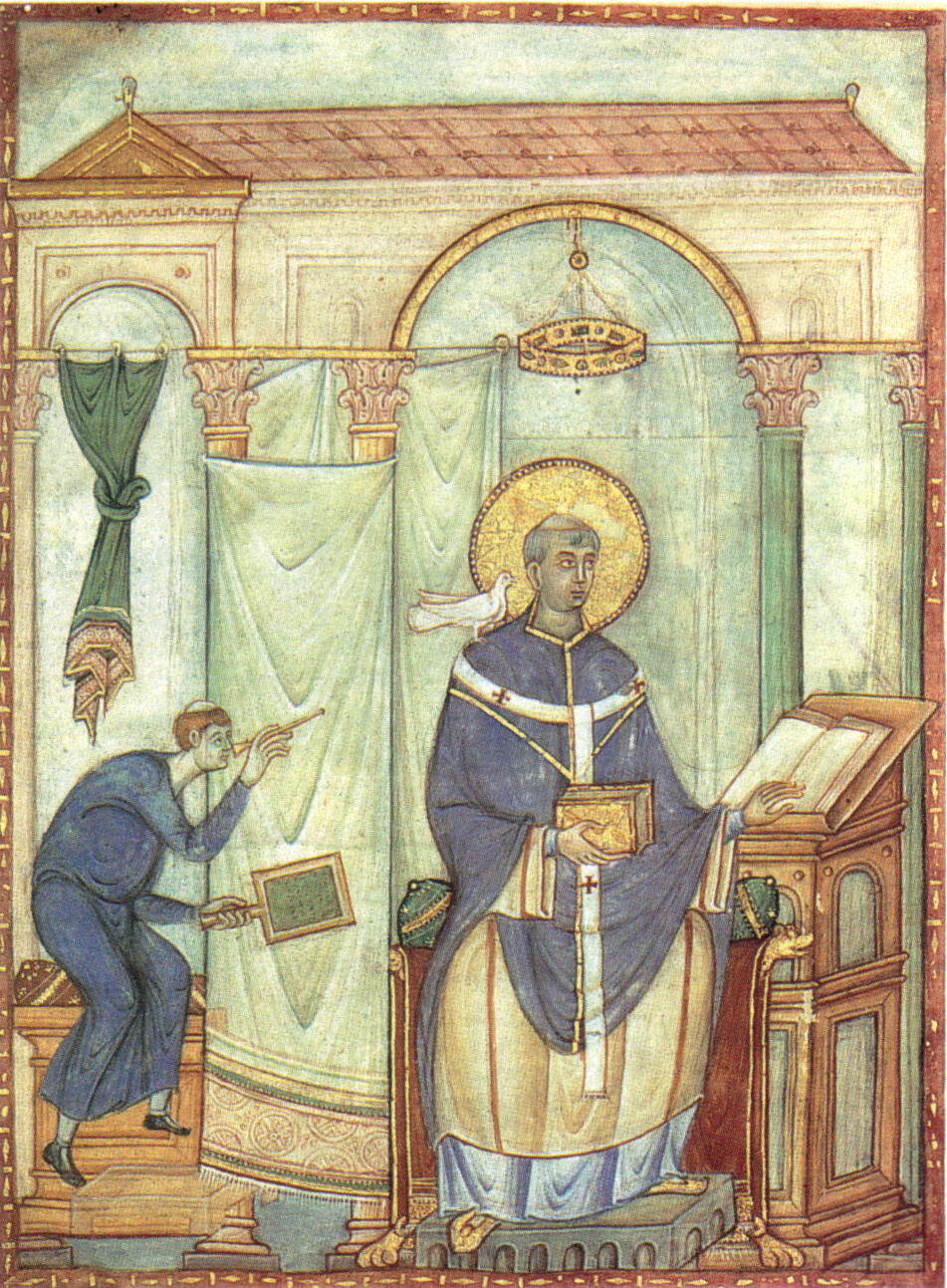
The masses usually participated in psalming the hymns as part of their typical worship service.
As Christianity became more organized, especially after it became the official religion in the Roman Empire, singers started to play a bigger role.
A distinction was made between the masses and the officially trained singers.
In the medieval period, Latin became the most common language of the Bible, which is why many traditional hymns are sung in Latin today.
This era also saw the rise of monasteries and cathedrals, developing formal techniques and traditions.
They would train monks and other religious leaders on how to partake in religious psalming in the “right ways.” This measure solidified choirs as a formal and necessary feature for churches.
Evolution Through the Ages
During the Middle Ages and Renaissance, songs with multiple parts became popular, requiring the development of ensembles with multiple types of voices learning to sing songs with unique parts rather than all in unison. Singers became even more exclusive because of the amount of practice and skill required to sing these chorals properly.
Then came the Protestant Reformation, which changed, among other things, the relationship of the choir to the common attendee. Again, the masses were encouraged to sing songs, many of which were simplified and translated into the local language, making them more accessible.
As literacy and printed materials became more common, devotional music began to expand in style and genre. By the eighteenth and nineteenth centuries, it was more common for volunteer singers to provide the musical portions of services, rather than vocational church singers.
Gregorian Chant
Traditional Hymns
Gospel
Liturgical
Modern Praise and Worship
Chorales
Psalmody
Motets
Different branches of Christianity developed different traditions, and specific churches also grew their own local traditions over time. Distinct styles such as Gospel, American Traditional, community-based choirs, and contemporary worship.
Today, there are many different ways choirs may function. Some keep it simple with a volunteer-based ensemble made up of men, women, and children. Others divide the ensemble into groups based on age and/or gender. Some have professional musicians, either for hire or as volunteer members. Some have minimal instruments, such as a piano or organ. Others employ contemporary rock and other musical stylings, complete with electric guitars, drum sets, and more, with complete sound stages.
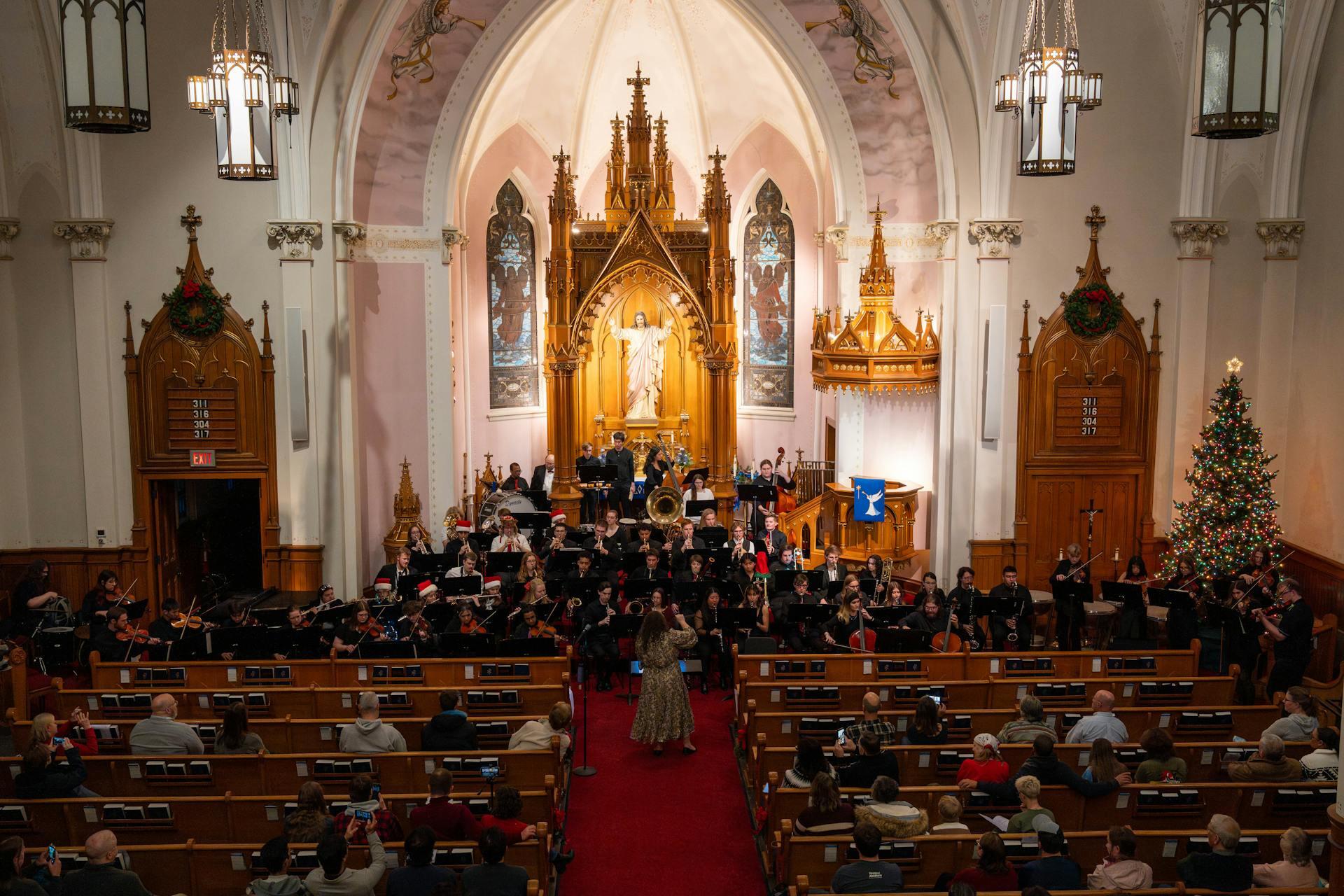
Structure and Function of Church Choirs
Generally, the purpose of a church choir is multifold. They typically aim to:
- Enhance the service with engaging music
- Perform more complex pieces that the congregation cannot
- Give confidence to the other attendees to sing along themselves
- Provide churchgoers the opportunity to worship through the powerful and socially-bonding medium of singing together
- Act as a fun, welcoming activity, usually hosting things like meetings and luncheons
- Provide youths a structured, safe place to be after school, while instilling routine and discipline
- Act as an educational opportunity for both faith and music
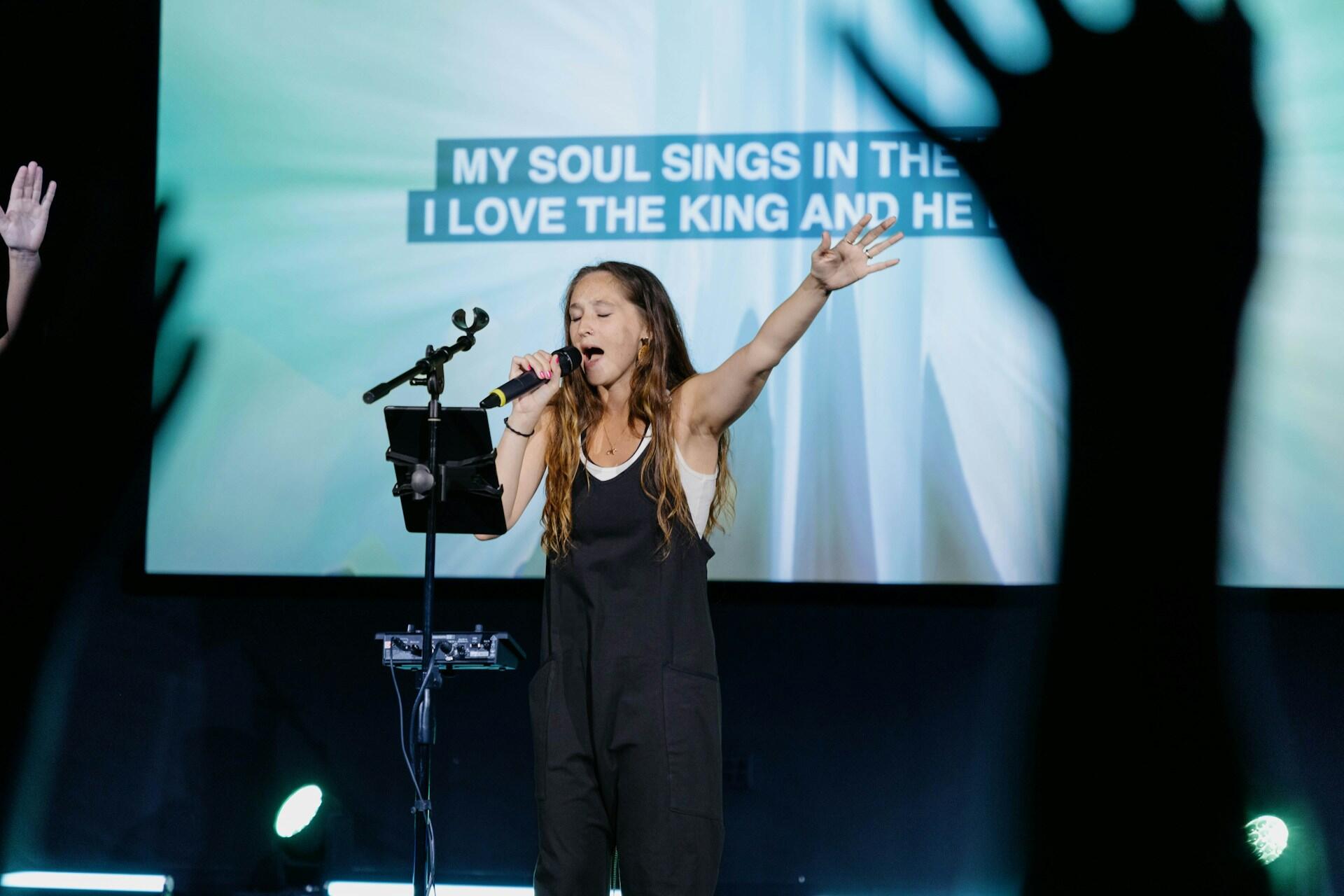
Church choirs are typically led by a music director or music minister, depending on the specific faith or denomination, budget, and needs of the assembly. They may be an appointed member or an official. They typically organize the choir by selecting pieces, leading rehearsals, and coordinating with clergy to plan services. The director may also be the one who plays the piano or other instrument, or they may act as a conductor.
Rehearsals usually occur once per week, and are usually short, perhaps 30 minutes to 1 hour. Singers learn notes, rhythms, and text or lyrics. The goal is to feel connected to the faith through music, while learning how to provide coherent musical leadership to the other members. Perfection and advanced vocals are not typically expected or even wanted. Choir music is meant to feel approachable and welcoming, not intimidate the congregation with its technicality.
Depending on the congregation, the singers may perform during every service and/or for special occasions. They may perform periodic concerts for their congregation or community. Some may even join competitions or perform tours like a band might.
How to Join a Church Choir
Joining a church choir is typically very easy and straightforward. Their purpose is to welcome people into the congregation. Many people assume they need formal training or a particularly impressive voice. In reality, most groups will welcome anyone with the willingness to learn and consistently commit to rehearsals and attending services.
The first step is simple: start attending a church! If you like the congregation and music, speak with a choir member or the director and express your interest. They should be able to tell you the ins and outs: when and where rehearsals are held, the attendance policy, and any other important information.
Some churches (especially very large ones) may hold auditions. These are usually very informal and generally serve to allow the director to accurately judge a singer’s vocal range and place them in the right section (such as soprano, alto, tenor, baritone, or bass).
You can also explore joining a choir at school or in the community.
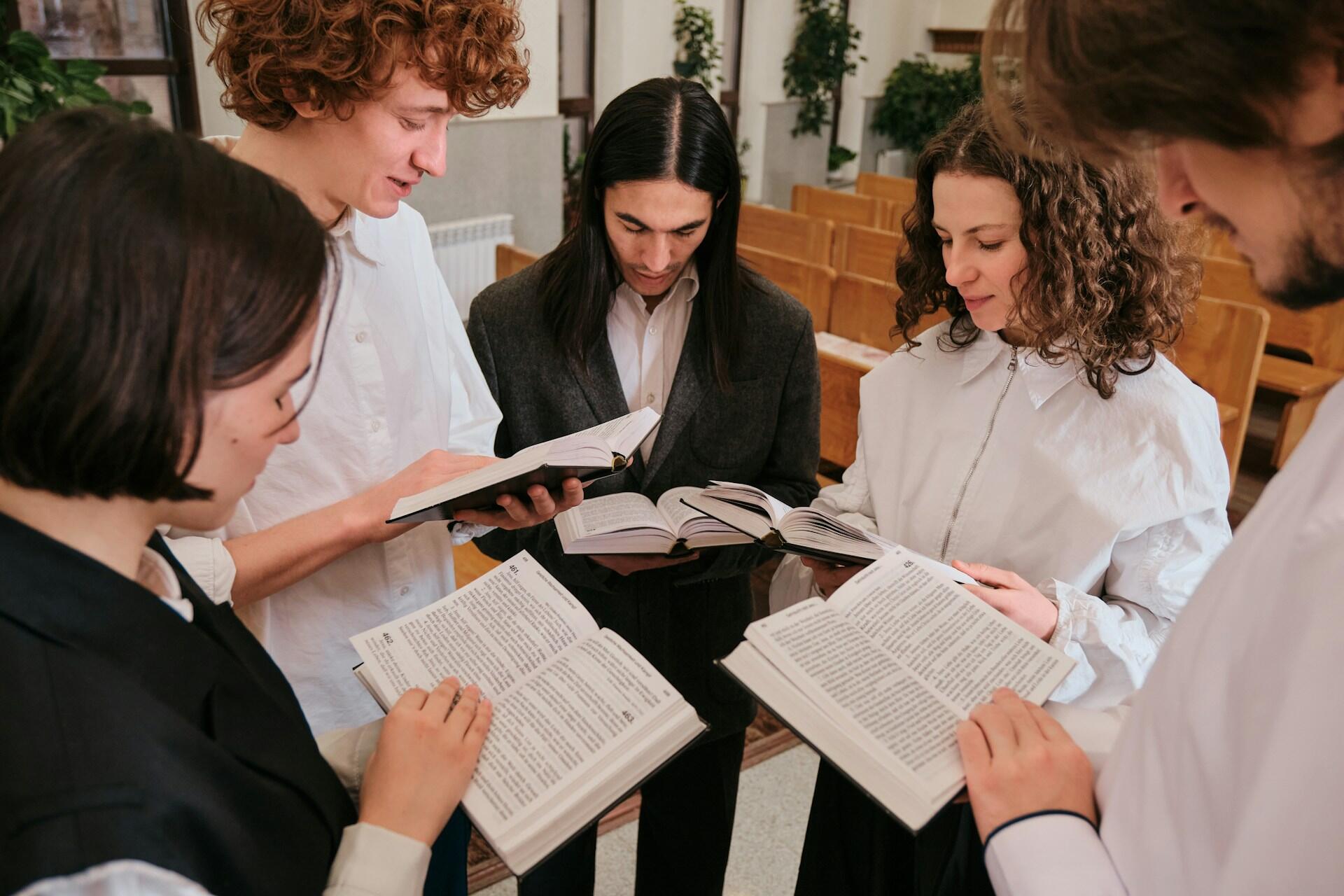
More intense programs will have a much more rigorous schedule, often with a more exclusive audition process.
In an audition, the director may ask you to sing a hymn or a simple song. They are looking for your pitch-matching and rhythmic ability. The director is responsible for teaching willing members about music, so they need to know how much experience you have and how much education you need.
The choir is usually free to join, but some may have modest membership fees.
It can take a little time to get comfortable in a new ensemble, but as long as you attend rehearsals and services regularly, ask questions when needed, and try your best, you’re sure to become a confident member.
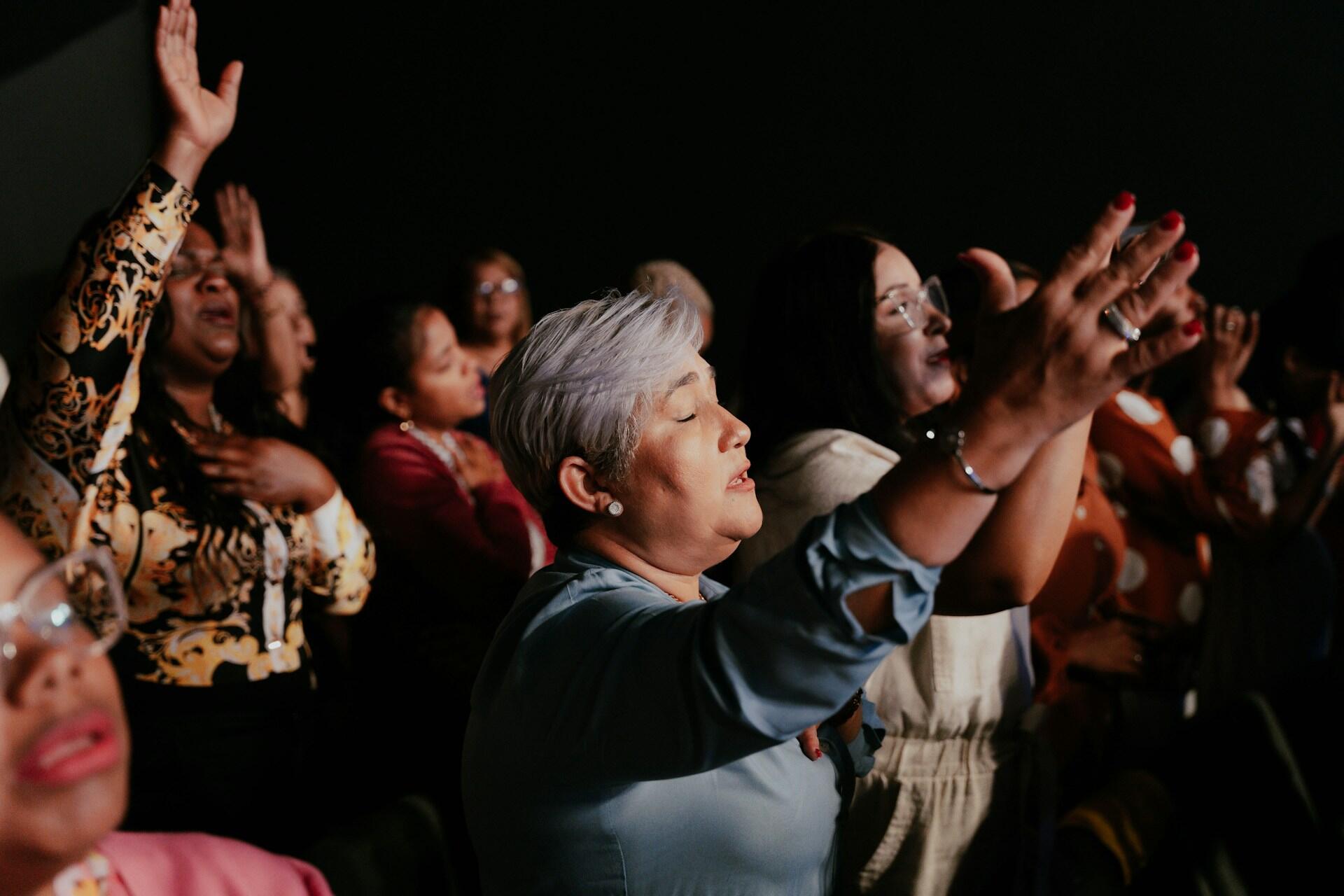
Repertoire of Church Choirs
The exact arrangements a church choir sings depend on the specific congregation's traditions, size, demographics, and resources. They may include anything ranging from centuries-old chants to modern-day, newly-written songs. Some modern churches include a lot of Christian rock and pop options to try to garner interest in younger audiences.
Here are some of the choir songs for church you’ll frequently find practiced across the country.
Latin Songs
Many churches use at least a few Latin songs in their repertoires as a way to recognize the antiquity of their faith. Latin songs certainly have a powerful quality that often inspires feelings of deep faith. Some songs can be quite austere, helping singers and listeners devote more energy to the meaning and worship of the song rather than the technical skill required to perform it. They're particularly popular for holidays and special events.
- “Ave Maria” by Franz Schubert
- “Ave Verum Corpus” by Wolfgang Amadeus Mozart
- “Panis Angelicus” by César Franck
- “Tantum Ergo” by Thomas Aquinas
- “Ubi Caritas” Gregorian Chant
- “Kyrie Eleison” Gregorian Chant
- “Gloria in Excelsis Deo” Gregorian Chant
- “Agnus Dei” by Samuel Barber
- “Veni Creator Spiritus” Gregorian Chant
- “Dies Irae” Gregorian Chant
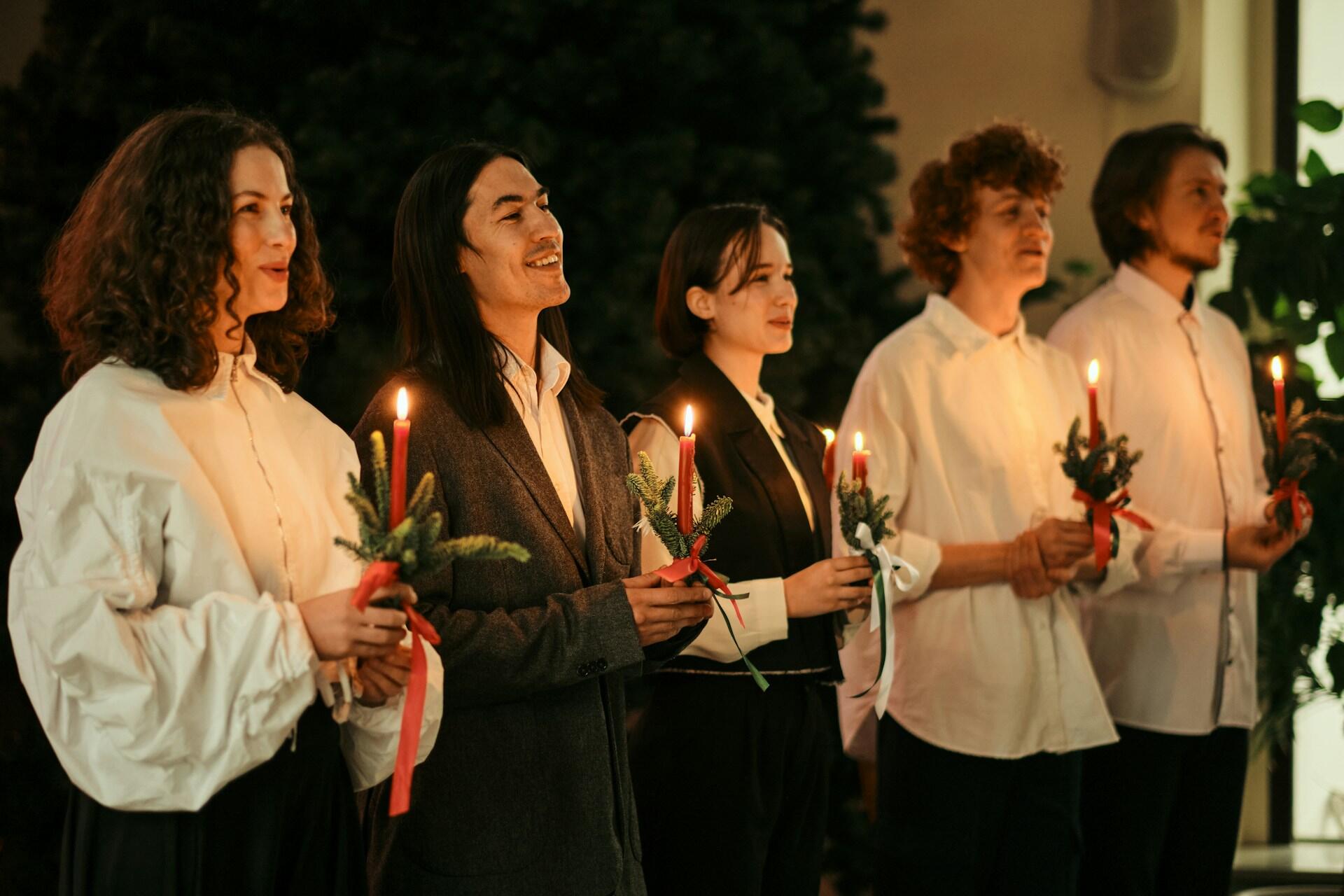
Traditional Songs
America has a rich collection of traditional church choir songs. Some come from Europe, while others were created by early American Christians. They are a way to celebrate the history of the faith, as well as personal heritage and the history of the country.
Many religious songs are also performed as part of middle school student choir repertoires.
- “Amazing Grace” by John Newton
- “How Great Thou Art” by Carl Boberg, trans. Stuart K. Hine
- “Holy, Holy, Holy” by Reginald Heber, arr. by John B. Dykes
- “Abide with Me” by Henry Francis Lyte, arr. by William H. Monk
- “Be Thou My Vision” traditional Irish text, arr. Eleanor Hull
- “All Creatures of Our God and King” by Francis of Assisi, trans. William H. Draper
- “Come Thou Fount of Every Blessing” by Robert Robinson
- “It Is Well with My Soul” by Horatio Spafford, arr. by Philip Bliss
- “Great Is Thy Faithfulness” by Thomas Chisholm, arr. by William M. Runyan
- “The Old Rugged Cross” by George Bennard
God designed our psyche for singing. When singing praise to God, so much more than just the vocal box is engaged... God has formed our hearts to be moved with depth of feeling and a whole range of emotion as the melody-carried truths of who God is and whose we are sink in.
Keith Getty, "Sing!: How Worship Transforms Your Life, Family, and Church"
Songs for Church Service
While the specific songs used in a service will depend heavily on denomination and the preferences of the individual church’s leadership, there are a few songs that are often seen during services. These songs inspire the congregation to sing along as part of their worship ceremony. They are usually simple and easy to learn.
- “Doxology (Praise God, from Whom All Blessings Flow)” by Thomas Ken, arr. by Louis Bourgeois
- “Psalm 23 (The Lord Is My Shepherd)”
- “Gloria Patri”
- “Sanctus”
- “Kyrie”
- “Here I Am, Lord” by Dan Schutte
- “Seek Ye First” by Karen Lafferty
- “Bread of Heaven” by William Williams, arr. by John Hughes
- “Lord of the Dance” by Sydney Carter
- “Alleluia”

Gospel Songs
Usually upbeat and fun, gospel music is a favorite even outside of Gospel churches. These songs are a fantastic way to bring fun and life to a service or concert. Typically paired with clapping and maybe feet stomping, the tunes are engaging, cathartic, and help inspire feelings of extraordinary faith.
- “Oh Happy Day” by Edwin Hawkins
- “Total Praise” by Richard Smallwood
- “His Eye Is on the Sparrow” by Civilla D. Martin, arr. by Charles H. Gabriel
- “How I Got Over” by Clara Ward
- “Blessed Assurance” by Fanny J. Crosby, arr. by Phoebe Knapp
- “I’ll Fly Away” by Albert E. Brumley
- “Precious Lord, Take My Hand” by Thomas A. Dorsey
- “Guide Me, O Thou Great Jehovah” by William Williams
- “This Little Light of Mine”
- “Wade in the Water”
It is the voice of the Church that is heard in singing together. It is not you that sings, it is the Church that is singing, and you, as a member of the Church, may share in its song.
Dietrich Bonhoeffer
Modern and Contemporary
These contemporary songs are perfect for concerts and wrapping up a service. They are often full-length songs, spanning several minutes, so they’re too long to include in the middle of a service. Their stylings and lyrics are catchy, the way other modern pop and rock can be, making it feel more approachable in everyday life.
- “Shout to the Lord” by Darlene Zschech
- “10,000 Reasons (Bless the Lord)” by Matt Redman and Jonas Myrin
- “Here I Am to Worship” by Tim Hughes
- “In Christ Alone” by Keith Getty and Stuart Townend
- “Oceans (Where Feet May Fail)” by Joel Houston, Matt Crocker, Salomon Ligthelm
- “Blessed Be Your Name” by Matt Redman and Beth Redman
- “Cornerstone” by Joel Houston, Jonas Myrin, Eric Liljero, Reuben Morgan
- “Good Good Father” by Pat Barrett and Tony Brown
- “Build My Life” by Pat Barrett, Matt Redman, Brett Younker, Kirby Kaple
- “Great Are You Lord” by David Leonard and Jason Ingram
Next to the Word of God, music deserves the highest praise. The gift of language combined with the gift of song was given to man that he should proclaim the Word of God through music.
Martin Luther
Spanish Church Songs
Since many worshippers in the US are Spanish-speakers, there are naturally many Spanish-language Christian songs to explore. With the extensive history of Catholicism in Mexico and South America, there is no shortage of songs in Spanish. Whether you speak Spanish already, have a congregation made up of Spanish-speakers, or you or your ensemble simply want to explore other languages, these songs can be wonderful to include.
- “Pescador de Hombres (Tú has venido a la orilla)” by Cesáreo Gabaráin
- “Alabaré”
- “Un Pueblo que Camina” by Cesáreo Gabaráin
- “Juntos como Hermanos” by Cesáreo Gabaráin
- “Santa María del Camino” by Juan A. Espinosa
- “Canta y Camina” by Cesáreo Gabaráin
- “Danos un Corazón Grande para Amar” by Cesáreo Gabaráin
- “Nada te Turbe” text by Teresa de Ávila
- “Gloria a Dios en el Cielo”
- “Perdón, Oh Dios Mío”
Notable Church Choirs in the US
Many churches in the United States are well-known for their strong performances. They may tour the country, performing concerts much the same way a mainstream band would. Others are regular winners at choir competitions both domestically and internationally.
The Tabernacle Choir at Temple Square (Salt Lake City, Utah)
Founded in 1847, the organization became nationally known when they began their weekly radio program in 1929 (with a TV portion starting in 1949); a program which still airs every week!
It’s one of the most famous choirs in the world and has performed for ten presidential inaugurations, thirteen World’s Fairs and Expositions, over twenty performances at the Olympics in Salt Lake City in 2002, and performances in 28 countries outside of the US. They’re also known for their annual Christmas performance, which usually sees 63,000 attendees.
St. Thomas Choir School (New York City, New York)
This exclusive all-boys boarding school in Manhattan is one of only three such institutions in the world. Modeled after the English cathedral tradition, the student body (usually only about 30 students in total, all aged between 8 and 14) receives intensive individual and group instruction. They also learn all their other necessary middle school subjects there, such as science, math, history, and English, along with sports.
The institute trains singers to have unmatched skill. The boys’ ensemble performs five choral services at Saint Thomas Church each week alongside the adult professional singers, some of whom are alumni of the academy. They’re known for performing many extraordinary annual performances of classical works, showcases, and even premiering Scott Eyerly's Spires. They’ve toured the US and Europe, even performing at the Papal Mass at the Vatican in 2004.
You can join a chorus or choir in your high school to experience the joy and fun, too!
The Mississippi Mass Choir (Jackson, Mississippi)
Founded in 1988 by Frank Williams of the famed gospel group, the Jackson Southernaires, the ensemble held open auditions and soon had a body of over 100 singers. After months of rehearsals, they recorded and released their debut eponymous album.
Within five weeks, it was certified as the Number 1 Spiritual album in the country by Billboard. It set a record for gospel recordings, staying at the number 1 spot for 45 weeks. They’ve released 12 albums in total, winning numerous awards along the way, including 2 Grammy Awards. They have toured 40 states and several other countries, even becoming the first gospel choir to perform at the Acropolis in Athens.
They’ve also performed for the Pope, were featured in an episode of ABC's Black-ish, and an episode of the Discovery Channel's Expedition Unknown.
Church choirs are a way for communities to build stronger ties. They help people worship more passionately and bring a sense of reverence, joy, and/or inspiration to audiences. Singing in a chorus is typically a low-pressure way to become more involved in your congregation and community, and opens the door for many amazing friendships.
Summarize with AI:
Did you like this article? Leave a rating!

 Loading...