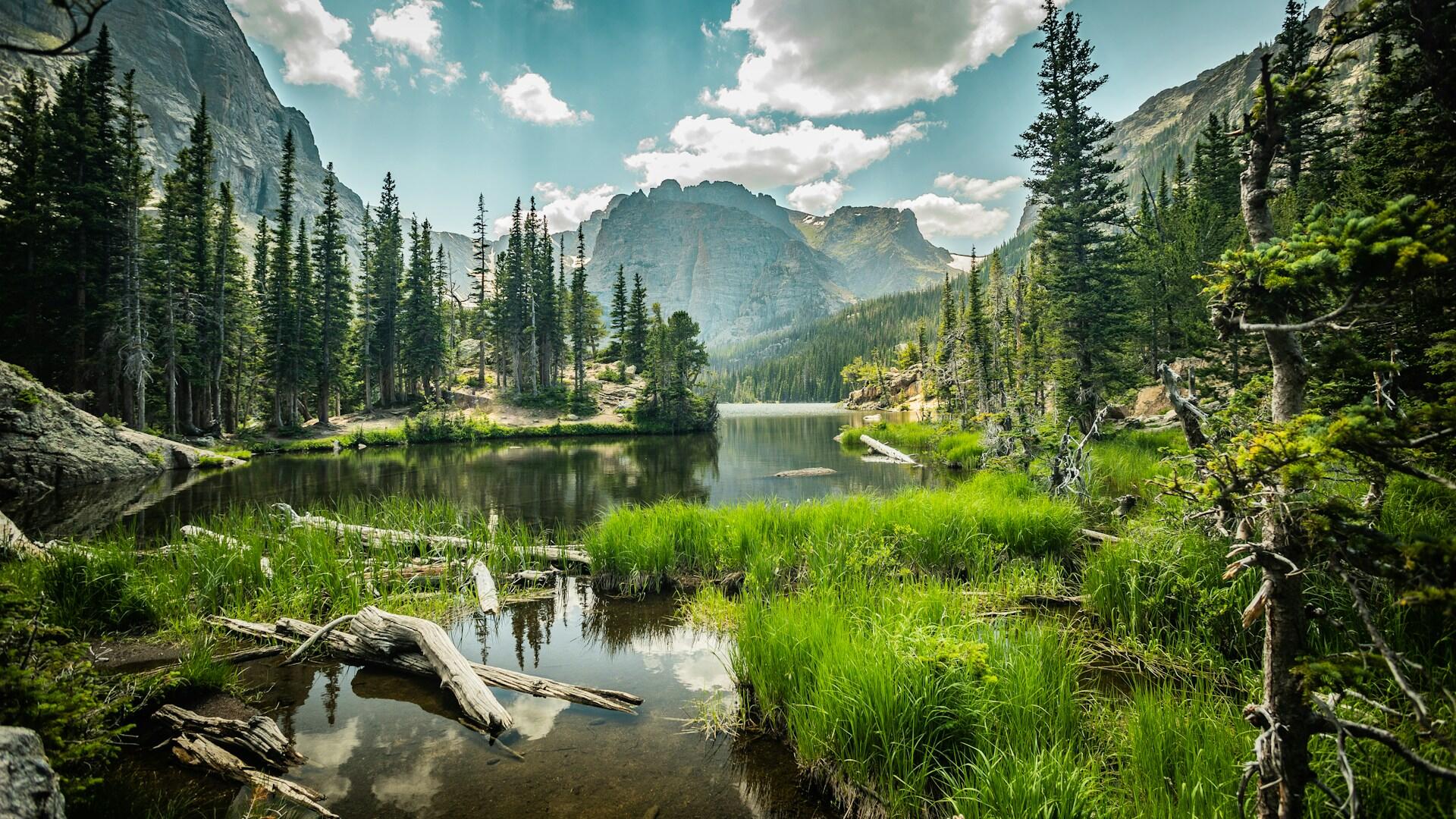

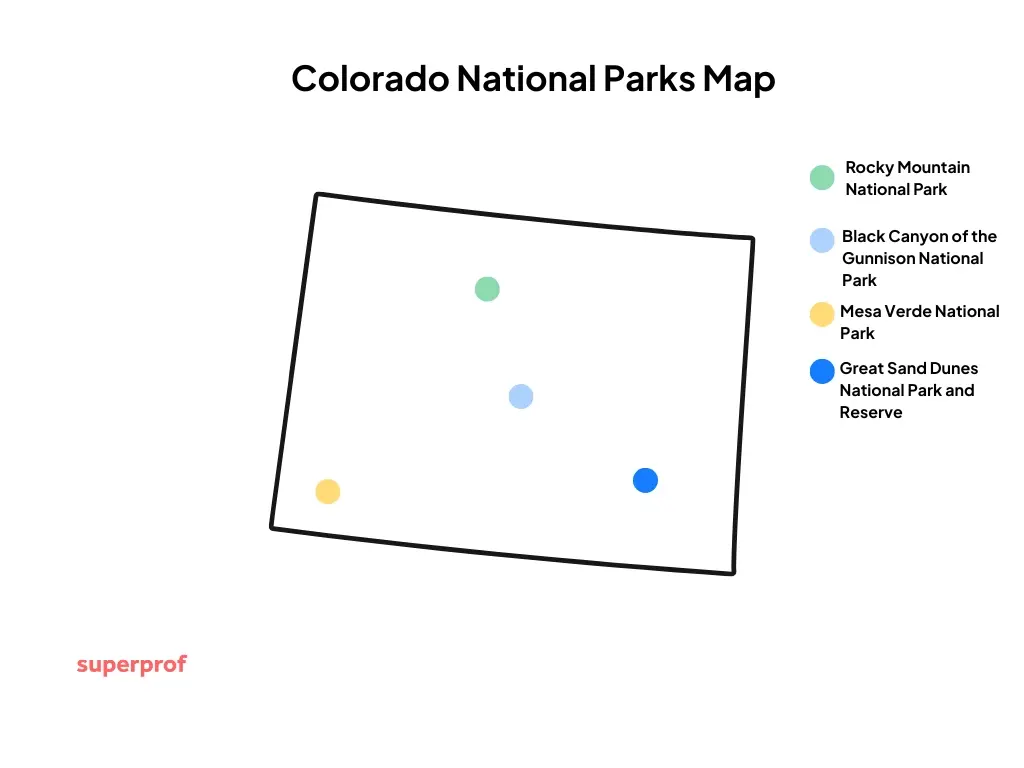
Colorado is home to four incredible national parks. Each one features a vastly different landscape; it’s impossible to choose which one is the most breathtaking! If you’re planning a road trip, visiting as many Colorado parks as possible is a great decision. Find out more about these listed historic places and what you need to know about planning a visit.
What National Parks are in Colorado?
- Rocky Mountain National Park
- Black Canyon of the Gunnison
- Mesa Verde
- Great Sand Dunes


Rocky Mountain National Park (RMNP)
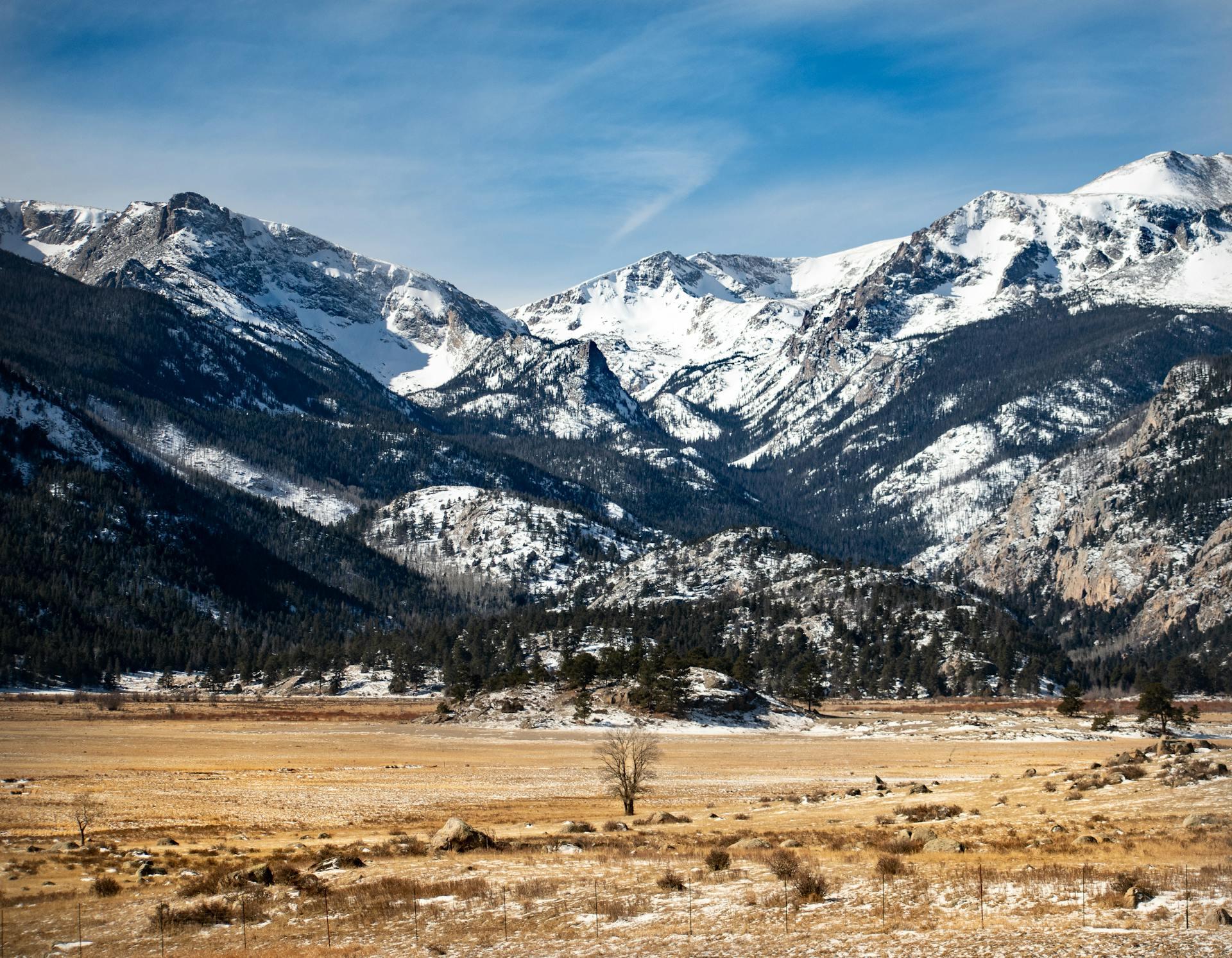
You can find RMNP between the town of Estes Park and Grand Lake, less than two hours away from Denver, and about three hours from Colorado Springs, by car (weather permitting). Most visitors make their way from Estes Park, finding a local hotel to serve as home base.
The national park incorporates part of the Front Range of the Rockies and straddles the Continental Divide, where rainwater and snowmelt either flow toward the Atlantic or Pacific oceans.
Rocky Mountain focuses on the preservation of the delicate high-elevation ecosystems found there. They have restrictive protections in place for visitors and monitor the park regularly to inspect things like erosion, water quality, air pollution, and wildlife populations.
Find out which national parks across the U.S. to add to your itinerary!
What to See and Do
Different seasons open different adventure opportunities for Rocky Mountain visitors. For a complete experience, you simply must visit at least once per season. The seasonal weather is taken to the extreme in the high elevation, so be sure to plan with that in mind.
The main attraction is, of course, hiking! Rocky Mountain National Park has over 350 miles of marked trails to explore. The best trails change depending on the season.
Spring Hiking
- Cub Lake Trail
- Ouzel Falls
- Fern Falls
- Deer Mountain
- Chasm Falls
- East Inlet Trail
Summer Hiking
- Mills Falls
- Bluebird Lake
- Gem Lake
- Lake Haiyaha
- Black Lake
- Chasm Falls
- Hallett Peak
Rocky Mountain National Park boasts 60+ mountain peaks that are more than 12,000 ft high!
Autumn Hiking
- Bierstadt Lake
- Alberta Falls
- Cub Lake
- Deer Mountain Trail
- Lily Lake
- Loch Vale
Winter Hiking
- Chasm Lake
- Calypso Cascades
- Upper Beaver Meadows
- Emerald Lake Trail
- Dream Lake
Beyond hiking, the park also hosts several other activities, like biking (or bicycling), climbing, fishing, and horseback riding, as well as ranger-led activities like skiing, snowshoeing, and stargazing. Seasoned hikers enjoy backpacking all year round at designated campsites throughout the park.
Also check out the scenic drives on Old Fall River Road and Trail Ridge Road during the warmer months. The Holzwarth Historic site, which features a historic homestead built and expanded upon in the 1940s and 1950s, is an interesting stop for visitors.
There are several drive-up campgrounds for tents and RVs across the park’s territory, with different sites open at different times of year, so you can even enjoy the wilderness without backpacking.
Plan a Trip
The number one thing to remember about planning a trip to Rocky Mountain is that you are at the mercy of the weather and the wildlife. If you plan your visit in advance, but the day-of weather is too treacherous, it’s best to cancel or reschedule rather than try to tough it out. High winds, heavy snow, plummeting temperatures, and lightning storms can be deadly.
The RMNC website is the best resource for learning about the listed rules, including pet policy, entry fees, and trail conditions, which you need to know about when planning.
Discover the amazing national parks in Montana.
The highlights to remember are:
From late May to mid-October, the park utilizes timed-entry passes from 9 am to 2 pm. This helps space out crowds, creating a better experience for visitors and ensuring preservation of the environment.
Always check the forecast and current conditions on the official Rocky Mountain site on the days leading up to and on the day of your visit. Remember that even in the summer, the temperatures can plummet into the 40’s when the sun sets.
Backpackers must make an online reservation in advance and receive a permit, which must be kept on their person at all times. You must also place a dash tag in your car. No campfires are allowed; only portable stoves may be used.
All visitors should do their best to avoid bears, and should have a plan for if they cross paths. Campers should have their food stored in their vehicles and/or inside certified bear-proof containers.
Black Canyon of the Gunnison National Park
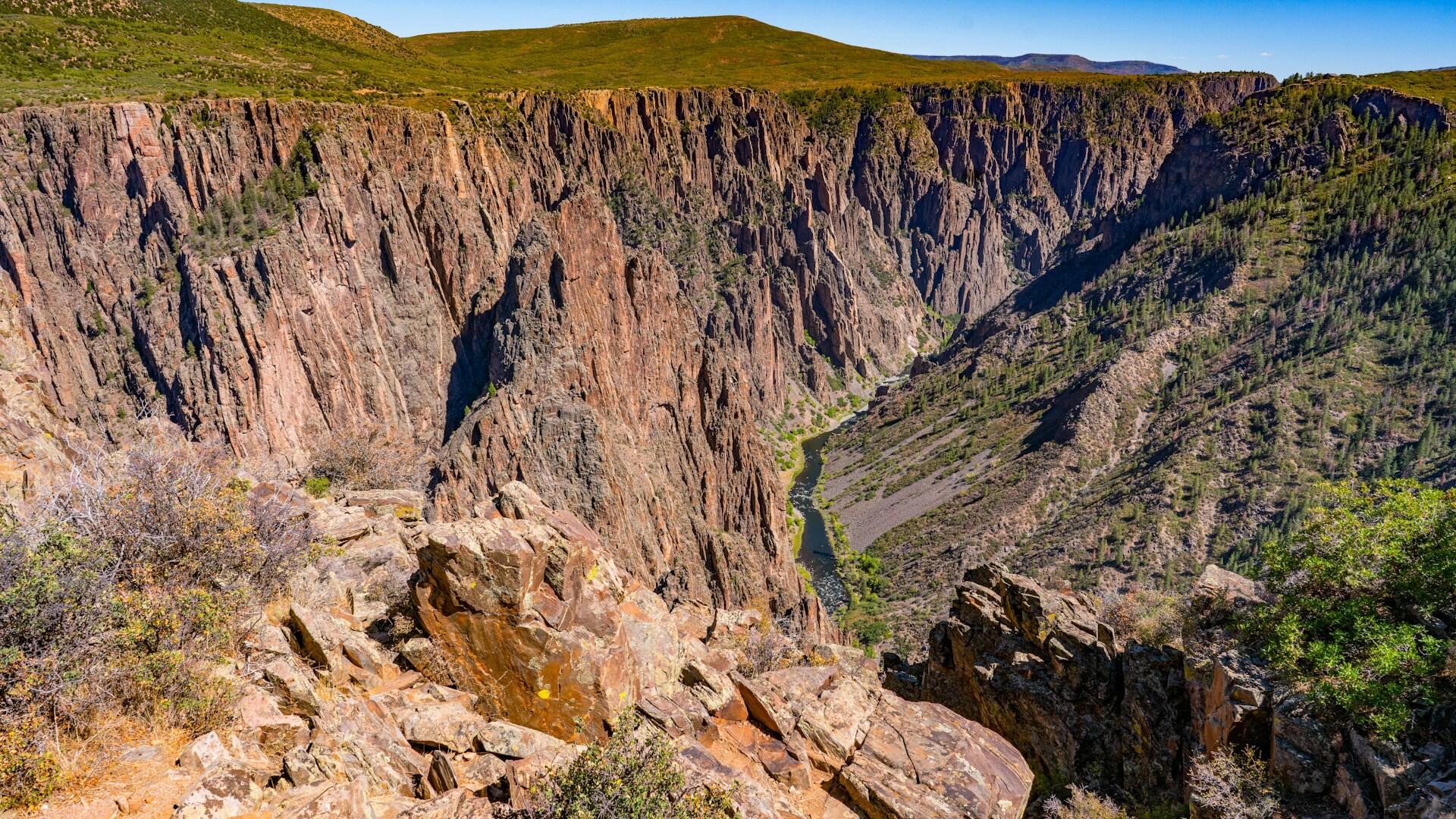
Located in Western Colorado near Montrose, the park encompasses a very steep and narrow segment of the Gunnison River. The rocky cliffs are made of dark volcanic rock, millions of years old. The South Rim is the more popular area, since it’s where the main visitor center building is located, and has more developed trails.
The name “Black Canyon” refers to the lack of sunlight, blocked by the high rock walls.
at canyon bottom
top of Signal Hill
As of early 2026, the park is experiencing closures and disruptions due to wildfires, so be sure to check the official website when planning your trip for any listed warnings.
The park is a preserve for rare geological features, river ecosystems, and cliff habitats found within its boundaries. Special measures and daily limits are imposed on certain inner-canyon trails to maintain the delicate cliff’s integrity.
Expect to drive about 5 hours from Denver or 4 hours from Colorado Springs.
Find out which parks to visit in Wyoming.
What to See and Do
Black Canyon is a perfect place for a day trip! At the rim of the park, short hikes, picnicking, photography, stargazing, and scenic drives are popular activities.
Hikers can enjoy several notable trails:
- Chasm View
- Uplands Trail
- Rim Rock
- Warner Point
- Deadhorse (with loop option)
- North Vista (to Exclamation Point)
- North Vista (to Green Mountain)
- Oak Flat Trail
The inner canyon requires a reservation to access, and is only meant for experienced and well-prepared hikers. If that’s your thing, you can enjoy more difficult trails as well as rock climbing, kayaking, and river rafting. Backpacking camping is allowed for up to three days on the wilderness trails. The trails in the inner canyon are not named or marked. Instead, they are called “wilderness routes” and mainly consist of steep scrambles with loose rock.
Plan a Trip
Black Canyon is a beautiful park with lots of easygoing trails accessible from the visitor center building, various campgrounds, or ranger stations. Those interested in exploring the inner canyon must be well prepared, with equipment like water purifiers, “WAG bags” for waste, maps and compasses, proper rations and water, a first aid kit, and knowledge of self-rescue.
There are several drive-up campgrounds with RV places at the South and North rims, as well as at the East portal for multi-day stays. Note that water is only available in the warmer seasons, and some sites close in the winter. Otherwise, you can stay in a hotel in nearby Montrose.
Be sure to check the official website for more information about permits and reservations, fees, closures, and pet policies.
Some highlights to know about the park include:
North Rim: Only 42 permits are given on a first-come, first-served basis each day; no reservations can be made in advance.
South Rim: Reservations must be made online in advance. Only 47 people per day may enter.
Even GPS signals may not work in the inner canyon due to the high walls.
Always pack your food and scented items in certified bear-proof containers and/or keep them in your vehicle or on-site lockers.
The steep slopes of the park often lead to hikers experiencing altitude sickness. Know the signs and what to do if you or a travel buddy starts experiencing symptoms, as severe cases can be life-threatening.
Mesa Verde National Park
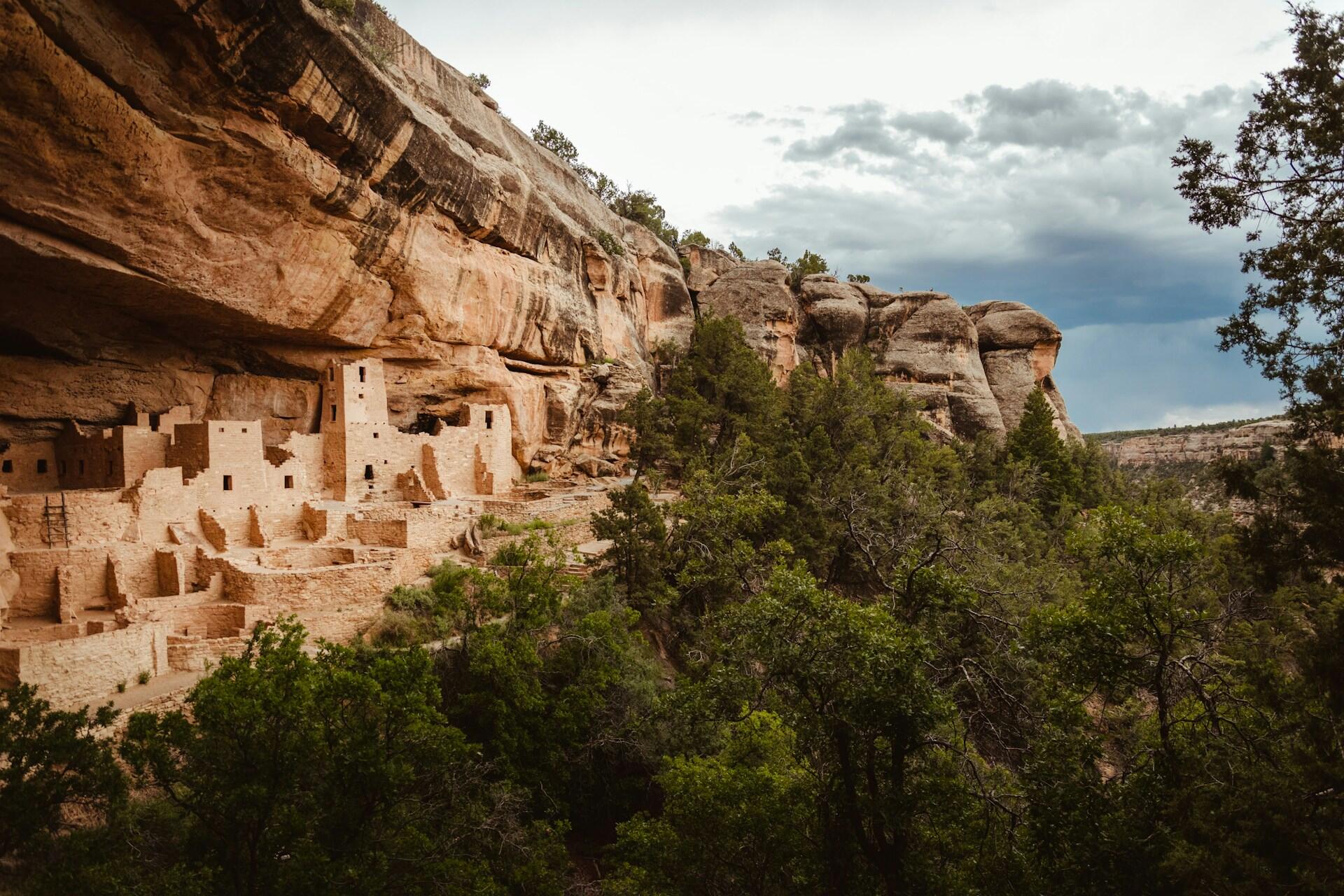
The oldest national park in Colorado, Mesa Verde is a unique site because it’s not just a wildlife and ecological preservation: it also protects more than 700 years of history in the ancestral Puebloan cliff dwellings. For this reason, it’s listed as a UNESCO World Heritage Site. Preservation and conservation efforts focus on the landscape as well as the archaeological sites.
It’s located in Montezuma County, in Southwest Colorado, near Mancos and Cortez. It’s accessible by a single main road that leads all the way to the mesa top, with side roads that lead to viewpoints and sites.
It's quite a drive from Denver, about 7 hours and 40 minutes! From Colorado Springs, it's about 6 hours and 45 minutes. But, if you're stacking your road trip and visiting multiple places, it's only a little more than 4 hours away from Great Sand Dunes and Black Canyon!
Learn about the amazing national parks in Florida.
Colorado National Parks Timeline
1906
Mesa Verde Established as a National Park
1915
Rocky Mountain Established as a National Park
1999
Black Canyon Established as a National Park
2004
Great Sand Dunes Established as a National Park
What to See and Do
The biggest draws at Mesa Verde are, of course, the historic cliff dwellings. These dwellings, built by the Ancestral Pueblo people, were built into the sides of canyon walls.
Many sites can only be visited as part of a guided tour, as activity must be highly monitored to ensure the dwellings are not damaged.
Popular Cliff Dwelling Sites
- Cliff Palace
- Balcony House
- Long House
- Step House
Birding, stargazing, cycling, and self-guided tours are also popular recreations for visitors. One of the main attractions is the auto tour on Mesa Top Loop Road. The drive is a 6-mile-long road lined with short, paved trails that lead to viewing areas for several different ancestral sites, including dwellings and carved villages.
The park is a popular place for day hiking, featuring many trails. Backpacking and overnight camping outside of designated campgrounds is not allowed in Mesa Verde.
The Mesa Verde Museum building is another popular attraction, featuring historic artifacts and information about the Colorado site.
Some popular hiking trails at Mesa Verde include:
- Badger House
- Knife Edge
- Point Lookout
- Prater Ridge
- Petroglyph Point
- Spruce Canyon
- Soda Canyon Overlook
- Nordenskiold Site No. 16
In the winter, hikers can borrow free snowshoes at the visitor center or use their own cross-country skis to travel along a handful of trails, including Petroglyph Point, Spruce Canyon, and Chapin Mesa Rim.
Plan a Trip
Mesa Verde is another park that is heavily affected in winter. Cliff dwellings are closed in the winter, so you cannot see them up close at all. Make sure you plan to visit during the open season in the spring and summer if you want the total experience. Even in summer, temperatures can be very low and plummet in the shade and after sunset due to the elevation. Be prepared with proper layers.
In winter, even some of the open trails are temporarily closed due to weather or other issues, so always check the official website before you go.
Plan your trips to the national parks in Oregon.
The campground is the only place in the park where you may camp; no backpacking is allowed. Otherwise, you’ll need to secure a room at the Far View Lodge or another nearby hotel.
Before you begin the drive to visit the cliff dwellings, make sure you have more than 50 miles’ worth of gas in your tank. You can fuel up at Morefield Campground if needed.
Dehydration and altitude sickness are common at Mesa Verde. Avoid having a bad experience by drinking enough water and paying attention to any altitude-related symptoms.
Many of the cliff dwelling tours are strenuous, requiring walking on steep surfaces and climbing stairs and ladders. The high elevation makes this more difficult for many. Research which tours are suitable for your abilities before you go.
Great Sand Dunes National Park and Reserve
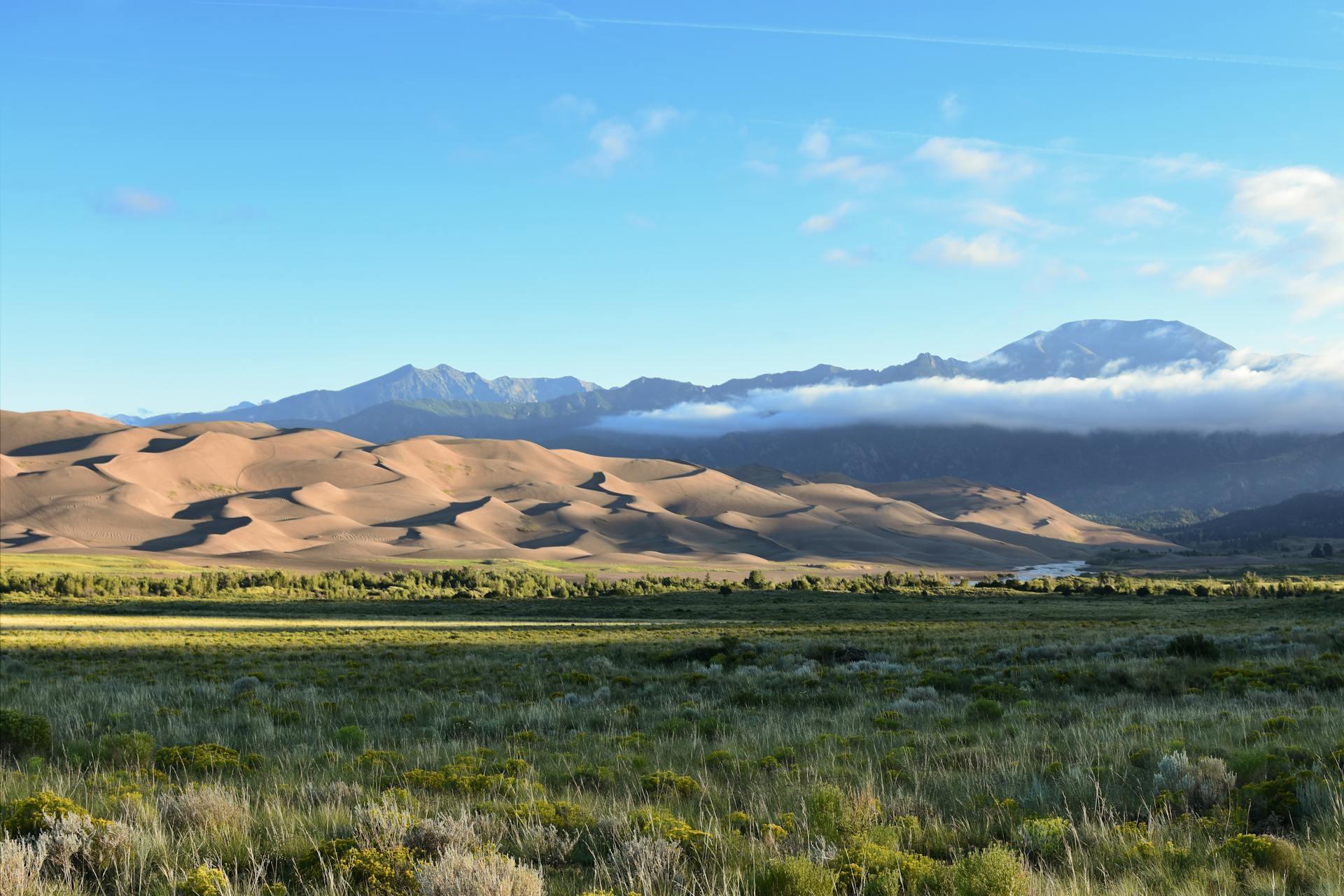
The Great Sand Dunes are open all year round, 24 hours per day. The park is located in Southern Colorado, near Alamosa and the San Luis Valley. It’s made of wind-blown dunes at the base of the Sangre de Cristo Mountains.
In addition to the dunes, the park also encompasses grasslands, wetlands, forests, alpine lakes, and high peaks. The park’s conservation and preservation efforts involve preserving the natural hydrology of the area, including Medano Creek.
Furthermore, ancient artifacts from the first peoples to live in North America have been found in the park, making it an important archaeological site.
It's about 2.5 hours away from Colorado Springs and 3 hours and 45 minutes from Denver.
What to See and Do
Obviously, the 30-square-mile dune field is the main attraction at Great Sand Dunes National Park and Reserve. Some of the massive dunes even rise hundreds of feet above the valley floor! Visitors are allowed to walk anywhere they’d like on the dunes. High Dune, Star Dune, and Hidden Dune are some of the most popular lookout points, with views spanning up to about 50 miles in all directions with clear weather.
Other dune-based activities include sandboarding and sand sledding (on approved slopes). Visitors can rent sand boards from the Great Dunes Oasis store or other nearby businesses. Stargazing at night is another favorite activity, and you can attend a Night Sky program with a ranger to learn more about the constellations easily visible in the Dark Sky Park.
The Great Sand Dunes started forming around 400,000 years ago when glacial ice deposited sand in the nearby valleys. Prevailing winds in the area slowly blew the sand towards the base of the mountains, where it piled up over time.
Visitors can camp with their horses at designated campsites, as well as use off-road vehicles in designated areas to backpack within the park. Some areas require obtaining a permit online in advance, but most of the park doesn’t require any permits.
Medano Creek, at the base of the eastern edge of the dunes, is like a natural beach in the mountains, popular for families to spend the day and picnic.
Popular day-hikes include:
- Wandering in the dunes and summiting the tallest dunes
- Montville Nature Trail
- Mosca Pass Trail
- Sand Ramp Trail
- Medano Pass Primitive Road
- Medano Lake and Mount Herard
- Music Pass
Many trails are located in the forest and alpine parts of the park, away from the dunes, and may require driving to the other side of the mountain range to access.
Plan a Trip
Though the park is technically open every day, it’s still important to check the weather. The area does experience freezing temperatures in the winter, making the dunes frozen and/or covered in snow and unsleddable, but still hikable.
Campers can stay at Piñon Flats Campground or, if they have a high-clearance 4WD vehicle, at one of the Medano Pass Primitive Road sites. Backpackers are allowed in designated areas across the entire park; the National Park sites require reservations, while the National Preserve sites do not.
Discover the incredible national parks in Alaska.
Each season creates a different environment. Winters are harshly cold, the spring has volatile weather, summers are very hot, the creek dries up even with massive rainstorms, and the autumn usually has warm days with cold nights. Be prepared for the different weather patterns.
At all times of year, it’s important to have proper sun protection on the dunes. Always wear sunscreen and sunglasses, and in the summer, be sure to wear a hat.
It’s easy to forget that all of Colorado is more than 1,000 ft above sea level. Great Sand Dunes is located at about 7,500 - 8,000 ft above sea level at the base of the dunes. If you hike up the dunes or nearby mountains, you’ll be even higher. Altitude sickness can strike even when you’re at “ground level” within the park.
Planning a road trip to the major national parks in Colorado is sure to be one of the most exciting and memorable experiences you can have. Be sure to drive safely on the long-hauls, in snowy or rainy weather, and if you go off-road, ensure your vehicle can handle the terrain! Being well-prepared is the best way to make a fun family trip into a lasting positive memory.
References
- Black Canyon Of The Gunnison National Park (U.S. National Park Service). (n.d.). In www.nps.gov. https://www.nps.gov/blca/index.htm
- Great Sand Dunes National Park & Preserve (U.S. National Park Service). (n.d.). In www.nps.gov. https://www.nps.gov/grsa/index.htm
- Mesa Verde National Park (U.S. National Park Service). (n.d.). In www.nps.gov. https://www.nps.gov/meve/index.htm
- Quick Guide to Colorado National Parks. (2014). In Colorado.com. https://www.colorado.com/articles/quick-guide-colorado-national-parks
- Rocky Mountain National Park (U.S. National Park Service). (n.d.). In www.nps.gov. https://www.nps.gov/romo/index.htm
Summarize with AI:
Did you like this article? Leave a rating!

 Loading...