
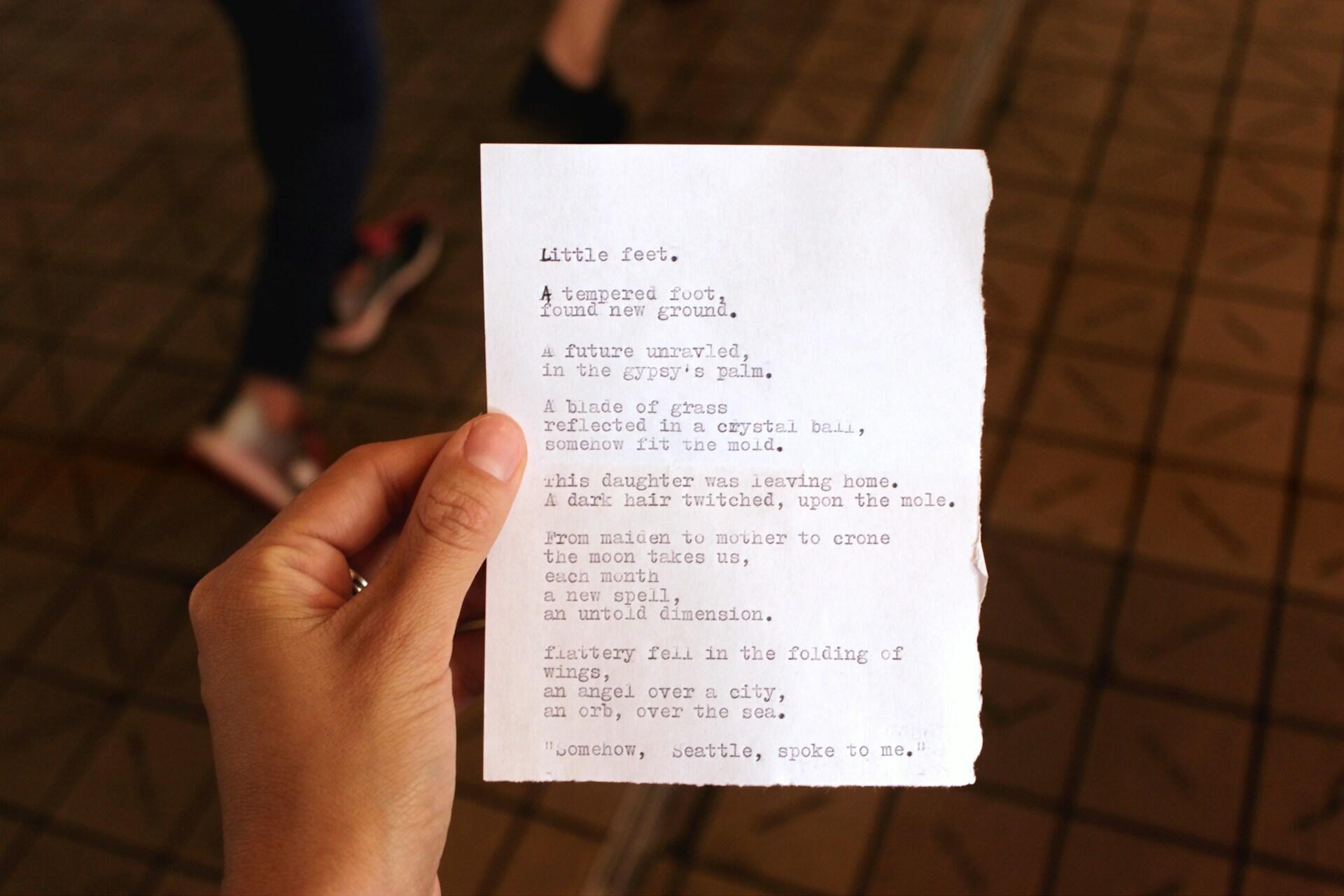

Free verse poetry is can be defined as poetry that has no specific rules, forms, or patterns. Such poems are without rhythm and rhyme schemes, yet still provide artistic expression. In this way, the poet can give their own shape to a poem however they desire. However, it still allows poets to use alliteration, rhyme, cadences, and rhythms as they want without rules to get the effects that they consider suitable for the piece.


Defining Free Verse Poetry
The only rule of free verse poetry is: there are no rules.
Poets are allowed to use the language, structures, forms, and styles they see fit to convey the imagery and themes they want. Some poets use minimal language, no rhymes, and a very loose structure, while others create their own rules to apply throughout the piece in ways that don’t apply to other poetry styles.
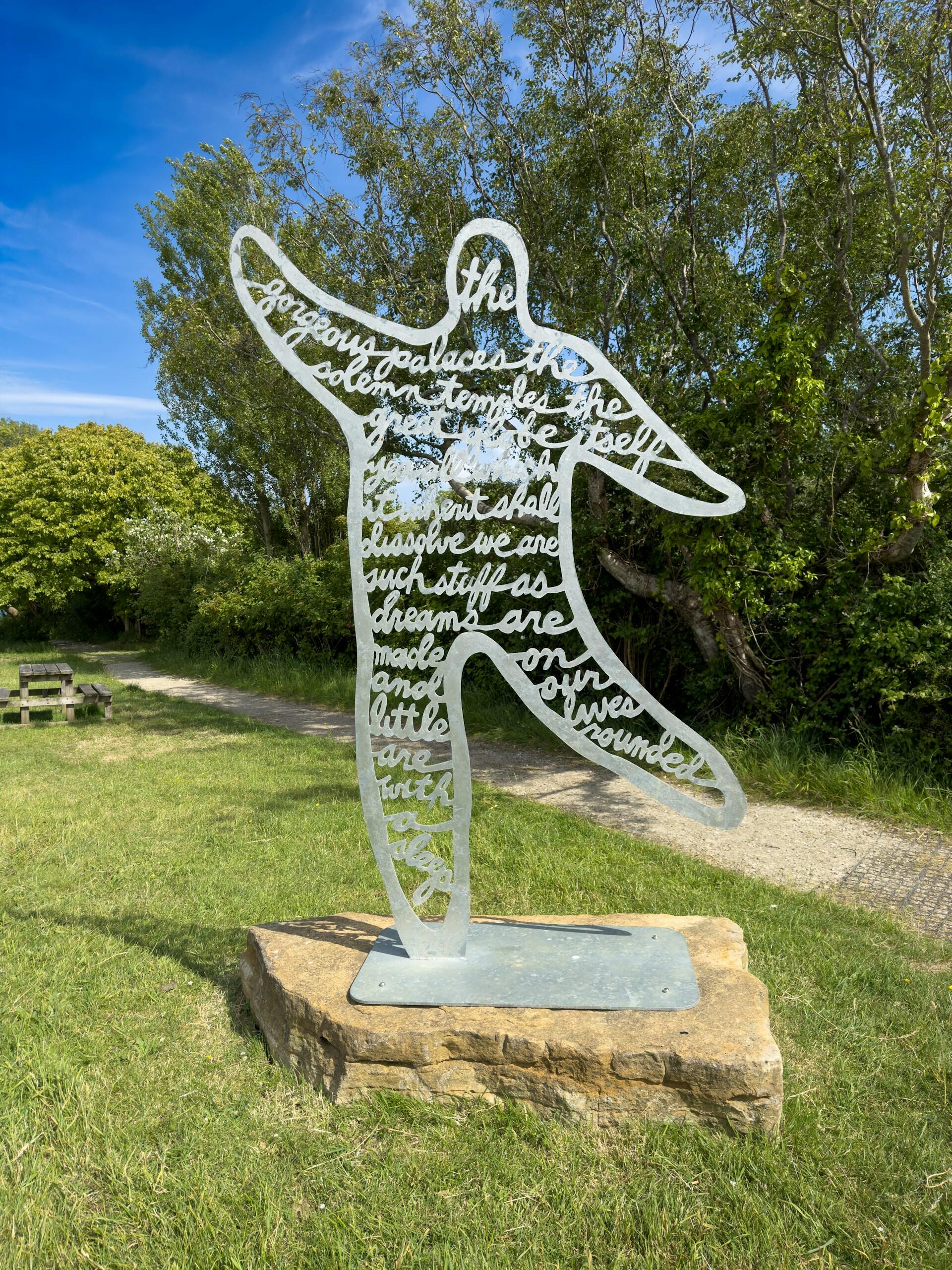
The best thing about free verse is that poets can imagine the forms of any sound through intonation instead of meter.
Free verse gives a greater freedom for choosing words and conveying their meanings to the audience.
Since it depends upon patterned elements like sounds, phrases, sentences, and words, it is free of the artificiality of a typical poetic expression.
Free verse poems have no set meter, which is the rhythm of the words, no rhyme scheme, and no particular structure.
Some poets find this liberating, being able to whimsically change their minds, while others feel like they do not do a good job in that manner. Robert Frost commented that writing free verse was like "playing tennis without a net."
Characteristics of Free Verse Poetry
Free verse is not simply a form of prose arranged in lines. Like other sorts of poetry, it is language organized to create a musical or emotional effect using rhythm and sound. However, these effects are used irregularly, not according to any completely fixed pattern.
Much of free verse poetry is meant to mimic normal speech patterns while also creating an unmistakable poetic experience.
This differs from poetry like limericks, which have a strict structure.
To see free verse poetry in action, take a look at this example from D.H. Lawrence:
Things men have made with wakened hands and put soft life into / are awake through years with transferred touch, and go on glowing / for long years. / And for this reason, some old things are lovely / warm still with the life of forgotten men who made them.
"Things Men Have Made," by DH Lawrence (1929)
What are some of the features evident in this poem? Let’s examine the features of free verse poetry that appear in this poem:
Structure
The lines are of different lengths and have no rhyme scheme. Nor are they arranged in a fixed pattern of stressed and unstressed syllables. There are no fixed stanza patterns.
Yet, you can feel that this is a highly organized piece of writing, with each word being chosen deliberately at a depth surpassing the average prose writing.
The form instead follows natural speech rhythms, with stressed and unstressed syllables blending naturally. When free verse poetry is read aloud, it’s often almost indistinguishable from prose or simply speaking.
Find out what makes slam poetry so interesting.
Literary Devices
In this piece, the most obvious literary device used is repetition. Here, it shows up with variation: “men have made” and “men who made.”
The two phrases appear at the beginning and end of the poem, sandwiched between a single starting syllable and a single ending syllable, creating a visual and phrasal sense of balance.
This usage also serves to highlight the shift in the focus of the poem from the things that are made to the actual people who made them.
Some phrases are emphasized and linked together by alliteration (words beginning with the same sound): "men ... made," "transferred touch," "go on glowing."
Using literary devices creates interesting forms within a free verse poem that doesn't rely on line breaks or a rhyme scheme.
Self-Imposed Syllable Stress Arrangement
Although there is no set number of stresses in the lines, there is a clear pattern of stresses at the beginnings of the lines. The first line and the last both begin with two stressed syllables: “Things men,” “warm still.”
The second and the fourth line both begin with two unstressed syllables, followed by one that is stressed: “are awake,” and “And for this.”
Again, this emphasizes a balance between the first two lines and the last two.
So while free verse poems are ‘free’ with no rules, this doesn’t mean they have no organization or structure.
Poets are free to use whatever devices they like for a free verse poem.
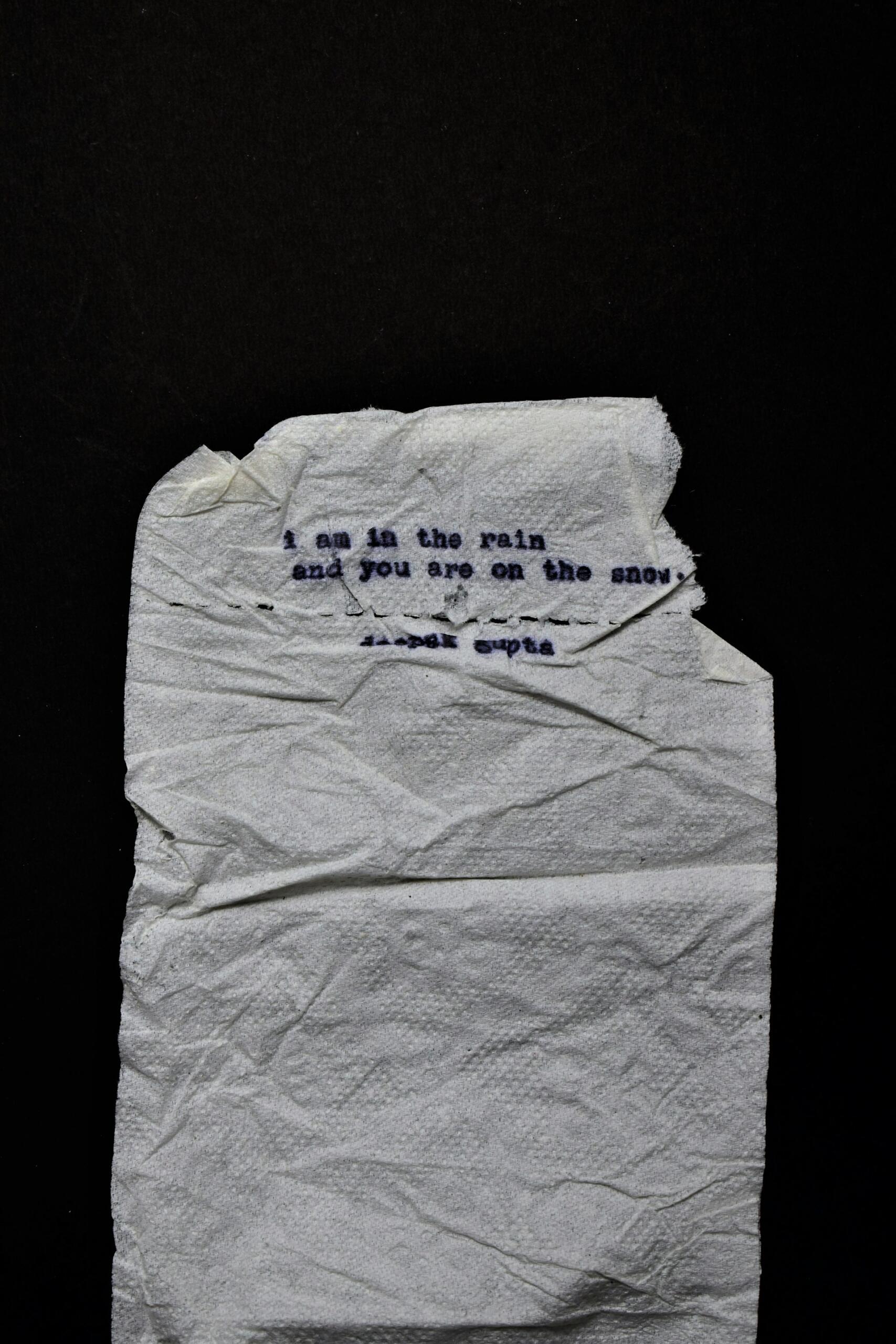
The masterful free verse poet can convey that they haven’t just chosen words at random, and that each word, line, and syllable was sculpted to evoke specific emotions and ideas.
Origins of Free Verse Poetry
Free verse is a rather new form of poetry compared to other types, such as sonnets. It’s commonly used in contemporary English literature works.
1880s
Vers Libre Poetry Developed
The French movement of free verse poetry emerged after influence from famous poets such as Victor Hugo and Édouard Dujardin.
Walt Whitman’s Work Popularizes Free Verse
Whitman wrote most of his poems in the 1850s to 1870s, but they began to get famous around the 1860s to 1880s. Today, he is known as the “Father of Free Verse.”
1912
Imagist Movement
The movement, led by poets like Ezra Pound, H.D. (Hilda Doolittle), and F.S. Flint, emphasized sculpting mental images with as few words as possible.
20th century
Evolution of Free Verse
From the 1900s to the 1970s, various poets further developed and spread free verse in American literature, solidifying the style.
The term is loosely applied to the poetry of Walt Whitman and even earlier experiments with irregular meters. It was originally a literal translation of vers libre, the name of a movement that originated in France in the 1880s. Free verse became popularized in English poetics in the early 20th century.
The first English-language poets to be influenced by vers libre, notably T.E. Hulme, F.S. Flint, Richard Aldington, Ezra Pound, and T.S. Eliot, were students of French poetry.
Eliot’s early experimentations with free verse influenced the loosening of formal metrical structures in English-language poetry.
You don't need to go to university to study poetry or other forms of creative writing! Discover poems lessons to dive into your creativity.
How to Write Free Verse Poetry
Free verse poems do not follow the rules imposed for other established poetry styles; they have no strict rhyme or rhythm, but they are still an artistic expression.
Take a look at a few different examples of free verse poetry to see what some of the possibilities are:
After the Sea-Ship—after the whistling winds; / After the white-gray sails, taut to their spars and ropes, / Below, a myriad, myriad waves, hastening, lifting up their necks, / Tending in ceaseless flow toward the track of the ship: / Waves of the ocean, bubbling and gurgling, blithely prying, / Waves, undulating waves—liquid, uneven, emulous waves, / Toward that whirling current, laughing and buoyant, with curves, / Where the great Vessel, sailing and tacking, displaced the surface;
After the Sea-Ship by Walt Whitman
The fog comes / on little cat feet. / It sits looking over harbor and city / on silent haunches / and then moves on.
Fog by Carl Sandburg
I now delight / In spite / Of the might / And the right / Of classic tradition, / In writing / And reciting / Straight ahead, / Without let or omission, / Just any little rhyme / In any little time / That runs in my head; / Because, I’ve said, / My rhymes no longer shall stand arrayed / Like Prussian soldiers on parade / That march, / Stiff as starch, / Foot to foot, / Boot to boot, / Blade to blade, / Button to button, / Cheeks and chops and chins like mutton. / No! No! / My rhymes must go / Turn ’ee, twist ’ee, / Twinkling, frosty, / Will-o’-the-wisp-like, misty;
Free Verse by Robert Graves
Some kind of attraction that is neither / Animal, vegetable, nor mineral, a power not / Solar, fusion, or magnetic / And it is all in my head that / I could see into his / And find myself sitting there.
Feelings, Now by Katherine Foreman
Notice the qualities that stand out the most in your opinion. You can choose to implement these ideas in your own poetry. Experimenting with the many different variations usually found in free verse can help you hone your skills and style in these methods, or even help you create new conventions!
Find out how to create a haiku poem.
Use these tips to get started in creating your own free verses:
Free verse poems mimic natural speech patterns, and all other structure and style choices are left up to the author; there is no set rhyme scheme or meter. Blank verse poems use a set meter (usually iambic pentameter, like Shakespeare), but no set rhyme scheme.
Choose Your Words Carefully
Carefully chosen words can help you create a poem that sounds like the situation, emotion, or object you are trying to portray. For instance, short words with sharp consonants cause the reader to stop-and-go in a choppy cadence: Cut, bash, stop, kick, punch, jump, kiss.
Use these types of short words when you want to show excitement, fear, anger, new love, or anything that might make your heart beat quickly.
Longer words with soft sounds cause the reader to slow down. Use them when you want to show themes like tension, laziness, or rest.
Discover how to construct a ballad poem.
Play with Form

Experiment with line breaks, breaking your poem into lines of different lengths.
Notice how it may change the mood or meaning of the words.
Self-impose “rules” that suit your theme or emotion that you want to convey.
If your intended emotion is something tense, use shorter, more restricted lines, or longer, overwhelming lines.
If you want to encapsulate a happy or easygoing atmosphere, use more relaxed language and comfortable line breaks.
Another type of poetry with interesting structure are epic poems.
Use Alliteration
Alliteration is a literary device where the first sound in a series of words is the same, like “She sells sea shells.”
You can use alliteration in free verse to create a particular mood, feeling, or sound to the poem, especially when combined with the right word choice.
Alliteration can be used to create a fun, playful mood, an angry, stressful mood, or anything in between. It works as a way to create forms within a formless word canvas.
Edit your poem with a careful eye and ear, changing words and the structural scheme as needed to bring forth the mood, emotion, or scene you want to highlight.
Learning how to write poetry of any sort can feel intimidating at first. With help from a professional creative writing tutor, you can learn all about free verse as well as any other type of poetry writing! Discover an online poetry class and start practicing your poetry skills in English literature today.
References
- free verse. (n.d.). Britannica. https://www.britannica.com/art/free-verse
- Lewis, K. (2022, April 18). A Brief History of Free Verse Poetry: Free Verse Poetry from the 19th Century to Now. Read Poetry. https://www.readpoetry.com/a-brief-history-of-free-verse-poetry/
Summarize with AI:
Did you like this article? Leave a rating!


 Loading...
THANKS FOR A CLEAR DEFINITION AND EXAMPLES.
Excellent simplification of what is often daunting. Francine Ringold
This is the explanation of free verse I’ve been needing for years. Thank you!
Thanks alot for this clear explanations ☺️