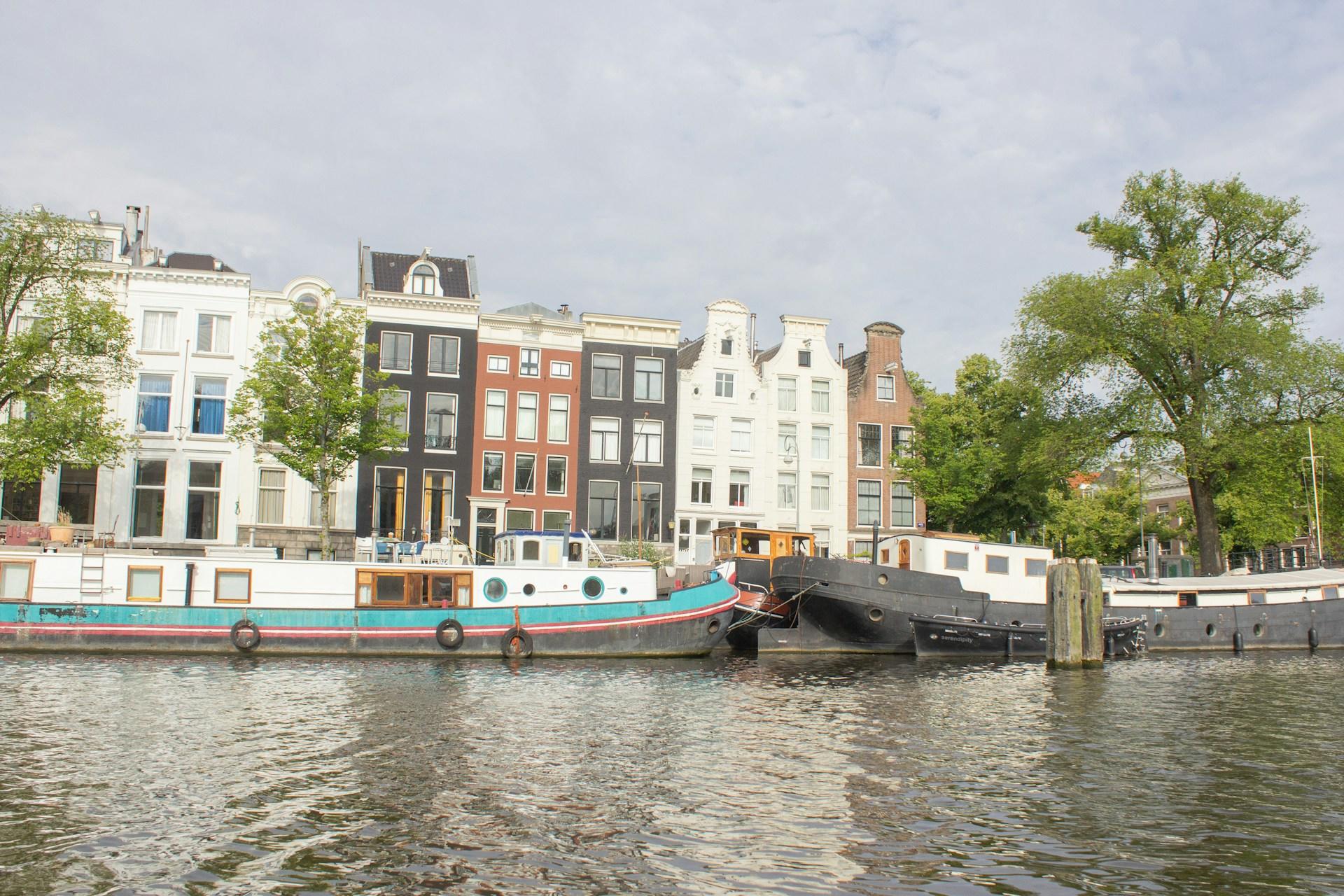

When you look at European history, the Netherlands is one of the most impactful countries in the region. It’s a land with a long, storied timeline. Today, we’ll focus on the Netherlands’ role in modern history, starting in the 16th century. Though the history of the area goes back much, much farther. In terms of modern-day geopolitics, the Dutch had a huge part in shaping the way the West looks today. Take a look at the timeline of Netherlands important events.
1568-1648
Eighty Years’ War
1579
Union of Utrecht
1588-1795
The Dutch Republic of Seven Provinces
c. 1588–1672
Dutch Golden Age
1648
Peace of Münster
1780-1813
Patriot Revolt, Batavian Republic, and The Napoleonic Era
1815
Kingdom of the Netherlands
1940–1945
German Occupation during World War II
1948-1980
Post-War Reconstruction and Social Reform
2000s
Modern Historical Events


Start of the Eighty Years’ War (1568–1648)
In the 15th century, Amsterdam had grown and become a major trading port for grain. The Netherlands produced grain for consumption in major cities in the countries of Belgium, France, and England. This trade was vital during this period for prosperity.
In the early 16th century, in 1506, Charles V succeeded his father and became King of Spain, sovereign over the Low Countries, and ruler of the Holy Roman Empire. His aunt, Margaret of Austria, was extremely politically aware. When Charles V went back to Spain, she governed the territory of the Netherlands.
Charles V spent much of his life extending his empire and waged war with France almost constantly. His empire, which was referred to as the “seventeen provinces,” expanded all around France (as it existed then). He also sent armies to fight the Ottoman Empire. He worked to violently prevent the Protestant Reformation from growing within the Holy Roman Empire.
In the end, Charles V’s reign was full of violence and debt as he spent all the empire’s wealth on war pursuits. The territory was divided among the Spanish Habsburgs and the Austrian Habsburgs in 1556.
The Eighty Years’ War began in 1568 as a revolt by the Dutch provinces against Spanish Habsburg rule. Heavy taxation, strict Catholic control, and other oppressive policies emboldened new and existing Charles V/Habsburg opposers to rebel.
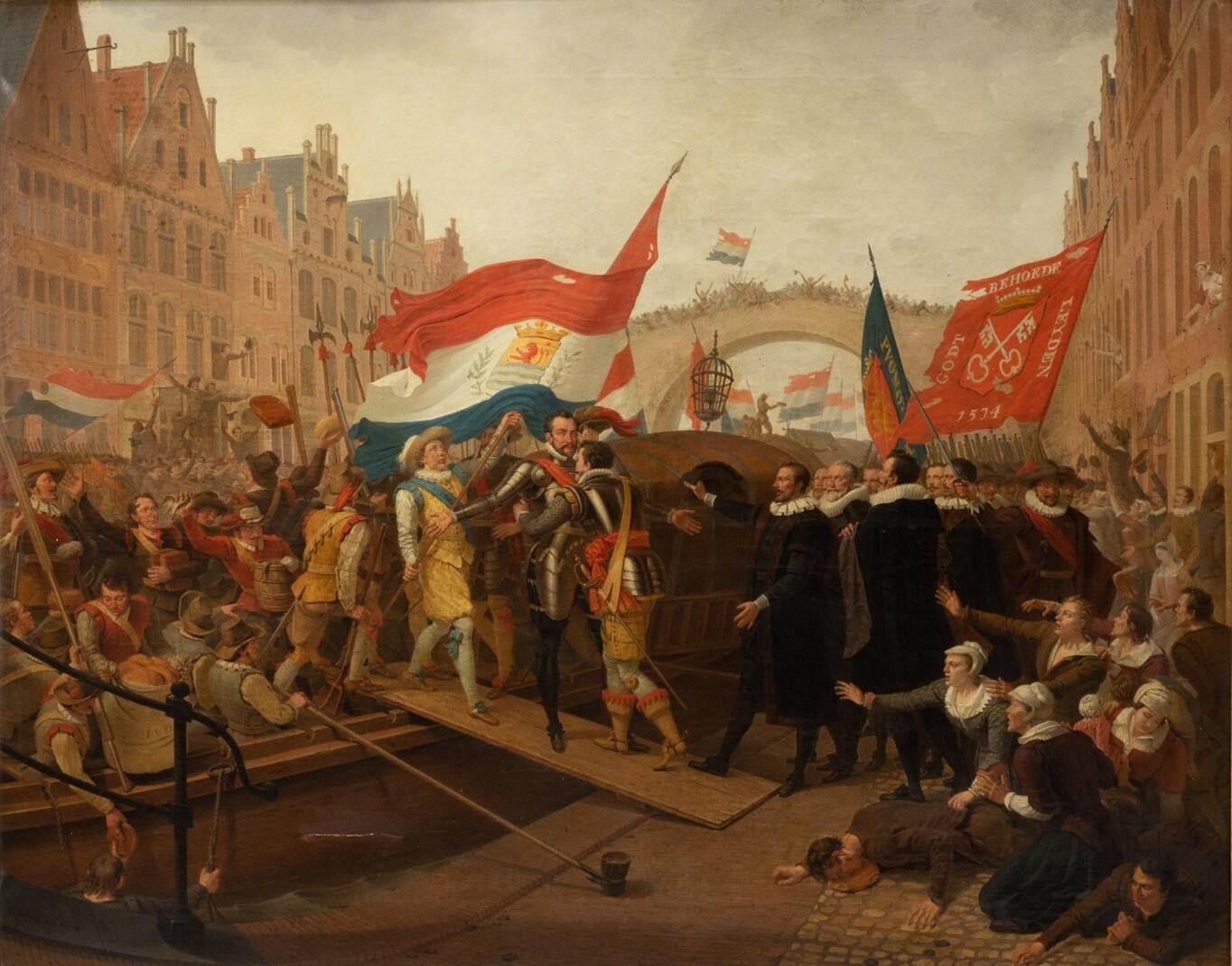
In 1568, the first wave of rebellion to set off the war came when William of Orange organized an attack from his exiled position in the Holy Roman Empire against the seventeen provinces. He hired “sea beggars,” aka privateers, to recapture poorly defended cities in the North, including Holland and Zeeland.
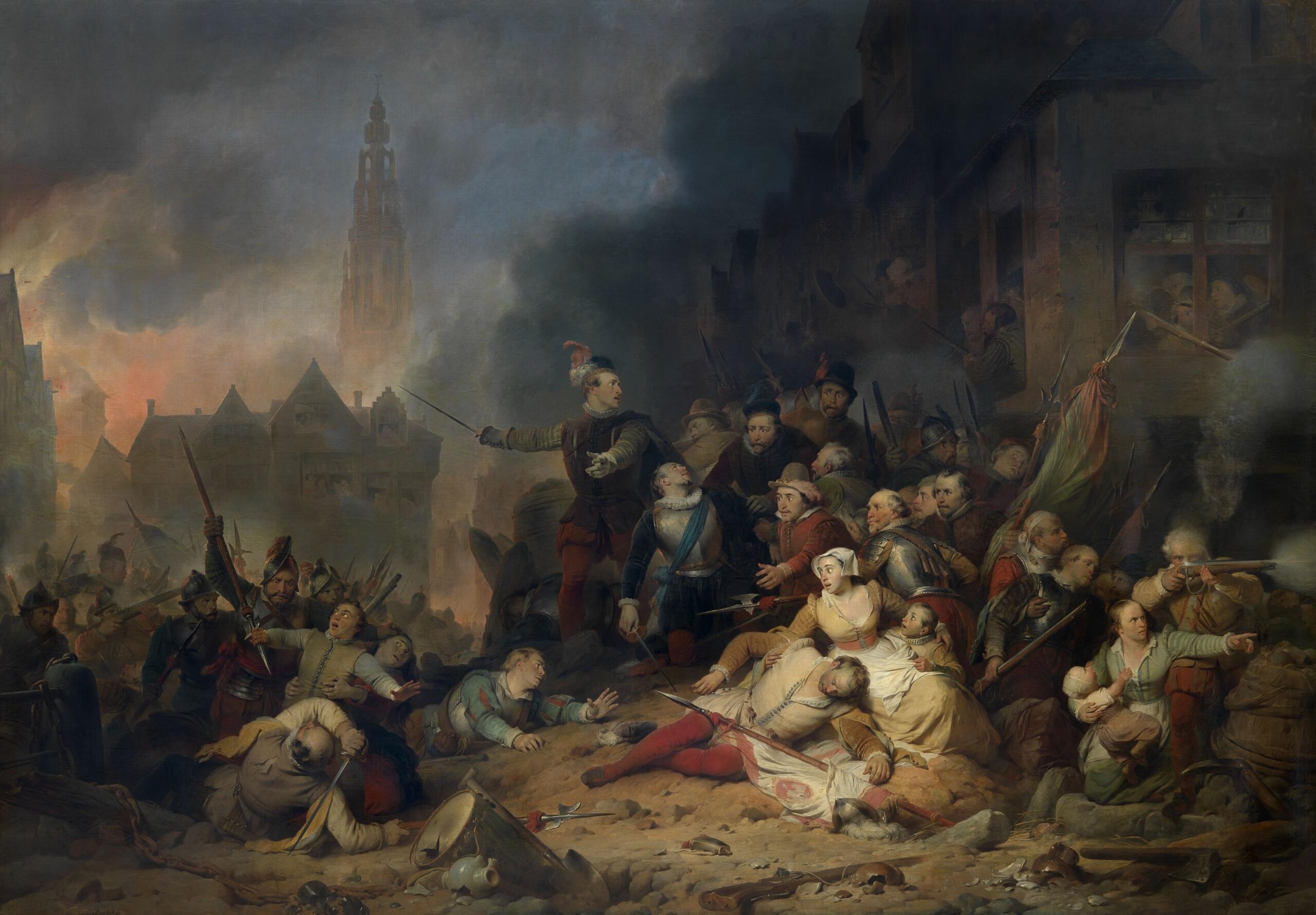
Eventually, leader Philip II stopped paying the Spanish mercenaries for their military service. They began plundering towns across the provinces, even ones that were still loyal to the Spanish crown, in what became known as the “Spanish Fury.”
It is the will of God, and we must submit; but I call my God to witness that I have done all that in me lay to save the city, utterly desperate as I knew the attempt to be. When I took in hand the defence of these oppressed Christians, I made an alliance with the mightiest of all Potentates—the God of Hosts, who is able to save us, if He choose.
William the Silent (William I of Orange), To his brother Louis at the Siege of Harlem (1573)
The Spanish mercenaries began to slaughter and pillage towns at an extremely alarming rate, garnering hate from everyone else.
Calvinists started to take over and persecute Catholics in rebel cities. The war raged on for almost a century, disrupting daily life, trade, and agriculture.
We’ll cover more details about the war, which encapsulated several other events on this list, below.
In 1621, the Eighty Years’ War conflict, which had reached a brief lull, was reinvigorated. It blended with the Thirty Years’ War, which had begun in 1618. The Thirty Years’ War was a brutal conflict that was also spurred by tensions between Catholics and Protestants. It caused an estimated 4.5 to 8 million soldier and civilian deaths across Central Europe.
Union of Utrecht (1579)
In 1576, the Netherlands’ seventeen provinces united in the Pacification of Ghent.
In response to the Spanish Fury, the Dutch provinces (except Luxembourg) agreed to ally themselves and oust the mercenaries. This formal peace measure was necessary since most of the provinces were still loyalists, with only a few rebel cities established, effectively causing a civil war.
However, the union of the provinces was shaky and began to crumble in 1577, mostly due to the religious terms contained within the Pacification agreement. In the agreement, the loyalist/Catholic provinces outlined that all provinces could cooperate on the mercenary issue, but that they intended to remain loyal to the king aside from ousting his rogue soldiers. The rebelling/Protestant/Calvinist areas didn’t intend to follow that part of the agreement, of course.
The Union of Utrecht was the next step in the unification of the provinces.
This time, the southern provinces united under the Union of Arrals, which sided with the Spanish king.
The northern provinces united under the Union of Utrecht. It allowed complete personal freedom of religion, getting rid of the religious edicts that had been causing strife in previous unification efforts.
The Union of Utrecht is regarded as the foundation of the Dutch Republic, also known as the Seven United Provinces.
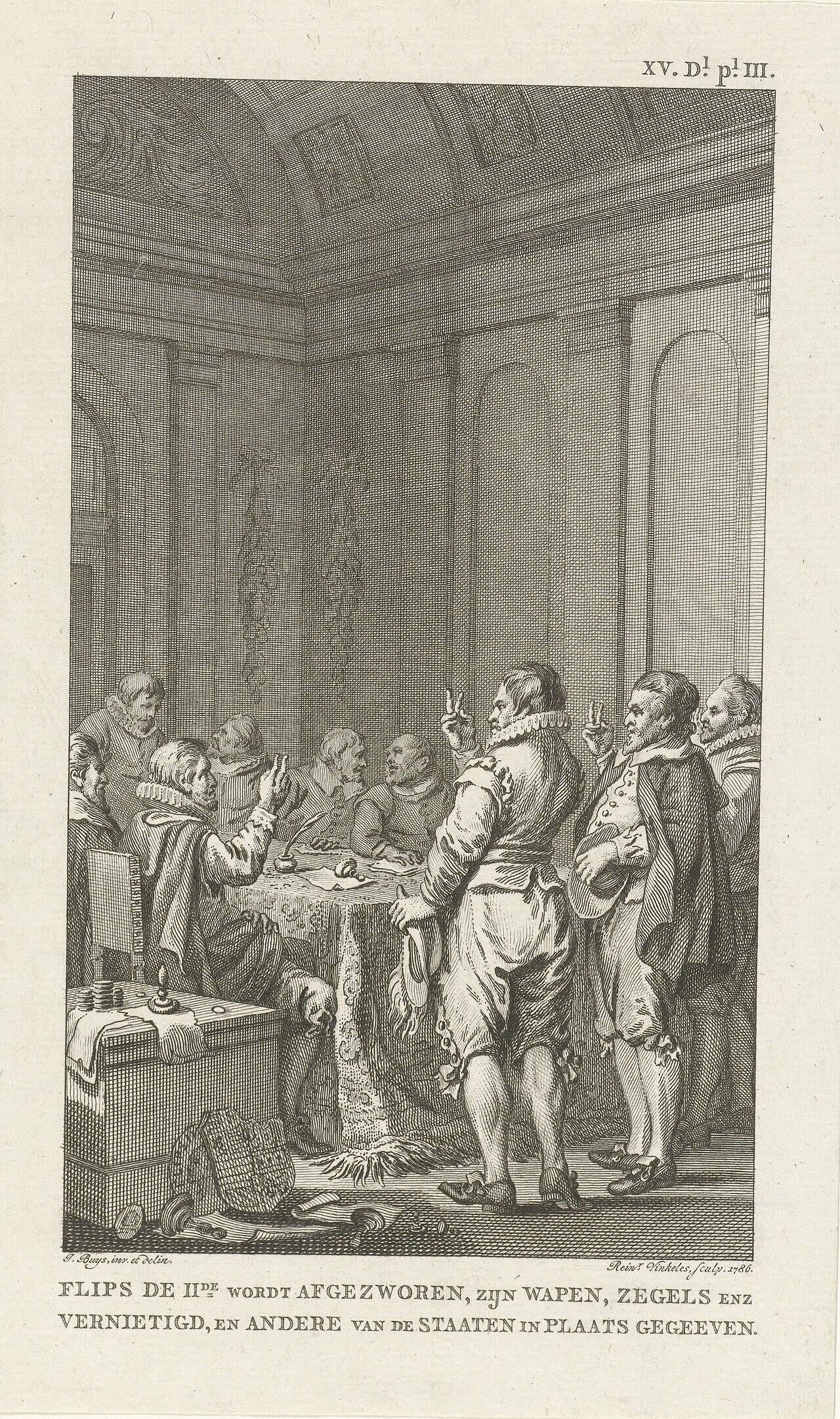
This unification pushed the provinces to be able to separate entirely from the Spanish king, and they declared their independence in 1581 in the Act of Abjuration.
The Dutch Republic of Seven Provinces (1588-1795)
The Union of Utrecht was not the end of the conflict between the Dutch provinces and the Spanish. By 1584, much of the dissenting territory had been recaptured, including the Seven Provinces’ capital city, Antwerp. As a result, thousands of Calvinists in the captured areas fled to Amsterdam, which became the new capital.
All the while, the Provinces were unable to determine a suitable King of their own. Robert Dudley became governor of the Netherlands for a brief time; his poor command skills and tendency to interfere in religious matters made him unpopular, and he was eventually ousted. So, the Seven United Provinces decided to become the Dutch Republic, completely doing away with monarchy. In 1588, each of the seven provinces appointed a representative leader and sent them to The Hague, where the States-General assembly acted as the de facto federal government.
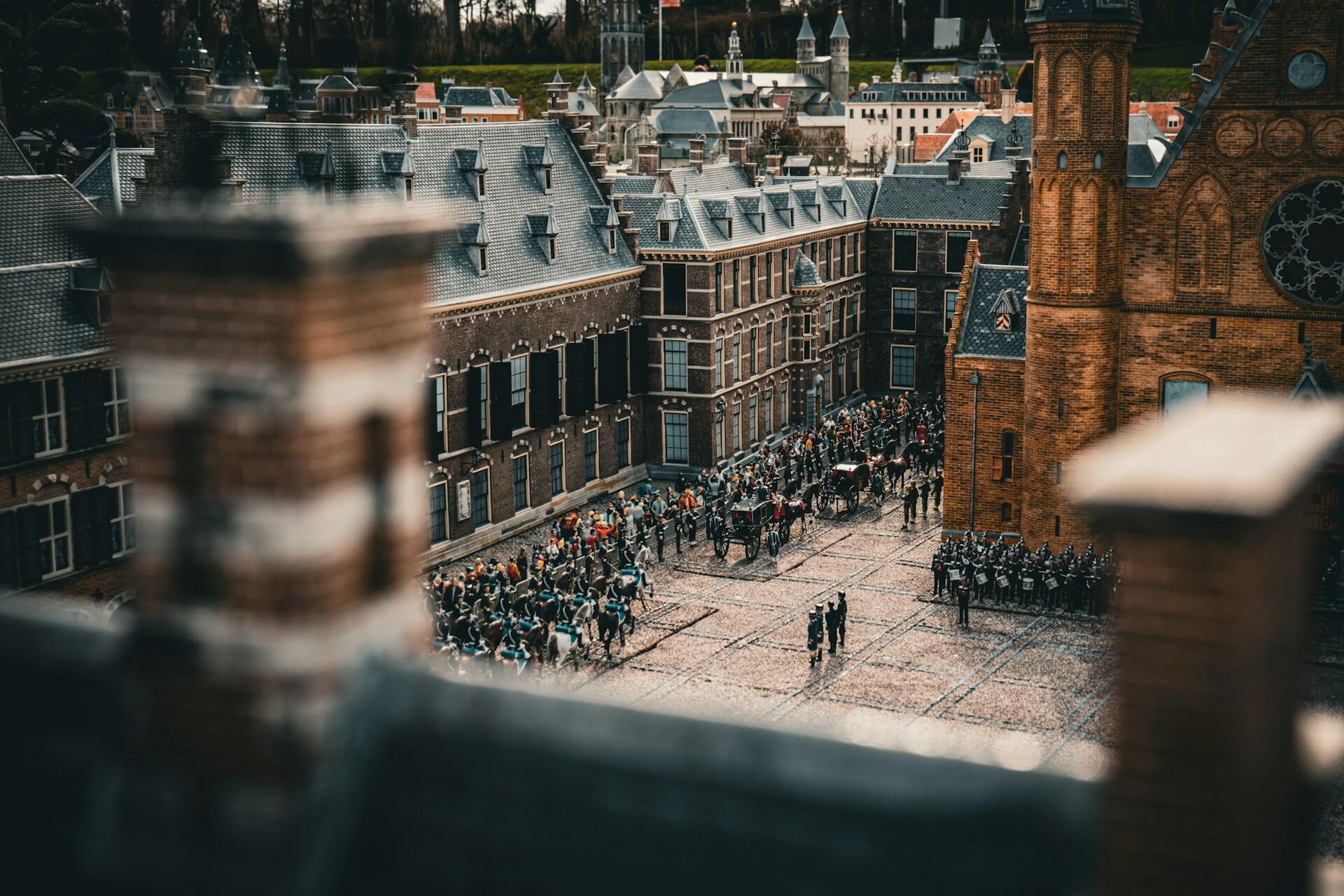
The new government allowed a high degree of local participation from landowners, elites, and merchants, which was more inclusive than most other European states at the time. It also supported religious minorities and welcomed skilled migrants, which helped strengthen the economy.
The Dutch Republic looked toward trade and overseas expansion, which led to the Dutch’s notorious seafaring exploits and booming economic growth.
I will maintain.
House of Orange family motto, exemplified by Frederick Henry as Stadtholder 1625-1647
Dutch Golden Age (c. 1588–1672)
Through unified funds, military forces, and governing, the Dutch Republic reclaimed some of the land that had been once again taken by Spain in the previous decade. The Netherlands became a hotbed of culture and economy, with skilled workers, philosophers, scientists, and artists flocking to cities like Amsterdam to take part in the blooming intellectualism and art scenes there.
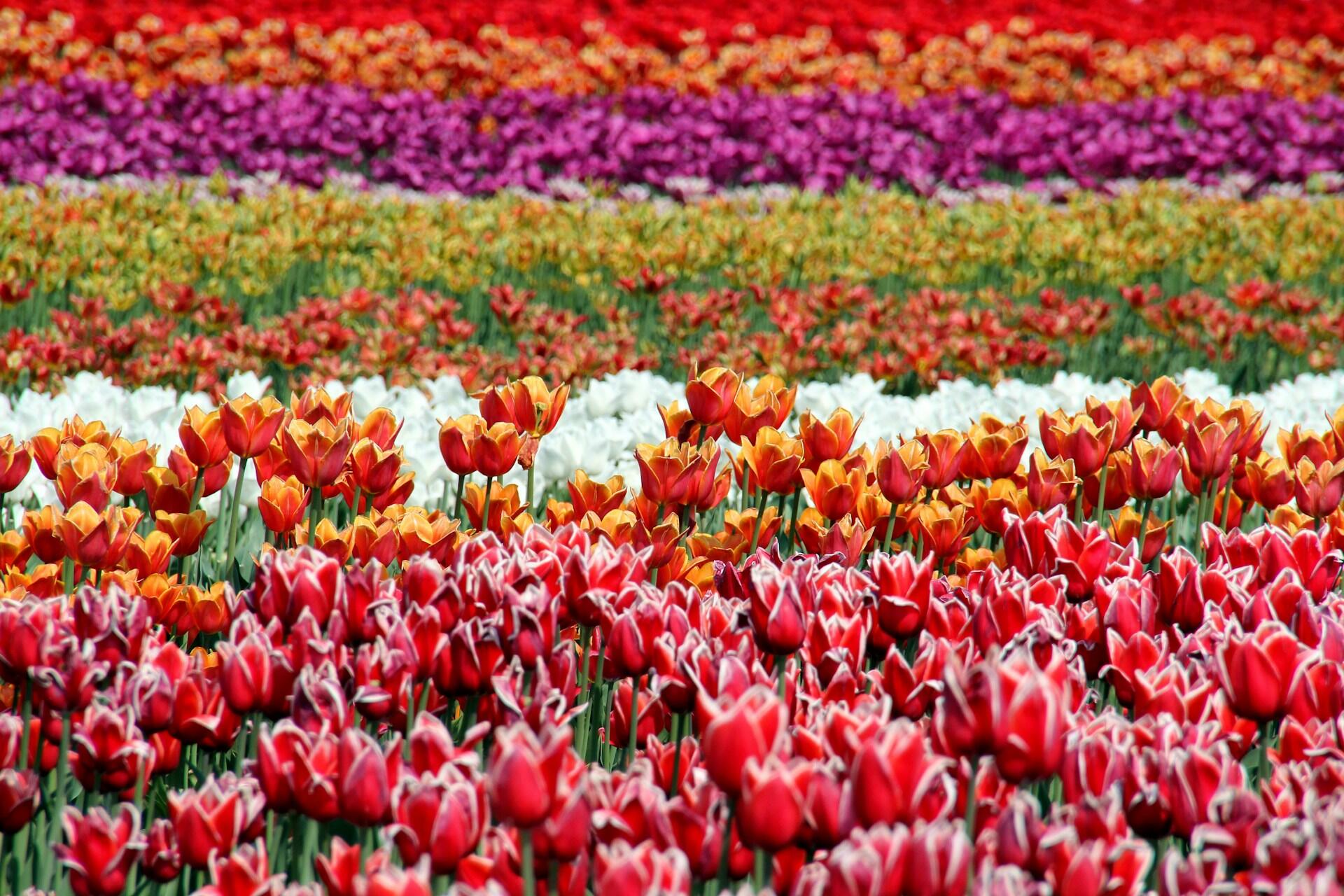
Tulip mania in 1636 and 1637 is recorded as being the first speculative economic bubble. The price of newly introduced tulip bulbs reached very high prices and then collapsed the following year.
Amsterdam emerged as a major financial hub. Banking, shipping, and insurance expanded rapidly. Dutch merchants became some of the world’s leaders in sea trade, supported by a powerful navy and advanced shipbuilding techniques.
In 1602, the Dutch East India Company (known as VOC) was founded. It became the first multinational company to issue shares. Eventually, it became a major player in the Asian trade market. By 1609, the Netherlands’ economic growth was so undeniable and alluring that the Spanish sought a truce in 1609 (Twelve Years’ Truce), recognizing Dutch independence, so they could trade with one another.
The VOC traded:
- Spices
- Silk and textiles
- Porcelain and metals
- Tea, coffee, wine, rice, grain, sugarcane, soybeans
- Livestock
- Slaves
In 1650, the Dutch Empire owned over 16,000 merchant ships, which were used to establish trading posts and colonies all over the world. The Dutch East India Company and Dutch West India Company established trading posts in North America on the southern part of Manhattan (in what was then New Amsterdam). They also traded in South Africa, in the South American countries of Guyana and Suriname, in the Dutch East Indies (now Indonesia), and in a colony in Japan called Dejima.
The Dutch attempted to create settlements around the world just as the British, French, Spanish, and Portuguese had been for centuries at that point. They staked claims in Indonesia, New Guinea, Guinea, India, the Caribbean, North America, South America, and Taiwan. They also charted most of Australia, though they didn’t settle there.
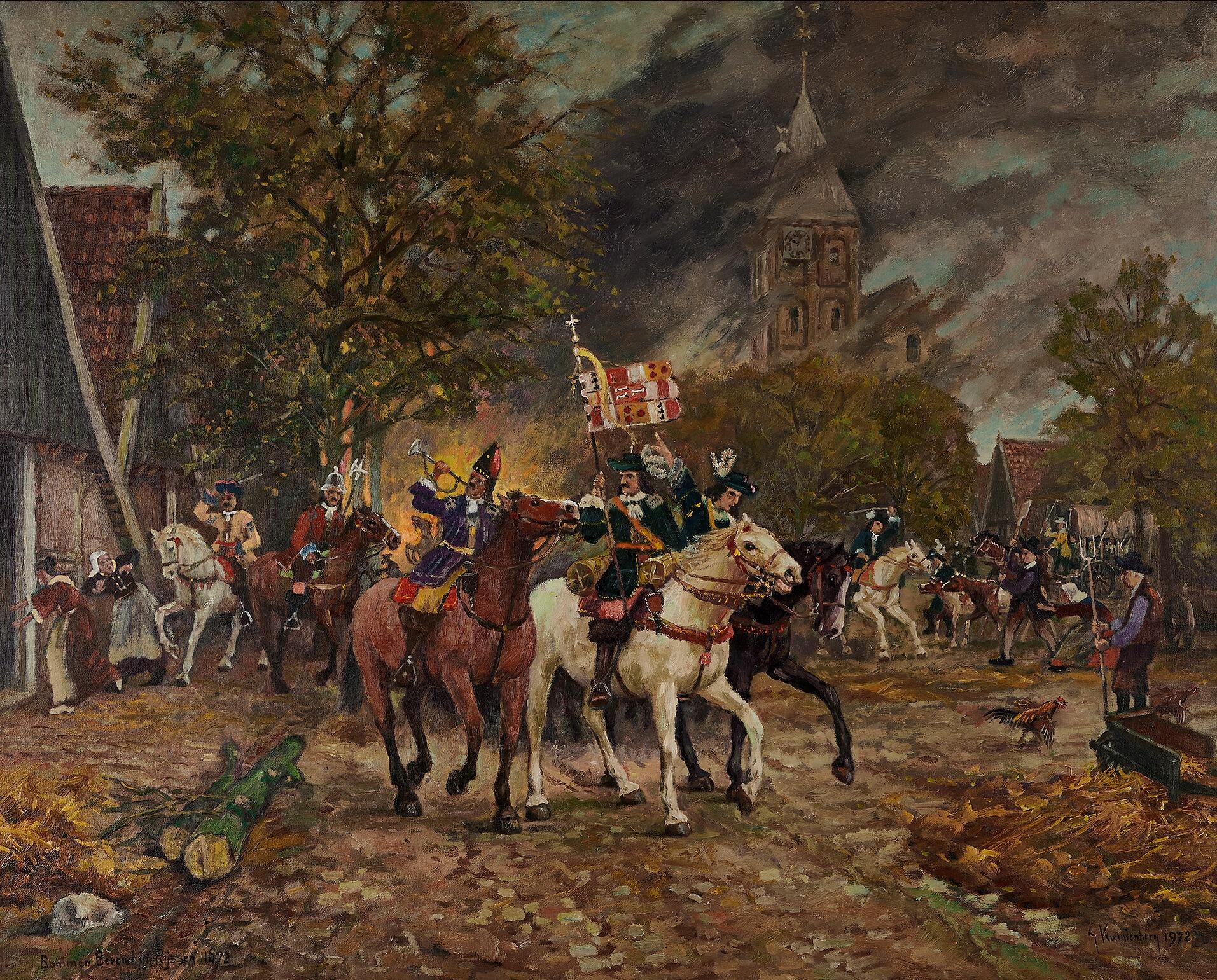
The Golden Age ended around 1672, a year known as the Rampjaar, or “Disaster Year,” when the Dutch Republic was simultaneously attacked by the French, English, and the two prince-bishops Bernhard von Galen (bishop of Münster) and Maximilian Henry of Bavaria. The armies of the invaders quickly conquered parts of the Republic by defeating most of the Dutch States Army.
The de Witt brothers (who were high-ranking officials with positions in the navy at the time) were accused of conspiring with Dutch enemies to orchestrate the downfall of the republic. This was a slanderous, violent propaganda movement, perhaps fuelled by Prince William III of Orange (whom the brothers did not like). It ultimately led to an enraged mob lynching the brothers at The Hague, and William III became the president of the Netherlands in their wake.
Peace of Westphalia (Peace of Münster) (1648)
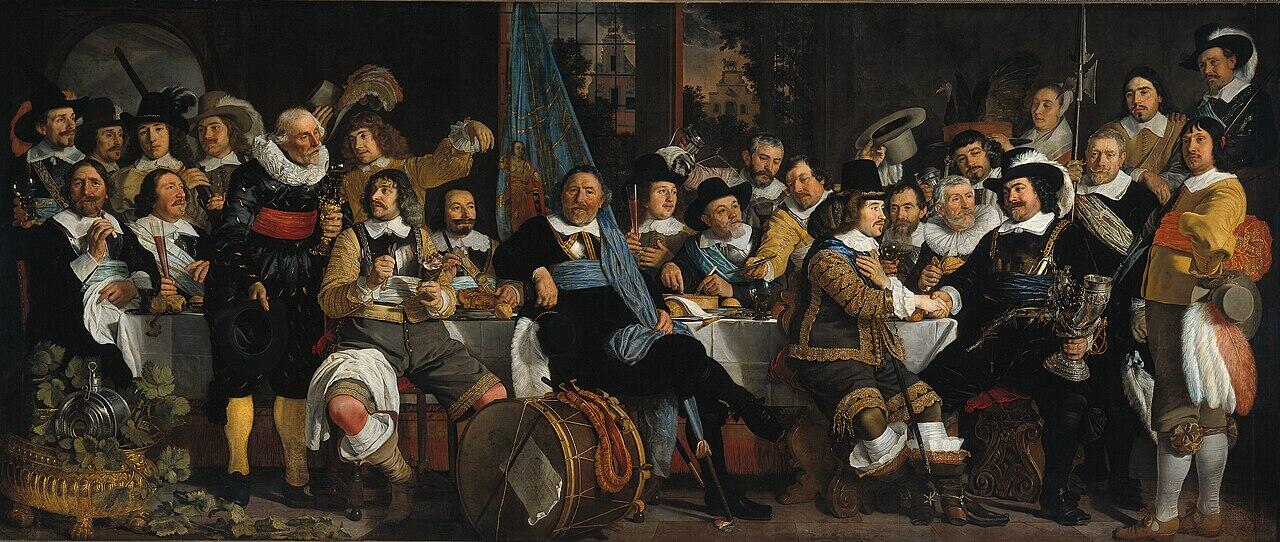
Taking a step back in time slightly, the Golden Age was able to flourish because of the peace treaty, which ended both the Eighty Years’ War and the Thirty Years’ War.
The Peace of Westphalia was a series of treaties that ended the war in the Holy Roman Empire between the Habsburgs of Spain and Austria (the Catholics) and the Protestant powers (mostly Sweden and the Netherlands), as well as France, which was Catholic yet anti-Habsburg.
[the] peace shall be good, firm, faithful, and unbreakable, and that there shall be therefore cessation of all acts of hostility of any character whatever between the aforesaid Lord King and the States General, upon the sea and other waters, as upon the land, in all their respective kingdoms, districts, lands, and lordships, and for all their subjects and residents, of all ranks and conditions, without exception of places or persons.
Article II from the Peace of Münster as translated by C. Smit
In the history of Netherlands, the most important agreement was the Peace of Münster. This treaty officially recognized the Dutch Republic as an independent state. It confirmed Dutch control over its territory and allowed the republic to trade freely without Spanish interference.
Because of this recognition and independence, the Dutch Republic was able to thrive in its Golden Age, which, as we just covered, lasted until 1672.
Patriot Revolt, Batavian Republic, and The Napoleonic Era (1780-1813)
The Fourth Anglo-Dutch War (1780-1784) left the Dutch Republic in a deep economic crisis. The war cost the country many of its key overseas territories and more than 200 merchant ships, sending the country into a debt it couldn’t pay back since the means of trade had been wiped out. The national bank owed money to the wealthy Dutch people, from whom it had taken loans.
Many historians call the fall of the post-war Dutch government in 1784 the symbolic nail in the coffin of the Netherlands as a European superpower. In 1672, the country was damaged by the 4-fronted attack, but not demolished as an influential player. In the century afterward, the country continued to be pivotal in European geopolitics and finances. In 1784, the government financially collapsed and succumbed to invasion.
The average Dutch person was furious about the government’s economic collapse and military defeat. They blamed William V, the Stadtholder. They were also tired of his authoritarian ways. These dissenters, called the Patriots (Patriotten), were inspired by the recent American Revolution and the Enlightenment. They wanted to take the wealth and power from the elites (mostly William V and aristocratic Regents) and distribute them to the middle class.
The Patriots succeeded in forming citizen militias and taking control of several cities in the Patriot Revolt (1780-1787) before William V’s brother-in-law, the King of Prussia, sent troops to stop them. The defeated Patriots fled to France.
A few years later, in 1795, the Patriots regrouped and returned with Revolutionary France by their side. William V couldn’t call on Prussia this time, and instead fled to England. The Patriots declared the country the Batavian Republic.
The Patriots were inspired by the ancient Germanic tribe known as the Batavi, who revolted against the Romans. The Patriots saw themselves revolting against tyranny, the same way as the ancient Batavi people.
Although the French troops helped the Patriots and were seen as liberators, they were business-minded. They demanded the Dutch house, clothe, and feed 25,000 French soldiers and pay 100 million guilders (~$6 to 10 billion in 2025) for their assistance. The new state, which had been born out of a frustration with government debt, was again thrown into the same situation.
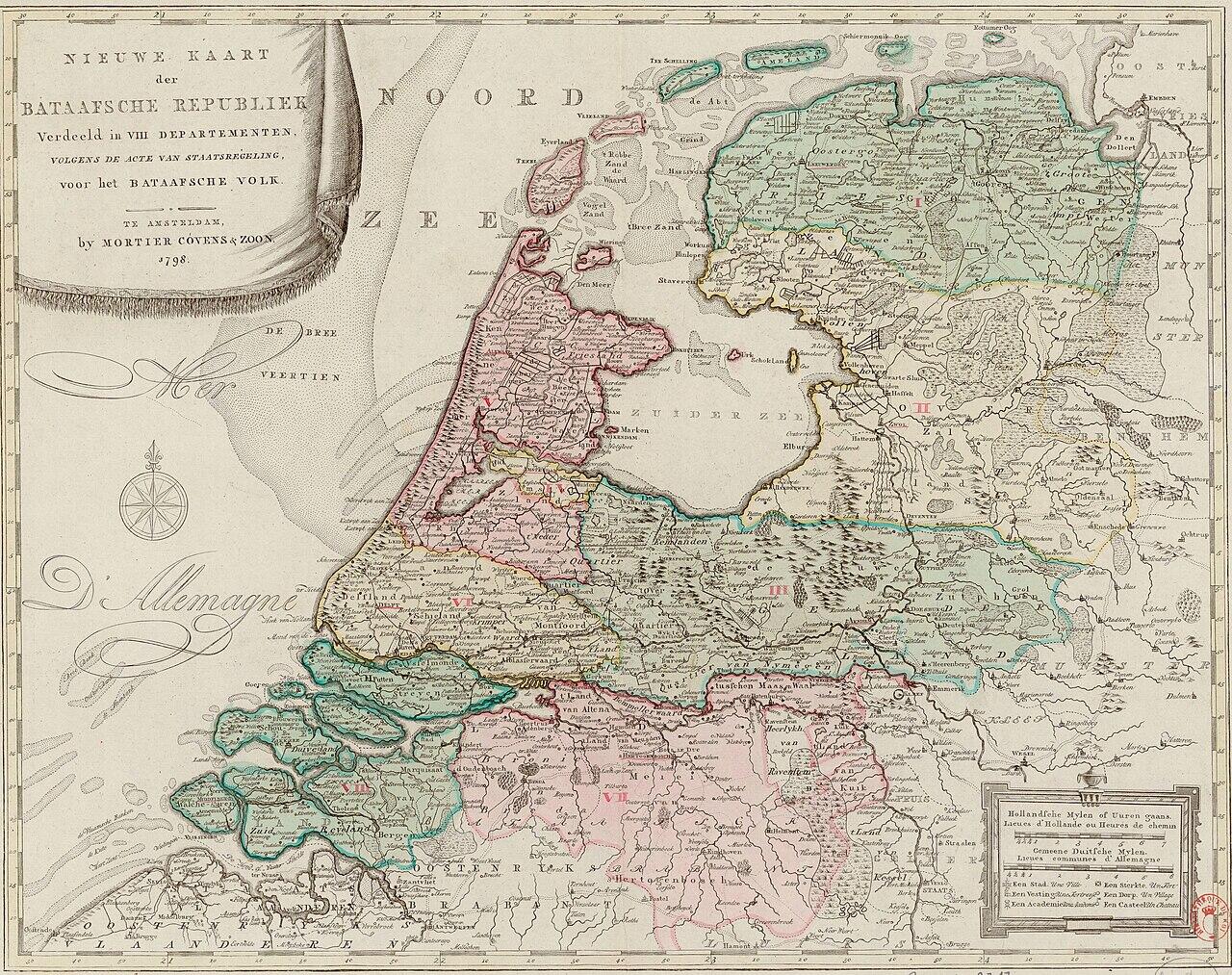
Under the short-lived Batavian Republic (1795-1806), the old system of “seven independent provinces” was abolished.
Instead, the Netherlands became a centralized state with a single national government for the first time.
Notably, more religious tolerance was mandated, granting equal rights to Catholics and Jews.
Despite the financial hardships, the country began to establish the modern institutions seen today, like the national tax system and the Ministry of Education.
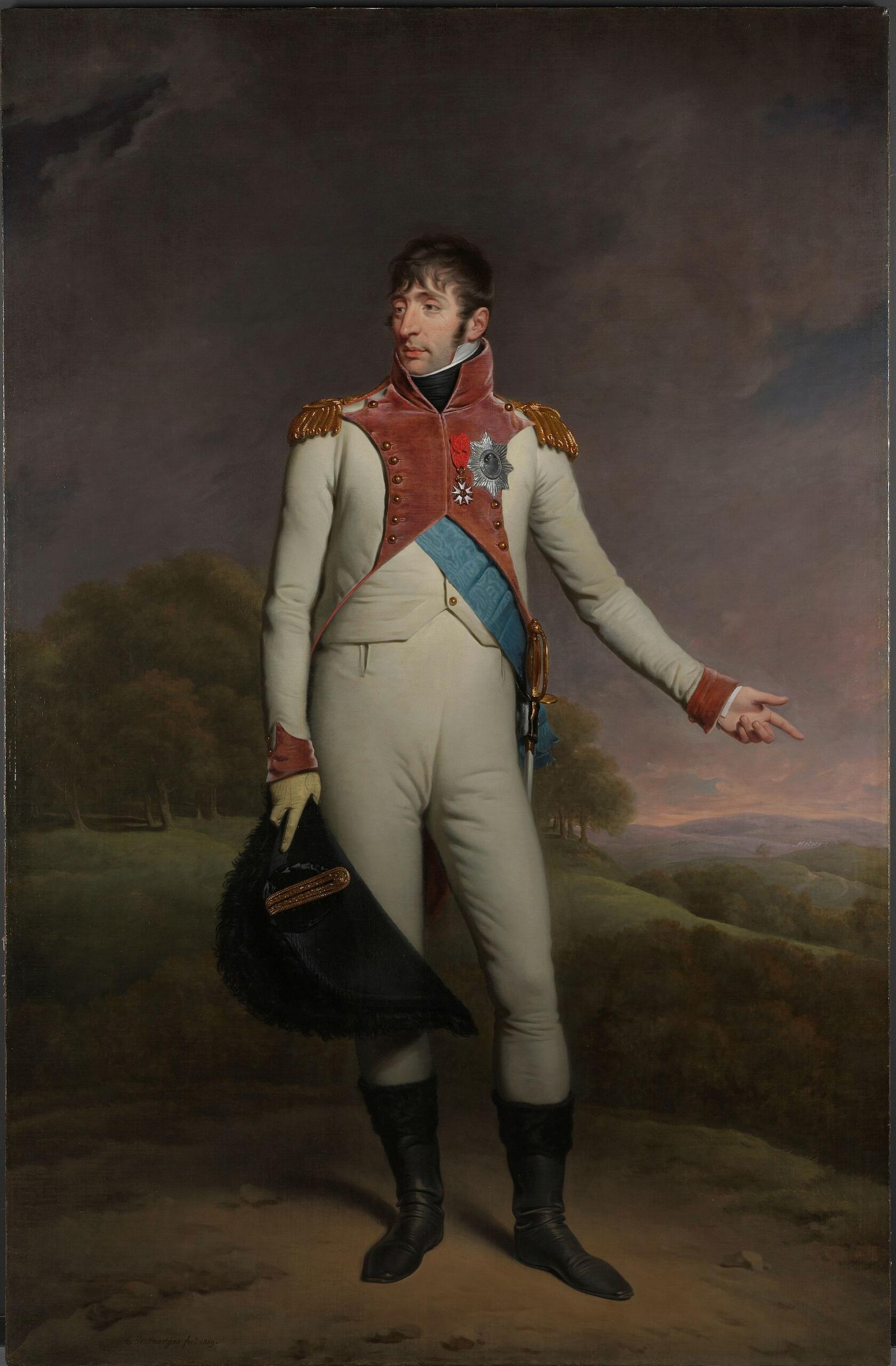
In 1806, Napoleon Bonaparte abolished the Republic and created the Kingdom of Holland. He was fed up with the Batavian Republic because it owed France a lot of money and favors, and he felt it was too slow in coming up with the cash and soldiers to fight in his wars.
Napoleon placed his brother, Louis, on the throne. However, Louis was too kind and wasn’t enforcing the trade blockade Napoleon had imposed. Eventually, Napoleon annexed the Netherlands directly into the French Empire in 1810.
Establishment of the Kingdom of the Netherlands (1815)
Bonaparte’s military failure in the Russian Disaster (1812) and the Battle of Leipzig (1813) weakened the emperor and made the Dutch people dislike him even more, since he was sending Dutch soldiers to their deaths in his military campaigns.
As French troops began to withdraw to avoid being trapped by the Russian and Prussian troops, three Dutch statemen (the Driemanschap) declared “the Netherlands is free” and governed by William V’s son (William Frederick) at The Hague. They essentially declared themselves free of French rule while the French had no way of enforcing otherwise.
William Frederick returned to the Netherlands in 1813, and he was met by cheering crowds ready to usher in a new era out from under French control.
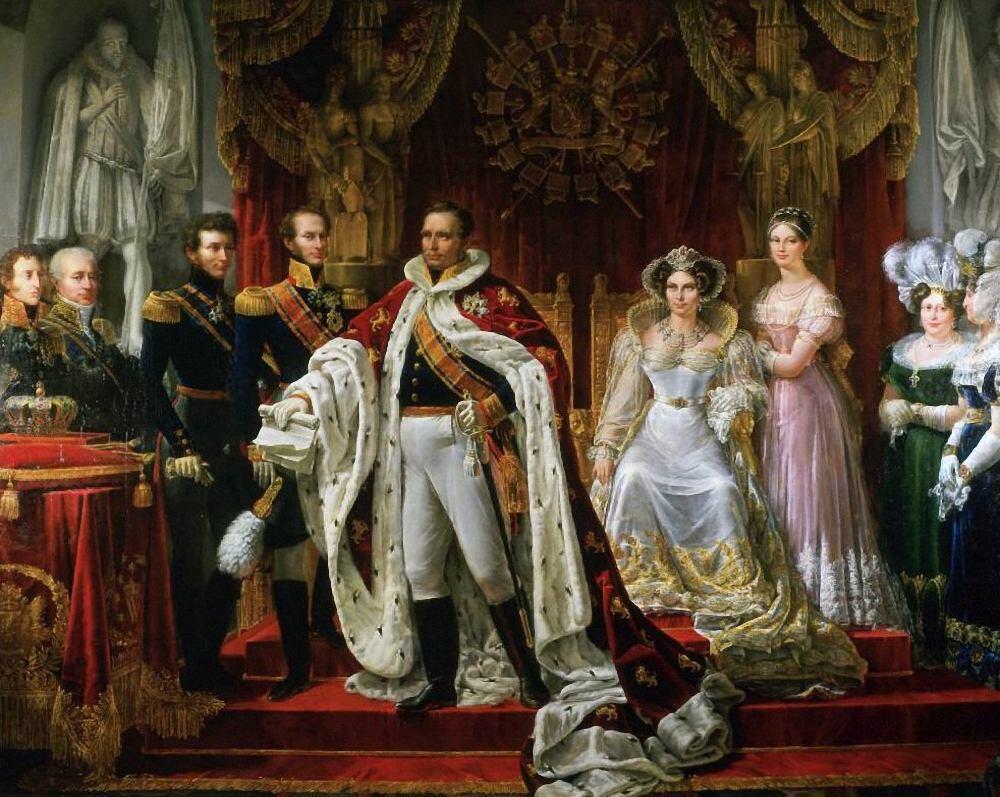
In 1815, he became King William I of the United Kingdom of the Netherlands. The borders and governance had been drawn up by the Great Powers (Britain, Prussia, Russia, and Austria) that defeated Napoleon in the Congress of Vienna. They wanted to be sure France would not try to create an empire across the continent again.
The solution (so they thought) was to merge the old Dutch Republic and the Southern Netherlands. Unfortunately, the union was not perfect. The north (Netherlands) was mostly Protestant and culturally Dutch. The south (Belgium) was mostly Catholic and had been under foreign rule for many years, so the culture was influenced by the Spanish, Austrian, and French. The two areas had been separated by many factors for so long that they didn’t feel a kinship with one another at all.
Furthermore, William I, who was Dutch by ancestry, treated the South like a “conquered province” rather than an equal part of his kingdom. The South was forced to pay off the North’s debt, and was given the same number of seats in the legislature, even though it had almost double the population. William I tried to make Dutch the only official language of the kingdom, but the Southern people spoke a mixture of languages (and not much Dutch). He also tried to control the Catholic Church, which poked the same wounds the Netherlands had been fighting over for hundreds of years.
Though Belgium separated from the kingdom in 1830, the Netherlands retained its monarchical system. The establishment of the kingdom provided long-term political stability and remains one of the most important events in Netherlands history.
The constitution is just a plaything for the masses, an illusion for their liberty, which I can use according to the circumstances.
King William I
German Occupation during World War II (1940–1945)
During WWI, the Netherlands was able to remain neutral largely due to the fact that the importation of goods through the Netherlands proved to be crucial to German survival during the war.
After the war ended, many German prisoners of war were exiled to the Netherlands, such as Kaiser Wilhelm II.
Due to the Netherlands geographical location, it was a hotbed for espionage. Many spy agencies had operators in the country since it was easy to travel freely throughout the Netherlands. Meta Hari, a notable public figure and exotic dancer, was accused of spying for the Germans and was executed by a firing squad in 1917.
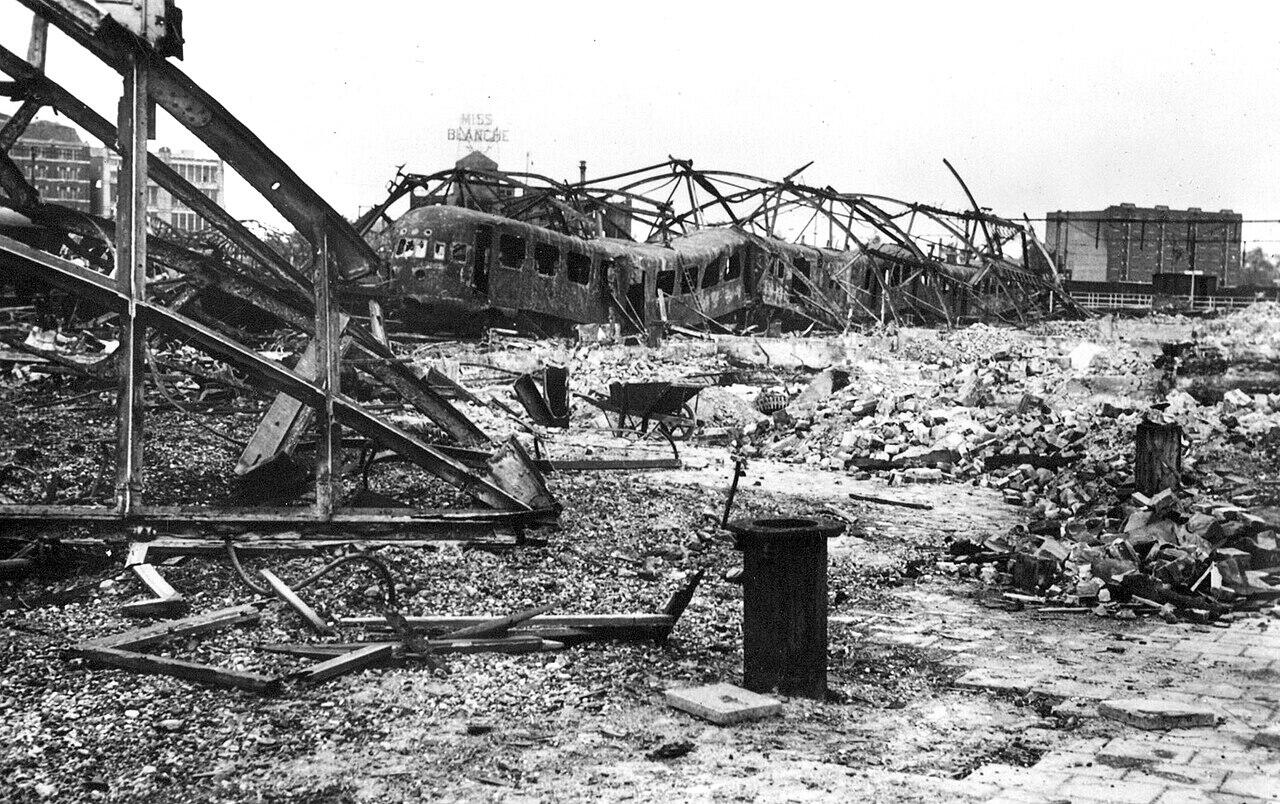
World War II was not as easy to avoid. In 1940, German forces invaded the Netherlands, beginning five years of occupation. Adolf Hitler authorized the bombing of Rotterdam, which reduced the city to ruins. A day after the "Rotterdam Blitz,” the Dutch government surrendered and sought refuge in London.
The Netherlands was a great strategic point for Nazi Germany; it was close to Britain, making it an ideal base for the German air and naval forces.
Throughout the German occupation, Jews living in the Netherlands were persecuted, and over 100,000 were sent to concentration camps. Young men were encouraged to fight for the German army in the war.
The Japanese occupied the Dutch West Indies (Indonesia) throughout the war and imprisoned some of the Dutch and mixed-race people in camps with appalling conditions.
The winter of 1944–1945 brought famine to parts of the Netherlands, causing thousands of deaths. Liberation came in May 1945 from the First Canadian Army.
Post-War Reconstruction and Social Reform (1948-1980)
After the Second World War, the economy and infrastructure in the Netherlands were left in shambles. Rebuilding was needed to create the new Netherlands that would be similar to the old one.
Despite the high birth rate, unemployment was low, and the economy grew at a great pace, causing an unprecedented financial boom. Much of the reconstruction help came from the United States, with Secretary of State George Marshall providing Western Europe with funds, goods, raw materials, and fresh produce in order to help with recovery.
Everyone is entitled to a carefree old age.
Willem Drees (Prime Minister 1948–1958)
From 1948 to 1958, the Dutch government was a coalition of Catholic and social democratic parties. Prime Minister Willem Drees encouraged everyone to take part and make a change. Wages did not rise very much, and this gave the Netherlands a competitive edge in comparison to other Western European countries.
The 1957 Treaty Establishing the European Economic Community, also called the Treaty of Rome, helped establish the European Union in the future. It was signed by Belgium, France, Italy, Luxembourg, the Netherlands, and West Germany.
In 1992, the Maastricht Treaty, which is the foundation treaty of the EU, was signed in the Netherlands.
This encouraged immigration from other European countries such as Spain and Italy. Immigrants from other countries, such as Turkey and Morocco, led to the Netherlands becoming a multicultural and tolerant society.
Drees created many social programs to look after the basic needs of Dutch citizens, such as a regular pension for senior citizens. The governments that followed Drees introduced child support and social security, which caused citizens to rely more fully on the state than on charities and private organizations.
The aforementioned social programs led the Netherlands to become one of the happiest and most prosperous countries on the planet.
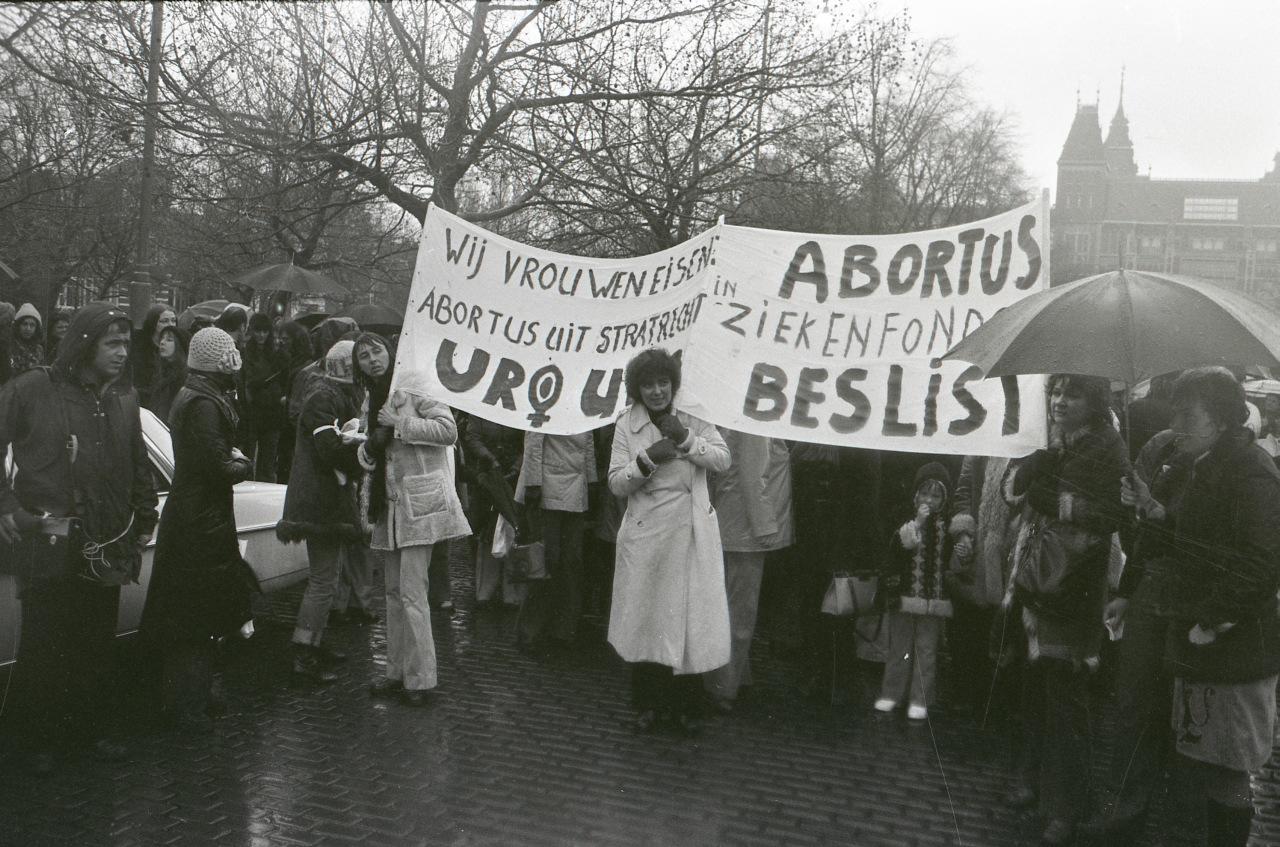
In the 1960s and 1970s, there were many social changes fought for by youth and students. Men and women battled for equal rights, pay, and legal abortion. Archaic traditions were abandoned in government, traditional morals were tossed aside, and social changes in subjects such as environmental issues, drug use, and sexuality were pushed for.
With the aforementioned social changes being accepted by the government, the Netherlands has proven to be an extremely avant-garde and socially tolerant society.
Modern Historical Events (2000s)
The 2000s were marked by the assassinations of two public figures who used their platform to speak their mind on controversial subjects. Pim Fortuyn, who had a very strict policy on immigration, was murdered on May 6, 2002, by Volkert van der Graaf, an animal rights activist. Van der Graaf claimed to have murdered Fortuyn in order to stop him from using Muslims as "scapegoats."
The second political murder of the 21st century affected director Theo Van Gogh, who was killed by a Dutch-Moroccan Islamic extremist after releasing a short film that criticized the treatment of women in Islamic culture. This murder sparked a debate about Islamic extremists living in the Netherlands and over-tolerant immigration policies.
The Netherlands, like many European countries, has centuries of rich culture with many memorable events that shaped Dutch society. Learning about other countries and cultures is a great way to accept other people and different ways of thinking. We can all learn a lot from each other!
Summarize with AI:
Did you like this article? Leave a rating!


 Loading...