
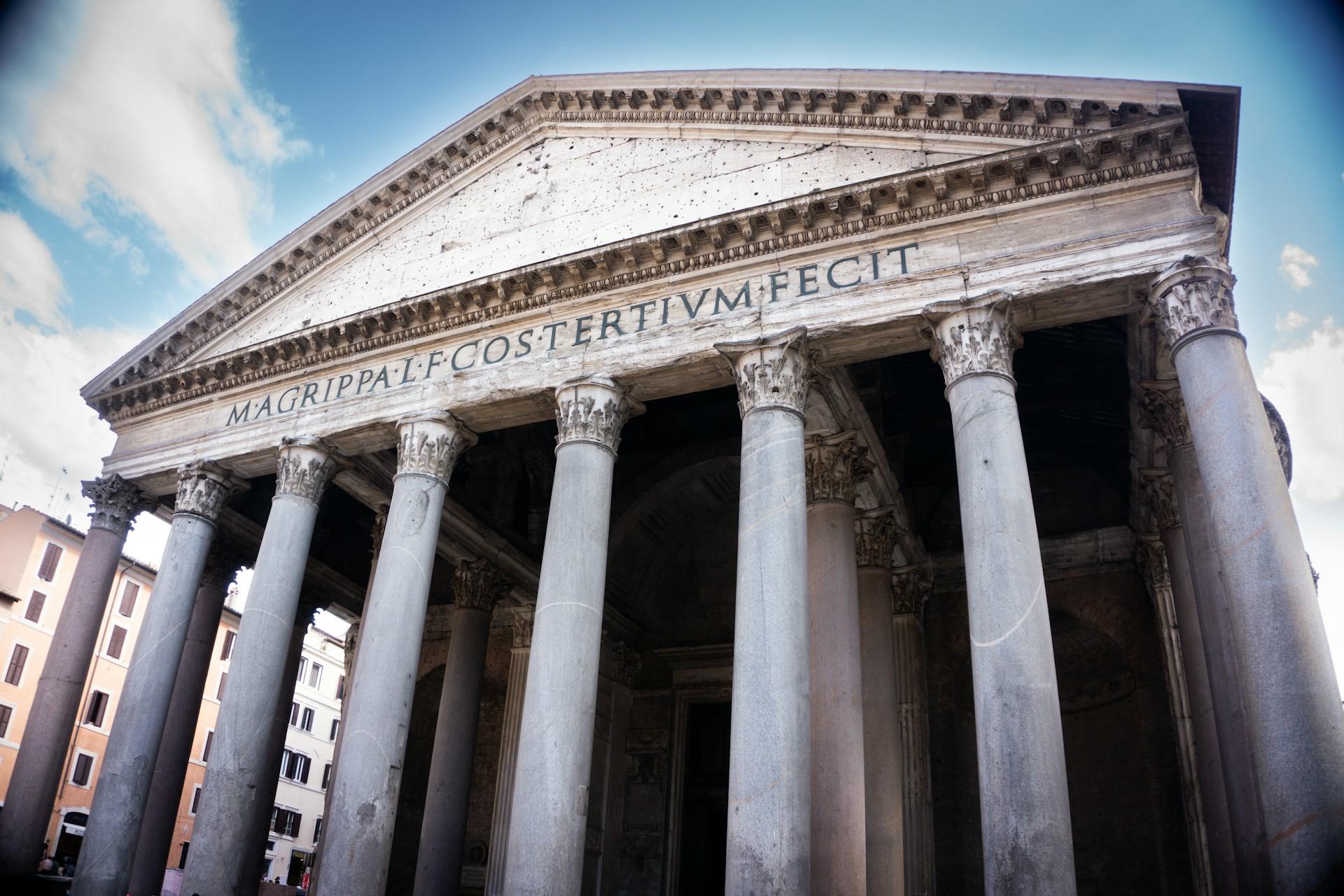

A priori, et cetera, a posteriori, alter ego, ad hoc, nota bene, mea culpa, etc.
Latin — once the language of ancient Rome, scholarship and philosophy — continues to enchant because it condenses deep meaning in a few, elegant words. Latin quotes and phrases have endured across centuries precisely because their ideas — about life, time, fate, virtue — remain universal.
This guide goes beyond a simple list: it explores inspiring Latin quotes on life, love, strength, and fate—complete with their historical context from Ovid and Horace to Stoic philosophers like Seneca. Whether you're looking for wisdom to use in writing, a meaningful tattoo, a memorable speech, or daily reflection, this article will help you understand and appreciate1 these timeless expressions.
We have picked some of the most beautiful Latin language phrases, some used often, others much more rarely, which we've broken down into these categories:
- Latin phrases about fate and time
- Latin phrases about life
- Latin phrases of advice
- Latin phrases about love
- philosophical latin phrases


📜 Overview of Key Latin Phrases and Proverbs
You might have heard some Latin in your time; even as an English speaker, the roots of our language share common ground with the written and spoken language of ancient Rome.
As a result, the Latin proverb has in many cases become one of the default ways2 of displaying one’s wisdom or intellect in conversation or scholarly musings. Here's a quick overview of some of the top Latin quotes and common Latin sayings everyone should know:
| Latin Quote | English Translation |
|---|---|
| Alea jacta est | The die is cast |
| Audaces fortuna juvat | Fortune favors the bold |
| Deus ex machina | God from the machine |
| Vulnerant omnes, ultima necat | They all wound and the last kills |
| Ad vitam aeternam | To eternal life |
| Fluctuat nec mergitur | (She) is tossed by the waves but doesn't sink |
| Ave, Imperator, morituri te salutant | Hail, Emperor, those who are about to die salute you |
| Amicus Plato sed major amicus veritas | Plato is my friend, but the truth is a better friend |
| Aurea mediocritas | The golden mean |
| Beati pauperes spiritu | Blessed in spirit (are) the poor |
| Carpe diem | Seize the day |
| Errare humanum est | To err is human |
| Nosce te ipsum | Know thyself |
| Quae sunt Caesaris, Caesari | That which is God's, to God; that which is Caesar's, to Caesar |
| Habeas Corpus | That you have the body |
| Homo homini lupus | A man is a wolf to another man |
| Veto | I forbid |
| Amor vincit omnia | Love conquers all |
| Ad vitam aeternam | To eternal life |
| Cogito, ergo sum | I think, therefore I am |
| Ex nihilo nihil | Nothing comes from nothing |
| Panem and circenses | Bread and circuses |
🕰️ Latin Phrases About Fate and Time
It’s not uncommon for Latin sayings to reference the themes of fate, destiny and the inevitable march of time, which we must all reconcile as we go through life.

The mythos of Latin-speaking cultures live on today in the phrases that we often parrot in our day-to-day lives.
| Latin Phrase | Translation | Origin |
|---|---|---|
| Tempus fugit | Time flies | Virgil |
| Tempus edaz rerum | Time, devourer of all | Ovid |
| Alea iacta est | The die is cast | Caesar |
| Fortuna caeca est | Fortune is blind | - |
| Fata viam invenient | The fates will find a way | Virgil |
| Stat sua cuique dies | Each person's day is fixed | Virgil |
| Faber est suae quisque fortunae | Each is make of his fate | Sallust |
| In omnia paratus | Ready for anything | - |
| Omnia vincit tempus | Time conquers all | Ovid |
| Omnia mutantur | Everything changes | Ovid |
| In perpetuum | Forever | - |
| Errare humanum est | To err is human | Seneca |
| Repetitio mater studiorum | Repetition is mother of learning | - |
| Acta non verba | Actions, not words | - |
| Nunc est bibendum | Now is time for drinking | Horace |
| Audaces fortuna juvat | Fortune favors the bold | Virgil |
| Vulnerant omnes, ultima necat | They all wound and the last kills | Seneca the Elder |
“Alea jacta est”: The die is cast
Certainly one of the most famous Latin quotes. These are the words uttered by Caesar when crossing the Rubicon with his army, in spite of the fact that a Roman law stipulated that he had to discharge his soldiers before crossing the river.
By disrespecting this order, Caesar was brought into conflict with the Roman Senate. The government considered his actions an insurrection, treason, and declaration of war. The idiom “crossing the Rubicon” is also used in English to suggest passing a point of no return. Another way of phrasing this is with the popular expression “come what may”.
Another way of thinking of this saying is as the Latin words for best or worst… it’s happened now, so we have to go along with it.
We could have chosen from many Latin war phrases, but this one is one of the most poignant.
"Fortuna caeca est" – Fortune is blind
This Latin expression reflects on the randomness and unpredictability of fate. Originating from Roman thought, it suggests that good or bad fortune is often distributed without regard for merit or effort. Philosophers such as Boethius explored this idea in The Consolation of Philosophy, highlighting how the wise person should not rely on luck bu
“Errare humanum est”: To err is human
Mistakenly attributed to Seneca, it is a philosophical maxim to forgive the mistakes made by humans who are not perfect. However, the maxim is also about understanding our errors, so we can improve. The second part explains this point well: being stubborn about your errors is inexcusable.
The maxim can be compared to the writing of a more rec
“Deus ex machina”: God from the machine
Of all the mottos in Latin on this list, “Deus ex machina” is possibly the most well known due to its constant appearance in our critique of media.
Originally a translation of a Greek expression, it makes reference to the theater and the intervention of gods or goddesses, brought over the stage using special equipment. The divine intervention solved all the problems at the end of the play.
Nowadays, the expression is used when a situation is resolved thanks to an element that was unexpected until that moment. The expression is often used pejoratively for an incredible miracle which is poorly integrated into a story to make a happy ending.
“Vulnerant omnes, ultima necat”: They all wound and the last kills
We tend to love Latin phrases in Latin that imply a dark truth; this is one of the best examples of a quote that does exactly that.
This Latin expression is often inscribed on old sundials or public clocks. It is a way of remembering the passing of time and that every hour could be someone's last. It teaches us to value our time and reminds us that we are not immune to the effects of time.
🌿 Latin Phrases About Life
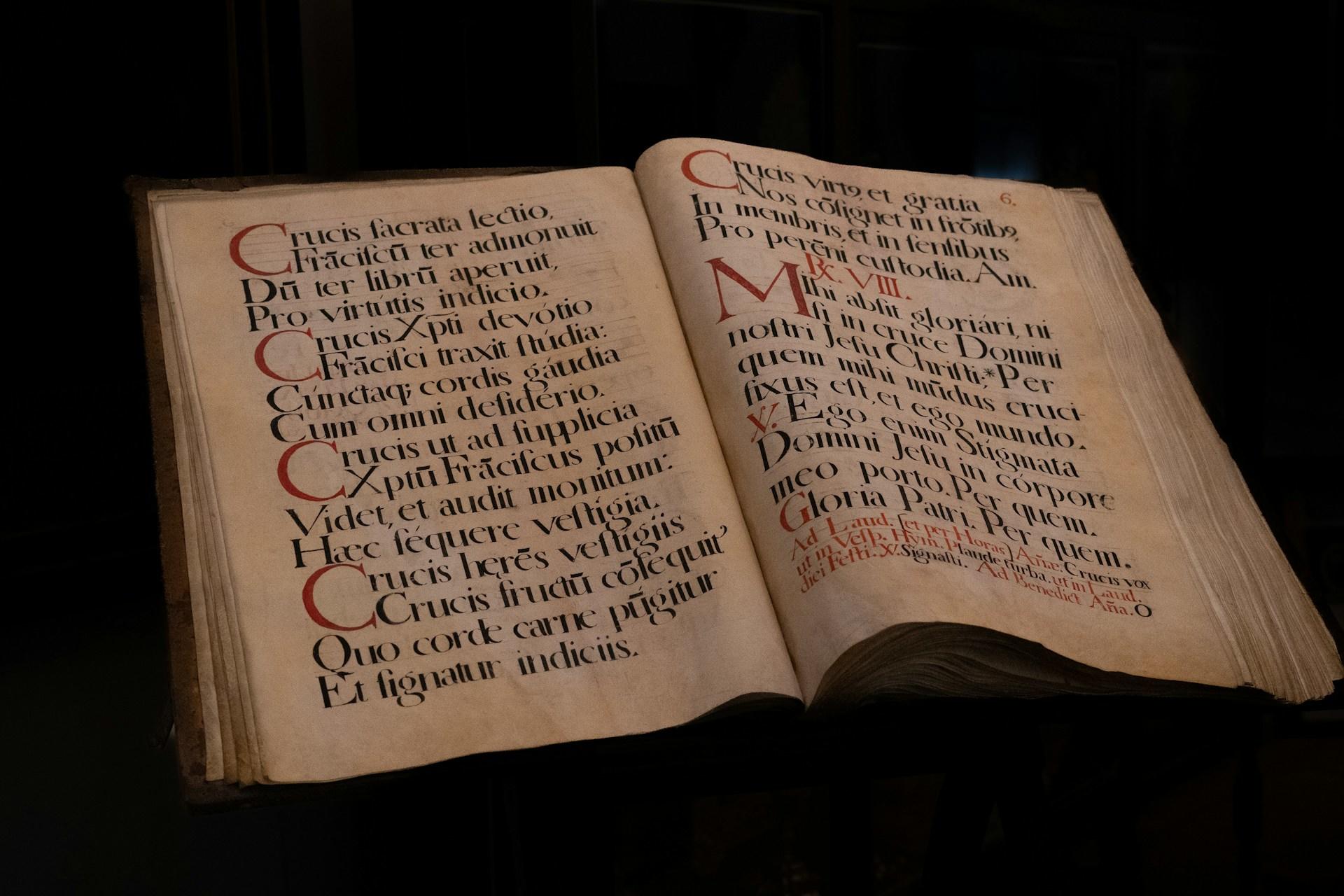
As English speakers, we love Latin phrases about love and life that inspire us and keep us moving through our trials and tribulations. What follows are some cases of Latin sayings that have inspired and emboldened people, both past and present.
| Latin Phrase | Translation | Origin / Author |
|---|---|---|
| Ad vitam aeternam | To eternallife | - |
| Carpe diem | Seize the day | Horace |
| Carpe nocetem | Seize the night | Medieval Latin |
| Carpe vitam | Seize life | Late Latin |
| Dum spiro, spero | While I breathe, I hope | Cicero (attrib.) |
| Dum vivimus, vivamus | While we live, let us live | Epicurean motto |
| Vivere est cogitare | To live is to think | Cicero |
| Vita est donum | Life is a gift | - |
| Vita est pulchra | Life is bautiful | - |
| Vita brevis est, ars longa | Life is short, art long | Hippocrates |
| Vita sine litteris mors est | Life without learning is death | Seneca |
| Gaudeamus igitur | Therefor, let us regoice | Medieval hymn |
| Memento vivere | Remember to live | - |
| Felix qui potuit rerum cognoscere causas | Happy he who understood causes | Virgil |
| Sapere aude | Dare to know | Horace |
| Aequam servare mentem | Keep a calm mind | Horace |
| Aurea mediocritas | The golden mean | Horace |
| Sine qua non | Essential condition | - |
| Tempora mutantur... | Times change, and we change with them | Ovid (attrib.) |
| Vivere est vincere | To live is to conquer | - |
| In medio stat virtus | Virtue stands in the middle | Aristotle (via Latin tradition) |
| Fluctuat nec mergitur | (She) is tossed by the waves but doesn't sink | Baron Haussmann |
| Ave, Imperator, morituri te salutant | Hail, Emperor, those who are about to die salute you | Suetonius |
“Ad vitam aeternam”: To eternal life
According to beliefs and traditions, this proverb is rather pessimistic, as it implies that we are dead. Indeed, eternal life is linked to Paradise for worthy Christians or eternal hell for sinners. Another way of translating this phrase is "to life everlasting".

Discover the best dictionaries for translating Latin.
"Fluctuat nec mergitur”: (She) is tossed by the waves but doesn't sink
This motto has been used by the city of Paris since 1358 by the Guild of Boatsmen along the river Seine. At a time when access to the open sea was crucial for the city, boats were the most effective means of transport.
It became the official motto of Paris in 1853, it accompanies the ship on the coat of arms of Paris. Henri Tausin explains perfectly why this motto was chosen.
The motto recalls “the dangers that Paris has seen, the terrible revolutions that have agitated it, the crises of all kinds it has suffered” and expresses “the idea of vitality, strength, perpetuity that characterises the long and glorious existence of this city.”
This is not the only example of a large group of people using Latin phrases for love of someone or something, but it is definitely a good one.
Learn all about the languages derived from Latin.
Dum spiro, spero" – While I breathe, I hope
Attributed to Cicero, this optimistic Latin phrase captures the enduring human spirit in the face of adversity. "Dum spiro, spero" reminds us that as long as we are alive, there is always a possibility for change, growth, or recovery. Often used to convey resilience and perseverance, it reflects a mindset that refuses to give in to despair. Whether facing personal challenges or larger struggles, this phrase encourages hope as a vital force that sustains life itself.
"Fluctuat nec mergitur”: She is tossed by the waves but doesn't sink
Fluctuat nec mergitur is the historic motto associated with the city of Paris3. The emblem of the ship dates back to the medieval Guild of the Nautes, the powerful corporation of river boatmen who controlled trade along the Seine.
Although the ship symbol appeared as early as the 14th century, the motto in its current form became widespread later and was officially adopted by Paris in the 19th century. It symbolizses the city’s resilience in the face of hardship, echoing the steadfast spirit of Paris throughout its tumultuous history.
“Ave, Imperator, morituri te salutant”: Hail, Emperor, those who are about to die salute you
These words were chanted by the gladiators in front of the Imperial Box before the start of the Games, according to Suetonius. The Romans loved the Circus Games, especially the very bloody fighting of death row prisoners, slaves, or even voluntary barbarians.
If the gladiator lost, it was the public who decided whether he lived or died by lowering or raising their thumb. The motto recalls the pride of the gladiators, who had only one thing to save: their lives.
📝 Latin Phrases of Advice
Some of the best Latin words are Latin words for success and the associated advice that they can impart to their recipients. Hopefully these quotes will help you whether you are struggling, achieving your goals, or just need some extra support.
| Latin Phrase | Translation | Origin / Author |
|---|---|---|
| Amicus Plato sed major amicus veritas | Plato is my friend, but the truth is a better friend | Quintus Horatius Flaccus |
| Aurea mediocritas | The golden mean | Auintus Horatius Flaccus |
| Beati pauperes spiritu | Blessed in spirit (are) the poor | The Bible - Matthew 5:3 |
| Carpe diem | Seize the day | Horace |
| Errare humanum est | To err is human | Lucius Annaeus Seneca |
| Nosce te ipsum | Know theyself | Thales |
“Errare humanum est”: To err is human
The complete phrase is "errare humanum est, persevare diabolicum", which means "to err is human, but to persist in error (out of pride) is diabolical". It is often attributed to Seneca, but it is known to have existed before.
It is a philosophical maxim to forgive the mistakes made by humans who are not perfect. However, the maxim is also about understanding our errors, so we can improve. The second part explains this point well: being stubborn about your errors is inexcusable.
The maxim can be compared to the writing of a more recent author, John Powell, who says that "the only real mistake is the one from which we learn nothing".
How well do you know your Latin declensions?
🧠 Latin Words of Wisdom
As we mentioned in the beginning, Latin is often a language of academic prestige and a sign of intelligence. It should therefore come as no surprise that many Latin quotes contain age-old wisdom that still holds true to this day.

Habeas Corpus: That you have the body
Latin phrases love to be short and sweet, but they are often abbreviated from longer passages.
The full Latin phrase is "that you have the person for the purpose of subjecting him/her to (examination)" (habeas corpus ad subjiciendum). It is an Anglo-Saxon institution that serves to guarantee the individual freedom of citizens by protecting him/her against arbitrary arrests.
Voted in 1679 in England, the Habeas Corpus Act is a reaction to attempts at monarchical absolutism.
“Veto”: I forbid
Authority alone does not lend value to an idea… Hence, the ‘veto’.
Originally, the veto was a way of opposing a magistrate, regardless of rank, or a decision of the Roman Senate.
Today, the term still denotes opposition to a decision. It is used by the United Nations Security Council for countries contesting decisions. If a country exercises their veto power, the proposal is rejected.
You will find similar quotes in the dozens of Latin languages used throughout the world today!
❤️ Latin Phrases About Love
Love is a central part of human existence. In its many forms and expressions, it's a timeless and universal theme that has been explored extensively in Latin literature and philosophy, from Ovid's Ars Amatoria to Virgil's Eclogues.

With its poetic elegance and depth, Latin offers a rich repository of love quotes, illustrating love's power, complexity, and enduring nature. Latin quotes about love range from the romantic and passionate to the wise and reflective, revealing how deeply the Romans valued emotional connection.
| Latin Phrase | Translation | Origin |
|---|---|---|
| Amor vincit omnia | Love conquers all | Virgil |
| Ubi amor, ibi dolor | Where there is love, there is pain | - |
| Amare et sapere vix deo conceditur | Even a god find it hard to love and be wise | Publilius Syrus |
| Amor omnia vincit | Love conquers everything | Virgil |
| Amor est vitae essentia | Love is the essence of life | - |
| Si vis amari, ama | If you want to be loved, love | Seneca |
| Nihil sine amore | Nothing without love | - |
| Omnia vincit amor, et nos cedamus amori | Love conquers all; let us yield | Virgil |
| Amor animi arbitrio sumitur, non ponitur | We choose to love; we do not place it down | Publilius Syrus |
| Verbis amor non eget | Love does not need words | - |
The Latin word for love is “amor,” which is a masculine noun meaning love, affection, or passion. The verb form is “amare,” which means “to love.” Both are commonly used in classical Latin texts to express feelings of romantic or deep affection.
"Amor vincit omnia": Love conquers all
This phrase, derived from Virgil's Eclogues, encapsulates the omnipotent force of love, capable of overcoming any obstacle. It reflects the Roman belief in the transformative power of love, which can transcend social, political, and personal barriers. This idea is mirrored in countless stories and poems from ancient Rome, where love often emerges as a central, driving force.
"Ad vitam aeternam": To Eternal Life
This Latin phrase about love captures the timeless and enduring nature of love. It expresses how love is not confined by time, promising an everlasting bond in the mortal realm. The eternal aspect of live is indeed a recurring theme in Roman poetry and philosophy, reflecting the importance placed on loyalty and devotion.
"Amor tussis non celantur" – Love and a cough cannot be hidden
This witty and insightful Latin proverb speaks to the undeniable visibility of love. Just as a cough eventually betrays itself, so too does love—no matter how hard one tries to conceal it. The phrase humorously captures the idea that emotions, particularly love, have a way of revealing themselves through actions, expressions, or even silence. It reminds us that love is a powerful force that naturally surfaces, often when we least ex
💭 Philosophical Latin Phrases
Philosophers are prized for their ability to not only observe and make sense of the metaphysical, but also for their ability to eloquently word their insights so that the common rabble can understand their intricate conclusions.
Below are both famous examples of the observation and simplification of truth in our lives.

“Cogito, ergo sum”: I think, therefore I am
This quote is a Latin philosophical proposition coined by René Descartes in his Discourse of Method (1637) and appeared originally in French in the original French “je pense, donc je suis”. This idea is also referred to as “the cogito”.
The idea is that existence is the only certainty that resists any doubt. Only the existence of the thinking human being is certain at the beginning. Descartes taught to completely reform knowledge.
“Panem and circenses”: Bread and circuses
Literally “bread and circus games”, the Latin expression denounces the distribution of bread during games in order to attract the good graces of the people. The expression is taken from Juvenal's Satire X.
Today, it is used to show the skewed relationship between people who are satisfied with “bread and games” without worrying about larger issues and the political powers that may be tempted to exploit these trends in the short term.
Now that we've explored some of the most powerful Latin quotes, you might start to notice them more in your everyday life! Covering universal themes, such as fate and time, inspiration, wisdom, love and the meaning of life, the ubiquity of these quotes demonstrates the enduring impact of the Latin language on culture and modern thought and expression.
🕯️ Latin Phrases About Death and Mortality

Death was a recurring theme in Roman philosophy, poetry, and religion. The Latin language captures mortality with both poetic reflection and philosophical clarity. These Latin phrases about loss remind us of the inevitability of death, encouraging us to value life and live meaningfully.
| Latin Phrase | Translation | Origin |
|---|---|---|
| Memento mori | Remember you will die | Stoic |
| Requiescat in pace | Rest in peace | Liturgy |
| Sic transit gloria mundi | Thus passes worldly glory | Medieval |
| Respice post te... | Remember you are mortal | Triumph ritual |
| Pallida mors aequo pulsat pede | Death knocks equally on all | Horace |
| Non omnis moriar | Not all of me shall die | Horace |
| Dulce et decorum est pro patria mori | Sweed & noble to die for one's country | Horace |
| Vita mutatur, non tollitur | Life is changed, not ended | Liturgy |
| Post mortem | After death | - |
| De mortuis nil nisi bonum | Speak only good of the dead | Chilon |
| Finis vitae sed non amoris | The end of life, not of love | - |
| Mors certa, hora incerta | Death certain, hour uncertain | - |
| Mors ultima linea rerum est | Death is the final line | Horace |
"Post mortem nihil est, ipsaque mors nihil" – After death, there is nothing, and death itself is nothing.
Attributed to Seneca, this phrase expresses a serene view of death as the absence of sensation and fear. A comforting thought for those who embrace life’s transient nature.
"Mors ultima linea rerum est" – Death is everything’s final limit.
From the Roman poet Horace, this line presents death as the unavoidable conclusion of all things. It’s a poignant reflection on the impermanence of even the grandest achievements.
⚡Latin Motivational Quotes

Some of the best Latin words are Latin words for success and the associated advice that they can impart to their recipients. Hopefully, reading some of these famous Roman quotes might fill you with ‘fortitudo’ (Bravery in Latin).
| Latin Phrase | Translation | Origina |
|---|---|---|
| Ad meliora | Toward better things | - |
| Semper ad meliora | Always toward better things | - |
| Carpe somnium | Seize the dream | Modern Latin |
| Non ducor, duco | I am not led; I lead | Motto of Sāo paulo |
| Inveniam viam aut faciam | I shall find a way or make one | Hannible |
| Esse quam videri | To be rather than to seem | Cicero |
| Nolite te bastardes carborundorum | Don't let the bastards grind you down | Cicero |
| Sic parvis magna | Greatness from small beginnings | Drake |
| Nulli secundus | Second to none | Military motto |
| Vincit qui se vincit | He conquers who conquers himself | - |
| Ad maiora | Toward greater things | - |
| Virtus tentamine gaudet | Strength rejoices in challenge | - |
| Mens agitat molem | Mind moves matter | Virgil |
| Nihil difficile volenti | Nothing is difficult for the willing | - |
| Foritudine vincimus | By endurance we conquer | Shackleton family |
| Crescit sub pondere palma | The palm grows under weight | Ovid |
| Ex nihilo nihil fit | Nothing comes from nothing | Parmenides |
| Fiat lux | Let there be light | Genesis (Latin Vulgate) |
| Alis volat propriis | She flies with her own wings | Oregon motto |
| Gutta cavat lapidem | The drop hollows the stone | Ovid |
“Amicus Plato sed major amicus veritas”: Plato is my friend but a greater friend is the truth
This is a quote from Aristotle, found in his book Nicomachean Ethics. As a disciple of Plato, he was a great admirer of the philosopher. However, despite his admiration, he did not blindly follow the words of his master but dared to question his teaching in order to come closer to the truth. Today, these words can be used by any person questioning or taking a stand against their teacher.
This work centers around the concept of eudaimonia. That word often gets mis-translated to happiness, but it more closely relates to the concept of the highest good.
Eudaimonia is something you pursue for its own sake, not as a means to another end.
"Aequam memento rebus in arduis servare mentem" – Remember to keep a calm mind in difficult times
Also from Horace’s Odes, this phrase is rooted in Stoic values4. It encourages emotional balance and rational control, especially during hardship. The message is to remain steady—neither overjoyed by success nor crushed by misfortune—embodying the ideal of ataraxia, or serene detachment from external events.
“Aurea mediocritas”: The golden mean
Taken from the Odes of Horace, a Latin poet, these verses are not as pejorative as one might think. The “golden mean” or “golden middle way” implies that one should be content to lead a peaceful life without the hassle and worry that opulence would bring.
“Beati pauperes spiritu”: Blessed in spirit (are) the poor
The seventh verse from the Sermon on the Mount (Gospel according to Matthew, V, 3) and the seventh Beatitude, today these words commend those who succeed without intelligence. The phrase teaches us to be poor in the economic sense rather than the spiritual sense by learning to detach oneself from worldly goods.
There isn’t one direct word in Latin that exactly means successful as in modern English. However, "felix" (meaning fortunate, happy, or blessed) and "prosperus" (prosperous or favourable) are often used to describe someone enjoying success. For achievements or outcomes, the phrase "res secundae" means favourable circumstances or successes. Romans viewed success as closely tied to luck, virtue, and divine favour.
Horace was known to be an Epicurean and therefore enjoyed the pleasures life had to offer him. This same idea comes up in Ronsard's poems, and in particular Sonnets for Helen: “Gather today the roses of life”. It can be interpreted as an incentive to enjoy every moment of such a short human existence.
Have you wondered about the origins of the Latin alphabet?
“Nosce te ipsum”: Know thyself
Translated from ancient Greek, this expression is one of the three precepts engraved at the entrance of the temple of Delphi and the oldest, according to Plato. It is a sacred formula of humanism that requires man to become aware of his own existence and consciousness. “Know Thyself” invites you to get to know one another better and be aware of your strengths and weaknesses.
The three precepts engraved at the entrance to the Temple of the Delphi are:
1. Know thyself.
2. Nothing in excess.
3. Give a pledge and trouble is at hand.
“Quae sunt Caesaris, Caesari”: That which is Caesar's, to Caesar
If you’re a Christian, this is possibly one of the best quotes in Latin that you can use to impart Jesus’ teaching. It is used to say that we must recognise the responsibility of a gesture to a person, whether positive or negative. According to the Gospel, it was Jesus who said "Give back to Caesar what is Caesar's and to God what is God's" after the Pharicians asked him if they should pay the tax.
“Carpe diem”: Seize the day
From a poem by Horace, the complete phrase is “carpe diem quam minimum credula postero”, literally meaning “be the least credulous possible for the next day”. It is generally translated into English as “live in the present without worrying about tomorrow” to keep the poetic genre.

“Homo homini lupus”: A man is a wolf to another man
“Man is wolf to man” means that man is his own worst enemy. We see it used for the first time by Plautus in his comedy Asinaria. From a philosophical point of view, it is a pessimistic view of man, an unscrupulous, selfish and individualistic being, who does not hesitate to destroy others for his own success.
🛡️ Latin Phrases About Strength
Romans greatly admired inner fortitude, resilience, and bravery in the face of adversity. These phrases encapsulate the idea that strength comes not just from power, but from courage, perseverance, and virtue.

| Latin Phrase | Translation | Origin |
|---|---|---|
| Fortis fortuna adiuvat | Fortune helps the brave | Terence |
| Audaces fortuna iuvat | Fortune favors the bold | Virgil |
| Per aspera ad astra | Through hardship to the stars | Seneca |
| Ad astra per ardua | To the stars through struggle | RAF motto |
| Veni, vidi, vici | I came, I saw, I conquered | Julius Caesar |
| Aut vincere aut mori | Conquer or die | Ancient motto |
| Labor omnia vincit | Work conquers all | Virgil |
| Fortitudo et spes | Strength and hope | - |
| Nil desperandum | Never despaire | Horace |
| Virtus in arduis | Courage in hardship | - |
| Bellum omnium contra omnes | War of all against all | Hobbes |
| Gloria in excelsis | Glory in the highest | Christian liturgy |
| Invictus maneo | I remain unconquered | - |
| Virtus vincit invidiam | Virtue conquers envy | - |
| Age quod agis | Do what you are doing | - |
The most common Latin word for strength is "virtus", which originally meant manliness or valor in Roman times. Over time, it came to signify moral excellence, courage, and inner strength. Another word, "fortitudo", refers more specifically to physical strength or fortitude—resilience in the face of hardship. Both terms were highly valued in Roman philosophy, especially in Stoic thought.
"Fortes fortuna adiuvat" – Fortune favors the brave
Often cited in military contexts, this phrase celebrates bravery and risk-taking. It suggests that those who act boldly are more likely to be rewarded, not because luck randomly chooses them, but because courage creates opportunities. In Roman culture, this idea reflected the belief that fortune is not passive—it responds to decisive action. The phrase was famously used by Pliny the Elder before embarking on his ill-fated rescue mission during the eruption of Mount Vesuvius.
"Ex nihilo nihil"- Nothing comes from nothing
The complete phrase is “ex nihilo nihil, in nihilum posse reverti”, which means “nothing comes from nothing, nothing can revert to nothing”. Nothing can be created or destroyed. These verses are attributed to Lucretius and were taken up by Voltaire in his book Philosophical Dictionary. In English, the meaning has evolved far from the original translation: “He that wills the end, wills the means”. If you are determined to do something, you will find a way.
📘 Common Latin Words: Law, Business and Everyday

Latin continues to influence modern English more than many people realize. From everyday expressions to academic terminology and legal language, countless Latin words survive in the way we write, reason, and communicate.
This section gathers some of the most widely used Latin phrases you are likely to encounter today—whether in casual conversation, scholarly work, or professional settings.
Short Latin Word and Quotes
Short Latin expressions continue to appear in everyday speech, literature, and even social media. Below are some of the most recognisable short Latin sayings that remain popular for captions, mottos, and daily inspiration.
| Latin Phrase | Translation / Meaning |
|---|---|
| Cogito, ergo sum | I think, therefore I am |
| Veritas liberabit vos | The truth will set you free |
| Fortis fortuna adiuvat | Fortune helps the brave (unique variant) |
| Noli timere | Do not be afraid |
| Labor omnia vincit | Hard work conquers all |
| Cave canem | Beware of the dog |
| Ex nihilo nihil fit | Nothing comes from nothing |
| Si vis pacem, para bellum | If you want peace, prepare for war |
| Vita incerta, mors certa | Life is uncertain, death is certain |
| Non ducor, duco | I am not led; I lead |
| Amor fait | Love of fate |
| Incepto ne desistam | May I not shrink from my purpose |
| Sine metu | Without feat |
| Semper idem | Always the same |
| Acta non verba | Actions, not words |
| Luctor et emergo | I struggle and emerge |
| Nihil sub sole novum | Nothing new under the sun |
| Vivat crescat floreat | May it live, grow, and flourish |
| Vita sine litteris mors est | Life without learning is death |
| Consilio et animis | By wisdom and courage |
| Nemo mortalium omnibus horis sapit | No one is wise at all times |
| Ad lib | As much as you want |
| Consensus | An agreement or accord |
| In memoriam | In memory of |
| Magnum opus | Greatest achievement of an artist or writer |
| Verbatim | Word for word |
| Vice Versa | Reverse order, or the other way around |
| Alter ego | Different version of lyourself |
| Ad infinitum | To infinity |
| Ad hominem | Argument against a person |
| Sic itur ad astra | Thus one goes to the stars |
“Cogito, ergo sum”: I think, therefore I am
This quote is a Latin philosophical proposition coined by René Descartes in his Discourse of Method (1637) and appeared originally in French in the original French “je pense, donc je suis”. The idea is that existence is the only certainty that resists any doubt. Only the existence of the thinking human being is certain at the beginning. Originally referred to as “the cogito”, it comes with the idea of completely reforming knowledge.

Latin Words in Law and Business
Latin continues to shape the language of law, contracts, government, and business. These expressions might seem technical, but they provide clarity in decision-making, agreements, and formal communication. Below are essential Latin phrases still widely used in legal, administrative, and business contexts today.
| Latin Phrase | Translation / Meaning |
|---|---|
| Bona fide | In good faith; genuine intention |
| Mens rea | Guilty mind - criminal intent |
| Actus reus | Guilty act - the criminal deed |
| Habeas corpus | You shall have the body - unlawful detention protection |
| Prima facie | At first sight; based on first impression |
| Pro bono | Professional work done for free |
| Quid pro quo | Something for something - reciprocal exchange |
| Sub judice | Under judicial consideration |
| Ultra vires | Beyond one's legal power |
| Ipso facto | By that very fact |
| Modus operandi (M.O.) | A method of working; characteristic behavior |
| Per annum | Per year |
| Per capita | Per person |
| Inter alia | Among other things |
| De minimis | Too minor to be legally significant |
| Nolo contendere | No contest (legal plea) |
| Sine qua non | An essential condition |
| Lex loci | The law of the place where the event occurred |
| Caveat emptor | Let the buyer beware |
| Mutatis mutandis | With the necessary changes made |
"Habeas corpus": that you have the body
Latin phrases love to be short and sweet, but they are often abbreviated from longer passages. The full Latin phrase is "that you have the person for the purpose of subjecting him/her to (examination)" (habeas corpus ad subjiciendum).
The Habeas Corpus is an Anglo-Saxon institution that serves to guarantee the individual freedom of citizens by protecting him/her against arbitrary arrests. Voted in 1679 in England, the Habeas Corpus Act is a reaction to attempts at monarchical absolutism.
The Latin word for power is "potentia", which refers to ability, might, or influence. Another key term is "imperium", used in political and military contexts to mean command, authority, or sovereign power. Meanwhile, "auctoritas" relates more to moral authority or prestige—the kind of influence one earns through respect rather than force. Each word reflects a different aspect of how the Romans understood and exercised power.
“Veto”: I forbid
Authority alone does not lend value to an idea, hence, the ‘veto’. Originally, the veto was a way of opposing a magistrate, regardless of rank, or a decision of the Roman Senate. Today, the term still denotes opposition to a decision. It is used by the United Nations Security Council for countries contesting decisions. If a country exercises their veto power, the proposal is rejected.
Learn how to conjugate the Latin ‘vitare’, the root of ‘veto’, through all its declensions5.
“Panem et circenses”: bread and circuses
Literally “bread and circus games”, the Latin expression denounces the distribution of bread during games in order to attract the good graces of the people. The expression is taken from Juvenal's Satire X.
Regrettably, this is not a new or uncommon phenomenon, and it’s certainly not limited to the written word, no matter how excellent the prose is. Several influential people have made ample use of the ‘bread and circuses’ concept6, including Zbigni
Academic Latin Words
Many academic disciplines still rely on Latin terminology to describe key concepts, methods, and traditions. Whether used in essays, research papers, or scholarly discussions, these Latin expressions offer precision and a sense of intellectual heritage. Here are some of the most common Latin terms you’ll encounter in academic writing.
| Latin Phrase | Translation / Meaning |
|---|---|
| ibid. | In the same place - repeated citation |
| op. cit. | In the work cited |
| loc. cit. | In the place cited |
| cf. | Compare |
| et al. | And other (multiple authors) |
| et seq. | And the following (pages / sections) |
| sic | Thus / so - indicates intentional reproduction of an error |
| circa | Around / about (dates) |
| i.e. | That is (clarification) |
| e.g. | For example |
| cs. | Against / in contrast |
| etc. or et cetera | And so on |
| ad hoc | For this purpose; provisional |
| a priori | From earlier - independent of experience |
| a posteriori | From later - based on experience |
| status quo | The current state of affairs |
| in situ | In its original place |
| per se | In itself |
| de facto | In fact / in practice |
| de jure | By law / formally |
| nota bene (N.B.) | Note well |
| alma mater | Literally meaning "Nurturing mother", it now refers to the school, college, or university you graduated from |
| Q.E.D. | Which was to be demonstrated (proof complete) |
Now get the answers to every question about Latin you've ever had.
Check out our other articles in the Superprof blog if you want to know more about Latin or other subjects!
Latin may be an ancient language, but its influence is still woven into everyday speech, literature, law, and culture. Whether used to inspire, clarify ideas, or give timeless weight to modern expression, these phrases remind us how powerfully a few well-chosen words can endure. Exploring Latin isn’t just about looking back—it’s about understanding the foundations of the words and ideas we use today.
What are your favorite Latin quotes—or any timeless lines you think we’ve missed? Share them with us in the comments below!
Learn More About Latin Phrases for Life
- Pettersson, Daniel. “Tools for Learning Latin.” Latinitium, 2021, latinitium.com/resources-for-learning-latin/tools/. Accessed 4 Jan. 2026.
- PoliLingua. “Why Latin Matters in Modern Times.” Polilingua.com, 2024, www.polilingua.com/blog/post/most-common-latin-translations-and-phrases.htm. Accessed 4 Jan. 2026.
- Traub, Courtney. “Fluctuat Nec Mergitur: Why Is It Paris’ Motto, and What Does It Mean?” Paris Unlocked, 10 Oct. 2019, www.parisunlocked.com/history-of-paris/fluctuat-nec-mergitur-paris-motto-meaning/. Accessed 4 Jan. 2026.
- Sparrow, Micah. “Stoicism: A Philosophy for Life - the Works Counseling Center.” The Works Counseling Center, 26 Dec. 2022, workscounselingcenter.com/stoicism/. Accessed 4 Jan. 2026.
- Pons, Dictionary. “Conjugation of VETARE - Latin Verb | PONS.” Pons.com, 2026, en.pons.com/verb-tables/latin/vetare. Accessed 4 Jan. 2026.
- Bentancor, Ylva . “Tittytainment / Ylva Bentancor» Errant Sound.” Errant Sound, Aug. 2015, errantsound.net/2015/08/tittytainment-ylva-bentancor/. Accessed 4 Jan. 2026.
Summarize with AI:
Did you like this article? Leave a rating!


 Loading...
I would also love to know the correct pronunciation of these Latin phrases? Even the use of the hard or soft ‘C’ .. l thank you.
Hello Freddie, thanks for the info! It would be great for a future article and we will keep it in mind.
Does anyone know a Latin saying, at different stages of our aging process, we resemble different family members. Someone said it to me and I wish I wrote it down
Hello Pj, thank you for your comment! A phrase similar to the one you might be searching for is, “Vultus est index animi et aetatum.” This roughly translates to, “The face is the index of the soul and of the ages.” If you’d like to learn additional Latin phrases, feel free to reach out to a Superprof Latin tutor today to discover more! 📚