

As you've likely noticed, we live in a world dominated by right-handed people and music is no exception—most musicians are righties as well.
So, how do you get along if you're left-handed? Can you learn how to play the guitar?
What are the methods, the techniques, things to know?
Are there left-handed artists and musicians who've succeeded in learning how to play the guitar?





Have a Good Look at Your Guitar!
Have you looked at a guitar recently?
A guitar isn't a hammer, there isn't a singular way to hold and use it.
When you play the guitar, you don't use just one hand but two, and each has a different role, a specific action: one will create the chords or the notes on the frets on the neck while the other uses the pick or the fingers to make sounds on the strings.
To play the guitar, you need to have a hand that's strong and very flexible, and great dexterity to push down on the strings with enough pressure, and the other hand needs to be versatile and agile to strum the strings the right way.
For righties, we often have a tendency to say that they'd manage best with two right hands and are forced to cope by training their left hands.
Lefties have always lived in a world of righties and have learned how to get by just fine, and it's the same for learning and playing the guitar.
Learn from a professional with guitar lessons near me on Superprof.
The Left-Handed Guitar
This will be, of course, your first instinct, a natural solution that nonetheless has some sizeable disadvantages.
The first disadvantage concerns the choice of guitar because your options are fairly limited and the costs are often prohibitive compared to their righty cousins.
Another disadvantage is that the lefty guitarist will need to learn to handle the guitar using methods designed for righties: even if reading chord grids in reverse is a simple matter of getting used to it, it will take a certain amount of adaptation to develop the automatic movements necessary to playing the guitar.
Whether you decide to learn how to play the guitar on your own or with a guitar teacher, the problem will be the same: every time you read an example, you'll need to do a little work to reverse what you're seeing.
The last disadvantage of playing the guitar left-handed is that you'll never be able to borrow a friend or another musician's guitar: more than 99% of guitars are for righties.
You'll have to be very careful with yours, not to lose track of it, not to damage it.
The 10 Best Left Handed Guitar Chords
Let’s say you’ve recently picked up a lefty guitar, and started getting into the idea of honing your skills, but are still a bit perplexed by how you’re supposed to play chords. Are they the same as their right-hand counterparts? Is there something special you’re supposed to be doing to get them right?
Thankfully, there’s no special trickery involved in playing lefty guitar chords on a lefty guitar — they’re just mirror images of what you’d do with an ordinary guitar.
So, if you were looking at a book that illustrated chord charts in the standard fashion, you’d need only “flip” them around to arrive at the left-handed equivalent.
Let's take a look at the Am7 Chord
The Am7 chord is a perfect chord for beginners. This chord brings a light ambience touch to your guitar playing.
Having a few diagrams specifically for lefties is always going to be quicker and easier, though, so in the interest of helping our left-handed brethren out, we’ve compiled some of the most frequently used open-position chords here for you to start getting in the swing of things.
After you have these mastered, you can start hunting down trickier chords and voicings to advance your level of playing.
Major Left Handed Guitar Chords
We’ll start with the essential, open-position Major chords:
C Major Chord
- Place your 1st finger on the 5th string/1st fret
- Place your 2nd finger on the 3rd string/2nd fret
- Place your 3rd finger on the 2nd string/3rd fret
- Play strings 5 and 6 open
- Mute string 1
D Major Chord
- Place your 1st finger on the 4th string/2nd fret
- Place your 2nd finger on the 6th string/2nd fret
- Place your 3rd finger on the 5th string/3rd fret
- Play string 3 open
- Mute strings 1 and 2
E Major Chord
- Place your 1st finger on the 4th string/1st fret
- Place your 2nd finger on the 3rd string/2nd fret
- Place your 3rd finger on the 2nd string/2nd fret
- Play strings 1, 5, and 6 open
F Major Chord
- Place your 1st finger on the 5th string/1st fret
- Place your 2nd finger on the 4th string/2nd fret
- Place your 3rd finger on the 3rd string/3rd fret
- Play string 6 open
- Mute strings 1 and 2
G Major Chord
- Place your 1st finger on the 2nd string/2nd fret
- Place your 2nd finger on the 1st string/3rd fret
- Place your 3rd finger on the 6th string/3rd fret
- Play strings 3, 4, and 5 open
A Major Chord
- Place your 1st finger on the 5th string/2nd fret
- Place your 2nd finger on the 4th string/2nd fret
- Place your 3rd finger on the 3rd string/2nd fret
- Play strings 2 and 6 open
- Mute the 1st string
B Major Chord
- Place your 1st finger on the 6th string/2nd fret
- Place your 2nd finger on the 5th string/4th fret
- Place your 3rd finger on the 4th string/4th fret
- Place your 4th finger on the 3rd string/4th fret
- Mute strings 1 and 2
Minor Left Handed Guitar Chords
And lest we forget, some of those ever-useful minor chords:
A Minor Chord
- Place your 1st finger on the 5th string/1st fret
- Place your 2nd finger on the 4th string/2nd fret
- Place your 3rd finger on the 3rd string/2nd fret
- Play strings 2 and 6 open
- Mute string 1
B Minor Chord
- Place your 1st finger on the 6th string/2nd fret
- Place your 2nd finger on the 5th string/3rd fret
- Place your 3rd finger on the 4th string/4th fret
- Place your 4th finger on the 3rd string/4th fret
- Mute strings 1 and 2
D Minor Chord
- Place your 1st finger on the 6th string/1st fret
- Place your 2nd finger on the 4th string/2nd fret
- Place your 3rd finger on the 5th string/3rd fret
- Play string 3 open
- Mute strings 1 and 2
E Minor Chord
- Place your 1st finger on the 3rd string/2nd fret
- Place your 2nd finger on the 2nd string/2nd fret
- Play strings 1, 4, 5, and 6 open
The Secret To Learning Right-Handed Guitar Chords For Leftys
If you're having trouble reading or playing right-handed chords, the secret way is to flip these charts around.
Try using a mirror or cell phone camera to flip the chord shape around.
A mirror or even the front camera on your phone turns any regular right-handed chord into a left-handed one.
Tips for Awesome-Sounding Chords
With these chords, the first thing to remember is that you should be playing them with a left-handed guitar. Attempting these on an ordinary guitar will result in some less-than-stellar sounds and you’ll be cursing yourself for trying!
Other than that, though, the same rules apply when playing left-handed chords that you’d use when playing right-handed chords. You want to start slow to reinforce the proper chord shapes, remember to push down firmly on the strings, and start working in rhythms when you feel comfortable switching between different chord shapes.
Are There Guitars for Lefties?
Of course there are, but as we explained earlier, the costs are higher.
What's more, if you go to a music store, the salesperson will offer about five models for lefties for every ninety-five models for righties.
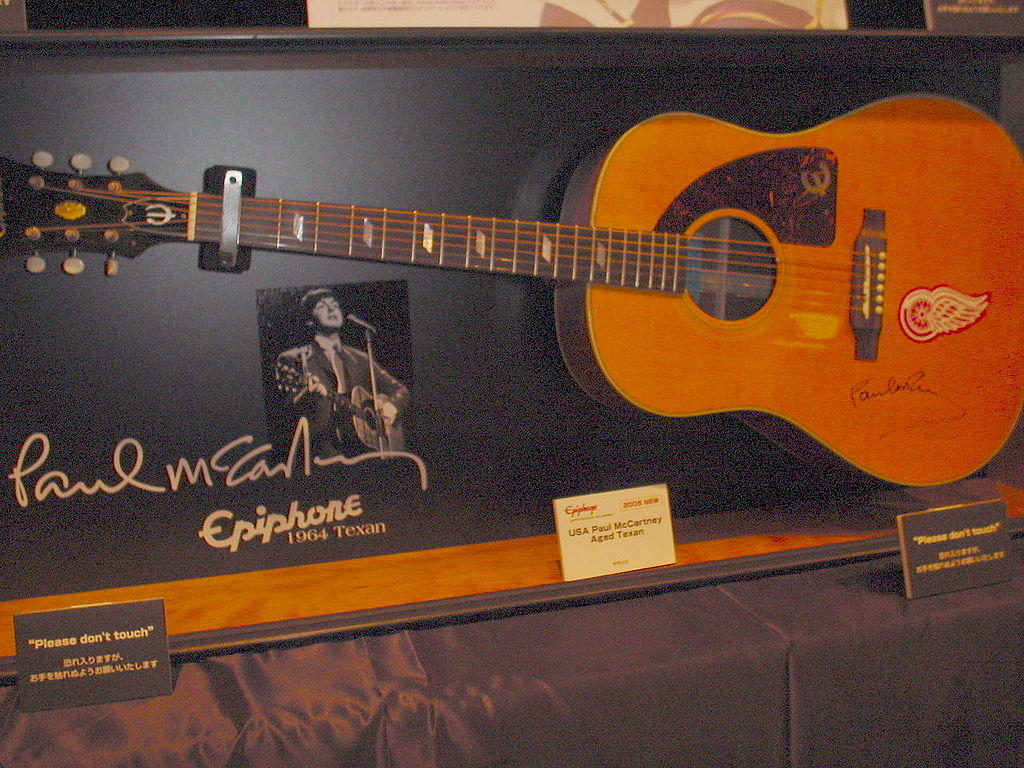
The majority of manufacturers do not offer all of their models in left-handed versions and when they do ("Hallelujah!" as Jeff Buckley—also an excellent guitarist—would say, as would Leonard Cohen), the model for lefties will only be available in one color and it will cost up to 25% more, not to mention that there won't be any other models in stock.
Nevertheless, we think you should remain positive, because there have been and will always be celebrity guitarists who were left-handed, like Kurt Cobain from Nirvana, Paul McCartney (the Beatles), and Jimi Hendrix.
Did you know that Jimi Hendrix learned to play by ear, first on a ukelele with only one string?
And With a Right-Handed Guitar?
Because the majority of guitars are for righties, a large number of lefties choose to learn how to play the guitar as righties.
Even if it isn't very natural and even if the positioning isn't always easy to understand, this is easily the most popular decision made by lefties.
In concrete terms, the action of the left hand doesn't generally pose any problems and it's with the right hand that hiccups arise: creating a rhythm with your right hand when you're left-handed isn't very easy and that's why so many lefties encounter difficulties with rhythm on their right hand.
But the issue of rhythm is there for everyone, and so whether you're a lefty or righty, the problem can be addressed by working on it regularly and diligently, for example by taking guitar lessons.
Among the guitarists who make the decision to play on a guitar made for righties, there's Mark Knopfler (formerly of Dire Straits) or even the blues guitarist Albert King.
The Reverse Guitar
With this solution, the lefty uses a guitar designed for righties to play like a lefty.
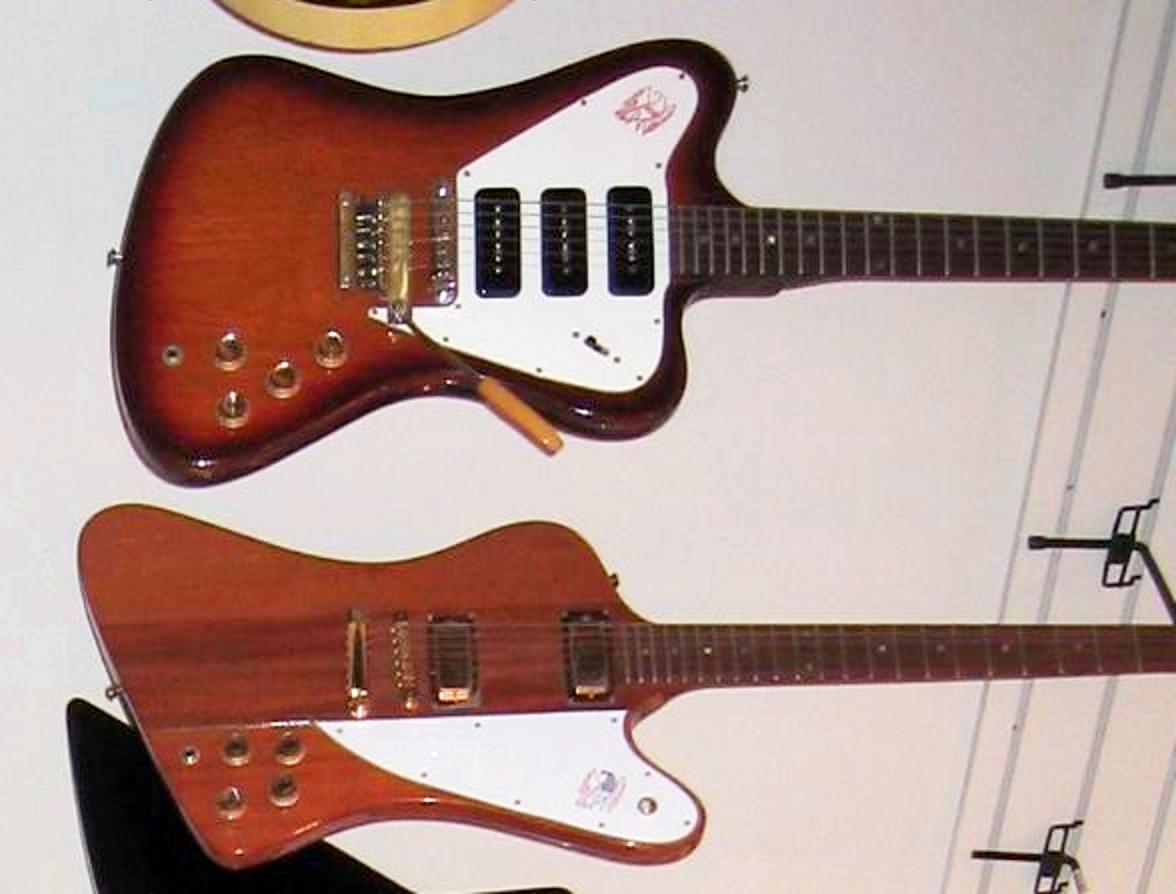
To be very clear, you're going to play backwards with the strings in the proper order, meaning that the deepest string, the E, will be found on top and not closest to you.
This guitarist's technique is being used more and more: the true advantage is that you can play like a true lefty and have the options of models of guitar made for right-handed guitarists.
Isn't that cool?
This compromise is a fascinating solution, but there's nevertheless a financial investment since you'll have to resize the bridge of the guitar and even have an expert change the support. Before you get to this point, don't be afraid to ask for advice from your guitar teacher (during your guitar lessons).
This is an opportunity to take advantage of your guitar lessons and pick up on more methods for learning the guitar!
Pay closest attention: if your guitar doesn't have a cutout, it will be difficult for you to reverse the strings because you won't be able to access the lowest frets on the neck, you'll be blocked from reaching anything beneath the fifteenth fret.
In reversing the strings on your guitar, you're going to find yourself with an arm that rubs against the knobs (the buttons that control volume and the effects) and the amp selector.
The best example of this technique was Jimi Hendrix with his famous Stratocaster for righties.
Is There Another Solution for Playing the Guitar as a Lefty?
One last solution, which might look strange and rather risky, still involves playing on a guitar for righties, while keeping the order of the strings as intended.
This will give you rather bizarre chord positions, which are totally reversed (the bass strings will be found on bottom), and your learning how to play the guitar runs the risk of being very difficult.
There are no educational methods for this approach.
Strangely enough, certain guitarists play this way, such as Bob Geldof or even Dick Dale, mister "Misirlou" from the film Pulp Fiction. Yes, we make your musical ear work!
One last solution is the classical guitar: if you're left-handed and you instinctively feel that you'll be more at ease playing left-handed, choose to begin with the classical guitar: unlike rock or folk guitars, most classical guitars are symmetrical.
All you have to do is change the order of the strings: remove the strings, order them from biggest to smallest, and reverse the order as you put them back on your guitar.
Discover different guitar lessons near me on Superprof.

You'll have them in the following order: Low E, A, D, G, B, High E.
In short, as you can see, there aren't any truly viable solutions for the left-handed guitarist: it's all a matter of feeling and will.
If you really want to learn how to play the guitar, you will always find a way to get there, nothing can stop your drive, your determination, and nothing can deter your passion. If you want personalized guidance as you build your skills, private guitar lessons can help you stay motivated and develop proper technique.
And you can even start improvising on the guitar!
What's important is that you're comfortable with your guitar.
That's why we recommend trying lots of guitars before you decide on one.
Meet with your favorite guitar salesperson, explain your situation, and try out some guitars.
Don't buy one on the Internet unless you've held in your hands!
Whatever happens, remember that you're not alone with your left-handed "problem": talk to a guitar teacher (during your guitar lessons), to a guitar retailer, do your research online on specialized sites, and choose the method that suits you best.
Find guitar lessons online here on Superprof.
Summarize with AI:
Did you like this article? Leave a rating!


 Loading...