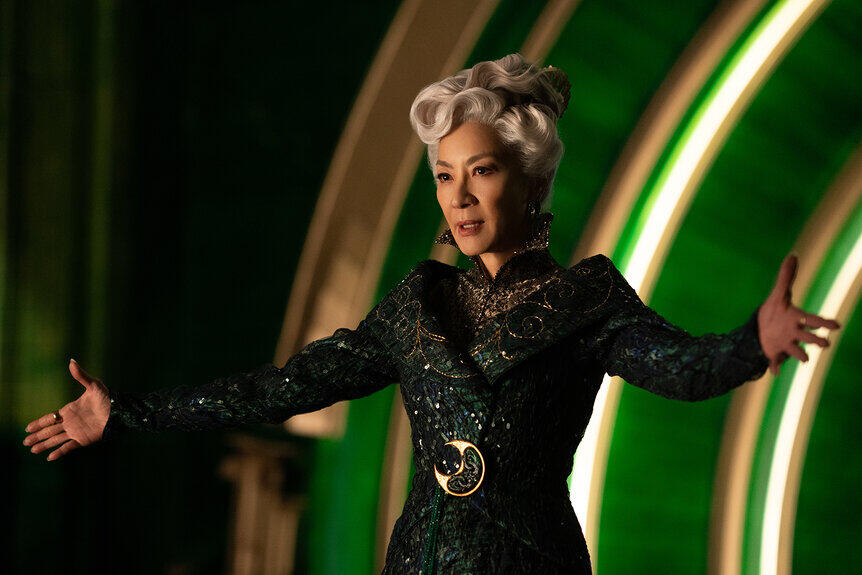

Madame Morrible is one of the central characters in Wicked, appearing in the novel, musical, and film. At first glance, her role in the story might seem simple, but there’s more to her character and her actions than what first meets the eye. After all, the story of Wicked aims to make us question people’s appearances and motives. This article explores Madame Morrible’s character, what she represents, and what lessons we can learn from her story.



The Creation of Madame Morrible
In L. Frank Baum’s original novels about Oz, which were published between 1900 and 1920, Madame Morrible doesn’t exist. She was created by Gregory Maguire in his 1995 novel Wicked: The Life and Times of the Wicked Witch of the West, which uses the setting created in Baum’s Oz. Maguire had to create a character who could be used as a catalyst for all the necessary events to align in the original tale, while linking the story he wanted to tell in Wicked. Her role was expanded from the book in the Broadway musical and again in the recent films.
Pfannee of Phan Hall's role was also expanded from the novel and stage play in the movie.
Gregory Maguire’s Novel
Morrible is more complex and morally ambiguous in Maguire’s novel, compared to her stage and film counterparts. Maguire gave all his characters lots of nuance, even the villains. In the adaptation process for stage and film, some of that depth is naturally lost.
She is part of the larger political system of Oz, which is described as unstable, hierarchical, and oppressive. She works closely with the Wizard’s government, aiming to centralize authority to the Wizard’s inner circle. She seeks to restrict the lives of Animals as part of the regime’s oppressive plans, as shown when she supports a demonstration featuring a caged lion cub in class.
At Shiz University, she serves as the headmistress of Crage Hall, where Elphaba and Glinda study.
She presents herself as a respected mentor figure at Shiz, admired by students who seek her approval. She takes a special interest in Elphaba, praising her rare magical ability and offering private instruction.
On the surface, it seems like a generous act, but Morrible’s intentions are entirely motivated by politics and power, not care. Morrible aims to get the Wizard’s approval, and therefore secure more power for herself. If she can harness Elphaba’s power and/or get Elphaba on their side, it’s sure to earn her lots of upward mobility.
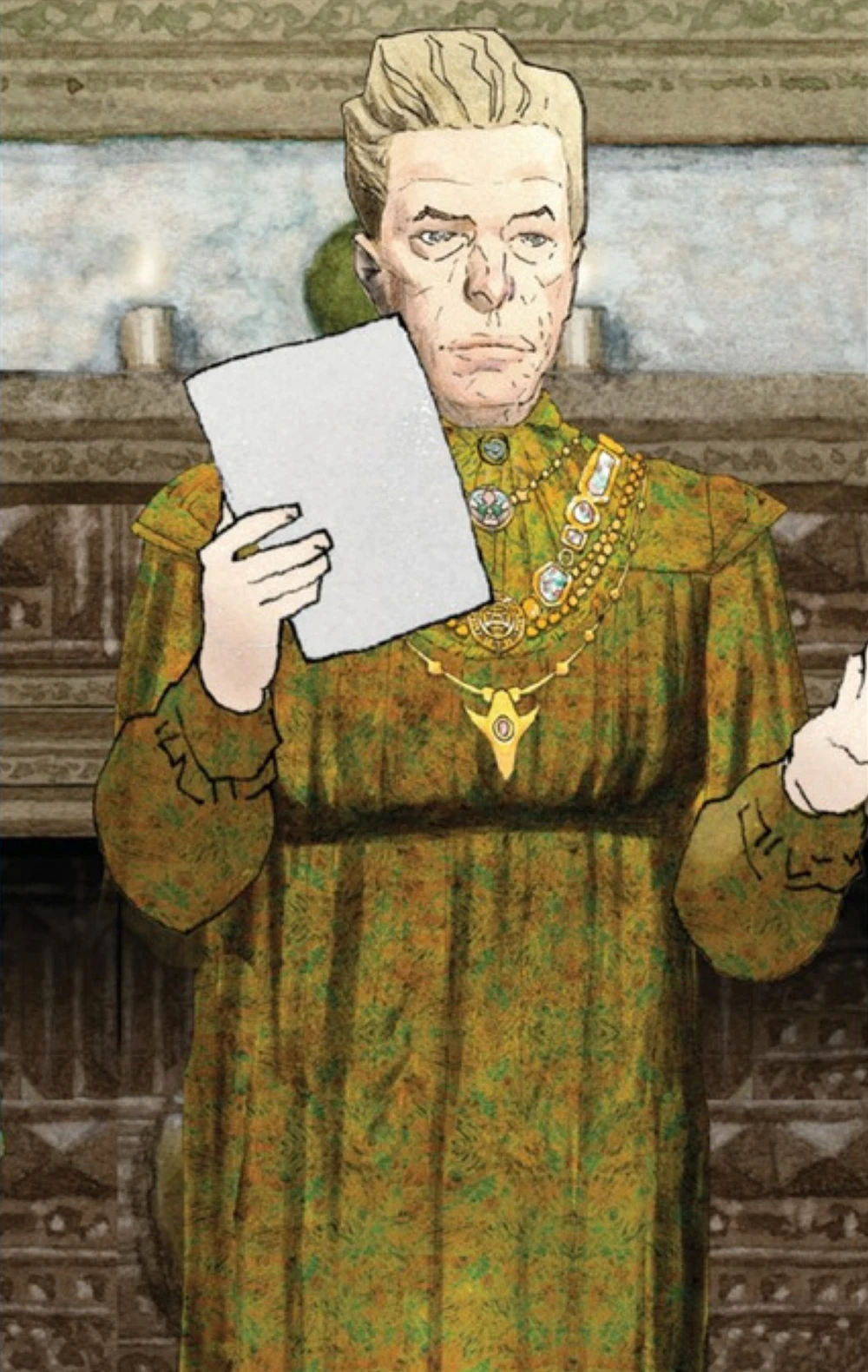
The novel hints at a deeper connection between Morrible and Elphaba’s origins. It suggests Morrible may have been present at Elphaba’s birth during the “Time Dragon” prophecy, raising questions about how long she has influenced Elphaba’s life leading up to her time at Shiz.
In the novel, Morrible dies quietly in bed, leaving Elphaba with a sense of unfinished business. The political and philosophical messaging in the book means Elphaba is robbed of a catharsis, because rarely do people in power face justice and consequences in real life.
Animals should be seen and not heard.
Madame Morrible (book)
Wicked Musical
In the stage adaptation, some of Morrible’s ambiguity is removed, making her a clearer antagonist. Her personality is exaggerated, fitting the theatrical nature of the production and removing a layer of concealment about her motives and true nature. Her link to the Wizard is made much more obvious to the audience.
She is the one who invites Elphaba to meet the Wizard in the Emerald City, pushing the young witch to get involved with the political system, intending to eventually use her as an agent of control over Oz.
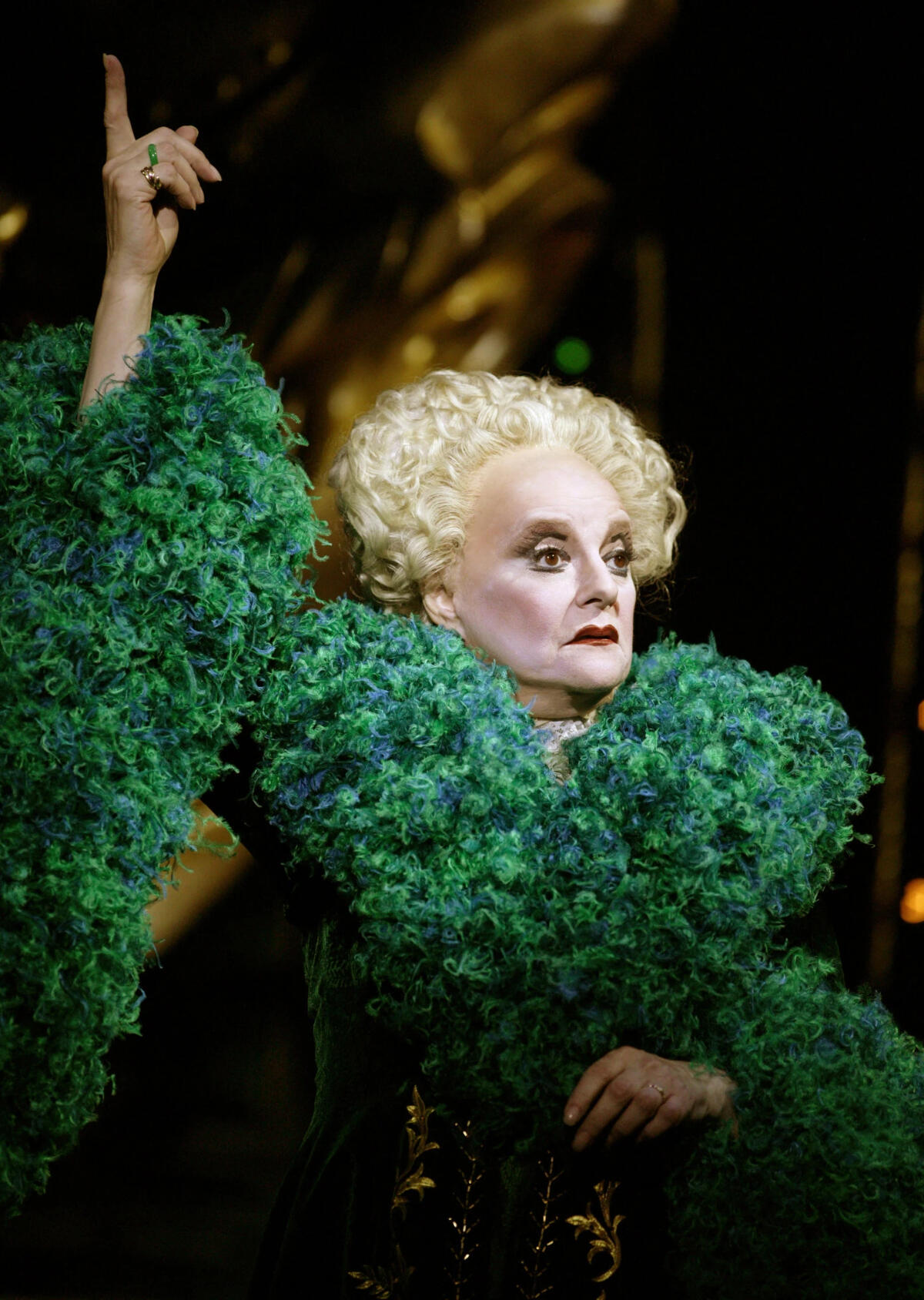
The biggest difference between the novel’s Morrible and the musical character is her magical ability. In the book, it’s not revealed just how much magic Morrible can conjure, remaining a mystery to the end. In the musical, we see her have command over the weather, which she uses to influence events from afar.
The most notable event is the creation of the tornado that picks up Dorothy’s house and brings it to Oz. This act ties her directly to the central conflict in The Wizard of Oz in a way the novel does not.
Morrible’s manipulation of Glinda is also made clearer in the play. She positions Glinda as a hero, the “Good Witch,” taking advantage of Glinda’s existing popularity and charm, as well as her penchant for people-pleasing. Morrible does this on purpose to create a higher contrast against Elphaba, once she was denounced as the “Wicked Witch.”
The musical also provides a more satisfying ending. After the fall of the Wizard, Glinda arrests Morrible, and we are left to assume she will be held accountable for her actions.
Wicked Movie
The film adaptation blends elements from both the book and the musical. Since it has a much longer runtime, the film could afford to add more nuance and veil her true intentions longer in the plot.
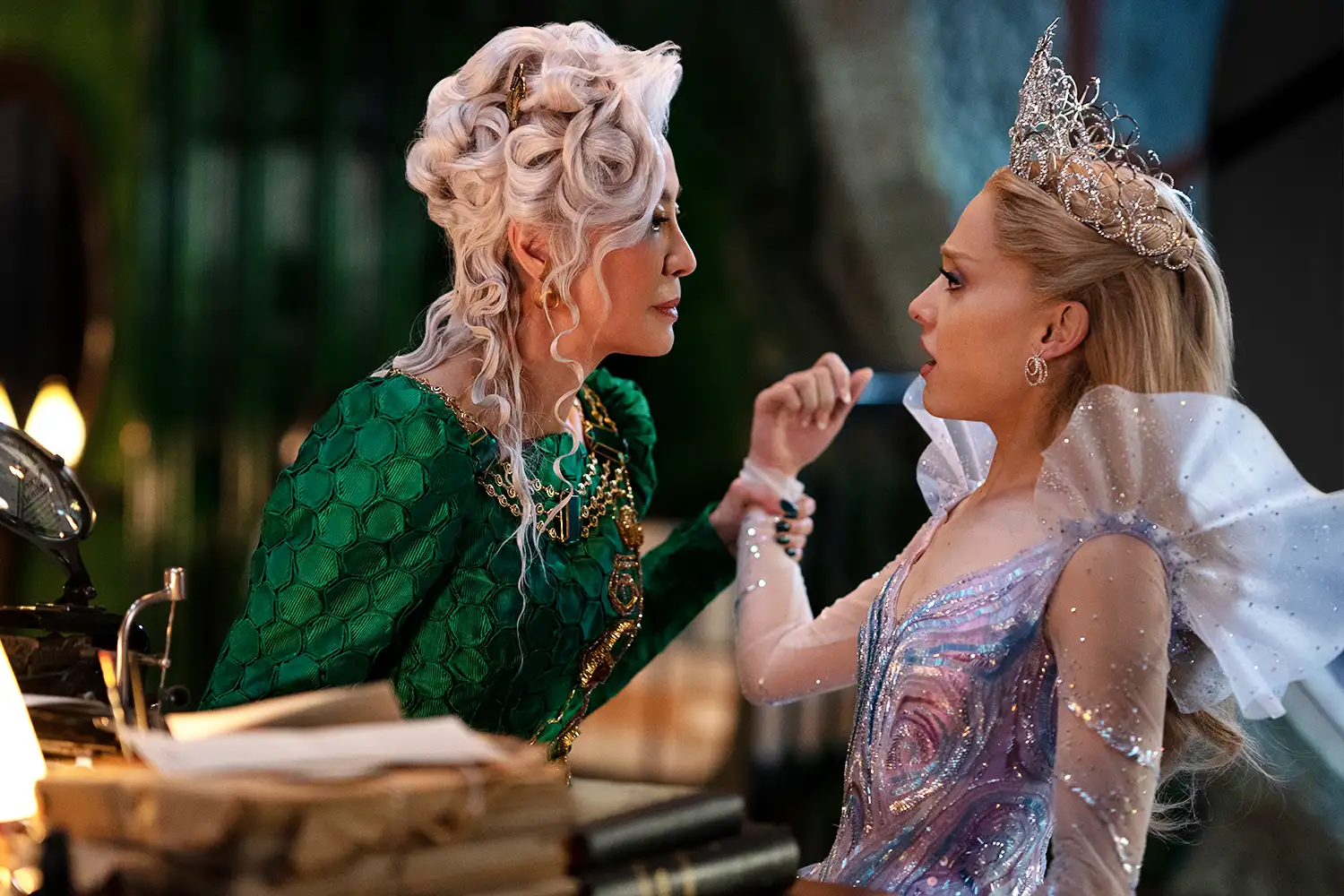
Michelle Yeoh’s portrayal adds more restraint and calm authority to the character compared to the stage version, which adds to the feeling of betrayal when Morrible’s true nature is revealed. We also see more of her interactions with the Wizard as one of his accomplices. We get the impression that the partnership is the result of years of strategizing and calculation on Morrible’s part, which aligns with her manipulative ability.
The storm scene is further developed to show that not only did Morrible cause the tornado, but she also intentionally used it to crush Nessarose and lure Elphaba out of hiding, highlighting what cruel depths she is willing to go to.
Madame Morrible’s Character Analysis
Madame Morrible is not entirely a simple villain, but she is also not a sympathetic figure. She represents the type of person who thrives within power systems that reward manipulation, even or especially, at the cost of other people’s well-being. She is a political operator, a manipulator, and a symbol of how power can twist itself into something dangerous.
She doesn’t challenge these power structures or desire change. Instead, she leans into the existing framework, strengthening it and making it more extreme. She believes in order and hierarchy without regard for their harm to others.
While her role and personality vary slightly between adaptations, the core of her purpose in the story remains.
Don't let her get away! This wicked witch.
Madame Morrible ('Wicked' movie trailer)
Personality and Traits
Morrible’s defining characteristic is her confidence. She speaks with certainty, even when she is wrong, and rarely raises her voice, which exudes a sense of real power. Her tone is formal, smooth, and often patronizing. Her presence commands every room she walks into, both due to her demeanor and her status.
She is also incredibly manipulative, often pushing people into thinking, feeling, and doing things without them ever noticing her influence. She uses praise, backhanded-compliments, promises, and vague encouragement with students to maintain her influence. Her suggestions are often framed as rare, can't-miss opportunities rather than a choice. She convinces Elphaba to meet the Wizard in the Emerald City, making it seem like a reward for her hard work, rather than a political trap.
Even after Glinda grows closer to Elphaba and Morrible becomes Elphaba's enemy, Morrible is still able to get Glinda in her clutch. Morrible shapes her into a public symbol of goodness, making it impossible for Glinda to support Elphaba or denounce Morrible and the Wizard. Glinda steps into this role willingly, since it matches her personality and goals. Morrible can recognize the opportunity and knows how to shape circumstances to make all the pieces fall into place.
Morrible’s worldview explains her confidence and her comfort with controlling others. It adds nuance to her character. She believes stability is essential for safety and order. The Wizard’s oppressive policies toward Animals do not disturb her; she sees them as necessary for the greater good. To her, dissent signals danger to stability, not a problem with the system. In her mind, it’s the people who need to adapt to the system, not the other way around.
She trusts her own judgment above all else. Her desire for more power stems from the belief that she is the person best suited to guide Oz. This certainty allows her to justify actions that are harmful, because she is convinced they serve a larger purpose.
Role in the Plot
Morrible’s manipulative nature means there are many ways she moves the plot forward that are easy to miss at first. She sets several major events in motion, sometimes intentionally, sometimes unintentionally. She’s not always present for the consequences, but her cleverness and forethought mean she usually knows what’s going on.
Recognizes Elphaba’s power and takes her under her wing at Shiz. Manipulates Elphaba to try to groom her to willfully work for the Wizard and Morrible. Sends Elphaba to the Wizard to try to get her to join their cause.
Elphaba’s morals were stronger than Morrible’s manipulation. She rejects the Wizard entirely, becoming an enemy of the state. It solidifies Elphaba’s resolve to fight against those who harm others and vow to help the Animals. If Morrible had never tried to set Elphaba up in the government, she may never have rebelled.
Morrible makes an announcement to all of Oz, calling Elphaba “wicked,” labeling her the “Wicked Witch of the West.”
Elphaba is branded as a danger, alienating her from all of Oz. She is pushed to develop her self-reliance, making her stronger against the Wizard’s plans. Her unfair stigmatization also pushes others like Glinda and Fiyero into action (even if it takes a while).
In the musical and film, Morrible summons the tornado to bring Dorothy’s house to Oz. In the film, she purposefully lands the house on Nessarose to trick Elphaba into revealing herself, hoping to capture her.
She galvanizes Elphaba’s resolve in her quest to overthrow the Wizard. But, it also makes Elphaba angry, drawing her into the events of the original story. In the novel, Elphaba is brought to her downfall for getting involved with Dorothy. In the film, the action ultimately leads to Morrible’s arrest.
Especially apparent in the novel, Morrible’s involvement in the government of the Emerald City is more behind-the-scenes and far-reaching than it first seems. She represents the quiet bureaucratic policies that shape everyday life and the impact of systems created by people who don’t truly have others’ well-being in mind. This type of person can also heavily influence public perception, making us question how much of what we think has been crafted by manipulative people.
The impacts of her actions and influence are not obvious because there are no dramatic actions drawing attention to the conflict. Instead Morrible’s influence slowly and quietly infiltrates everything through mundane policies and paperwork. This portrayal is more realistic and therefore unsettling. Maguire intended to show how harmful systems are usually powered by people and actions that seem unthreatening.
Madame Morrible acts as a catalyst for bigger events across the plot. She is motivated by seeking control and more power, believing her way would be the best for Oz. Without her, the events of Wicked would have unfolded differently, or even not at all.
Discover Prince Fiyero's importance in the plot of WIcked.
Notable Performances of Madame Morrible
Over the many years Wicked has been performed on stage, Madame Morrible has been portrayed by a wide range of actors. Each performer brings a different interpretation and artistic choices to the role, creating a slightly different experience.
On Broadway, performers tend to emphasize her theatrical presence with a firm voice, strong gestures, and even effective comedic timing. Morrible’s stage presence is usually larger-than-life, full of obvious confidence and command.
She starts out so likable ... by the end she's an absolute daughter of Satan and gets dragged off to prison. She goes crazy. She has always been a little crazy, and she's been covering it up because she wants power. She's power mad. And she ... is the brains behind everything.
Rue McClanahan - on her role as Madame Morrible as told to Playbill.com
However, other actresses choose to make Morrible more restrained and cold, making her more villainous. These portrayals have every world and movement feel deliberate and careful, without the comedy of the flamboyant version. This characterization makes Morrible feel more powerful and sinister.
Some of the most well-known performers who have played Madame Morrible in Wicked on Broadway include:
- Carole Shelley (2003-2005, 2007-2008)
- Rue McClanahan (2005-2006)
- Jayne Houdyshell (2006-2007, 2008-2009)
- Rondi Reed (2009-2010, 2017-2018)
- Kathy Fitzgerald (2010-2011, 2014-2015, 2016, 2021)
- Randy Danson (2011-2013)
- Carol Kane (2013-2014)
- Mary Testa (2014-2015)
- Michele Lee (2015-2016)
- Judy Kaye (2016, 2022)
- Sheryl Lee Ralph (2016-2017)
- Nancy Opel (2018-2020)
- Alexandra Billings (2020-2021, 2021-2022)
- Michele Pawk (2022-2024)
- Donna McKechnie (March 2024-March 2025)
- Natasha Yvette Williams (March 2025-Current)
In the movie, Michelle Yeoh plays the character in between the two extremes shown on stage. She is not a cartoonish villain or simply an unfeeling Emerald City bureaucrat. She is calm and polished, but also has moments of emotion that make her seem approachable. This is especially effective at making it believable that Morrible is a master manipulator and an expert in subtle planning.
What Madame Morrible always has in common in her portrayals is her core traits: confidence, belief in rigid order, and manipulation. These traits can be expressed in many ways, allowing the story to be a little more flexible. Like all the Wicked characters, Morrible contains a deep backstory and a unique way of thinking.
Summarize with AI:
Did you like this article? Leave a rating!

 Loading...