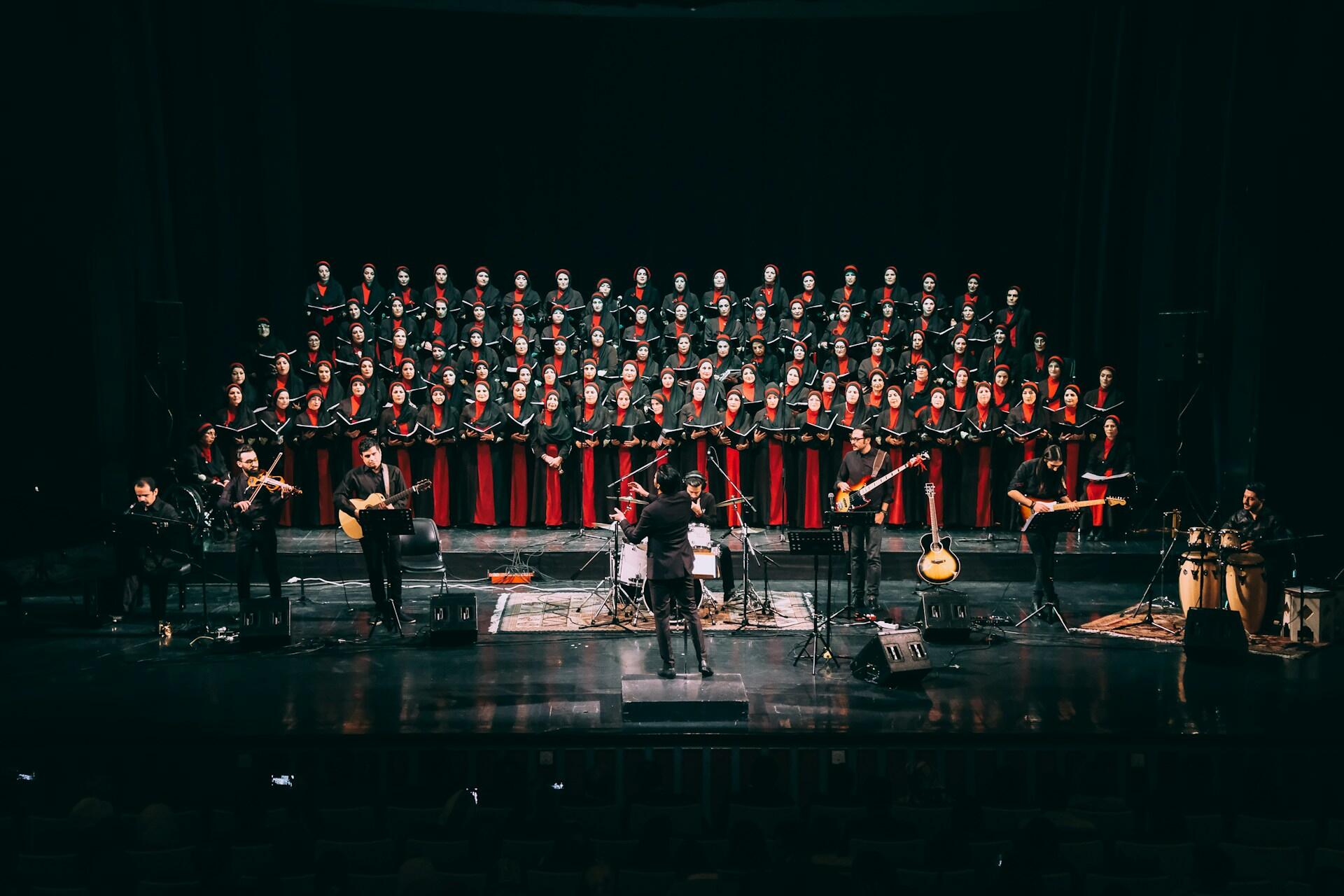

Middle school choir programs are part of many students’ formative education. Some schools have required singing classes, while others have elective music programs students can choose to join. For many students, choir or chorus may be their first time singing in a structured group. Choosing the right songs at this pivotal age can help build confidence in the classroom and beyond, improve vital vocal skills, and help students develop a lifelong love of music. Find out which songs are best for middle school choir classes and methods for making class fun and engaging.



Auditioning and Preparing for Middle School Choir
Middle school choir auditions are typically low-pressure. The goal of auditions is usually to understand their vocal range and place them in a section, not to bar them from joining. Teachers want to hear basic pitch matching, the ability to keep rhythm, and a willingness to sing in front of another person.
What to Prepare for Auditions: Teachers
Chorus and music teachers should give students a few weeks’ notice in advance about chorus auditions or tryouts. Students (and their parents) will likely need to know crucial information in advance, like:
- When and where practices are held
- The tardiness and absence policy
- What performance the group will be preparing for, and the date of the concert
Teachers can help students prepare by giving them an idea of what the audition will look like. Students, especially middle schoolers, might be too nervous or timid to audition; giving them some idea of what to expect can help them muster up the courage to put themselves out there.
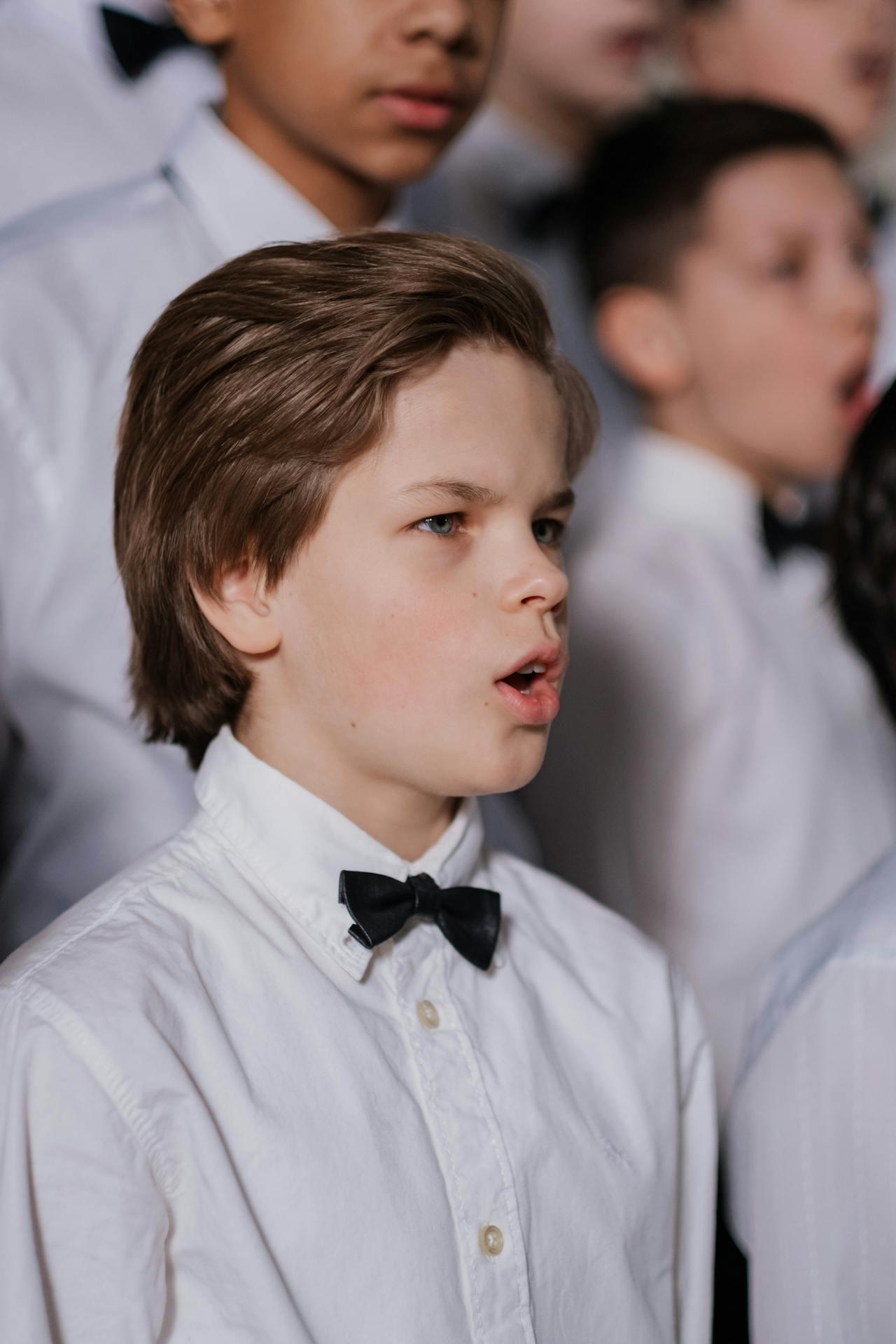
If possible, holding auditions during school hours is a way to get more students to audition, since it won’t require any extra shuttling around from parents or interfere with after-school plans.
Many teachers determine a specific song for choir auditions, since it’s not a professional or competitive group.
They might use a simple song like “Row, Row, Row Your Boat."
The purpose of the song is to evaluate a student’s rhythm and tone, and determine where they should be placed in the choir, not to compare or exclude students.
What to Prepare for an Audition: Students
As mentioned before, the audition song is usually assigned by the music director in advance. As an auditioning student, you can prepare simply by practicing the song a few times in the week or two leading up to tryouts. Since the auditions are low-pressure, you don’t need to be “perfect,” and in fact, you should not add frills to the song. Simply stick to the traditional notes, and practice more about delivery, pitch-adherence, and timing.
Work on becoming more comfortable singing in front of others, so you don’t feel so nervous when singing in front of the teacher.
Who Can Join Middle School Choir?
Typically, a school chorus or choir program will be open to all the students in a particular grade range who attend that school. Prior musical experience is generally not required. Most schools have basic music education built into the core elementary school curriculum anyway, so students usually have the most basic fundamentals.
As long as attending practice and rehearsals doesn’t interfere with any other commitments you have, you are likely welcome to join the program.
No. School choir programs are about education, not perfection. The students in the group learn more about singing and reading music for fun and learning. The skill level is generally mixed, with support available for both beginners and advanced singers.
Choosing the Right Songs for Middle School Choirs
Selecting fun, interesting, and educational songs for middle school choir requires skill and knowledge. Teachers must be aware of student development, both in a physiological sense and in a student body sense (a challenge for many teachers these days). They must also have clear classroom goals and teaching techniques that work for the specific group. Fitting the right songs into the mix provides students with engaging opportunities to learn more about music, develop their skills, and improve their confidence.

Understanding Vocal Ranges and Abilities
Middle school voices are typically in the midst of change, for both boys and girls. Of course, boys’ voices change more drastically, but all students experience some kind of vocal evolution in their teen years.
So, teachers should choose songs within a limited range to accommodate voices that are typically in the soprano and alto ranges (usually A3 to D5).
Unison and two-part songs work very well at this level. They allow students to focus on pitch, timing, and blending without complex harmonies. Many composers write specifically for middle school voices, including John Leavitt, Mary Donnelly, and Sally Albrecht.
Of course, teachers must take into consideration the specific voice range of their particular group (one of the reasons to hold auditions!).
Balancing Challenge and Enjoyment
Students need music that feels achievable, but offers a satisfying reward. Overly easy music can be dull and boring, leading students to feel disengaged or even frustrated. Music that is too complicated feels out-of-reach, which also causes disengagement and frustration.
An experienced composer will make arrangements that can be scaled up or down in difficulty to suit choirs with different experience levels.
A balanced program includes songs with clear melodies, varied rhythms, and interesting lyrics. Arrangements that tell a story or touch on themes like friendship, the seasons, or nature often hold student interest. Songs about hope, love, or everyday experiences are relatable without being too emotional.
It does not need to be perfect - or technically correct - to be magic.
Rasheed Ogunlaru, Author
Teaching Choir Songs in Middle School
An effective choir program includes instruction that goes beyond repetitively singing the same songs over and over. Teachers use activities like games and exercises to build skills and keep students engaged. These activities help students shake off nerves while allowing them to understand more about music and their own voices.
Games and Activities for Singing Instruction
Music teachers can use call-and-response exercises to help students learn pitch-matching. Rhythm clapping games improve timing and coordination as a group. Singing in rounds, such as “Frère Jacques,” teaches students how to pay attention to what they’re singing and how to avoid getting lost.
Movement-based activities involving hand motions or stepping can also help rhythm and breath control.
Middle schoolers can get bored easily. Keep them engaged by setting clear goals in class, varying the rehearsal material and structure, and making rehearsals interactive so students feel more comfortable and like part of a group.
Warm-up Exercises
The middle school choir warm up should be short and repetitive, a routine, so students can remember it when practicing on their own. Lip trills, humming, and scale patterns prepare the voice for more complex singing. Focusing on exercises that move stepwise rather than by leaps can protect developing voices.
Finding Sheet Music
Access to quality sheet music is vital for a choir’s success. Poor song selection or subpar arrangements can really make a class uninteresting. Teachers should look for arrangements specifically written for middle school, youth, or treble choirs to find songs with the appropriate skill level and vocal range.
There are many a composer in this sect who specialize in making choral arrangements for younger students to sing.
JW Pepper
Music K-8
Hal Leonard
Stanton’s
Alfred Music
Sheet Music Plus
Top Middle School Choir Songs
Middle school choir teachers usually have some creative freedom in which songs they choose for their students (provided they have the budget for licensing the songs). While branching out and choosing exciting arrangements is a great way to drive interest in the students, it’s important to include many classics as well. Not every song can be the most recent top hits! There is great value in teaching older and more traditional songs.
Here are some great ideas for music to choose for your middle school music program. Plus, many middle school songs are also great for high school choir! Simply choose a more complex arrangement of the song, if needed (and available).
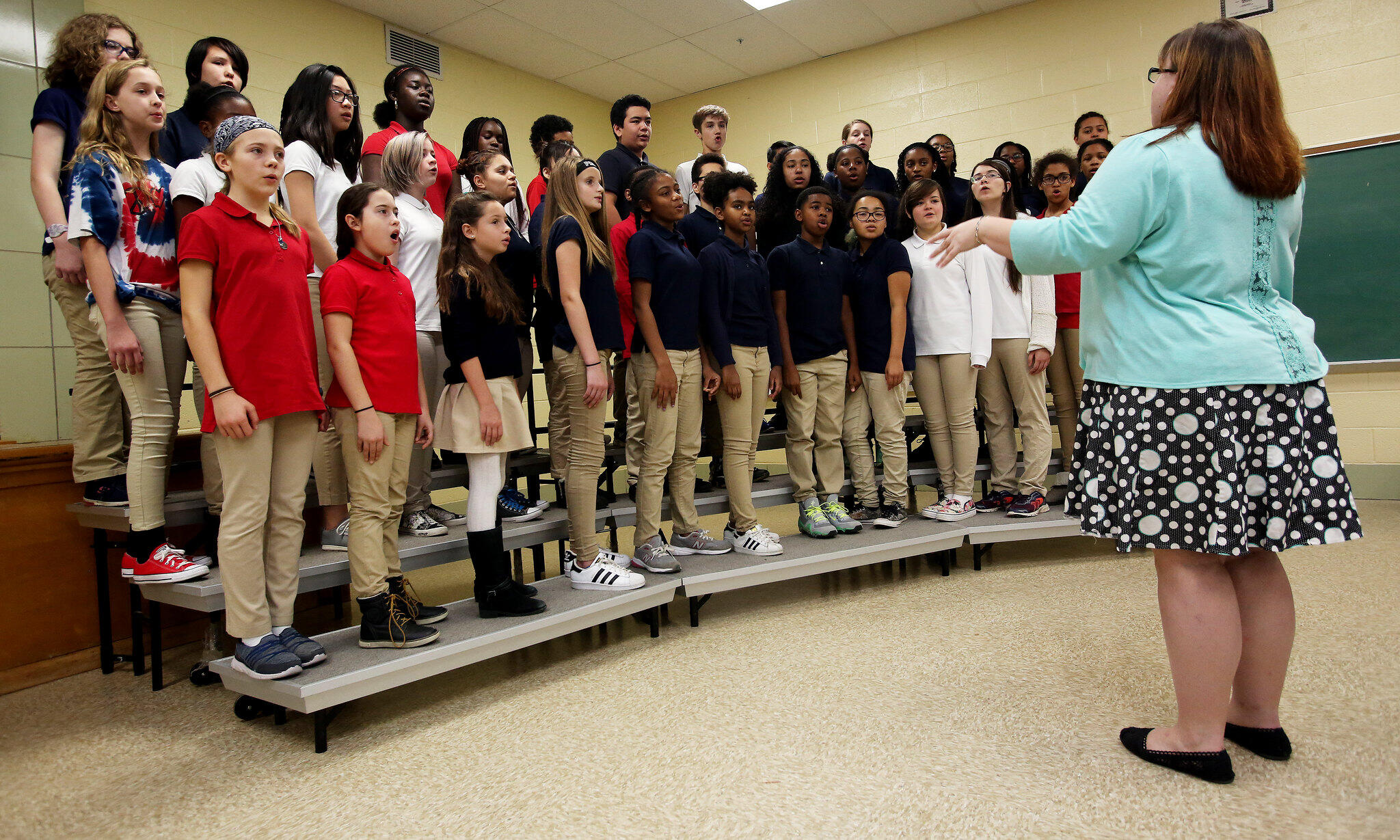
All-Time Favorite Songs
Classic safe bets are perfect to sprinkle in all year, but are especially effective for fall concerts since they are easier to learn. These classical and common songs allow students to begin learning how to read and sing music without asking too much at once. It helps prepare them for more difficult pieces in the second half of the year. Plus, students and audiences generally love these classics!
- “Dona Nobis Pacem” by Bach
- “Simple Gifts”
- "Gloria in excelsis Deo"
- “Alleluia” by Saint Augustine, arr. Elaine Hagenberg
- "Alleluia" by Mozart, arr. Leavitt
- “Lean On Me” by Bill Withers
- “America the Beautiful”
- “The Water is Wide” by Cecil Sharp
- “Song of the River” arr. Mark Patterson
- "How Can I Stop Singing My Song?" by Cynthia Gray
- "Welcome!" arr. Audrey Snyder
- “The Moon” by Andy Beck
- “Sing Me A Song Of A Lad That Is Gone” arr. by Sherri Porterfield
- “Canon” by Mozart
- “The Rainbow Connection” by Paul Williams & Kenneth Ascher
Words make you think. Music makes you feel. A song makes you feel a thought.
E.Y. Harburg, American lyricist and librettist
Modern Classics
There are many composers today who write music suitable for choirs, or who write specifically for choirs. The music isn’t pop, and they aren’t old enough to be long-time classics, but they’re favorites among choir singers. Look for a modern composer, like Eric Whitacre, Samuel Barber, Morten Lauridsen, Moses Hogan, Z Randall Stroope, Frank La Rocca, Reena Esmail, Jim Papoulis, Jacob Narverud, Caroline Shaw, Roger Emerson, and Florence Price to find a plethora of choices.
Some of their top choir songs (and others) include:
- “Journey the Night” by Lisa Longe
- “Songs For the People” by Jacob Narverud
- “Glow” by Eric Whitacre
- "Happiness" by Roger Emerson
- “New Beginnings” by Jim Papoulis
- “Canto 'e Libertad” by Diana Saez and Suzette Ortiz
- “TaReKiTa” by Reena Esmail
- "Human" by Christina Perri, arr. Audrey Snyder
- “Windflowers” by Richard Ewer, lyricist Christina Rossetti
- “Sing Unto the Sky” by Karen Marrolli
- "Rockstar" by Roger Emerson
- "Cindy" arr. Neil A. Johnson
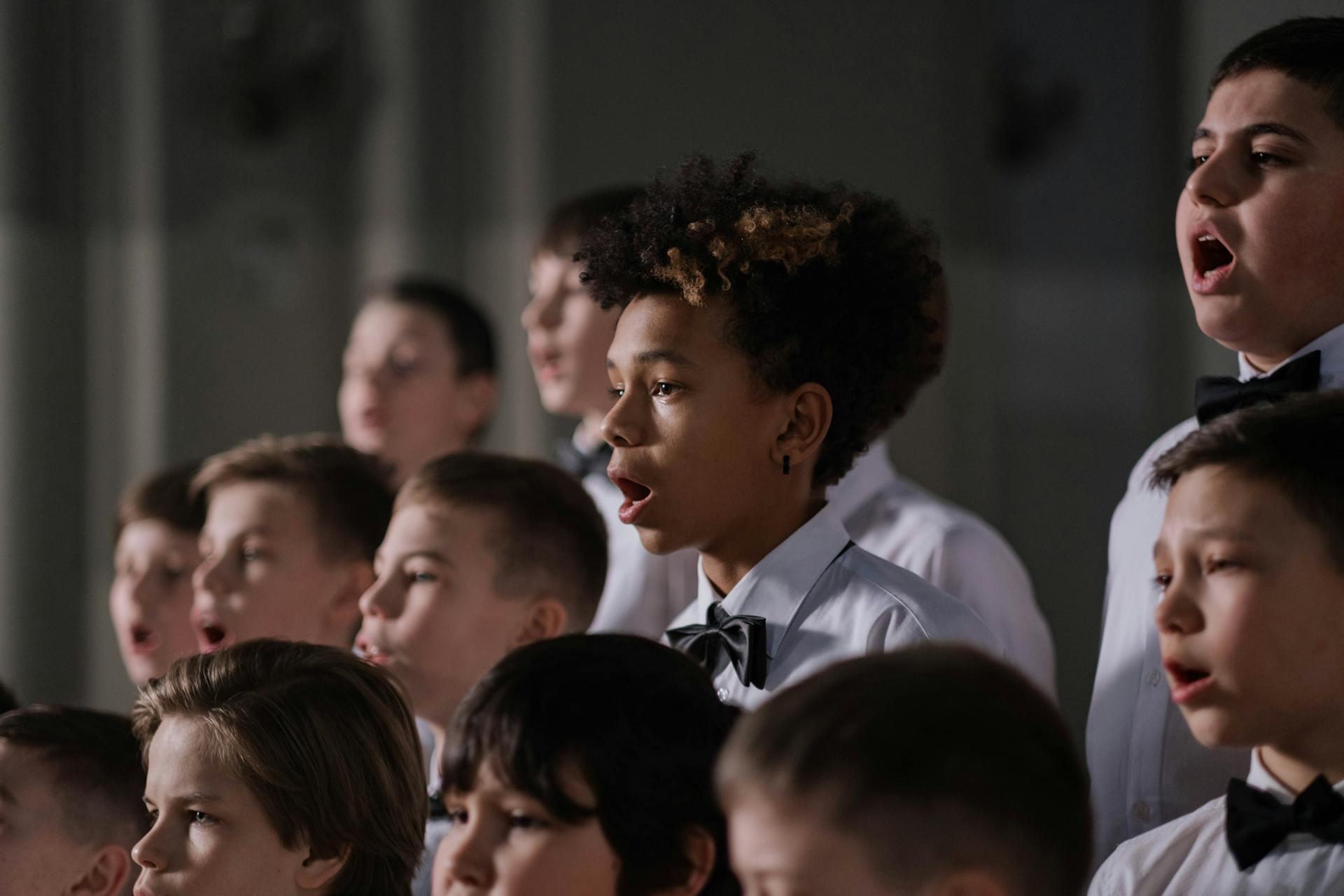
Pop Songs
Modern and contemporary songs are a great way to excite both students and audiences. Pop songs can teach students more about music that they care about in their everyday lives. A healthy mix of contemporary and vintage pop is a surefire way to bring some life to your choral group. Here are some interesting pop songs for middle school choir to incorporate into your program.
- “Dancing Through Life” from Wicked, by Stephen Schwartz, arr. By Roger Emerson
- “Espresso, Please” Sabrina Carpenter highlights, arr. by Alan Billingsley
- "Fly Me to the Moon" by Frank Sinatra, arr. Roger Emerson
- "Bubbly" by Colbie Caillat, arr. Roger Emerson
- "Dynamite" by BTS, arr. Audrey Snyder
- "Better Together" from Descendants 2: Wicked World, arr. Audrey Snyder
- "Africa” by Toto, arr. by Roger Emerson
- “Taylor Swift: Eras (Choral Medley)” arr. by Mark Brymer
- “Here Comes the Sun” by The Beatles, arr. by Matt Podd and Adam Podd
- "Birds of a Feather" by Billie Eilish, arr. Mark Brymer
- "Golden" from KPop Demon Hunters, arr. Roger Emerson
- "Sing" by Pentatonix, arr. Audrey Snyder
- “How Far I’ll Go” from Moana by Lin-Manuel Miranda, arr. by Ed Lojeski
- "I See the Light" from Tangled, arr. by Mac Huff
- "Cups" from Pitch Perfect, arr. Roger Emerson
- "Mean" by Taylor Swift, arr. Roger Emerson
- "Pure Imagination" from Willy Wonka and the Chocolate Factory, arr. Audrey Snyder
- "Rise Up" by Andra Day, arr. Audrey Snyder
Songs for Each Season
One of the best ways to decide which songs to do is to focus on when the performance will take place. Most schools have three main performances per year: the fall concert, the winter or holiday concert, and the spring concert. Summer is usually left out since school is not in session, but some programs may run over the summer as well. It can also be uplifting to include summer-hopeful songs in a spring concert, beckoning in the sunny months (especially if you’re located in a colder region).
Autumn
Easier songs are best for the first major performance, which takes place early in the school year (unless you’re working with seasoned choral singers). These simpler songs allow the choir students to learn quickly, gaining knowledge, practice, experience, and confidence. They’ll be better prepared to start practicing the winter songs after the fall concert is over. Autumn concerts can include spooky Halloween songs, autumnal holiday songs, traditional songs, fall harvest songs, and cozy songs. If your concert wants to include patriotic elements for Patriot Day and Veterans Day, there are also many arrangements to choose from.
- “The Lion King (Medley)” by Elton John, arr. by Mark Brymer
- “Coco (Choral Highlights)” by Mac Huff
- “Ghostbusters” by Ray Parker, Jr., arr. by Tom Anderson
- "September" by Earth, Wind & Fire, arr. Roger Emerson
- “Fall Leaves” by Tigerlilly Holyoak and Penny Rodriguez
- “Something Told the Wild Geese” by Douglas E. Wagner
- “Spooky Scary Skeletons” by Andrew Gold, arr. by Roger Emerson
- “The Lights of Diwali” by Lois Brownsey and Marti Lunn Lantz
- “A Respectable Bird” by Suzy Johnson
- “In Noctem” by Nicholas Hooper/, arr. by Andy Beck
- “Joyful Thanksgiving” by Jill Gallina
- “I Put a Spell on You” from Hocus Pocus, by Bette Midler and Jay Hawkins, arr. by Jacob Narverud
- “We Honor You” by Roger Emerson
- “La Llorona” arr. by Jon Washburn
Winter
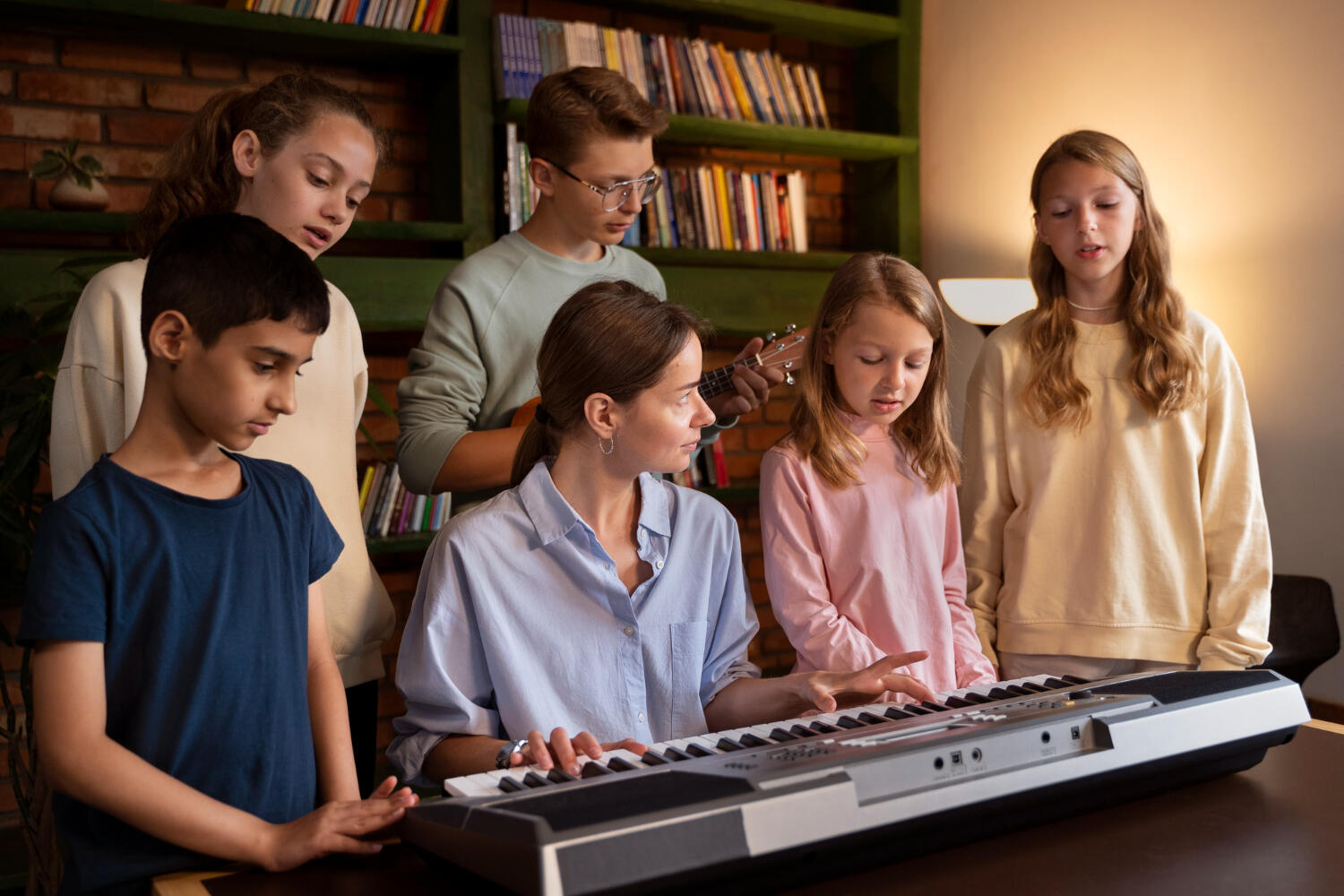
The winter or holiday concert at most schools usually takes place right before Christmas break. It’s the perfect opportunity for holiday and seasonal songs. By this time, singers have more experience learning and collaborating in their music, so they can take on a few more difficult pieces. Winter concerts often include Christmas songs, Hanukkah songs, Kwanzaa songs, other winter holidays, traditional or Yule songs, songs about snow and the end of the year, and New Year’s songs. Many winter and Christmas songs are usually included in church choirs as well.
Look for composer Victor C. Johnson for more Kwanzaa features, which can be harder to find if you're not familiar.
- “A Very Merry Christmas” by Pinkzebra
- “Santa Claus Is Comin’ to Town” in the style of Mariah Carey, by J. Fred Coots, arr. Tim Hayden
- “Silent Night”
- "Kachi" arr. Randall Snyder
- "Our Winter Wonderland" by Audrey Snyder
- "White Fields in Winter" by Ruth Morris Gray
- "In The Stillness of Winter" by Victor C. Johnson
- "Ding Dong! Merrily on High" arr. Ruth Morris Gray
- “Holiday Jazz!” by Kirby Shaw and John Jacobson
- “Wonderful Christmastime” by Paul McCartney, arr. Alan Billingsley
- “The Holly and the Ivy” arr. Benjamin David Knoedler
- “Joy to the World”
- “Light the Menorah” by Marti Lunn Lantz and Lois Brownsey
- “We Wish You a Merry Christmas/Christmas Is Here” arr. Masa Fukuda
- "Winter" by H.P. Nichols, arr. Greg Gilpin
- "Winter Wind" by Brandon Williams
- “Kwanzaa Song” by Cheryl Reeves
- “God Rest Ye Merry Gentlemen”
- “Winter’s Frost” by Marti Lunn Lantz and Lois Brownsey
- “Let It Go” from Frozen, by Robert Lopez, Kristen Anderson-Lopez, arr. by Mac Huff
- “O Holy Night”
- "Winter's Waking" by Amy F. Bernon
- "Winter Wisps" by Tyler Arcari
- "Umoja Tunaimba" by Victor C. Johnson
- "Gaudete!" by Ruth Morris Gray
Spring
Spring concerts usually surround graduation season, creating a perfect opportunity to include songs about change, new adventures, friendship, and courage. It also usually coincides with holidays like Easter, Memorial Day, Earth Day, Cinco de Mayo, and Mother’s Day. By this time, choir students are more experienced with learning music, so they are ready for even more complex arrangements. However, including a few easygoing selections is a good way to ensure they aren’t overwhelmed.
- “America the Beautiful” by Katharine Lee Bates, Samuel A. Ward, arr. by Joseph M. Martin and David Angerman
- “God Bless America” by Irving Berlin, arr. by Keith Christopher
- “This Is Me” from The Greatest Showman, by Pasek & Paul, arr. Mac Huff
- "Stand By Me" by Ben E. King, arr. Audrey Snyder
- "They Say It's Spring" by Blossom Dearie, arr. Greg Jasperse
- “Defying Gravity” from Wicked, arr. by Emily Crocker
- “Always Remember (Irish Blessing)” arr. by Julie Wheeler
- “Meet Me in the Afterglow” by Kate Crellin
- "Come Lovely Spring" by Franz Joseph Haydn, arr. Shaw
- "High Hopes" by Panic! At The Disco, arr. Audrey Snyder
- "Imagine Spring" John Johnson and Audrey Snyder
- "Welcome, Spring" by Andy Beck
- “Turn Turn Turn (To Everything There Is a Season)” by Pete Seeger, arr. by Roger Emerson
- “La Bamba” by Ritchie Valens, arr. by Mark Brymer
- “Here Comes the Sun” by The Beatles, arr. by Alan Billingsley
- “Love Never Leaves” by Jacob Narverud
- At The Spring Dawn" by Andrea Ramsey
- "O Love" by George Matheson, arr. Elaine Hagenberg
Summer
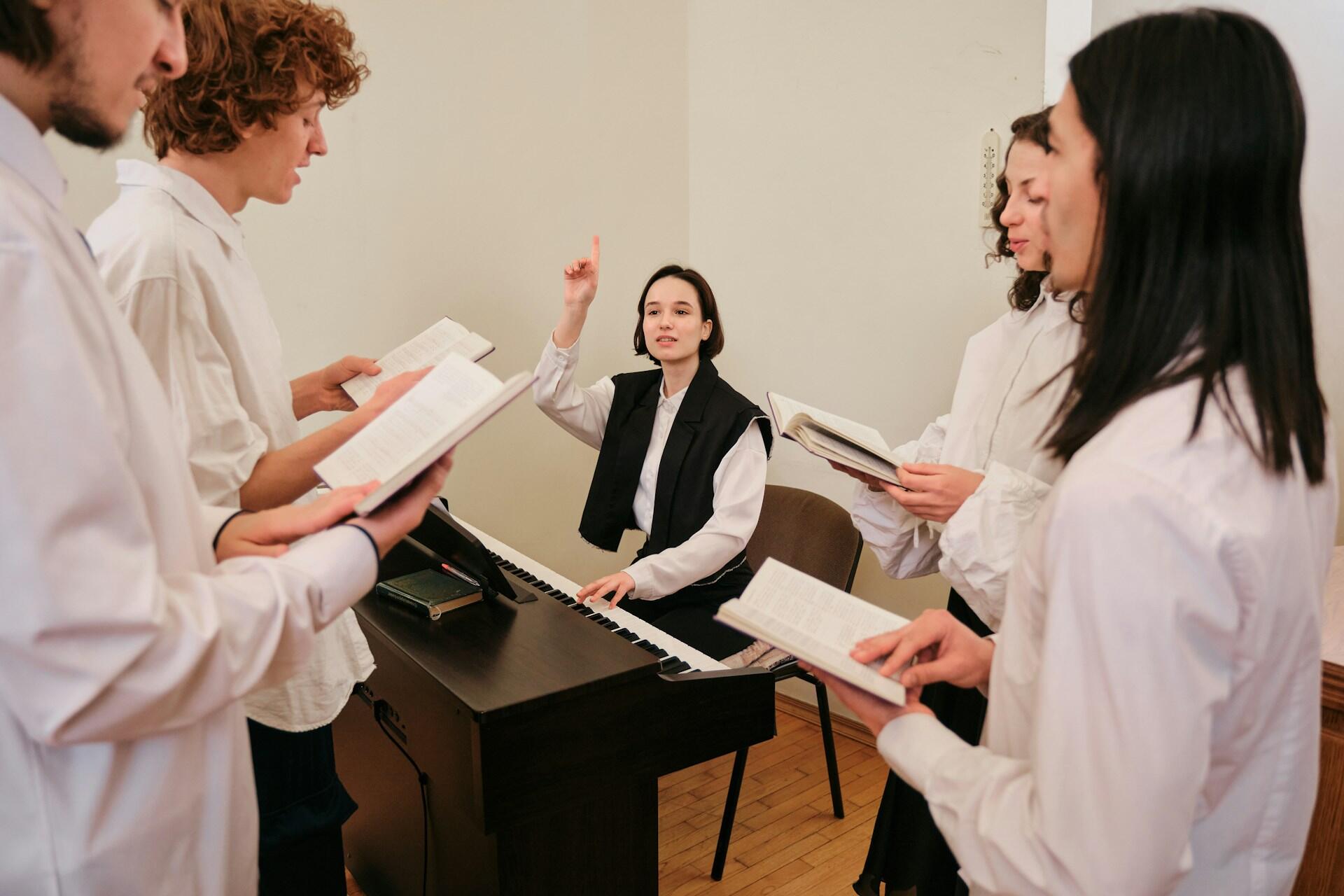
Though an unusual time of year for typical school concerts, summer programs will still need material for students to practice! Around this time of year, the songs can be more relaxed, reflecting a more carefree summer vibe. Holidays at this time include Father’s Day, Juneteenth, and Independence Day. Songs can also reflect patriotic themes for the 4th of July. It’s a great time to test experimental pieces for future performances.
- “Stand in that River” by Moira Smiley
- “Yonder Come Day” arr. by Judith Cook Tucker
- “Feel Good” by Tyson & Scott, arr. by Barbara Baker
- “Kaval Sviri” by Peter Liondev
- “Route 66” by Bobby Troup, arr. by Kirby Shaw
- “Walking on Sunshine” by Kimberly Rew, arr. by Mac Huff
- “Don’t Worry Be Happy” by Bobby McFerrin, arr. by Richard Salt
- “Fields of Gold” by Sting, arr. by Craig McLeish
- “The Star-Spangled Banner”
- “Soda Pop” from KPop Demon Hunters, arr. by Roger Emerson
- “In Summer” from Frozen, arr. by Alan Billingsley
- “I’m On My Way” arr. by Anthony Trecek-King
- “Be The Change” by Laura Farnell
Middle school chorus is an exciting time for students who love to sing, since they can start taking on more complex pieces compared to elementary school songs. For teachers, learning how to help develop young voices without straining them and helping students with changing voices learn how to cope is of utmost importance. There are so many songs to choose from that can engage students and make them excited to attend choir class.
Summarize with AI:
Did you like this article? Leave a rating!

 Loading...