
There are many paths leading to the top of Mount Fuji, but there is only one summit – move.
Morihei Ueshiba, Japanese martial artist
Believed to be around 10,000 years old in its current form, Japan's Mount Fuji's story actually began with volcanic formations dating back nearly 2.6 million years.¹ Japan's most famous volcano and the country's highest mountain is a popular destination for tourists. Still, it's also a sacred and artistic symbol. Let's explore why it remains such an iconic location.
Key Takeaways
- Mount Fuji is the highest mountain in Japan, standing at 12,388 feet, and is believed to have formed in its current shape around 10,000 years ago. However, its volcanic origins date back roughly 2.6 million years.2
- The mountain is an active stratovolcano that last erupted in 1707, and scientists continue to monitor seismic activity due to its location near major cities like Tokyo.3
- Mount Fuji's crater size measures approximately 1,640 feet wide and 820 feet deep, reflecting its explosive geological history.8
- Beyond geology, Mount Fuji is a sacred spiritual site linked to Shinto and Buddhist traditions. It remains a powerful symbol of Japanese culture and artistic inspiration.1
- Climbing Mount Fuji has been a tradition since the 7th century, and today thousands of visitors climb the volcano each year during the official July to September season.11


Where Is Mount Fuji in Japan? Location and Geography
Mount Fuji is located on Japan's largest island, Honshu.6 It's about 62 miles southwest of Tokyo. You'll find it between Shizuoka and Yamanashi prefectures.
Height: 12,388 ft
Location: Honshu Island, between Shizuoka and Yamanashi Prefectures
Status: Active stratovolcano
Last eruption: 1707 (Hoei eruption)
Crater size: Approximately 1,640 feet wide and 820 feet deep
UNESCO status: World Heritage Site (2013)
Highest mountain in Japan
The Geological Formation of Mount Fuji
Mount Fuji was formed over millions of years by volcanic eruptions.8 This created the layer stratovolcano we can see today. The current mountain is the result of overlapping volcanoes.
Mount Fuji is made up of several overlapping volcanoes:
- Komitake Volcan: The oldest base layer
- Kofuji (Old Fuji): Formed around 100,000 years ago
- Shinfuji (Young Fuji): Created the current cone-shaped mountain
The modern Mount Fuji structure formed roughly 10,000 years ago, though volcanic activity began millions of years earlier.
Historic Eruptions and Their Impact
Having experience numerous eruptions throughout its history, both Mount Fuji and the surrounding region (which offers many things to do) are products of volcanic activity. Early eruptions created lava flows, altered landscapes, and contributed to the formation of lakes and valleys. The 1707 Hoei eruption is the most significant recorded event, with ash spreading across Edo (now Tokyo).8

~2.6 million years ago
Volcanic activity begins
The geological foundations of Mount Fuji began forming through volcanic activity in the region, creating the base layers that would later shape the mountain.
~100,000
Formation of Old Fuji (Kofuji)
A large volcanic structure known as Old Fuji forms, serving as the mountain's base before later eruptions reshape it.
~10,000
Modern Mount Fuji (Shinfuji) forms
The symmetrical cone-shaped volcano is recognized today through successive eruptions and lava flows.
7th century
Mount Fuji becomes a sacred religious site
Mount Fuji begins attracting pilgrims and religious worshippers, becoming associated with Shinto and Buddhist traditions.¹
864 CE
Jōgan eruption
A significant eruption produces large lava flows that divide Lake Senoumi into what are now Saiko and Shojiko lakes.
800-1083 CE
Multiple eruptions during the Heian period
Sixteen recorded eruptions occur, shaping the mountain's structure and surrounding landscape.
1707
The Great Hoei eruption
Mount Fuji's most recent eruption creates new volcanic vents and spreads ash across Edo (modern Tokyo). The eruption forms the Hoei crater on the southeastern slope.
2011
Increased seismic monitoring following earthquake activity
Following major earthquakes in Japan, scientists increase monitoring efforts to assess potential volcanic activity.
2013
UNESCO World Heritage designation
Mount Fuji is recognized as "Fujisan, sacred place and source of artistic inspiration," highlights its cultural and spiritual importance.
- 864 CE – Jōgan eruption created lava flows and new lakes
- Multiple eruptions during the Heian period (800–1083 CE)
- 1707 – Hoei eruption created new vents and spread ash across Edo (Tokyo)
- Despite being active, Mount Fuji has remained dormant for more than 300 years.
Mount Fuji Crater Size, Height, and Key Mount Fuji Facts
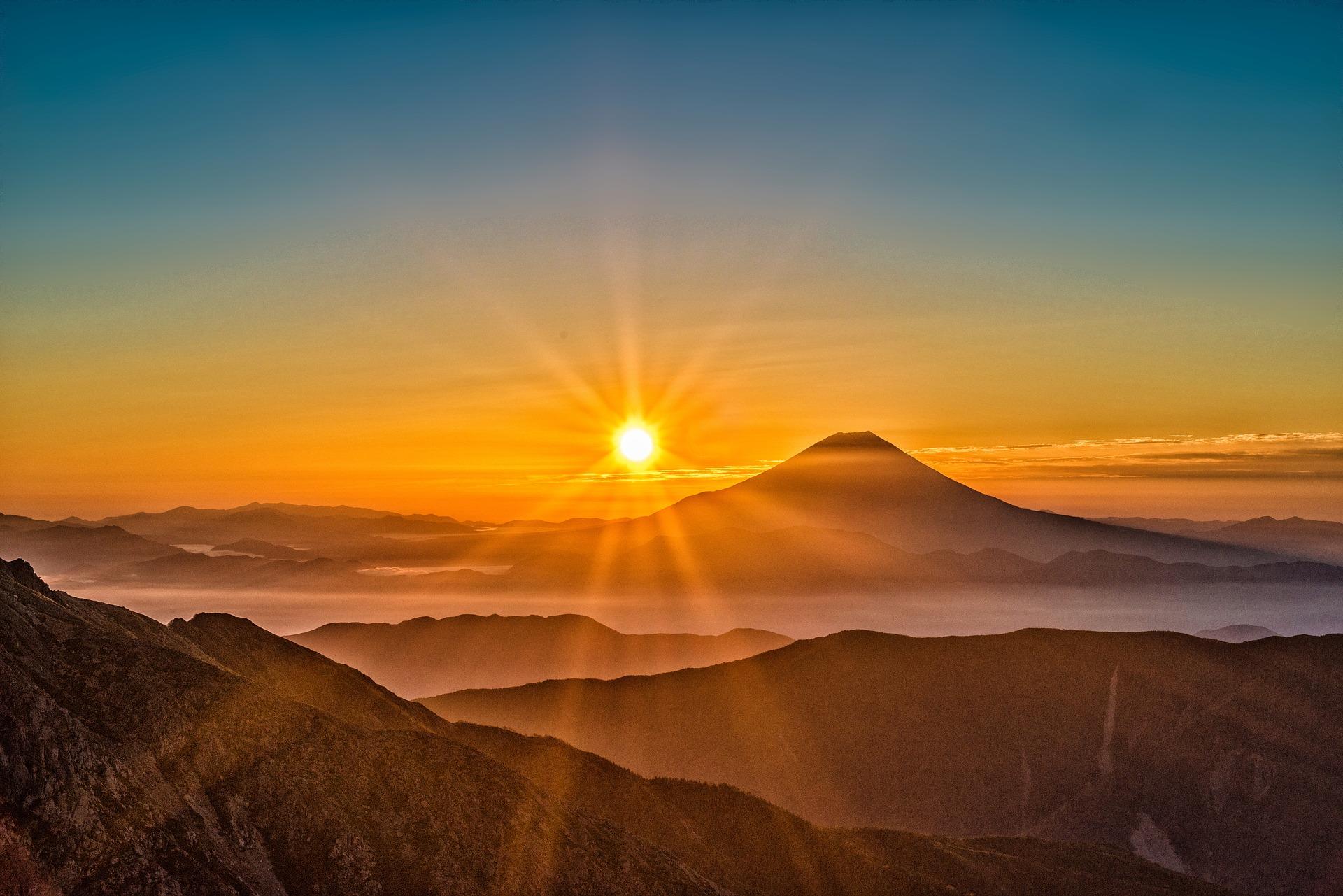
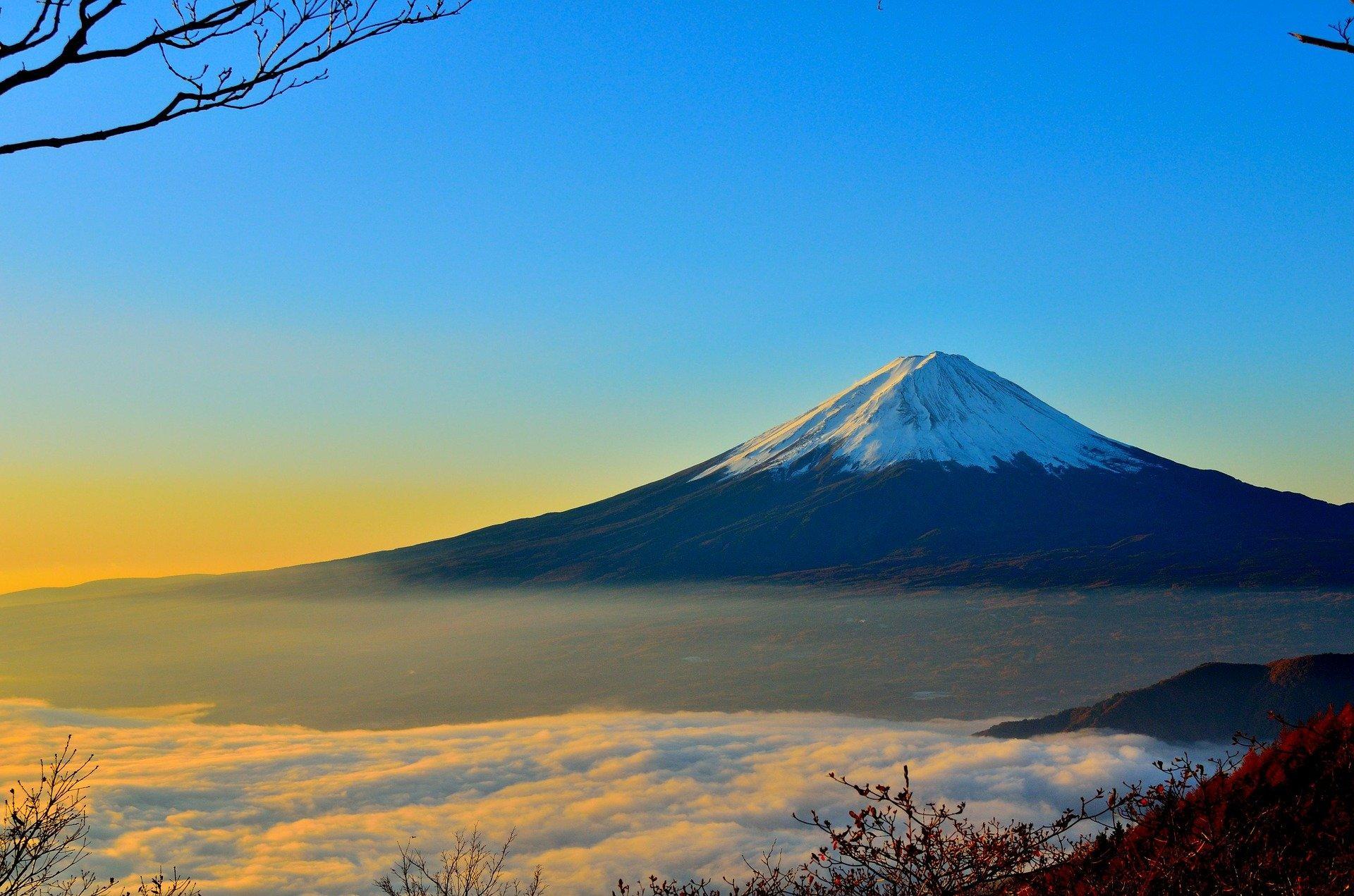
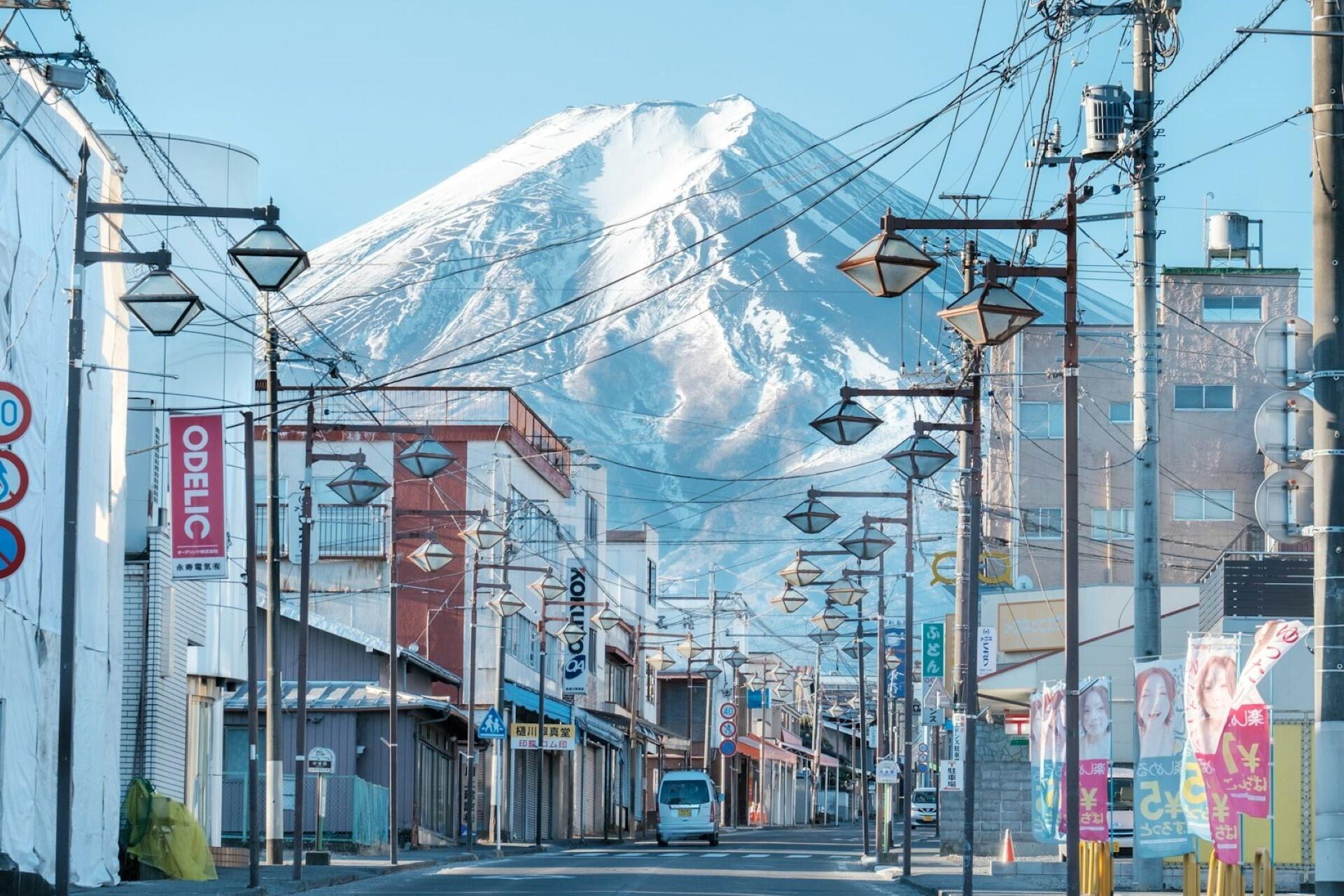
Mount Fuji is 12,388 feet tall. It's the highest mountain in Japan and one of the most iconic natural landmarks, which is why so many people plan trips to it. The crater is approximately 1,640 feet wide and 820 feet deep. Its snow-capped summit and near-perfect cone shape make it one of the most recognized volcanoes in the world.
Between 200,000 to 300,000 people climb to the top of Mount Fuji each year.
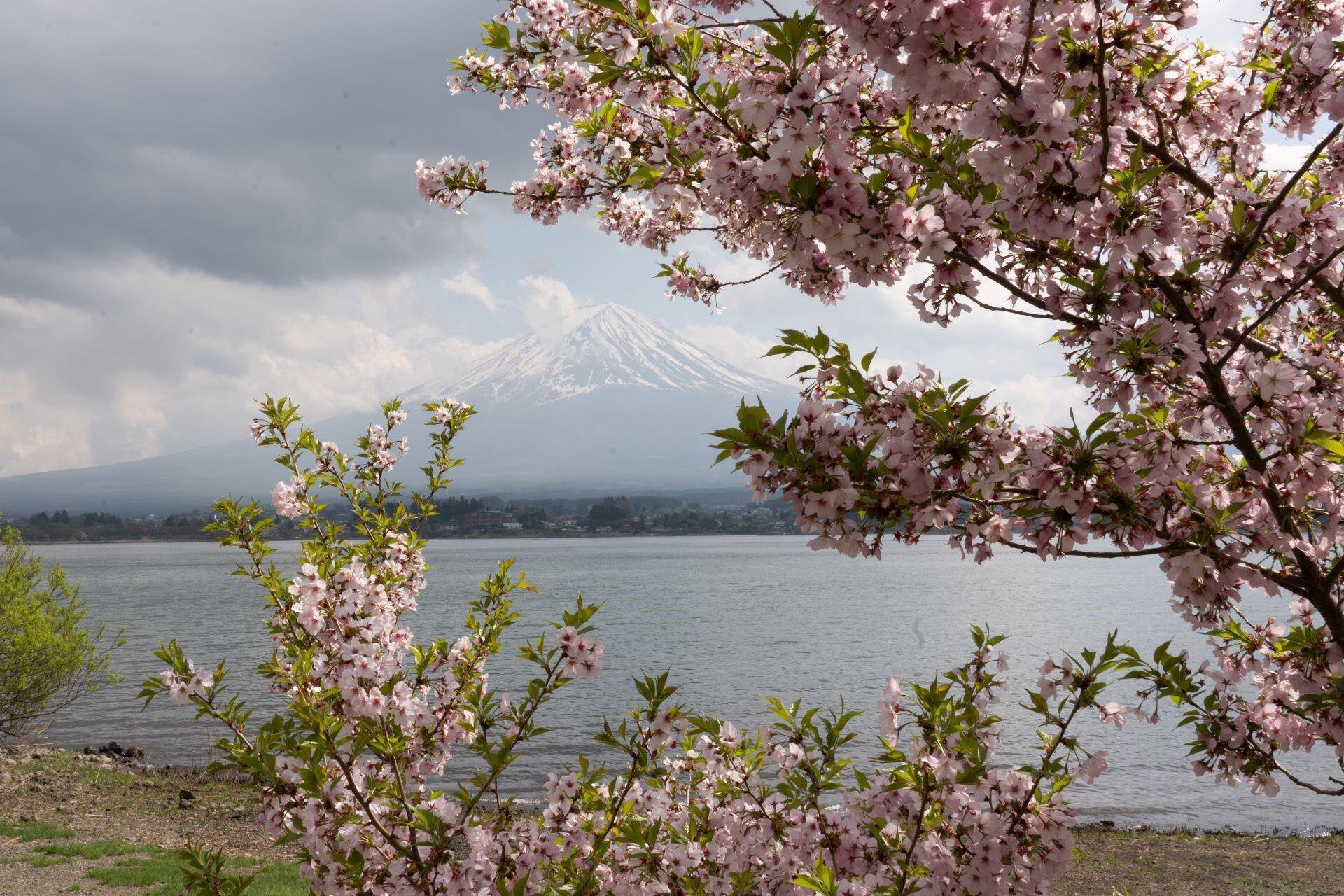
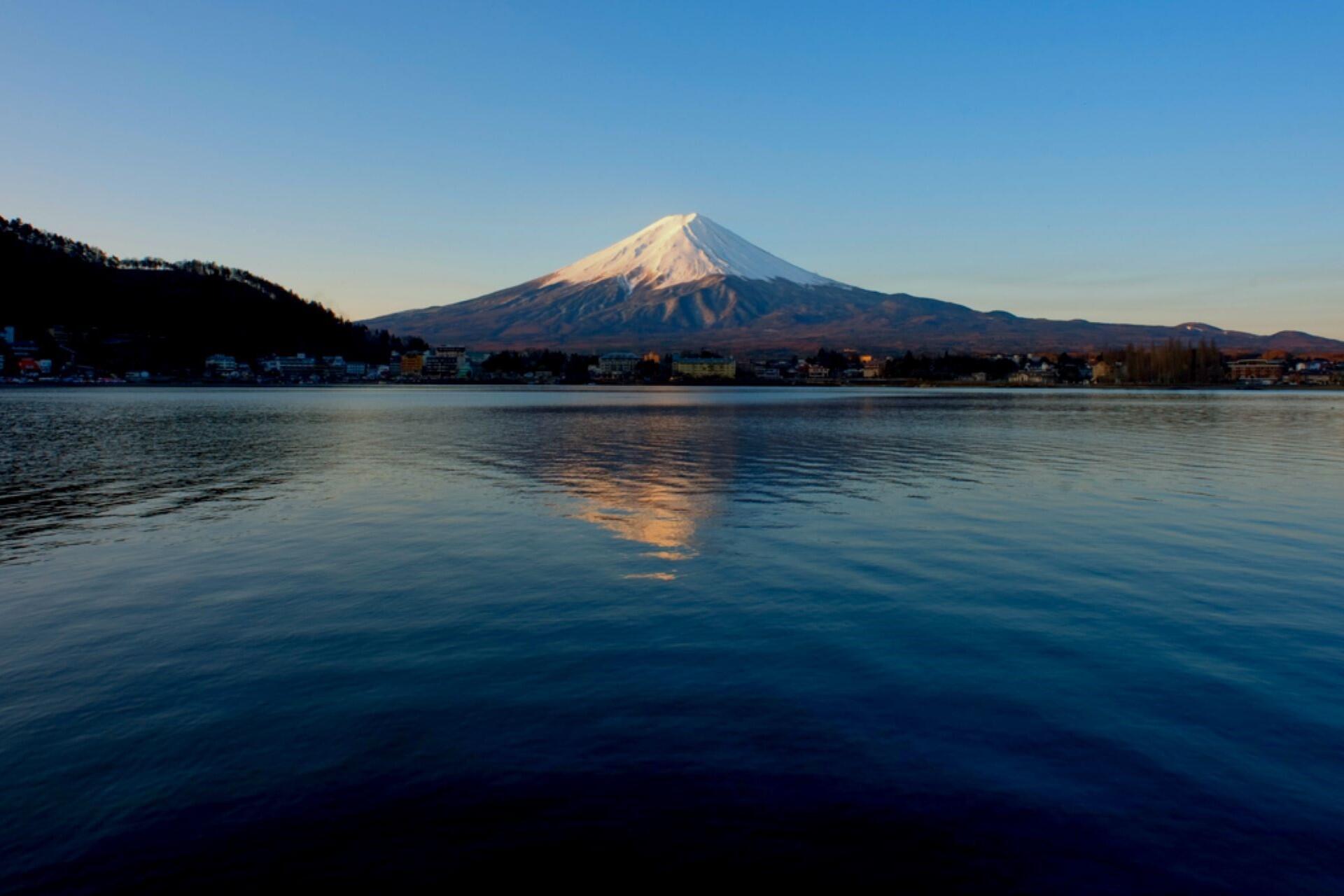
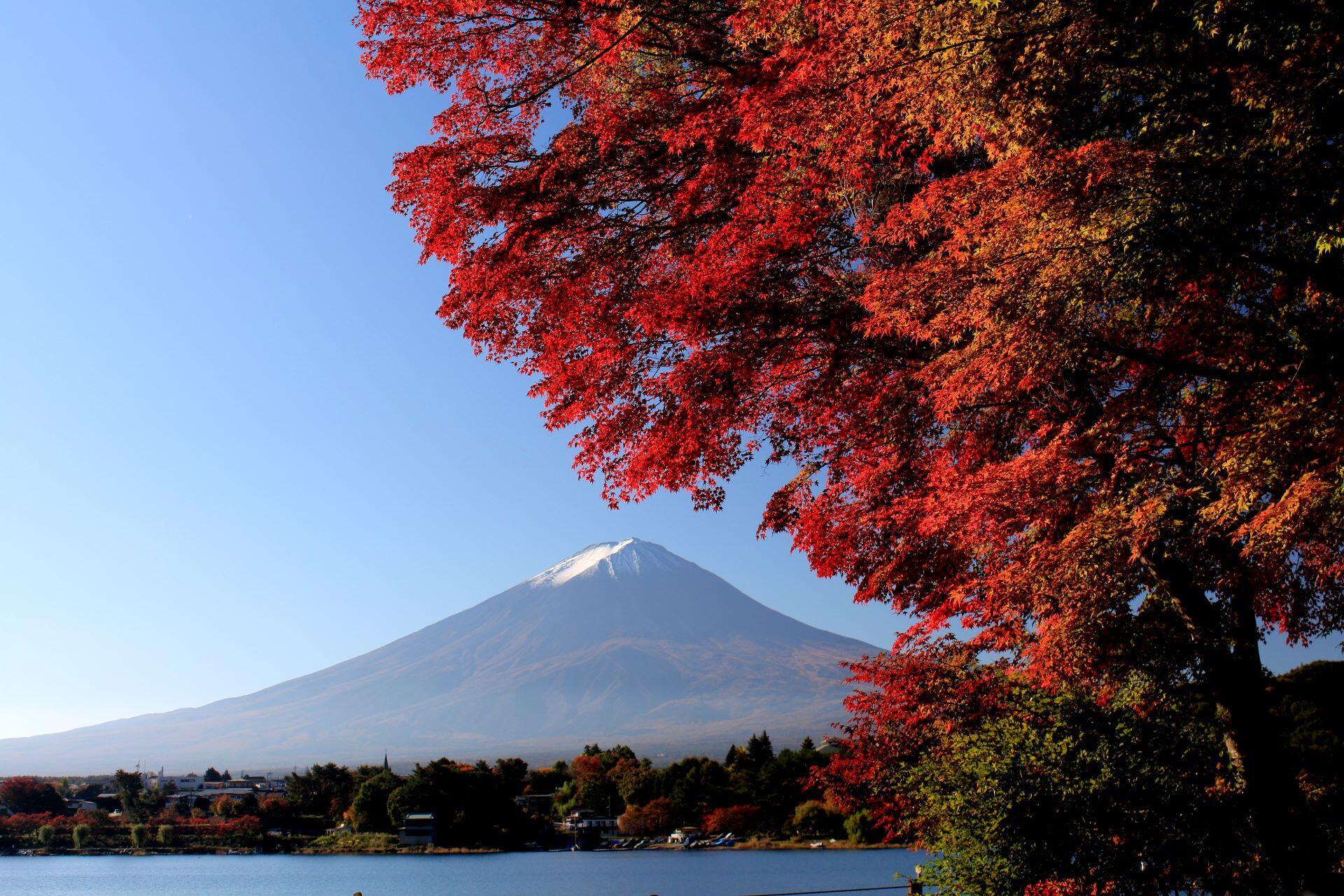
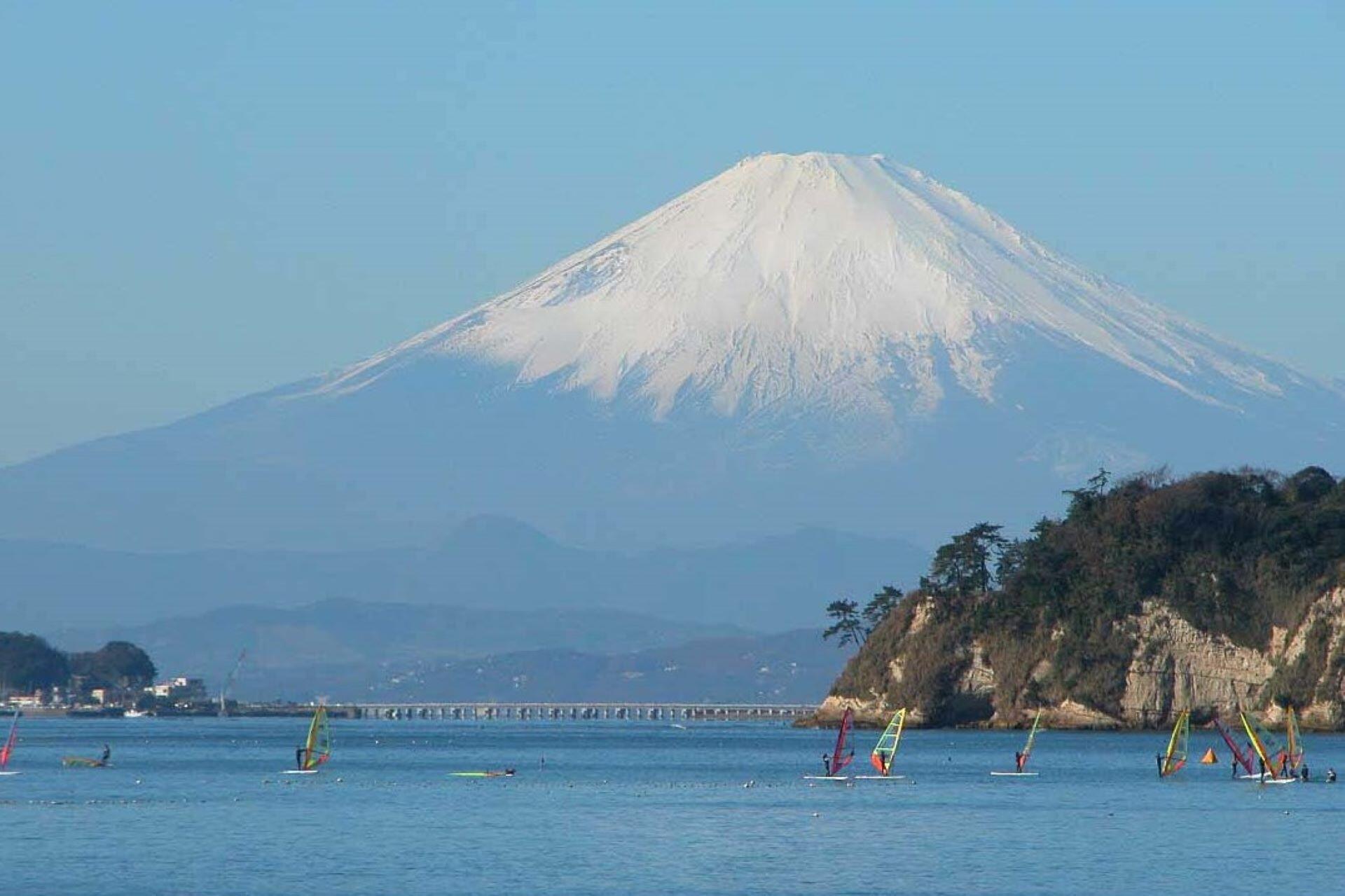
Mount Fuji Across Seasons and Landscapes
Mount Fuji in Japanese Culture and Religion
A wise man will climb Mt. Fuji once, a fool will climb Mt. Fuji twice.
Common Japanese Sayings
Mount Fuji has long been considered a sacred mountain in Japanese spirituality. Shinto beliefs and Buddhist pilgrimage traditions are part of its story. It's associated with Konohanasakuya-hime the goddess believed to protect Mount Fuji and symbolize natural beauty and renewal. In addition to religious devotion, it's also inspired artistic expression and Japanese national identity.
Mount Fuji is deeply connected to Japanese spirituality:
- Considered the home of the goddess Konohanasakuya-hime
- Central to both Shinto and Buddhist traditions
- Pilgrimage routes have existed for centuries
- Many shrines and sacred sites surround the mountain
Mount Fuji symbolizes harmony between nature, religion, and national identity in Japan.
Climbing Mount Fuji: A Timeless Tradition
Many visitors chose to climb Mount Fuji. Some do it for religious or spiritual reasons, using the climb as a pilgrimage and time for self-reflection. Tourists also like to climb Mount Fuji, with thousands of hikers reaching the summit every year, and feeling the cost of the trip was worth it.
Official climbing season: Early July to early September
Average climb time: 5–10 hours ascent, 3–5 hours descent
Main trails: Yoshida, Subashiri, Gotemba, Fujinomiya
Popular tradition: Climbing overnight to watch sunrise (“Goraikō”)
Annual climbers: Over 200,000 hikers during peak season
Is Mount Fuji Active? Understanding Its Volcanic Status
While it's called Mount Fuji, you'll have noticed that we've continually mentioned that it's a volcano. Mount Fuji is classified as an active stratovolcano.12 It hasn't erupted since 1707, but scientists do continue to monitor the volcano closely since it's located near densely populated areas like Tokyo. It shows no signs of imminent eruption; seismic activity indicates it's volcanically active.
References
- “Fujisan, Sacred Place and Source of Artistic Inspiration.” UNESCO World Heritage Centre, https://whc.unesco.org/en/list/1418/. Accessed 8 Feb. 2026.
- “Fujisan – Value and Significance.” Fujisan World Heritage Council, https://www.fujisan-3776.jp/en/value/index.html. Accessed 8 Feb. 2026.
- “Fujisan – Features.” Fujisan World Heritage Council, https://www.fujisan-whc.jp/en/about/feature.html. Accessed 8 Feb. 2026.
- “Gotemba.” Encyclopaedia Britannica, https://www.britannica.com/place/Gotemba. Accessed 8 Feb. 2026.
- “Last Eruption of Mount Fuji.” National Geographic Education, https://education.nationalgeographic.org/resource/last-eruption-mount-fuji/. Accessed 8 Feb. 2026.
- “Mount Fuji.” Encyclopaedia Britannica, https://www.britannica.com/place/Mount-Fuji. Accessed 8 Feb. 2026.
- “Mount Fuji – Tourism and Religious Significance.” Encyclopaedia Britannica, https://www.britannica.com/place/Mount-Fuji/Tourism-and-religious-significance. Accessed 8 Feb. 2026.
- “Mount Fuji, Japan.” NASA Earth Observatory, https://science.nasa.gov/earth/earth-observatory/mount-fuji-japan-39099/. Accessed 8 Feb. 2026.
- “Mount Fuji.” Smithsonian Institution, Global Volcanism Program, https://volcano.si.edu/volcano.cfm?vn=283030. Accessed 8 Feb. 2026.
- “Mt. Fuji – About Mt. Fuji.” Fuji Mountain Guides, https://www.fujimountainguides.com/about-mt-fuji.html. Accessed 8 Feb. 2026.
- “Mt. Fuji: More Than a Mountain.” Japan National Tourism Organization, https://www.japan.travel/en/fuji-guide/mt-fuji-more-than-a-mountain/. Accessed 8 Feb. 2026.
- “Mt. Fuji Earthquake Caused Volcanic Eruption.” Oregon State University Volcano World, https://volcano.oregonstate.edu/news/mt-fuji-earthquake-caused-volcanic-eruption. Accessed 8 Feb. 2026.
- “Volcanoes of the World: Fuji.” Oregon State University Volcano World, https://volcano.oregonstate.edu/fuji. Accessed 8 Feb. 2026.
- “Mount Fuji: Symbol of Japan.” Government of Japan – Highlighting Japan, https://www.gov-online.go.jp/eng/publicity/book/hlj/html/202301/202301_01_en.html. Accessed 8 Feb. 2026.
Summarize with AI:
Did you like this article? Leave a rating!


 Loading...