

Read, read, read. Read everything -- trash, classics, good and bad, and see how they do it. Just like a carpenter who works as an apprentice and studies the master. Read! You'll absorb it. Then write. If it's good, you'll find out. If it's not, throw it out of the window.
William Faulkner, American writer
From post-war literary giants to the creators of children's classics, the best Dutch authors have shaped literature beyond the borders of their country. Whether you're looking for intimate diaries, novels, or fun children's stories, these Netherlands authors offer timeless works to explore. To help you get started, here’s a quick overview of the most famous Dutch writers and their most celebrated works.
| Author | Most Famous Work |
|---|---|
| Multatuli | Max Havelaar (1860) |
| Louis Couperus | Eline Vere (1889) |
| Annie M.G. Schmidt | Jip and Janneke |
| Etty Hillesum | An Interrupted Life |
| Hella Haase | The Tea Lords |
| Willem Frederik Hermans | The Darkroom of Damocles |
| A.C. Baantjer | Murder in Amsterdam |
| Gerard Reve | The Evenings |
| Jan Wolkers | Turkish Delight |
| Harry Mulisch | The Discovery of Heaven |
| Dick Bruna | Miffy series |
| Anne Frank | The Diary of a Young Girl |
| Cees Nooteboom | Rituals |
| Astrid Roemer | Was Getekend |
| Michel Faber | The Crimson Petal and the White |


Multatuli (1820–1887)
Multuli was the pen name of Eduard Douwes Dekker, one of the most influential figures in Dutch literary history. He was born in Amsterdam and would work as a colonial administrator in the Dutch East Indies (now Indonesia). Seeing the corruption and exploitation under the colonial system inspired him to write Max Havelaar (1860). This novel exposed abuses in the colonial administration.
There is nothing more poetic than the truth. He who does not see poetry in it will always be a poor versifier outside of it.
Multatuli
A mix of satire, polemic, and vivid storytelling, the book fearlessly critiqued the injustice of colonial policy. It earned him as many admirers as it did enemies. Today, the work is considered a literary masterpiece and an early example of political activism through fiction.
Most Famous Work
Max Havelaar (1860)
Genre
Political satire, colonial critique, literary realism
Louis Couperus (1863–1923)
Louis Couperus is regarded as one of the greatest Dutch novelists of his era. He was born in The Hague, but he spent part of his youth in the Dutch East Indies, which would greatly influence his work. His novels typically explore themes including colonialism, societal decay, and personal destiny.
His most famous works include Eline Vere (1889) and The Hidden Force (1900). Couperus brought a cosmopolitan sensibility to Dutch literature and his works are widely studied both for their literary merit and their perspective on Dutch society and history of the time.
Most Famous Work
Eline Vere (1889)
Genre
Psychological realism, naturalist fiction, colonial literature
Annie M.G. Schmidt (1911–1995)
Born in 1911 in Kapelle, Netherlands, during her lifetime, she was referred to as "the real queen of the Netherlands" for her contributions to literature, children's books, and her unfailing sense of humor.
She was a scholarly individual and is widely regarded as one of the most beloved Dutch writers. She wrote poetry, songs, books, plays, musicals, and television series about a variety of different subjects. Although she has accomplished much in the literary world, she is mainly remembered for her children's books such as Jip and Janneke. The book series of Jip and Janneke was praised for its simplicity and wit.
Her legacy still lives on today as many people can continue to read and appreciate her wonderful works. In 1988, she was awarded the Hans Christian Andersen Medal for her contributions to children's literature.
Her death, in 1995, which was brought on by euthanasia, sparked much debate and developed many conversations about euthanasia and its use in the modern world.
Most Famous Work
Jip and Janneke (children’s book series)
Genre
Children’s literature, poetry, plays, humorous writing
Etty Hillesum (1914–1943)
Etty Hillesum was a Dutch Jewish diarist whose writings offer an intimate view of life during the Holocaust. She was born in Middelburg and studied law and Slavic languages in Amsterdam before the Nazis invaded the Netherlands.
In 1941, she began keeping a diary. This diary chronicles her personal transformation, deepening spirituality, and her reflections on human nature. Rather than go into hiding, Hillesum chose to help fellow Jews in the Westerbork transit camp. Her diaries and letters were later published as An Interrupted Life.
Hillesum was killed in Auschwitz in November 1943 at the age of 29. Her writings are now considered historical documents as much as they're celebrated for their spiritual and philosophical depth.
Most Famous Work
An Interrupted Life (Diaries and Letters)
Genre
Memoir, spiritual and philosophical writing
Hella Haase (1918–2011)
Born in the Dutch East Indies, which is now known as Indonesia, in 1918 to a civil servant father and a concert pianist mother. She is held in high esteem by many citizens of the Netherlands.
A common nickname for Haase is "the Grand Old Lady" of Dutch literature. Her narrative novel Oeroeg is about a boy growing up on a tea plantation in the Dutch East Indies and was a common staple for generations of schoolchildren since its first publication in 1948.
Haase had the immense privilege in 1988 of interviewing the Queen of the Netherlands on her 50th birthday due to the fact that she was regarded as "the Queen among authors."
Her magnum opus is considered to be her novel titled, "Heren van de Thee", or The Tea Lords in English, that has been translated in many languages and gained worldwide recognition. For her work, she received many awards and much recognition until her death in 2011.
Most Famous Work
The Tea Lords (Heren van de Thee)
Genre
Historical fiction, colonial literature
Willem Frederik Hermans (1921–1995)
Hermans was a critical author born in 1921 in the city of Amsterdam. He is also a member of the "Great Three" (De Grote Drie) of Dutch post-war literature. Known for his poetry, short stories, novels and plays, Hermans was well renowned and in 1977 received the Prijs der Nederlandse Letteren which is the highest honor and prize for Dutch writers.
His writing style is existentialist and generally very bleak. His sentences were very short and to the point which is uncommon in early Dutch literature and due to the fact that he lived during the Second World War, some of his novels, The tears of the Acacias and The Darkroom of Damocles, are set in WWII under German occupation and explore the war genre.
Hermans always had the intention of supporting himself financially through his writings but this did not occur due to the fact that the Netherlands' economy was recuperating after the Second World War. Therefore, he accepted a job an intellectual job as a lecturer of physical geography at Groningen University.
His most famous works include his novella The House of Refuge published in 1952 and his novels The Darkroom of Damocles and Beyond Sleep released in 1958 and 1966 respectively.
Most Famous Work
The Darkroom of Damocles (1958)
Genre
Literary fiction, existentialist literature, war fiction
A. C. Baantjer (1923–2010)
Born in 1923 in the city of Urk, Netherlands, Baantjer is a very well-known Dutch author of detective fiction. His novels have been well received internationally, resulting in the translation of his works in Spanish, French, Korean, Russian, and Estonian. There are 23 of his 60 published books available in the English language largely due to Baantjer's publisher Speck Press.
His detective novels revolve around the police instructor De Cock (also translated as DeKok, which means "cook" in Dutch) and his sidekick, Sergeant Vledder. Some of his notable works include Murder in Amsterdam, DeKok and the Dead Harlequin, and Dekok and Murder by Melody.
Most Famous Work
Murder in Amsterdam (part of the De Cock/DeKok series)
Genre
Detective fiction, crime novels
Gerard Reve (1923–2006)
Many Dutch writers have made an impact in the world's literary scene and on Dutch culture and Gerard Reve is one of the most important. Born in Amsterdam in 1923, Reve is one of the Netherlands' greatest literary treasures and also a member of the "Great Three" or De Grote Drie, when translated into Dutch, of Dutch post-war literature.
His works are now acclaimed, but at the time, they received harsh criticism for their obscenity, frank discussions of sexuality, and graphic depiction of homosexual relationships that were not accepted by the politics of that time. Reve's central theme included sexuality; however, he also explored the theme of Western religion in his artistic texts. His use of irony and a sardonic tone entertained readers for decades.
His famous works include The Evenings (De Avonden) published in 1947, The Fourth Man (De Vierde Man) published in 1981 and was the inspiration for Paul Verhoeven's 1983 film of the same name and Parents Worry (Berzorgde Ouders) in 1988. His novels, The Evenings and Parents Worry, have been translated into English, and Reve's 1956 novel, The Acrobat, was initially written in the English language.
Most Famous Work
The Evenings (De Avonden, 1947)
Genre
Literary fiction, post-war literature
Jan Wolkers (1925–2007)
Born in 1925 in the city of Oestegeest, Wolkers was a famous writer, sculptor, and painter. His literary works were greatly celebrated, and he is commonly known as being the fourth member of the "Great Four" writers of post-World War II Dutch Literature, along with Gerard Reve, Willem Frederik Hermans, and Harry Mulisch.
Many of Wolkers' novels were acclaimed throughout the 1960s and were shocking for many readers due to their graphic descriptions of sexual acts.
His most famous novel was Turks Fruit which was published in 1969 in the Dutch language and was later translated into 1o different foreign languages and is known as Turkish Delight in English. The 1972 film, directed by Paul Verhoeven and adapted from Wolkers' novel, was nominated for an Academy Award and was voted the best Dutch Film of the century in 1999. He is known for rejecting various literary awards such as the Constantijn Huygensprijs and the P.C. Hooftprijs.
Most Famous Work
Turks Fruit (Turkish Delight, 1969)
Genre
Literary fiction, autobiographical fiction
Harry Mulisch (1927–2010)
Born in 1927 in the Dutch city of Haarlem, Harry Mulisch is the third and possibly most famous member of the "Great Three" of Dutch post-war literature. He was a prolific writer during his professional career, producing more than 80 novels, plays, essays, poems, and philosophical reflections. Mulisch's works are not only available in the Dutch language but have been translated into more than 30 international tongues.
Many professionals acknowledge him as being "Holland's Greatest Author" and "Holland's most important post-war writer." The horrors of World War II greatly influenced Mulisch's works. His family was Jewish, and they suffered much Nazi persecution during the German occupation of the Netherlands for their traditions. His maternal grandmother died in a gas chamber, and his mother just barely escaped her deportation to a concentration camp.
His success came in the later years of his career when he published his novel The Assault in 1982, which was adapted into a 1986 Academy Award-winning film, and his 1992 novel The Discovery of Heaven is considered his magnum opus due to the fact that it practically started a reading revolution. The latter was voted by Dutch readers in a 2007 newspaper poll as the "best Dutch-language book ever written."
Most Famous Work
The Discovery of Heaven (1992)
Genre
Literary fiction, historical fiction, philosophical fiction
Dick Bruna (1927–2017)
Dick Bruna was born in 1927 in Utrecht and is one of the Netherlands' most cherished authors. Not only is he an author, but also an illustrator, artist, and graphic designer. For people of a certain age, Miffy is one of the most famous Dutch things, but others would probably think of windmills and tulips.
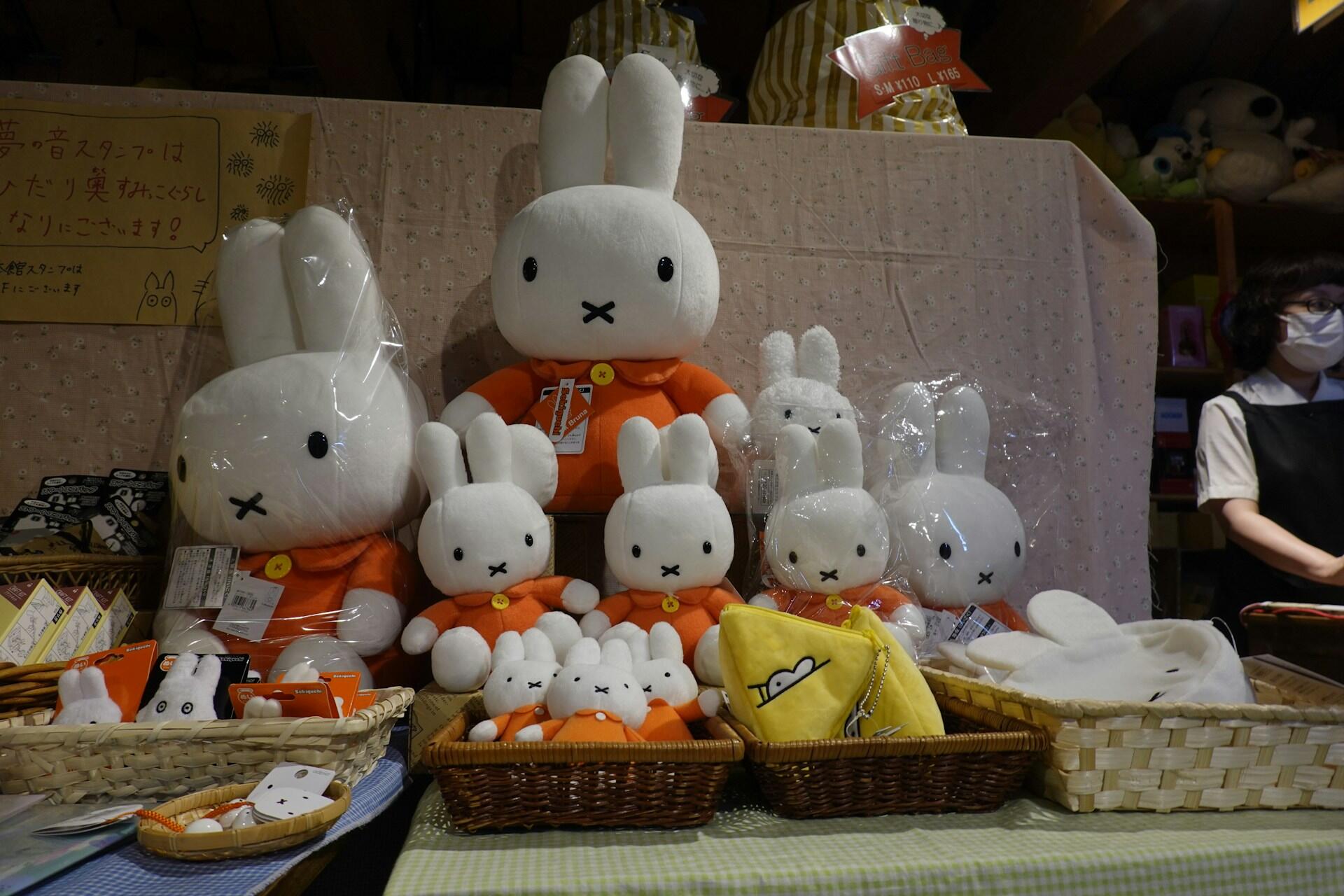
He gained prominence in 1955 when he illustrated and created the beloved rabbit, "Miffy" (Nijntje in Dutch, a diminutive term for "small rabbit" in English). Miffy is a cartoon rabbit that is drawn with heavy graphic lines, simple shapes and primary colors.
copies of Miffy books have been sold worldwide.
Not only has the Miffy character sold books, but also toys and clothing. In addition, two television series and a feature film have been released to meet the demand for the international love shown for Miffy.
The last Miffy book was released in 2017, the same year Bruna passed away. Bruna has published over 120 children's books during his extensive career and featured characters such as Lottie, Farmer John and Hettie Hedgehog in his texts.
Here's a classic Miffy episode.
Most Famous Work
Miffy (Nijntje) children’s series
Genre
Children’s literature, illustration
Anne Frank (1929–1945)
Although Frank was born in Frankfurt, Germany, she is considered a Dutch writer, as she spent the majority of her life in Amsterdam. She was born in 1929 and died in 1945 at the age of 15. Her legacy has had a profound impact on many people throughout history.
Her family originally moved from Germany to the Netherlands when the Nazis gained control over Germany. She is widely regarded as one of the most discussed Jewish victims of the Holocaust.
Find out more about Anne Frank in this video.
Her international fame comes from the publishing of the diary she kept from the moment the Franks went into hiding in some concealed rooms behind a bookshelf where Otto Frank, her father, worked in July 1942 until their arrest by the Gestapo in August 1944.
Her writings were saved by Miep Gies and titled "The Diary of a Young Girl", and they were subsequently published in the Dutch language in 1947. It was a brilliant idea to publish this diary, as it has since been translated into 60 foreign languages and remains one of the most important and moving realistic stories about war and its impact on ordinary people.
Most Famous Work
The Diary of a Young Girl (1947)
Genre
Memoir, historical non-fiction
Cees Nooteboom (1933– )
Cees Nooteboom is known for fiction, travel writing, and poetry. He was born in The Hague, and his 1955 debut novel Philip and the Others earned him some recognition. Rituals in 1980 earned him the Pegasus Prize and helped establish him as a global author. His writing is philosophical and cosmopolitan, exploring themes such as time, memory, and identity. In addition to his fictional works, is travel writing is also well-known, with collections like "Roads to Santiago" and "Venice: The Lion, the City, and the Water" being his most popular works.
His writing is as challenging as it is entertaining, and Nooteboom continues to have a profound influence on modern Dutch literature. At the same time, his works are enjoyed worldwide.
Most Famous Work
Rituals (1980)
Genre
Literary fiction, travel writing, poetry
Astrid Roemer (1947– )
Astrid Roemer is a Surinamese-Dutch novelist, poet, and playwright. Her background helped her writing bridge the Caribbean and European literary traditions, exploring themes of colonialism, identity, and migration. Her trilogy, Gewaagd Leven, Lijken op Liefde, and Was Getekend, explores the personal and societal aftermath of Suriname's independence from the Netherlands.
She won the prestigious P.C. Hooft Prize in 2016, becoming the first Surinamese author to receive this honor. Her willingness to tackle subjects like sexuality, trauma, and political violence makes her one of the most significant contemporary voices in Dutch-language literature.
Most Famous Work
Was Getekend (part of a trilogy)
Genre
Literary fiction, postcolonial literature
Michel Faber (1960– )
Born in 1960 in The Hague, Faber is a writer of English-language fiction. He and his parents emigrated to Australia in 1967 and underwent his schooling at the University of Melbourne.
Commonly known as a novelist, some of Faber's most notable novels include The Crimson Petal and the White, Under the Skin, and The Book of Strange New Things. Not widely known as a poet, his 2016 poetry book titled Undying is a poetry collection written about the death of his second wife to cancer.
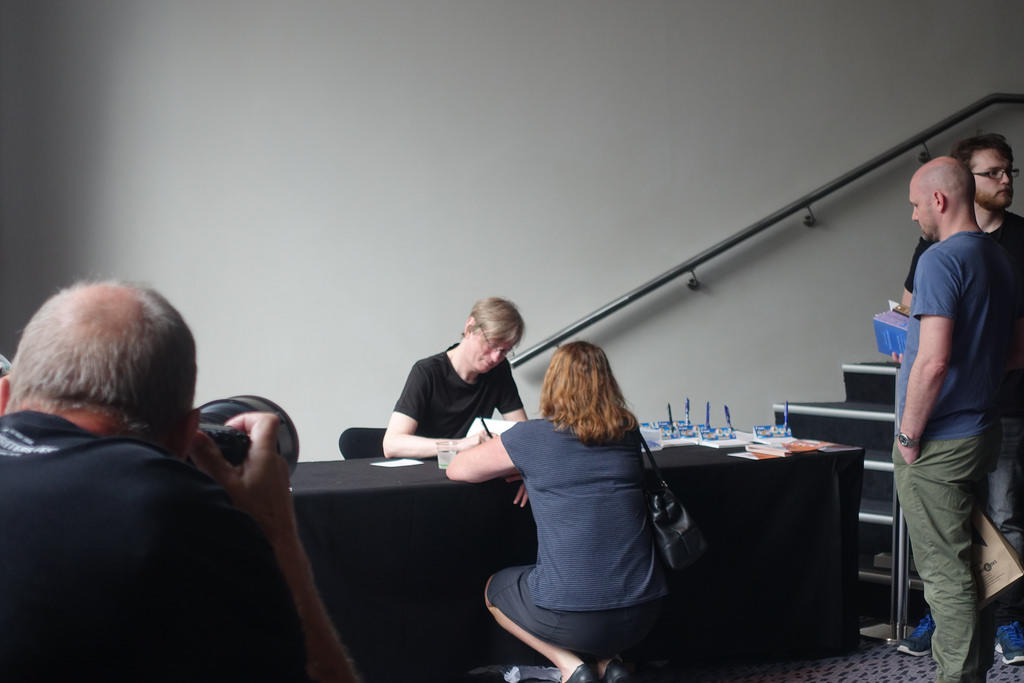
His novel Under the Skin was well received by literary critics and was adapted into a 2013 film starring Scarlett Johansson. Faber's 850-page novel The Crimson Petal and the White is viewed by many as being his magnum opus due to its Victorian themes and immense popularity.
Most Famous Work
The Crimson Petal and the White (2002)
Genre
Literary fiction, speculative fiction
There are many Dutch writers who have left their mark in the literary world and can be enjoyed by many readers today. The 15 aforementioned Dutch writers have created page-turners, instructed us about historical events and provided us with more insight about complex social situations.
Summarize with AI:
Did you like this article? Leave a rating!


 Loading...
