
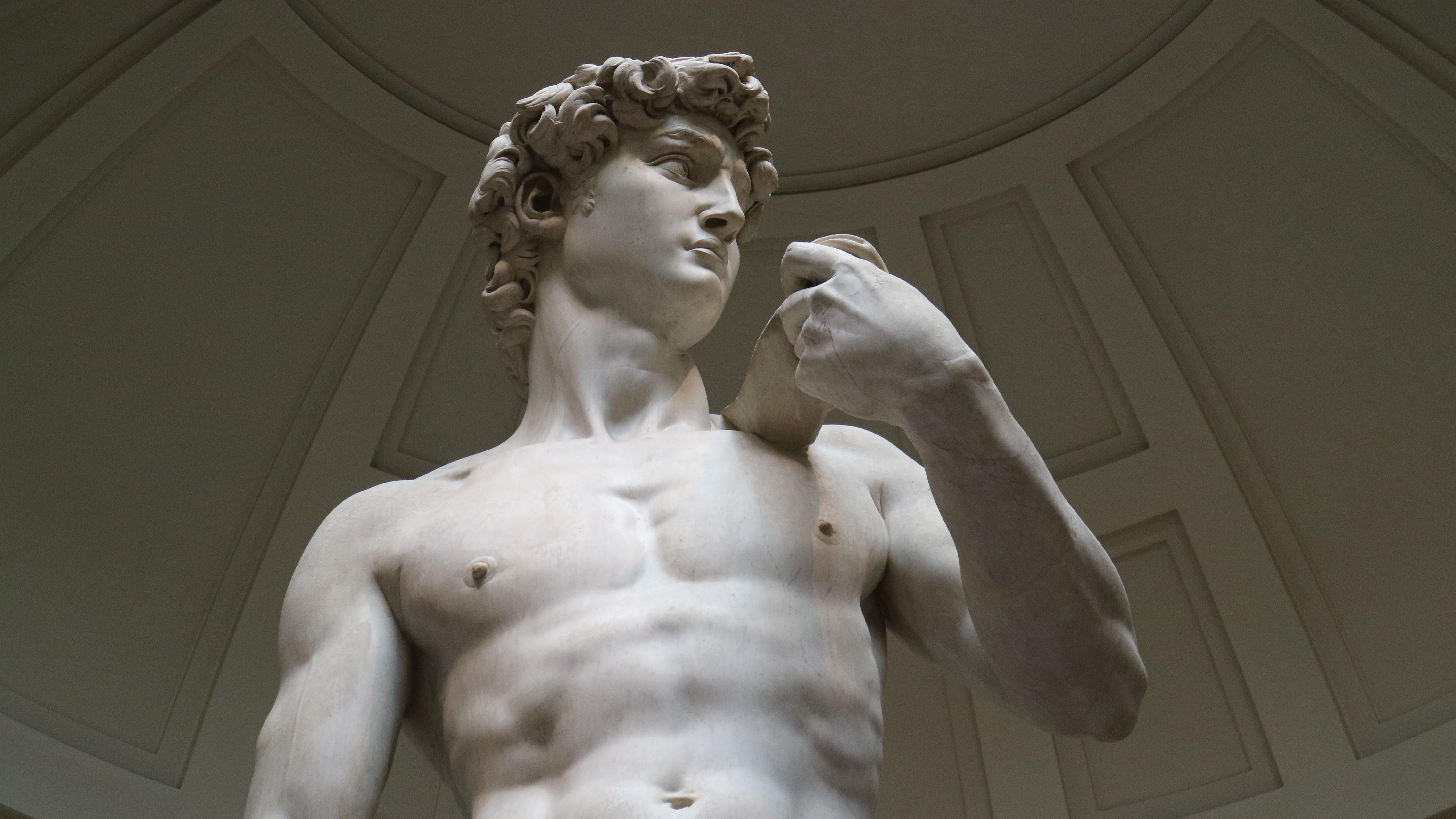

The beauty of art history is its infinite variety of sculpture styles, movements, and forms. Whether you're stepping into a museum for the first time or deepening an existing interest in sculptural history, understanding the different types of sculpture (from ancient Greek idealism to contemporary kinetic installations) makes the whole experience richer. Here's a guide to the most significant types of statues and sculpture styles from across the centuries.
📜 Historical Sculpture Styles
- Hellenistic
- Roman
- Equestrian
- Reliefs & Carvings
- High Renaissance
- Mannerist
- Baroque
- Neoclassical
- Modernist
🎨 Contemporary Types
- Abstract
- Assemblage / Found Objects
- Land Art
- Kinetic
That's how many distinct sculpture styles are covered in this guide; from Hellenistic to Kinetic!


Historical Evolution of the Different Types of Sculptures
We’re going to begin by looking at sculptural styles through western art up until the twentieth century in chronological order.
After this, sculptures experience a massive proliferation of styles, innovations, and concerns. When we get to the twentieth century, we’ll drop the chronological structure and look at some of the major things going on; which were roughly contemporaneous to each other.
Let’s start with Ancient Greece.
c.500–100 BC
Hellenistic / Classical Greek sculpture
c.100 BC–400 AD
Roman sculpture
c.600–1200
Romanesque and Gothic — reliefs and architectural carving
c.1400–1527
High Renaissance
c.1520–1600
Mannerism
c.1600–1750
Baroque and Rococo
c.1750–1850
Neoclassicism
c.1880–1940
Modernism
1900s–present
Contemporary: Abstract, Assemblage, Land Art, Kinetic
Hellenistic Sculpture
As a bit of a disclaimer, the expression ‘Greek sculpture’ is necessarily going to be a generalization: the civilizations that we refer to as ‘ancient Greece’ lasted between about the tenth century BC and 600AD. That’s sixteen hundred years. Things change a lot in that amount of time.
The sculpture that we talk about when we talk about Greek sculpture is from the classical and Hellenistic periods. This means the fifth and fourth centuries BC, and the third, second, and first centuries BC respectively.
Greek sculpture developed into idealized but naturalistic representations of people and deities in this period. Figurative sculpture was the main concern, and people like Phidias are the big names.
Roman Sculpture
Often, Greek and Roman sculpture, the two major arts of the ancient world, are lumped together. This is because Roman art was heavily influenced by the Greeks (and most of the sculptors in Rome were actually Greek).
However, the main difference is that, where Greece aimed for idealization (making the perfect form of the thing sculpted) Rome was more deliberately representational. These guys preferred detail and historical events, rather than beauty for beauty’s sake.
Equestrian Sculpture
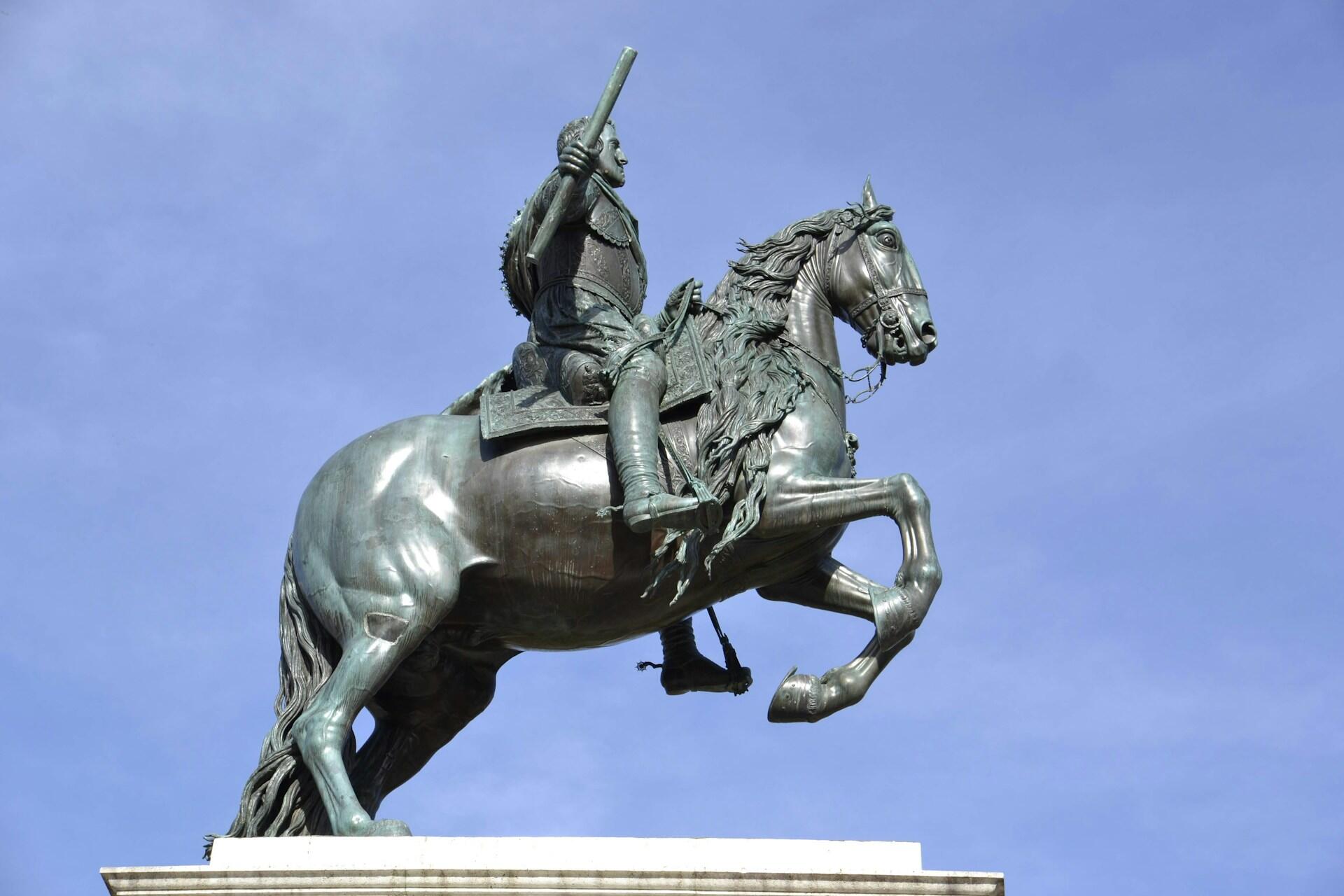
This one is a bit out of place, but we should take a moment here to consider the equestrian statue as a discrete art form. Simply put, these are just guys on horses. However, the social significance of these is not to be understated.
There are very few surviving equestrian statues from antiquity. Yet, they were used (and have been used ever since) to convey power and prestige.
To make a life-size horse in bronze or white marble just required a huge amount of stuff. And this stuff has always been quite expensive.
For a few examples, look at the Statue of Marcus Aurelius, Donatello’s Statue of Gattamelata, or Verrocchio’s Bartolomeo Colleoni.
Reliefs, Carvings, and Architectural Sculpture
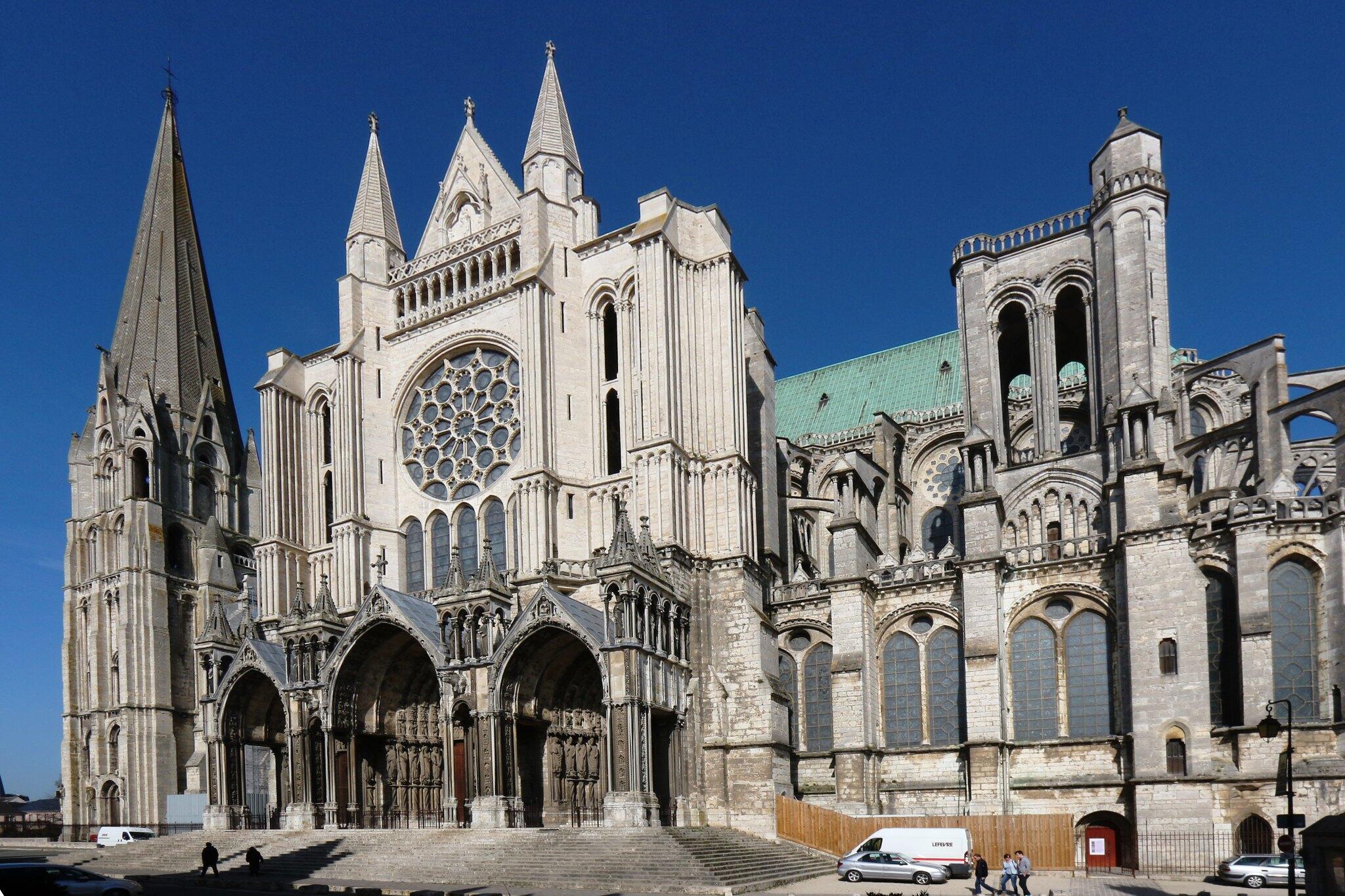
During the period between the fall of Rome and the beginning of the Renaissance, we don’t know a huge number of names of sculptors. However, we do know that their main concerns were in the decoration of religious institutions, including cathedrals, abbeys, and churches.
Reliefs (in which sculptors would work on raising images from a flat background) and carvings were the main techniques used in this architectural sculpture. And we refer to this period (roughly 600 to 1200) as Romanesque or, later, Gothic art.
High Renaissance Sculpture
The Renaissance began in Italy, drawing on classical techniques and themes. Really, it changed the way we thought about art; and still has an influence to this day.
Moving away from the religious concerns that dominated the art of the first millennium, it instead looked at the human figure, taking its knowledge and detail from the developments of science.
Michelangelo, Leonardo da Vinci, and Donatello are all names from this period.
Mannerist Sculpture
Whilst High Renaissance sculpture valued naturalism, mannerism attended instead to artificiality and exaggerated beauty; all to compete with the sculptors of the preceding movement.
Benvenuto Cellini’s Perseus with the Head of Medusa (from 1554) is one of the iconic sculptures of mannerism.
Baroque Sculpture
And if Renaissance sculpture in general was concerned with a sense of stability, baroque, which followed, wanted to import dynamism and movement into sculpture. It was characterized by great decoration and energy.
Gian Lorenzo Bernini is the name you need to know, as his sculptures, fountains, public art, and architectural projects transformed Rome in the seventeenth century.
Rococo, or ‘Late Baroque’, was the extreme end of this movement. It was theatrical, incredibly detailed, and colorful.
Neoclassical Sculpture
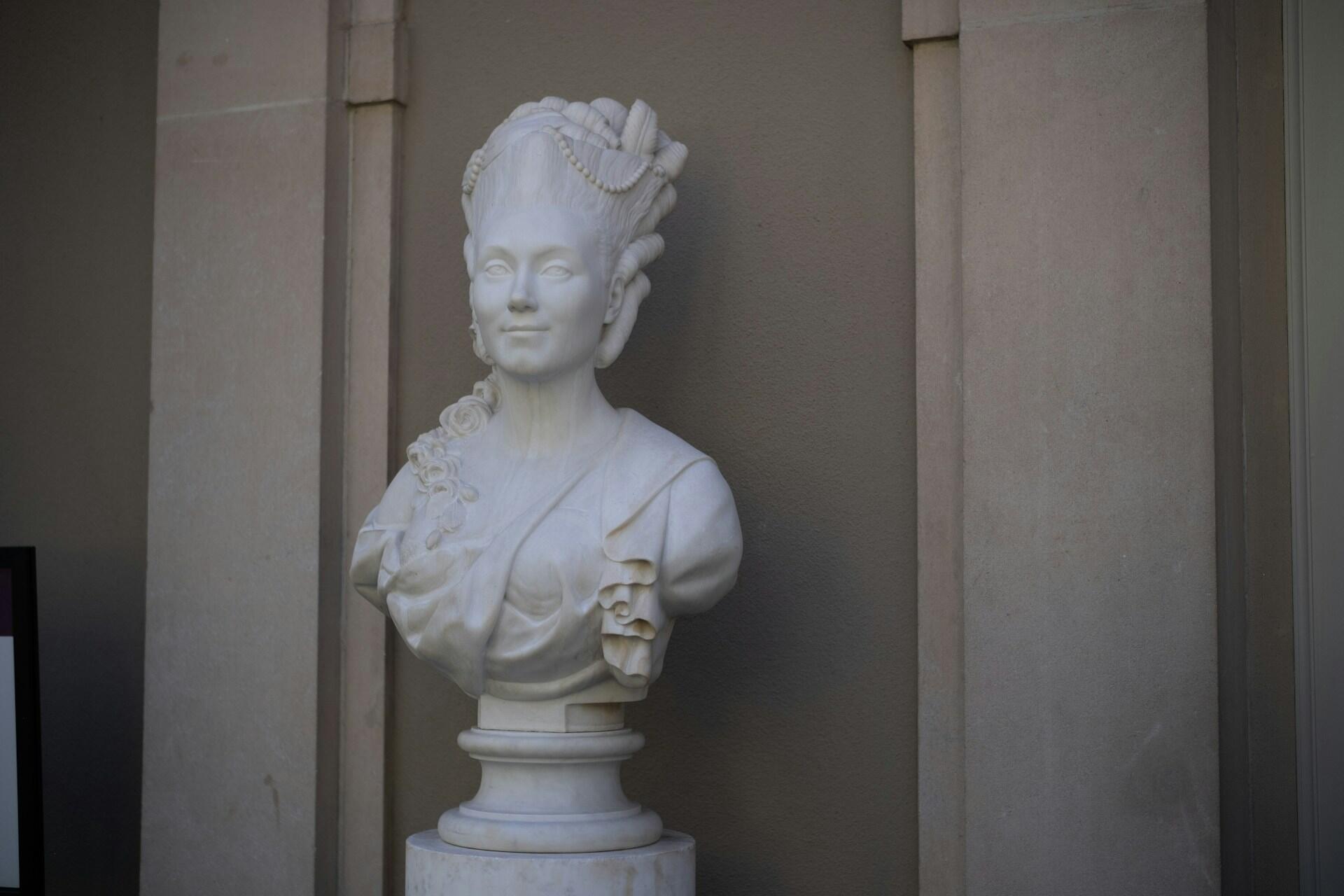
As usually happens, history’s response to this movement was to return to simplicity. This is what neoclassical sculpture (obviously taking its name from the classical period) did in the eighteenth century.
Antonio Canova was the main figure in this movement, returning to the principles of design of ancient art.
Modernist Sculpture
At the turn of the twentieth century, painters, musicians, writers, and sculptors were galvanized by a different way of doing art. This was what was known as modernism and, for the arts, it was a colossal break from tradition.
In sculpture, the primary figure in this movement was Auguste Rodin, who introduced an impressionistic quality into sculpture. He threw away the sharp lines and chiselled features and focused on a realism, rather than an idealism. A famous work of his is The Thinker.
His student, Constantin Brancusi, was also hugely influential. His outdoor sculpture and more abstract sculptures had a massive influence on the modern and contemporary artists that followed.
Learn more about famous sculpture artists!

Marble — dominant in Greek, Roman, Renaissance, and Neoclassical work
Bronze — used for equestrian statues, Baroque, and Modernist pieces
Stone and wood — primary materials for Romanesque and Gothic architectural carving
Found / everyday objects — central to Assemblage and Dadaist sculpture
Natural materials (earth, rock, water) — defining feature of Land Art
The Variety of Contemporary Types of Statues
Contemporary sculpture is hugely multifaceted, incredibly diverse, and unbound from the strict rules that characterized art sculpture up until the nineteenth century. This is because the boundaries of what art and sculpture are have been pushed by artists throughout this period.
Here are some of the directions in which sculpture has been pushed in recent years. They can’t really be detailed chronologically, as many are contemporaneous.
Find out more about the most famous sculptures.
Abstract Sculpture
Abstract sculpture came primarily out of the work of Brancusi, one of the fathers of modernist sculpture. Rather than figurative art, which sought to represent to greater or lesser degrees of details an object, abstract art did away with the concern for representation.
Brancusi’s work was all about ‘essences’, the simplest possible forms of things. It was hugely influential, inspiring artists like Henry Moore, Barbara Hepworth, and Alberto Giacometti.
Assemblage / Found Objects
Started by the likes of Pablo Picasso and the Dadaists in the first half of the twentieth century, assemblages are thought of as collages but in three dimensions.
These developed out of an artistic interest in ‘found objects’; items usually used for quite different purposes, but, in these cases described and presented as art.
Marcel Duchamp’s famous Fountain (1917) is one of the most original versions of this. The artwork is a urinal bought from a hardware and placed on a pedestal. At the time, this piece posed fascinating questions about the nature of art.
Land Art
An incredibly ambitious and monumental style of contemporary sculpture is what is known as land art. This seeks to create sculpture and art out of the land itself.
Take a look at Robert Smithson’s piece Spiral Jetty in the Great Salt Lake in Utah, or Charles Jencks’s Landform in Edinburgh.
Kinetic Sculpture
Art historians like to argue. And one such argument in the art world regards the start of the movement or kinetic art. Generally, it’s agreed now that it was the brainchild of Naum Gabo, whose Kinetic Construction has been the inspiration for many.
Kinetic art describes works that use movement in their construction and form. In almost any art museum, you’ll find an example of this style.
Metropolitan Museum of Art, New York — Greek, Roman, Renaissance, and Modernist
Art Institute of Chicago — strong collection across most historical periods
MoMA, New York — Abstract, Assemblage, and Kinetic sculpture
Spiral Jetty, Great Salt Lake, Utah — Robert Smithson's iconic Land Art piece
Storm King Art Center, New York — outdoor sculpture across multiple contemporary styles
Find the best places to see sculpture!
Summarize with AI:
Did you like this article? Leave a rating!

 Loading...
