
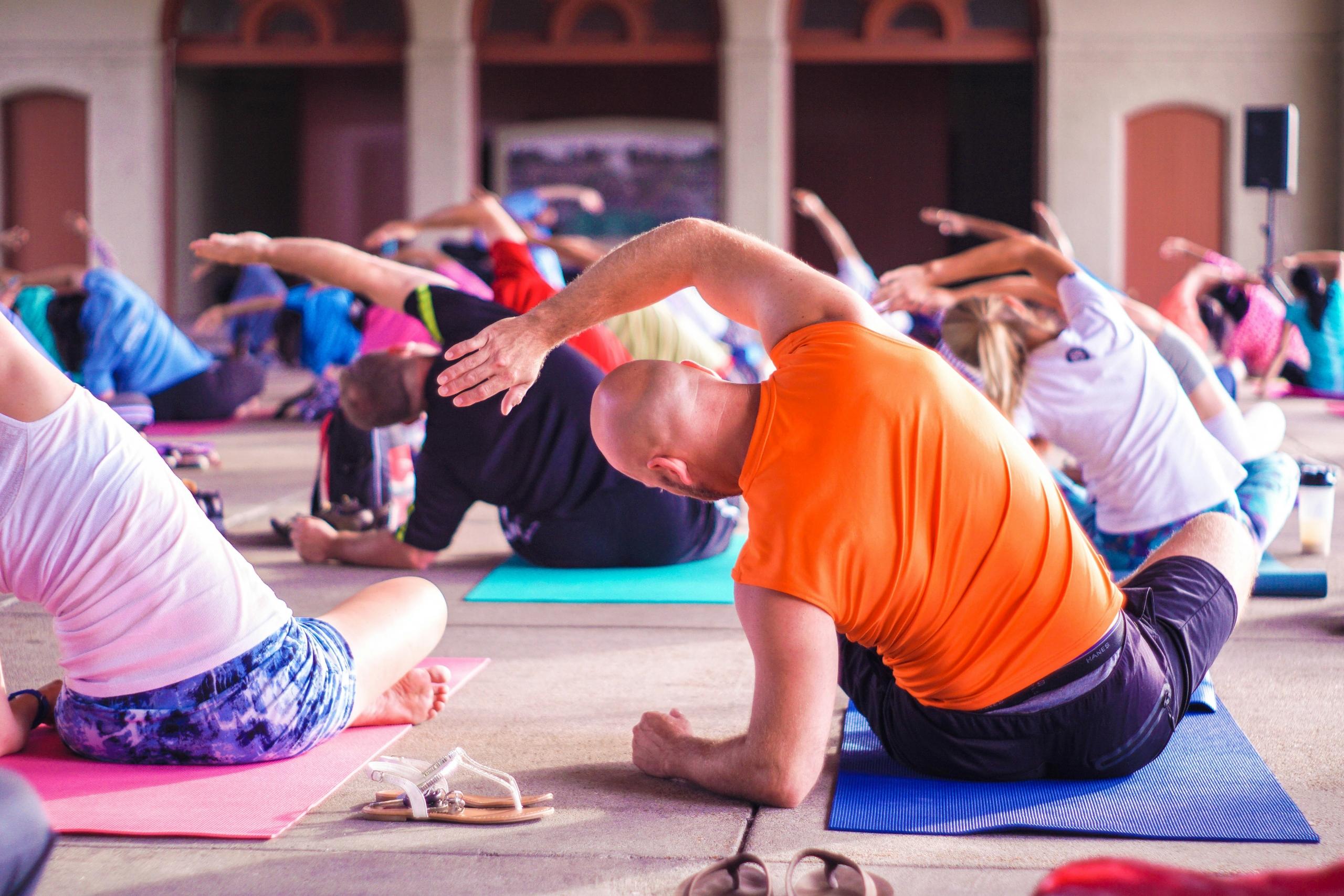

For nearly every challenging moment in life, there's a yoga pose to help you feel better.
Mandy Ingber
Hatha yoga, a popular form in the Western hemisphere, refers to yoga postures, including Ashtanga, Iyengar, vinyasa, and power yoga. The term 'hatha' means 'force,' 'effort,' or 'willfulness,' but not all hatha workouts need to be intense; they can be designed for various purposes, from aiding digestion to relieving arthritis.
Today, we'll explore the key hatha yoga poses and how to sequence sessions for beginners, intermediates, and advanced yogis. The table below gives an overview of the main poses covered in this article, along with their difficulty level and primary benefits.
| Pose | Level | Primary Benefits |
|---|---|---|
| Mountain Pose (Pranamasana) | Beginner | Posture / grounding / body awareness |
| Upward Salute (Hasta Uttanasana) | Beginner | Chest opening / shoulder stretch |
| Standing Forward Bend (Uttasana) | Beginner | Hamstrings / lower back release |
| Crescent Moon (Anjaneyasana) | Beginner | Hip flexors / balance / core |
| Downward-Facing Dog (Adho Mukha Svanasana) | Beginner | Full-body stretch / shoulders / calves |
| Warrior I (Virabhadrasana I) | Beginner | Legs / hips / core strength |
| Warrior II (Virabhadrasana II) | Beginner | Stamina / leg strength / focus |
| Tree Pose | Beginner | Balance / concentration / ankles |
| Cat-Cow (Marjaryasana-Bitilasana) | Beginner | Spine mobility / breath coordination |
| Child's Pose (Balasana) | Beginner | Rest / hip flexors / lower back |
| Cobra (Bhujangasana) | Beginner | Back strength / chest opening |
| Sphinx Pose | Beginner | Gentle backbend / lower back |
| Bridge Pose (Setu Bandhasana) | Intermediate | Glutes / lower back / chest |
| Camel Pose (Ustrasana) | Intermediate | Deep backbend / hip flexors |
| Seated Forward Bend | Intermediate | Hamstrings / lower back / calm nervous system |
| Bound Angle (Baddha Konasana) | Intermediate | Inner thighs / hips / groin |
| Cow Face Pose (Gomukhasana) | Intermediate | Shoulders / hips / IT band |
| Upward-Facing Dog (Urdhva Mukha Svanasana) | Intermediate | Back strength / wrists / chest |
| Side Plank (Vasisthasana) | Intermediate | Core / obliques / wrist strength |
| Pigeon Pose (Eka Pada Rajakapotasana) | Intermediate | Deep hip opener / piriformis |
| Bow Pose (Dhanurasana) | Intermediate | Full back / chest / thigh stretch |
| Plow Pose (Halasana) | Advanced | Spine / shoulders / hamstrings |
| Fish Pose (Matsyasana) | Advanced | Throat / chest / upper back |
| Crane/Crow Pose (Bakasana) | Advanced | Core strength / arm balance / focus |
| Peacock Pose (Mayurasana) | Advanced | Arms / core / balance |
| Corpse Pose (Savasana) | All levels | Full-body rest / integration / relaxation |




The Basics of Hatha Yoga
A hatha yoga session generally runs for an hour but beginners classes may last only 30 minutes and some yoga studios offer 'yoga during lunch' sessions that may last only 15 or 20 minutes! The general outline of a hatha yoga session, regardless of level or duration, starts with the physical aspect, meaning the poses. That exertion better prepares us for the more subtle breath work and energy flow. The tranquillity we earn from breath awareness and energy flow, in turn, prepares us for a deeper state of meditation.
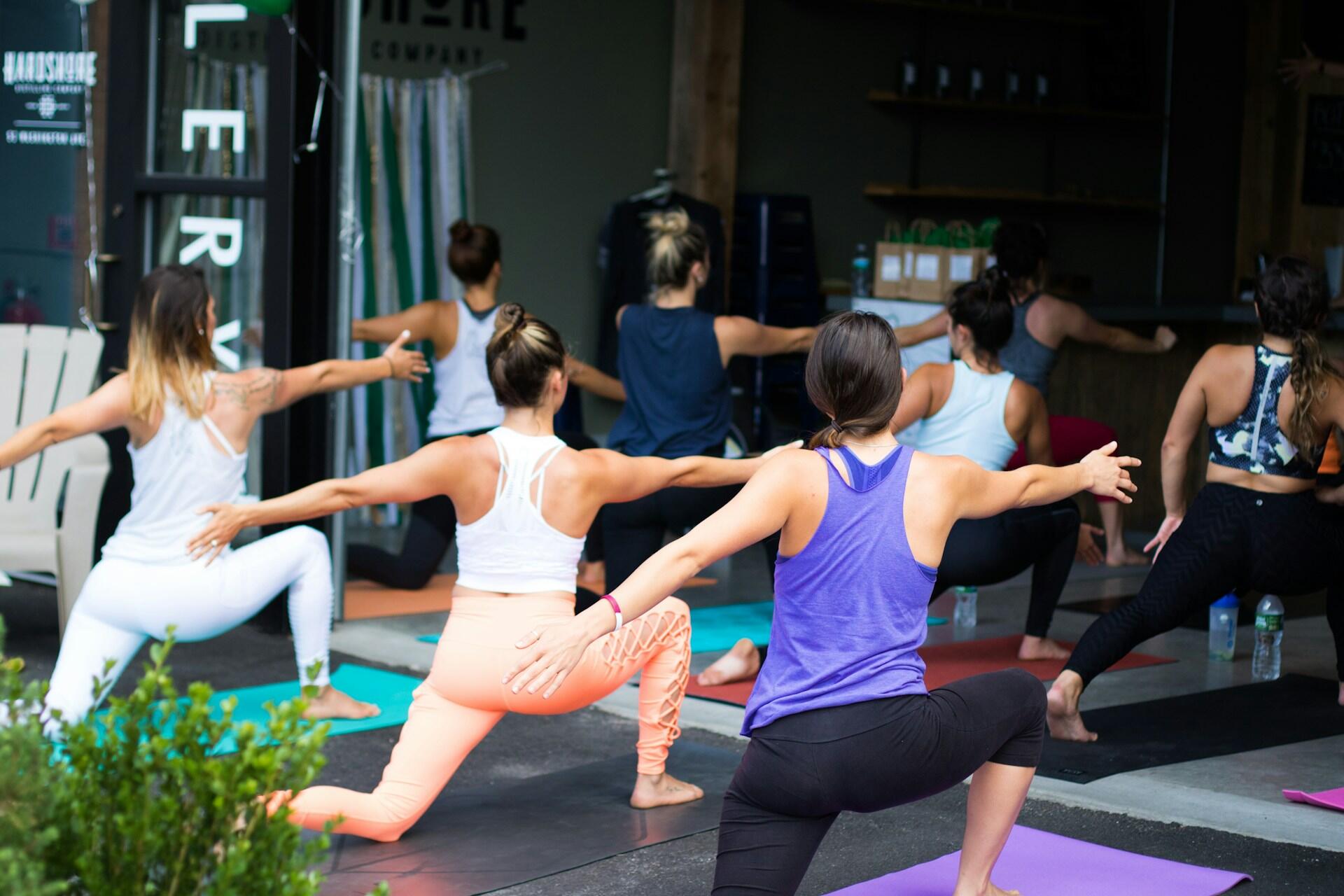
A general rule of thumb for hatha yoga is to follow these specific steps when completing your sequences.
Start with the standing poses
Warrior poses, gate and tree poses.
Moving down to the kneeling poses such as ‘cow and cat’ and downward-facing dog.
Next complete the seated poses
‘Bound angle’ and ‘cow face’ poses.
Let us not forget ‘crane’ and ‘peacock’! And then, we arrive at the lying down poses, with ‘cobra’ and ‘sphinx’ being very similar.
Finally, shavasana!
Enjoy your ‘corpse’ pose; you’ve earned it!
Some yoga teachers have preferred poses that they will include in every session; the crescent lunge is a particular fav of mine, for example. If you are currently undergoing yoga teacher training or hope to soon, you should always be sure to mix up your classes a little bit so that your students do not become bored with the same sequences in every class. By some estimates, there are thousands of yoga sequences to choose from, meaning your yoga sessions never need to be the same.
Just one little exception to that point: if you are leading restorative yoga sessions, you should probably keep things pretty much the same, seeing as that particular yoga sequence is meant to serve a particular purpose! With these general guidelines in place, let’s take a look at some targeted hatha sequences.
The Creation of Hatha Yoga
Hatha Yoga, a very important branch of yoga focused on physical postures and breath control, has evolved over centuries. This timeline highlights the key phases in the development of Hatha Yoga, from its early roots in ancient Indian spiritual practices to its modern global presence.
Pre-10th Century CE
Early roots in the Vedic period (1500-500 BCE) with meditative and ascetic practices.
Influences from the Yoga Sutras of Patanjali (2nd century BCE), emphasizing moral guidelines, postures, breath control, and meditation.
9th - 12th Century CE
Emergence of Hatha Yoga
With texts like the Amritasiddhi and the Goraksha Samhita, introducing specific physical practices.
15th Century CE
Hatha Yoga Pradipika by Swami Swatmarama systematized Hatha Yoga
Detailing asanas, pranayama, mudras, and bandhas.
16th - 18th Century CE
Further development
With texts like the Gheranda Samhita and the Shiva Samhita, expanding on Hatha Yoga practices and philosophy.
Late 19th - 20th Century CE
Modern revival and global popularization
By Indian yogis such as Swami Vivekananda, T. Krishnamacharya, B.K.S. Iyengar, Pattabhi Jois, and Indra Devi.
21st Century
Hatha Yoga becomes widely practiced worldwide
With various styles and schools focusing on physical and meditative aspects.
A Good Place to Start: Sun Salutation Sequences
Many yoga teachers like to begin their class with a sun salutation; it is a great way to warm up, stretch and work major muscle groups. Sun salutations are particularly effective in vinyasa flow classes and also in power yoga classes because each movement flows into another. They also form the backbone of a hatha yoga flow, making them worth mastering early on.
A benefit of these Suria Namaskar mantras (the Sanskrit name for sun salutation sequences) is that they coordinate breath with movement. For instance, as you sweep your arms upwards in the 'raised arm' pose, a deep inhale feels inevitable because your ribcage naturally expands on that move. Likewise, as you flow into a forward fold, exhaling is inevitable.
When done correctly, each ‘reaching’ move is done on an inhale and each release is done on the exhale. There are many ways to sequence a sun salutation but most yogis agree that one should start in mountain pose (pranamasana) and then flow into ‘upward salute’ or hasta uttanasana, its traditional name.
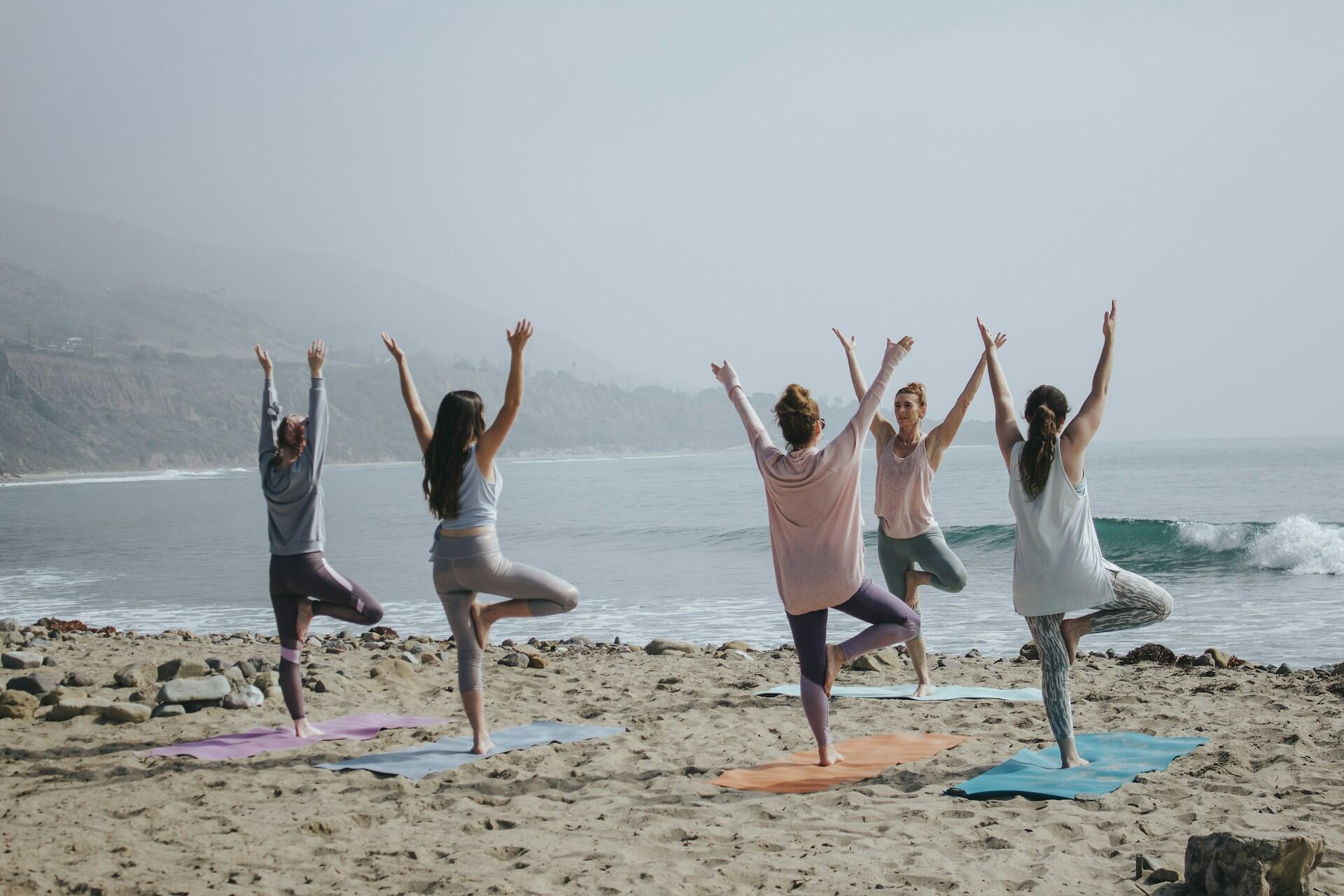
Mountain pose is a great starting position in yoga, allowing you to channel your energy in the next part of the sequence.
The rest of the sequence is a follows:
- Uttasana or standing forward bend: feet shoulder-width apart, bend forward at the hips
- Anjaneyasana or crescent moon pose: a deep lunge with head back and arms raised high
- Adho Mukha Svanasana: the downward dog positions
- Ashtanga Namaskara: knees and chest down, hands under shoulders and hips raised
- This asana has many names including ‘chest, knees and chin’, indicating what should touch the mat when done properly
- Urdhva Mukha Shvanasana or ‘upward-facing dog’: head and torso raised; hips and legs on the mat
- Adho Mukha Svanasana: again, flow into the downward-facing dog pose
- Anhaneyasana: again, the crescent moon position, this time with the other foot back
- Uttasana: again, bend forward
- Hasta Uttasana: reach again for the heavens with your head raised, really opening your chest up
- Pranamasasa: back into mountain pose; the salutation is complete. Namaste!
This sequence is more commonly known as a Type A Sequence. Type B substitutes the 'forward bend' pose with the chair pose and also includes warrior poses. Of course, nothing says you cannot include other asanas in your warmup sequence; the important takeaway is that sun salutations are meant to open the body up and coordinate movement with breathing.
Of course, nothing says you cannot include other asanas in your warmup sequence; some yoga instructors may insert a boat pose (navasana) or a seated forward bend. The important takeaway of sun salutations is that they are meant to open the body up and coordinate movement with breathing; to ready the mind and body for deeper reflection of the fundamental yoga philosophy: that the mind, body and spirit are one.
Did you know that yin yoga does not call for any standing asanas?
Beginner Hatha Sequences
Using the Sun Salutation sequence is a great way to start your class – indeed, some instructors base their hour-long class on these 12 asanas alone, but you should probably add a few asanas to make each session complete. The average hatha yoga session includes between 20 and 30 asanas; about half of them should be dynamic.
Hatha yoga is a 'yang' yoga, meaning that there is more movement involved than a 'yin' yoga class.
Each session should start by working the body. Once the body is ‘opened’, warmed up, practitioners can focus exclusively on breathing which, in turn, leads to a meditative state. After your sun salutation, deciding which asanas to include in your sequence really depends on the results you are aiming for.
Hatha Sequence for Beginners
A hatha yoga sequence for beginners offers a structured approach to introducing foundational poses and techniques, emphasizing proper alignment, controlled breathing, and gentle stretching. In this table, we've listed a sequence of asanas to try; naturally, you may replace some of these poses with your favorites.
Practicing these sequences regularly helps improve posture, reduce stress, and enhance overall well-being! By following a guided sequence, beginners can safely and effectively develop their yoga practice, laying the groundwork for more advanced poses and deeper mindfulness in the future. In this table, we’ve listed a sequence of asanas to try; naturally, you may replace some of these poses with your favorites.
| Name | Target Area(s) | Notes |
|---|---|---|
| Surya Namaskar or Sun Salutation | Works your entire body | A series of 12 poses to warm the body |
| Standing Poses | The focus is on strengthening major muscle groups and building balance | Warrior poses, tree poses, gate poses, extended side triangle and others |
| Hand-and-knee postures | Works your core as well as lower joints | Camel pose, cow-and-cat; upward and downward facing dog; plank and side plank |
| Seated postures | Gains flexibility | Head-to-knee, seated forward bend, bound angle, cow face pose |
| Lying down poses | Works your abs and back | On your stomach: Sphinx, Cobra, Pigeon, Bow On your back: Bridge, Fish, Plow |
| Savasana corpse pose | Resting your entire body | Namaste! |
Intermediate Flow Sequences
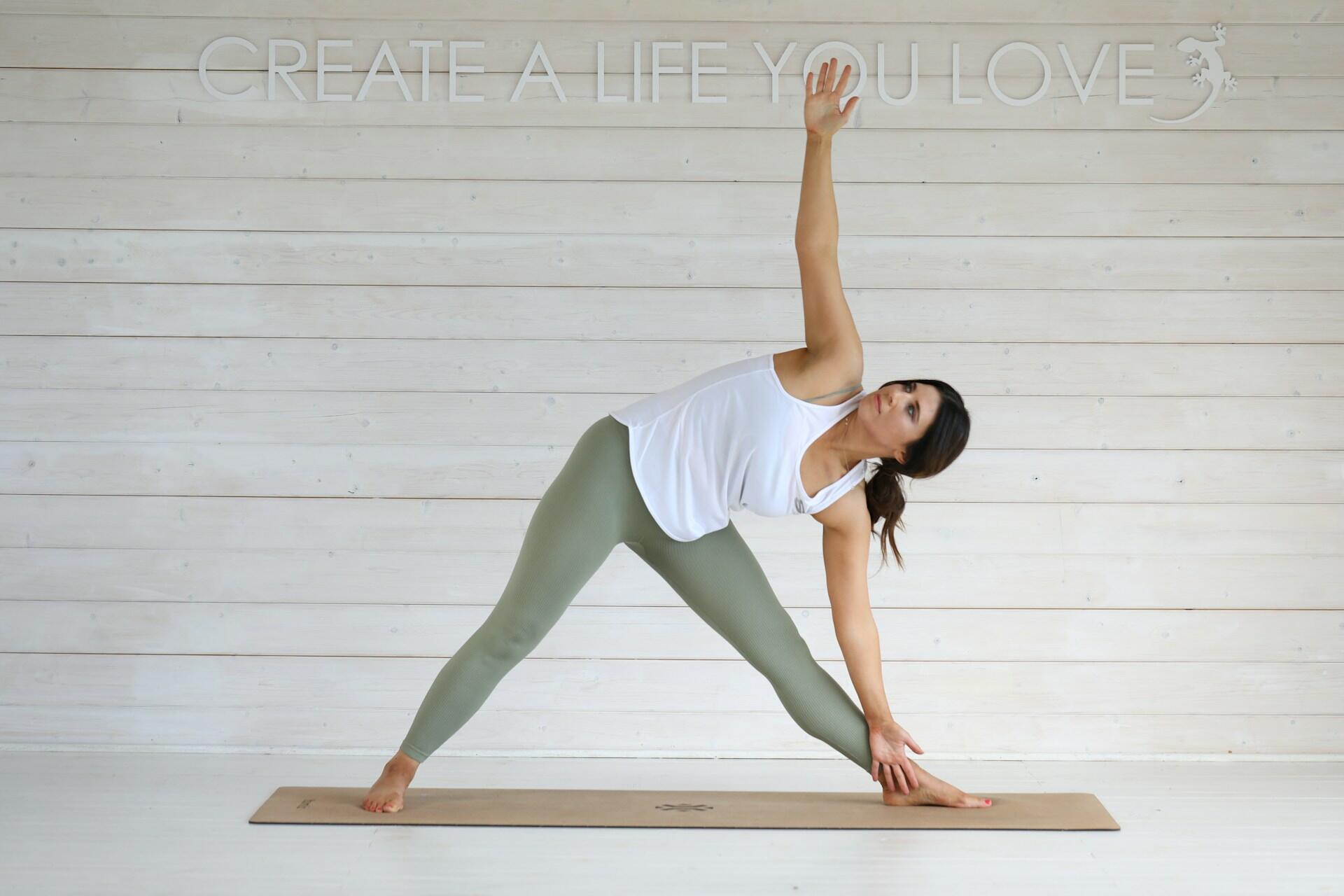
Once foundational poses feel steady, intermediate sequences introduce deeper hip openers, backbends, and longer holds that build strength and flexibility more deliberately. A typical intermediate hatha flow sequence might progress from sun salutations into warrior II, triangle pose, and extended side angle, before moving into seated poses like pigeon, cow face, and a seated forward bend, closing with bridge or bow and a long savasana.
At this level, the connection between breath and movement becomes more refined. Holds tend to last five to eight breaths rather than one or two, and transitions between poses are slower and more intentional. Students comfortable with the beginner sequence for at least three months are generally ready to explore intermediate flows.
Advanced Hatha Sequences
Advanced hatha sequences incorporate arm balances, deep backbends, and inversions that demand both strength and significant body awareness. Poses like crow (bakasana), plow (halasana), fish (matsyasana), and peacock (mayurasana) are common at this level. These sequences are not about intensity for its own sake; they require a stable practice built over time and should always be approached with an experienced teacher's guidance.
Word has gone around in yoga circles that 'hatha' is the melding of 'ha' (sun) and 'tha' (moon), implying a balance between solar and lunar energies. Unfortunately, that theory is not supported by Sanskrit texts.
Master Hatha Yoga Poses with Superprof
Whether you're building your first beginner hatha yoga sequence or looking to deepen an existing practice, working with a qualified instructor makes a real difference. Superprof connects you with experienced yoga tutors who can tailor sessions to your level and goals; from foundational asanas to advanced postures. Find a hatha yoga tutor near you and take the next step in your practice.
Now learn how you can sequence any yoga class!
Summarize with AI:
Did you like this article? Leave a rating!


 Loading...
This was such an incredible article. Thank you so much
Thank you for the detailed explanation!