


I want to astonish Paris with an apple.
Paul Cézanne
Still-life is an art genre that spans thousands of years, from frescoes carved and painted by anonymous artists in Ancient Egypt to sixteenth-century Dutch artists who made still-life painting a legitimate art form and the nineteenth-century French painters that started the Impressionist movement. Still-life continued to be a popular art form and was revived in the 1950's by artists such as Andy Warhol, Roy Lichtenstein and later on by artists such as Judy Chicago and Keith Haring. We have selected some of the most famous and influential pieces of still-life art from the early 17th century to the 1950's.
| Painting | Artist | Year |
|---|---|---|
| Basket of Fruit | Michelangelo Merisi Caravaggio | c. 1599 |
| Water Lilies Series | Claude Monet | 1896–1926 |
| The Basket of Apples | Paul Cézanne | c. 1893 |
| Living Still Life | Salvador Dalí | 1956 |
| 32 Campbell's Soup Cans | Andy Warhol | 1962 |
| Floral Still Life Paintings | Rachel Ruysch | c. 1680–1720 |
| Still Life with Flowers in a Glass Vase | Jan Davidsz de Heem | c. 1660 |
| The Luncheon in the Studio | Édouard Manet | 1868 |
| Still Life with Sugar Bowl | Paul Cézanne | c. 1890 |
| Still Life with Lemon | Pablo Picasso | c. 1910 |
| Still Life with Sand and Shells | Robert Douglas Hunter | c. 20th century |
| Vase with Three Sunflowers | Vincent van Gogh | 1888 |
| Still Life with Teapot | Emil Carlsen | c. 1905 |
| Still Life with Blue Bowl | Carl Schmitt | c. 20th century |
| The Dining Room Table | Frank Benson | c. 1910 |


1. Michelangelo Merisi Caravaggio: "Basket of Fruit" , still life artist & still life examples
Michelangelo Merisi Caravaggio was an Italian painter born in Milan at the end of the sixteenth century. He is famous for painting some of the most critically appraised religious still life painting examples of his time or since. His style relied heavily on the use of thechiaroscuro technique, using very dark backgrounds and very clear and luminous shafts of light to illuminate the characters on his paintings. His style which later became known as tenebrism had a significant influence on the following generation of artists and this stylistic element can be seen in the work of Dutch artist Rembrandt, even though Rembrandt never traveled to Italy to study Italian master painters.

The Basket of Fruits was painted around 1599 and stands out in Caravaggio's work as one of only two still-life paintings. One of the tricks that Caravaggio often used during his career was trompe l'oeil. In this painting, the quasi-photographic realism it displays tricks our eyes and brain into thinking that the fruits are almost popping out of the canvas.
WithStill Life with Fruit on a Stone Ledge, Caravaggio started the Roman still-life movement even though it would take some time for the movement to really kick-off.
2. Claude Monet: "Water Lilies" Series
Claude Monet was one of the still life artist founders of the Impressionism movement that started in Paris in the 1860's. The name of the movement itself came from of one of Monet's paintings Impression, Sunrise, a title that was first used to mock the growing movement. Throughout his career, Monet remained the main leader of the Impressionist movement and has been its most prolific artist. One of the ways Monet achieved the intended play on natural light was by painting the same scene again and again, at a different time of the day or a different season.
Monet spent extended periods of his time to study the effect of smoke, steam, rain or fog on the refraction of light. This study led him to paint the same scene over and over again in order to capture as many details as he could.

His Water Lilies series, with more than 250 paintings, includes some of his most famous artwork. The oil on canvas painting titled Water Lily Pond and painted in 1919, is one of the most expensive European work of art ever sold. It reached the price of $80,451,178 in 2008 at an auction in Christie's, London.
Check for online drawing classes here.
3. Paul Cézanne: "The Basket of Apples"
Paul Cezanne is probably one of the most influential still life examples of the 19th century. A French Post-Impressionist painter born in 1839, Cezanne is renowned for his innovative approach to still life painting. His unique style, characterized by geometric forms and explorations of color and light, revolutionized the genre and laid the groundwork for modern art movements such as Cubism.

When Impressionism emerged, Cezanne joined Pisaro, Renoir and Monet in creating incredible paintings. For most of the 1870's Cezanne stuck to the Impressionist style, but even though his paintings were displayed in exhibitions alongside other artists of the movement, his work was always something else, not quite entirely Impressionist.
Cezanne did a lot of work, studying the relationship between naturally occurring geometrical shapes. He always desired to reduce any natural element to its purest geometrical form. Many critics of the time suggested that the rendering of Cezanne's compositions were due to an impaired eye-sight, but no evidence ever suggested such a thing. Cezanne's work, for most of his career, was a mix of life portraiture and still-lifes, including landscapes and "nature morte".
Some of his work directly influenced the Post-Impressionist movements including the Cubism movement, but as a whole, Cezanne's legacy was to be one of the most revolutionary artists of his time and to alter the course of modern art development. He influenced the works of Vincent Van Gogh,Picasso and Gaughin.
The Basket of Apples painting includes many elements that would be used to bridge the gap between Impressionism and Cubism:
- The disjointed perspective
- The unbalanced aspects of the picture coming all together to balance the whole composition
- The simultaneous two point of views
4. Salvador Dali: "Living Still Life"
Salvador Domingo Felipe Jacinto Dalí i Domènech, 1st Marquess of Dalí de Púbol or simply Salvador Dali, was probably one of the most eccentric and extravagant artists of the twentieth century. He was also an artistic genius and contributed artwork in many fields, from drawings, paintings, sculptures to photographies, writings, movies and even fashion. He was fascinated by quantum physics and the work of Werner Heisenberg about the principle of uncertainty. This fascination translated into his work and many of his paintings included elements and symbol acknowledging the new science.
While Dali was greatly influenced by painters of the Renaissance, some of his work also include cubist elements and later on Dali would develop his own interpretation of the Surrealism and Dadaism post-WWI movements.Nature Morte Vivante orLiving Still Life was painted by Dali in 1956. At the time, the painter was experiencing with a style he called Nuclear Mysticism.

In his work, Dali tried to draw the link between quantum physics and the human mind. Dali composed this canvas and tried to link elements of art, science and physics and believed that despite the still and motionless nature of such a still-life painting, the atoms that composed either the objects represented on the picture or the painting itself, are always moving, in a constant, infinite motion. Dali successfully took the century-old subject matter of still-life and added his own signature style on it while conveying to the viewer what he really meant by Nuclear Mysticism.
5. Andy Warhol: "32 Campbell's Soup Cans"
Born in Pittsburgh, Pennsylvania, from Slovak immigrants parents, not much predestined Andy Warhol to become the pop culture leader of the booming 1960's. As a sickly child, he was often bedridden and later in life described that time of collecting pictures of movie stars and listening to the radio with his mom as a period of great importance in the development of his personality, skill set and preferences.
Early in his career, Warhol worked as a commercial and advertising artist; he went on doing extensive work for the American shoe manufacturer, Israel Miller. Warhol who had been spotted by the art world for his unusual ink drawings of shoe ads started to exhibit his work in galleries in New York during the late 1950's and then in Los Angeles in the early 1960's. At the same time he began breaking through the art world, he was hired by RCA Records to design album covers and promotional materials for bands of the time.
It is during the 1960's that Andy Warhol's work really became famous and his influence over American pop culture established itself. He mastered the art of printmaking using both abstract and realist subjects capturing the essence of objects or celebrities. During that decade, he produced paintings of iconic American everyday life objects such as the Campbell's Soup Cans or Coca-Cola bottles and also started painting personalities that fascinated him: actors, singers and influential people such as Marilyn Monroe, Marlon Brando or Elizabeth Taylor. He started the Factory, an art studio, that became a hub for artists, musicians, writers, journalists and actors and underground celebrities. The New York Academy of Art includes everything from still-life and life drawing classes to demonstrations, exhibitions and galleries. It started drawing lessons and painting classes for all-level students where they can be taught by professional artists.
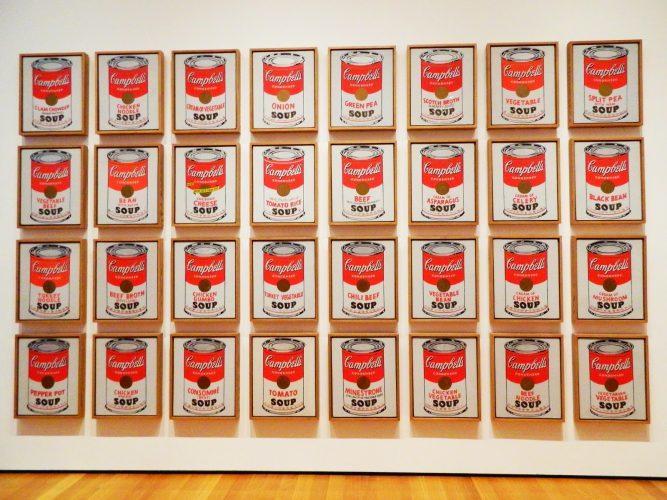
The 32 Campbell's Soup Cans, was produced in 1962 by Andy Warhol. It consists of thirty-two canvases, each consisting of a painting of a Campbell's Soup can — one of each of the canned soup varieties the company offered at the time.
It is own and displayed at the Museum of Modern Art in New York City. His 32 Campbell's Soup Cans is probably the most famous still-life masterpiece of the modern era. With this work, Warhol linked both classic techniques such as painting and drawing, with advanced processes. At the time he first displayed this series, in a one-man exhibition in Los Angeles, it caused great controversies, some critics questioning Warhol's artistic motive and denying that his work had any real value as art. Today his art is recognized as some great examples of Pop Art and are amongst the most expensive Pop Art masterpieces. One of his Small Torn Campbell Soup Can sold for $11,776,000 in 2006 and was the highest price of any of the Campbell Soup Series.
6. Rachel Ruysch: A Blossoming Brilliance
Rachel Ruysch, a Dutch Golden Age painter born in 1664, is celebrated for her exceptional talent and groundbreaking contributions to still life painting. As one of the few female artists of her time to achieve recognition and success, Ruysch's legacy is both notable and long-lasting. Ruysch's skill in floral still life compositions set her apart from her contemporaries. Her paintings are characterized by meticulous attention to detail, vivid colors and exquisite rendering of botanical specimens. Through her artistry, Ruysch captured the fleeting beauty of flowers with outstanding realism, imbuing her compositions with a sense of life and vitality.
During the Dutch Golden Age in the 17th century, artists often included hidden messages or symbols within their still life compositions. For example, certain fruits or flowers might have represented wealth, abundance or even moral virtues, adding layers of meaning to what might seem like ordinary arrangements of objects.
Her influence on still life painting extends beyond her own time, inspiring generations of artists to explore the beauty of nature and the possibilities of the genre. Ruysch's meticulous technique and skillful manipulation of light and shadow continue to inspire admiration and awe among art enthusiasts and scholars alike. Today, her works are treasured in museums and private collections around the world, serving as a testament to her remarkable legacy as one of the greatest still life painters in history. Rachel Ruysch's pioneering spirit and artistic vision continue to inspire and captivate audiences, ensuring her rightful place in the pantheon of art history.
7. Jan Davidz de Heem: "Still Life with Flowers in a Glass Vase"
Jan Davidsz de Heem, a Dutch Golden Age artist born in Utrecht in 1606, is renowned for his exceptional contributions to still life painting. Heem is known for his impressive ability to fill everyday objects with a sense of life with just a paint brush, elevating the painting genre to new heights of realism and beauty. His compositions often feature an exquisite array of fruits, flowers and luxurious items meticulously arranged to captivate viewers with their details and sumptuous textures.
What sets Heem apart is his way of capturing the play of light and shadow, creating a sense of depth and three-dimensionality that brings his compositions to life. His use of colors and precise brushwork further enhances the realism of his paintings. Heem's influence on still life painting is considerable, inspiring generations of artists to explore the genre's potential for artistic expression. Today, his works continue to be celebrated for their timeless beauty and technical brilliance, constantly reminding us that still life is a rich and multifaceted art form.
8. Edouard Manet: Capturing Life's Essence Through Still Life
Édouard Manet, a very important figure in the transition from Realism to Impressionism, made notable contributions to the genre of still life painting during the 19th century. While Manet is perhaps best known for his groundbreaking figurative works and scenes of modern life, his still life paintings also reflect his innovative approach and keen observational skills.
Manet's still life compositions often featured everyday objects such as fruit, flowers and tableware arranged with simplicity and clarity. Unlike traditional still life paintings that idealized their subjects, Manet brought a sense of immediacy and modernity to his depictions, capturing the essence of contemporary Parisian life.
One of Manet's most famous still life paintings, "The Luncheon in the Studio," exemplifies his style and approach. In this work, Manet combines elements of still life with portraiture, portraying his friends and fellow artists gathered around a table set with fruits, wine and other culinary delights.

The painting's loose brushwork, bold colors and unconventional composition foreshadow the techniques later embraced by the Impressionists. Manet's influence on still life painting extends beyond his own works to the broader development of modern art. His emphasis on capturing the fleeting moments of everyday life and his willingness to challenge traditional artistic conventions paved the way for future generations of artists to explore new possibilities in the genre.
9. Paul Cézanne: Still Life with Sugar Bowl
Paul Cézanne returned to still life subjects throughout his career, using apples, bottles, drapery and household objects to study form and composition. Still Life with Sugar Bowl shows how he turned everyday table settings into carefully arranged works of art. Instead of painting objects exactly as they appeared, Cézanne reduced forms into basic shapes such as cylinders, spheres and cones. This method later influenced Cubism and many modern painters. The sugar bowl becomes part of a larger study of balance, space and perspective.
Still life allowed painters to control every detail of a composition. Unlike landscapes or portraits, objects could be arranged, moved and studied for hours or even days under the same lighting conditions.
Cézanne often painted the same objects repeatedly, adjusting angles and relationships until the composition felt complete. In this painting, the folds of cloth, the placement of fruit, and the shape of the bowl all work together with quiet precision. His brushwork gives solid weight to each object while keeping the scene lively. Today, many art historians see these still lifes as a bridge between nineteenth-century painting and the bold experiments of modern art. Few artists changed the direction of still life painting as deeply as Cézanne did through patience, observation and innovation.
10. Pablo Picasso: Still Life with Lemon
I paint objects as I think them, not as I see them.
Pablo Picasso
Pablo Picasso reshaped the still life tradition, especially during his Cubist period. In Still Life with Lemon, common objects are divided into geometric forms and viewed from different angles at the same time. Rather than creating a realistic tabletop scene, Picasso focused on structure and movement. The lemon and surrounding objects become a complex arrangement of shape and line. His work showed that still life could be innovative and modern.
Picasso used still life as a place to test new ideas about perspective and design. Musical instruments, bottles, newspapers, fruit and plates often appeared in his studio paintings. In Still Life with Lemon, the subject becomes less important than the relationships between lines, planes and shadows. This fresh approach encouraged viewers to think rather than simply observe. His experiments inspired generations of artists in Europe and beyond. Through works like this, Picasso proved that even the most familiar objects could become something surprising, energetic and intellectually engaging when seen through a new artistic lens.
11. Robert Douglas Hunter: Still Life with Sand and Shells
Canadian painter Robert Douglas Hunter became known for calm and thoughtful still life scenes inspired by nature. Still Life with Sand and Shells reflects his appreciation for simple objects and quiet beauty. The shells and sand suggest the seashore, while the careful arrangement creates harmony and order. Soft tones and gentle lighting give the painting a peaceful atmosphere. It is one of the fine still life examples rooted in the natural world.
Hunter had a gift for finding beauty in modest subjects and presenting them with dignity. Rather than relying on dramatic effects, he used subtle color changes and balanced composition to create interest. The textures of shell surfaces and loose grains of sand give the painting a tactile quality that draws viewers closer. His work often reflects a deep connection to Canadian landscapes and coastal environments. Still Life with Sand and Shells reminds us that still life does not require luxury objects or grand symbolism. Quiet observation alone can produce a memorable and lasting work of art.
12. Vincent van Gogh: Vase with Three Sunflowers
If you truly love nature, you will find beauty everywhere.
Vincent van Gogh
Vincent van Gogh created several sunflower paintings and Vase with Three Sunflowers remains one of his best-known floral still lifes. Sunflowers held special meaning for Van Gogh and often represented warmth and friendship. With thick brushwork and bright yellow tones, he filled the flowers with life and emotion. Instead of simply recording their appearance, Van Gogh expressed energy through color and texture. These works remain among the most admired still life paintings in history.
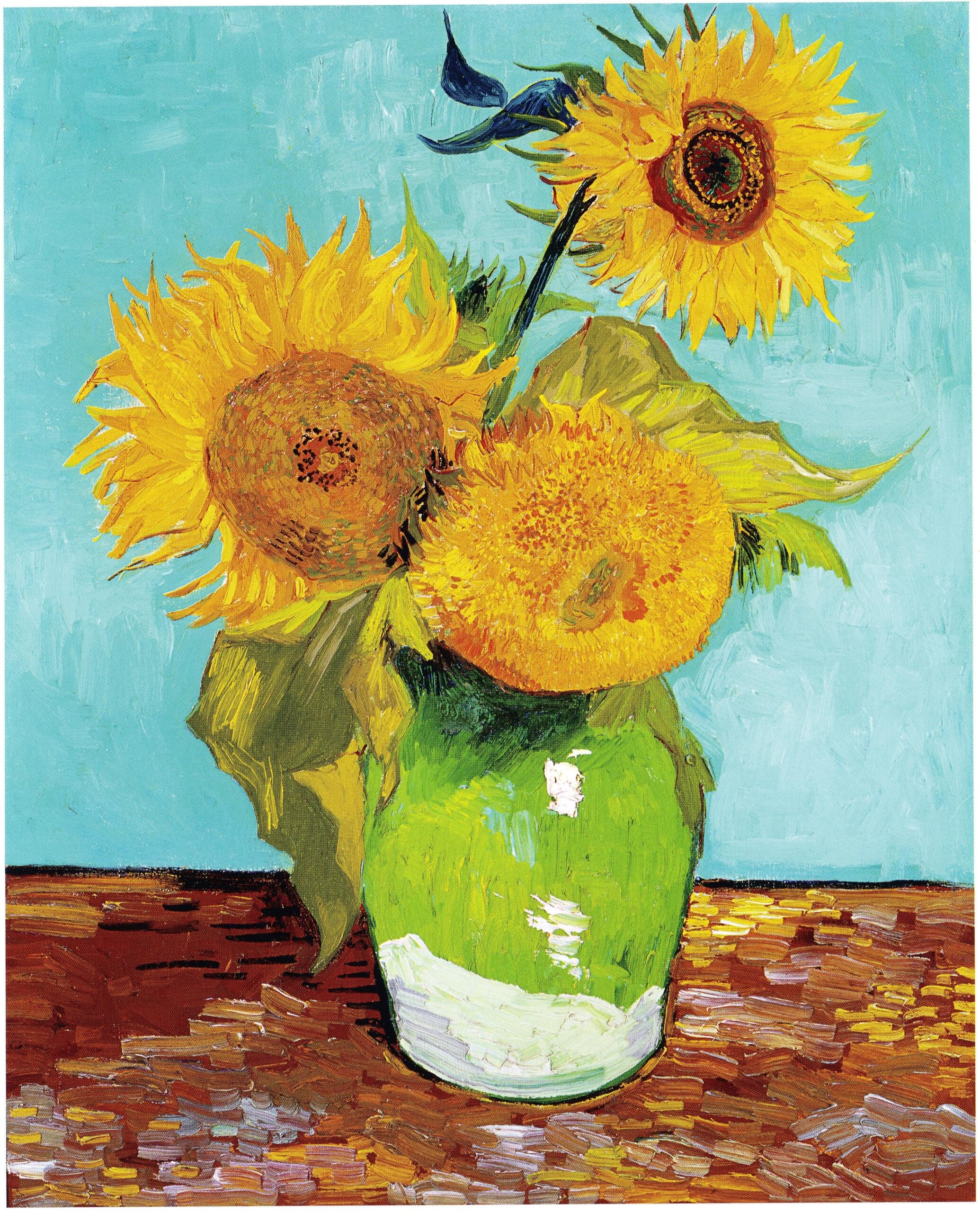
Van Gogh painted flowers during important moments of his career, especially while preparing his home in Arles for fellow artist Paul Gauguin. The sunflower series became a symbol of hope and companionship. In this version, even the fading petals seem alive through his expressive strokes. The background and vase are simplified so attention stays on the blooms themselves. His ability to turn a humble bouquet into something deeply emotional remains one of his greatest achievements. These paintings continue to attract visitors worldwide and are central to the story of modern European art.
Vincent van Gogh created multiple sunflower paintings in just a short period and they are now among the most famous flower artworks ever made.
13. Emil Carlsen: Still Life with Teapot
Emil Carlsen was a Danish-American still life artist respected for elegant still life paintings and interior scenes. Still Life with Teapot shows his skill in turning everyday objects into refined compositions. Carlsen used soft light, muted colors and careful placement of forms. The polished teapot and nearby objects create a sense of quiet beauty. His paintings are often praised for their calm and thoughtful mood.
Carlsen believed that beauty could be found in silence and simplicity. Instead of crowded arrangements, he often selected only a few objects and gave each one space to breathe. In Still Life with Teapot, reflections on metal surfaces contrast with softer fabrics and darker shadows. This subtle variety keeps the scene visually rich without becoming complicated.
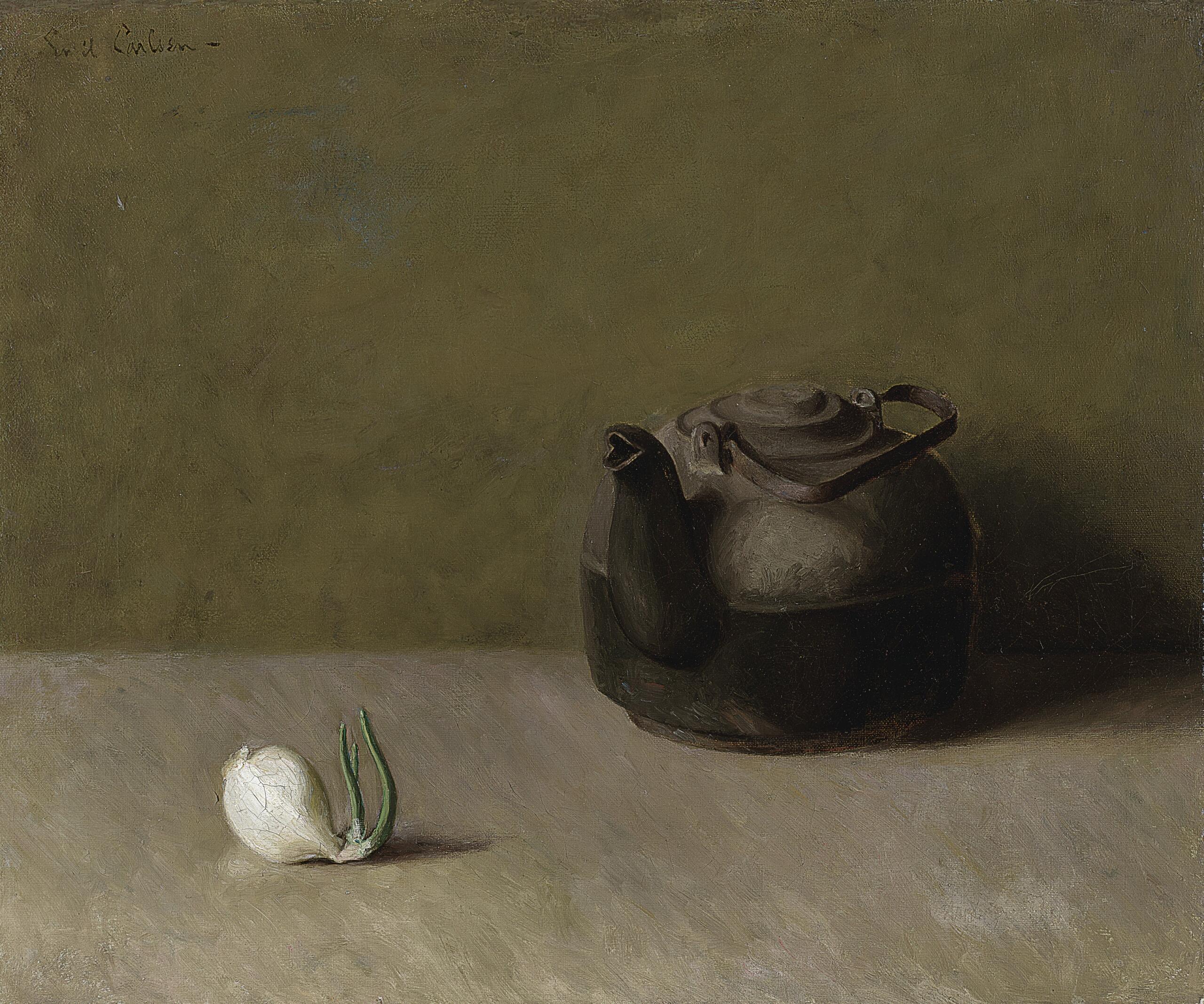
His style was influenced by European traditions but developed into something distinctly personal in America. Collectors and museums continue to value his still lifes for their craftsmanship, restraint and timeless elegance. His paintings reward careful looking and quiet attention.
14. Carl Schmitt: Still Life with Blue Bowl
American painter Carl Schmitt brought a fresh modern style to traditional still life subjects. In Still Life with Blue Bowl, color and composition are the main focus. The blue bowl draws immediate attention, while nearby objects create contrast and rhythm. Clear shapes and balanced design give the painting a modern character. His work shows how still life continued to develop in the twentieth century.
Schmitt was interested in harmony, proportion and the emotional effect of color. Rather than filling the canvas with detail, he arranged forms clearly and allowed each object to contribute to the overall structure. The strong blue bowl acts as an anchor within the composition, while surrounding tones create movement and balance. His still lifes reflect modern design ideas without losing warmth or familiarity. Paintings such as this reveal how artists adapted old traditions to changing tastes in the twentieth century. Schmitt’s work remains admired for its order, freshness and intelligent use of visual relationships.
15. Frank Benson: The Dining Room Table
Frank Benson is widely known for portraits and Impressionist scenes, but he also painted memorable interiors and still lifes. The Dining Room Table turns an ordinary room into a study of light and atmosphere. Sunlight, polished surfaces and carefully placed objects create warmth and elegance. Benson captured natural light with skill while preserving the calm order of the setting. The painting shows how still life can be found in everyday domestic spaces.
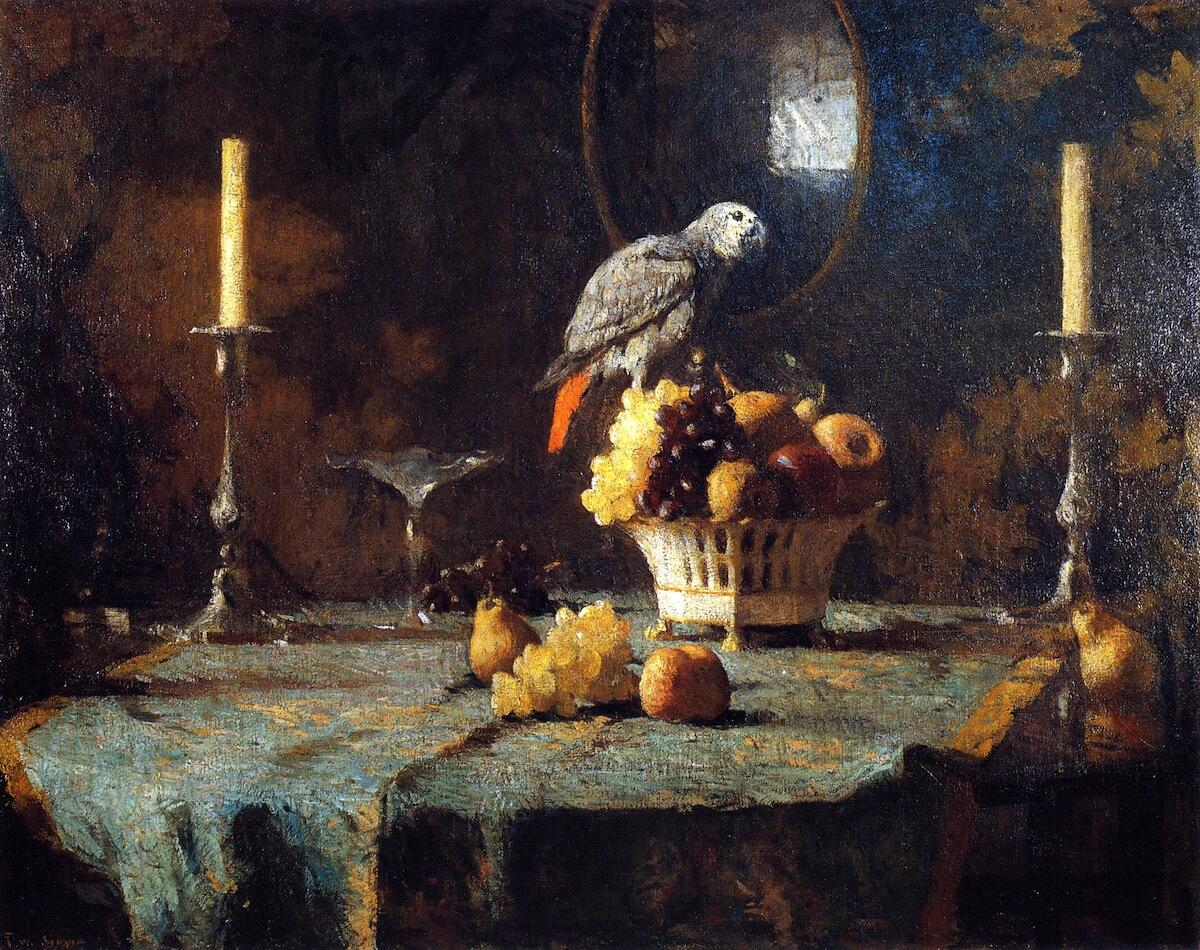
Benson had a remarkable ability to paint brightness without losing subtle detail. In this interior, light moves across the table, chairs and decorative objects, creating a sense of life within a quiet room. The scene feels welcoming and refined, yet natural rather than staged.
His training in academic art combined with Impressionist interests in light and color gave his work broad appeal. The Dining Room Table demonstrates that still life can extend beyond fruit bowls and flowers into the atmosphere of a lived-in home. It remains a graceful example of American painting.
Learn How to Paint with Superprof
Are you interested in taking on painting classes and into becoming a still life artist? Learn how to create still paintings with the help of Superprof. Our team of expert tutors offer a great opportunity to properly explore the world of art with personalized guidance and expertise. Fully understanding still painting cultivates an appreciation for beauty in everyday objects, creating a deeper understanding of composition, light and form.
Whether you're a beginner or looking to better your painting skills, Superprof connects you with qualified tutors who adapt their classes to your needs. Each tutor brings their own approach, providing invaluable insights and techniques to help you develop as an artist!
Choose Superprof for personalized, flexible and diverse learning opportunities with expert tutors across a wide range of subjects and interests.
Moreover, learning still painting with Superprof offers flexibility and convenience. With the ability to schedule lessons according to your availability, you can pursue your passion for art without disrupting your busy schedule. Whether you prefer in-person sessions or online classes, Superprof offers options to suit your preferences and circumstances. Ultimately, learning still painting with Superprof is about embracing creativity, fostering self-expression and discovering the joy of creating art. With the support of our experienced tutors, learning still painting is bound to be enriching, rewarding and inspiring. Discover different drawing classes near me on Superprof!
Summarize with AI:
Did you like this article? Leave a rating!


 Loading...

