
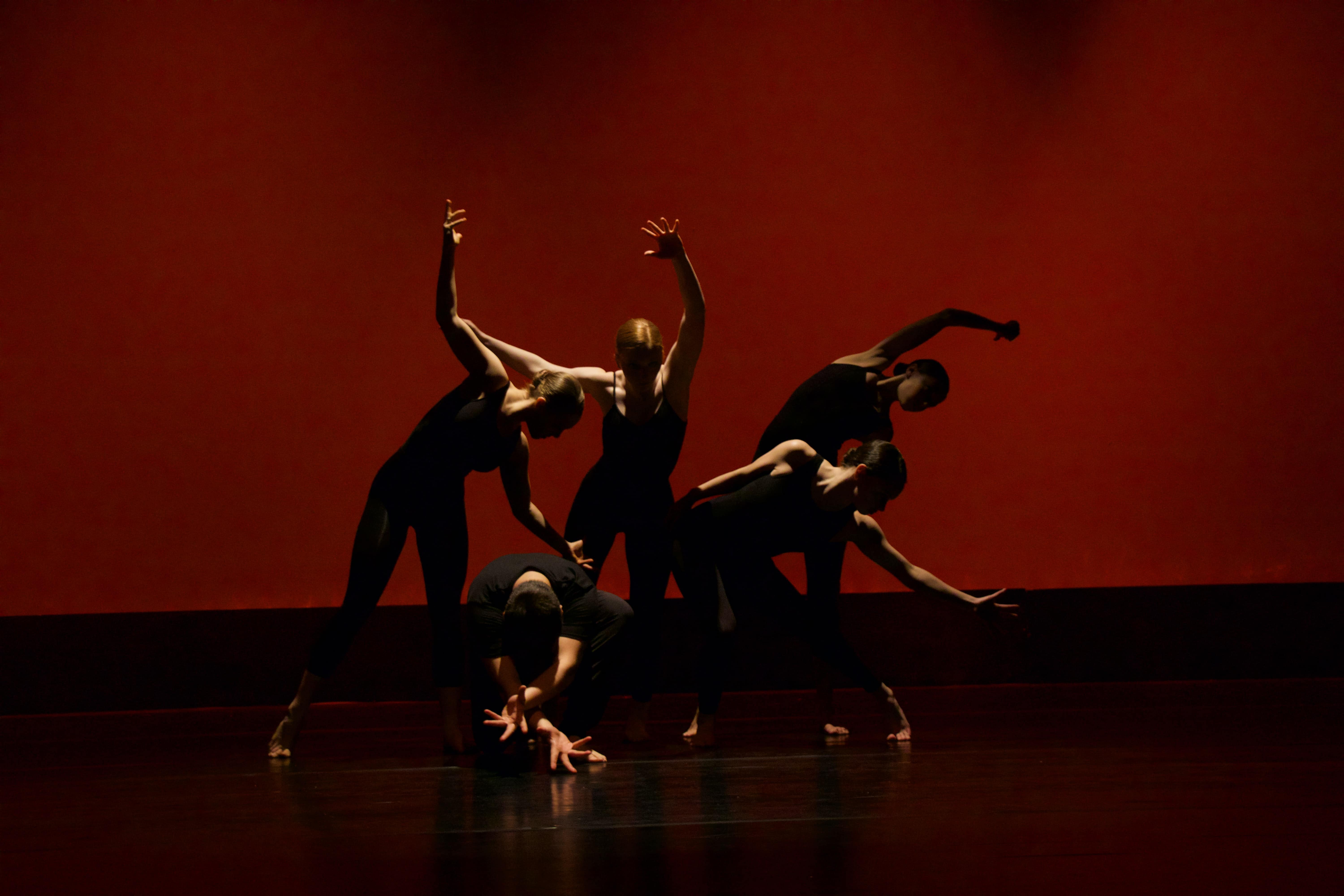

Due to its technical similarities, contemporary dance is often perceived to be closely related to modern dance, ballet, and other classical concert dance styles. While it draws inspiration from these other dance styles, contemporary dance has its own techniques that make it a distinct genre. Read on to find out what defines contemporary dance!



Brief History of Contemporary Dance
Isadora Duncan (1877-1907) was a ballet performer who decided to part ways with the rigidity of ballet and instead embraced her desire for natural, free-styled movements.
She met lots of resistance (as one does when pioneering new art forms) as well as many patrons and admirers. Inspired by ancient art like that found on Greek vases and bas-reliefs, Duncan performed for wealthy patrons in London and Paris before traveling the rest of Europe.
Many other performers followed along by showing the world that there can exist a dance that ignores old conventions and allows performers to push the boundaries of human expression.
What Is Contemporary Dance?
Many people are still asking themselves what exactly contemporary dance is. Contemporary dance has grown popular across the world, but it is most common in the United States and Europe. Contemporary dance is a type of dance that was created to express one's feelings through movement in direct contrast to the rigidity and exactness of traditional ballet.
This dance is known for having no strict rules, and it is common for each performer to move and have a personal understanding and interpretation of the dance. It is all about being creative!
Compared to other dances, contemporary dance adds a modern twist to a classical genre. For instance, other dances like ballet, are known for being a strict and established form of dance, where dancers have to follow movements to the letter, like machines.
Since contemporary dance is a type of dance developed to allow the dancer to express anything based on their feelings, it is usually practiced barefoot, to allow for better technical control of the movement.
The key to understanding this art is that it is based on allowing the performer to be creative and fluid. Improvisation is an essential part of this dance.
Modern-day contemporary dance is open to interpretations which is why it has many different applications. Even when traditional forms of dance are still popular, we can see a rise in their use of it in theater, movies, videos, and more.
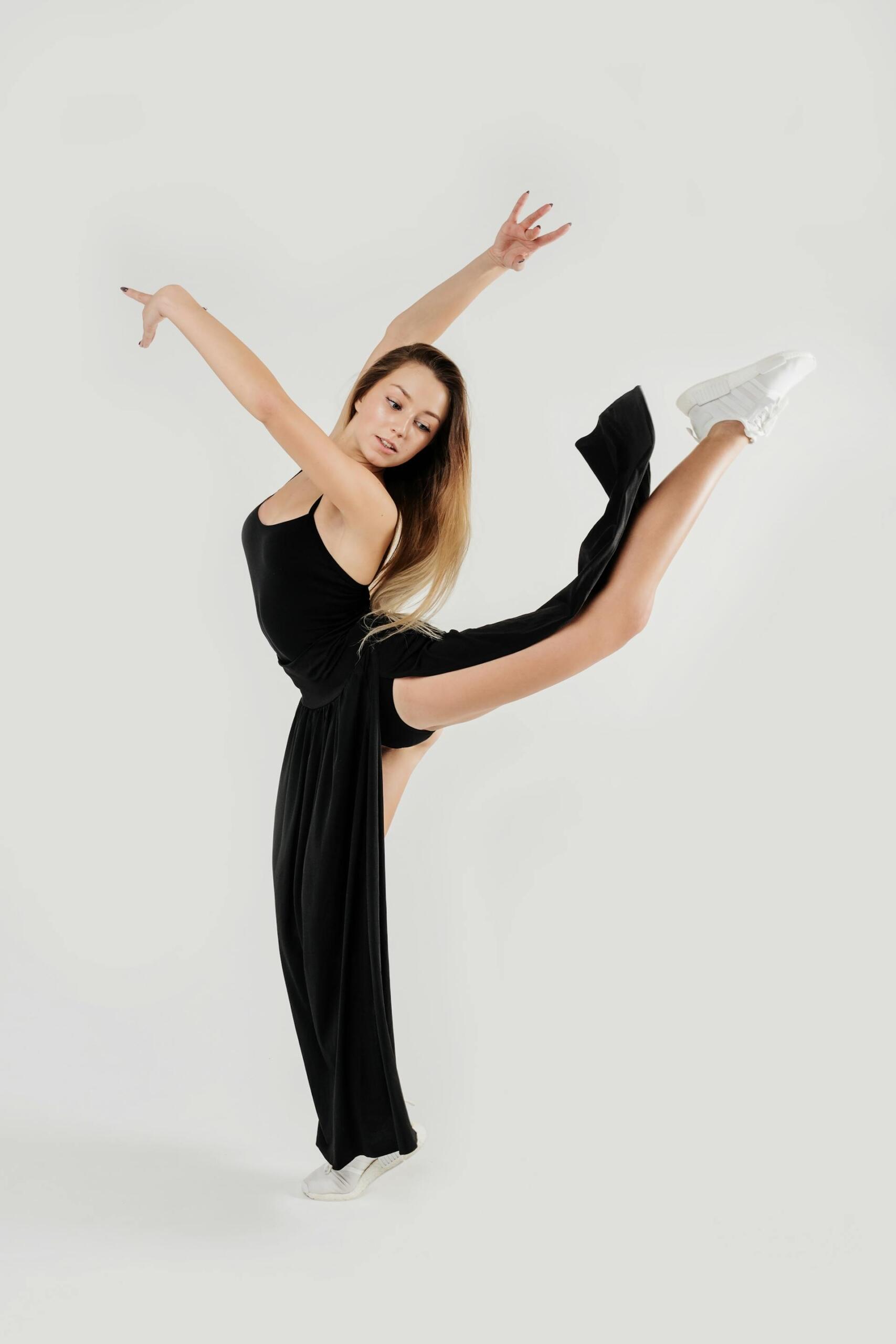
The genre's versatility allows the performer to use the influence of a storyline and music to create characters and entire theatrical performances that stray away from the more traditional methods of storytelling.
Contemporary dance has many different styles, some closely linked to music, such as jazz, rock and roll, and hip-hop. This style was created during the 80s and it became highly popular during the 21st century.
Overall, this genre offers the dancer ultimate creative freedom to perform something that identifies with them.
Want to learn how to unleash your creativity with contemporary dance? Learn techniques in contemporary dance with a personal dance teacher on Superprof!
Contemporary dance was developed based on the foundations of modern dance and post-modern dance. Martha Graham (1894-1991) is considered the "Mother of Contemporary Dance," having opened the Martha Graham School of Contemporary Dance in 1926.
What Are the 3 Basic Techniques of Contemporary Dance?
Melanie Clarke is one of the most influential performers in contemporary dance. She is a lecturer and program leader in dance at Trinity Laban Conservatoire of Music and Dance in London and the author of The Essential Guide to Contemporary Dance Techniques. In the book, she provides information about each technique that is used in contemporary dance. There are three —Graham, Cunningham, and Release, and each of them make part of the genre's history in the United States.
Release Technique
The Release technique was, as its name suggests, developed to allow performers to move their bodies in a way that will enable them to release their stress, emotions, and thoughts. The main idea is to let go of any tension built through different movements.
Dancers use momentum, inertia, and gravity to inform their movements. It is a holistic style of dance movement that takes into consideration breathing, muscle relaxation, and anatomy. Movements are much more than what meets the eye, as dancers monitor all these factors while moving in intuitive, fluid ways.
The technique is highly informed by other techniques like the Skinner Releasing Technique, Feldenkrais and Alexander Technique, and even practices like yoga and martial arts.
The Graham Technique
The Graham technique is characterized by its emotional individuality and expressionism in a method that meets movement and music. It is said that this technique continues to evolve and even though it has an essential base, it continues to change year after year.
Developed by Martha Graham (1894–1991), this technique is also found in modern dance. It is designed to mimic the breath, in that the movements “contract” and “release,” creating a pattern of visual tension followed by relief. Another main principle is the idea of creating “spirals” with the body, from hip to shoulder, as well as exaggerated natural movements.
While the movements are not free-flowing, they are still very different from other structured forms of dance.
You can learn more about all these techniques with a private dance coach for dance classes near me on Superprof.
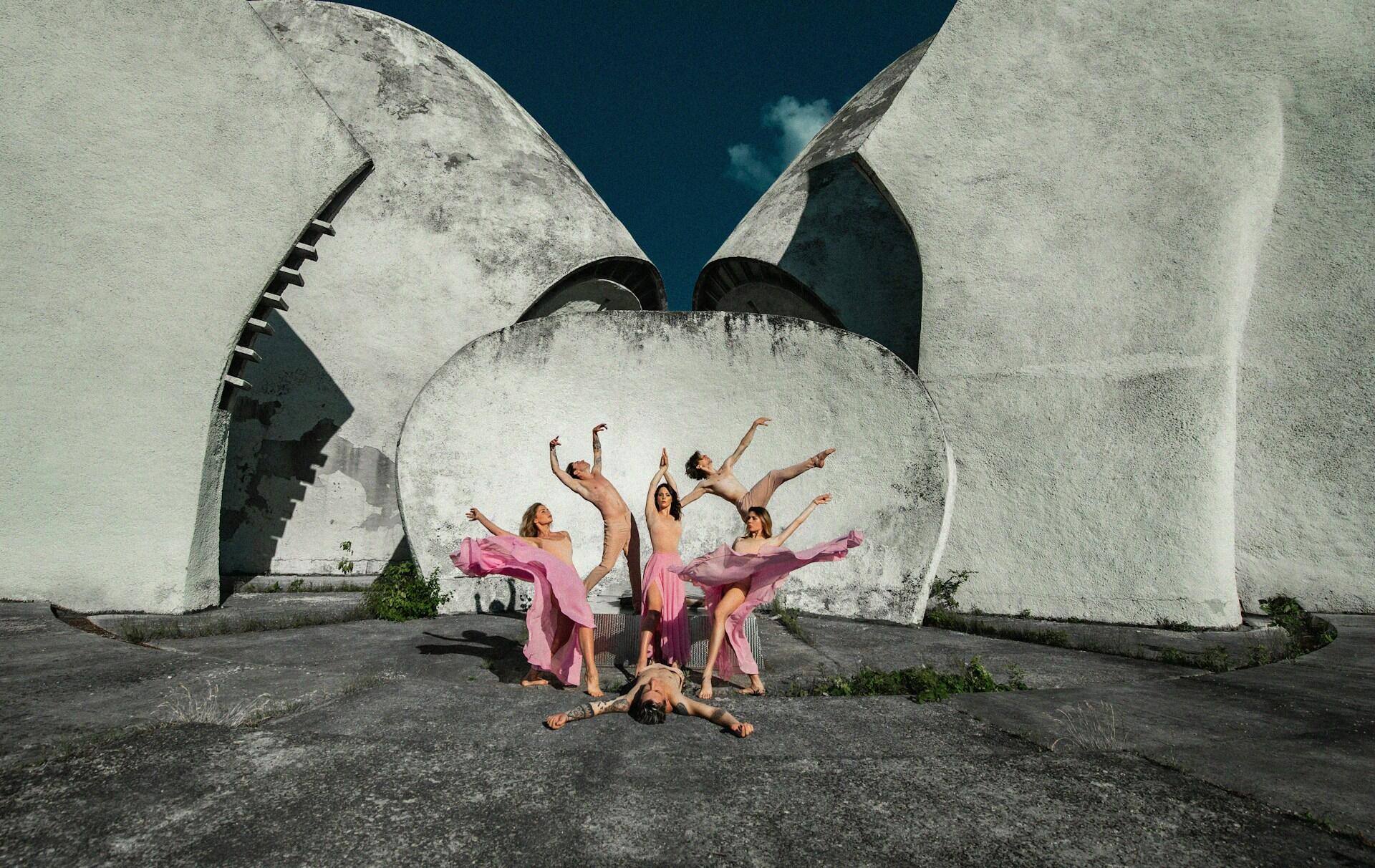
The Cunningham Technique
Finally, there's the Cunningham technique, which was born from the Graham technique since Merce Cunningham (1919-2009) was a student of Graham. As many pupils do, Cunningham broke away from the structures developed by his mentor and created his own techniques.
The technique breaks away from the original form of contemporary dance —which embodied feelings and emotion— and focuses on finding freedom through physical movement. This means that this technique doesn't necessarily follow musicality and it highly relies on improvisation.
The goal is to be so balanced and spatially aware that new ways of moving open up; where a less-balanced dancer would not be able to make a movement, a practiced Cunningham dancer would be able to reach the position by virtue of superior body control and balance.
What Are the Elements of Contemporary Dance?
Contemporary dance has quite a few elements that make it stand out. However, it also has the five basic elements every genre has, they are body, action, space, time, and energy.
Every dance uses all five of these elements, just in different ways. These differences are what create different dance styles.
Body
The first element, the body, is probably the most important one since it is the medium through which dance is performed. Dance critic Walter Terry put it best this way:
No paints nor brushes, marbles nor chisels, pianos or violins are needed to make this art, for we are the stuff that dance is made of. It is born in our body, exists in our body, and dies in our body. Dance, then, is the most personal of all the arts . . . it springs from the very breath of life.
Walter Terry
Through stillness and motion, the body becomes a tool for art that the dancer can experience and/or embody. The audience understands the art because of the body. It is used to transform ideas, emotions, and information from thoughts and feelings into a tangible, understandable form.
Action
The next element is action, which is the mere act of moving.
Action is the method by which emotions, ideas, and information become something understandable and tangible. Dancers can move a part of their body, including their face and expression, their entire body, and can act alone or with others. They can be still or dynamic, take up more space or less, and even be lifted or otherwise interact with other dancers on the stage.
In contemporary and modern dance, improvisation is commonly used, which allows dancers to portray an idea, emotion, whim, etc. in the moment, rather than rely on pre-planned, rehearsed movements.
Space
Then there's space, which refers to where the action of moving the body takes place.
Dancers can move in one spot or travel around the dance floor or stage. They can be in harmony or disharmony with physical elements around them like stage props and boundaries, and other dancers.
The way a dancer interacts with the stage conveys meaning. If they move quickly, directly, and with purpose, it conveys a different emotion and idea than if they wander around in an organic and haphazard fashion. They may appear in front of, next to, or behind different stage elements, including other dancers. They could even be under or on top of those elements!
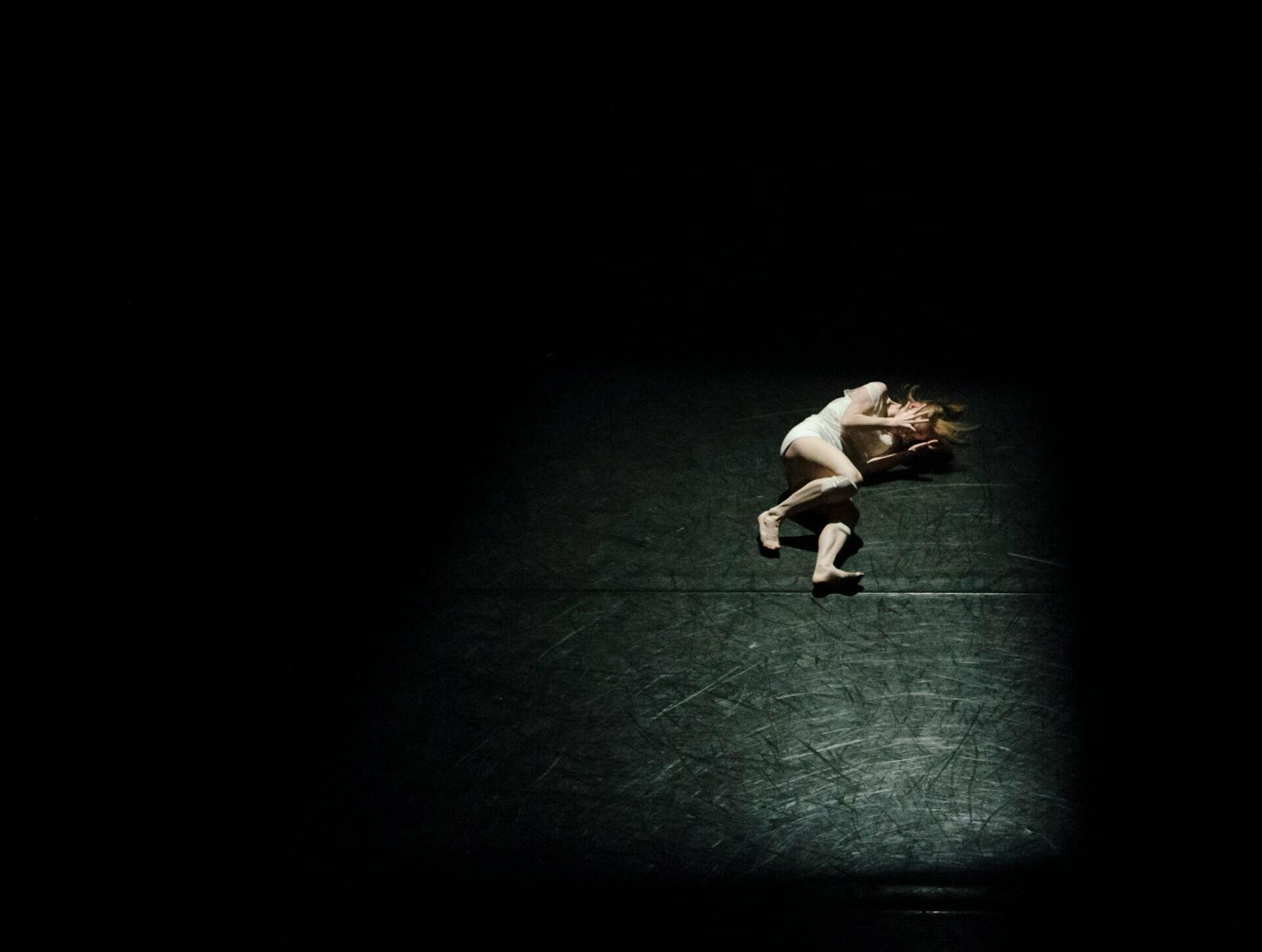
They may appear in front of, next to, or behind different stage elements, including other dancers. They could even be under or on top of those elements!
In some instances, the space may even include the audience section and the space above the stage.
Time
Another element is time because performers must think of how to move their bodies in relationship with time. Are they moving fast or slow? Is the dance short or long? How long do they spend in stillness or in movement? Are they moving to a beat or purely organically?
Most dance forms require dancers to move in harmony with a rhythm, but contemporary dance may or may not follow this tradition. Some dances are performed with the constraint that dancers must move in time with the music and hit their cues and marks by previously decided measures.
Some styles of contemporary dance allow dancers to break away from a pattern while improvising, and dancers can instead rely on organic cues for timing or even disregard them to convey an emotion or dramatic effect.
Energy
Finally, there's energy, which refers to how the performer moves through space and time. Energy helps us to identify how the performers are moving. What effort are they making?
Dancers can choose to move quickly or slowly, abruptly or gently, with precision or chaos, in large motions or small ones. Each choice shows the type of energy the dancer wants to convey.
Do they want to portray high energy, like excitement, joy, big love, aggression, or fear? Or do they want to convey low energy like tiredness, tenderness, sadness, or contemplation?
Regardless of if a dance has high energy or low energy, it still has energy.
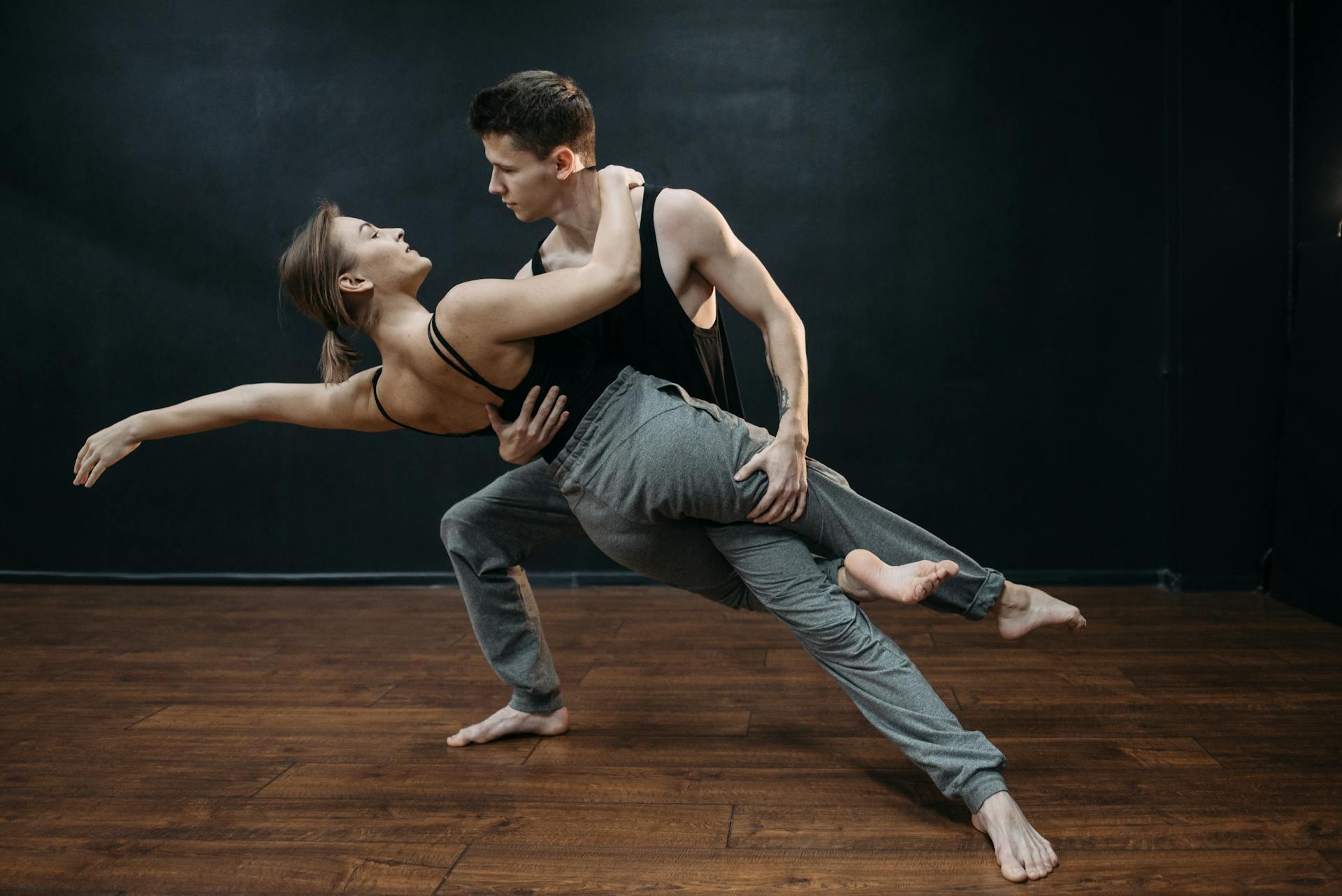
Using the Five Contemporary Dance Elements
If you take a look at the work of famous contemporary dancers, you'll see that everyone used different elements of the genre but they are always using the five basic ones.
When it comes to the elements used in contemporary dance, it depends on the technique being used, the resources each dancer uses, and other factors. This does not mean that every choreography has to have every element; performers get to choose which ones to use.
The unique part of contemporary dance comes in when dancers can use the five elements of dance in ways other dances typically do not allow, like not maintaining rhythm and utilizing improvisation.
Another way to look at this question is “What movements are hallmarks of contemporary dance?” Or perhaps, “What types of dances is contemporary dance based on?”
Contemporary dance incorporates elements from many styles of dance, notably jazz, ballet, and non-Western forms like African dance and Japanese Butoh. Contemporary dance also uses themes from non-dance forms like yoga and martial arts.
Learn Contemporary Dance with a Private Tutor
Many people believe the only way to dominate a new skill is by attending an institute for dance, or an academy, school, or class. Private tutoring sometimes is not considered a viable option for learning a new skill.
However, tutoring lessons are growing in popularity, and a private dance teacher can be just what you need to begin learning or hone your talent. With a professional personal dance teacher, you can learn the techniques of contemporary dance from an experienced teacher in solo classes.
Superprof tutors offer classes in-person and online, so even if you can’t find a teacher near you, you can still learn through online classes and a webcam. If you want a private tutor, who has extensive experience teaching contemporary dance, to give private lessons, all you have to do is search for someone right here on Superprof. On a tutor's profile, you'll find information about their teaching background, their level of experience, their rates per hour, the techniques they use, and more.
Keep in mind that it is best to have every dance class in person so you can understand everything better and see every movement clearly. If you have online lessons it will probably take you longer to understand the moves since your tutor won't be able to see every move clearly.
A tutor will guide you through your learning process, as they'll also correct your mistakes, support you, and be tough with you when necessary.
Summarize with AI:
Did you like this article? Leave a rating!

 Loading...
