
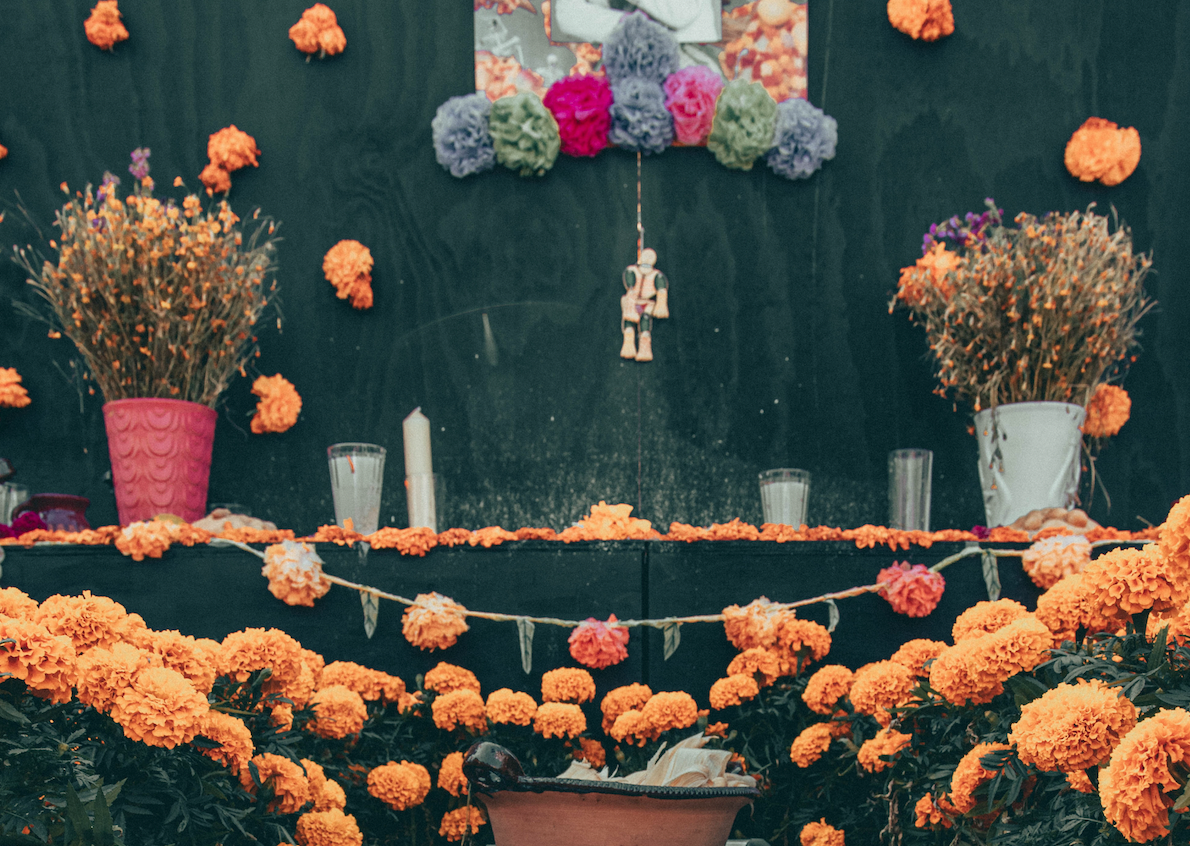

One of the most well-known events in Mexico is Día de Los Muertos ("Day of the Dead"), when families create altars, ofrendas, to honor and celebrate their ancestors. It's a beautiful tradition created from a tapestry woven with offerings, intricate flowers, and mesmerizing symbols. Now let's delve into the enchanting realm of ofrenda ideas, featuring vibrant blooms like marigolds, decadent foods, and intricate crafts.





Day of the Dead Altars: A Colorful Tradition
In Mexico, Día de los Muertos is a holiday steeped in tradition and cultural significance. At its heart are the altars that serve as a location of reverence for family members who have passed. These colorful and intricate shrines are a fundamental aspect of the Día de los Muertos festivity. The two-day festival happens on November 1st and 2nd.
Meticulously arranged, each element on an ofrenda represents different aspects, creating a spiritual guide for those who have left the physical world.
Both the altar and the actual offerings placed upon it can be called "las ofrendas."
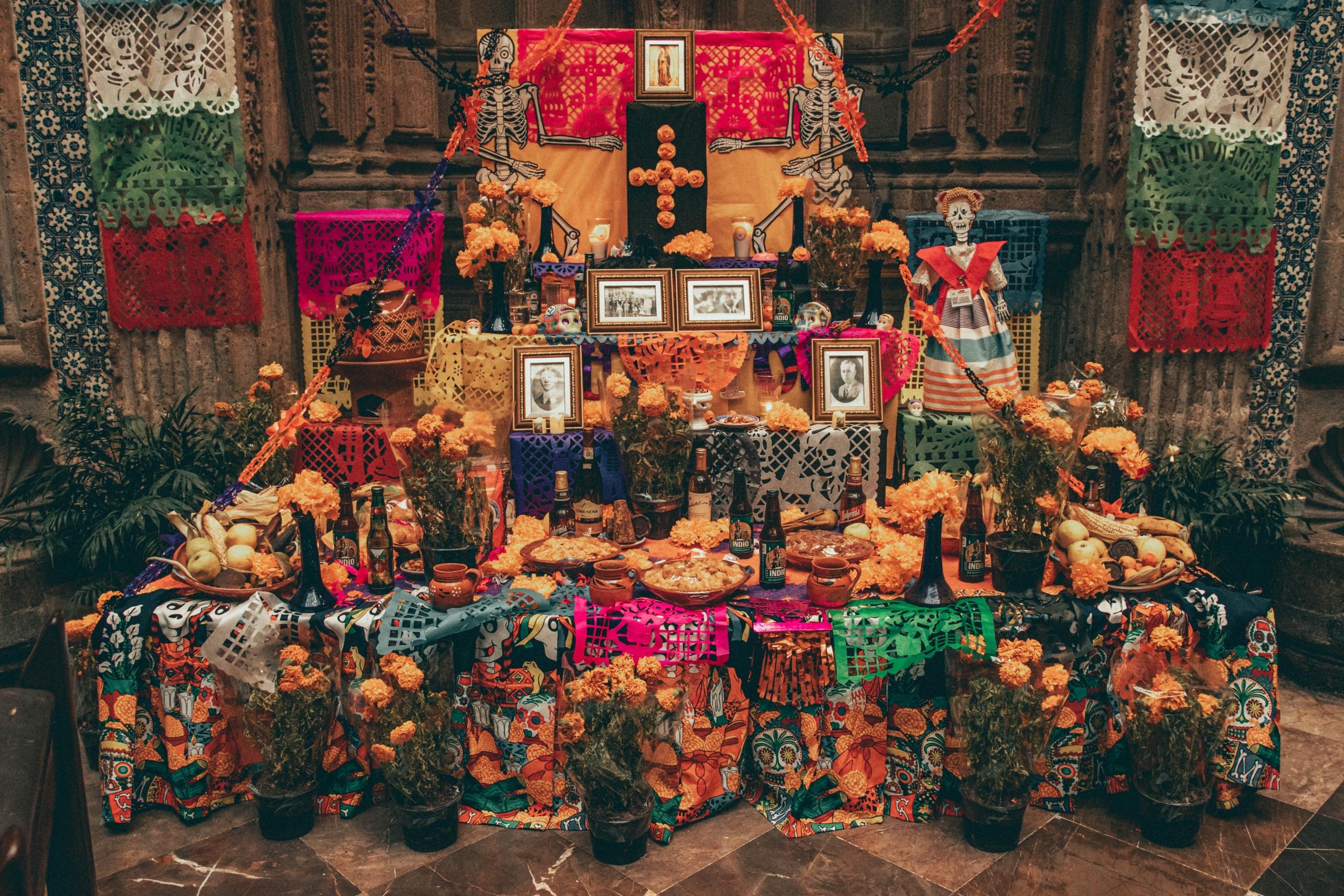
On these Day of the Dead ofrendas, you will find photos of those who have passed, marigold flowers, and items that they enjoyed in life, such as their favorite drinks or personal mementos. Each element and item on the altar holds significance and is carefully chosen to create a warm and inviting venue for the souls of their family members to return to.
As the smell of incense fills the air, and the marigolds surround the altar with their vibrant orange and yellow hues, the Day of the Dead altar becomes a focal point of the Dia de los Muertos festivities. It's a place where the community comes together to honor the memory of the departed, celebrating the lives of those who have left this world, yet remain in the hearts and memories of the living. This colorful tradition is a testament to the enduring connection between the realms of the living and the dead, a time when those who have passed are welcomed back with open arms, guided by the love and memories of the communities that cherish them.
The Altar Levels
Ofrendas feature symbolic items to represent each natural element. It's believed that these ofrenda features help guide and provide for the spirits who will be visiting the family during the festival. Traditions vary by country, region, and family.
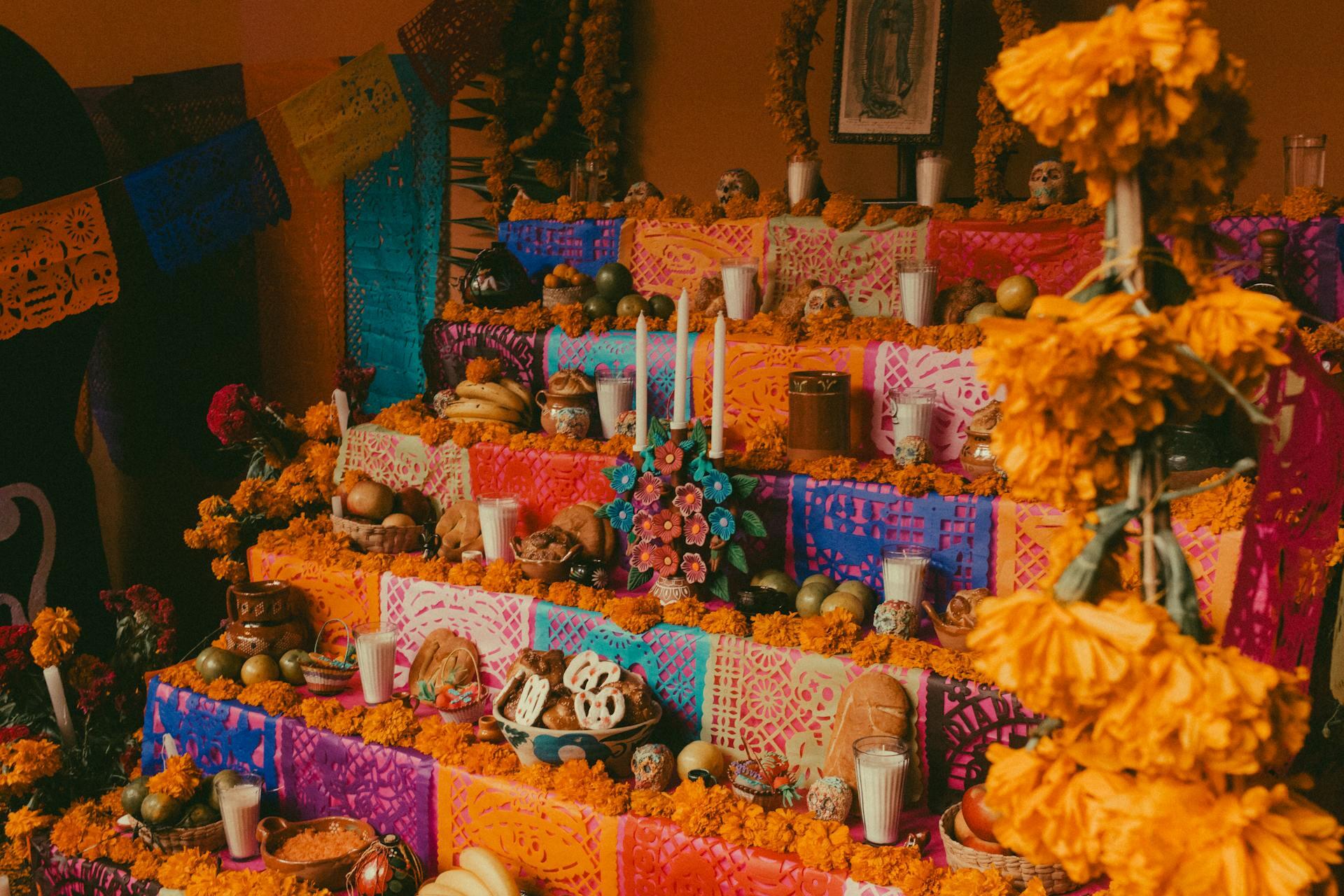
Some altars will even feature a 3-tier setup, representing heaven, earth, and the underworld.
Earth Level
At the base of the altar, one will often find items like salt and customary Mexican food, such as sugar skulls, pan de muerto, and the preferred dishes of the deceased. These offerings are meant to nourish and please ancestors, ensuring they have a satisfying time during their visit. The degradation of the food over the days it's left out is seen as evidence that the ancestors are eating their fill.
Water Level
A container of water to quench the thirst of the spirits after their long journey back to the world of the living is placed on the altar. The water can also be a means to purify the visiting souls, and sometimes families will include soap for the ancestors to wash up with. Other beverages, like milk, beer, wine, and horchata, are also frequently presented.

Día de los Muertos 2025
November 1, 2025 12:00 am
Start preparing on October 31st!
Wind Level
Here, papel picado (decorative paper), representing the wind, is displayed. These intricate paper cutouts, often adorned with skulls and other festive designs, add a sense of movement and whimsy to the altar. The flow of air, representing the souls' journey, is visible with the help of the paper.
Fire Level
Candles and incense, often placed on this spot, are symbolic of the fire that lights the way for the departed to return to their loved ones. Like water, fire can also be a type of purification. The flickering candles are also believed to represent the souls of the dead.
Elements of the Altar
In Mexico, the art of crafting altars for Day of the Dead is a deeply cherished tradition, bringing people together to celebrate the lives of those who have left this earthly realm. Each element on the altar is thoughtfully chosen to represent the earthly connection, memory, and honor of those who have passed away.
Each family may have their own personal traditions, adding or omitting elements and items as is customary for them. For the most part, the following elements are found in most ofrendas across the communities that celebrate.
Cempasúchil (“Flor de Muerto”)
The Flower of the Dead is known in English as "marigold." These colorful and fluffy-petaled blooms are used as a beauty element to nurture joy and peace, but more so for their fragrance, which is said to help guide the spirits. The flower has also been known since ancient times to possess some mild medicinal properties, which can offer a healing, reassuring feeling.
Calavera de Azúcar (Sugar Skulls)
Sugar is molded into a skull shape and intricately decorated. They serve as central principles, representing the sweetness and impermanence of life and death. They are often personalized with the names of the departed and decorated with colorful icing or paint.
Pan de Muerto
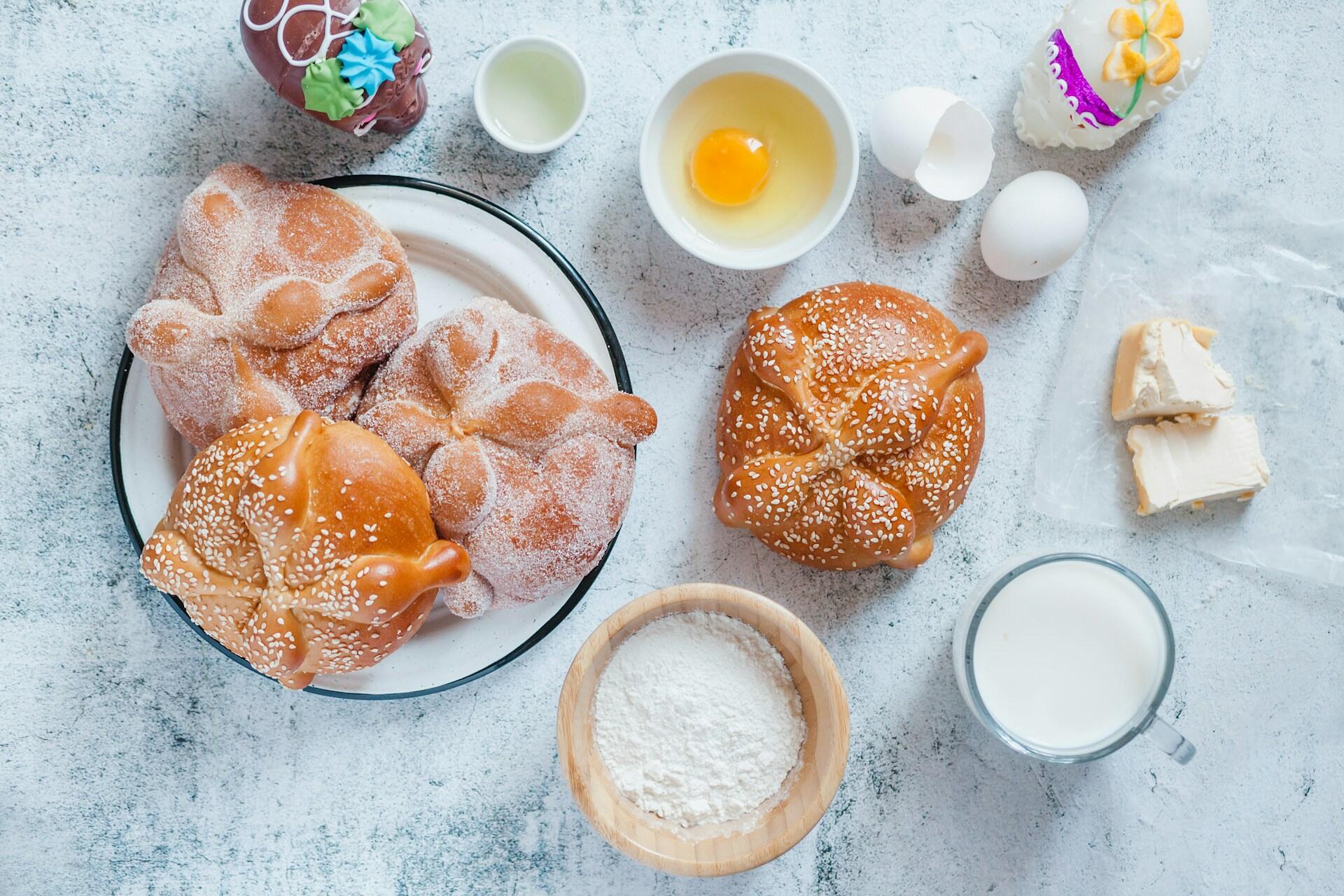
The traditional "bread of the dead," this sweet, fluffy bread is shaped like a skull or bones and is a delicious offering to those who have passed, symbolizing the circle of life. It's thought that the spirits are nourished by the bread after their long journey from the afterlife back to earth. Typically, at least two loaves are baked: one for the ofrenda and one for the living family.
Photos
Framed photographs of those who have passed away play a vital role in the altar, reminding everyone of the individuals being celebrated and ensuring their memory lives on. It pleases the spirits who return and see their visage on the beautiful family ofrenda, along with all the others. Photos also serve as a guide for the dead on their journey back to earth and help remind them of happy times in their earthly life.
I want people to realize that Día de los Muertos is a celebration of life. It is not scary, it’s not spooky, it’s not a costume—it’s more than that.
Angélica Jiménez, from rmpbs.org article "Día de los Muertos: a celebration of life in a time of loss."
Salt
A vital element, this is believed to purify and preserve the spirits of the departed, defending against decay. It also helps nourish them for their journey back to the world of the living. A grounding element, salt helps the spirits find and attach to the family during the festival.
Papel Picado
Delicate, decorative paper cutouts are hung around the altar, adding a sense of festivity. The movement symbolizes the wind and the connection between the realms of the living and the dead. The fragility of the paper also represents the fragility of life. The different colors can evoke different themes, like mourning, joy, and purity.
The items placed on an ofrenda are means to guide the spirits of the ancestors from the afterlife back to earth, and specifically to their family. The items on an ofrenda each help in this quest. Things like bright flowers, incense, and candles make the altar easier to find. Items like food and water nourish and refresh the spirits. Personal things like photos are a way of reminiscing with the visiting ancestors.
Crafting the Perfect Altar: Ofrenda Ideas
At the core of crafting the perfect Day of the Dead altar is the desire to create a warm and inviting space where the community can come together to remember and celebrate those who have passed. This connection between the living and the deceased is crucial to the holiday's significance and is celebrated by millions each year.
Crafting an ofrenda or offering is a cherished tradition that brings families together to honor their loved ones. The offering is a space in the home where cherished memories are celebrated, and the spirits of the departed are welcomed with open hearts.
Here, we explore creative ideas that add a personal and stylish touch to this beautiful tradition.
in Mexico each year, according to a 2020 Statista survey.
Familial Unity
One of the most heartwarming aspects of Day of the Dead is how it unites families. Creating an ofrenda is often a collaborative effort, reinforcing the bonds between generations. Some families spend days crafting the ofrenda together. Others prepare a feast to bring to the cemetery and eat with their ancestors at their graves overnight.
Sensory Feast
The offering engages the senses. Scents from the departed's treasured foods fill the air with enticing aromas and present a variety of tastes for the living and dead. Vibrant flowers surround the shrine, creating a colorful, fragrant experience. Incense and candles provide even more aromatics and visual delights, as well as a smoky ambiance.
Personal Touch
A stylish offering reflects the unique personality of the person being celebrated. It can include personal items, like artwork for artists or musical instruments for music lovers. Beloved objects from a person's life may be included, like a favorite alcoholic beverage or snack, a favorite book, or a child's favorite toy.
No, it's possible to build an ofrenda anywhere that makes sense for you and your family. In Mexico, many people forgo building an ofrenda at home, and instead adorn their ancestors' graves in the style of an ofrenda. Ofrendas can be as big or small as you want them to be, depending on the space you have to house them.
Stories and Letters
Incorporate written stories or heartfelt letters to the departed. Sharing memories and love through words deepens the connection between the ancestors gone by and those who remain on earth. Poems and drawings are also great ofrendas.
Creating an altar is a commemoration of life, a place where ancestral traditions are passed down, and cherished memories are relived. Each ofrenda is a unique work of art, lovingly crafted to reflect the personality of the departed. It's a location where families unite to honor their family and friends, sharing stories and delicious food. It's a stylish and personal tribute, celebrating life in all its colorful and flavorful glory.
These symbols are a testament to the enduring connection between the living and the memory of those who have passed away. They embody the idea that the departed are never truly gone; they live on in the hearts of their loved ones and are welcomed back to the world of the living during this special celebration. The Day of the Dead is a beautiful reminder that life and its many rich symbols are to be celebrated, and the legacy of those who have come before should be cherished.
Symbols of the Day of the Dead
In Mexico, the Day of the Dead is a festivity deeply rooted in the culture and the connection between the living and the departed. The symbols that adorn this holiday are rich with meaning, offering a profound glimpse into the beliefs and traditions of the region.
A traditional Dia de los Muertos altar incorporates deep symbolism and ancestral values.
Earthly Symbols
The Day of the Dead is a tribute to the cycle of life and the belief that the souls of the deceased return to this earthly realm. One of the most important symbols is the marigold, known as the "flor de cempasúchil," which represents the earth and guiding spirits. The short life of a picked flower is a reminder of the brevity of human life.
Mexican Heritage
The symbols reflect the deep-seated connection between Mexicans and their ancestors, celebrating their cultural identity and heritage. The indigenous population, mostly the Aztecs, had been celebrating their ancestors long before the Spanish colonists arrived. Traditional Mexican decorations and sweet bread symbolize this connection.
Calaveras and Calacas
Calaveras, represented in sugar form, as face paint, and in other ways on Día de los Muertos, is a reminder of death. Calacas (Mexican slang for "skeleton") are wooden figurines or people dressed as skeletons. The reminder is perceived as a fact of life with positive connotations rather than a depressing or scary idea, as seen in many parts of Western culture.
Learn Spanish with Superprof
Looking to learn more about Day of the Dead, while improving your Spanish language skills? With a diverse community of expert tutors ready to guide you at Superprof, you can personalize your language learning experience to suit your unique needs and goals.
Superprof provides a supportive and convenient platform for learners of all levels, from beginners to advanced speakers. Whether you're looking to increase your vocabulary, enhance your grammar, or improve your speaking abilities, Superprof equips you with the tools and guidance to make your language learning adventure both enjoyable and successful. Start your Spanish language journey with Superprof, and embrace a world of new possibilities and connections.
Summarize with AI:
Did you like this article? Leave a rating!


 Loading...
