
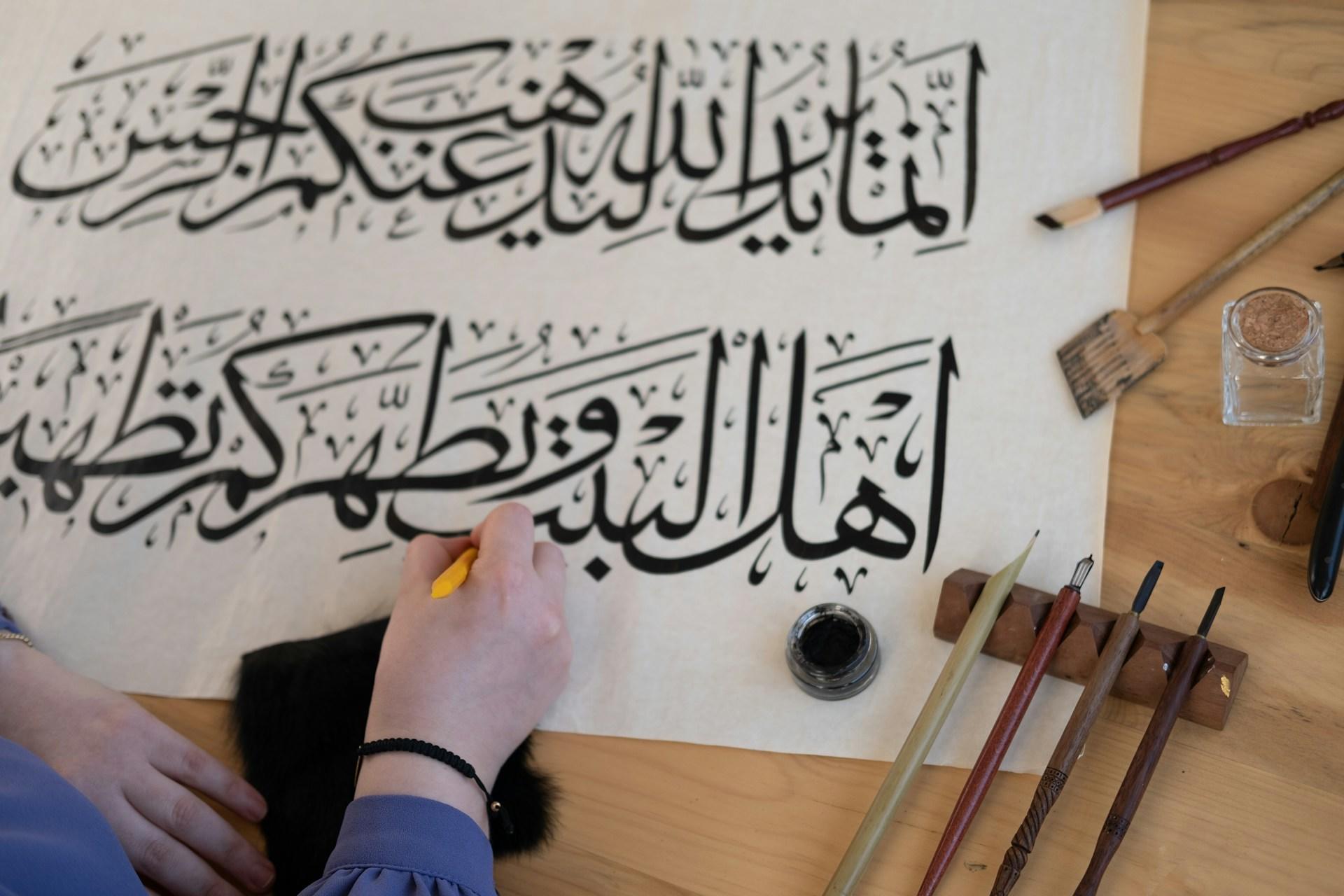

Writing is the painting of the voice.
Voltaire
Arabic is written from right to left because it evolved from ancient Semitic scripts such as Phoenician and Aramaic, both of which were right-to-left (RTL) languages. This is probably because it was easier for the earliest, predominantly right-handed scribes to carve into stone or write on parchment without smudging the ink. But there's more to Arabic's directionality than that. As you could have guessed from the title of this article, Arabic is read and written from right to left. It's a defining feature of the Arabic script and part of the language's (and the script's) historical evolution.
Key Takeaways
- Arabic is written and read from right to left because it developed from older Semitic writing traditions.
- Ancient scripts such as Phoenician and Aramaic helped shape the direction and development of Arabic script.
- Arabic is not written “backward”; it simply follows a different writing convention from English.
- Practical theories for right-to-left writing include carving direction, hand position, scroll handling, ink, and writing tools.
- Arabic is not the only right-to-left language; Hebrew, Persian, Urdu, Pashto, Syriac, and others also use RTL scripts.
- Learning Arabic script also means learning how letters connect, how their shapes change, and how numbers can appear left to right inside Arabic text.


Historical Origins of Right-to-Left Writing
So, why is Arabic right to left? To understand why the Arab language is written from right to left, a review of the history of language is in order. The earliest evidence of a writing system dates to the 4th millennium BCE, around -3500. Cuneiform writing was used in Mesopotamia, around the same time ancient Egyptian hieroglyphs appeared.
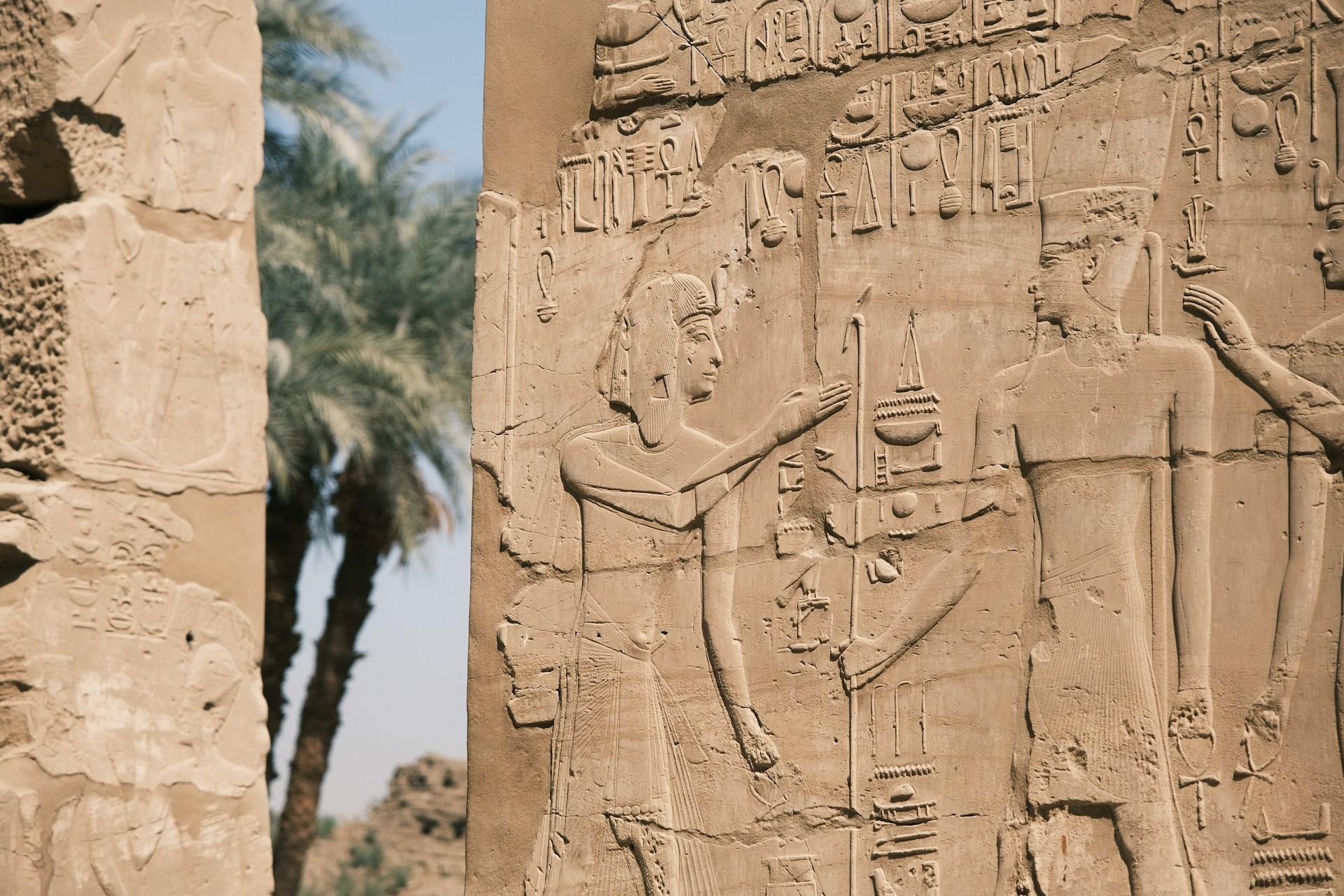
Over the next 3,000 years, that first writing system slowly evolved from a form of communication based on pictographs depicting objects to a system of signs representing sounds and phonemes. People gradually moved from using ideograms to communicate what they saw and thought to using letters and an alphabet.
The first known alphabet is called the Proto-Sinaitic alphabet. It was an abjad, an alphabet composed of consonants used for writing in the ancient Middle East. It contained 23 signs that date back to the 17th century BC. Archaeologists have found signs that appear to be derived from Egyptian hieroglyphs and from syllables of other Semitic languages.
So, in what direction were they written? For the most part, the hieroglyphs, cuneiform signs, and Proto-Sinaitic alphabet letters were written from right to left.
Semitic Language Family Influence
Like other Semitic languages, Arabic is written from right to left and read in the same way. Ancient writing systems like Phoenician and Aramaic also use this direction, but more on them in a moment. The direction of Arabic writing is a key linguistic trait of the language and part of its cultural and historical identity, all of which shape how it's written and the direction in which it's read.
This group of languages, such as Arabic and Hebrew, is read from right to left and is referred to as sinistroverse.
On the other hand, in English we write from left to right, which is said to be dextroverse.
Take note of all the languages derived from the Proto-Sinaitic alphabet:
- Arabic
- Aramaic
- Greek
- Hebrew
- Latin
In the 10th century BCE, people originating in the Middle East, whose descendants now live in Lebanon, Israel, and southern Syria, came to economically and commercially dominate the Mediterranean basin. They were called the Phoenicians. The loosely united Phoenicians revolutionized writing by creating standardized phonemes in the form of letters reminiscent of the Proto-Sinaitic writing. The Phoenician alphabet is the oldest verified alphabet. Around 1000 BC, the Phoenicians abandoned cuneiform writing and adopted a linear alphabet, written from right to left, that was then used throughout the Mediterranean for several centuries.
How Arabic Script Developed
What does this have to do with the direction in which Arabic is written? Between 300 BC and 650 AD, in what is today Syria, Iraq, and Iran, the Persian Empire adopted another Levantine Semitic language, Aramaic, as the first written official language of the Near East. Aramaic was spoken from Egypt to Pakistan, including Palestine, for nearly 900 years.
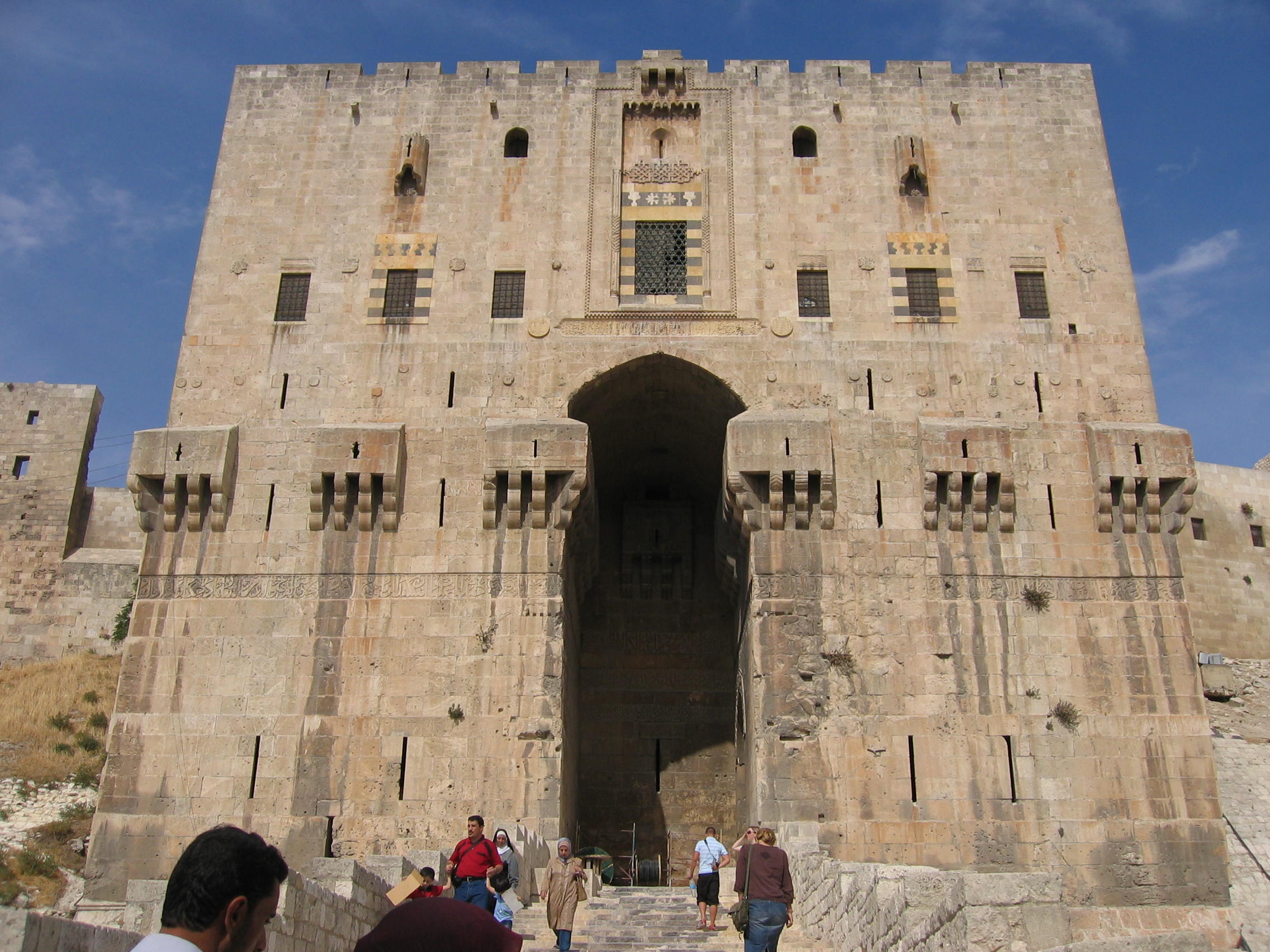
Aramaic, which is read right to left, was also the official language of the Assyrian, Mesopotamian, and Babylonian empires.
And from this Semitic language - Aramaic - came the Arabic alphabet (alif, ba, ta, tha, jim, ha, kha, etc.) in the 2nd century CE. But it wasn't until 512 that documents attesting to the existence of right-to-left Arabic writing were found near Aleppo in Syria. However, as the evidence was too old, no one can yet say why Arabic was written from right to left. We can only hypothesize. Arabic also holds deep cultural and religious significance, especially due to its central role in Islam and its long history as a language of scholarship, literature, and calligraphy.¹ Students learning written Arabic also need to recognize that letters can change shape depending on whether they appear at the beginning, middle, or end of a word.⁴
Why Is Arabic Written Right to Left?
Arabic is written from right to left, a tradition rooted in its history as a Semitic language. Ancient Semitic scripts, such as Phoenician, followed this orientation, and Arabic continued the practice. One explanation for this direction is its practicality in ancient times, when writing on stone or parchment was common. For right-handed individuals, it helped prevent ink smudging. This style has been preserved over centuries and remains a distinctive characteristic of the language today.
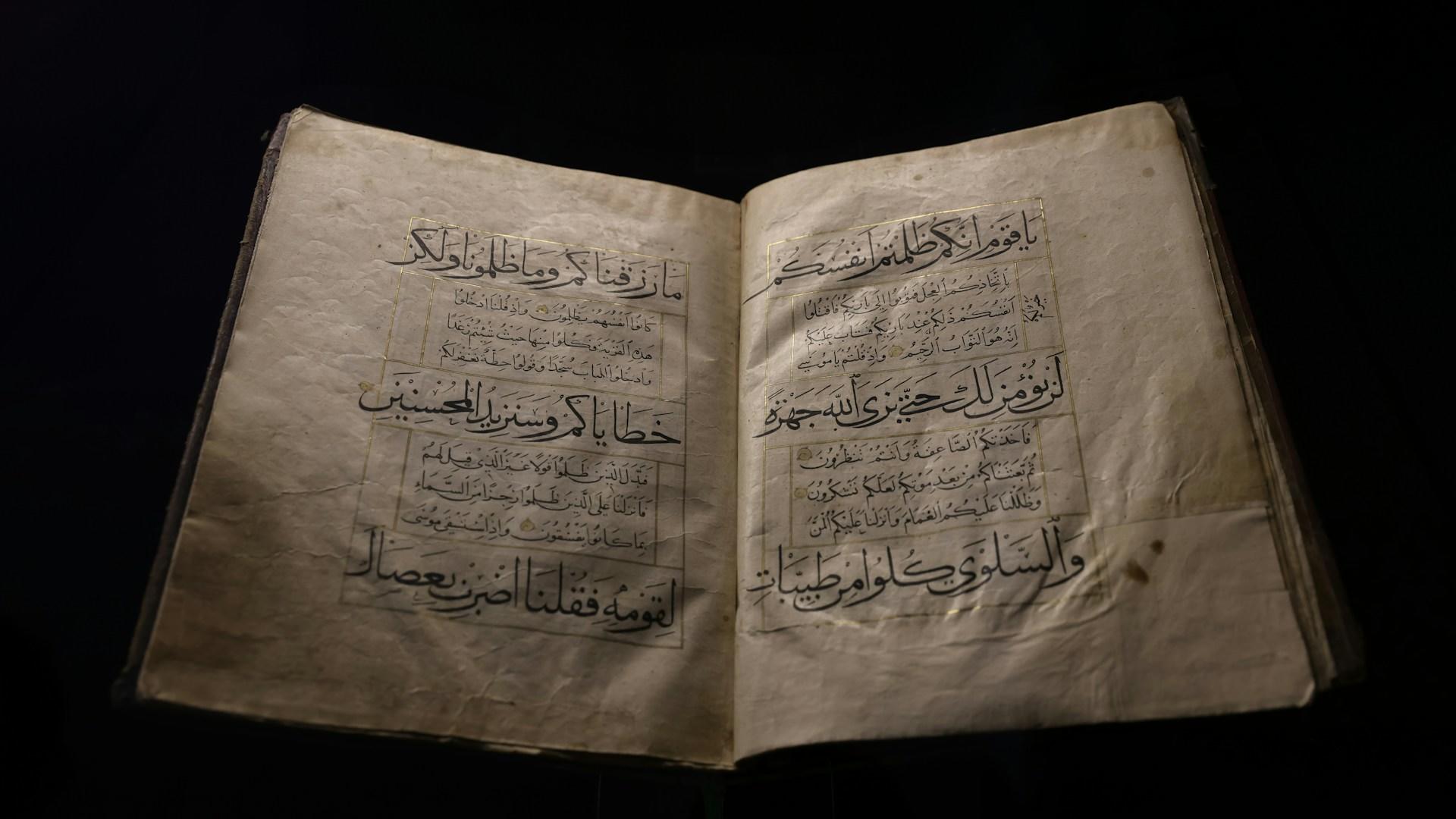
Other hypotheses on why Arabic is written from right to left are based on these factors:
- Reading: Going from right to left facilitated reading. Near East scribes unrolled their papyrus scrolls to the left while writing with the right hand.
- Cuneiform: Before the development of writing, people engraved cuneiform signs on rock. Because more people are right-handed than left-handed, the process of carving the rock may have started on the right and proceeded to the left.
- Scribe's Position: The direction in which Arabic was written may be due to the scribe's position at the time, seated on the floor, hand held at an angle, holding a reed dipped in ink.
- Teachings: Perhaps the scribes were simply using the writing techniques taught at the time.
- Influence of Writing Instruments: The writing direction may have been influenced by the way in which the writing instruments were used (quill, qalam, brush, clay, stone, reed, papyrus, stylus, etc.) Perhaps scribes used some kind of support for their hands. Did they use a pulling, etching, or punching technique? Was ink used, or did the scribe make notches on a stiff surface?
It's a common misconception that Arabic is written "backward". It's written in the opposite direction from English, but that's not accurate. Instead, Arabic, like many other languages, is written in the same direction as scripts such as Hebrew, Persian, and Urdu.
Key Facts:
- Arabic is not "backward"—it follows an established writing direction that dates back thousands of years.
- Many ancient scripts, including Phoenician and Aramaic, were also written right to left.
- Writing direction does not affect meaning, but it does affect how text is displayed, especially when Arabic and Latin characters appear in the same line.⁷
If you're interested in learning more about Arabic, check out our article about the foundation of Arabic and the Islamic god Allah.
Why Do We Write From Left to Right?
Our writing system, a Latin-based alphabet, derives directly from the Greco-Roman civilization. In Roman times, slaves were given the job of recording the language documents on papyrus. They were seated on the ground and wrote from right to left. Free men who preferred not to adopt the position of a slave chose to write in the opposite direction. If this assumption is correct, they must have increasingly written from left to right over time.

Over time, Greek and Phoenician writing developed in different directions, with Greek eventually settling into left-to-right writing while Phoenician remained right-to-left.⁶ Another hypothesis involves the dominant hand of the writer. In the past, being left-handed was bad, a stigma in fact. Just ask a few people who went to school in the 1950s. They'll tell you how even into the 20th century, left-handed children were made to write with their right hands.
It would be quite difficult for most right-handed people to write from right to left. They would be required to hold their wrist in an uncomfortable position, bending it sharply to avoid smearing their ink as they moved to the left. Or, they might try to write with their hand in a raised, and clearly exhausting, position.
That said, as a left-handed writer, I can remember spending a lot of time trying to find a comfortable position as I was learning to write in elementary school. The last thing I wanted was to smudge the ink and get yelled at by the teacher!
Ironically, reading and writing may be easier for left-handed writers when learning Arabic. They'll actually be able to see what they're writing!
Is Arabic the Only Language Written From Right to Left?
While reading from right to left may seem unusual to English speakers, Arabic is only one of many languages written with right-to-left scripts.⁸ It's also one of the most beautiful languages in the world, but that's more likely down to its writing system than the fact it's written from right to left.
Other significant examples include:
- Hebrew (used in Israel and Jewish communities worldwide)
- Persian (Farsi) (spoken in Iran, Afghanistan, and Tajikistan)
- Urdu (primarily spoken in Pakistan and India)
- Aramaic (an ancient Semitic language still used by some communities today)
- Syriac and Pashto, among others
Many of these languages share historical and linguistic ties with Arabic, which explains their shared directionality.
English
Mandarin Chinese
Spanish
French
German
Portuguese
Russian
Hindi
Japanese
Korean
Arabic
Hebrew
Persian (Farsi)
Urdu
Pashto
Kurdish (Sorani)
Sindhi
Uyghur
Dari
Syriac
Which Countries Read and Write From Right to Left?
Countries that read from right to left are those that speak languages written from right to left. So which countries are these exactly?
- Arabic-Speaking Countries: Saudi Arabia, Egypt, Iraq, Syria, Jordan, UAE, Morocco, Algeria, and more.
- Persian-Speaking Countries: Iran, Afghanistan, Tajikistan.
- Urdu-Speaking Regions: Pakistan and parts of India.
- Hebrew-Speaking Countries: Israel.
Learning to Read Right to Left
Arabic is a "roof", or standard, language. Within Arabic are several dependent variations, or dialects specific to Arabic countries (Egyptian Arabic, Moroccan Arabic, Lebanese Arabic, Iraqi Arabic, Algerian Arabic, etc). There is also literary Arabic and Modern Standard Arabic (MSA), which are generally understood by every Arabic speaker, no matter where he or she lives, be it in North Africa, Palestine, or Egypt.
Learning Arabic is, therefore, more complex than learning German, French, Portuguese, or Spanish. Before even attempting to write a sentence in Arabic or read an Arabic text, you will need to be instructed on how learning Arabic involves writing from right to left. Learning Arabic calligraphy can also help students understand how Arabic script became one of the most important artistic forms in Arabic and Islamic culture.³
Speaking Arabic is different, as it focuses on a particular dialect and the pronunciation needed to speak Arabic in a given way. Therefore, a beginner in conversational Arabic will have a different language-learning experience than someone studying classical Arabic.
To study Arabic calligraphy and learn Arabic writing from right to left at home, find an Arabic tutor on the Superprof platform! Just search for "Arabic " and enter your hometown, and find the best private teachers. Those learning Arabic will have to get used to the right-to-left writing system, which can feel odd at first. However, some practice can make things easier. Here's our advice for getting used to RTL:
Step 1
Use lined paper with a right-to-left orientation
This helps maintain uniformity in writing direction.
Step 2
Practice tracing Arabic letters and words
This builds muscle memory and improves handwriting.
Step 3
Write slowly at first
Focus on each letter’s connection and flow to ensure proper stroke order.
Step 4
Read Arabic texts regularly
Familiarity with RTL reading helps reinforce writing habits.
Step 5
Try writing with a qalam (reed pen) or calligraphy brush
This helps understand the natural stroke flow of Arabic script.
The Direction of Arabic Numerals
Does Arabic read right to left in every circumstance? While Arabic script is written from right to left, numbers are typically displayed from left to right within Arabic text.² This is because earlier mathematical notation had numbers aligned left to right to make calculations easier. This led to Arabic being written in the same direction as other Western scripts. Find out more about Arabic numerals (which are the same numbers that we use) here:
If you'd like to learn more about Arabic, look for a tutor on the Superprof website. You can find tutors from all over the world, and with so many offering the first session for free, you won't need to understand Arabic numerals to know that's a good deal for finding the right tutor. Just search for Arabic on the Superprof website today!
References
- Dayton, Huda. “World Arabic Language Day Celebration.” 4 Corners of the World, Library of Congress, 18 Dec. 2024, https://blogs.loc.gov/international-collections/2024/12/world-arabic-language-day-celebration/. Accessed 30 June 2026.
- Goregaokar, Manish, and Robin Leroy, editors. “Unicode Standard Annex #9: Unicode Bidirectional Algorithm.” Unicode, The Unicode Consortium, 13 Aug. 2025, https://www.unicode.org/reports/tr9/. Accessed 30 June 2026.
- Library of Congress. “From Your Hand to Heaven: Arabic, Persian and Ottoman Calligraphy Sheets at the Library of Congress – Part 1.” 4 Corners of the World, 23 Mar. 2021, https://blogs.loc.gov/international-collections/2021/03/from-your-hand-to-heaven-arabic-persian-and-ottoman-calligraphy-sheets-at-the-library-of-congress/. Accessed 30 June 2026.
- Northwestern University. “The Arabic Alphabet.” Middle East and North African Languages Program, Northwestern University, https://mena-languages.northwestern.edu/language-learning/languages-with-different-scripts/arabic-alphabet.html. Accessed 30 June 2026.
- The Metropolitan Museum of Art. “Origins and Characteristics of the Arabic Alphabet.” The Metropolitan Museum of Art, https://www.metmuseum.org/learn/educators/curriculum-resources/art-of-the-islamic-world/unit-two/origins-and-characteristics-of-the-arabic-alphabet. Accessed 30 June 2026.
- Waal, Willemijn. “The Greek Alphabet: Older Than You May Think?” The Ancient Near East Today, vol. 7, no. 3, Mar. 2019, https://anetoday.org/greek-alphabet-origins/. Accessed 30 June 2026.
- World Wide Web Consortium. “Arabic & Persian Layout Requirements.” W3C Internationalization, https://www.w3.org/International/alreq/. Accessed 30 June 2026.
- World Wide Web Consortium. “Languages Using Right-to-Left Scripts.” W3C Internationalization, 12 June 2025, https://www.w3.org/International/questions/qa-scripts.en.html. Accessed 30 June 2026.
Summarize with AI:
Did you like this article? Leave a rating!


 Loading...
I really enjoyed this read. Thoughtfully written.
I had questions as to the origin of dextroverse or rtl writing. I supposed, based on the current proven data that the majority of people are right handed over left left handed that it all may have begun with inscription carvings of the first written languages cuneiform, etc. In this case where the majority of people being right handed would have been an asset as the dominant hand would be the striking hand and therefore more accurate and less prone to mistake in hitting the chiseling implement.
Some of this article makes sense. When I use a chisel I hold the hammer in my right hand and my left hand to guide the chisel. It natural to move from right to left otherwise I would be working ‘cross-handed’. Try it, just don’t hit yourself in the face with the hammer.
It is, to me, reasonable to presume that the first translators of the glyphs recorded then as a true representation of the understanding at the time and so emulated the style of right to left.
Am joshua I really love Arabic
Am so thankful to you for this! !!
you have really made me enjoy Arabic.
As an 84 year old I am not likely to learn a new language. Did enjoy the article and as a ‘lefty’ can attest to the forced use of Dexter rather than sinister hand in writing.
All writing in the world follow the direction of God’s original home in Jerusalem… As everything in world points to Christ… Odd you didn’t know this ..
Benim sormak yada öğrenmek , yada anlamak, bilmek istediğim konu arapça sağdan sola yazılıyor da mana bütünlüğünü anlamak için mutlaka en son cümleden yani soldan başa doğru kelimelerin anlamını düşünerek mana anlaşılıyor bu nasıl sağlanıyor ?