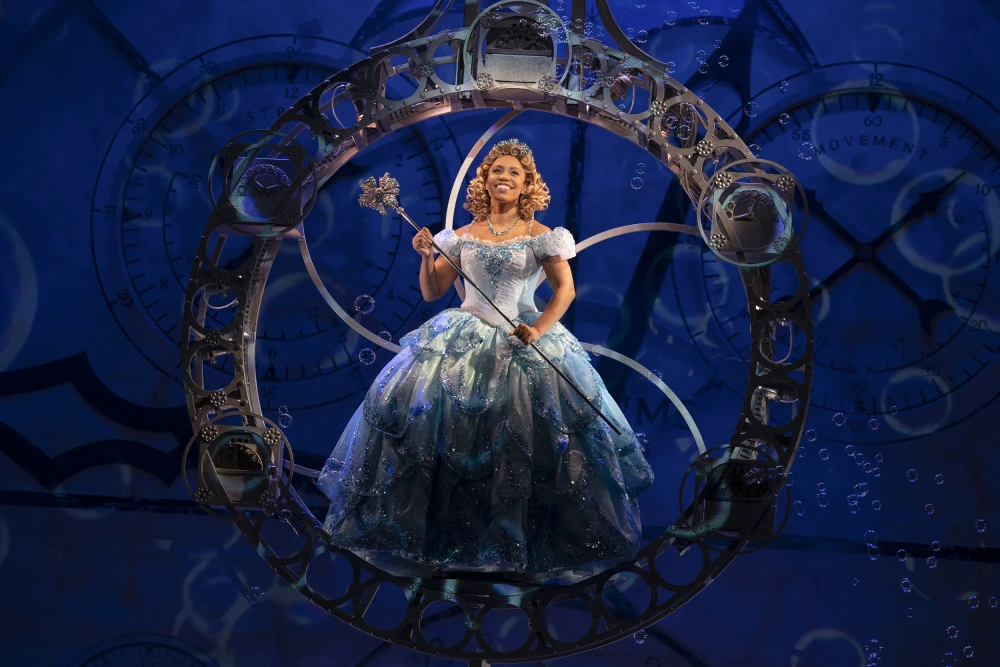

Glinda is one of the most recognizable characters in media since the release of the original Wizard of Oz film in 1939. Readers would have also known her from Frank L. Baum’s 1900 fairytale story The Wonderful Wizard of Oz. In the stage musical Wicked, as well as the recent movies, Glinda’s character is expanded and reimagined to explain more about the events in Oz, as well as explore complex themes. Learn more about Glinda’s origins, her character evolution, and her legacy.



Origins of Glinda the Good Witch
Glinda is a completely original character created by Frank L. Baum in his novel. Initially, she is part of a fairytale, so her simplistic portrayal as the Good Witch is intentional. She is meant to serve as a character that children reading or listening to the story can use as a moral compass and reassuring presence.
Literary Beginnings
In Baum’s original novel, Glinda makes only a brief appearance at the end of the story to grant Dorothy’s wish and send her home.
She was clearly a unique presence in Oz, which was generally chaotic and confusing. By contrast, Glinda is calm and poised, representing order, reason, and guidance. She is sure of herself and doesn’t try to convince Dorothy or anyone else of her importance.
I'm glad I don't know everything, Dorothy, and that there still are things in both nature and in wit for me to marvel at.
Glinda ("Glinda of Oz")
Character Development in Baum’s Series
Baum wrote several novel about Oz, and Glinda appears in quite a few. Her role and personality are elaborated a little in the books after The Wonderful Wizard of Oz, but she remained a mediator, protector, and defender. She helped resolve political disputes and served as the protector of the land of Oz.
Although she was consistently portrayed as the epitome of “goodness” in the series, she was not passive or soft. When required, she wielded her power. She was wise but grounded, the embodiment of grace.
Overall, she remained the moral compass and source of stability for Oz, a strong female character for children to look up to.
Glinda in ‘Wicked’
Gregory Maguire’s 1995 novel Wicked: The Life and Times of the Wicked Witch of the West reshaped the story of Oz. The novel took a closer look at the characters through an adult lens. Maguire wanted to use Oz as a world to explore themes like moral complexity and politics.
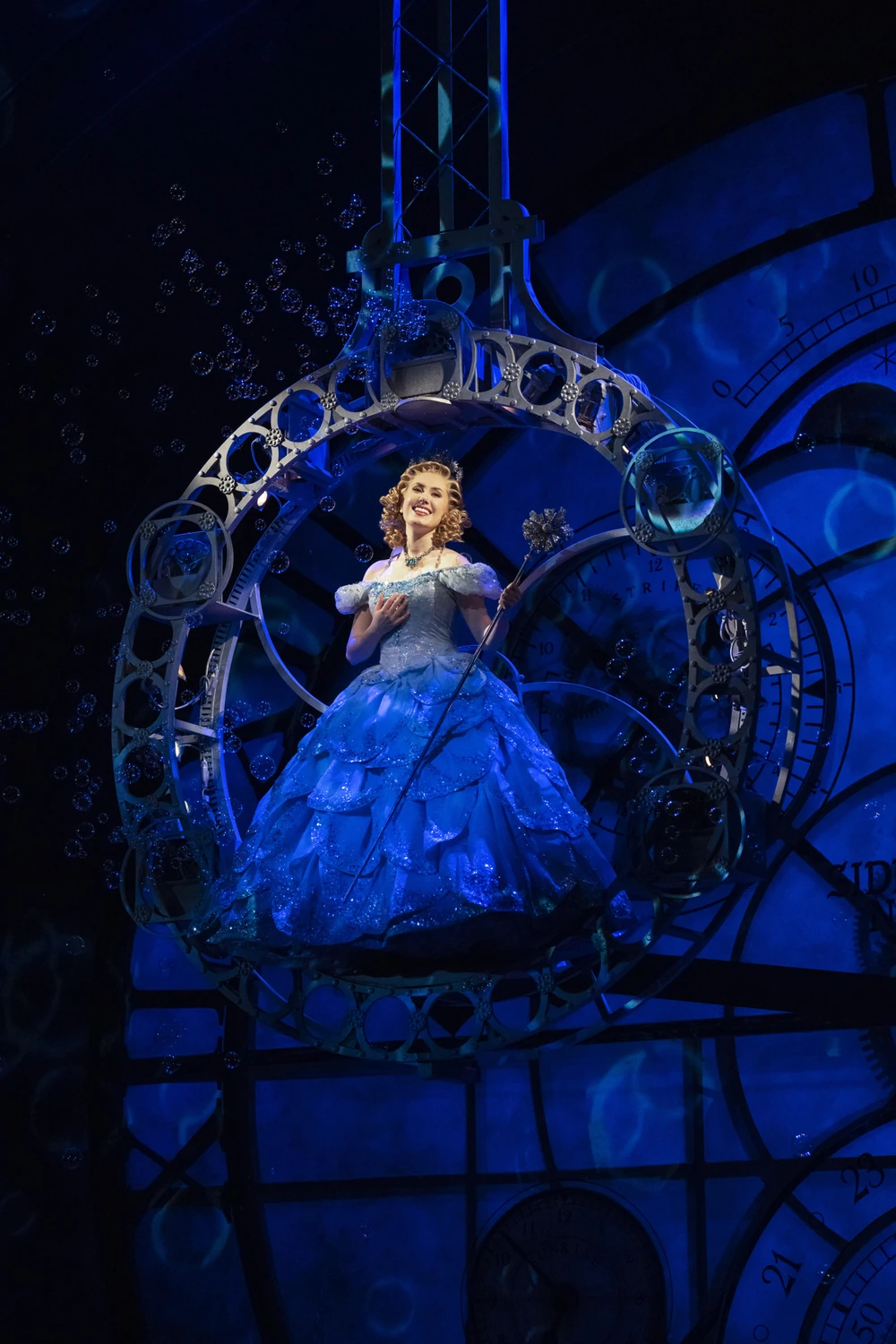
In this version, Glinda is no longer simply the “Good Witch.”
We learn that she was an ambitious, yet insecure, girl.
The novel asks readers to examine the labels of “good” and “wicked,” and contemplate what they really mean, and how people get those labels.
Maguire presents both Elphaba and Glinda as multifaceted, nuanced, flawed people who make choices shaped by society, fear, and hope.
The stage musical Wicked was based on this reinterpretation.
Most of the darker themes in Maguire’s novel were softened or omitted for the sake of storytelling on a stage, but the main themes of moral ambiguity and difficult choices remain. In Glinda’s case, the core idea was kept: Glinda develops into the Good Witch rather than automatically starting as one. Even when she is labeled "good" by Madame Morrible, it's a skewed meaning of the word, and Glinda must learn how to grow past it.
By the time she meets Dorothy, she is almost ready to become the Good Witch the Emerald City needs.
Transformation from Galinda to Glinda
In Wicked Glinda begins as “Galinda,” a young woman focused mostly on reputation and popularity. She wants to be admired, which makes her a type of people-pleaser focused on how others perceive her.
Her transformation begins when she meets Elphaba at Shiz University. At first, Galinda doesn't know how to respond to someone who doesn't care about reputation. She’s never been given the idea of living outside of expectations like that before. Their interactions and subsequent friendship make Galinda examine what it means to be “good.”
It's good to see me, isn't it?
Glinda ('Wicked' musical)
Her shift from “Galinda” to “Glinda” marks a small, yet pivotal, turning point in her story.
She tells everyone to call her ‘Glinda’ in honor of the Animal teacher, Dr. Dillamond, who had been forcibly removed from his position by the Wizard's cruel regime. The act is a bit performative, but it marks the beginning of a change within her. She begins to understand that “goodness” is not about popularity. It’s about making difficult choices and following through on them, even when they don’t bring fanfare.
From this small pivot, Glinda’s journey to becoming the Good Witch requires her to make a long and complicated transformation:
Shiz University
Friendship with Elphaba
Glinda starts considering Elphaba’s feelings more, even though Elphaba is not popular. Their friendship changes Glinda for good.
Tricked by the Wizard in the Emerald City
Even when she saw the Wizard trick Elphaba into performing a cruel spell, she still couldn't bring herself to resolve to fight against the villainous characters.
Difficult Choices
Ultimately, Glinda isn’t ready to become good at all costs when given the chance. She doesn’t go with Elphaba, choosing to wish the “wicked” witch well on her mission while staying behind in comfort.
“The Good Witch”
Label: Good
Madame Morrible and the Wizard label Glinda “the Good Witch” in the same manner as they label Elphaba “the Wicked Witch of the West.” She didn’t do anything to earn the title; it was thrust upon her to serve their mission. She acts as a political puppet for those in power while internally convincing herself she’s doing good, even failing to stand up for Elphaba in favor of maintaining her position.
Inner Conflict
Through experiencing the real effects happening in the world, Glinda can no longer pretend that the problems are all ‘out there.’ She accidentally leads to the Wizard and Morrible killing Nessarose and bringing Dorothy to Oz, and she realizes she needs to stop the Wizard.
The Good Witch
Breakthrough
Finally, Glinda steps up to make the right choice, even though it’s scary and difficult. She ousts the Wizard and arrests Madame Morrible, finally becoming a true Good Witch.
Glinda learns that being “good” takes more than just doing what makes other people heap their praises. Through experience, loss, conflict, and reflection, she finally learns that doing what’s expected of her from people who don’t have her or Oz’s best interest in mind is not actually good. She learns that kindness and true goodness mean taking responsibility and action.
Prince Fiyero is another pivotal character who grows along with Glinda and Elphaba.
Relationship with Elphaba
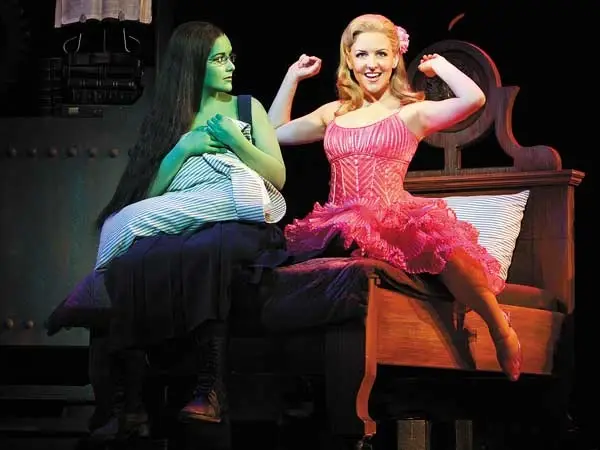
The most consequential event in Glinda’s life is her friendship with Elphaba. It informs how Glinda thinks and feels about the Wizard and the Emerald City so she can ultimately overcome their influence.
Their relationship shapes both characters, giving them each a transformational arc and deep character development. At first, the two witches are seemingly complete opposites: Glinda is motivated by a desire for total acceptance, while Elphaba is fiercely independent and driven by morals.
Through paying attention to Elphaba’s experiences at Shiz and listening to her thoughts and opinions, Glinda finally sees the effects of social bias on those who are not ‘popular.’ She also learns about developing a strong inner moral compass from Elphaba, who never goes against what she thinks is right. She learns a new way to think and behave in the world.
Glinda seeks to help her new friend by sharing the secrets of social acceptance. After all, leaders of change need to have charisma around others to be effective; it’s not a purely shallow thing. She increases Elphaba’s confidence, which helps her ultimately make the decision to rebel against the Wizard and awaken her magic power. Above all, she is Elphaba’s first real friend, giving her the essential basic human experience of connection.
Ultimately, Glinda is able to make the moral choice in part because of her experience being Elphaba’s friend. The “wicked witch,” who had actually done the good thing far sooner than Glinda, blazed the trail into rebellion for Glinda to follow behind. Without experiencing their connection and friendship, Glinda might not have made the right choice. She might have kept on convincing herself that she was doing good by being a kind person in a cruel government.
Although she and Elphaba have a falling out later because Glinda gives Dorothy Nessaroses's silver shoes before sending her to the Emerald City to see the Wizard, they still ultimately care deeply for one another.
Glinda’s Portrayal in Film and Theater
Most people picture Glinda through the major visual adaptations: the 1939 film, the Broadway musical Wicked, and the recent film versions of that musical. Each portrayal adds its own interpretation, evolving with the culture of its time.
These different versions show how flexible the character of Glinda is. She can be elegant and majestic, or lively and humorous, with more and more complexity to show audiences new ideas and human nature.
The 1939 Film Adaptation
For many audiences, especially older generations, Glinda is remembered through the portrayal in the 1939 film The Wizard of Oz. Glinda is soft-spoken, graceful, and frequently offers a warm smile. She appears in a shimmering gown, floating inside a bubble. This visual design shaped popular ideas of what a “good witch” looks like.
Neither Baum nor Maguire ever mention Glinda traveling in a bubble. It was an invention for the original film as a way to convey fantasy and magic. It highlighted how graceful and poised Glinda was.
In the stage adaptation, and especially the new movies, the bubble takes on a new meaning. It literally gives us the impression of “someone who lives in a bubble,” as in, someone blissfully ignorant of the world around them.
Burke’s performance reinforced Glinda’s role as a supportive guide. She calmly explains to Dorothy what to do next, removing fear from the young girl. She seems to always appear at the exact moment she is most needed and can help with any problem.
She embodies the “mother” archetype, acting as a much-needed reassuring presence for Dorothy, whose mother had previously died.
The ‘Wicked’ Musical and Film Adaptations
Glinda was transformed into an icon for the new era when the Wicked musical premiered on Broadway in 2003. This Glinda is bright and cheerful, as well as dramatic. It was a departure from the more reserved character known from the novels and previous film.
She is capable of shallowness, pettiness, and making mistakes, as well as reflection and growth. The musical gives her a full arc, showing her flaws and her attempts to improve.
In these versions, Glinda has more agency; she makes choices that have real impacts on Oz. She feels the weight of her role and her responsibilities and learns how difficult it is to be a leader, especially in a world full of misinformation and fear. She puts on a brave and confident facade in front of the Ozians, but behind the scenes, she’s full of doubt. She struggles with rejecting the "wonderful" Wizard in the Emerald City because, at heart, she's a girl afraid of being disobedient.
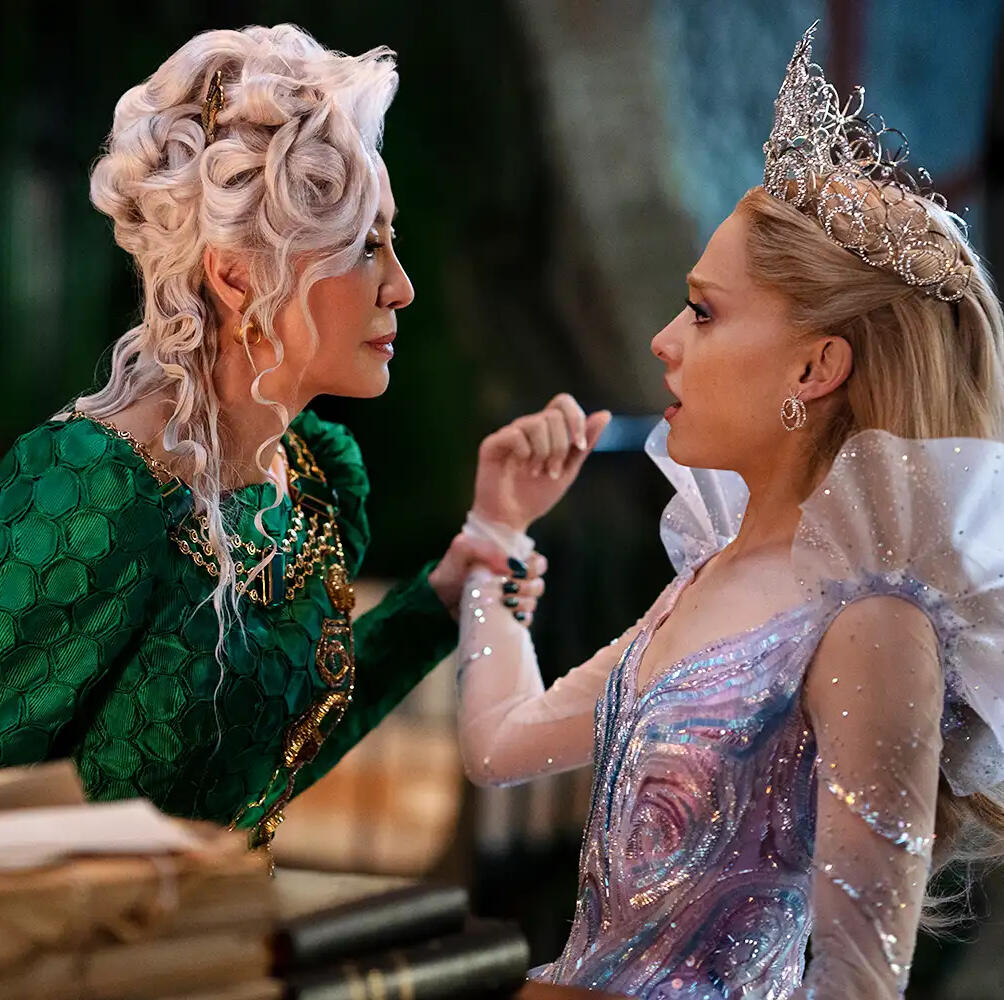
The musical’s version of Glinda teaches the audience that there are more important things than social acceptance and doing what you’re told. She also shows how bad actors can manipulate with praise, not just through condemnation.
The new film builds upon these themes. Through the virtue of a Wicked show that is more than 6 hours long in total, we can see more of Glinda’s subtle inner conflicts, decisions, and changes. In this version, she drives home the point that being “good” at the expense of not standing up for what’s right isn’t really “good” at all. She also demonstrates how easy it is to convince yourself you’re doing the right thing by staying comfortable, which is surely something almost everyone has experienced at one point or another.
Pfannee is another character important in Glinda's personal story.
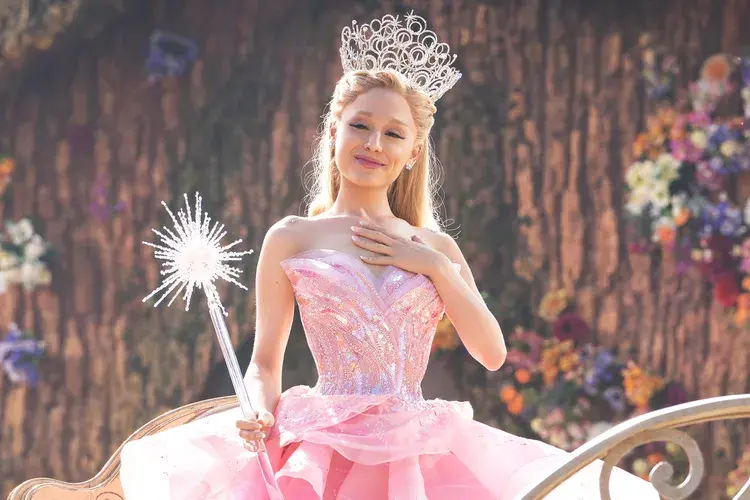
Key Portrayals in the Media
Glinda, as one of the most iconic characters in film and on stage ever, has appeared in numerous pieces of media. She is used as a character who can be simplified or complicated as needed for the audience. These are some of the media that have portrayed Glinda since her 1900 debut.
Actresses on Stage
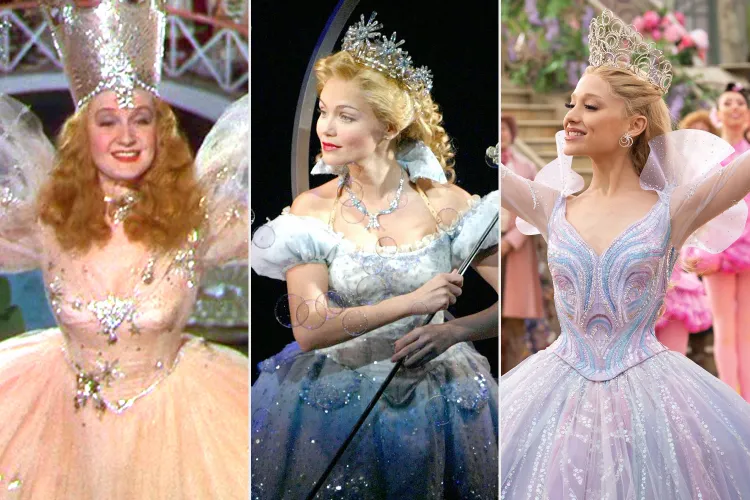
Glinda is made even more memorable by those who have portrayed her. Each actress infuses a unique quality in Glinda that emphasizes certain qualities and characterizations. Here are some of the most notable actresses who have made Glinda come to life.
Billie Burke - 1939 Film
The original Glinda, Burke’s version, is still a classic interpretation of both the character and the general idea of a “good witch.” This Glinda provided a steady and calm presence for Dorothy, especially helpful for children (and adults) who were seeing the world turned upside down by WWII. She became an icon for people to keep in mind when weighing moral quandaries.
Are people born wicked? Or do they have wickedness thrust upon them?
Galinda ('Wicked' movie)
Kristen Chenoweth - Original on Broadway
Chenoweth added a heaping dose of humor and personality to Glinda. She shows more emotional strength as she deals with rejecting those who hold power over her. Her friendship with the “wicked” witch helps show that there is always more behind a label.
Ariana Grande - Bringing Glinda to the Silver Screen
In the feature films, Grande brings even more character depth to Glinda. Her friendship with Elphaba is explored much more deeply, revealing a complicated psyche. The film’s Glinda inspires viewers to take a look at themselves and the world around them so they can take action to do good.
Books, Animated Shows, and Other Media
Oz is a popular world featured in many spin-offs and adaptations for all ages. Children’s books and animated TV shows frequently feature interpretations and storylines suitable for younger audiences.
She is also a character in other musical adaptations like The Wiz, as well as films, TV series, and animated creations like Oz the Great and Powerful, Journey Back to Oz, Emerald City, and Once Upon a Time.
Glinda is an incredible character who shows us all what “good” can mean. She gives us a guide so we can ask ourselves, “Is that what Glinda the Good Witch would do?” The versions of her character that overcome hardships to become the good she truly wants to be show us how to be strong and pursue what’s moral, even if it’s scary and difficult. Wicked is a "living" piece of media that evolves to provide contemporary messages using its well-developed characters.
Summarize with AI:
Did you like this article? Leave a rating!

 Loading...