


What is a noun?
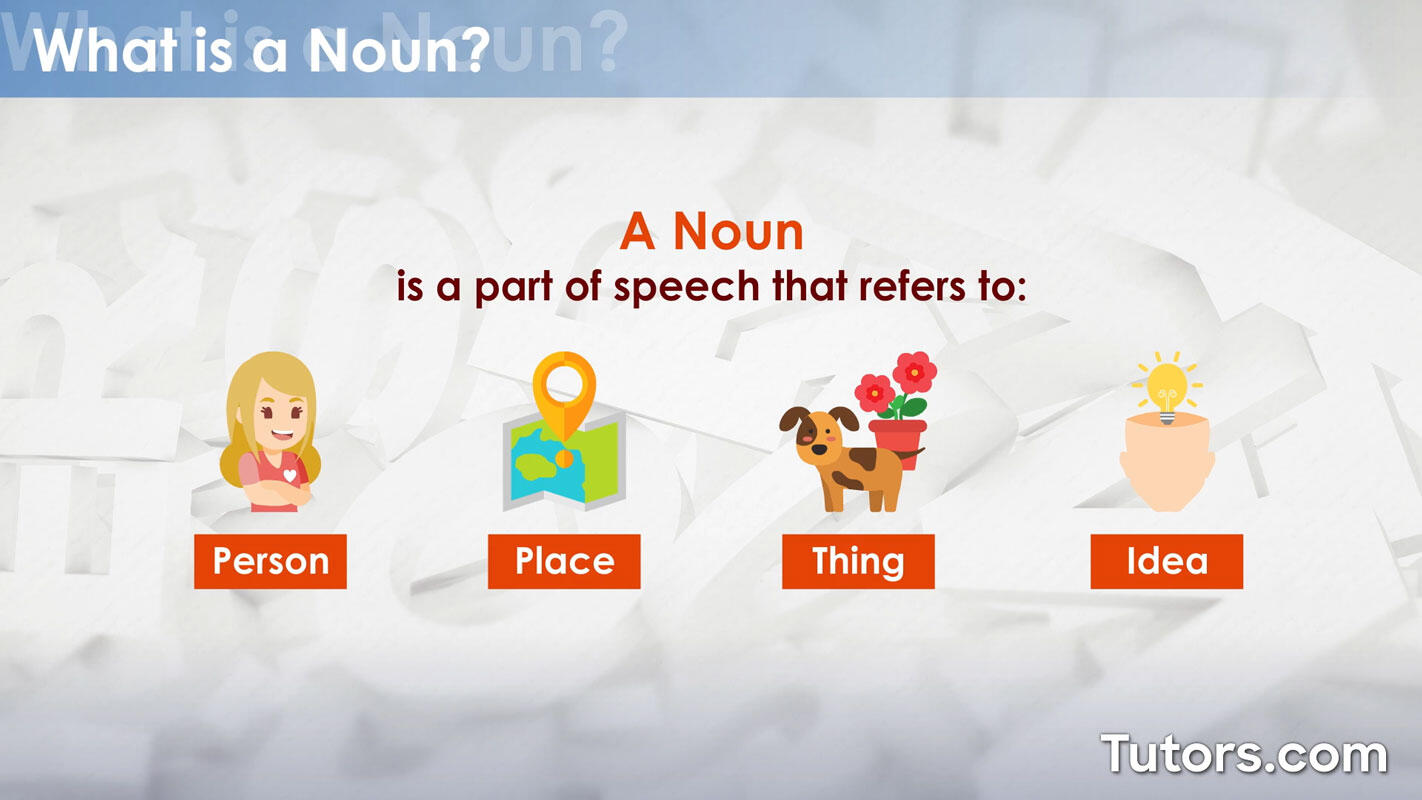
A noun is a part of speech that refers to a person, place, thing, or idea:
Person: Nouns can denote generic types of people (boy, girl, doctor, lawyer, etc.) and specific people (Nick, Jan, Dr. Smith, Mr. Jones, etc.).
Place: Nouns can identify general places (city, state, country, etc.) or specific ones (Pittsburgh, Pennsylvania, United States, etc.).
Thing: Things include objects that can be identified through one of the five senses (dog, bee, flower, etc.).
Idea: Ideas consist mainly of beliefs or concepts that are abstract and cannot be explained using the five senses (patience, friendship, peace, etc.).
Noun grammar
Both nouns (single words) and noun phrases (multiple words) can often be combined with a determiner (a, the, this, etc.) to be the subject or object of a verb or the object of a preposition.
Depending on its use in a sentence, a noun can function as a subject, direct object, indirect object, subject complement, object complement, or gerund. Nouns can usually be replaced with a pronoun (it, her, he, etc.).
Types of nouns
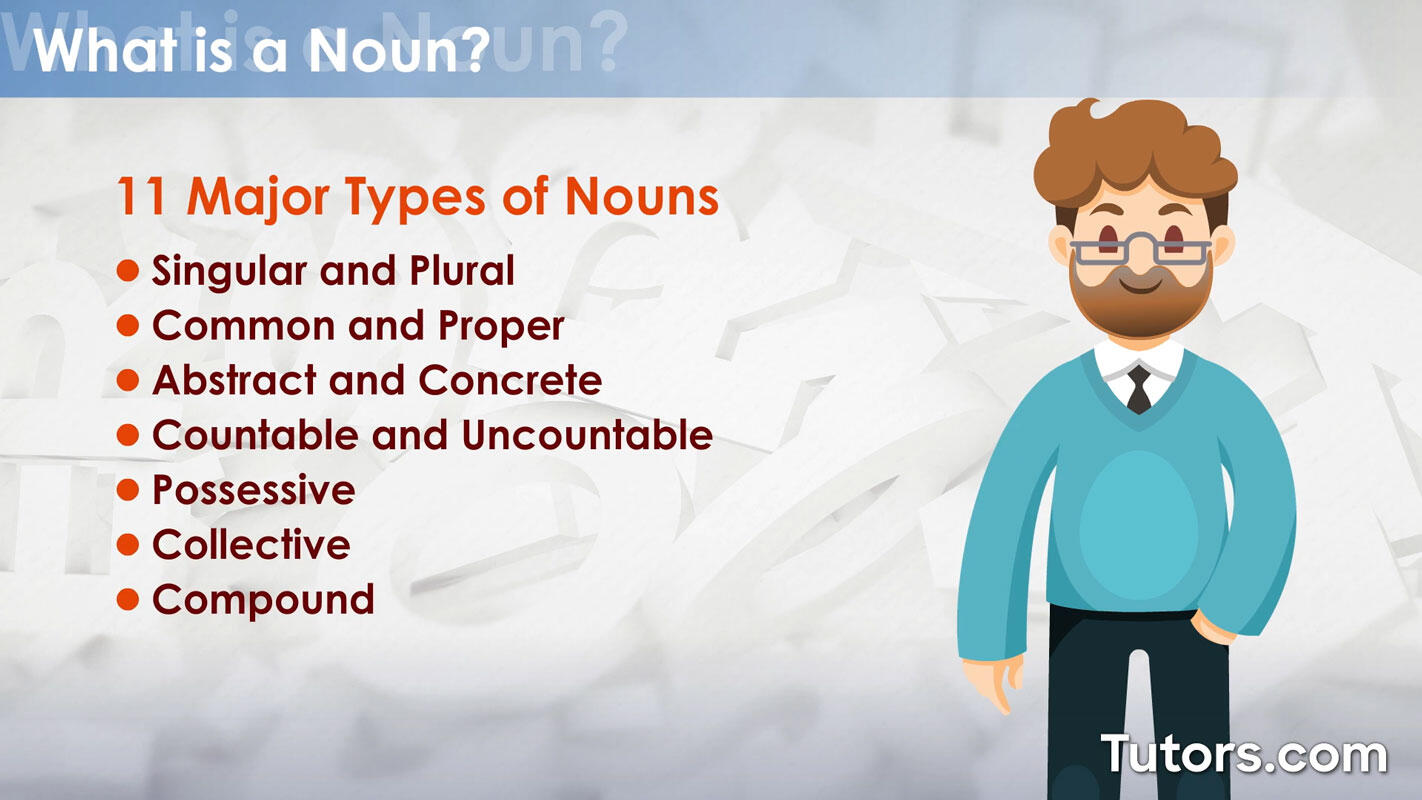
Overall, there are 11 different types of nouns, which include the following:
Singular nouns and plural nouns
Common nouns and proper nouns
Abstract nouns and concrete nouns
Countable and uncountable nouns
Possessive nouns
Collective nouns
Compound nouns
Singular and plural nouns
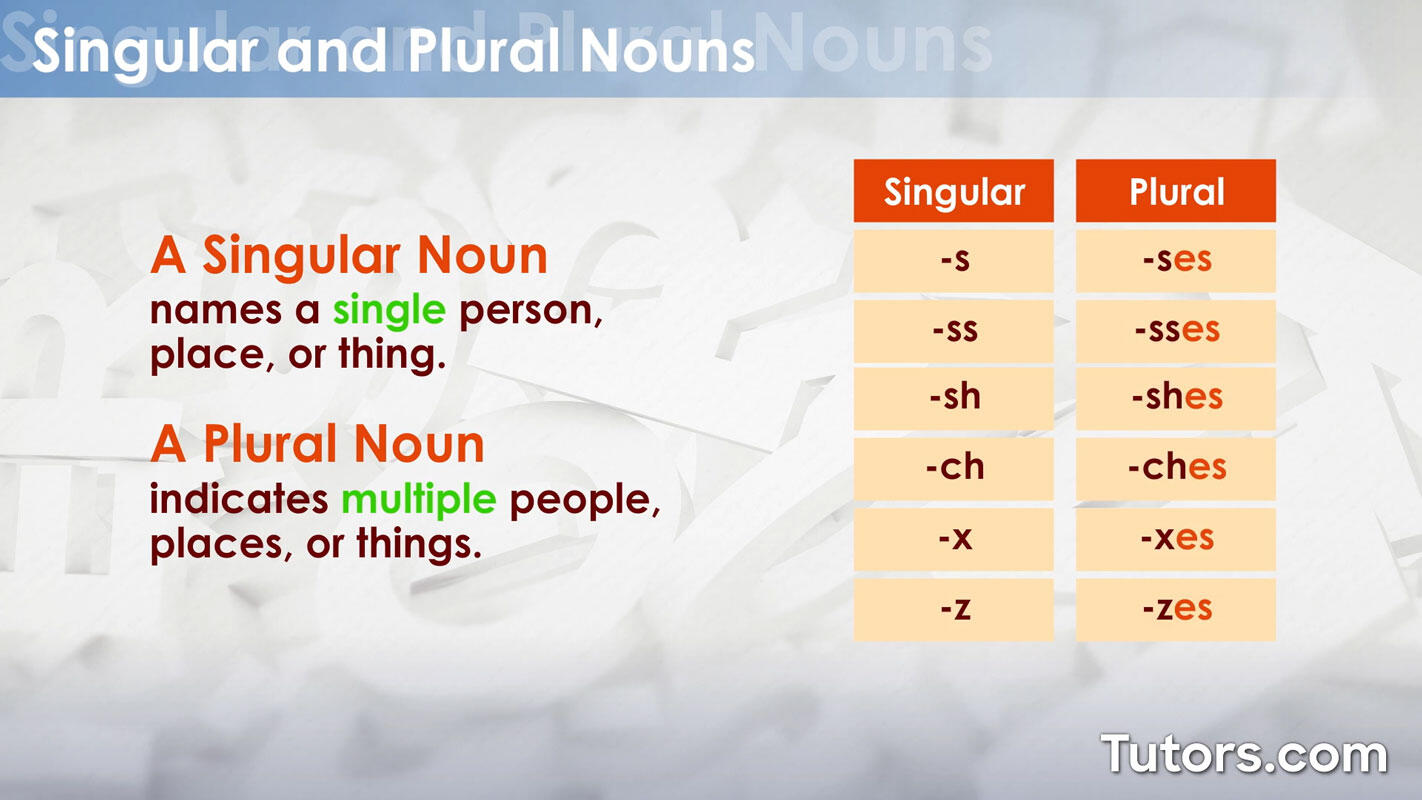
A singular noun names a single person, place, or thing; a plural noun indicates multiple people, places, or things. Most singular forms of nouns become plural by adding an -s to the end of the word.
If a singular noun ends in -s, -ss, -sh, -ch, -x, or -z, adding an -es makes the plural form:
| Singular nouns | Plural nouns | |
|---|---|---|
| Person/People | Girl | Girls |
| Place(s) | House | Houses |
| Thing(s) | Glass | Glasses |
Common and proper nouns
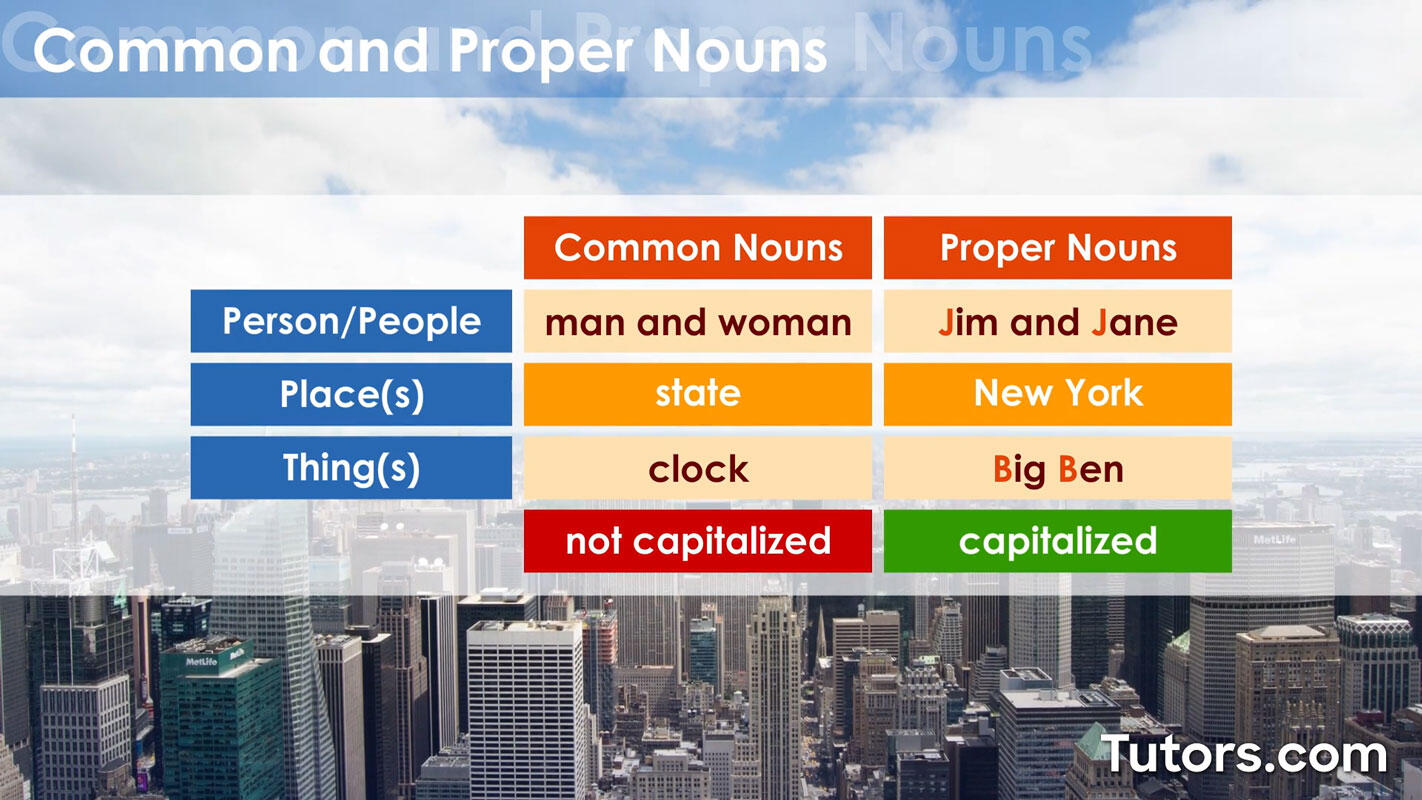
Common nouns reference a general person, place, or thing; proper nouns reference particular people, places, or things. Proper nouns start with capital letters, while common nouns do not:
| Common noun | Proper noun | |
|---|---|---|
| Person | Man and woman | Jim and Jane |
| Place | state | New York |
| Thing | clock | Big Ben |
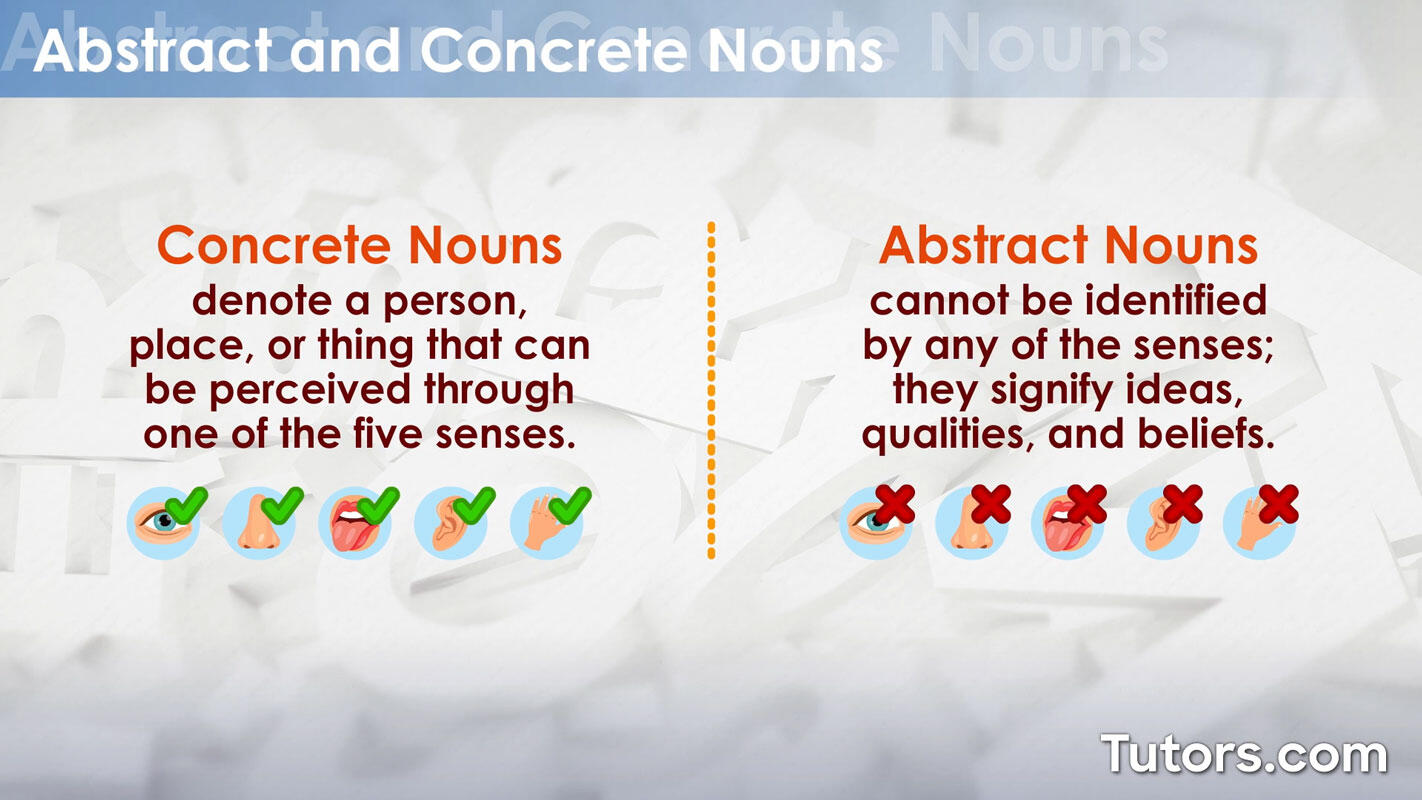
Abstract and concrete nouns
Concrete nouns denote a person, place, or thing that can be perceived through one of the five senses:
heart
child
book
Abstract nouns, however, cannot be identified by any of the senses; they signify ideas, qualities, and beliefs:
Love
Childhood
Wisdom
Countable and uncountable nouns
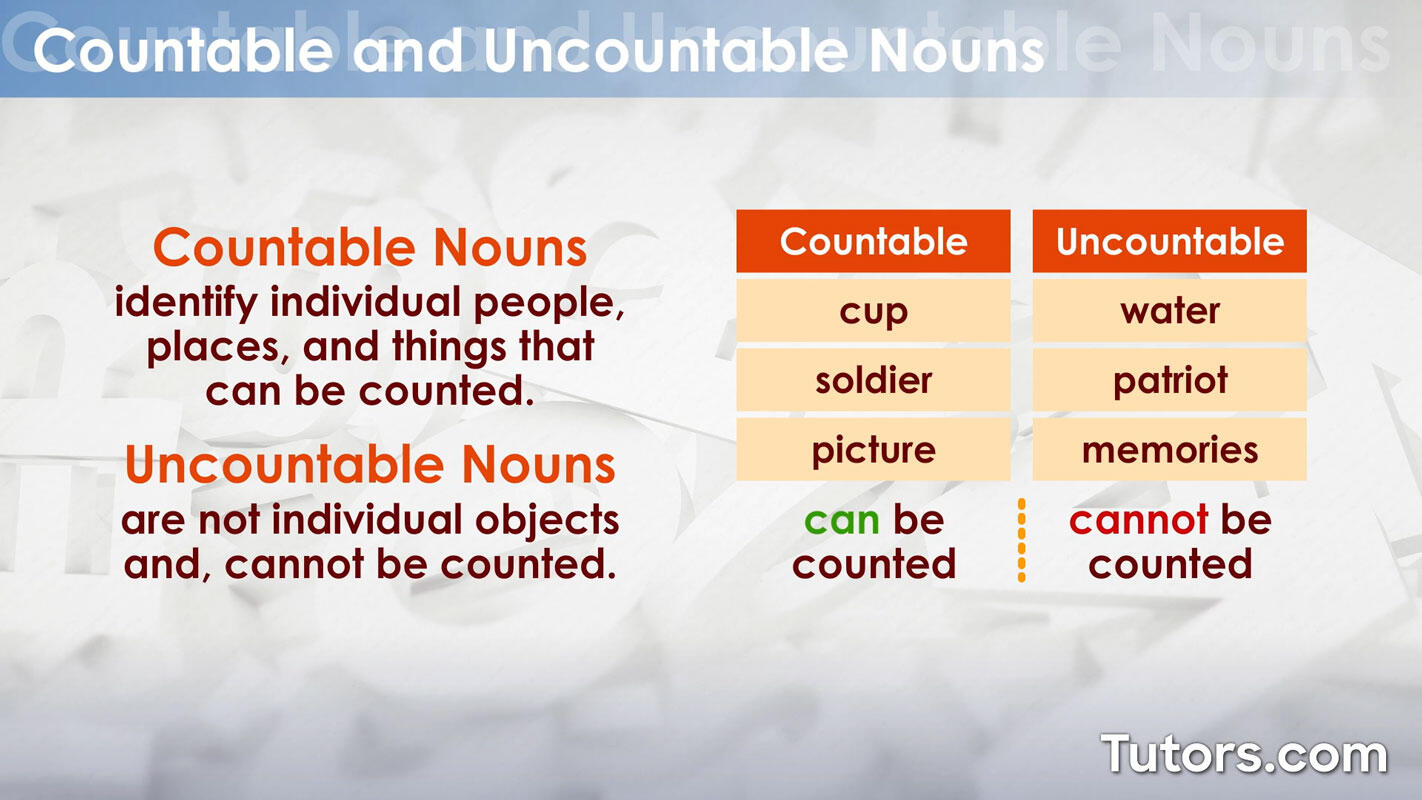
Countable nouns identify individual people, places, and things that can be counted:
cup
soldier
picture
Uncountable nouns are not individual objects and, therefore, cannot be counted:
water
patriot
memories
Possessive nouns
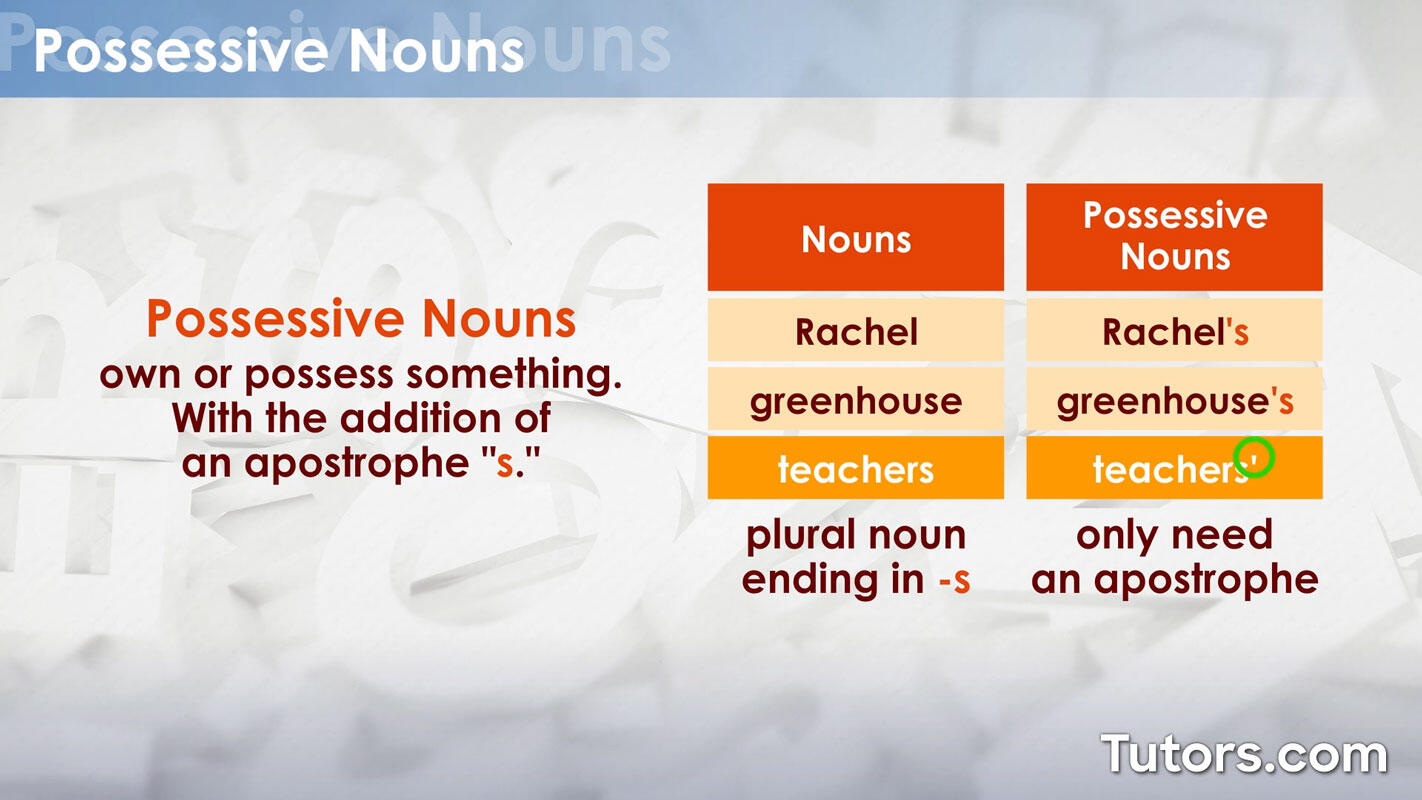
Possessive nouns own or possess something. Almost all nouns become possessive with the addition of an apostrophe "s." Plural nouns ending in "s" only need a possessive apostrophe at the end of the word:
Rachel → Rachel's
teachers → teachers'
Collective nouns
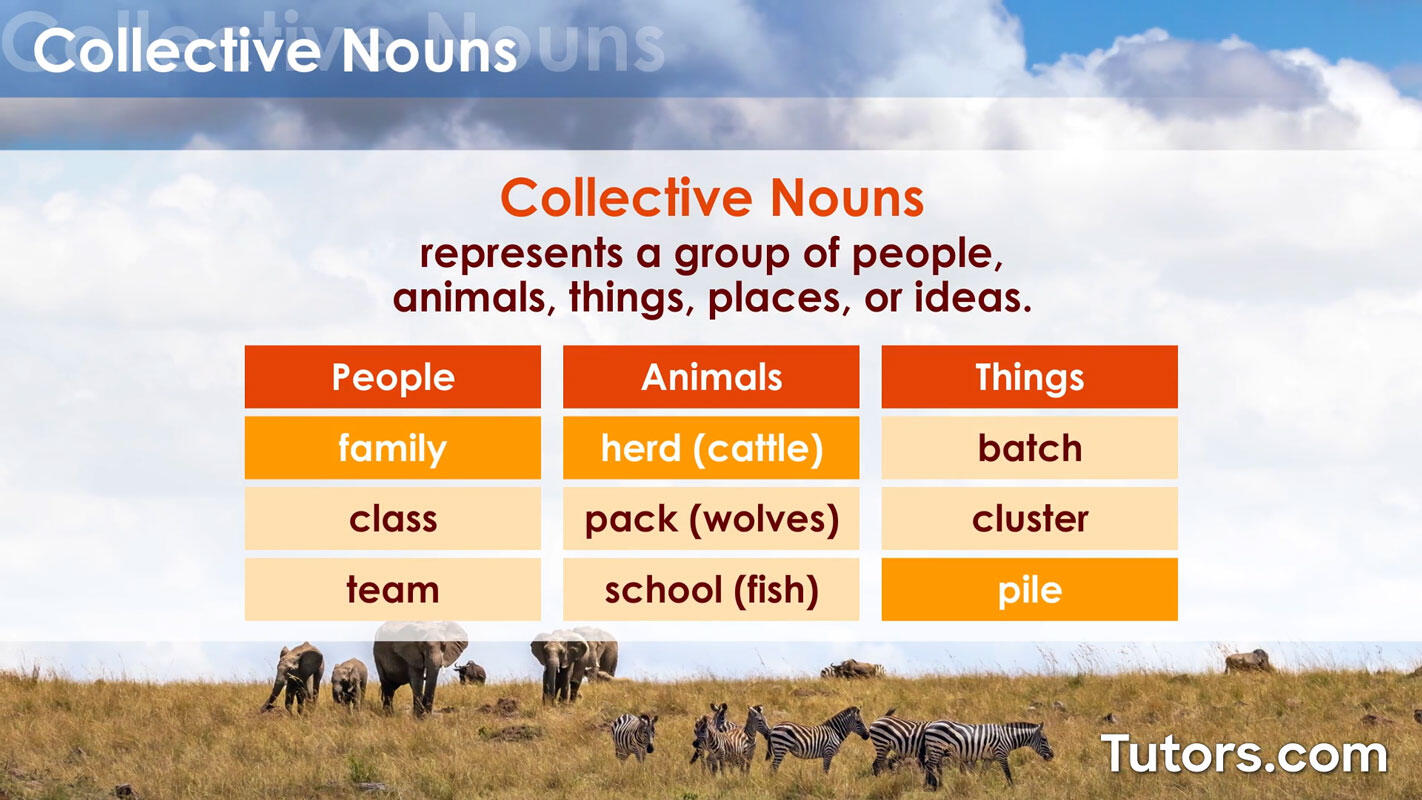
A collective noun, or mass noun, represents a group of people, animals, things, places, or ideas. Examples of collective nouns include the following:
| People | Animals | Things |
|---|---|---|
| family | heard (cattle) | batch |
| class | pack (wolves) | cluster |
| team | school (fish) | pile |
Compound nouns
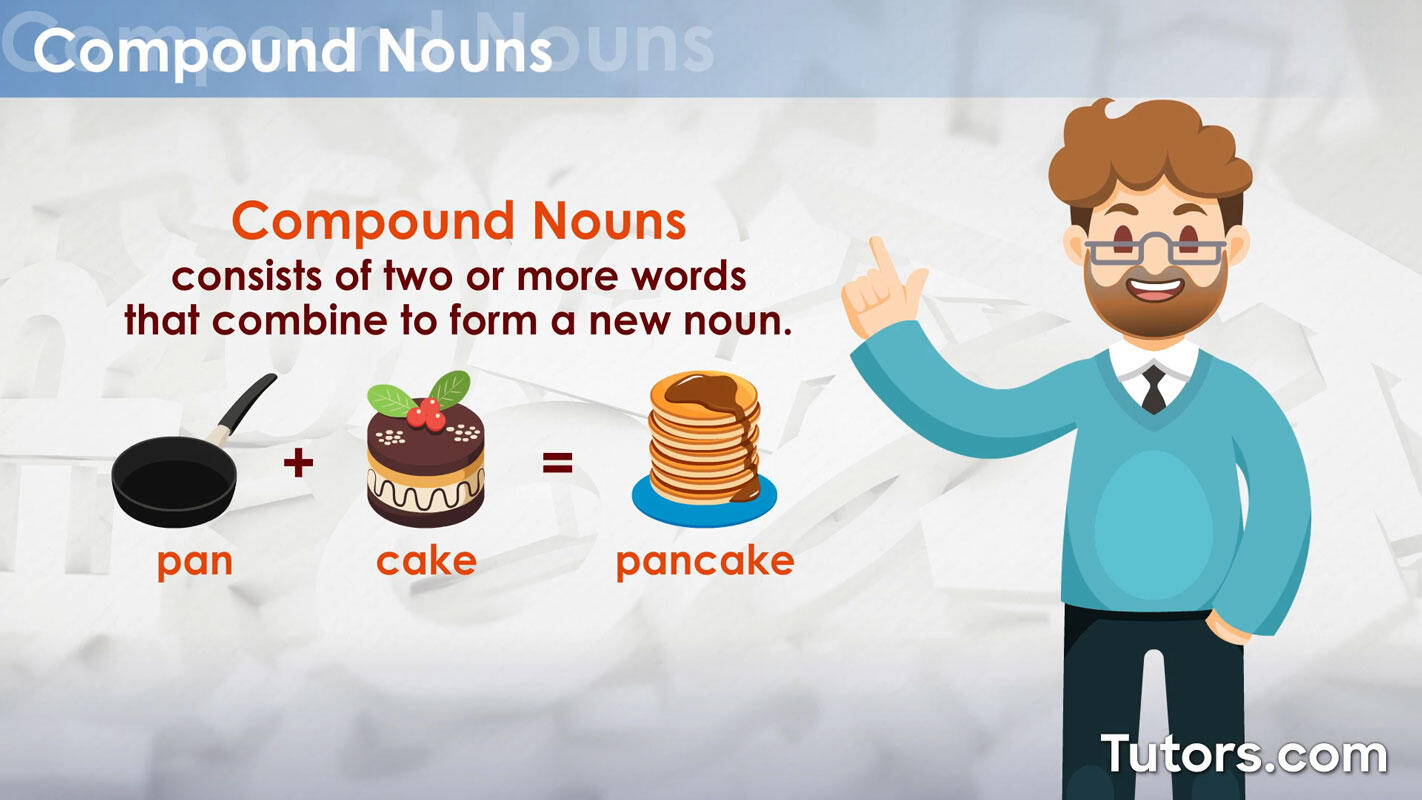
A compound noun consists of two or more words that combine to form a new noun. The words that create the compound noun do not need to be nouns themselves:
| Structure | Examples |
|---|---|
| noun + noun | bedroom |
| verb + noun | swimming pool |
| adjective + noun | coffee cup |
Noun examples
The top 50 most common nouns in the English language include the following:
| 1. time | 11. work | 21. area | 31. week | 41. business |
| 2. year | 12. life | 22. company | 32. member | 42. night |
| 3. people | 13. woman | 23. problem | 33. end | 43. eye |
| 4. way | 14. system | 24. service | 34. state | 44. home |
| 5. man | 15. case | 25. place | 35. word | 45. question |
| 6. day | 16. part | 26. hand | 36. family | 46. information |
| 7. thing | 17. group | 27. party | 37. fact | 47. power |
| 8. child | 18. number | 28. school | 38. head | 48. change |
| 9. Mr. | 19. world | 29. country | 39. month | 49. interest |
| 10. government | 20. house | 30. point | 40. side | 50. development |
Provided below are example sentences for each main type of noun:
Singular Noun: The dog spent the day chasing a squirrel.
Plural Noun: The cats enjoyed staying inside all day.
Common Noun: Randy's birthday was last month.
Proper Noun: Maria's birthday is in May.
Abstract Noun: Isaac cherished his childhood memories.
Concrete Noun: Lisa would also skip stones across the lake.
Countable Noun: Ron drank two cups of coffee at breakfast.
Uncountable Noun: Julie splashed Nate with water.
Possessive Noun: She complimented Josefina’s skirt.
Collective Noun: The family enjoyed the road trip to Yellowstone.
Compound Noun: All of the fireflies lit up the backyard.
Summarize with AI:
Did you like this article? Rate it!

 Loading...