


What is a pronoun?
A pronoun is part of speech that takes the place of a noun (person, place, thing, or idea) or noun phrase. Pronouns function as nouns; they can be subjects, direct objects, indirect objects, objects of a preposition, and more.
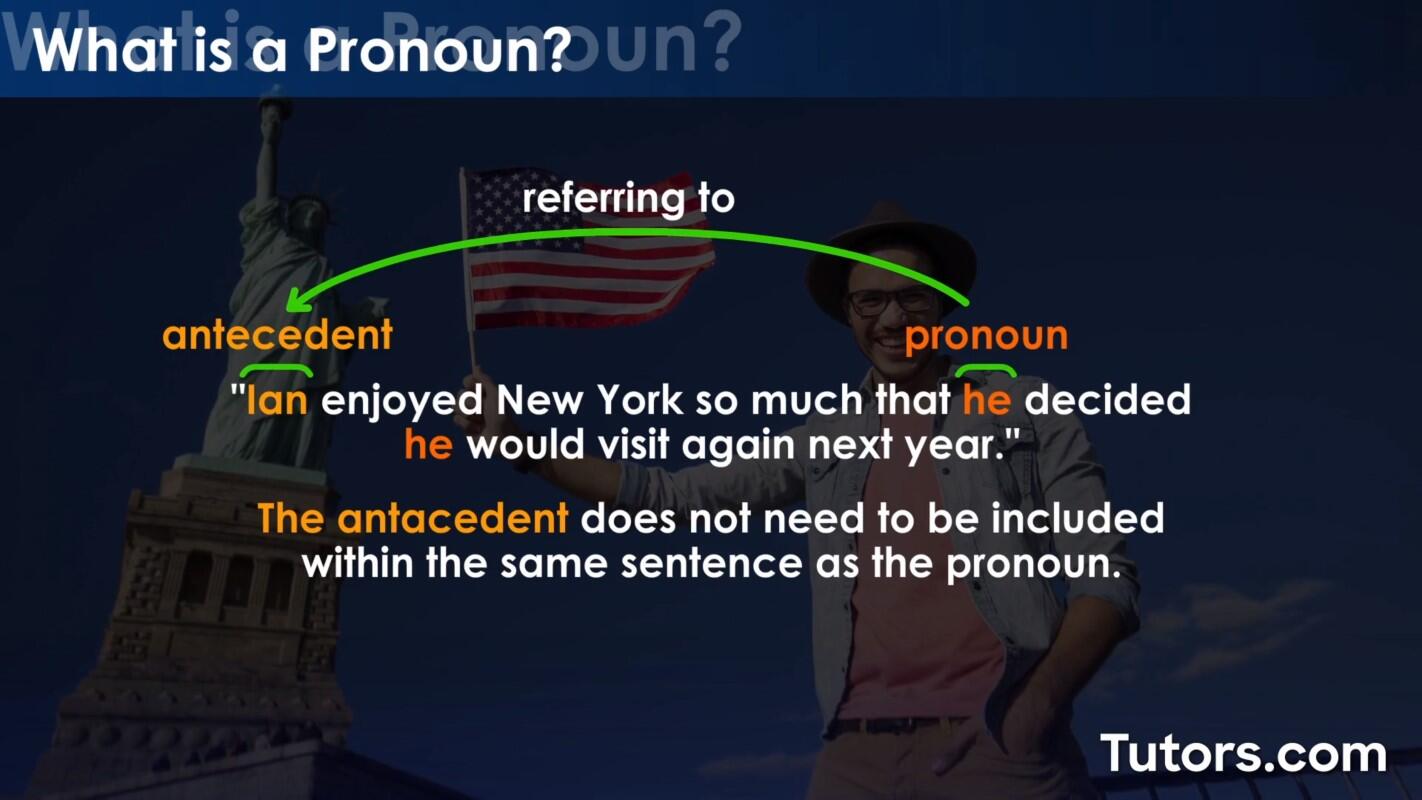
The noun the pronoun refers to is called the antecedent:
Ian enjoyed New York so much that he decided he would visit again next year.
Antecedent: Ian
Pronoun: he
When utilizing pronouns, it should be clear what the antecedent of the pronoun is to avoid any confusion:
Incorrect: Eve loved watching her brother's dog, as she was able to spend the day in the park.
Antecedent: Eve or the dog?
Pronoun: she
Correct: Eve loved being able to spend the day in the park when she watched her brother's dog.
Antecedent: Eve
Pronoun: she
The antecedent does not need to be included within the same sentence as the pronoun:
Tara was not always interested in science. However, after taking a biology course, she found it fascinating.
Sentence 1: Tara (antecedent)
Sentence 2: she (pronoun)
Pronoun rules
The following set of English grammar rules ensures the appropriate use of pronouns:
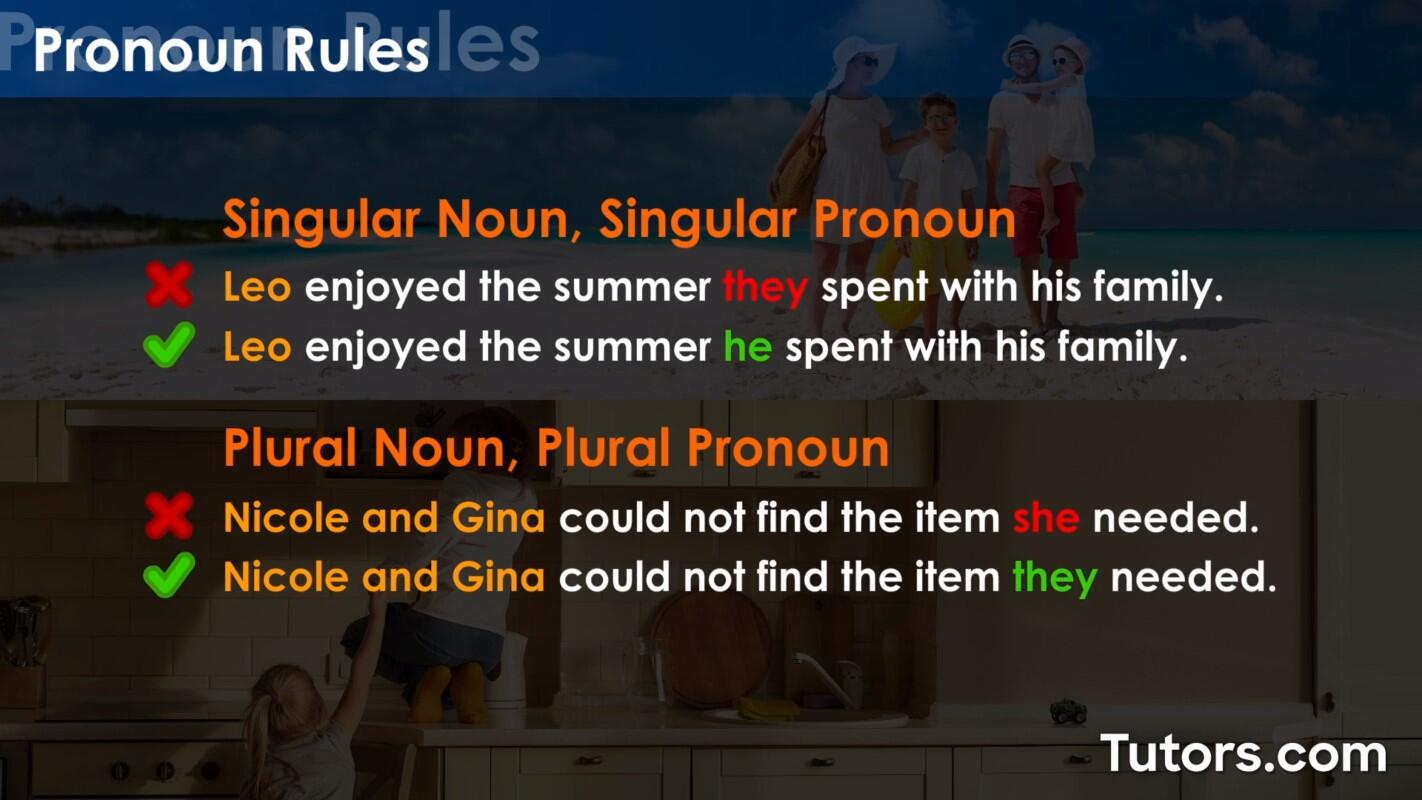
Singular noun, singular pronoun
Incorrect: Leo enjoyed the summer they spent with his family.
Noun: Leo (singular)
Pronoun: they (plural)
Correct: Leo enjoyed the summer he spent with his family.
Noun: Leo (singular)
Pronoun: he (singular)
Plural noun, plural pronouns
Incorrect: Nicole and Gina could not find the item she needed.
Noun: Nicole and Gina (plural)
Pronoun: she (singular)
Correct: Nicole and Gina could not find the item they needed.
Noun: Nicole and Gina (plural)
Pronoun: they (plural)
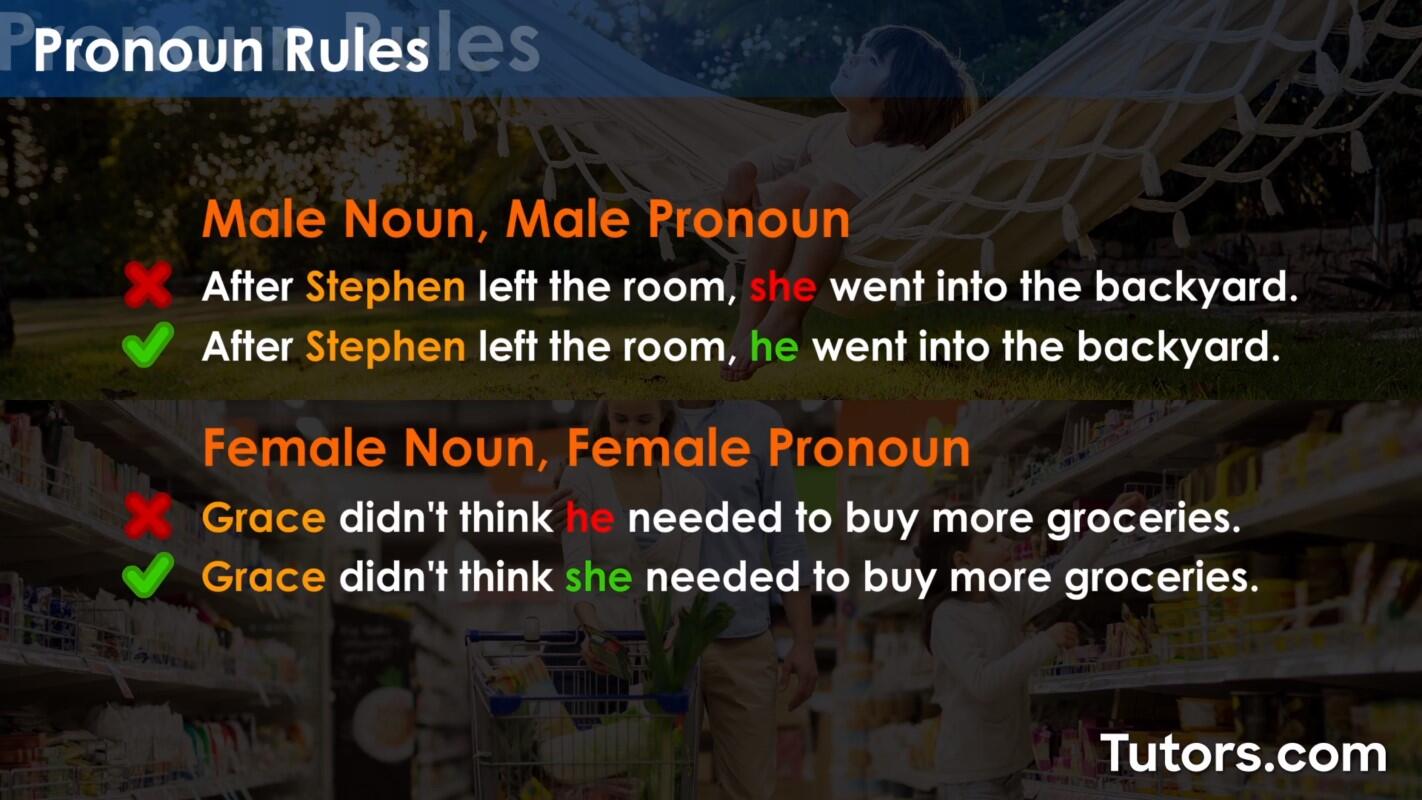
Male noun, male pronoun
Incorrect: After Stephen left the room, she went into the backyard.
Noun: Stephen (male)
Pronoun: she (female)
Correct: After Stephen left the room, he went into the backyard.
Noun: Stephen
Pronoun: he
Female noun, female pronoun
Incorrect: Grace didn't think he needed to buy more groceries.
Noun: Grace
Pronoun: he
Correct: Grace didn't think she needed to buy more groceries.
Noun: Grace
Pronoun: she
Pronoun examples
The most common pronouns include the following:
| anyone | her | itself | she | they |
| anything | him | me | someone | us |
| everyone | himself | myself | something | we |
| everything | I | nothing | them | who |
| he | it | one | themselves | you |
Pronoun sentences
The following sentences incorporate the use of at least one pronoun:
Will was lucky he had friends to help him move.
She became a very experienced guitar player over the years.
The teacher wasn't sure why they decided to work together.
You don't have to stay any longer. We have everything under control.
Little did I know, they were looking for us.
Types of pronouns
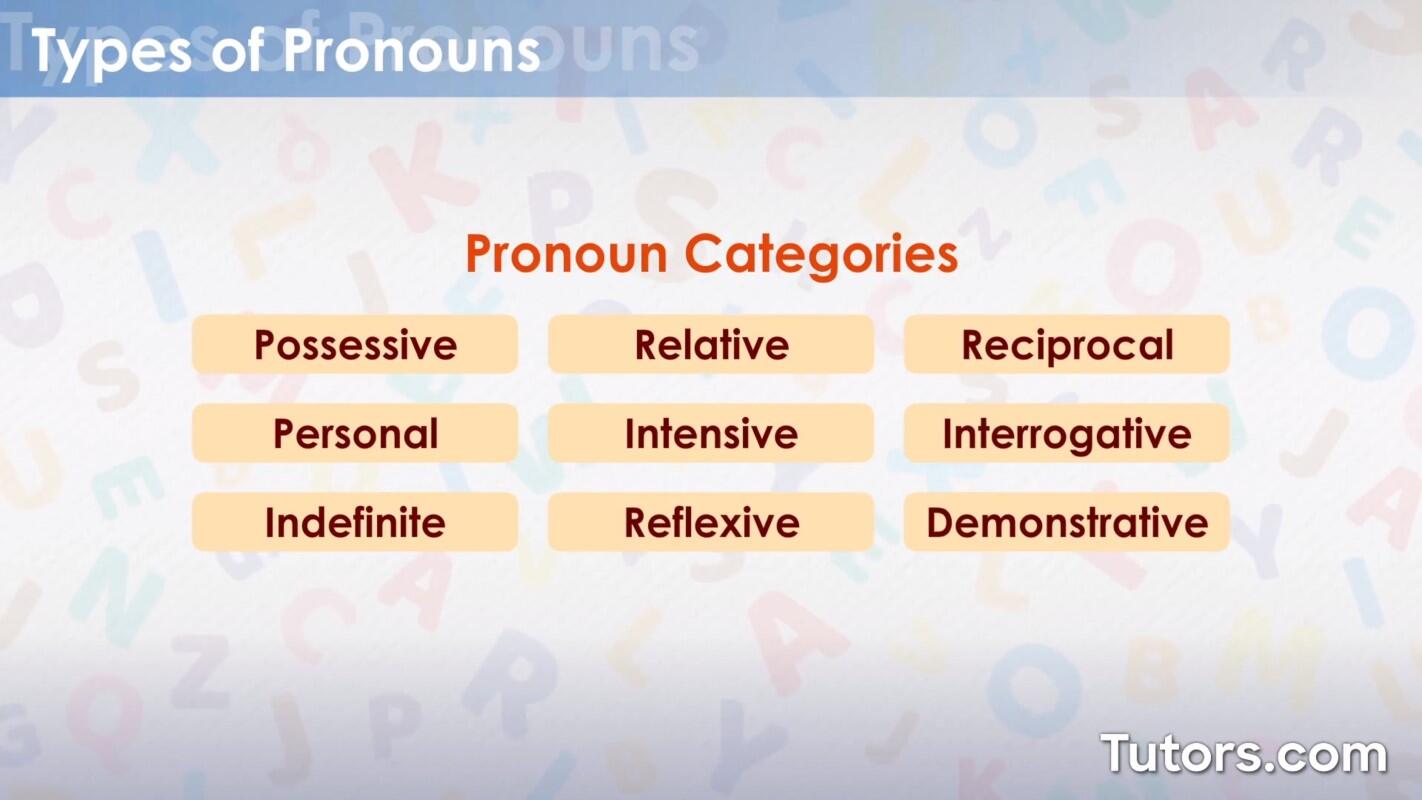
There are many different types of pronouns used in both writing and speech in the English language. These pronoun categories include the following:
Possessive
Personal
Indefinite
Relative
Intensive
Reflexive
Reciprocal
Interrogative
Demonstrative
Subject and object
Possessive pronouns
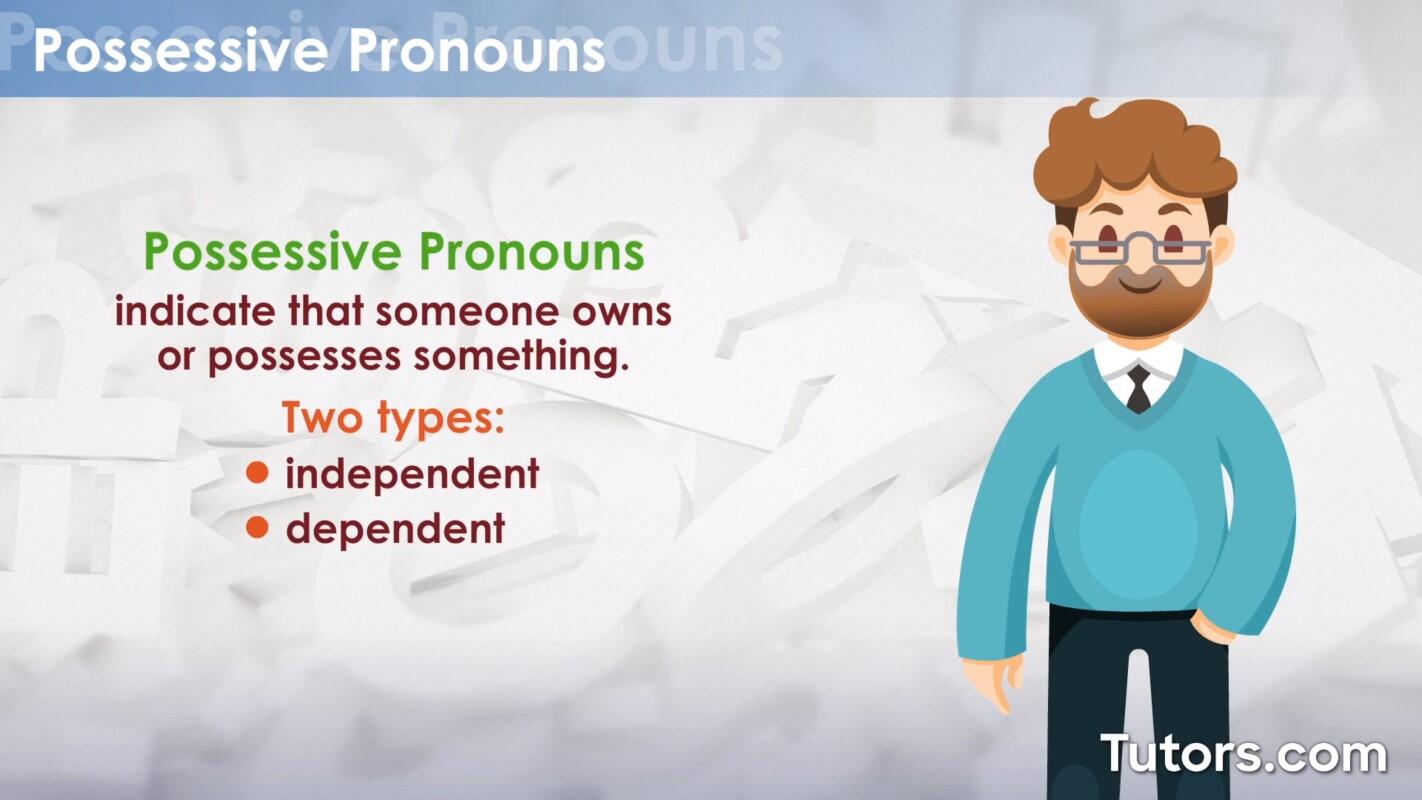
Possessive pronouns indicate that someone owns or possesses something. Unlike possessive nouns, these pronouns do not identify ownership through the use of an apostrophe.
There are two types of possessive pronouns – independent and dependent.
Independent possessive pronouns reference a noun already established within a sentence, which means they are typically positioned toward the end of a sentence. These pronouns include “hers,” “his,” “mine,” “theirs,” “ours,” and “yours”:
The car in the last parking spot is his.
Dependent possessive pronouns function as adjectives and, therefore, precede the noun in a sentence. These pronouns include “her,” “his,” “its,” “my,” “our,” “their,” and “your”:
His house was in the last one on the left.
Personal pronouns
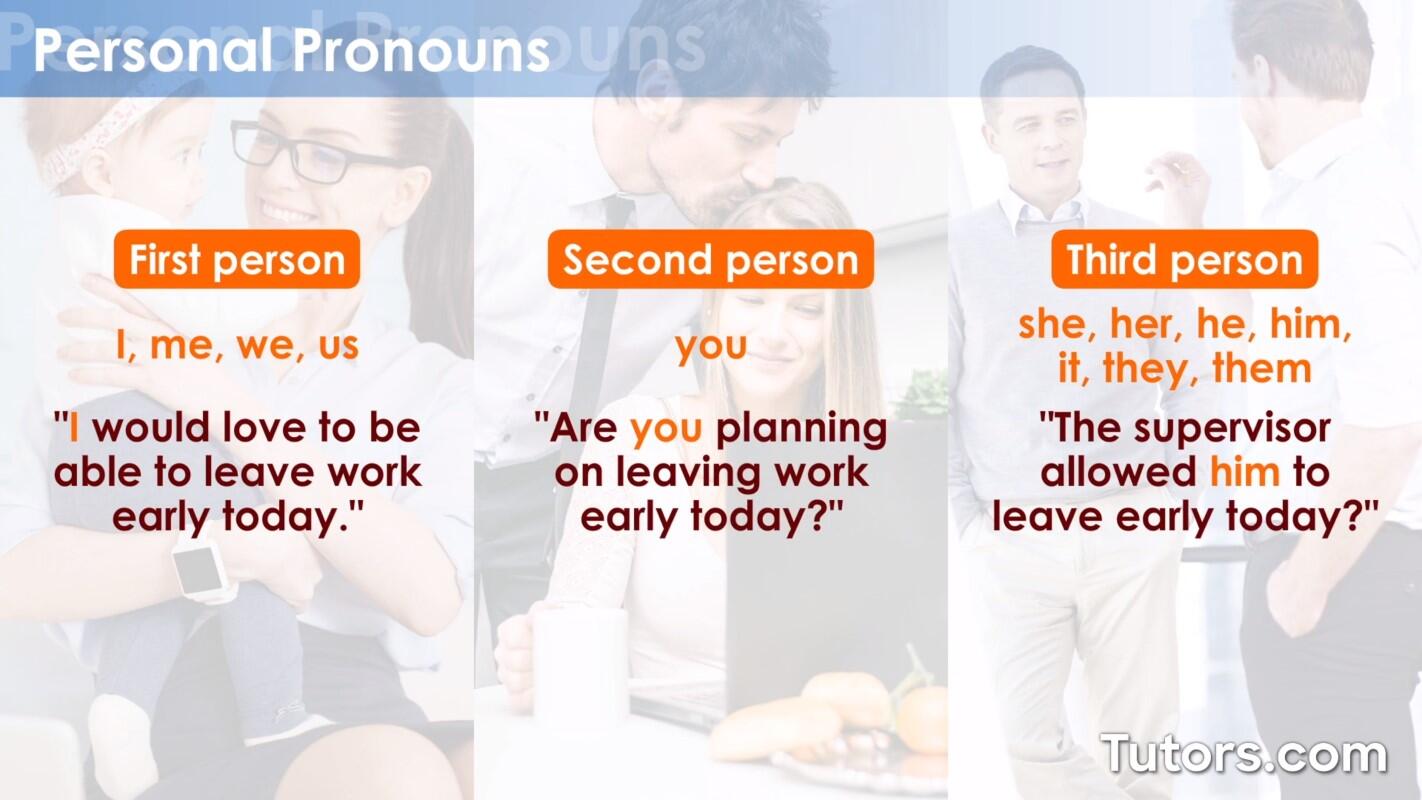
A personal pronoun typically takes the place of a proper noun that refers to a person/people. These pronouns include the following:
First Person: I, me, we, us
I would love to be able to leave work early today.
Second Person: You
Are you planning on leaving work early today?
Third Person: She, her, he, him, it, they, them
The supervisor allowed him to leave early today.
Indefinite pronouns
While pronouns generally refer to a specific person, place, or thing, some produce a broader reference. These indefinite pronouns do not refer to a particular noun. Examples of these pronouns include the following:
| Singular | Plural | Singular or Plural | |
|---|---|---|---|
| another | little | both | all |
| anybody | much | few | any |
| anyone | neither | fewer | more |
| anything | nobody | many | most |
| each | no one | others | none |
| either | nothing | several | some |
| enough | one | such | |
| everybody | other | ||
| everyone | somebody | ||
| everything | someone | ||
| less | something |
The following sentences include the use of indefinite pronouns:
Summer is the perfect time for the family to travel somewhere.
Everybody hoped for a snow day.
The manager asked that everyone stay in the lobby.
She felt that her coffee needed some sugar.
Most left after the fireworks; however, several stayed in the park.
Relative pronouns
Relative pronouns connect phrases and clauses to a noun or another pronoun. The clause or phrase modifies the noun that the pronoun connects. Relative pronouns include “who,” “whom,” “whose,” “which,” and “that.”
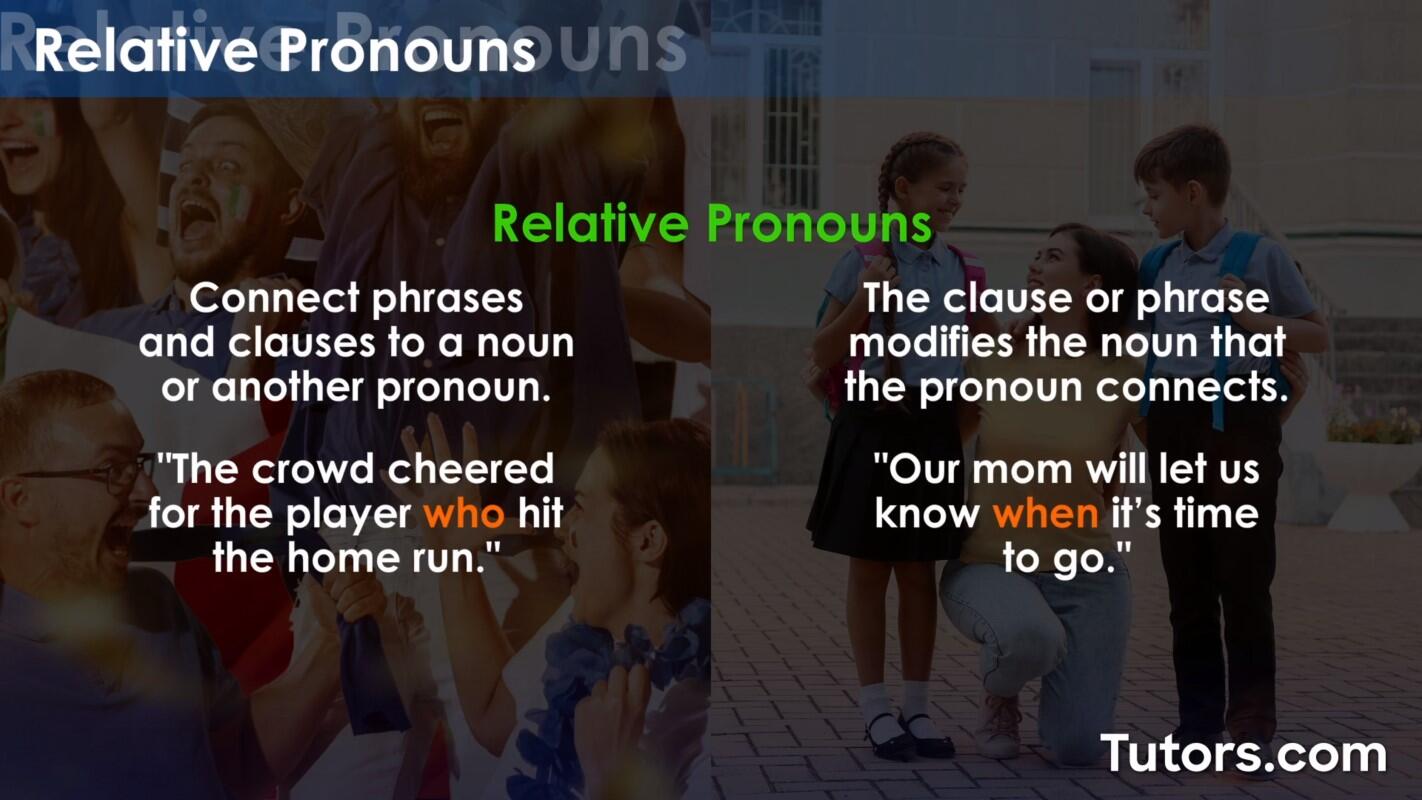
The crowd cheered for the player who hit the game-winning home run.
Our mom will let us know when it’s time to go.
The high school where Ryan graduated is down the street.
Intensive and reflexive pronouns
The following words are considered both intensive and reflexive pronouns:
| myself | yourself | himself | herself |
| itself | ourselves | yourselves | themselves |
While intensive and reflexive pronouns share the same words, they serve different functions in a sentence.
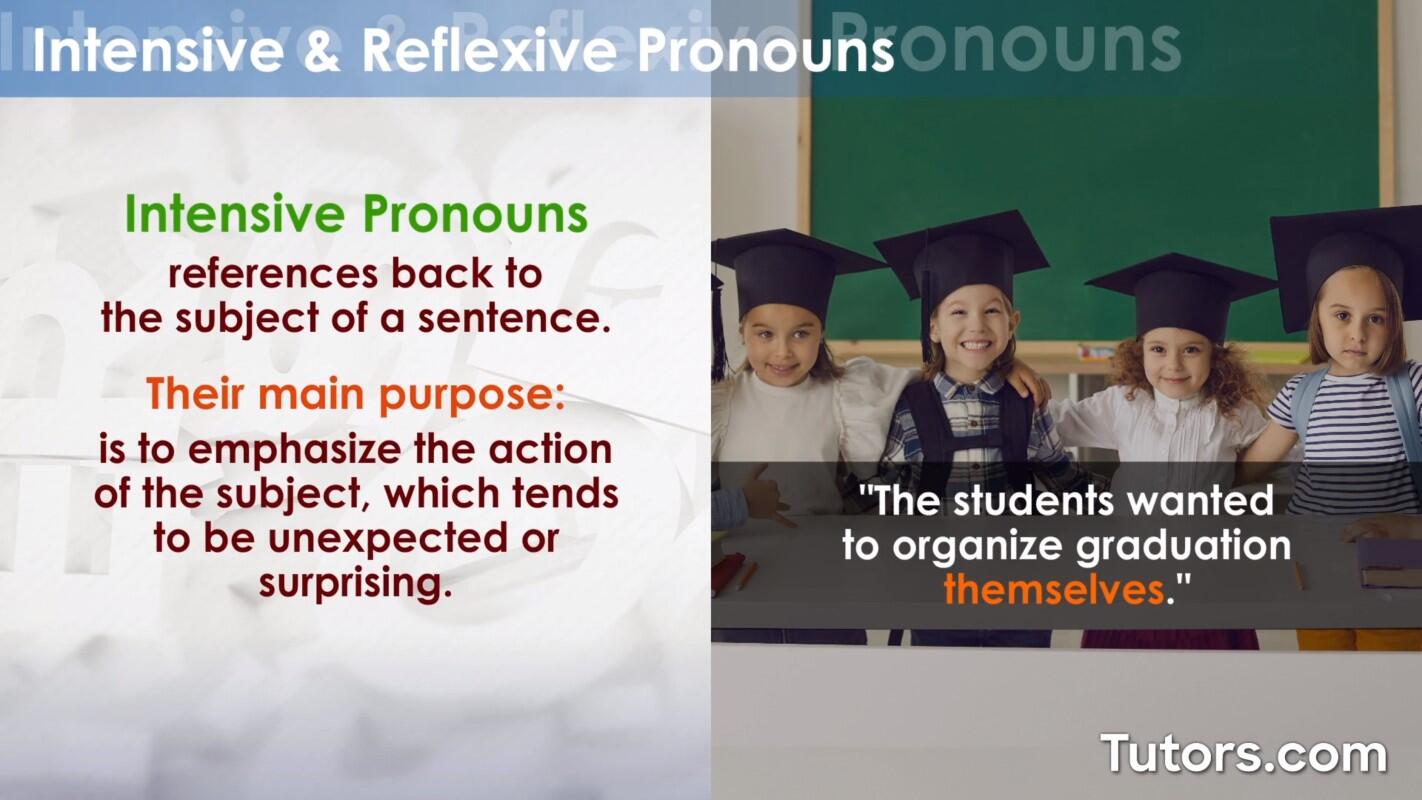
An intensive pronoun references back to the subject of a sentence. Their main purpose is to emphasize the action of the subject, which tends to be unexpected or surprising. An intensive pronoun can be removed from the sentence without altering its meaning.
The students wanted to organize graduation themselves without help from the administration.
A reflexive pronoun refers back to the subject of the sentence. Removing a reflexive pronoun from a sentence makes it difficult to comprehend. Writers use reflexive pronouns when both the subject and object of a verb are the same person or thing.
The students found themselves organizing their graduation.
Reciprocal pronouns
Reciprocal pronouns refer to two or more people who are the subject of the sentence and express a mutual relationship. There are two reciprocal pronouns: “each other” and “one another.”
Tiana and Chantal helped each other with their projects.
My family supports one another.
Interrogative pronouns
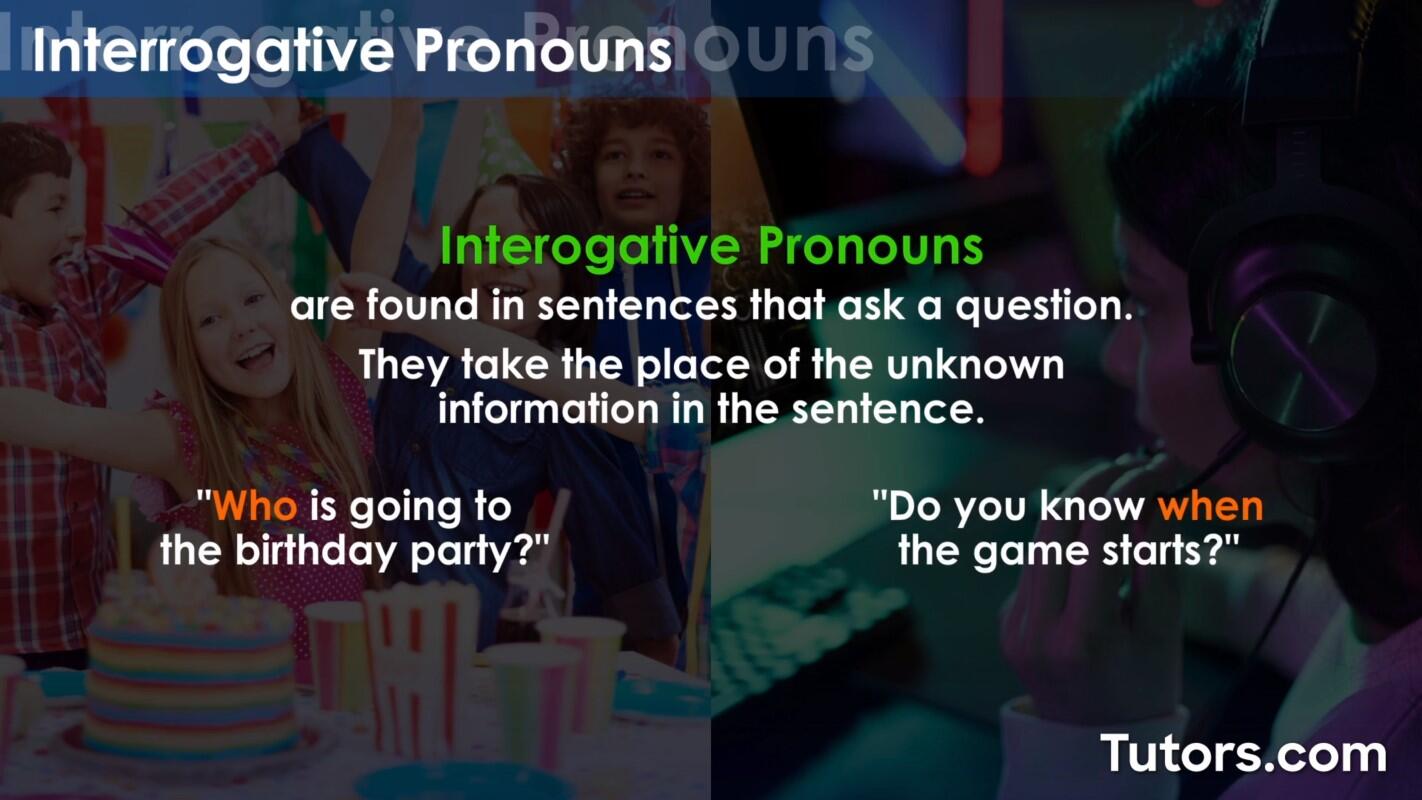
Interrogative pronouns are found in sentences that ask a question. They take the place of the unknown information in the sentence. The words “who,” “whom,” “what,” “which,” and “whose” are the most common interrogative pronouns. The suffix -ever is sometimes added to an interrogative pronoun, which often emphasizes confusion or surprise.
Who is going to the birthday party?
Do you know when the game starts?
Whoever decided it was a good idea to leave early?
Demonstrative pronouns
Demonstrative pronouns point to something specific within a sentence. They are meant to identify a noun’s position as near or far in both space and time. The pronouns “this,” “that,” “these,” and “those” are demonstrative.
This dog loves to sleep all day.
Those trees need to be cut down.
Please throw that away.
Subject and object pronouns
Subject pronouns come before a verb and include “I,” you,” “he,” “she,” “it,” “we,” “they,” and “who.”
He likes to swim in the ocean.
Who was at the door?
Object pronouns come after a verb or preposition and include “me,” “you,” “him,” “her, “it,” “us,” “them,” and “whom.”
We see her every day after school.
To whom was the letter addressed?
Summarize with AI:
Did you like this article? Rate it!

 Loading...