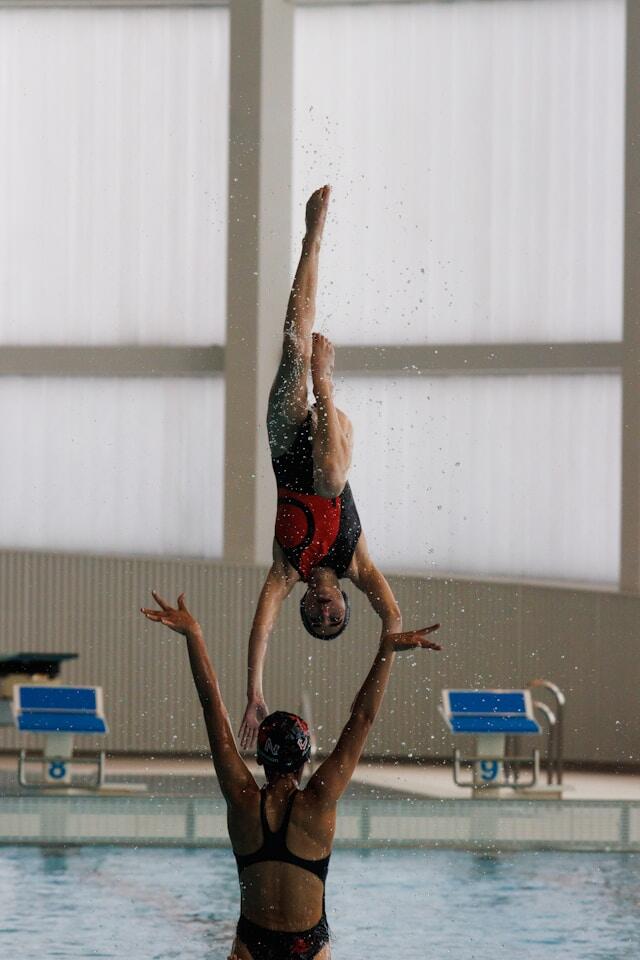

Synchronized swimming (now officially known as artistic swimming) is one of the most physically demanding sports in the world, combining elite athleticism with musicality, choreography, and near-superhuman breath control. Athletes train for years practicing precise vertical leg positions, overhead leg extensions, and underwater figures; the technical elements that judges score alongside the artistic performance of each routine.
The United States dominated the discipline in its early Olympic years, producing champions from 1984 through 1996 who set the standard for the world. From Tracie Ruiz winning the first-ever Olympic gold to Bill May making history as the first man to claim a World Championship title, American synchronized swimmers have left a permanent mark on the sport.
This guide covers the most celebrated famous synchronized swimmers the US has produced, from the legends of the 1984 Los Angeles Games to today's athletes carrying the tradition forward.
For a broader look at American excellence in the water, our guide to top American swimmers covers the full spectrum of aquatic champions.


Notable Figures in Synchronized Swimming
The United States produced the world's best synchronized swimmers for over a decade, claiming gold at three consecutive Olympic Games from 1984 to 1996. The athletes from this era pioneered technical free routines, training methods, and artistic standards that countries around the world would spend years trying to replicate. They trained under coaches who built programs from scratch, often practicing six to eight hours a day in the swimming pool; refining their free routines and group choreography to a level of precision that set new world standards. Their achievements defined a golden age for American women synchronized swimming that has never quite been matched since.
🚫 Touching the pool bottom during a routine results in a penalty deduction
👁️ Goggles are not permitted during competition: swimmers perform without them
🎵 Underwater speakers allow athletes to hear music during their routines
🏊 Competitions feature solo, duet, and team events: each divided into a technical free routine and a free routine, scored separately by judges
🦵 Vertical leg extensions and overhead leg movements are core technical elements: the height, synchrony, and movement quality of legs above the water surface are directly scored
@tntsports USA’s Synchronised swimming team putting on a show with their Smooth Criminal routine 💃 🇺🇸 #swimming#synchronisedswimming#Olympics♬ original sound - TNT Sports
Tracie Ruiz
At the 1984 Los Angeles Games, Ruiz won gold in both the solo event and the duet alongside partner Candy Costie; making the US the undisputed star of synchronized swimming's Olympic debut. She had won six consecutive US National Championships leading into those Games and accumulated 41 gold medals across her career.
Ruiz returned to defend her title at the 1988 Seoul Olympics, winning silver in the solo after a narrowly contested finish with Canada's Carolyn Waldo. She was inducted into the International Swimming Hall of Fame in 1993. Her performances in Los Angeles remain the defining moments of American synchronized swimming's history.
Becky Dyroen-Lancer
Becky's team's free routine, "Fantasia on the Orchestra," received a perfect score; all ten judges awarded a 10, making it the only perfect-scored routine in Olympic artistic swimming history. That achievement capped a career that included 9 consecutive Grand Slams (1992–1996), each requiring wins in the solo, duet, and team events (including both the technical free routines and free routines) at the same FINA competition. Dyroen-Lancer's precision in vertical positions and overhead leg movement set new benchmarks for senior competition, and her synchro routines are still studied by coaches today.
What makes her story even more extraordinary is that Dyroen-Lancer was born with a heart defect and underwent open-heart surgery as an infant. She went on to win four World Championship gold medals, dominate nine consecutive FINA World Cup titles, and be named Swimming World Magazine's Synchronized Swimmer of the Year three times running. After retiring, she performed in Cirque du Soleil's O for five years.
Karen and Sarah Josephson
Twin sisters Karen and Sarah Josephson are among the most successful duet pairs in the sport's history. They won 16 consecutive national and international championships in the duet event and claimed Olympic gold at the 1992 Barcelona Games. Their synergy as twins gave them a natural coordination that coaches described as unlike anything they had seen in competition.
The Josephsons were part of the generation that cemented US dominance in synchronized swimming during its Olympic formative years. Their Barcelona gold marked the third consecutive Olympics where the United States topped the podium in the duet event.
Kristin Babb-Sprague
Kristin Babb-Sprague won the solo event at the 1992 Barcelona Olympics, making the US the dominant force across both synchronized swimming events that year. Her victory, combined with the Josephsons' duet gold, gave America a clean sweep of the discipline at the Barcelona Games.
Babb-Sprague was one of the most technically precise solo performers of her generation, known for the clarity of her figures and the expressiveness of her routines. Her 1992 gold completed a remarkable run of American solo Olympic victories that began with Ruiz in 1984.
Olympic Synchronized Swimmers
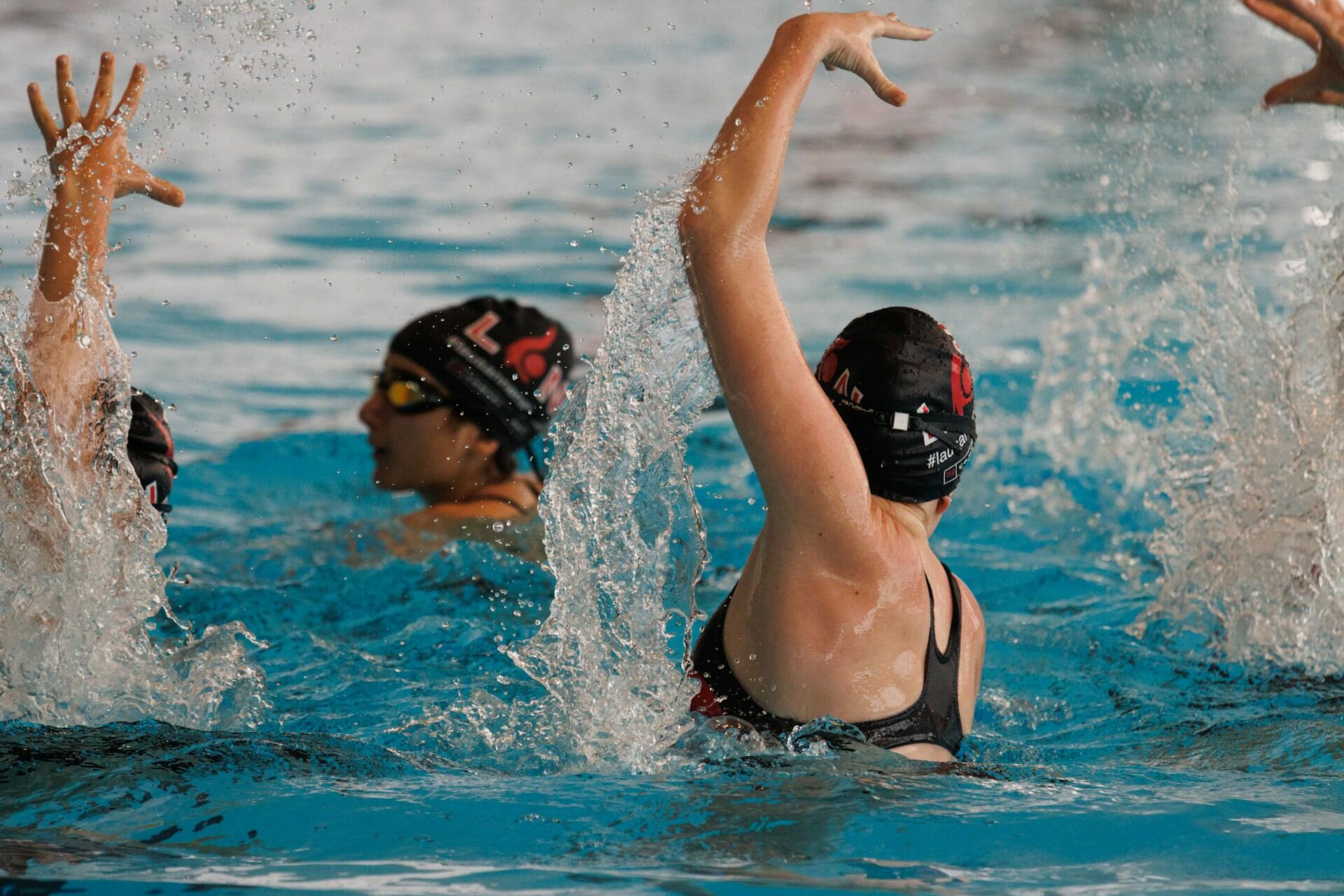
While Russia dominated synchronized swimming from the late 1990s through the 2010s, American olympic synchronized swimmers continued to compete at the highest level and make their presence felt on the world stage. Athletes like Candy Costie, Mary Killman, and Anita Alvarez represent different chapters of the same story; a tradition of American excellence in a sport that demands total body control and extraordinary artistry across the solo, duet, and group events.
Our guide to the best famous olympic swimmers in the US explores how this tradition connects to the wider world of American aquatics.
Candy Costie
Candy Costie was the duet partner of Tracie Ruiz at the 1984 Los Angeles Olympics, and together they won the first-ever Olympic duet gold medal in synchronized swimming history. Costie trained alongside Ruiz at the Seattle Aqua Club under coach Charlotte Davis, one of the pioneering figures in US synchro coaching. Their partnership was one of the most celebrated in the sport's early history.
Costie's contribution to the 1984 Games helped establish the US as the world standard-bearer in the duet format. She and Ruiz had won silver at the 1982 World Aquatics Championships before converting that into gold on home soil two years later.
Mary Killman
Mary Killman is one of the most accomplished American synchronized swimmers of the modern era. An enrolled member of the Citizen Potawatomi Nation, she joined the US National Team at 16 and went on to become a five-time US Senior National Solo Champion. She represented the United States at the 2012 London Olympics in the duet event alongside Mariya Koroleva; the only American women to compete in synchronized swimming at those Games.
Killman was named USA Synchro Athlete of the Year four times (2010, 2011, 2012, 2014) and won three consecutive US Collegiate National Solo titles at Lindenwood University. She was also a silver medalist at the 2011 and 2015 Pan American Games. Her longevity and consistency made her one of the defining American competitors of her generation.
🏅 2012 London Olympics: Women's Duet with Mariya Koroleva
🥈 Pan American Games Silver: 2011 (duet + team), 2015 (duet + team)
🇺🇸 USA Synchro Athlete of the Year: 2010, 2011, 2012, 2014
Anita Alvarez
Anita Alvarez is the most prominent American synchronized swimmer of the current generation. She made her Olympic debut at Rio 2016 and competed in Tokyo 2020, before reaching the podium for the first time with a team silver medal at the 2024 Paris Olympics. The Buffalo, New York native has been named USA Artistic Swimming Athlete of the Year multiple times and is widely regarded as the face of the sport in the United States today.
In June 2022, Alvarez fainted underwater at the end of her solo free routine at the World Aquatics Championships in Budapest. Her coach, Spanish legend Andrea Fuentes, jumped into the pool fully clothed to rescue her before she reached the bottom. The footage went viral worldwide and drew enormous attention to just how extreme the physical demands of performing a synchronized swimming routine are: athletes are underwater for significant portions of the routine, holding their breath while executing complex choreography. Alvarez had previously fainted in competition at the 2021 Olympic Qualification Tournament, also rescued by Fuentes. She returned to competition and went on to claim Olympic silver in Paris.
Male Synchronized Swimmers
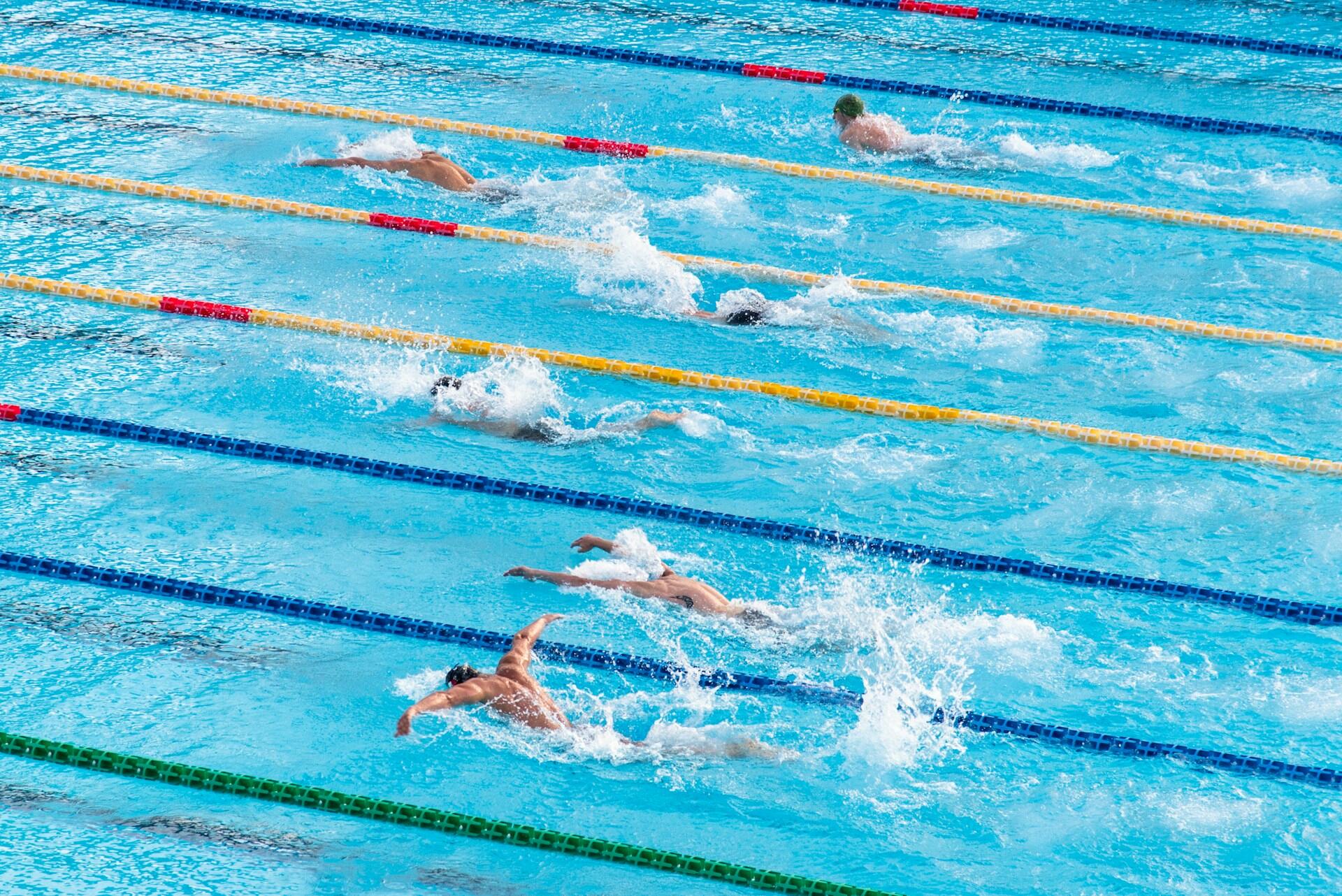
For most of the sport's history, synchronized swimming was exclusively a women's discipline in elite competition. Men were barred from competing at the Olympics and World Championships, despite the fact that male athletes had participated in the sport since its earliest days. That changed in 2015, when the World Aquatics Championships introduced a mixed duet event for the first time. In 2024, men were permitted to compete in the Olympic team event in Paris.
Our profiles of the most famous male swimmers in American history explore the broader landscape of men in US aquatics.
Bill May
Bill May is the most important figure in the history of male synchronized swimming. Born in Syracuse, New York, he discovered the sport at age 10 when he joined his sister's class after swimming practice; because, as he put it, the alternative was sitting outside the pool watching her. By 16 he was competing with the elite Santa Clara Aquamaids program, and by 1998 he was the US National Champion in the mixed duet alongside partner Kristina Lum.
May was barred from competing at the 2004 Olympics because the sport was women-only. He spent 10 years performing in Cirque du Soleil's O in Las Vegas before returning to competition in 2015 at age 36. May's return to senior competition in 2015 after a decade away demonstrated that practicing synchronized swimming at elite level is a discipline that transcends both age and gender. His mixed duet performances brought new visibility to male participation in the sport.
At the 2023 World Championships in Fukuoka, he became the first American man to win a world team medal when the US claimed silver in the acrobatic routine. He was honored at the 2024 Paris Olympics as the team event opened to men for the first time.
It was either try it with her or sit outside the pool and watch her, so my mom told me to try it, just to be in the water and be doing something.
Bill May
For a deeper look at the women who built the American tradition alongside these male pioneers, our guide to legendary women swimmers profiles the full history.
Key Moments in Artistic Swimming History
Artistic swimming has one of the most fascinating origin stories in Olympic sports; rooted in Chicago water ballet shows of the 1930s and shaped by decades of advocacy, athleticism, and cultural change.
Today's young synchronized swimming athletes train under USA Artistic Swimming's national program, practicing figures, vertical movements, and synchro routines from junior level through to senior championships. The mixed duet format introduced in 2015 has opened the sport to a new generation of male and female performers, and the 2024 Paris Games marked a turning point for the discipline globally.
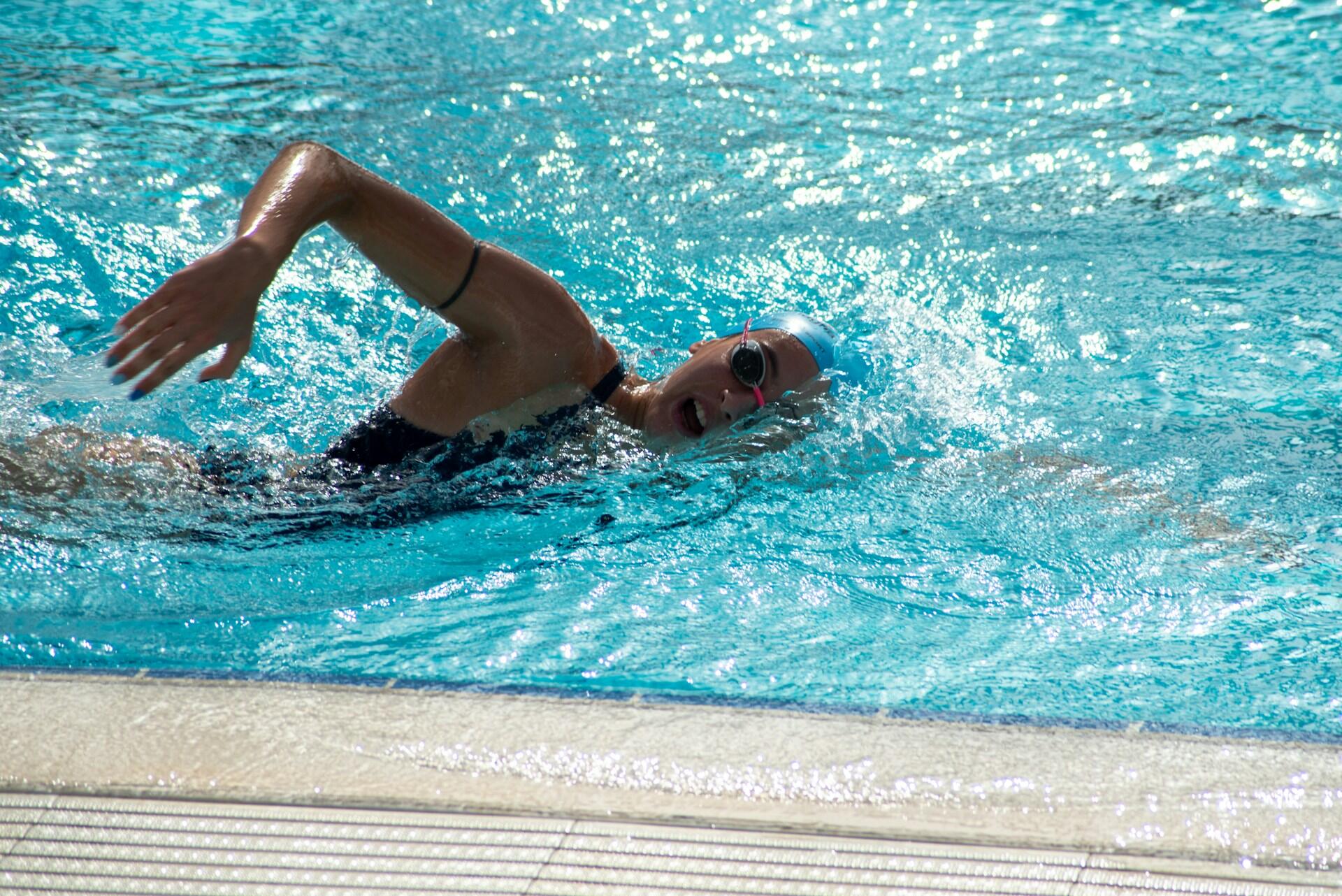
The sport has gone through multiple reinventions: from its first Olympic appearance in 1984 to the 2017 rebrand to "artistic swimming," and the landmark inclusion of men at the 2024 Paris Games. Understanding these milestones helps explain why the US was dominant in the early years and what has changed since. The timeline below traces the key moments that define the sport's evolution.
1933
Katherine Curtis coins the term 'synchronized swimming' at the Chicago World Exhibition.
The sport begins its journey from water ballet to competitive discipline.
1941
The AAU officially recognizes synchronized swimming as a competitive sport in the US.
Men and women are required to compete separately, inadvertently discouraging male participation for decades.
1952
Synchronized swimming makes its first appearance as a demonstration event at the Helsinki Summer Olympics.
1984
The sport becomes fully Olympic at the Los Angeles Games. Tracie Ruiz wins two gold medals.
The first-ever Olympic synchronized swimming champion.
1992
The Josephson sisters win duet gold and Kristin Babb-Sprague claims solo gold at the Barcelona Olympics, marking the peak of US Olympic dominance.
1996
Becky Dyroen-Lancer leads the US team to a perfect score at Atlanta.
All 10 judges award a 10 for their 'Fantasia on the Orchestra' free routine.
2015
Bill May becomes the first man ever to win gold at a World Aquatics Championship.
He competed in the mixed duet technical free routine with partner Christina Jones in Kazan, Russia.
2017
FINA renames the sport 'artistic swimming' at the IOC's request.
The decision is widely criticized as most athletes and coaches were not consulted.
2024
Men are permitted to compete in the team event at the Paris Games. Anita Alvarez helps the US team win a silver medal.
🥇 1984 Los Angeles: Solo gold (Ruiz) + Duet gold (Ruiz & Costie)
🥇 1992 Barcelona: Solo gold (Babb-Sprague) + Duet gold (Josephson sisters)
🥇 1996 Atlanta: Team gold (Dyroen-Lancer's team, perfect score)
Summarize with AI:
Did you like this article? Leave a rating!

 Loading...