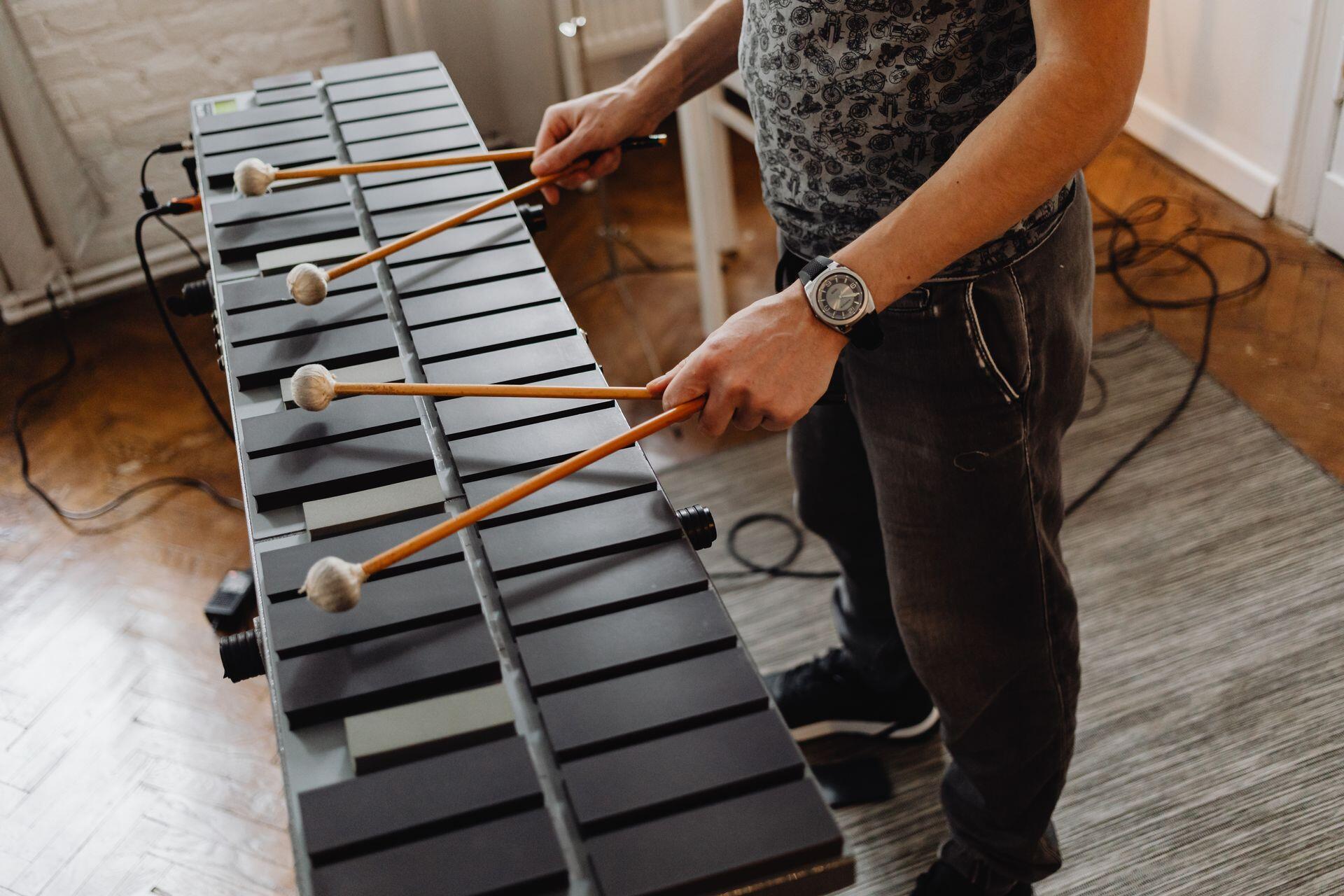

Auxiliary instruments provide smaller, distinctive sounds among a sea of loud, rhythmic, melodic instrumentation. These instruments can cut through with clear notes or provide emphasis in quieter moments. In marching bands, they offer precise pops of texture.
| Type of auxiliary percussion | Common instruments | How the sound is made | Typical use in a marching band |
|---|---|---|---|
| Handheld shakers | Maracas, egg shakers, cabasa, shaker, tambourine | Shaken or moved by hand | Adds pulse, texture and style |
| Struck small percussion | Triangle, cowbell, woodblock, claves, bells | Struck with a beater, stick or hand | Creates accents and clear rhythmic patterns |
| Scraped or textured percussion | Guiro, ratchet, vibraslap, bell tree | Scraped, spun or shaken | Produces special effects and color |
| Frame and hand drums | Tambourine, bongos, congas, djembe | Played with hands, sticks or beaters | Adds groove, rhythm and cultural character |
| Cymbals and metal effects | Suspended cymbal, crash cymbals, gong, brake drum | Struck or scraped | Builds climaxes and dramatic impacts |
| Pitched accessories | Glockenspiel, crotales, chimes, steel pans | Struck with mallets | Adds melody, pitch and brilliance |


What Is Auxiliary Percussion?
The word ‘auxiliary’ does not mean unimportant or extraneous. Though these instruments usually only make brief appearances, especially in marching band music, they add distinct and memorable flavor.
These are percussion instruments aside from the portable drums found in the main drumline. The drumline, or battery section, usually includes snare drums, tenor drums, bass drums, and marching cymbals. Auxiliary instruments are usually all the other percussives outside of those.
The term is flexible and can be defined by each individual ensemble. Some consider clash cymbals to be part of the main drumline, while others consider them to be auxiliary. Additionally, each ensemble may use different auxiliaries. One group might have a triangle, a tambourine, a marimba, and a woodblock, while another might have a drum kit, timpani, and electronic samples.
The Role of Aux Percussion Instruments in Marching Bands
Auxiliary percussion supports the ensemble through rhythm and emphasis. They can mark transitions and bring new tones and colors into the music. They also often imitate sound effects, which is useful for drama and comedy.
Here are some ways these instruments are used in arrangements:
- Triangle: adds a bright accent at the end of a phrase
- Tambourine: supports a dance-like rhythm
- Woodblock: creates a dry, sharp pulse for emphasis
- Suspended cymbal: builds tension through a rolling crescendo
- Brake drum: adds a metallic, industrial effects
- Bells: add a high ringing to a quiet section
Specifically, auxiliary instruments are meant for specific musical purposes. They are written into the composition with intention; if there are no auxiliaries available in an ensemble, the music needs to be modified to achieve emphasis and emotion in other ways.
Cowbells, woodblocks, and claves can sharpen a rhythm without making the music louder. Ratchets, guiros, flexatones, and thunder sheets can imitate effects other instruments cannot.
Triangles, tambourines, and bell trees can make a harmony feel brighter, lighter, or more dramatic by changing the tone. Genre-specific instruments like congas, cabasas, agogô bells and tambourines can make the arrangement sound more like its intended musical tradition.
Like the main drums, auxiliary percussion can signal a change in tune, tempo, or movement. Cymbal rolls, gongs, chimes, and brake drums can build anticipation and indicate clear beginnings and endings.
How Auxiliary Instruments Fit Into a Piece
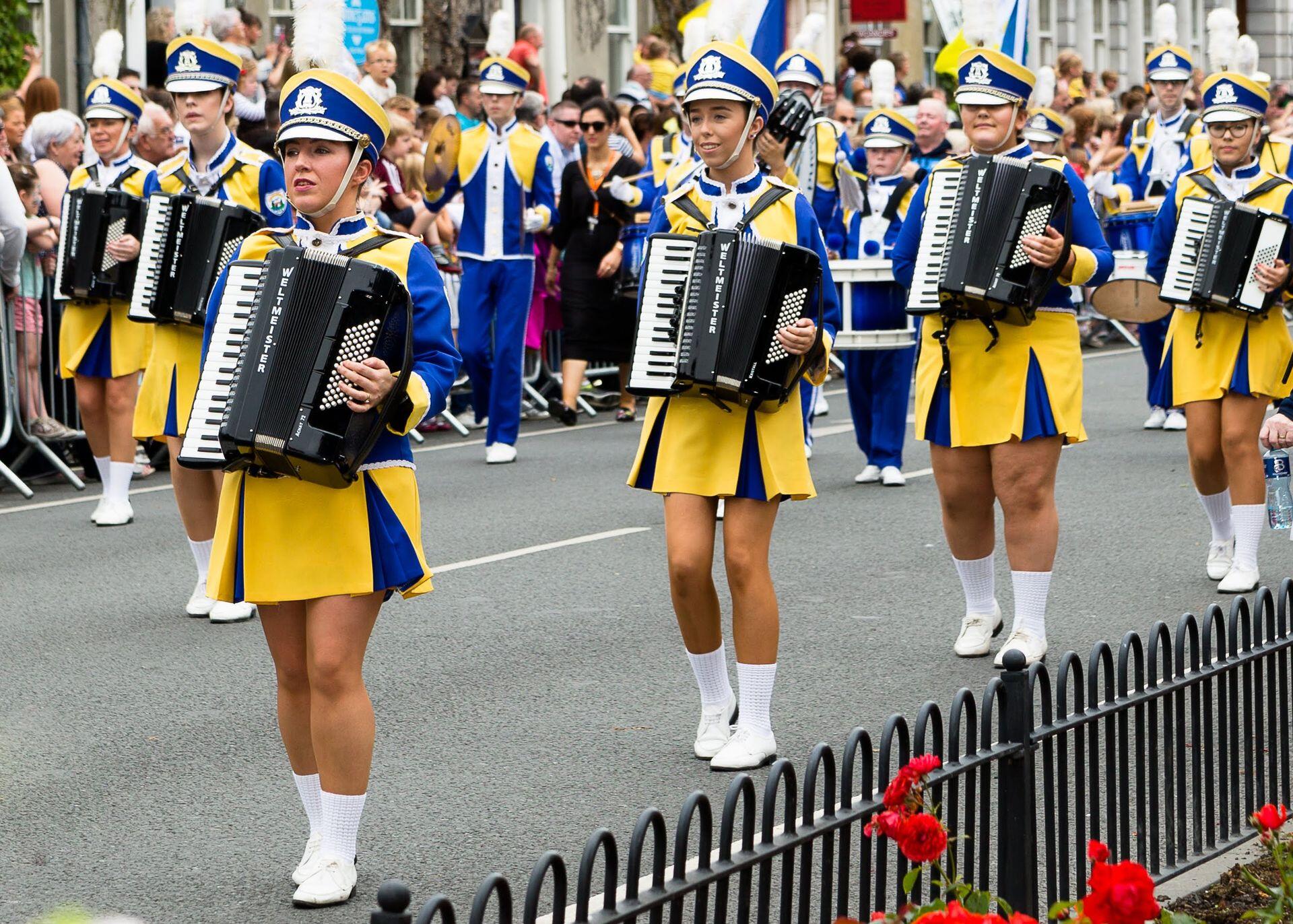
In many marching bands’ field performances, the majority of auxiliary instruments are played in the front ensemble, known as the pit. In parade formations, they may be dispersed throughout the ensemble, provided they’re portable.
In the pit, players usually switch between several instruments throughout the performance. They may play larger instruments, such as the marimba and timpani most of the time, but strike the triangle or cowbell at precise moments. They usually only last for a few bars, or even a single note, but that timing and tone can change or emphasize entire musical moments.
Color guard is also often referred to as auxiliary, because they provide a supportive role rather than a main musical one. Note that both color guard and supporting instruments are both regularly referred to as ‘auxiliary.’
Auxiliary Percussion Instruments List
There are many, many different instruments that can be added to a particular ensemble’s list. Remember that some instruments may be considered main instruments, rather than auxiliary, by certain ensembles. Many groups also do not have every instrument. Smaller companies and schools with tight budgets especially typically only have a small handful of options.
That said, here are the instruments you’re likely to find in school, community and competitive marching bands.
Handheld Shaker Instruments
Shakers make sounds when small objects, like beads, seeds, pellets, rocks, or metal parts move around inside or across a container. They can be used to keep a steady pulse and fill space between larger drum beats. They are often used when evoking certain musical styles, particularly Latin American, African, and Caribbean.
Egg Shaker
A small, egg-shaped shaker that produces a light, dry sound. It works well for quiet passages and steady rhythmic patterns.
Maracas
A pair of handheld shakers, traditionally fashioned from gourds but frequently made of plastic, fibreglass, or wood. Maracas can produce a fuller sound than an egg shaker.
Cabasa
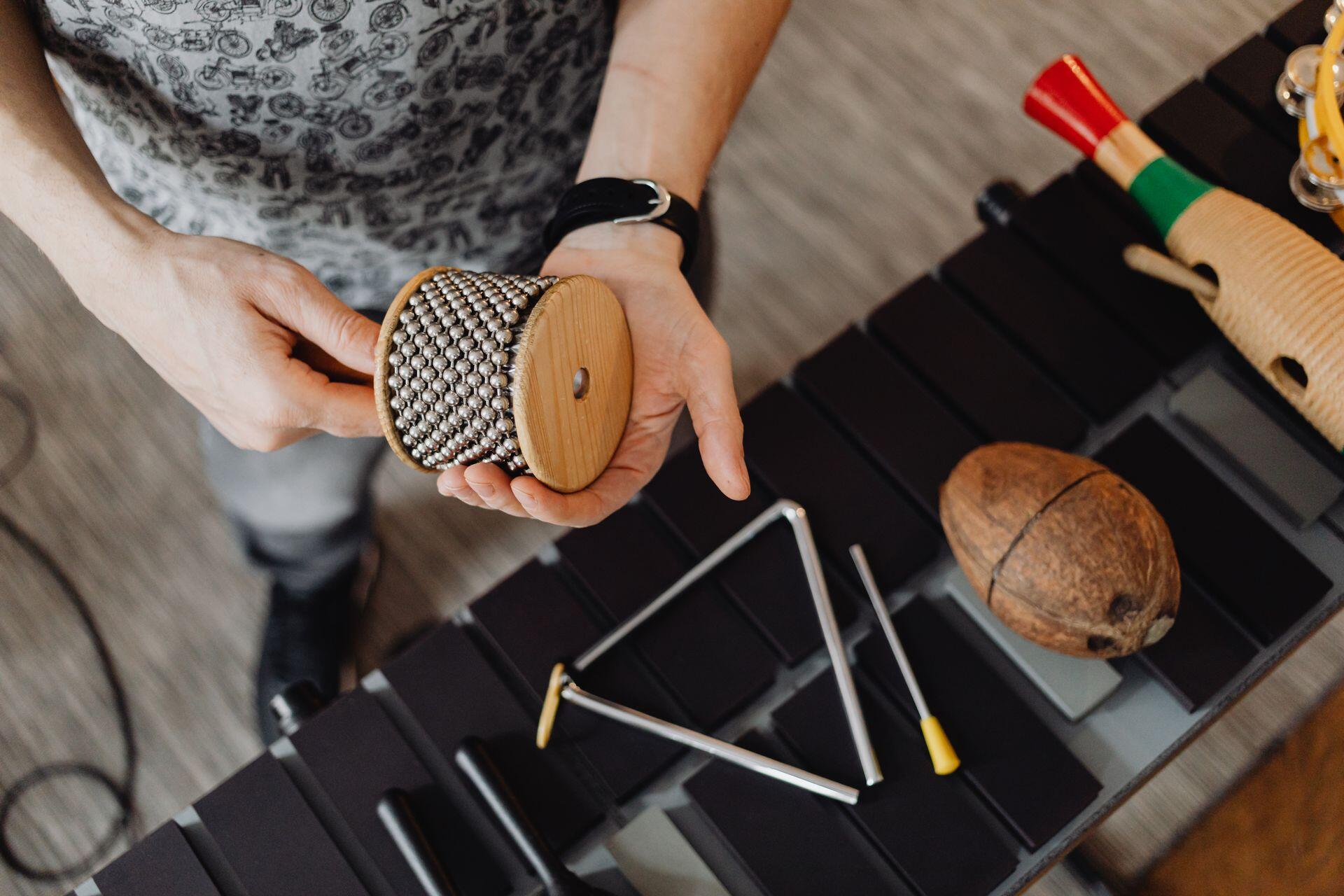
An instrument with metal beads wrapped around a cylinder. The player twists or rubs the beads to create a textured sound.
Shekere
A larger gourd shaker covered with a net of beads. It has a strong, complex sound.
Rainstick
A tube filled with small objects that move slowly through the instrument. It creates a falling-rain effect rather than a clear rhythmic beat.
Tambourine
It can be struck, shaken or rolled. Some styles have a drumhead, while others are a hollow hoop-shape. Tambourines with drumheads can be struck and jingle.
Struck Small Percussion
These types of instruments are played with a stick, beater, mallet or strike from a hand. They often produce short, clear sounds and are good for defining a rhythmic pattern, along with the drum major. Some of them, such as the glockenspiel, triangle, woodblock, and brake drum, are considered staples rather than auxiliaries in many ensembles.
Triangle
A metal instrument, aptly shaped like a triangle, struck with a beater. It has a bright, ringing tone and can be played with single notes or rolls.
Cowbell
A hollow metal bell with no clapper. It is usually struck with a stick and is common in Latin, rock and funk-influenced music. It adds distinct, loud, sharp tones for rhythm and emphasis.
Woodblock
A hollow block of wood with a sharp, dry tone. It is often used for crisp rhythmic figures, offering a more solid sound than a cowbell.
Temple Blocks
A set of tuned hollow blocks, often mounted together. They produce several different pitches.
Claves
Two hardwood sticks struck together. They make a clean, penetrating click.
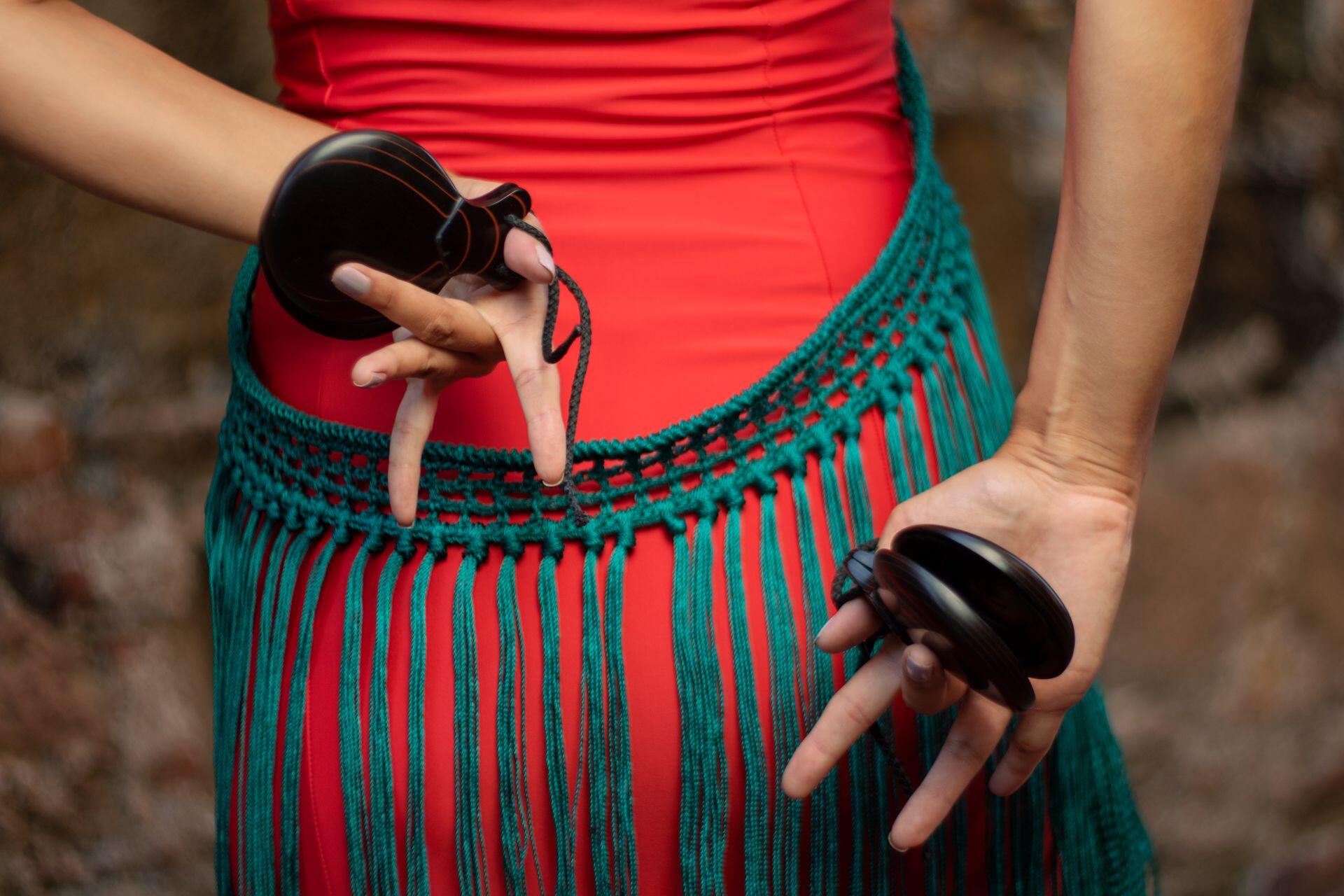
Castanets
Small wooden shells clicked together by hand, either in a traditional fashion or attached to a stick. They can also be mounted on a spinning machine. They are often associated with Spanish dance music.
Finger Cymbals
Small hand-held discs that create a delicate, high tone.
Crotales
Small, tuned bronze or brass discs with a bright tone. They may be struck with hard mallets or, in some music, bowed.
Glockenspiel or Orchestral Bells
Metal bars hammered with mallets. In a marching setting, they can carry high melodic lines clearly.
Agogô Bells
Two or more tuned metal bells joined together. They are struck with a stick and are common in Afro-Brazilian music.
Anvil or Brake Drum
This option provides a sharp, hard metallic tone. Anvils and brake drums, literally a part taken off a vehicle, are used for this musical element.
Scraped or Textured Percussion
Some instruments create unique sounds through friction, like scraping or vibration. They are useful for providing audial texture rather than an additional drum beat. They add character while supporting the main music. Similarly, color guard adds visual flair to the band.
Ratchet
A wooden instrument with a rotating handle. It makes a fast clicking or rattling tone.
Bell Tree
A group of small metal bells. The player usually sweeps a finger or beater across them for a cascading sound.
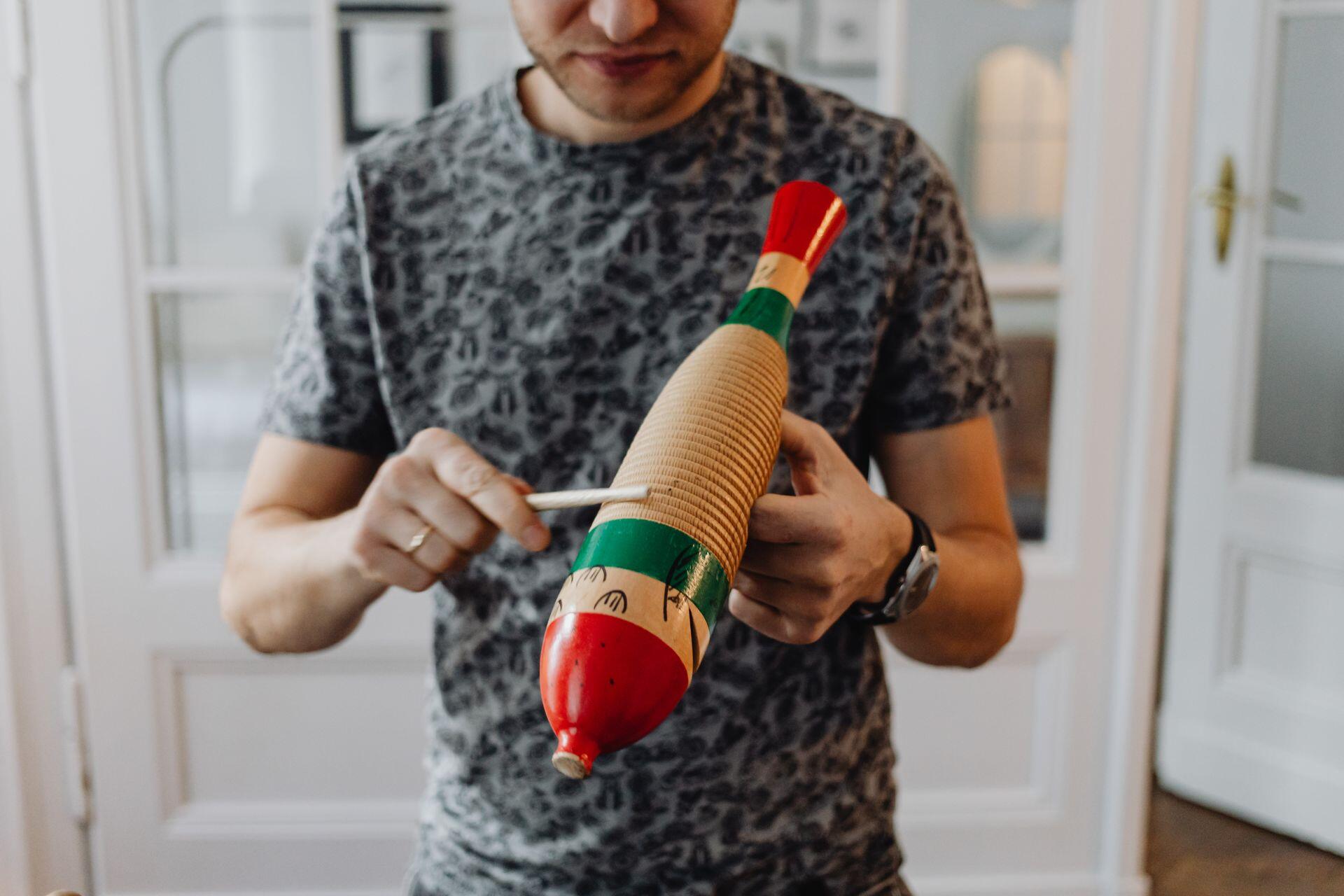
Guiro
A notched instrument, traditionally made from a hollow gourd, but can also be wood. The player scrapes a stick along the ridges to create a rhythmic rasping sound.
Flexatone
A flexible metal instrument with loose beaters attached. It produces an unusual bending pitch, sometimes compared with a cartoon-like “boing”.
Slapstick
Two pieces of wood joined at one end with a hinge. When snapped together, they create a whip-crack sound.
Sandpaper Blocks
Two sandpaper-covered blocks rubbed together. They produce a soft scraping sound.
Cabasa
Although it can be shaken, it is often used by rotating its metal beads across the instrument’s surface.
Vibraslap
An iconic instrument that creates a dry rattling sound when struck. It is often used for a comic or dramatic effect.
Frame and Handheld Drum Accessories
Some instruments are held or played mostly with hands, but can sometimes be hit with sticks, mallets, or brushes. They can add a supporting beat and “groove” quality to the main instrumentation. This is often backing up the work of the brass section.
Tambourine
A frame drum with metal jingles, with or without a drumhead. It can be played with the hand, thumb, fingers, fist, knee or a beater.
Frame Drum
A shallow drum with a wide frame. It is usually hit with a soft-ended stick, but can also be beat with a hand. It offers a deep, resonating rhythm.
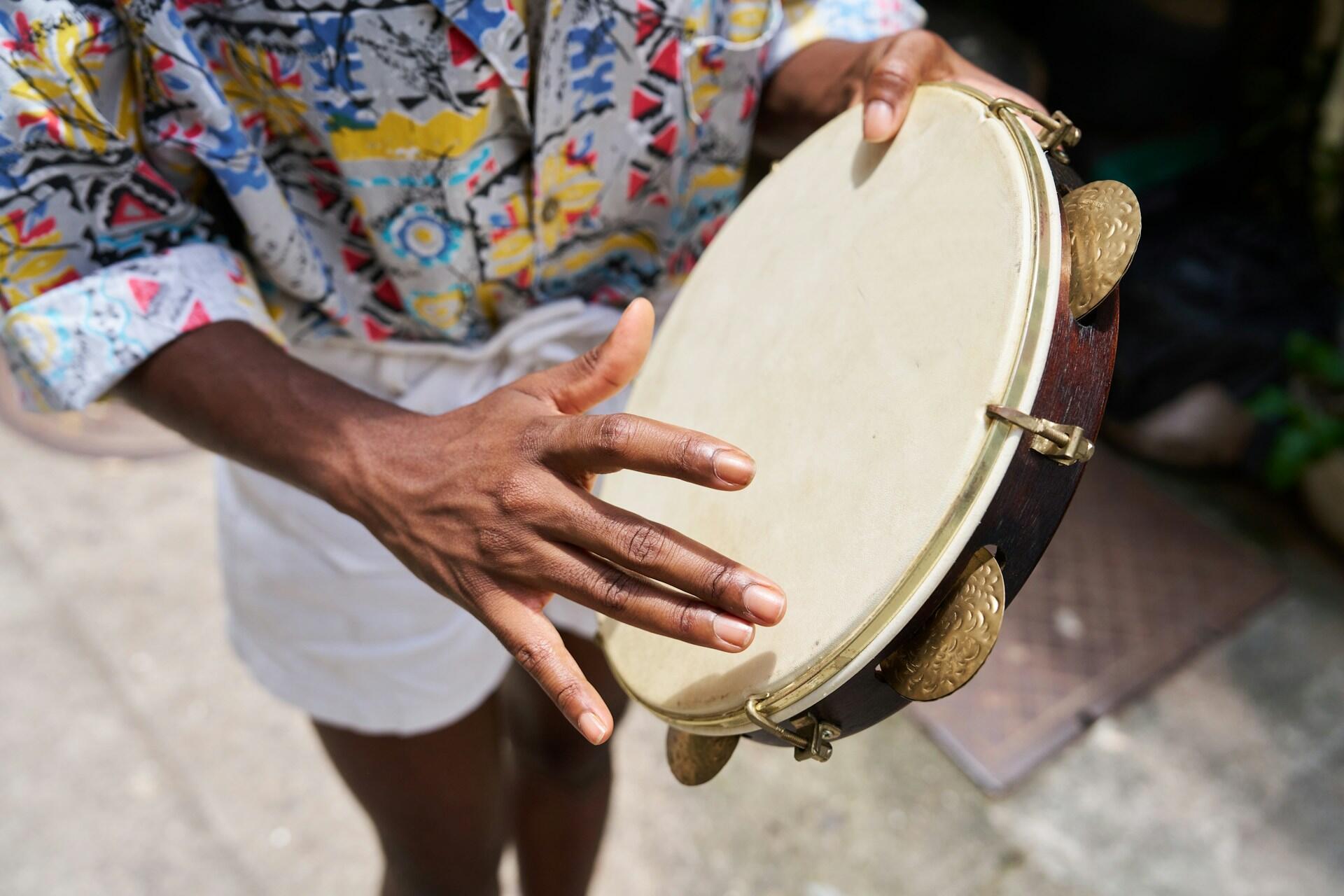
Pandeiro
A Brazilian frame drum with jingles, sometimes called the Brazilian tambourine. It can create rhythms similar to both a tambourine and a small drum. The drum aspect is usually more emphasised than a regular tambourine.
Bongos
A pair of small hand drums with different pitches. They are played by hand, creating a fun, light sound.
Congas
Tall single-headed hand drums with a warm, rounded quality. They can create slap sounds and more resonant tones, depending on where the drumhead is struck.
Djembe
A goblet-shaped drum from West African traditions. It can produce deep bass notes and bright slaps.
Cajón
A box-shaped instrument used by striking its front face. Interestingly, musicians sit on top and tap the front face under the legs. It can produce different tones depending on where it’s hit.
Cymbals, Metal and Effect Instruments
Suspended and clash cymbals frequently appear in most marching band ensembles, and can be considered main instruments in many cases. Though, they can sometimes be treated as auxiliary, along with many other percussion and non-percussion auxiliaries.
Suspended Cymbal
A single cymbal mounted on a stand. It can be struck, rolled, scraped or bowed.
Crash Cymbals
Two cymbals played together for loud, dramatic accents. Players have one cymbal strapped to each hand and can also use them for visual effects by flipping and rotating them.
China Cymbal
A cymbal with a loud, sharp, “trashy” quality. Rather than clear, ringing tones, they create an interesting, heavily-textured sound.
Splash Cymbal
A small cymbal with a quick, bright tone. They provide high-pitched cymbal sounds.
Gong or Tam-tam
A large metal disc with a deep, resonant tone. These instruments are famous for being used very few times per performance, usually only once or perhaps twice.
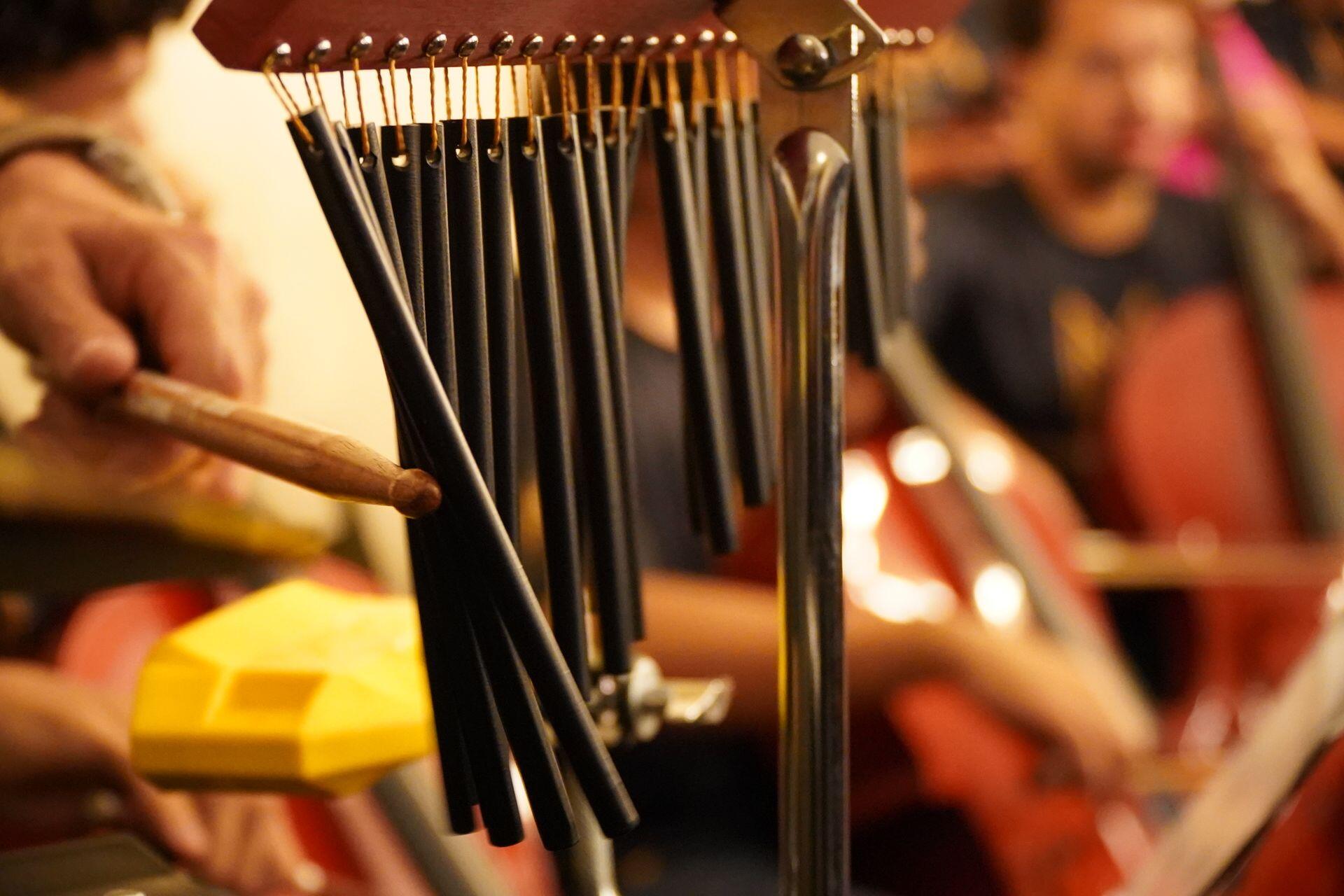
Wind Chimes and Tubular Bells
A group of small tubes that create a shimmering cascade when swept by hand. Different sizes and styles of chimes can create a wide variety of tones and sounds.
Thunder Sheet
A thin sheet of metal shaken to create a thunder-like rumble. It can also be stuck with various types of sticks to create loud sounds with a sharp beginning.
Whistle
A simple but effective source for particular styles or effects. With many different kinds of whistles out there, there are many options for sounds and volume.
Drum Kit
Often treated as an auxiliary instrument in a front ensemble because it supports the whole group rather than marching with the battery. A drum kit usually contains a variety of drums and can be used for creating more nimble drum-based melodies.
Though not as pervasive in a musical piece as the other instruments, auxiliaries support the melodies and harmonies produced by the woodwinds and brass sections. Other instruments not mentioned here include the xylophone, glockenspiel, timpani, marimba, and guitar. Auxiliary players are highly talented, switching between several different instruments through each performance, and maintaining exact timing.
References
- Fitzwater, Aleah. “Auxiliary Instruments Every Concert Band Should Have.” Yamaha Music, 30 Nov. 2022, hub.yamaha.com/music-educators/prof-dev/teaching-tips/auxiliary-instruments. Accessed 1 Oct. 2026.
- Sumwalt, Don. “Don’t Forget the Auxiliary! (Percussion, That Is!) - Part 1.” Band Director Media Group, Apr. 2004, banddirector.com/percussion/dont-forget-the-auxiliary-percussion-that-is-part-1. Accessed 1 Oct. 2026.
Summarize with AI:
Did you like this article? Leave a rating!

 Loading...