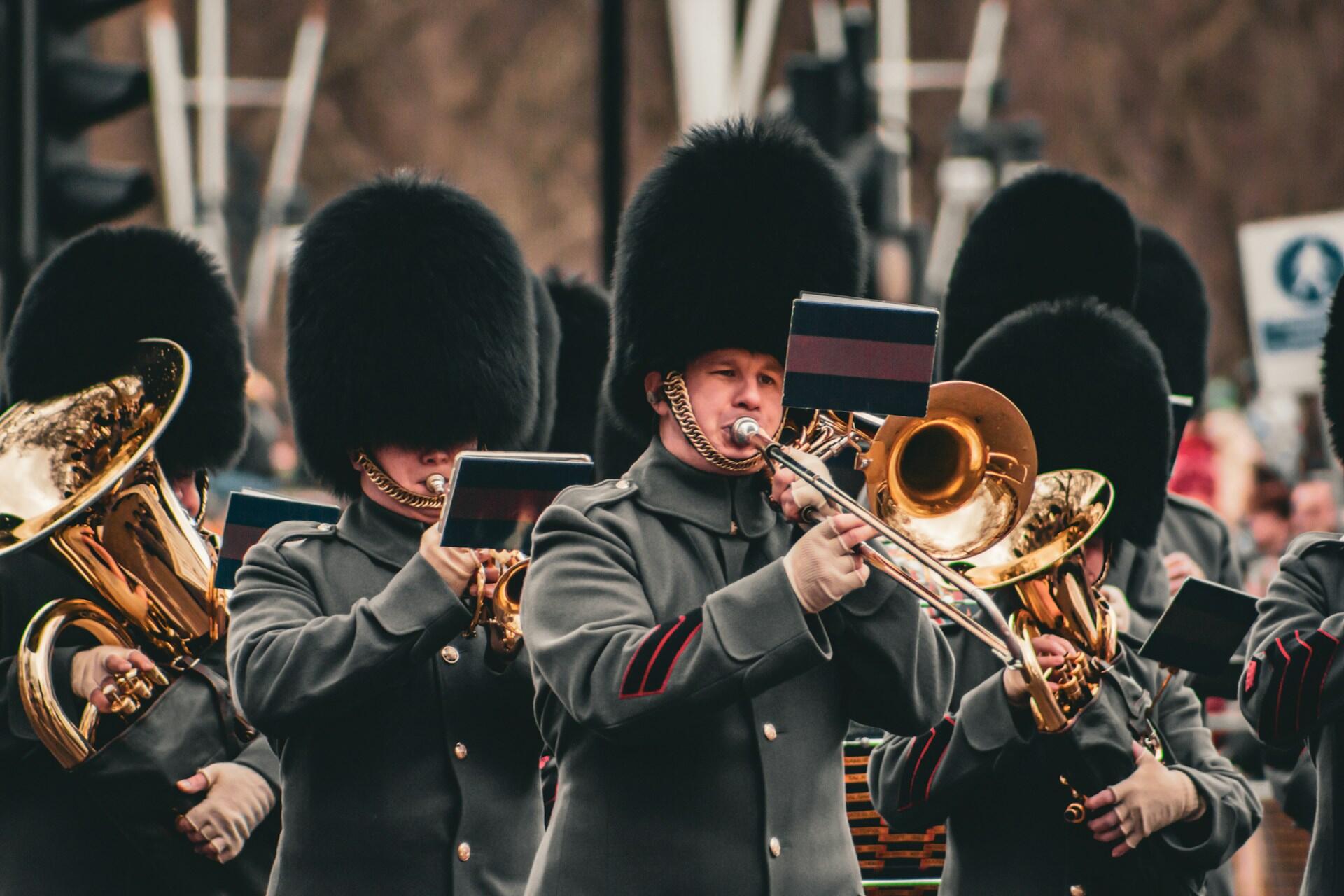

The brass section of a marching band adds volume and energy to the ensemble. The variety of instruments across the section include high, carrying tones and low, resonant base. Together, they create the liveliness that is the hallmark of a marching band.


What Are Brass Instruments?
Brass instruments are wind instruments played by buzzing the lips into a cup-shaped mouthpiece. This is different from the woodwind instruments, which include a reed that creates the musical sound.
Not every instrument included in the brass section is actually made of brass. The label encompasses all the instruments that require embouchure (pressing the lips to and buzzing them in the cup-shaped mouthpiece) rather than a reed. That means that even instruments like the French horn, which are made of copper, are included in the family.
Most brass instruments are made from metal tubing coiled into different shapes. The length and diameter of the tubing affects the pitch and tone, with thinner tubes creating higher, brighter sounds, and larger tubes making broader, darker sounds.
Players can change notes in several ways:
- Valves: Trumpets, cornets, flugelhorns, baritones, tubas, and most other horns change notes when the musician presses different valve combinations with their fingers.
- Slides: Trombones famously have a large slide that changes the length of the tubing, and therefore the pitch.
- Human changes: Changing the speed and pressure of the air being blown and adjusting the lips are other ways to change the quality of the sound of a brass instrument.
All Brass Instruments: The Main Types
The brass family is extensive. Many instruments are commonly found in marching bands, while others are more likely to appear in orchestras, concert bands, jazz bands or other similar ensembles. Here’s a list of all brass instruments typically found in marching bands and other types of bands.
| Instrument | Usual pitch or range | How it produces notes | Typical sound | Common use |
|---|---|---|---|---|
| Trumpet | High brass; commonly B-flat | Three valves | Bright, clear, bold | Marching bands, concert bands, jazz, orchestras |
| Cornet | High brass; commonly B-flat | Three valves | Warm, rounded, less direct than trumpet | Brass bands, concert bands, training ensembles |
| Flugelhorn | High-to-middle brass; commonly B-flat | Three valves | Soft, dark, mellow | Jazz, brass bands, selected marching arrangements |
| Mellophone | Middle brass; commonly F or E-flat | Three valves | Broad, centred, horn-like | Marching bands |
| French horn | Middle brass; commonly F/B-flat | Rotary valves | Rich, smooth, blended | Orchestras, concert bands, brass groups |
| Alto horn | Middle brass; usually E-flat | Three valves | Gentle, warm | Brass bands |
| Trombone | Low brass | Slide; sometimes a rotary valve | Direct, powerful, flexible | Marching bands, jazz, orchestras, concert bands |
| Baritone horn | Low brass | Three or four valves | Clear, focused, warm | Marching bands, concert bands, brass bands |
| Euphonium | Low brass | Three or four valves | Full, lyrical, rich | Concert bands, brass bands, some marching bands |
| Tuba | Lowest regular brass voice | Usually three to six valves | Deep, broad, resonant | Concert bands, orchestras, brass bands |
| Sousaphone | Lowest marching brass voice | Usually three valves | Deep and projecting | Marching bands, parade bands |
| Bass trombone | Low brass | Slide plus one or two valves | Heavy, dark, powerful | Jazz bands, orchestras, concert bands |
Marching bands don’t necessarily need all the common instruments. Smaller bands, like school and community ensembles, may have only a handful of instrumentalists. A common brass lineup includes trumpets, mellophones, trombones or baritones, and tubas or sousaphones. This is only one section of all the instruments found in marching bands.
How Brass Family Instruments Are Classified
Brass instruments can be grouped in multiple ways. The most practical way of categorizing them is by pitch and by musical role. Find out the different types of brass instruments, and why it’s usually important to have instruments from each classification for a well-rounded band sound.
Classification by Pitch
The first way to separate the instruments is by high brass and low brass. Ideally, an ensemble will have at least two players of each instrument, so breaths can be spaced out without interrupting the melody.
If nothing else, a band should have at least one player each for trumpet, mellophone, trombone, baritone, and tuba. These five instruments cover the breadth of pitches found in marching band music.
High Brass
These instruments play in the upper brass range. They usually have narrower tubing and smaller mouthpieces and bells. The sound is bright and carries easily and clearly across the whole band.
High brass instruments in marching band are:
- Trumpet
- Bugle
- Cornet
- Flugelhorn
- Mellophone
You blow in this end of the trombone and sound comes out the other end and disrupts the cosmos.
Roswell Rudd, Trombonist and composer
Low Brass
Low bass instruments have larger mouthpieces, bigger tubes and larger bells, leading to lower, more resonant notes. Their weighty sound backs chords and makes the band’s music feel more confident and supported. Low brass instruments include:
- Trombone
- Baritone
- Euphonium
- Tuba
- Sousaphone
French horns sit in the mid-range, and are usually only found in concert settings. In marching bands, the role of French horn is usually taken by the mellophone, which is easier to hold and play while marching.
Classification by Ensemble Role
Arrangers choose musical pieces that suit the available instruments; in some bands, musicians may be asked to learn a different instrument in order to expand the music choices available. Arrangements have four main components: melody, harmony, rhythm, and bass lines.
In both the high and low brass sections, different instruments can carry different jobs.
Melody: The pervading musical tune is usually carried by trumpets and cornets. They may play the exact same parts or just similar ones.
Harmony: Mellophones, trombones, baritones, and euphoniums usually support the melody. Their mid-range tones help join the high and low sections.
Rhythmic support: Trombones and baritones are great for adding a rhythm undercurrent. Their notes are clear without being a distraction. They work in tandem with the drum majors.
Bass foundation: Tubas and sousaphones provide the lowest notes, establishing the harmonic base and reinforcing the beat.
A balanced brass section has all these areas fulfilled by at least one instrument. A band will sound bare or thin without at least one low voice and one high voice.
High Brass Instruments
High brass band instruments are often the most audible and part of a marching band’s sound. The higher tones of these instruments bring energy to melodies and accentuate fanfares and climactic moments.
Trumpet
The trumpet is perhaps the best-known high bass instrument in marching bands and other types of bands. It’s compact and easy to carry while being able to execute loud, brilliant sounds and rapid note changes through valve compressions.
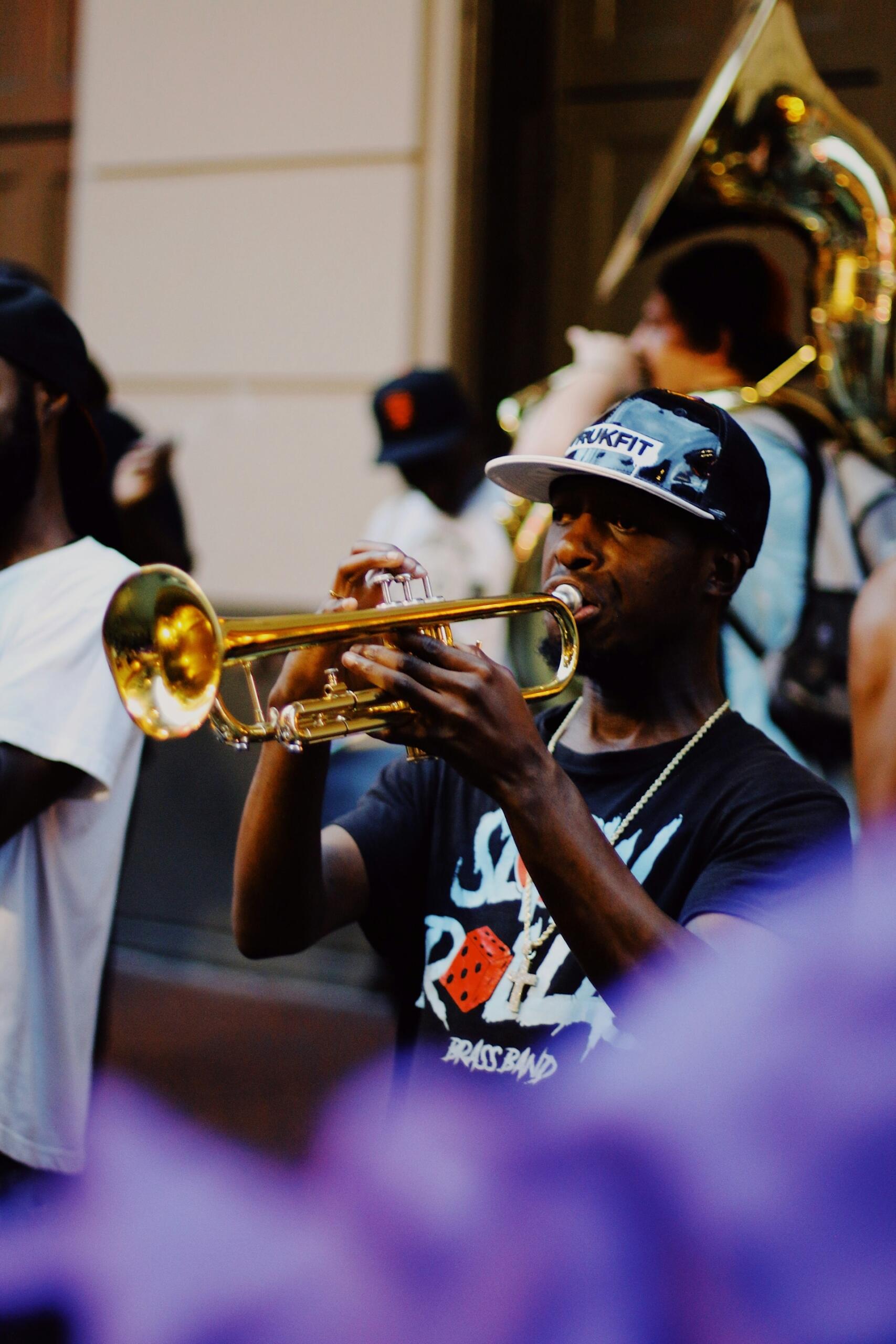
Trumpets frequently play melody lines, fanfares, high harmony and rhythmic accents. One arrangement can have multiple trumpet parts, requiring the trumpet section to be split into two or more sub-sections.
First trumpet parts are usually higher and consist entirely of the melody. Second and third trumpet parts usually back the melody at times, provide harmonies, and help convey rhythmic patterns.
The valve arrangement on a trumpet makes them perfect for musical phrases that require lots of agility.
Cornet
Cornets look a lot like a trumpet, but they have a more compact shape and a more conical bore (the inside diameter of the tubing).
Cornet tubing has a gradual widening inside that becomes bigger than that of a trumpet, creating a rounder and softer tone.
Cornets and trumpets operate very similarly, with a triple valve arrangement and a typical B-flat pitch, so players can usually play both instruments with some additional practice.
Flugelhorn
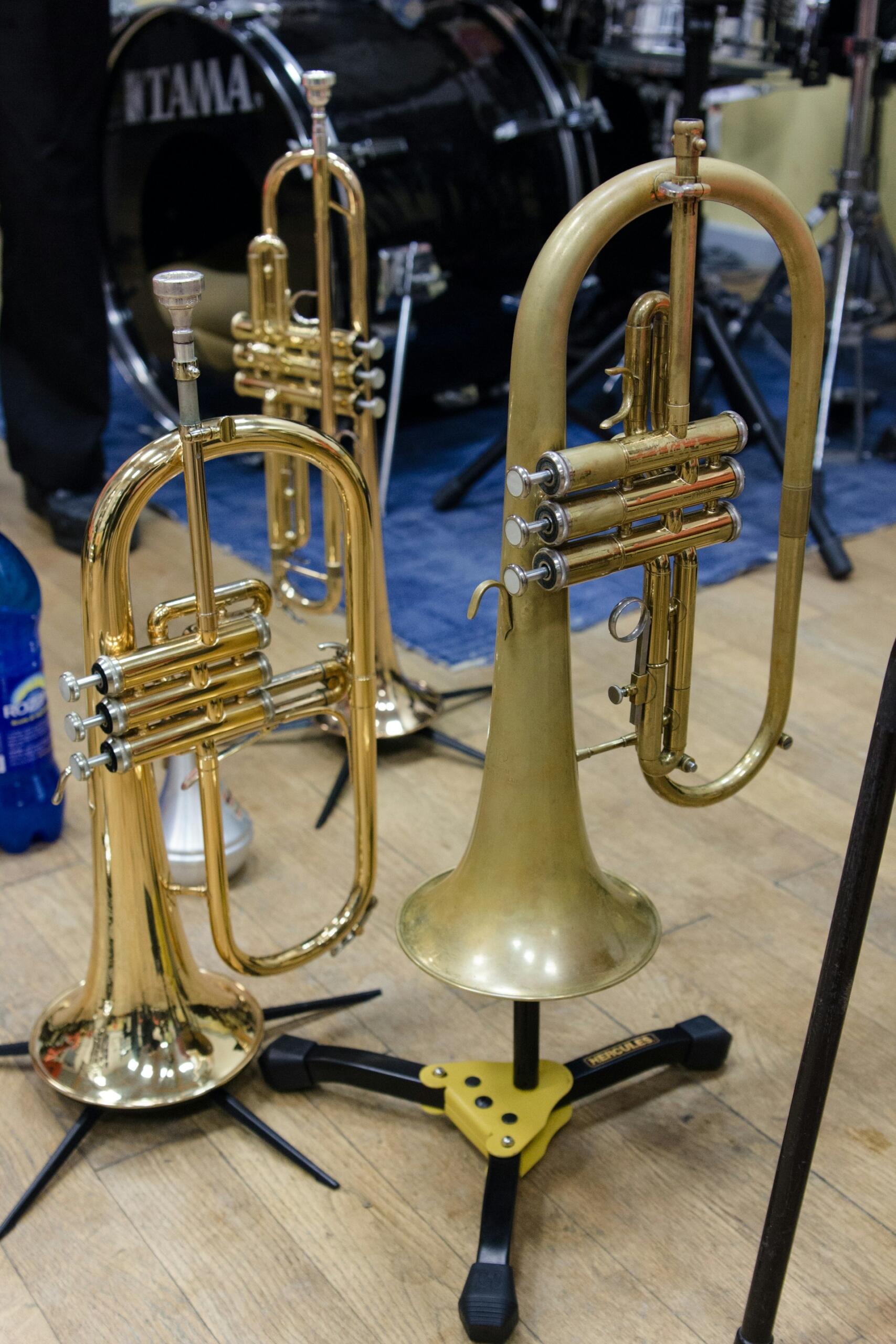
Another close relative of the trumpet, flugelhorns have a lower, darker sound than both trumpets and cornets, though they’re also pitched in B-flat.
The instrument’s warm tonal qualities make it highly prized for lyrical melodies. It's another instrument played with valve changes.
The gentle tone of a flugelhorn doesn’t usually cut through large marching band ensembles, making it better for supporting parts, if it appears at all. They can be good as solo auxiliary instruments when fitted with microphones.
Flugelhorns are usually used in quieter music, like small concert ensembles.
Mellophone
The mellophone bridges the sound gap between the high and low brass section. It provides a deeper voice to the high brass family as an alto.
It takes the place of a French horn in marching bands; French horns have a backward-facing bell so they are not usable for marching band, which requires instruments to project. The smooth tones of the mellophone make them perfect for counter-melodies and backing harmony. They can execute harmonies, counter-harmonies and melodies through agile valve compression.
Low Brass Instruments
Low marching band brass instruments give the music body and weight. They play fewer quick notes and instead provide supporting harmony, rhythm and long-lasting, connecting tones.
Trombone
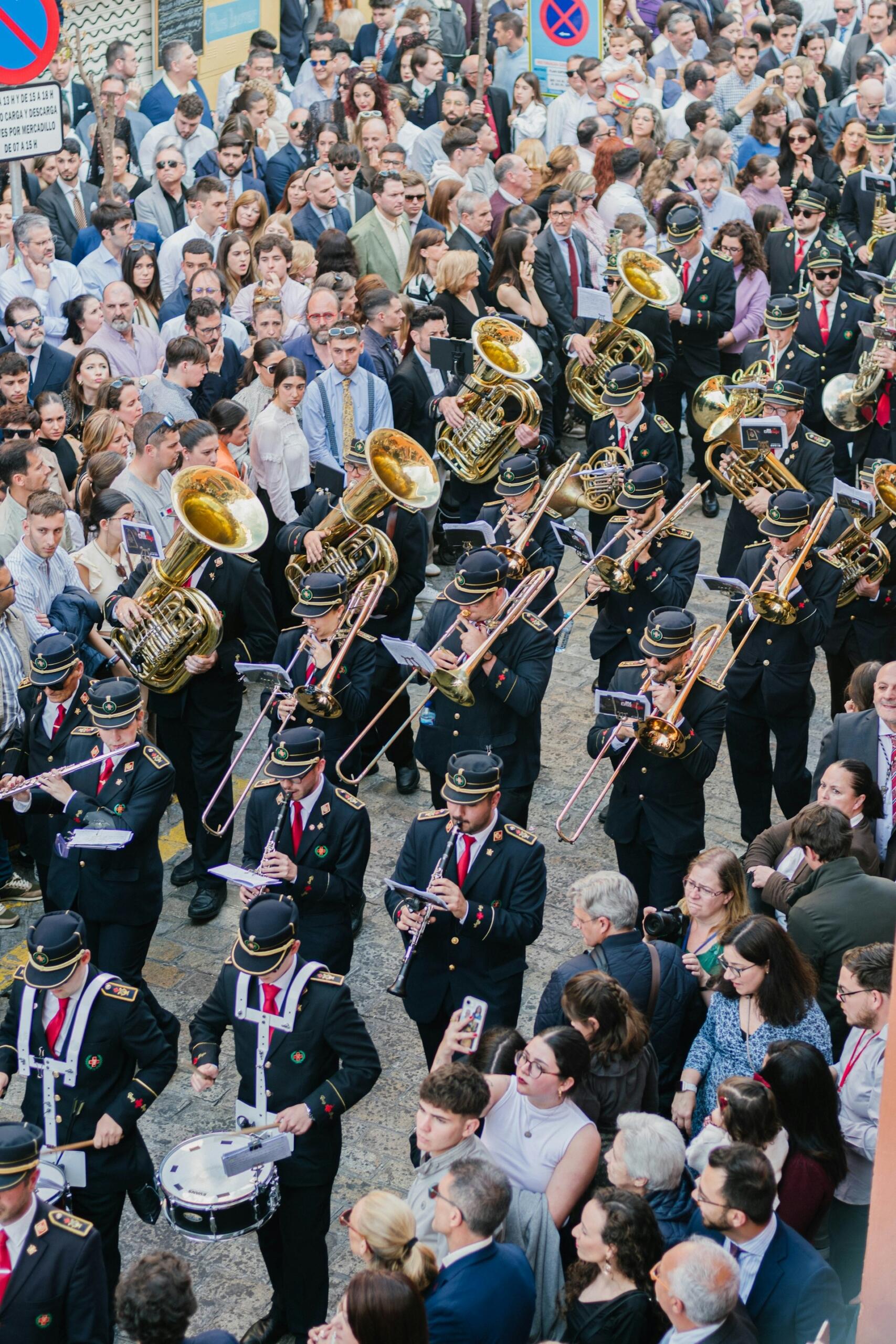
Trombones are another iconic member of the marching band ensemble.
Their long slides can be used as a visual spectacle, especially in showy marching band choreography.
A standard tenor trombone has a strong sound that can vary between buzzy and smooth.
This makes it suitable for marching, jazz, concert band and orchestral works.
It’s agile, making it useful for clean rhythmic attacks and melodic backing.
Euphonium and Baritone Horn
Both the euphonium and baritone are valved and cover a similar range, so they’re often confused for one another. In marching band, the terms are often used loosely since they function similarly in the arrangement. They often play middle and low harmonies, counter-melodies, and rhythm. But they have their distinctions.
Baritones are often used instead of a trombone, since it can hit much of the same register without the long slide that can get in the way.
It usually has narrower tubing than a euphonium, creating a more focused sound.
They’re also smaller and easier to carry than euphoniums, which have larger tubing and a fuller, broader tone.
The euphonium is prized for its expressive melodies, especially in concert bands and British brass bands.
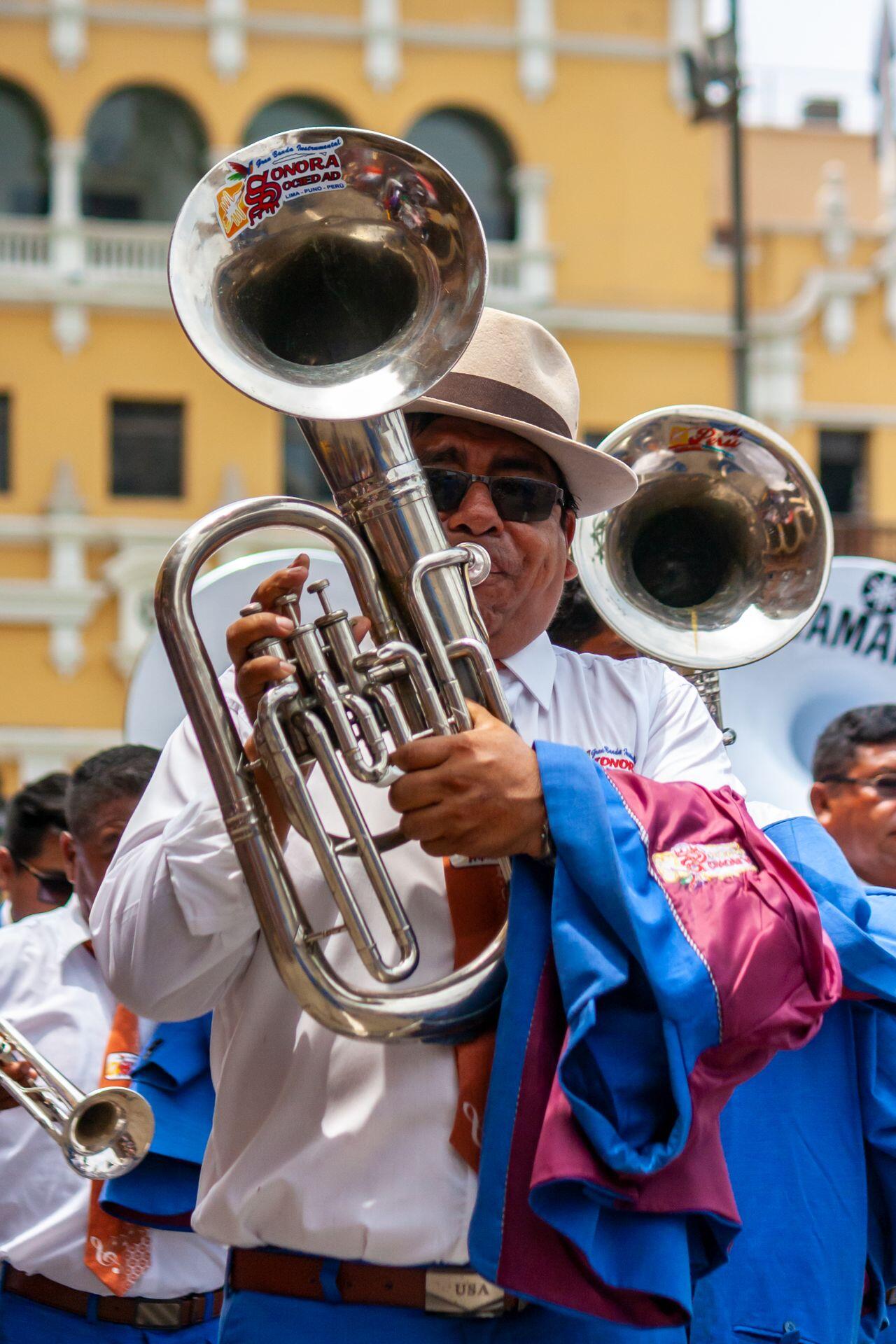
They can be quite large, so marching bands usually use marching euphoniums, which are modified to be easier to hold and carry, and the bell is modified to project more sound toward the audience.
Tuba and Sousaphone
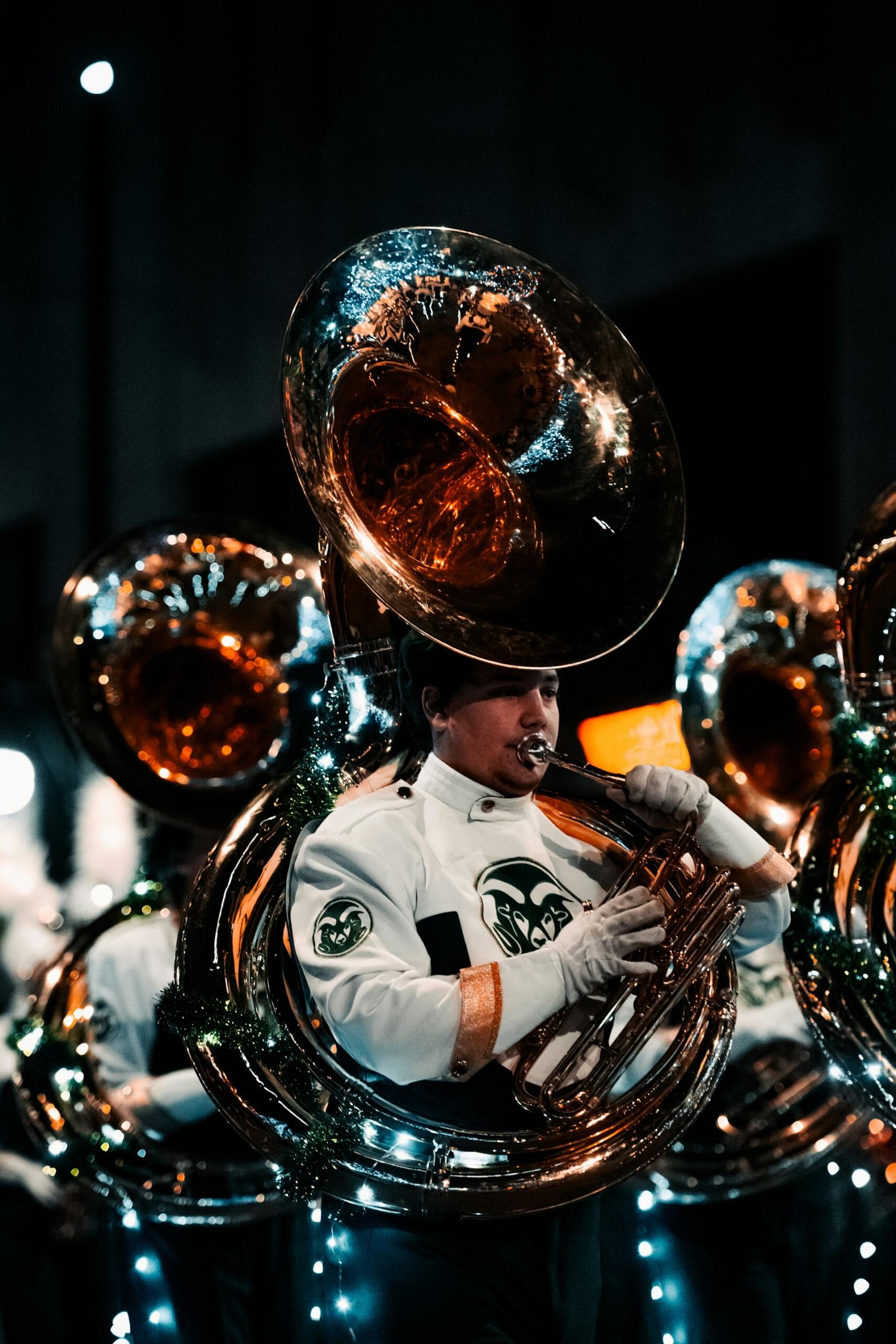
Contrary to popular belief, tubas are not typically found in marching bands. Instead, the marching version, the sousaphone, is usually what you see. Though, marching tubas do exist and are also sometimes used.
Both instruments provide the lowest range of notes in the brass family for most bands. In concerts, tubas are played while sitting down and resting the instrument on one’s thigh.
Sousaphones wrap around the player’s body, making it possible to march while playing such a large instrument. That shape also makes the sound project further than the average tuba.
Tubas and sousaphones play bass lines. Though the parts may look simple on paper and sound easy to the untrained ear, they are physically demanding. A good player has to maintain a steady airflow for a large, air-guzzling instrument. They must also bear a weighty instrument and maintain precise timing. Their bells boast the largest diameter sizes of all common band instruments.
The brass instruments work well to back up the color guard, providing melody and fanfare.
How to Choose the Right Brass Instrument
Selecting a brass instrument to learn depends on your physical comfort and abilities, musical interests, and available options. For marching band, you must remember that whatever instrument you choose, you’ll need to carry it while playing and marching the entire time you’re performing and for much of your rehearsals.
Some people do develop pain from many months or years of playing. It can be worth talking to a doctor or another medical professional familiar with the musculoskeletal system about ways to prevent problems before they arise.
After that, there are several other points to consider:
The most practical way to decide is to be able to try holding and perhaps playing a few notes on as many different instruments as you can. Music teachers, local bands, or instrument shops can usually arrange trial sessions where you can sample several different instruments. Note which instruments you’re drawn to in terms of feel as well as how they sound.
Do you want to play a high or low brass instrument? Think about what sounds you want to be able to make as well as the job of each instrument in the ensemble.
Many schools and community bands may have decent beginner versions of instruments available for a lower price. You may also be able to find rentals, payment plans for ownership, or pre-owned options. If you can learn how to play through your local community program or school, lessons may be more affordable. If your instrument of choice requires a specialised teacher, you’ll need to keep private lesson fees in mind. Also, larger instruments tend to cost more.
The brass instruments in a marching band create the high-energy atmosphere most people associate with the phenomenon. They are often the section with the most players, along with percussion instruments.
References
- Levine, Mike. “The Brass Family, Explained.” Yamaha Music, 13 May 2026, hub.yamaha.com/winds/brass/the-brass-family-explained. Accessed 3 Oct. 2026.
- Lortz, Mark. “Arranging Music for Small Marching Bands.” The Instrumentalist, 26 Apr. 2019, theinstrumentalist.com/may-2019/arranging-music-for-small-marching-bands. Accessed 3 Oct. 2026.
- Sen, Kan. “The 10 Most Common Marching Band Instruments: An Expert Guide for Musicians.” Cosmos, 23 July 2026, www.cosmoshandpan.com/blogs/news/the-10-most-common-marching-band-instruments-an-expert-guide-for-musicians?srsltid=AU7gw4VjE4GT7RGuIK9RcKTleofQ_L2FKUQSV2Zq_SsnYyribnhBClm-. Accessed 3 Oct. 2026.
Summarize with AI:
Did you like this article? Leave a rating!

 Loading...