


Spanish music is known for its catchy melodies, beautiful lyrics, and passionate rhythms.
If you are looking for the best Spanish songs of all time, you cannot go wrong with classics like "La Bamba" by Ritchie Valens, "Guantanamera" by Celia Cruz, or "Besame Mucho" by Consuelo Velazquez. These songs have stood the test of time and continue to be popular around the world.
Other famous Spanish songs include "Despacito" by Luis Fonsi and Daddy Yankee, "Bailando" by Enrique Iglesias, and "La Tortura" by Shakira. These modern hits have brought Spanish music to the forefront of the global music industry and have introduced new generations to the beauty of Spanish music.
| 🎶 Song | 🎤 Artist | Year | Genre |
|---|---|---|---|
| Por qué te vas | Jeanette Dimech | 1974 | Pop |
| María | Ricky Martin | 1995 | Latin Pop |
| Despechá | Rosalía | 2022 | Pop / Flamenco |
| Despacito | Luis Fonsi ft. Daddy Yankee | 2017 | Reggaeton |
| Hasta siempre | Nathalie Cardone | 1997 | Pop |
| Obsesión | Aventura | 2002 | Bachata |
| La Tortura | Shakira ft. Alejandro Sanz | 2005 | Latin Pop |
| Bailando | Enrique Iglesias ft. Descemer Bueno & Gente de Zona | 2014 | Latin Pop |
| La camisa negra | Juanes | 2004 | Latin Rock |
| Bamboléo | Gipsy Kings | 1987 | Rumba |
| El cóndor pasa | Simon & Garfunkel | 1970 | Folk / Latin |
| Macarena | Los Del Rio | 1993 | Pop |
| Feliz Navidad | José Feliciano | 1970 | Seasonal |
| La bamba | Los Lobos / Ritchie Valens | 1987/1958 | Rock / Folk |
| Gasolina | Daddy Yankee | 2004 | Reggaeton |
| Hijo de la Luna | Mecano | 1986 | Pop |
| Camarero | Andra & Descemer Bueno | 2015 | Latin Pop |
| Como la flor | Selena | 1992 | Tejano |
| Guantanamera | Joseíto Fernández | 1966 | Son cubano |
| Oye cómo va | Tito Puente | 1963 | Salsa / Latin Jazz |
| Eres Tú | Mocedades | 1973 | Ballad |
| Tití Me Preguntó | Bad Bunny | 2022 | Reggaeton / Trap |
| BZRP Music Sessions #53 | Shakira & Bizarrap | 2023 | Pop / Electronic |
| Hawái | Maluma | 2020 | Reggaeton |
| Mi Gente | J Balvin ft. Willy William | 2017 | Reggaeton |
| Con Calma | Daddy Yankee ft. Snow | 2019 | Reggaeton |
| El Perdón | Nicky Jam ft. Enrique Iglesias | 2015 | Reggaeton |
| BZRP Music Sessions #52 | Quevedo & Bizarrap | 2022 | Latin Trap / Pop |
| La Vida Es Un Carnaval | Celia Cruz | 1998 | Salsa |
| Bésame Mucho | Consuelo Velázquez | 1940 | Bolero |
🎧 Listen to the full playlist on Spotify


Por qué te vas - Jeanette Dimech
Loosely translated to “Why are you leaving?”, the song Por qué te vas from 1974 is one of the most iconic Spanish-language songs of all time.
"Por qué te vas" is a song by British-Spanish singer Jeanette Dimech, which was released in 1974 as a single from her album "Reluz", and made popular due to the film Cría Cuervos. The song was written by Spanish composer José Luis Perales and tells the story of a woman who is left heartbroken and alone after her lover leaves her. With its melancholic melody and haunting lyrics, "Por qué te vas" became a hit not only in Spain but also in Latin America and Europe, and it remains one of the most popular Spanish-language songs of all time. The song has been covered by numerous artists over the years and has been featured in several films and TV shows, cementing its place in popular culture.
The song is so popular that it’s been covered plenty of times:
- José Luis Perales in 1987
- Attaque 77 in 1992
- Pato Fu in 1996
- Masterboy in 1999
- Javier Alvarez in 2001
- Sabine Paturel in 2002
- Globus in 2006
- Suarez in 2010
- Marquess in 2014
- Hot Banditoz in 2016
- Lucero in 2017
You might have even listened to the song during your Spanish lessons because it’s quite slow and great for beginners to listen to.
Want to learn more about Spain? Check out our guide.
María - Ricky Martin
¡Un, dos, tres! You’ve probably heard the Spanish song María by Ricky Martin. In 1995, this was the star’s first real hit.
It reached number 88 in the US charts in 1996, and if you ask American to name famous Spanish singers, Ricky will come to mind. The song tells the story of a man who is deeply in love with a woman named María, who he can't stop thinking about despite her being out of his reach.
With its upbeat tempo and catchy chorus, "María" became a huge hit for Martin, both in Latin America and internationally.
The song's success helped to launch Martin's career on the global stage, and it remains one of his most iconic songs to this day.

While the lyrics aren’t very profound, some may remember the chorus:
Un pasito palante Maria
Un, Dos, Tres
Un pasito patras
Even these days you can’t help but dance to this tune. Gracias, Ricky! It may surprise you to know that Ricky Martin still has Spanish-language hits to this day!
Despechá - Rosalía
Rosalía is a young and talented Spanish singer, songwriter, and music producer who has taken the music industry by storm. With her unique blend of Flamenco, pop, and urban music, she has gained worldwide recognition and captured the hearts of millions of fans. Rosalía grew up in a family of musicians and started studying Flamenco singing when she was 13. She was discovered by music producer Raül Refree in 2016 and released her debut album "Los Angeles" in 2017. Since then, she has become a household name in Spain and is paving the way for a new generation of musicians with her innovative music style and fashion sense.
"Despechá" is a song about heartbreak and the emotions that come with it. Rosalía wrote the song after going through a difficult breakup and wanted to express the pain and vulnerability she was feeling. The song quickly became a fan favorite and received critical acclaim for its poignant lyrics and powerful message.
Despacito - Luis Fonsi ft. Daddy Yankee
"Despacito" is a song by Puerto Rican singer Luis Fonsi featuring rapper Daddy Yankee. It was released in 2017 and quickly became a global phenomenon, breaking numerous records and becoming one of the most streamed songs in history.

The song's lyrics are a sensual ode to love and desire, and the catchy beat and infectious chorus helped to make it an instant hit.
The song's success helped to bring reggaeton and Latin music into the mainstream, and it has been credited with helping to bridge cultural divides and promote understanding and unity across the world. Even today, "Despacito" remains a beloved song that continues to inspire and move people around the globe.
The song left its mark on music history and was played on almost every radio which has left a lot of people looking for Despacito lyrics in Spanish. The title basically means “slowly” or “softly” and describes the physical attraction between two people from dancing.
Listening to this song is a good opportunity to practice a few Spanish words. Additionally, Luis Fonsi’s voice will want you to get up and dance right from the first line.
Check out our brief guide to Spain's history.
Hasta siempre - Nathalie Cardone
The origins of "Hasta Siempre" date back to the 1960s, when Che Guevara was a prominent figure in the Cuban Revolution. The song was written by Carlos Puebla, a Cuban composer and musician who was a supporter of the revolution. Puebla was inspired to write the song after meeting Guevara in person and being moved by his dedication to the cause. The lyrics of "Hasta Siempre" are a tribute to Guevara's life and work, and they express a deep sense of admiration and respect for his revolutionary spirit.
Fast forward several decades to 1997, when Nathalie Cardone released her version of "Hasta Siempre" as a single. Cardone's rendition of the song is a powerful and emotional tribute to Guevara, with her distinctive voice bringing a haunting quality to the lyrics. The song's music video, which was directed by French filmmaker Jean-Baptiste Mondino, features Cardone singing in front of a black-and-white image of Guevara, adding to the overall impact of the song. Cardone's version of "Hasta Siempre" became a hit in France and other countries, introducing a new generation of listeners to the story of Che Guevara and his legacy.
Obsesión - Aventura
Aventura’s “Obsesión” is a classic bachata song that has captured the hearts of millions of listeners around the world. Released in 2002, the song tells the story of a man who is deeply in love with a woman who doesn’t reciprocate his feelings. Despite her rejection, he can’t help but obsess over her and long for her love. The song’s lyrics are emotional and heartfelt, and they capture the pain and desperation of unrequited love.
Bachata is a genre of music that originated in the Dominican Republic in the early 20th century. It is characterized by its distinctive rhythm, which is a fusion of African, European, and indigenous influences. Over the years, bachata has evolved and incorporated elements of other genres, including merengue, salsa, and even hip-hop and R&B. Aventura is a group that has taken this fusion to new heights, blending traditional bachata with modern urban sounds to create a unique and captivating sound that has earned them millions of fans around the world.
La Tortura - Shakira ft. Alejandro Sanz
She’s had plenty of hits over the years including Hips Don’t Lie and Loca. This song from 2005 is completely in Spanish.
This song tells a complicated and passionate love story. It’s a mix of Latin pop and reggaeton, one of many types of Spanish music.
Bailando - Enrique Iglesias ft. Descemer Bueno and Gente de Zona
With Enrique Iglesias singing this song in 2014, Bailando couldn’t be anything other than a hit across Latin America and the world.
Bailando reached number 12 on the US Billboard Hot 100 charts!
With its alluring rhythm and easy-to-remember lyrics, this Spanish-language song even has an English-language version with Sean Paul. This song, like a lot of music, is about love and physical proximity.
La Camisa Negra - Juanes
The Colombian singer is famous for their song “La Camisa Negra” (The Black Shirt). This song is about a man grieving over his relationship, which is why he’s wearing a black shirt.
The beautiful music lures you in with its mix of Colombian folklore and Latin pop. The song was problematic in Italy due to the fact that black shirts were often worn by the fascists. However, that didn’t stop the song from being successful elsewhere.
Bamboléo - Gipsy Kings
The Gipsy Kings are a group from the south of France that plays Andalusian music! The group is made up of Spanish and Gypsy musicians and their songs mix Latin pop and flamenco. One of the songs in Spanish that virtually everyone knows and proof that traditional Spanish music can be a hit anywhere.
The song Bamboléo was a hit in 1987 across the world, especially in the US where it reached 6th on the Billboard charts. The verses are inspired by a Venezuelan song and the chorus is that of Carmen Miranda’s song of the same name.
This song compares love to a frantic dance and calls upon you to live your life in the fullest way possible through joy and, of course, dancing.
El Condor Pasa - Simon & Garfunkel
Simon and Garfunkel introduced the world to Spanish folk music and traditional Spanish music in a new way when they covered "El condor pasa". The song was originally written in 1913 and is based on traditional music such as folk music from Peru.
Daniel Alomía Robles wrote the song originally, and his estate actually had a legal case against Simon and Garfunkel which was settled amicably.
The single sold over 25 million copies in the US and was so famous due to the fact that it was included on the massive Bridge Over Troubled Water album that gained such critical acclaim.
Macarena - Los Del Mar
The Macarena is not just a song, it was an absolute phenomenon in some parts of the world. A lot of people know the English language version of the remix, but the original was composed and sung in Spanish.
The remix was by American-based producers The Bayside Boys and spawned a dance craze all over the world in the 1990s. It spent 14 weeks at No. 1 on the U.S. Billboard Hot 100 singles chart and turned into one of the most famous Spanish songs ever released in the States and around the globe.
Love it or hate it, we couldn't forget about this song, which is about a woman called "Macarena" which is a popular name in the Andalucia region.
Feliz Navidad - José Feliciano
It is fair to say that around the world, this is one of the best-known pieces of Spanish music. You won't be learning a lot of Spanish from the sparse lyrics, but it is definitely worthy of mention.
Walk into any store in the US during the holidays and this song will be playing regularly to shoppers and festive passers-by!
The song has gone Platinum in multiple countries. It was first released by Puerto Rican singer-songwriter José Feliciano but there have been many other cover versions and Feliciano even re-recorded the song himself.
La Bamba - Los Lobos / Ritchie Valens
This is actually a famous Mexican song that hails from the state of Veracruz. The 1958 adaptation by Ritchie Valens made it very famous and is even listed in Rolling Stone Magazine's 500 Greatest Songs of All Time.
The song has been covered many times including by Los Lobos for a movie adaptation of the same name. Though Valens didn't write the song from scratch, his interpretation has left a lasting impression and will be remembered in spite of his tragic story. When "La Bamba" entered the Top 40, he would see success for just two weeks before he died in a plane crash.
Gasolina - Daddy Yankee
Music changes with the times, and though you may not instantly think of Spain when you think of rap music, there are some very popular Spanish rappers, including Daddy Yankee!
In 2018, Gasolina was ranked number 38 on Rolling Stone's 50 Greatest Latin Pop Songs, and the song has many other accolades to its name. As one of the first rap songs (with a huge Reggaeton influence) to come out of Spain, it showed that the Spanish language can facilitate many modern styles and genres of music. Pitbull was involved in the song and has gone on to huge success since.
Hijo de la Luna - Mecano
Hijo de la Luna is a 1986 hit performed by the Spanish group Mecano. Considered one of the most beautiful Spanish songs, it’s also very melancholic.
In fact, the song is about a woman who asks the moon for a husband. The moon accepts this on the condition that she sacrifice her first child. However, the child who’s born resembles neither the father nor the mother so the father, enraged that the mother cheated on him, stabs her. He abandons the child who’s collected by the moon.
Camarero – Andra & Descemer Bueno
Waiter (translation for camarero) is a story of disappointment in love set to surprisingly upbeat, utterly danceable music.
Released in June of 2019, Camarero pegged millions of YouTube views. The song’s almost-thoughtful Spanish guitar opening belies the liveliness to come and Andra’s voice hides an even bigger secret.
Andra, is neither Spanish nor Latina but Romanian. Her Spanish accent and rolled Rs are spot-on and her delivery is crisp.
A jazz and bachata musician of Cuban origins, with dance moves, vocal power, and fire enough to match Andra's delivery.
Still, her Spanish accent and rolled Rs are spot-on and her delivery is crisp; each word is clearly identifiable even to minimally trained ear.
Her partner in collaboration, Descemer Bueno, is a jazz and bachata musician of Cuban origins. He sings his fair share of the song with equal fire and, should you be inclined to watch the video, you’ll see that his dance moves are just as well defined. As you listen (and watch), you realize that the song is not all doom and gloom. Andra and Descemer go on to attest that, if you can only dance and sing, life’s burdens will seem lighter.
You can also check out some great Spanish series.
Como la flor - Selena
Selena's career was far too short, just under 15 years. Still, this Texas-born songstress did her utmost to raise Tejano music; in fact, she put it on the world stage. She also wrote the most requested Latin music song in karaoke bars across the United States: Como la flor.
It's a touch slower than standard Tejano music (lit. Texas music). It features synthesizers, instruments no self-respecting Tejano band would consider. Still, it has all the Tex-Mex flavor and besides, all those karaoke singers can't be wrong, can they?
Guantanamera - Joseíto Fernández
We return to Cuba, and to folk music, with this delightful, laid back tune.
It describes a lovely woman, Juanita, from Guantánamo - a guantanamera. The song is a poem set to music. Cuban poet José Martí delivered just the right tone for Cuba's wistful charm.
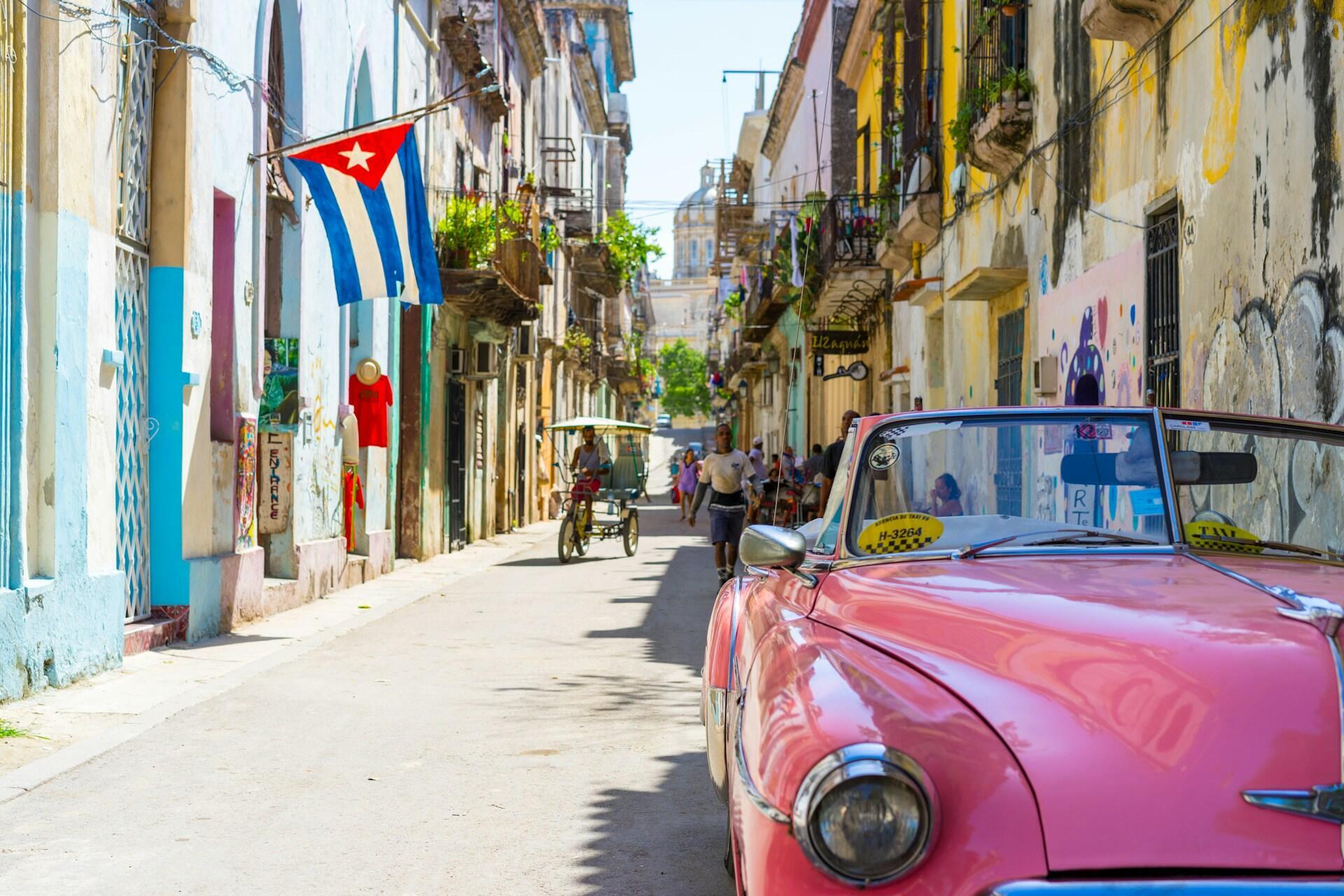
This song's popularity endures, as artists continue to cover it. Among the most famous versions, we count Celia Cruz, The Sandpipers, Wyclef Jean, and Compay Segundo. But, Joseíto's original recording remains our favourite.
Oye cómo va - Tito Puente
The legendary bandleader, Tito Puente, released this song in 1962. That was the time tastes in music were changing from ballroom-style cha-cha-cha, to garage band rock'n'roll.

It took Latin music a while to rediscover its audience. Still, every so often, a hit or two would emerge from between rock songs.
The American rock group, Santana (pictured), managed that feat when it covered Oye cómo va, in 1971.
Oye cómo va means 'listen how it goes'.
The main lyric, Oye cómo va, mi ritma, is 'listen how it goes, my rhythm'.
You might think 'oye' is simply a callout, like 'hey!', in English. If you took online Spanish courses, you would know that it means 'listen', as in: listen to Oye cómo va.
Eres Tú - Mocedades
Mocedades is an ever-changing singing group from the Basque Country. They came together in the late 60s, and rocketed to fame in 1973. That was the year they represented Spain, and nearly won the Eurovision Song Contest, with Eres tú.
That performance gave them, and their song, international exposure. That lovely anthem is great background music, as you study our guide to Spain's history.
Tití Me Preguntó – Bad Bunny
Bad Bunny has redefined what it means to be a global Spanish-language artist, and Tití Me Preguntó is one of his most irresistible tracks. Released as part of his record-breaking 2022 album Un Verano Sin Ti, the song is a playful, brass-heavy celebration of attention from women; told with the easy confidence that has made Bad Bunny the most streamed artist in the world three years running.
Over 128 M people tuned in to watch Bad Bunny's halftime performance.
The production blends reggaeton with cumbia and salsa influences, creating something that feels at once modern and rooted in Latin tradition. It is an excellent entry point into Bad Bunny's catalogue for anyone new to his music.
BZRP Music Sessions #53/66 – Shakira & Bizarrap
Few Spanish songs in recent memory generated as much global conversation as Shakira's collaboration with Argentine producer Bizarrap, released in January 2023. A thinly veiled response to her highly publicized breakup with footballer Gerard Piqué, the song became a cultural phenomenon overnight, breaking streaming records and dominating social media. Shakira's delivery is sharp and assured, and Bizarrap's production gives the track an addictive electronic pulse. As a piece of popular Spanish-language music, it is a snapshot of a specific cultural moment, and as a song, it is genuinely excellent; one of the most famous Spanish songs of its era.
Hawái – Maluma
Colombian singer Maluma released Hawái in August 2020, and it became one of the biggest Spanish songs of the pandemic era. The track is a slick, melancholic reggaeton song about watching an ex move on happily while pretending everything is fine; a theme that clearly resonated globally, reaching number one in multiple countries and accumulating billions of streams. Maluma's smooth delivery and the song's cinematic production make it stand out in the reggaeton landscape. The English remix featuring The Weeknd extended its reach even further, but the original Spanish version is the one worth knowing.
Mi Gente – J Balvin ft. Willy William
Mi Gente was the song that truly confirmed Colombian artist J Balvin as one of the defining voices of the global Latin music explosion. Released in 2017, the track samples Willy William's Ego and transforms it into a reggaeton anthem of collective celebration and Latin pride. It reached the top of the charts in multiple countries and was one of the first Spanish songs to break into the global mainstream without an English version leading the charge. Beyoncé later joined the remix, further cementing its cultural footprint. It remains one of the most popular Spanish songs of the decade.
Con Calma – Daddy Yankee ft. Snow
Con Calma is Daddy Yankee at his most playful, sampling the 1992 Canadian reggae classic Informer by Snow and transforming it into a reggaeton track built for summer. Released in 2019, it became a global hit that introduced older listeners to Daddy Yankee while delighting long-time fans. The collaboration between Daddy Yankee and Snow is an unlikely but effective pairing, and the track's irresistible beat and bilingual energy make it one of the most fun Spanish songs to discover. It also demonstrates how Latin artists have absorbed and reinterpreted global music influences over the decades.
El Perdón – Nicky Jam ft. Enrique Iglesias
El Perdón, released in 2015, brought together two of the most commercially successful Spanish-language artists of their generation; Puerto Rican reggaeton star Nicky Jam and Spanish pop icon Enrique Iglesias. The song is a smooth, seductive mid-tempo track about asking for forgiveness after a failed relationship, and the chemistry between the two artists gives it a warmth that many collaborations lack. It topped the Latin charts and reached high positions globally, and it introduced Nicky Jam to a significantly wider audience. It is a textbook example of how collaboration across Latin music styles can produce something greater than the sum of its parts.
BZRP Music Sessions #52/66 – Quevedo & Bizarrap
Before Shakira's record-breaking session, Argentine producer Bizarrap had already set the internet alight with his collaboration with Spanish artist Quevedo in the summer of 2022. The track became the most streamed Spanish song in a single week on Spotify at the time of its release, driven by Quevedo's melodic delivery and a hook so infectious it felt impossible to escape. The song introduced millions of international listeners to a new generation of Spanish pop artists, separate from the Latin American reggaeton mainstream.
It is one of the best examples of how Spain is producing genuinely global popular Spanish songs in the 2020s.
La Vida Es Un Carnaval – Celia Cruz
La Vida Es Un Carnaval is the most joyful song on this list, and arguably the most life-affirming. Celia Cruz (the undisputed Queen of Salsa) recorded it in 1998, and it became one of her most beloved tracks in a career that spanned five decades. The song's central message, that life is a carnival and sorrow has no place in it, is delivered with the kind of total conviction that only Cruz could bring. Its upbeat salsa arrangement and Cruz's extraordinary voice make it an instant mood-lifter. It is essential listening for anyone exploring famous Spanish songs beyond the pop mainstream.
Bésame Mucho – Consuelo Velázquez
Bésame Mucho is possibly the most recorded Spanish song in history, with versions by artists as varied as The Beatles, Andrea Bocelli, Luis Miguel, and Diana Krall. Written by Mexican composer Consuelo Velázquez in 1940 (reportedly before she had ever been kissed) the song is a bolero of devastating romantic longing, asking a lover to keep kissing before they are separated forever. Its melody is immediately recognizable, its lyrics are among the most beautiful in Spanish song, and its emotional reach has proved universal across more than 80 years and hundreds of recordings. If you only learn the words to one classic Spanish song, make it this one.
Summarize with AI:
Did you like this article? Leave a rating!


 Loading...
Diamonds are forever.
Caballo viejo de Simón Díaz, la escuché hasta en árabe!!