
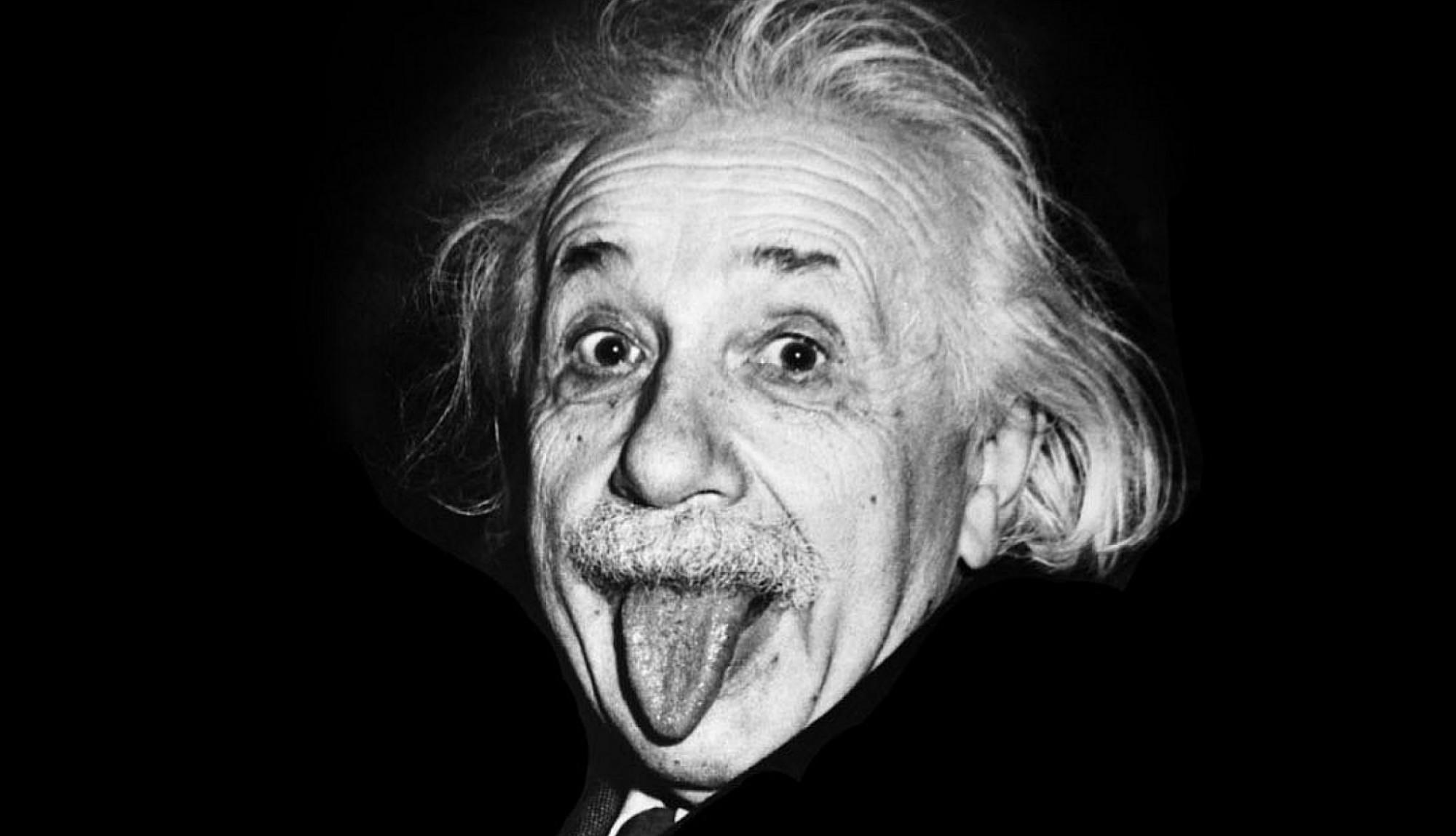

Imagination is more important than knowledge. For knowledge is limited to all we now know and understand, while imagination embraces the entire world, and all there ever will be to know and understand.
Albert Einstein
Albert Einstein was easily one of the most influential scientists in history. He's best known for theories that transformed how we understand space, time, and energy. However, he wasn't a mathematician by training, but his work relied heavily on advanced mathematics. We won't list all the Albert Einstein contributions to mathematics, but his theories, like special and general relativity, introduced mathematical models that would reshape how mathematics describes our universe and are worth exploring.
| Contribution | Year | Mathematical area / tools | Why it matters (math impact) |
|---|---|---|---|
| Special relativity (Lorentz transformations and spacetime formulation) | 1905 | Algebra, linear transformations, reference frames | Reframed space and time using consistent transformation rules, helping formalize spacetime reasoning used across modern mathematical physics. |
| Mass–energy equivalence (E = mc^2) | 1905 | Energy–momentum relations, dimensional reasoning | Linked mass and energy in a compact equation that became foundational for later mathematical models in relativistic mechanics and field theory. |
| Explanation of Brownian motion (Einstein relation) | 1905 | Probability, stochastic processes, diffusion equations | Connected microscopic randomness to measurable diffusion, advancing mathematical statistics and the use of differential equations in physical modeling. |
| Photoelectric effect model (quantum hypothesis) | 1905 | Quantization, energy relations | Helped establish discrete energy modeling, influencing mathematical approaches used in early quantum theory. |
| General relativity (spacetime curvature as gravity) | 1915 | Differential geometry, non-Euclidean geometry, tensor calculus | Brought curved geometry into mainstream physics, motivating broader use and development of geometric methods and tensors in modern mathematics. |
| Einstein field equations | 1915 | Tensor equations, partial differential equations | Provided a precise set of equations relating geometry to matter/energy, central to mathematical relativity and geometric analysis. |
| Einstein tensor | 1915 | Tensor calculus, curvature tensors | A compact mathematical object encoding spacetime curvature, widely used in differential geometry and gravitational modeling. |
| Gravitational waves prediction | 1916 | Wave solutions to field equations, perturbation methods | Showed the field equations admit wave-like solutions, influencing mathematical methods for solving and approximating nonlinear PDEs in relativity. |
| Cosmological constant (introduced in GR) | 1917 | Modified field equations, cosmological models | Added a term to the equations that shaped mathematical cosmology and the modeling of expanding/accelerating universes. |
| Bose–Einstein statistics and Bose–Einstein condensation (with S. N. Bose) | 1924–1925 | Statistical mechanics, combinatorics, probability distributions | Extended counting methods for identical particles, strengthening the mathematical foundations of quantum statistics. |
| Unified field theory program (attempts to unify gravitation and electromagnetism) | 1920s–1955 | Differential geometry, field theory, advanced equation systems | Pushed exploration of new geometric structures and field equations, influencing later mathematical approaches to unification even when the program did not succeed. |


The Theory of Special Relativity
Let us pinpoint a moment in the history of mathematics. So, how did Albert Einstein contribute to math? Albert Einstein, a self-taught scientist, educated himself in the sciences that fascinated him. This allowed him to work on topics such as celestial mechanics and nuclear physics. Recognized by his peers in 1909, he devoted himself entirely to research from that date onward. In 1905, for the first time, Albert Einstein voiced the equation that made him famous throughout the world. The famous formula E = MC².
Albert Einstein was not a mathematician by formal training. He was a theoretical physicist who relied heavily on advanced mathematics to express physical ideas. For key developments such as general relativity, he worked closely with mathematicians like Marcel Grossmann and engaged with the work of David Hilbert. Einstein’s strength lay in identifying physical principles, then using existing mathematical frameworks to describe them rigorously.
More importantly, what does this mean, and why did it bring him glory and esteem? In fact, this equation states that a mass (M) multiplied by the velocity of light squared (C²) yields a certain amount of energy (E), called mass-energy. This implies that the faster a body moves, the more energy it releases. But this idea did not come to him suddenly. It took him a whole line of reasoning to come up with this equation for special relativity.
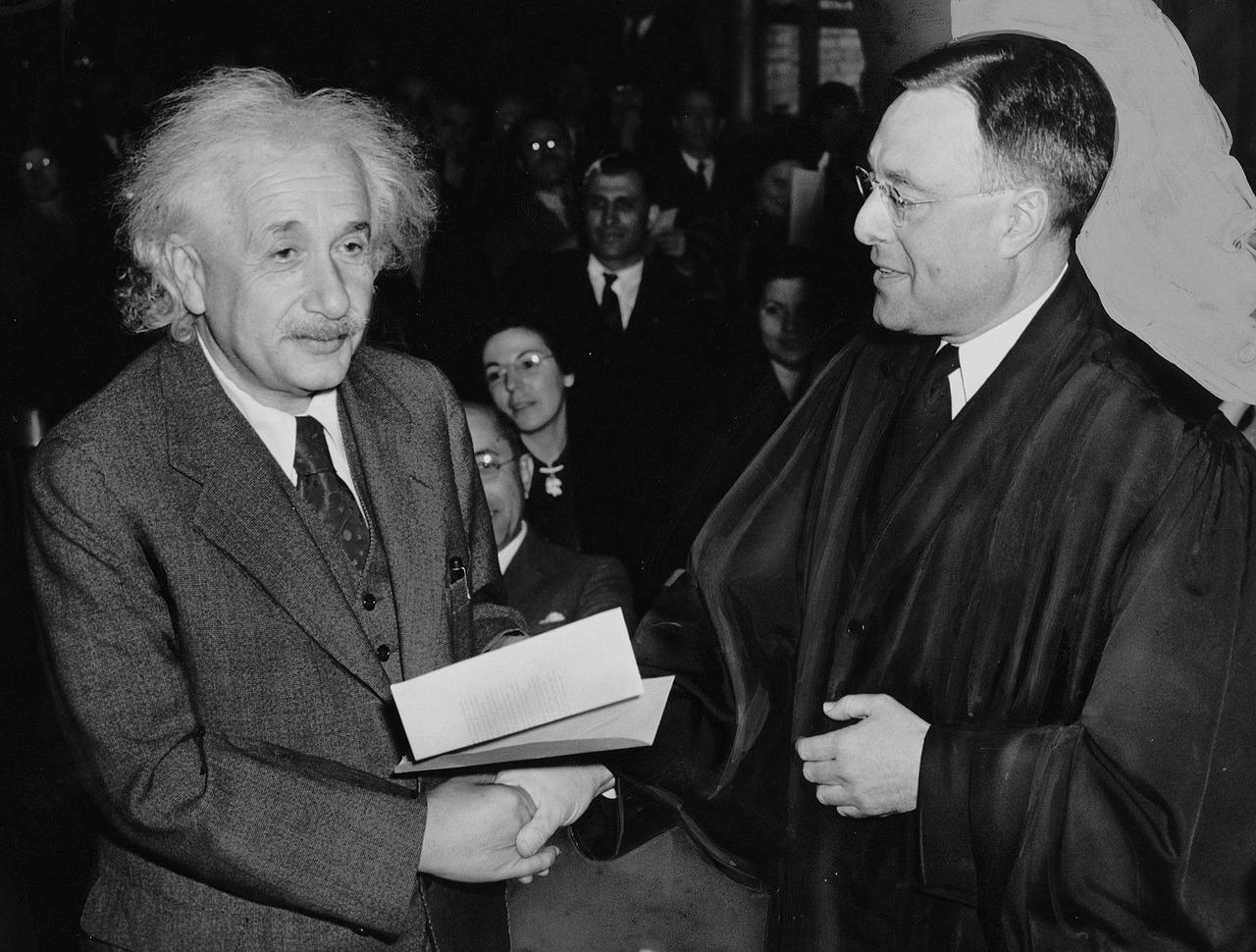
Everything begins with the assumption made by our learned ancestors that an object in motion has a velocity that corresponds to its normal velocity and to that observed by an external observer. By taking up the work of two 19th-century physicists (Morley and Michelson), Albert Einstein made the amazing discovery that the laws of physics are the same everywhere. And all of that, regardless of the reference. More surprisingly, the movement would slow down time.
An interesting example to illustrate this is that of space travelers moving at the speed of light, which would return to Earth after a year. While the latter have aged a year (the duration of their journey), the Earth would have undergone a much greater aging. In simpler terms, it has been proven that by moving at the speed of light, one second for you would be equal to approximately one minute for a motionless observer.
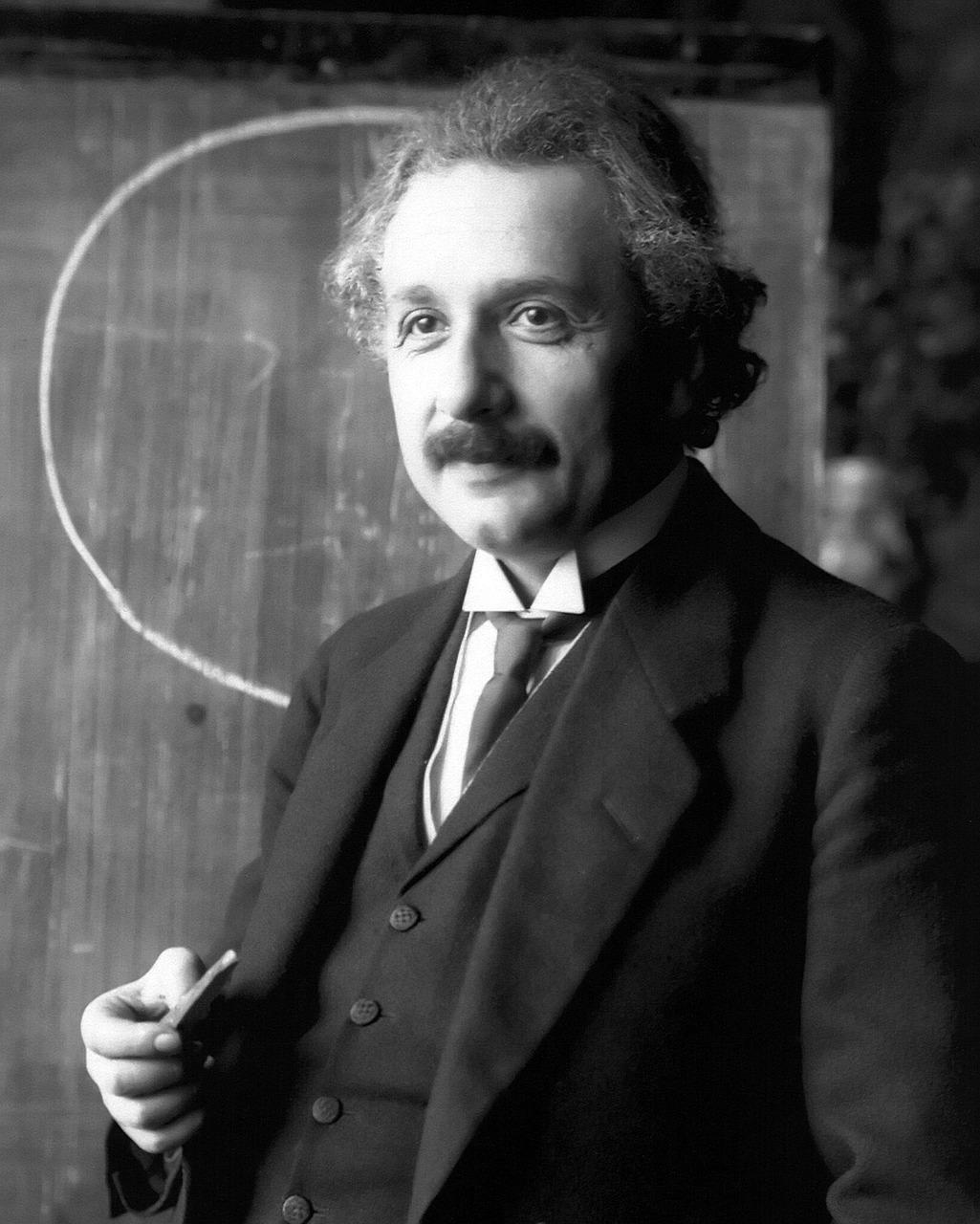
Albert Einstein's genius resonated on a much grander scale than on a human one. Indeed, on Earth, the speed of human movement is too low to observe even the slightest variation of time. Yet, taking as his starting point the speed of light, he had set up the notion of relativity in physics and questioned the absolute nature of space and time.
Thus, from this original postulate, he deduced that the velocity of a particle (as small as it may be) can cause great damage if it is launched at high speed (using the famous equation E = MC²).
The military and nuclear scientists quickly understood how to use this type of invention, and thus the atomic bomb was born. Today, we have learned how to tame this discovery to develop nuclear energy. Search for online math classes here on Superprof.
Thus, by creating a "simple" mathematical formula (a product), Albert Einstein changed the face of the world. We all remember the tragedies of Hiroshima and Nagasaki. But this mathematical equation also allowed us to make tremendous advances in understanding the workings of our universe, giving it real applications, sort of like how math can be used in painting.

between special and general relativity.
The Theory of General Relativity
In 1915, after the restricted theory of relativity, Albert Einstein published a new theory of gravitation: general relativity. Building on Isaac Newton's thesis (the law of universal gravitation, which explains the fall of bodies and the displacement of the stars), Albert Einstein established a new postulate. He put aside the concept of gravitational force and explained that every movement of an object is determined by the configuration of space-time.
Einstein’s theory of general relativity relies on non-Euclidean geometry, a branch of mathematics that describes curved spaces rather than flat planes. By treating gravity as a geometric property of space-time instead of a force, Einstein introduced mathematical tools such as tensors and curved manifolds into mainstream physics. These geometric methods remain essential in modern cosmology and gravitational research.
According to him, rather than the Sun pulling the Earth around it, Albert Einstein explains that the Sun actually disrupts space-time. It is this anomaly that forces the Earth to orbit the Sun. Put simply, if we imagine a stretched sheet (symbolizing our galaxy or our universe), and in the middle of it we put a stone (our Sun). Under the force of this stone, the sheet will twist and deform.
Now, roll a marble from the edge of this sheet to the center, in any direction, and study its trajectory. What is interesting is that at the beginning, the ball will move in a continuous straight line. Then, as it enters the dip created by our stone, it will change direction and begin to turn around, thus making a curved trajectory. You see now that the marble symbolizes a star (our beautiful planet Earth, for example).
With this type of hypothesis, Albert Einstein explained that each body moves along a straight line in space-time. Regardless of its destination, it will begin to modify its trajectory only when it encounters an anomaly in the configuration of space-time, making a curve around the object at the origin of the anomaly. Of course, this will take much longer than a simple ball turning around a stone in the center of a tablecloth. We're talking about elements that are difficult for our human minds to comprehend.
Difficult but not impossible, since Albert Einstein came up with the mathematical equations and formulas that can accurately calculate the curvature of space-time created as a result. Obviously, we are talking here about an infinitely complex system that still requires years and years of research. For now, we have discovered what happens with an isolated star. Imagine on the scale of the galaxy, even of the universe, with its infinities of stars, each producing its own strength. It's enough to make you dizzy.
Returning to our original subject, we can conclude that, with this theory, Albert Einstein questions the fifth postulate of Euclidean geometry (see essential maths vocabulary), explaining that, by placing a point outside a straight line, there is only one parallel to that line. Through his love of physics and his desire to better understand how our universe works, he came to change our contemporary view of mathematics.
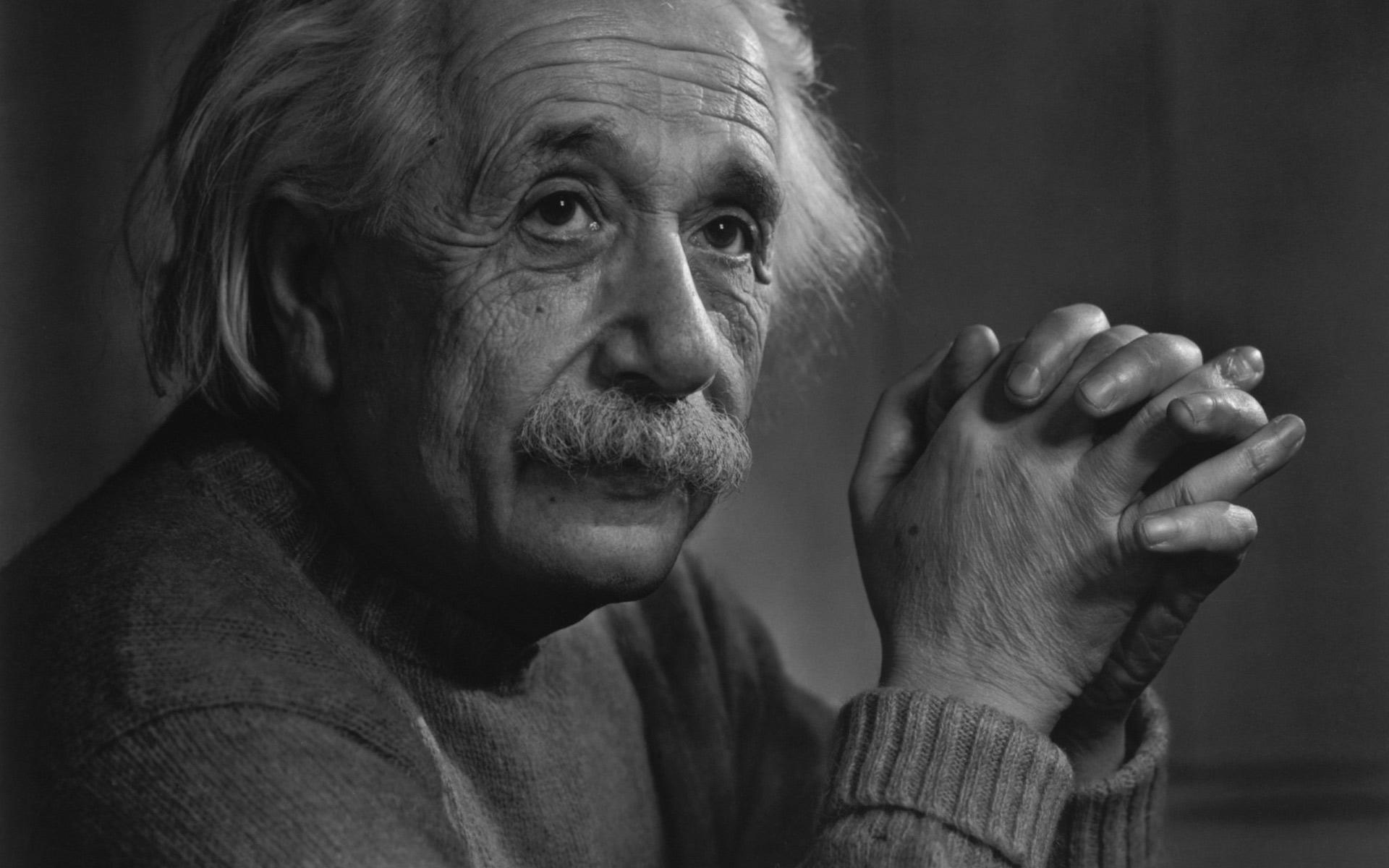
Gravitational Waves
Predicted by Albert Einstein in 1916, gravitational waves have just been detected using American instruments, providing the first direct evidence of ripples in spacetime caused by massive accelerating objects. This landmark observation confirms a key prediction of general relativity and opens a new way of observing the universe.
Search for a good math tutor near me here.
Albert Einstein: A Fortune-teller of Science
In short, this offered astronomers a new way to explore the corners of the universe. "This is one of the most spectacular tests of Einstein's theory," said astrophysicist Zoltan Haiman (Columbia University), who did not participate in the research effort. For him: "it looks like a new window to the universe". It will lead to plenty of scientific applications.
The Distortion of Space and Time
According to Einstein's theory, every object with mass distorts the curvature of space and time. To illustrate this, we use the image of a bowling ball that is bouncing on a trampoline. It moves space and time. In space, this generates waves that radiate at the speed of light.
Tedious Research
The research work was long and tedious. More than 1,000 researchers in fifteen countries. In total, more than a billion dollars was spent over the last 30 years. Researchers have detected gravitational tremors around spiral black holes around 1.3 billion light-years from Earth. To do this, they used a very elaborate measuring device: the LIGO instrument (Laser Interferometer Gravitational-wave Observatory). This instrument is capable of detecting remarkably small vibrations, in other words, gravitational waves. Once the gravitational wave signal was detected, scientists converted it into sound waves and were able to listen to the sounds of two black holes in fusion.
This discovery will allow us to learn more about the fusion of black holes, neutron stars, and other exotic astronomical phenomena that raise so many questions about the evolution of our universe.
France Córdova, Director of U.S. National Science Foundation (NSF)
Much more than just a mathematician or physicist, Albert Einstein sought to gain a better understanding of the universe that surrounds us. For this, he used mathematics and physics (a discipline derived from mathematics, let us bear in mind) to elucidate certain theories that today form the basis of this subject. Find an math tutor on Superprof.

Here is another argument in favor of explaining the world through mathematics. Thus, although it is easy to link Albert Einstein's mathematics, we can only thank him for the outstanding legacy he has left to future generations of scientists.
A Pursuit of a Unified Field Theory
In the later years of Einstein's life, he devoted himself to the pursuit of a unified field theory. He wanted to develop a single mathematical framework that could explain all the fundamental forces of nature, like gravitation and electromagnetism. His earlier work had redefined gravity through the geometry of space-time, but Einstein believed that there was a deeper mathematical unity governing the universe that could be expressed in universal equations. Just like how math tutoring changed over time, so was Einstein's focus.
From the early 1920s until his death in 1955, Einstein explored various mathematical approaches. These included extensions of differential geometry, alternative formulations of field equations, and attempts to generalize the geometric structures used in general relativity. He hoped that electromagnetic phenomena would emerge naturally from the same framework that described gravitation by modifying the mathematical description of space-time itself. Ultimately, no formulation achieved the consistency of empirical support required to be accepted as a complete theory.
The work on unification was shaped by Einstein's resistance to developments in quantum mechanics. While Einstein did contribute to early quantum theory, he was dissatisfied with its probabilistic nature and sought a deterministic mathematical description of physical reality. This philosophy would influence the paths he chose and leave him at odds with younger physicists who were embracing quantum field theory. Just like math and computers, the modern era was here and, in some ways, Einstein was being left behind.
1879
Albert Einstein is born in Württemberg, Germany
1905
Publishes special relativity and mass–energy equivalence (E = mc²)
1915
Completes the theory of general relativity and the Einstein field equations
1916
Predicts the existence of gravitational waves
1921
Awarded the Nobel Prize in Physics
1920s–1955
Pursues a unified field theory
2015
Gravitational waves detected experimentally, confirming Einstein’s prediction
Legacy and Influence of Modern Mathematics
Einstein's lasting impact on mathematics was to transform its role in scientific thought. His theories showed how math could describe physical reality with extraordinary accuracy, a bit like how you can use math in art. Math was elevated from a descriptive tool to the foundational language of nature. Geometry went from a mostly abstract field to the centre of physical theory with his work on space-time.
years and still is!
General relativity encouraged the use of non-Euclidean geometry, tensor calculus, and differential equations across physics and applied mathematics. These are now central in fields like cosmology, gravitational physics, and high-energy theory. Concepts that were once highly theoretical would become essential for modeling black holes, gravitational waves, and the large-scale structure of the universe. Einstein bridged the gap between pure mathematics and observable phenomena. Learn about many other mathematical misconceptions in the world, or work with a math tutor in Atlanta to strengthen your understanding.
Summarize with AI:
Did you like this article? Leave a rating!


 Loading...

