
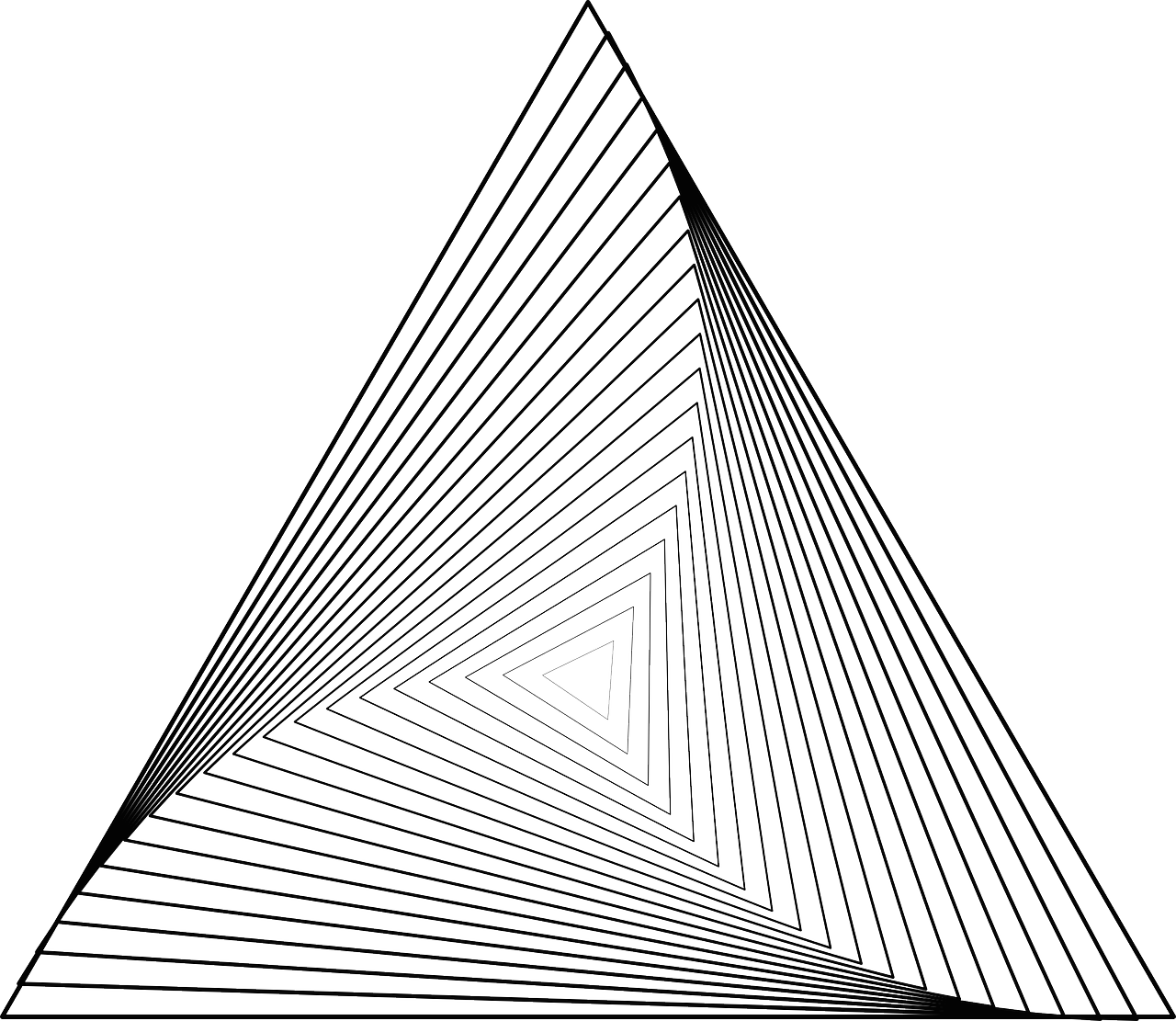

Geometry is a mathematics branch dealing with dimensions, sizes, angles, and shapes of a range of things you see in your daily life.
The word 'Geometry' is taken from Ancient Greek, where 'Geo' means 'Earth' and 'metron' means 'measurement.'
It's a visual study of sizes, patterns, and shapes and how they connect in space. For example, in plane geometry, two-dimensional (2D) shapes like squares, circles, rectangles, and triangles are known as flat (planar) shapes
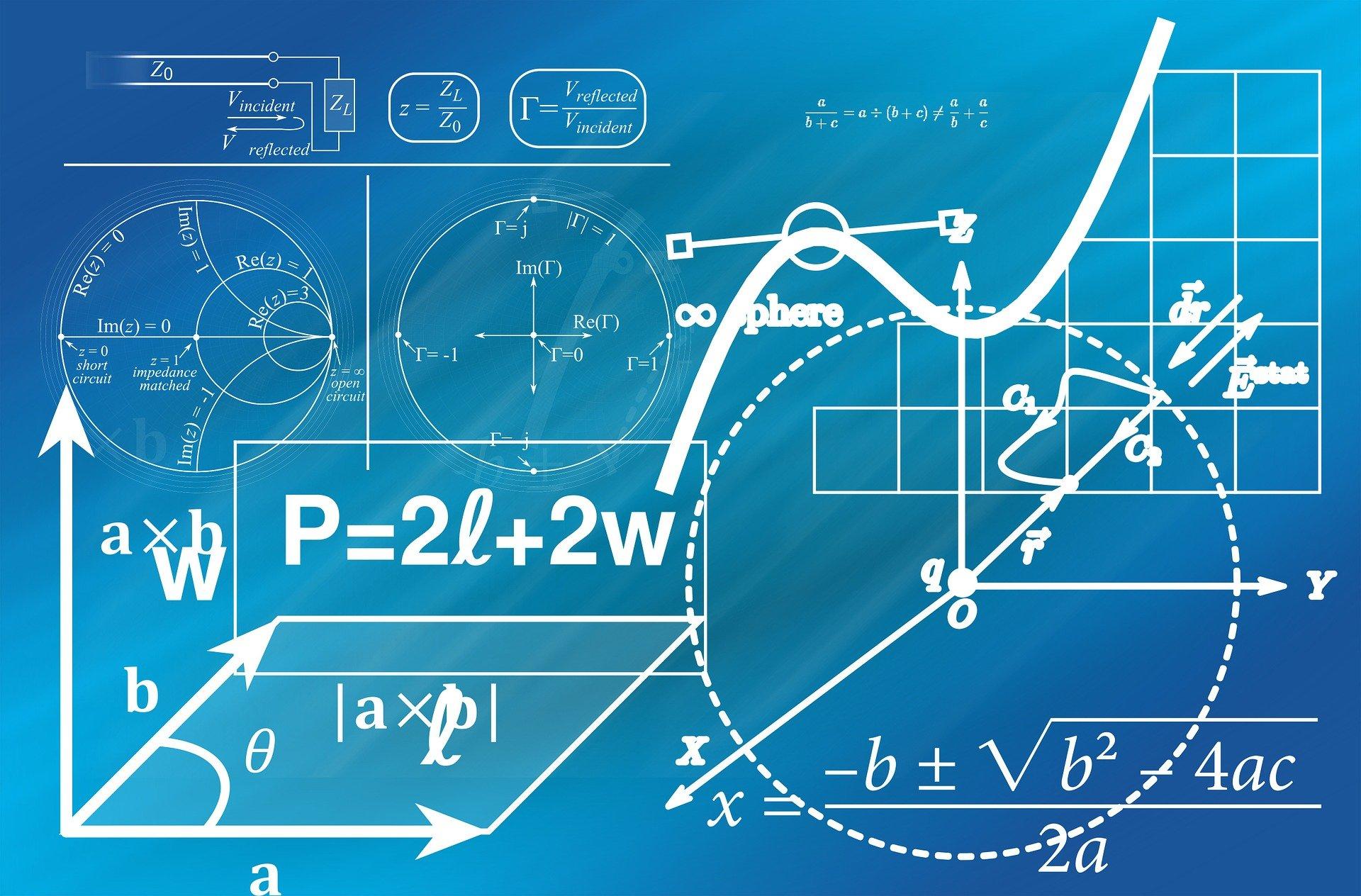
On the other hand, 3D (three-dimensional) shapes like a cone, cuboid, cube, etc., are known as solid shapes.
Planning to take on geometry? If so, you must fully understand and know the basic concepts, as they will help you figure out which dimension you're working in.
Wondering what are the basics of geometry? Read on!


Definition Of Geometry
Geometry is the study of various kinds of figures, sizes, and shapes in actual life or mathematics. This branch of maths helps you learn about angles, similarities, and transformations in figures.
Moreover, basic geometry largely depends on lines, points, angles, and planes.
Here are a few key branches:
- Algebraic geometry
- Topology
- Differential geometry
- Discrete geometry
- Convex geometry
- Euclidean geometry
Now that you know what geometry means, let's delve into the basics of geometry and why learning geometry is so crucial!
Plane Geometry
Plane geometry or two-dimensional geometry deals with planar (flat) shapes that can easily be drawn, including circles, triangles, and lines.
All two-dimensional figures come with two measures like breadth and length.
In short, two-dimensional geometry is the study of lines, points, and figures like polygons and circles lying in the plane. Some key terminologies in two-dimensional geometry include:
- Point
- Line
- Angles
Point
The point is the precise place or location on the plane. It's typically denoted by a "dot." You must understand that point isn't a thing; it's a place.
In addition, the point doesn't have any dimension but only a position.
Line
A line has just one dimension. It's straight with no curves and thickness and expands in each direction without the end.
What's important to remember is that a line is a combination of endless points. There's a vertical line (y-axis) and a horizontal line (x-axis) in geometry.
Angles
In geometry, angles are figures created by two-rays meeting at the common endpoint. The two rays are known as arms, and the endpoint is called the vertex.
Kinds Of Angle
Here are different kinds of angles:
- Acute angle: Also known as a sharp angle, the acute angle is smaller than the right angle and is usually fall between the range of 0-90 degrees
- Obtuse angle: Less than 180 degrees and more than 90 degrees angle is called obtuse angle
- Right angle: Angles that measure precisely on 90 degrees are called right angles
- Straight angle: Angles that measure 180 degrees are known as straight angles. They're quite akin to the straight line, hence the name
Polygons
A polygon is a two-dimensional shape. They're made from straight lines, and their shapes are 'closed,' i.e., all lines connect. The term 'poly' means multiple. The 'n-gon' is the polygon with 'n-sides.' For instance, triangles are 3-gon polygons.
Some polygon types include:
- Triangles
- Pentagon
- Hexagon
- Quadrilaterals
- Heptagon
- Octagon
- Nonagon
- Decagon
- Circle
Triangle
It's a polygon with three vertices and three edges. It's one of the most fundamental shapes in entire geometry. Its total is 180-degree
- Equilateral triangle: it has three equal angles and sides
- Isosceles triangle: this triangle has two equal angles and sides
- Scalene triangle: it has all three unequal angles and sides
Quadrilateral
It's a polygon with four vertices and four edges. Its total is 360-degree.
- Square: it has four equal vertices and sides that are at the right angle
- Rectangle: its opposite sides are parallel and have the same lengths
- Parallelogram: Its opposite angles and sides are equal and parallel
- Rhombus: all four sides have the same length; however, they don't have an internal angle of 90 degrees
- Trapezium: a quadrilateral with one set of parallel side
Pentagon
Plane figures with five angles and five sides.
Hexagon
Plane figures with six angles and six sides.
Heptagon
Plane figures with seven angles and seven sides.
Octagon
Plane figures with eight angles and eight sides.
Nonagon
Plane figures with nine angles and nine sides.
Decagon
Plane figures with ten angles and ten sides.
Circle
Circles are closed shapes. All points are of the same distance from a specific point called 'center.' They're pretty easy to make.
Congruency And Similarity In Geometry
Here's what the two terms mean in geometry:
- Congruence: When two figures have a similar size and shape, they're known as congruent
- Similarity: When two figures have an equal angle or a similar shape but don't have a similar size, they're known as similar
Solid Geometry (Three-Dimensional Geometry)
Solid geometry is the branch of geometry dealing with three-dimensional Euclidean space. Also known as Stereometry, the branch measures the volume of different solid, three-dimensional figures such as prisms, pyramids, cones, cylinders, cubes, and spheres.
All our surrounding objects are three-dimensional, obtained from rotational motions of 2D (two-dimensional) shapes. Here are some key characteristics of three-dimensional shapes:
- Faces
- Edges
- Vertices
Want to know more about these terms and their geometric shapes? Read on.
Edges
In geometry, edges are particular kinds of line segments that join two vertices in the polyhedron, higher-dimensional polytope or polygon.
In polygons, edges are line segments on boundaries and are typically called polygon sides. On the other hand, in polytope or polyhedron, edges are line segments where two polyhedron sides (or faces) meet.
Segments that join two vertices as they pass through the exterior or interior aren't edges but diagonals.
Here's a list of various solid shapes and their edges:
| Solid Shapes | Edges |
|---|---|
| Cube | 12 |
| Square pyramid | 8 |
| Triangular pyramid | 6 |
| Hexagonal prism | 18 |
| Triangular prism | 9 |
| Pentagonal pyramid | 10 |
| Hexagonal pyramid | 12 |
| Rectangular prism | 12 |
| Pentagonal prism | 15 |
Faces
In geometry, the face is the flat (planar) surface of the 3D geometric figure. However, not every space figure has a face. For example, a sphere doesn't have faces, but a pyramid does.
It's a surface commonly found in daily life. Every geometric shape is made from flat surfaces known as faces, and edges cover each surface. In addition, the face needs to be a 2D figure for a three-dimensional shape.
Here's a list of various solid shapes and their faces:
| Solid Shapes | Faces |
|---|---|
| Cube | 6 |
| Square pyramid | 5 |
| Triangular pyramid | 4 |
| Hexagonal prism | 8 |
| Triangular prism | 5 |
| Pentagonal pyramid | 6 |
| Hexagonal pyramid | 7 |
| Rectangular prism | 6 |
| Pentagonal prism | 7 |
Vertices
In geometry, the vertex (or vertices) is where two or more lines, edges, or curves meet. Simply put, it's a point where more than two lines match to make an angle, corners of polyhedral, and polygons are vertices.
Here's a list of various solid shapes and their vertices:
| Solid Shapes | Vertices |
|---|---|
| Cube | 8 |
| Square pyramid | 5 |
| Triangular pyramid | 4 |
| Hexagonal prism | 12 |
| Triangular prism | 6 |
| Pentagonal pyramid | 6 |
| Hexagonal pyramid | 7 |
| Rectangular prism | 8 |
| Pentagonal prism | 10 |
What Is Geometric Construction?
Geometric construction allows you to construct lines, angles, and polygons with the simplest of tools. You will need paper, a sharpened pencil, a straightedge to control your lines, and a drawing compass to swing arcs and scribe circles.
Make sure your drawing compass has a sharp needle on one arm and a sharpened pencil on the other arm. Practice swinging the drawing compass, so you are familiar with setting the needle on a given point, adjusting the arms, and swinging arcs.
Drawing a Line, Line Segments, and Rays
The straightedge and pencil are your tools for drawing straight lines, line segments, rays and sides of polygons. Adding the drawing compass allows you to copy any of those constructions accurately and faithfully.
- To draw a straight line, hold the straightedge in your non-dominant hand with your fingers splayed on the top to push downward, holding the straightedge in place. This keeps your fingers out of the path of the pencil.
- Hold the pencil in your writing hand, the tip against the straightedge and the pencil nearly vertical. This keeps the point tight against the straightedge as you smoothly and carefully run the pencil along the straightedge. Avoid wagging or wavering the pencil to keep your line straight.
- Once the line is drawn, label endpoints for line segments, identifying points for lines, and one each (one endpoint, one identifying point along the ray) for rays. Remember to use arrowheads for lines and rays.
Copying a Line Segment
Every line is a copy of every other line; each is limitless in two directions, so that is no challenge. Copying a line segment requires the drawing compass, pencil, and straightedge.
- Next to the existing line segment, draw a new point. Call it Point L.
- Place your drawing compass needle on Point G, open it to reach Point O, and carefully lift it up.
- Relocate the needle on Point L. Swing an arc out to the right, using the exact setting that was the distance of the original line segment GO.
- Use your straightedge to draw a line segment from Point L to any spot on the arc.
- Your new line segment is identical in length to your original!
- Label its endpoint Point D, and you are good as GOLD.
How to Copy an Angle
Here we have two rays sharing the common Point I. Rays SI and LI form an angle, ∠SIL or ∠I.
- Draw a new point, which will be our new vertex, off to the right. We will label it Point E.
- Use the straightedge to draw a line from Point E off to the right, with an identifying point along it.
- Label it Point R, and put an arrowhead on the right end.
These next steps are tricky. You will be using only the drawing compass to measure and copy distances from the original angle to the new one.
- Open your drawing compass up, so you reach from Point I along the two rays very nearly to their neat little arrowheads.
- Swing the compass to run a single arc across the original rays SI and LI.
- Without disturbing the compass setting, relocate it to Point E on your new ray.
- Swing the compass up so, visually, you are fairly certain to have drawn an arc at least the size of the first arc.
- Go back to the first angle, ∠SIL, and put the needle on one of the intersections of a ray and the arc.
- Open or close the compass, so the other arm reaches the other intersection of the arc and the other ray.
- Without adjusting the compass, relocate the needle to your new construction.
- Swing an arc that intersects with the arc you previously drew from the vertex, Point E.
- Where it crosses the other arc, you have found a point that will be along the new ray from Point E upwards and to the right!
- Connect Point E to that new point, call it Point V.
- Put an arrowhead on the ray. You now have an angle identical to ∠SIL called∠VER. You shine like SILVER!
Bisecting a Line Segment
You can use a compass to bisect an angle or a line segment.
- For a line segment, open the compass to a bit more than half the line segment's length (visually, not by measuring).
- Place the needle on one endpoint and swing an arc above and below the line segment.
- Relocate the compass to the other end of the line segment and repeat the swing.
- The points where the two arcs intersect above and below the line segment are the two points to connect with your straightedge.
- That straight, perpendicular line will bisect the line segment!
Bisecting an Angle
- For an angle, hold the needle of the compass on the vertex. Open the compass to stretch most of the way along one ray.
- Swing an arc that crosses both rays.
- Without adjusting the compass, relocate the needle arm to the intersection of the arc and one ray.
- Swing an arc in the angle's interior area.
- Without adjusting the compass, relocate the compass to the other ray, where the first arc intersected.
- Swing an arc.
- Where the two arcs intersect, that point is an endpoint of a line segment that bisects the angle. Connect it with a straightedge to the vertex point.
Why Is Geometry So Important To Learn?
It's pretty easy for pupils to write down geometry as another vain mathematics branch. However, when you describe the value of learning math – specifically geometry – they start to see its relevance in the world we live in.
At the elementary level, learning geometry is crucial as it builds the foundation for high school, college, and university-level mathematics. Often, geometry overlaps with Algebra, another critical branch of mathematics.
Geometry introduces vital formulas like 'Pythagorean theorem' and is primarily used in various science and mathematics classes.
In addition to that, it's a core lesson for various careers in Science, technology, engineering, and mathematics (STEM) fields.
Not only that, students who want to pursue an arts degree may find geometry increasingly interesting.
This mathematics branch is increasingly connected with visual arts; in fact, some of the most leading Renaissance artists like Leonardo da Vinci, Albrecht Dürer, etc., took a great interest in the subject of maths.
Hence, if teachers start with geometry, they may pique students' interest in mathematics. In addition, students who know spatial ability and geometry will push the limits of scientific and technical professions.
It helps to understand spatial relationships. The subject creates a plain perception of position and space via studying the shapes and sizes of everything across the globe.
Moreover, it helps understand the relationships and measurements of angles, solids, surfaces, and lines found in everyday environments.
See online math classes here on Superprof.
Take Geometry Lessons With A Private Tutor

Looking for credible 'geometry tutors near me' or 'maths tutors near me' but don't have time to conduct in-depth research to find one? If so, choose Superprof! A math tutor can help you build confidence and stay on track with your learning.
Just type in Google' best math tutoring near me,' and Superprof will pop up as the leading tutoring platform.
No matter you're looking for basic geometry lessons or advanced, Superprof private Geometry tutors will help you learn and master every concept efficiently and help you reach your learning goals.
All Superprof geometry tutors have their profile pages where students can view their tutoring experience, credentials, and the age group or level they're most effective at working with.
In addition, you can view their charges per session. Apart from that, you can also notice by flipping through the tutor's profile whether they provide lessons at home, some other place, or virtual.
Superprof has a range of geometry tutors who give online and in-person lessons as per your needs, so feel free to choose anyone meeting your requirements.
You would be happy to know that most Superprof geometry teachers provide the free-of-cost first lesson.
It's highly beneficial! You can take a session, and if you believe the tutor isn't right for you, you can switch to another without paying a penny.
So, are you grappling with different geometry formulas, series, or sequences? Superprof tutors can help you learn various geometry formulas and concepts effortlessly, using the best resources.
With Superprof tutors, learning becomes more accessible! Take geometry lessons with a private Superprof tutor and become a subject matter expert!
Summarize with AI:
Did you like this article? Leave a rating!

 Loading...
