


Homeschooling can cost almost nothing, or well over $1,000 per child each year. Curriculum is the biggest variable: some publishers give full courses away, while all-in-one packages pass $1,000. Outside classes, sports, tutoring, and field trips then add to the total.
No federal agency tracks what homeschooling families spend, so any “average” you see is an estimate. This guide uses publishers’ own prices, state program pages, and federal data instead. That way, you can build a budget around the choices your family actually makes.
Want to give private lessons?
Join the Superprof community and share your knowledge with interested and motivated students.
How Much Does It Cost to Homeschool?
The cost to homeschool depends on three choices: your curriculum, the number of children you teach, and the extras you add. A family using free materials and the public library can spend very little. A family buying a boxed curriculum for each child, plus classes and lessons, can spend several thousand dollars.
Examples
What Homeschooling Can Cost: Real Price Examples
| Expense | Example | Price |
|---|---|---|
| Free curriculum | The Good and the Beautiful Language Arts, levels K–8 (PDF) | $0 |
| All-in-one package | Sonlight All-Subjects Package, kindergarten (list price) | $1,060.40 |
| All-in-one package | Sonlight All-Subjects Package, 12th grade (list price) | $1,473.62 |
| Back-to-school shopping | Average K–12 family plan, all school types, 2026 | $863.86 |
| Private school | Average tuition, 2020–21 | $12,790 |
| Public school | Tuition-free; taxpayers spent $17,619 per pupil in FY 2024 | $0 |
Curriculum prices from each publisher’s website, checked Oct 5, 2026; Sonlight was offering 20% off at the time. Shopping figure from the National Retail Federation; tuition and spending from NCES and the US Census Bureau. Full references in the Sources section.
Published estimates of the typical cost vary widely, like the ranges in the chart below. Treat any single figure as a rough guide rather than a benchmark. Your own list of subjects, children, and activities is a far better predictor.
Families with several children often spend less per child than the first year suggests. Many books, manipulatives, and supplies can be reused by younger siblings or shared with other families.
What Drives the Cost of Homeschooling?
Five categories make up most homeschool budgets: curriculum, supplies, tutoring, activities, and everyday living costs. Each one ranges from free to expensive, so you can save in one area and spend in another.
Curriculum and Books
Curriculum is where costs differ most. The Good and the Beautiful offers its Language Arts courses for levels K–8 as free PDF downloads. At the other end, Sonlight’s All-Subjects Packages listed from $1,060.40 for kindergarten to $1,473.62 for 12th grade when we checked. Sonlight says each one includes “everything you need for one year of school for one student.”
Many parents mix and match instead of buying one package. They might pick a math program, a reading series, and library books for history and science. Passing materials down to younger children spreads the cost over several years.
Supplies and Technology
Supplies include paper, pencils, art materials, a printer, and often a computer. For a sense of scale, the National Retail Federation expects families with K–12 students to spend $863.86 on back-to-school shopping in 2026. That figure covers all school types, not just homeschoolers.

Electronics make up the largest share of that spending, at $293.11 per family, while school supplies average $146.45. Homeschoolers can stretch these purchases further, because supplies stay at home and get reused.
Tutors and Outside Classes
Many families hire a tutor for subjects they feel less confident teaching, such as advanced math, a foreign language, or a musical instrument. Tutoring rates vary with the subject, the tutor’s experience, and whether lessons are online or in person.
On Superprof, tutors set their own prices, so you can compare profiles and rates before booking. A tutor for one or two hard subjects usually costs far less than outsourcing everything.
Activities, Field Trips, and Camps
Extracurriculars are often the fastest-growing line in a homeschool budget. Music lessons, sports teams, martial arts, and dance classes all charge their own fees. Field trips to museums, zoos, and nature centers add admission and travel costs.

A family membership can make sense if you visit a museum or zoo several times a year. Some homeschool co-ops also organize group trips, which can lower the price per child.
When you're homeschooling, you have to look at what are the priorities first, right? And then those extracurriculars come in second.
Jessie Pedraza, homeschooling parent in Florida, 2024
Costs Families Often Forget
Beyond books and lessons, a few everyday expenses rise when children learn at home:
- Transportation: driving to classes, co-ops, and field trips adds fuel and wear on the car.
- Food: children eat lunch and snacks at home every day, so grocery bills go up.
- Utilities: a busy home during the day uses more heating, cooling, and electricity.
- Income: if a parent works fewer hours to teach, the lost pay can outweigh every other cost.
How Much Does Online Homeschooling Cost?
Online programs range from free to tuition-based. Some states and districts run free virtual public schools, but students in them are enrolled in public school, not homeschooled. In 2022–23, NCES found that 2.5% of students were in full-time virtual education, alongside 3.4% who were homeschooled.
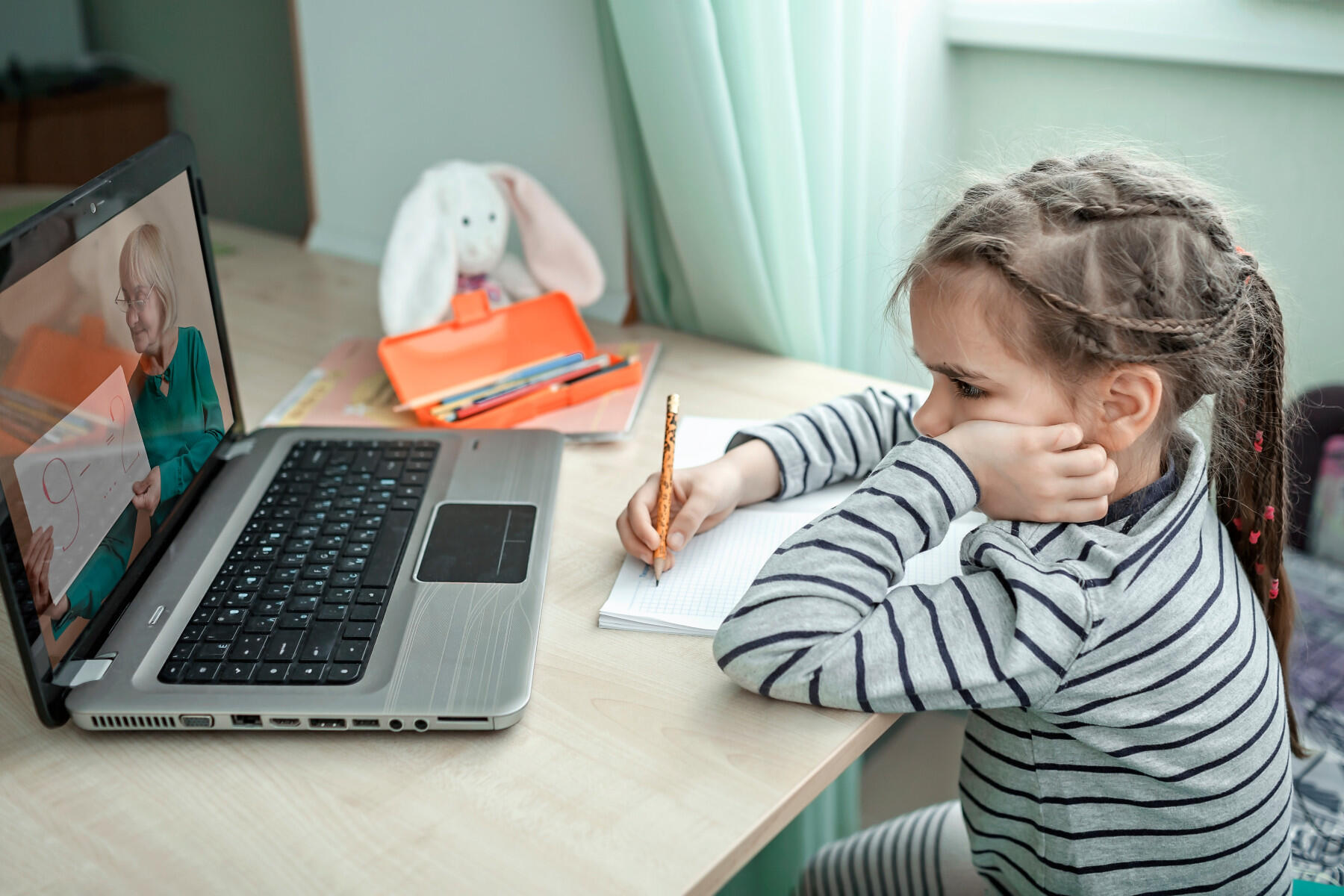
Private online programs set their own prices, and the format shapes the cost. Live classes with a teacher and classmates usually cost more than self-paced courses built on videos and quizzes. Before you enroll, check whether books, grading, and transcripts are included.
Want to give private lessons?
Join the Superprof community and share your knowledge with interested and motivated students.
Do You Get Paid to Homeschool?
No. Parents don’t receive a salary for homeschooling, but a growing number of states fund education savings accounts (ESAs). These accounts put public money toward approved learning costs, such as curriculum and tutoring, for children outside public school.
Arizona’s Empowerment Scholarship Account is one example. By law, it deposits 90% of the state’s base support level and additional assistance for that student. Families must agree not to enroll the child in a district or charter school. Florida’s Personalized Education Program (PEP) serves K–12 students not enrolled full time in a public or private school, with amounts set by county.
An ESA is not the same as your state’s homeschool law. Each program sets its own eligibility, approved expenses, and reporting rules. Read the official handbook before you apply.
Are There Tax Breaks for Homeschooling?
A few states offer tax credits or deductions for homeschool expenses, but most do not. At the federal level, a Coverdell education savings account can cover books, supplies, and tutoring at an eligible school. The IRS defines that school “as determined under state law,” so whether a home school counts depends on your state.
These four states offer tax help that can apply to homeschooling families:
- Illinois: a credit of 25% of qualified expenses after the first $250, up to $750 per family. The home school must meet state attendance law.
- Indiana: a deduction of up to $1,000 per child for education expenses of a homeschooled or private school student.
- Louisiana: a deduction of 50% of home-schooling expenses, up to $6,000 per child from 2024 onward.
- Minnesota: a K–12 subtraction of up to $1,625 per child in grades K–6 and $2,500 in grades 7–12, plus an income-limited credit. Religious materials don’t qualify.
Homeowners who homeschool still pay local property taxes, which help fund public schools. Keep every receipt, since each state sets its own rules on what qualifies.
Is Homeschooling Cheaper Than Public or Private School?
For most families, homeschooling costs less than private school but more than public school. Public school charges no tuition, because taxes cover it. Private schools charged an average of $12,790 in tuition in 2020–21, according to NCES.
What public schools spent per pupil in fiscal year 2024
a record high, funded by taxpayers (US Census Bureau)
That spending pays for teachers, buildings, transportation, and services that homeschooling families provide themselves. Homeschooling can also bring savings: no fundraising drives, more flexible vacation dates, and fewer school-specific purchases. The biggest cost is often a parent’s time, not money.
How to Find a Homeschool Tutor or Teacher
A good tutor can take over one tough subject or support a whole year of learning. When you hire a tutor or teacher for homeschooling, these steps help you choose well:
- Ask trusted friends, co-op members, or classroom teachers for referrals.
- Look for experience with your child’s grade level and subject.
- Confirm teaching qualifications and any certifications.
- Read reviews on Superprof or other platforms.
- Interview at least three tutors who fit your schedule and budget.
Hiring help works best as part of a wider plan.
Questions to Ask a Homeschool Tutor
- How long have you been tutoring or teaching?
- Do you have experience in the subject my child is studying?
- How do you adapt lessons to my child’s needs and abilities?
- How do you measure progress, and how often will you update me?
- Where will sessions take place, and how long is each one?
- What is your hourly rate, and are there fees for materials or testing?
- What is your policy for cancellations and make-up lessons?
Sources
- "First Look: Parent and Family Involvement in Education: 2023," National Center for Education Statistics, 2024. Available at: https://nces.ed.gov/pubs2024/2024113.pdf. Accessed 5 Oct. 2026.
- "Private Elementary and Secondary Enrollment, Number of Schools, and Average Tuition, by School Level, Orientation, and Tuition: Selected School Years, 1999-2000 through 2020-21," Digest of Education Statistics, National Center for Education Statistics, 2023. Available at: https://nces.ed.gov/programs/digest/d23/tables/dt23_205.50.asp. Accessed 5 Oct. 2026.
- "Public School Spending Per Pupil Reaches Historic High in 2024," U.S. Census Bureau, 2026. Available at: https://www.census.gov/newsroom/press-releases/2026/school-system-finances.html. Accessed 5 Oct. 2026.
- "Majority of Back-to-School Shoppers Get a Head Start on the Season," National Retail Federation, 2026. Available at: https://nrf.com/media-center/press-releases/majority-of-back-to-school-shoppers-get-a-head-start-on-the-season. Accessed 5 Oct. 2026.
- "All-Subjects Packages," Sonlight. Available at: https://www.sonlight.com/collections/all-subjects-package. Accessed 5 Oct. 2026.
- "12th Grade Homeschool Curriculum Package," Sonlight. Available at: https://www.sonlight.com/products/twelfth-grade-all-subjects-package. Accessed 5 Oct. 2026.
- "Free Homeschool Language Arts Resources," The Good and the Beautiful. Available at: https://www.goodandbeautiful.com/pages/free-homeschool-language-arts. Accessed 5 Oct. 2026.
- "Arizona Revised Statutes § 15-2402: Empowerment Scholarship Accounts," Arizona State Legislature. Available at: https://www.azleg.gov/ars/15/02402.htm. Accessed 5 Oct. 2026.
- "Personalized Education Program," Step Up For Students. Available at: https://www.stepupforstudents.org/scholarships/personalized-education-program/. Accessed 5 Oct. 2026.
- Mooney, Roger. "PEP Scholarship Allows for ‘A-plus Homeschool Experience’ for One Family," Step Up For Students, 2024. Available at: https://www.stepupforstudents.org/blog/pep-scholarship-allows-for-a-plus-homeschool-experience-for-one-family/. Accessed 5 Oct. 2026.
- "Publication 970: Tax Benefits for Education," Internal Revenue Service, 2025. Available at: https://www.irs.gov/publications/p970. Accessed 5 Oct. 2026.
- "Pub-112, Education Expense Credit General Rules," Illinois Department of Revenue. Available at: https://tax.illinois.gov/research/publications/pubs/education-expense-credit-general-rules.html. Accessed 5 Oct. 2026.
- "Deductions," Indiana Department of Revenue. Available at: https://www.in.gov/dor/i-am-a/individual/deductions/. Accessed 5 Oct. 2026.
- "School Expense Deduction," Louisiana Department of Revenue. Available at: https://revenue.louisiana.gov/individuals/general-resources/school-expense-deduction/. Accessed 5 Oct. 2026.
- "K-12 Education Subtraction and Credit," Minnesota Department of Revenue. Available at: https://www.revenue.state.mn.us/k-12-education-subtraction-and-credit. Accessed 5 Oct. 2026.
Want to give private lessons?
Join the Superprof community and share your knowledge with interested and motivated students.
Summarize with AI:
Did you like this article? Leave a rating!

 Loading...

