


Math in high school can be overwhelming for some students. However, it's still one of the most important subjects in school. With most schools requiring at least three years of math, including topics like algebra and geometry, some may offer four years for those looking to go to college. Let's explore what kinds of math you'll cover in your high school math classes.
High School Math Topics and Their Grades
- ➗ Grade 9 | Algebra 1
- 📐 Grades 9-12 (after Algebra 1) | Geometry
- ✖️ Grades 11-12 | Algebra 2
- 🟰 Grade 11 | Trigonometry
- ➕Grade 11-12 | Pre-calculus
- ➖ Grade 12 | Calculus
- 📚 Grades 9-12 | AP Classes


Core High School Math Courses
Most high-school pupils must complete 3 years of mathematics coursework, although 4 years is recommended, as most colleges require it. There may be different levels of math classes, recommended based on ability and performance.

Other schools may require completing math until a particular coursework is completed.
However, suppose you've decided that you'll choose a degree that doesn't require advanced mathematics.
In that case, it might be handy to take courses that are directly connected to your chosen field once you complete your mathematics coursework. But if you intend to pursue a degree in the STEM field, high school is the best time to start exploring advanced mathematical concepts. Here are some of the main topics you'll learn in high school mathematics:
Algebra 1
Algebra-1 is typically the first mathematics class you'll take as a high school student. Though there are many math classes in high school, algebra is arguably one of the most fundamental courses. Students will learn real numbers, explore, solve, write, and graph linear equations. In addition, they will study polynomials, quadratic functions, and equations.
Most learners take algebra in their first year, though mathematics classes are assigned based on placement test results. This is why high school mathematics classes contain pupils in various grades.
Algebra Essentials
Geometry
Here's a fun fact: a great majority of students who otherwise hate mathematics as a subject love to take geometry as coursework. So in high school geometry lessons, you'll likely study solid and plane geometry, including measurement formulas, formal proofs, and constructions. This course is usually taken after Algebra-1 coursework and may include pupils in various grades because of placement tests.
Algebra 2
Algebra-2 essentially builds upon concepts and skills covered in Algebra-1 coursework. However, unlike Algebra-1, you'll dig deeper into graphing and solving equations, in addition to functions and inequalities. Moreover, most algebra-2 classes include trigonometry, which isn't always taught as a separate course in most high schools. So for many learners, it's the last math course taken in high school.
Algebra 2 deepens your understanding of earlier concepts while introducing new and more advanced material. You’ll explore complex numbers, exponential and logarithmic functions, systems of equations, and deeper graph analysis. These skills create the foundation for trigonometry and pre-calculus.
Trigonometry
Typically taken in junior year – though it may occur later or even earlier – trigonometry is mainly included in other mathematics courses such as Algebra-2. However, some pupils take it as an altogether separate course. This course includes geometry and algebra, and the application of these concepts and problems to periodic and circular functions.
Key Terms
- Opposite
- Adjacent
- Hypotenuse
Ratios
- sin(θ) = opposite ÷ hypotenuse
- cos(θ) = adjacent ÷ hypotenuse
- tan(θ) = opposite ÷ adjacent
Pre-Calculus
Often, this course is referred to as an 'elective' for learners who want to take advanced mathematics classes. The coursework examines sequences and series, limits, probability, statistics, and derivatives. Most seniors attend this course before taking college math classes.
Pre-calculus prepares students for the pace and depth of college-level math. The course covers sequences, series, limits, probability, and introductory derivative concepts. Students who complete pre-calculus typically find Calculus far easier thanks to the strong conceptual foundation it provides.
Calculus
This coursework is highly beneficial if you are preparing to study a math-related degree in college. During calculus lessons, students will dive deeper into the material they learned in their pre-calculus course, with greater focus on differentiation and integration.
Calculus focuses on understanding change. Derivatives measure how fast a quantity changes, while integrals calculate accumulated quantities such as area or total distance. These concepts power fields like engineering, physics, economics, medicine, and data science.
Other Electives
Elective mathematics classes vary from school to school, including math applications, math literacy, computer math, and other high school math problems and concepts. All these topics emphasize real-world math applications and are accessible to students who choose fields other than STEM. For more localized support, consider searching for a math tutor near me.

Advanced Placement (AP) and Elective Math Courses
Advanced math options are for students who feel confident they can go beyond the core curriculum. With topics like algebra, geometry, and pre-calculus, these are strong options for college applicants and high-achieving students. Learners can explore real-world and specialized math.
AP Calculus AB and BC
AP Calculus AB and BC are the most advanced math options in most high schools. Both courses include college-level material, with AB covering foundational calculus concepts and BC including everything from AB and topics like polar, and vector functions as well as more in-depth integration techniques. These are an excellent choice for those interested in STEM fields at college like engineering, math, physics, or computer science.
AP Calculus AB
- Covers limits, derivatives, and integrals
- Equivalent to one semester of college calculus
- Ideal for students preparing for STEM or advanced college math
- Slightly slower pace than BC
AP Calculus BC
- Includes everything in AB
- Adds sequences/series, parametric equations, and polar functions
- Equivalent to two semesters of college calculus
- Best suited for strong math students or STEM-focused learners
Elective Courses
Many schools offer elective courses that allow students to broaden their mathematical understanding. There are various options at each school, but they're often intended to help students pursue non-STEM pathways. You'll find that these apply math to real-world uses more so than some of the other options.
Focuses on real-world uses of math such as budgeting, finance, measurement, and data interpretation.
Strengthens essential numeracy and prepares students for workplace or college-level math by reviewing core concepts in an accessible way.
Introduces computing logic, algorithmic thinking, or introductory programming skills using mathematical principles.
Explores problem-solving through hands-on tasks, projects, and scenarios relevant to everyday life.
How Hard Is High School Mathematics?
Math can be both tricky and hassle-free. For some, solving a high school math equation is one of the most daunting tasks; it's a breeze for others. According to one popular survey, students were asked to name the school subject they considered most challenging. Not surprisingly, math secured the top position in the chart. So, what makes high school math or math in general difficult?
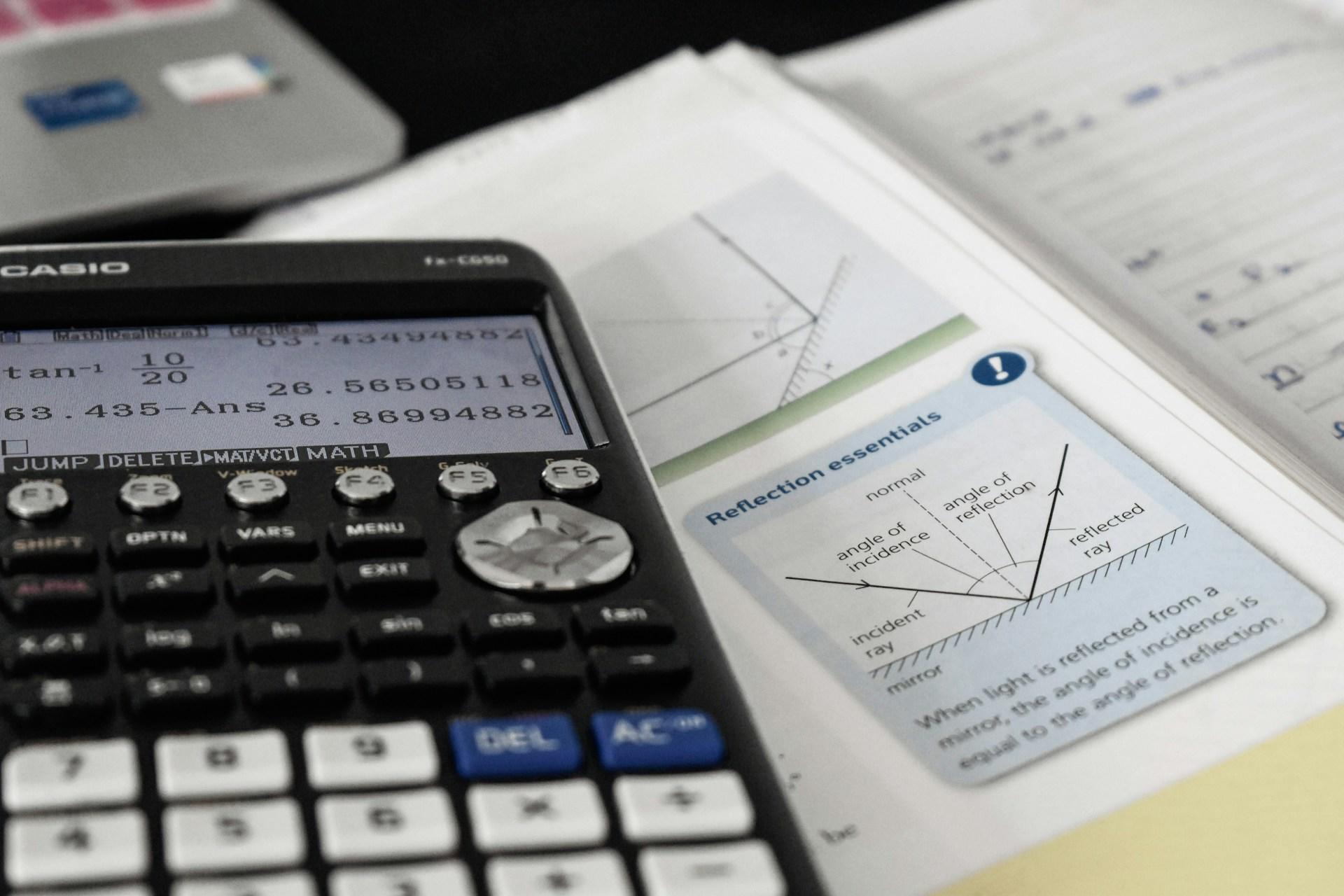
One possible reason math is considered hard is that it's not quick to do and requires extra labor, planning, and skill to perform it accurately and correctly. In other words, solving math problems requires persistence and patience. For many, math isn't something that comes naturally – it takes a lot of effort, but a math tutor near me can offer targeted, personalized help. Moreover, it's a field that often requires learners to devote significant time and energy. This means the issue isn't a matter of brainpower, essentially. Nevertheless, here are some reasons why high-school mathematics seems complicated:
To address this problem, if you're a high-school student and struggle with the subject of math, hire a professional Superprof math tutor. They will help you grasp all high school math levels and topics, including algebra, geometry, and others.
Ways to Motivate Students to Learn High School Math
Mathematics can be a rewarding and exciting subject to study; however, it takes a lot of perseverance and patience to become skilled in math. This is why students need frequent motivation and encouragement to stay committed to mastering math. Here are a few convincing ways that teachers can use to motivate students to learn high school math:

Find a Compelling Reason
Help your student locate a convincing reason as to why they should study mathematics. If they like to pursue a particular area of expertise, help them see how mathematics will help them achieve their set goals. If possible, do some thorough research along with them.
Get Learners Involved
Involve students with practical applications for math projects. Allow them to use all their abilities and gifts to solve high-school-level math problems. This way, you'll provide them with a self-start and encourage them to perform math equations independently.
Teach Your Students Ways to Learn
Improving math coursework in high school involves knowing some of the most effective learning methods, rather than just providing the information and expecting it to sink in. Teach your students all the basic concepts of learning and revision so they can solve high school math problems and equations quickly and achieve success. Preparing for high school in advance can help students start strong and feel more confident in tackling challenging math topics. Additional resources can provide guidance and practice. One helpful resource is Brighterly math, which supports children in developing math skills from the early grades onward.
Success in Encouragement
High school math coursework can feel like a big challenge for some learners. Encouragement is crucial because most students have either failed or feel like they're failing when working on high school mathematical equations. Reward the achievements and encourage effort; it will build new hope and help them remain motivated while doing math problems.
Share Your Knowledge
Students should be encouraged to share whatever they learn in their high school math courses. Try to create an environment where everyone can share something – no matter how small. This way, students can teach one another about high school math and develop some oral communication skills.
Teamwork
One of the best ways to motivate students to do math problems is by making teams, allowing them to inspire each other. Math support outside the classroom can also be a game-changer, such as working with a private math tutor. Math camps are the perfect place to foster this cooperation! Then, divide them into teams with a task to back one another. This helps students learn a lot about math without getting bored or frustrated.
Resources to Help Students with High School Math
There are more ways to learn pretty much any subject than ever before, including math. There are an incredible number of YouTube channels and websites dedicated to the subject, primarily aimed at high school students. Here's a list of online resources and websites that help pupils with high-school math.
Math.com
This website has everything students need to help with their high school mathematics. It's user-friendly and straightforward to navigate. For example, the drop-down menu contains options for all math courses studied in high school. In addition, the website includes a section where teachers can find essential information for course planning and several classroom resources. Not just that, Math.com also has a separate section where parents can seek help for their children's homework. Alternatively, you might also connect with a math tutor near me for flexible scheduling and personalized assistance.
MathPlanet.com
Another popular website for high school mathematics is MathPlanet.com. They provide lessons, explanations, and examples that almost all students seek and need in school. What's interesting about this website is that it contains several informative video lessons on diverse high school math subjects. In addition to that, they offer ACT and SATs practice exams with separate answer keys. It's one of the best websites available to assist students in their high school math problems and equations. Every lesson, resource, and explanation on the topic will help learners, teachers, and parents alike.
DoodleMath
Operated and owned by Discovery Education, the site offers teachers valuable resources to attract every pupil in the class. As the top mathematics site, it's a free platform where students can type in any math-related query and get instant and detailed solutions. The unique feature of this site is its 'Math for Everyone' section, where students will find clear explanations and examples of numerous math problems. Also, using this feature, you can determine how much tip you have to give at a restaurant or figure the chances of winning a million-dollar lottery.
Learn High School Math with Superprof
Looking for high school math tutors? Customized high-school mathematics lessons can be a great way to improve your high school math performance. Superprof helps you connect with both online and in-person tutoring, offering flexible location and scheduling. All of our tutors are highly qualified with diverse knowledge in geometry, algebra, and other math subjects. Alongside in-class experience, they're adept at motivating students to learn outside of class.

Whether you want to improve your high school math grades or prepare for the SAT or ACT, a math instructor can help you get the most out of your mathematics classes in high school, as well as allow you to ask specific questions. Start your search for a math tutor here on Superprof today, and find somebody in your local area or online who can give you the help you need.
Summarize with AI:
Did you like this article? Leave a rating!


 Loading...
HII,I WANT TO LEARN MATHS
Hello, you can send an email to hey@superprof.com to help you get started to find a tutor.