
Believe it or not, but pottery is one of the oldest inventions in human history, dating back to the period before the "Neolithic."
The proof of its relevance through the ages lies in different objects (pots and pans) dating back to approximately 29,000 BC — found in Egyptian and certain Asian civilizations.
The fact that the remains of the Lowan civilization provided proof of ceramic and clay-based utensils is a testament to the robustness of pottery creations!

Ancient people used pottery for storing, serving, and cooking food. It was also used as a way to express one's creativity.
The good thing is despite the industrial revolution and mass production of items, the pottery industry still survived! In fact, over the past few decades, the demand for handmade, high-quality, and unique goods has increased exponentially.
And since pottery has made a dramatic comeback with modern techniques and styles, many people in the US and worldwide want to join the bandwagon!
Making pottery can be therapeutic, enjoyable, and a hobby for people to learn. Anyone can become a potter or a ceramist provided they have the proper techniques, tools, and inspiration.
Though there are many ways to learn pottery in the USA, none is as effective and fruitful as pottery lessons! Superprof provides private pottery classes that can help you master the art quicker and better!
Whether you live in Chicago or elsewhere, if you want to create attractive hand-built or hand-thrown pottery, Superprof pottery classes are for you!


Why You Should Take Pottery Classes In The USA
Although you can learn how to make pottery from YouTube videos or books, joining pottery lessons is the best option if you want to become a professional.
With the help of exciting and engaging pottery classes, you'll be able to learn the trade faster and more comprehensively than merely watching videos or reading books.
So, whether you're a beginner or someone who wants to take their pottery skills to the next level, here are the top five reasons why you should take pottery classes in Dallas or anywhere else in the USA:
1. You'll Receive Hands-On Learning And Training

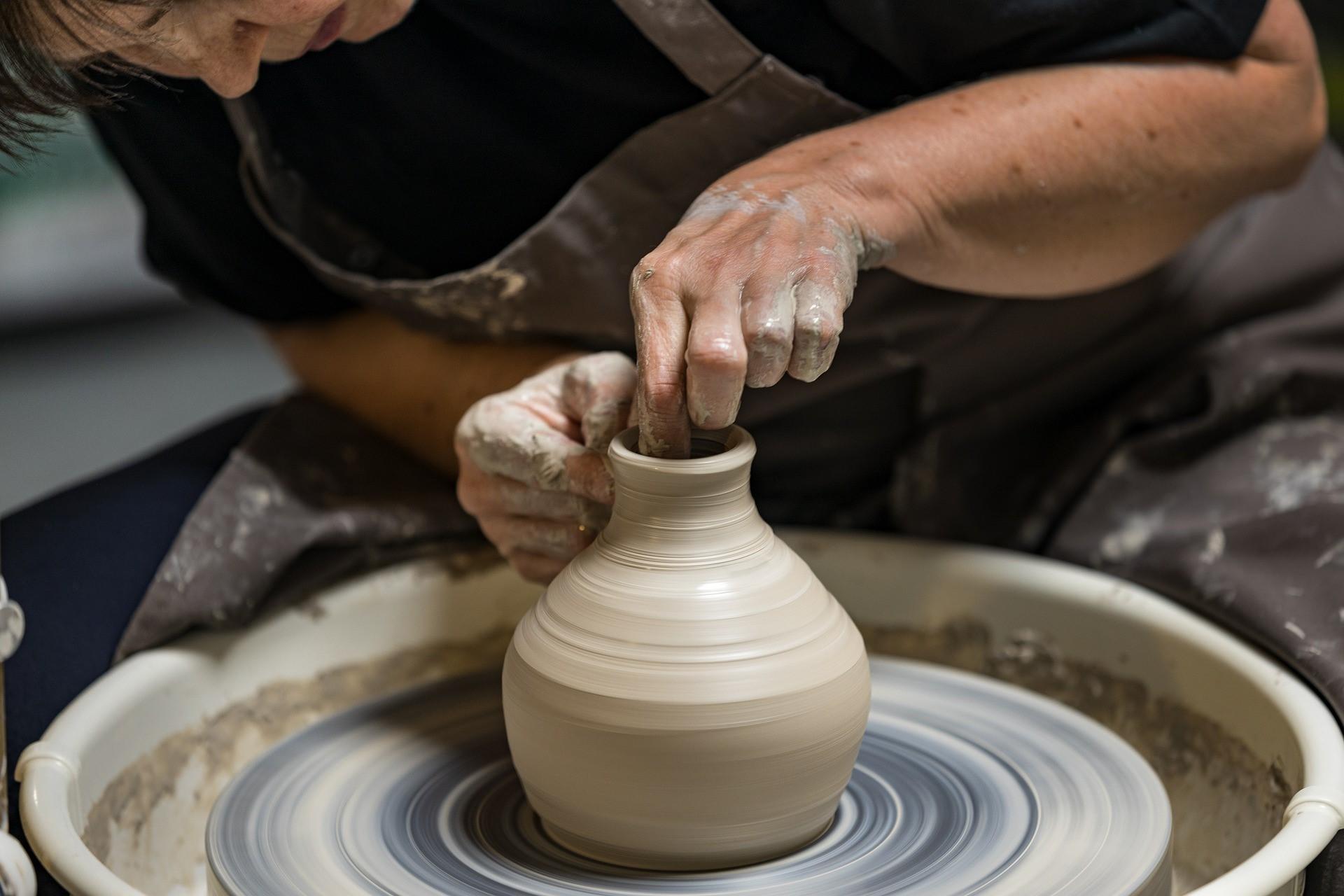
One of the most crucial aspects of making pottery is understanding the feel of the clay. Finding private pottery lessons means you'll always have somebody to guide you with hand placements, helping you feel how it moves through the hands and fingers.
Watching YouTube tutorials or reading books are helpful resources. However, as you start learning how to make pottery, you will need a trainer to assist you through the practicality of the discipline.
Furthermore, when you start, you will have trouble controlling the wheel as your elbows frantically fly all over the place. An instructor will supervise you as you iron out these minor kinks.
And since you haven't thrown on a pottery wheel before, it might be challenging to learn only using YouTube tutorials. Therefore, it is essential to contemplate hiring an instructor.
2. You'll Get Help With Pulling And Centering

Most new learners – especially beginners – struggle with pulling and centering. Having a centered clay is crucial as it gives your pot a base to grow on. If the clay isn't centered, the walls will be unbalanced and uneven.
You can iron out these mistakes by finding an experienced instructor in Los Angeles or wherever else you may be in the States. It's always good to have a professional guide you through the process.
Your expert pottery tutor will observe what you're doing wrong and provide you with valuable suggestions on how to overcome them.
Moreover, they will micro-manage, if they must, by guiding your hand on the wheel and assisting with your clay mix.
Meanwhile, when learning how to pull the cylinder up, pay close attention to where the trainer's hands are placed so that you can emulate the proper procedure.
And to help you fill in the rest of the gaps, your instructor will provide constant assistance regarding:
- How fast the pottery wheel spins
- How slow or fast you're pulling the cylinder up
3. You'll Know What To Wear
When applying ceramics in engineering and science, you're required to maintain the utmost cleanliness. It becomes imperative to avoid contamination; otherwise, the quality of the end-product is compromised.
However, ceramic artists don't have to be so meticulous! We're happy to inform you that pottery is meant to be messy and fun – it involves a soft and sticky mix of clay, grits, and water.
Therefore, if you're learning pottery from one of the many pottery classes in Houston or elsewhere in the states, make sure you don't dress to impress!
Always wear clothes you don't mind ruining! Your pottery instructor will guide you on exactly what you should wear.
They may tell you to wear something comfortable; however, no loose pieces of cloth:
- Scarves
- Flyaway sleeves
- Ties
These things can get in the way and even twirl up on the wheel as it revolves, causing injuries and ruining your work.
In addition to that, you may also want to avoid wearing tight clothes. They make it near impossible to lean forward or sit in one position for too long.
Overall, choose comfortable clothes and always avoid wearing things that might impede, expose, or snag.
4. You'll Learn To Wedge The Correct Way
Although you can find several helpful YouTube videos on how to wedge correctly, the only problem is that it won't tell you how the clay is supposed to feel.
However, with pottery courses in the USA, your experienced potter will feel the clay you made to ensure it's not too soft or too firm to throw on a potter wheel.
Apart from this, your trainer will also ensure you are eliminating air bubbles rather than creating them.
5. You'll Learn A Lot About Clay
Beginners have a misconception about all clays being the same. They think that there is only one way to differentiate between them: color; However, this isn't true!
Furthermore, when preparing your clay, you must also pay attention to clay firing temperatures. As a new potter, ascertain the cone size required for the firing temperature you're using; otherwise, your piece will instantly melt all over your kiln shelf.
Meanwhile, your instructor will also teach you about the various clays to throw on a potter wheel. Initially, they will provide you with a clay suited best for beginner throwers. This is mainly because new learners play with their clay a bit longer for accurate centering and pulling.
Once you become familiar with the various types of clay, you'll be able to try different clays until you stumble upon a mixture that sits well with your hands!
Pottery Lessons Near Me
Are you looking for the best pottery classes in the states? Whether you're in New York or wherever else, it is now possible to find an expert potter near your location!
How you ask? With Superprof! the best in-person and virtual tutoring platform in the US and the world.
Just type in Google "best pottery classes near me" or "best pottery courses near me," and you'll find Superprof near the top of the list.
Pottery is an evolving art. If you want to carve a path to becoming a professional, join Superprof's pottery courses in the states!
Not only will you learn the basics, but you will also benefit from learning the latest innovations in the art form!
Average Pottery Class Cost
A single pottery class or workshop costs $50 to $150 for an introductory course on basic techniques. A multi-week pottery course costs $200 to $450+ for an ongoing program that offers more learning and practice opportunities. Private pottery lessons cost $75 to $150 per hour, with higher prices when taught by a master potter.
| Class type | Average cost |
|---|---|
| Single pottery class or workshop | $50-$150 per class |
| Multi-week pottery courses | $200-$450+ (6-8 weeks) |
| Private (one-on-one) lessons | $75-$150 per hour |
| Online pottery workshops | Free-$100 |
Single pottery class
A pottery class costs $50 to $150 for a single class or workshop that provides a hands-on introduction to basic pottery techniques, perfect for beginners looking to explore their creativity in just one session. Most classes last 2 to 3 hours, include materials like clay and tools and are taught by experienced instructors.
Multi-week pottery course
Multi-week pottery courses cost $200 to $450+ for more in-depth programs that run for 6 to 8 weeks. Students develop their skills through a variety of projects in weekly sessions lasting 2 to 3 hours each. By enrolling in these courses, students benefit from a significantly discounted rate compared to paying for individual pottery classes.
- Large group classes with 10 to 20 students or more cost around $30 to $50 per session. The larger class size helps keep costs down but there is less individualized instruction and possibly more waiting time to use equipment.
- Small group classes of fewer than 6 students cost around $40 to $60 per session. The small class size allows for more personalized guidance, opportunities to ask questions and greater access to equipment.
Private (one-on-one) lessons
Private pottery lessons cost $75 to $150 per hour for one-on-one learning. Most private lessons last 1 to 2 hours, depending on what you want to achieve and the instructor's availability. Unlike group classes, students get the full attention of their instructor, which helps them improve their skills quickly and reach their specific pottery goals.
Online pottery workshops
Online pottery workshops are offered at prices ranging from free to $100, providing flexible virtual classes that cover various pottery techniques. This format allows students to learn at their own pace from the comfort of home but often requires students to purchase their own materials, which adds to the overall cost.
Cost of pottery lessons by type
The cost of pottery lessons varies depending on the specific type of class you choose. Pottery wheel classes typically range from $50 to $150, while hand-building classes cost $40 to $120. Wheel-throwing classes are pricier due to the specialized equipment that can limit class size. Hand-building requires fewer tools, making it somewhat more affordable.
| Class type | Average cost per session | Description |
|---|---|---|
| Pottery wheel | $50-$150 | Focuses on using a pottery wheel to create bowls, mugs, and vases, typically including instruction on centering clay, shaping, and trimming |
| Hand-building | $40-$120 | Teaches techniques such as pinch pots, coil building, and slab construction, while emphasizing creativity and design without the use of a wheel. |
| Glazing techniques | $40-$85 | Focuses on the application of glazes, surface, decoration, and finishing techniques. Often a follow-up to wheel or hand-building classes |
| Specialty workshops | $75-$200 | Offers focused instruction on specific techniques like raku firing, sculptural pottery, or advanced glazing, usually as a one-time session or short series |
Pottery class cost factors
Several factors influence the cost of pottery classes:
- Location: Classes in urban areas or specialized art centers may be more expensive.
- Instructor experience: Classes taught by renowned artists or master potters typically cost more.
- Studio facilities: Access to high-quality equipment like pottery wheels and kilns may increase costs. Community center classes with limited equipment are the cheapest.
- Class size: Smaller classes or private lessons are generally more expensive than larger group classes.
- Duration: Longer courses or workshops usually cost more than single sessions.
Additional costs to consider
As you start your pottery journey, it's important to consider the additional costs beyond just the class fees. These expenses may include materials, firing fees, and tools, all of which contribute to your overall investment in this creative endeavor.
- Materials: Some pottery classes require students to purchase their own materials, including clay, glazes, and tools. A typical 25-pound bag of clay costs around $25, while glazes can range from $10 to $30 each, depending on the type and quality. Students should budget for these materials, especially if they plan to create multiple pieces.
- Firing fees: In addition to class fees, many studios charge separate firing fees for kiln use, which is necessary to harden and finish pottery pieces. Firing costs can vary widely, but students might pay anywhere from $5 to $20 per piece, depending on the size and complexity of the work.
- Studio time: Some pottery studios offer additional studio time for students to work on their projects outside of scheduled classes. This can be a great opportunity for practice but may come with extra costs, often ranging from $10 to $30 per hour.
- Tools and equipment: While some classes provide basic tools, students may want to invest in their own tools for convenience and personal preference. Essential tools can include pottery knives, rib tools, and sponges, which can cost between $50 and $100.
- Membership fees: If you choose to continue working in a studio after your classes, some studios require membership fees for access to facilities and equipment. These fees range from $50 to $200 per year, depending on the studio's amenities and location.
Summarize with AI:
Did you like this article? Leave a rating!

 Loading...