

Choir classes are generally one of the most welcoming spaces in a school, community, or adult learning center. People with various musical backgrounds can all join together to understand more about singing while being part of a group. The feeling of improving all together and perfecting a performance is like no other! Read on to find out more about how to join a choir, the benefits of participating in one, and what types of tunes are usually chosen.



What Is a Choir?
A choir is a group of people who sing together.
The group can perform music arranged as one homogenous part or written in several parts, like soprano, alto, tenor, and bass. They may vocalize exclusively in harmony or work together like an orchestra, with different sections vocalizing different elements of a song.
Strictly speaking, choirs only perform arrangements where all the singers are in perfect harmony.
Choruses sing arrangements where different sections (sopranos, altos, etc) have different jobs within a piece. For example, the sopranos might vocalize all the words of the melody, while the altos only sing certain phrases.
In literal terms, a chorus includes dancing and performing at the same time (like musical theater). In a practical sense, choir and chorus are generally interchangeable, since they both get the point across: a group singing together.
Choirs often evoke the idea of a church, community, or adult program, but schools and colleges also often have choirs (or choruses). Some include a wide age range, while others are limited to specific ages, like a children’s or adult choir.
In a class, singing is both the subject and the method of instruction. Students learn through practice how to read music, follow a conductor, sing along with instrumentation and other singers, and use their voices. They practice hitting the right notes, developing their timbre, and perfecting their timing.
Professional choirs expect participants to already have a solid understanding of reading and performing pieces, but general groups are places for people to understand and practice. In education settings, the goal of choir is for each student to steadily improve each day with practice and participation while gaining confidence – not perfection.
How to Get Involved in a Choir
Joining a choir is generally a straightforward process. Most elementary, middle, and high schools, as well as colleges, offer this class as an elective class or club. Most churches will also have a choir group. In the community, there are typically more options, especially for adults.
Most choirs operate on a schedule where new members can only join at specific times, like at the beginning of the school year, for example. Some groups require an audition, while others are open to anyone interested. Except for professional groups, the auditions are generally pretty easy, acting more as a formality.
Before you join, make sure you understand the expectations. How often does the group meet, at what times, and where?
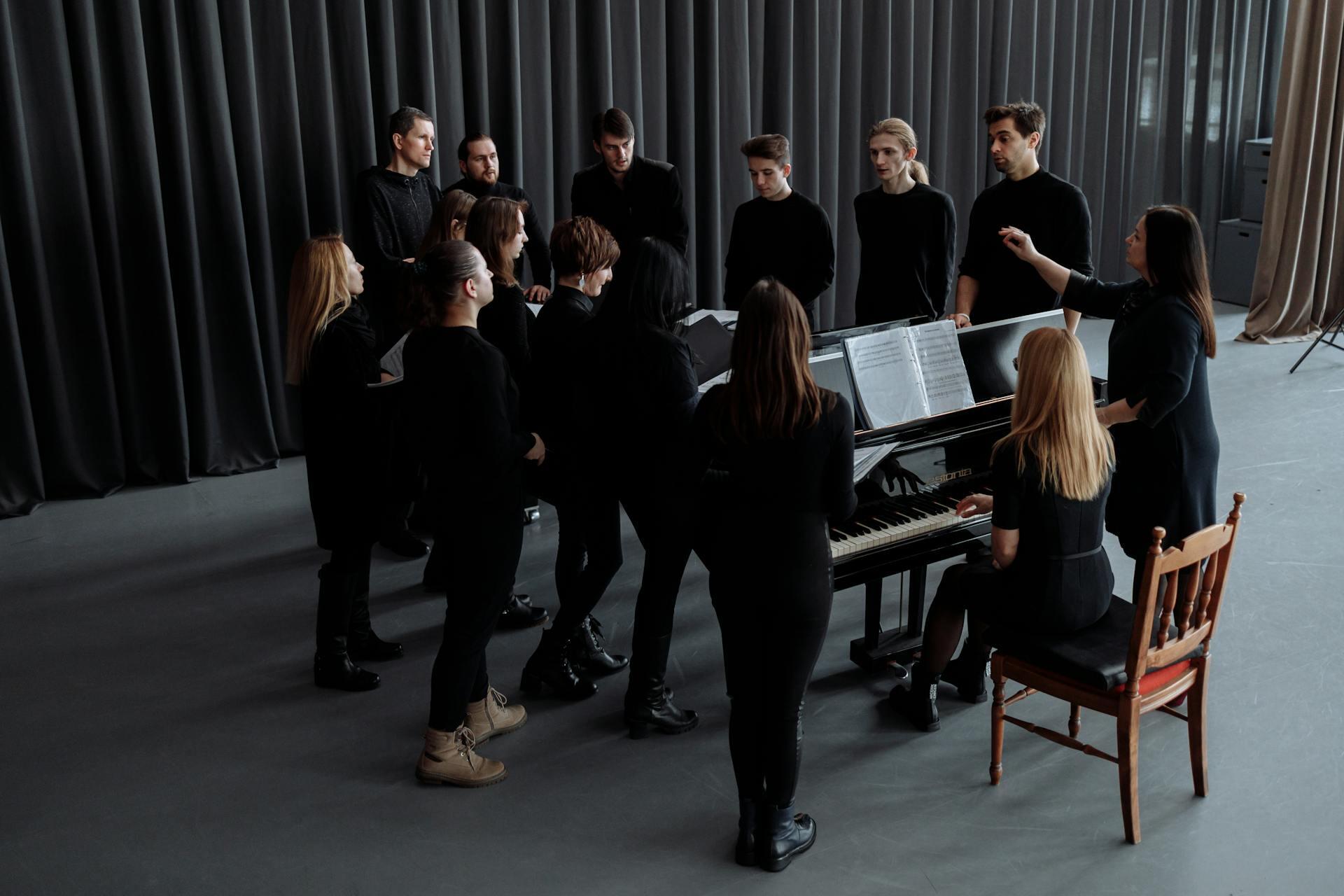
Joining and Auditioning for a Choir
Auditions sound intimidating, but for most choirs, they are simple. For a school, church, or casual choir, auditions are mostly used as a way to place participants in the right vocal section. It’s also a way to ensure the student is serious about joining the group. Auditions are not meant to exclude beginners.
The only exception would be for a professional or serious group, which would require auditioners to already be well-practiced in performing and reading music.
A typical audition for a beginner-friendly choir might include:
- Performing a short song like “Twinkle, twinkle little star” in different keys to gauge your vocal range and current ability
- Repeating pitches played on a piano to understand your current ability to match tones
- Basic rhythm or clapping exercises
Some choirs may have dues or fees, typically used for purchasing music licenses, buying equipment, or paying for the practice facility. Prices are generally reasonable and affordable for the group's demographic.
Professional choirs may be expensive to join, since they have more advanced facilities, teachers, and equipment. It’s also another way to ensure only people who are really serious pursue joining.
Teachers/choir leaders listen for pitch accuracy, tone, and potential. They are mostly holding a low-barrier-to-entry activity to ensure only people who are serious about joining will come to the classroom. Teachers generally expect auditioners to be a little nervous, especially in a K-12 setting, so don’t let that hold you back!
Most groups will have space for anyone who wants to join, so the selection process will be less intense. However, if you’re in a big academy or city with lots of people who want to join, directors may need to be more discerning simply because there isn’t enough room for everyone.
Learn more about joining middle school choir.

Preparing for Choir Auditions
When preparing for an audition, practice for a few weeks in advance. Practice how to perform warm ups, scales, and work on honing your pitch. Ask a friend or family member to listen, or record yourself, as you aim to match a given pitch. This also helps you feel confident performing in front of others.
You can use YouTube videos aimed at this exact type of practice to help you. Play a vocal game often to stay in tip-top shape. Taking a lesson with a singing teacher can be a great way to develop your nerves and learn a few valuable techniques at the same time.
If you are able to choose a song for the audition, make sure you select one with a simple melody that fits comfortably in your vocal range. The most important thing is to demonstrate clear pitch and steady rhythm. You’ll probably only need to sing about 30 seconds of the song.
Preparing for Rehearsals and Performances
Once you’re accepted into a program or class, you need to make sure you regularly attend classroom rehearsals and practice at home. Rehearsals typically include vocal warmup exercises, followed by practicing different sections in the selected piece, and a run-through of the entire song as a full choir. Over time, you’ll notice the song begin to shape up and sound better, with the members being more synchronized and harmonic. It’s a great feeling to be part of such a group effort!
At rehearsals, learners are expected to
- Arrive on time
- Bring your music materials
- Mark notes in their score, if needed
- Practice assigned parts at home
At first, learning to read music and perform in a group might feel slow and frustrating. Over time, everyone gets more familiar with the piece and understands how to collaborate. Teachers guide the students step-by-step, explaining rhythms, pitch, and phrasing. Mistakes are common and expected.
Discover more about joining a high school choir class!
In the classroom, the choir director will usually use fun exercises and a game or two to help develop singers' voices while improving their musical knowledge. A game may or may not be part of a choir program's rehearsal practice; they're typically reserved for younger learners.
The great thing about ensemble arrangements is that it’s harder to hear one mistake, so you have a little grace and breathing room to not feel so self-conscious. But you still need to be able to identify your own mistakes and work on fixing them, even if nobody specifically points you out.
Performances are typically a key part of choirs, especially for school groups. They are the end goal, serving as a clear aim for the vocalists to practice towards. Performances usually happen at events, concerts, or neighborhood gatherings. Performing teaches students focus, discipline, and teamwork.
By the time a performance comes around, you’ll have practiced in a group dozens of times, so you should feel pretty comfortable.
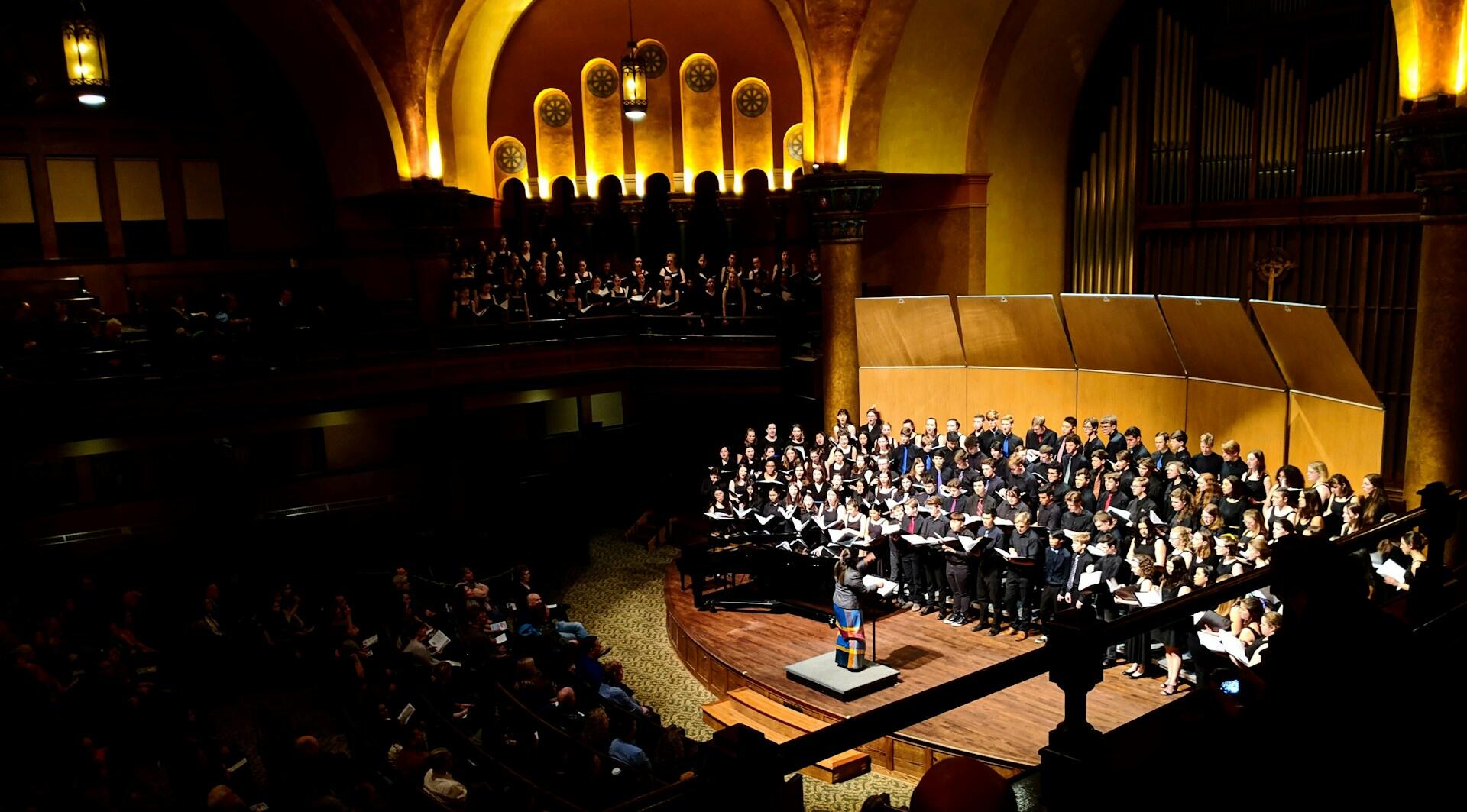
Selecting the Best Songs for School Choirs
How do choir directors choose arrangements for their group? The right arrangement helps students grow while keeping rehearsals engaging. Poorly chosen pieces can frustrate singers or strain voices. Overly-complicated songs may not shape up well, leading to lowered group morale and engagement (and won’t produce a very satisfying performance). Well-chosen pieces are interesting and fun to learn, leading to improved confidence and singing ability by the end.
Criteria for Choosing Songs
When selecting music for a choir class, teachers consider several factors. Choosing an appropriate vocal range is important, especially for younger groups of students whose voices are still changing. Selections should sit comfortably within each section’s range.
The best arrangements for school choirs:
- Are appropriate for the setting
- Suitable for the skill level of the choir as a whole
- Can be simplified if needed to suit the groups’ level
- Have interesting lyrics and sounds
- Have clear melodies and harmonies
- Balance challenge and accessibility
School choir songs should have portions that challenge vocalists to build new skills while allowing them to easily succeed in other parts of the song. A well-chosen song teaches phrasing, harmony, and listening without overwhelming the group.
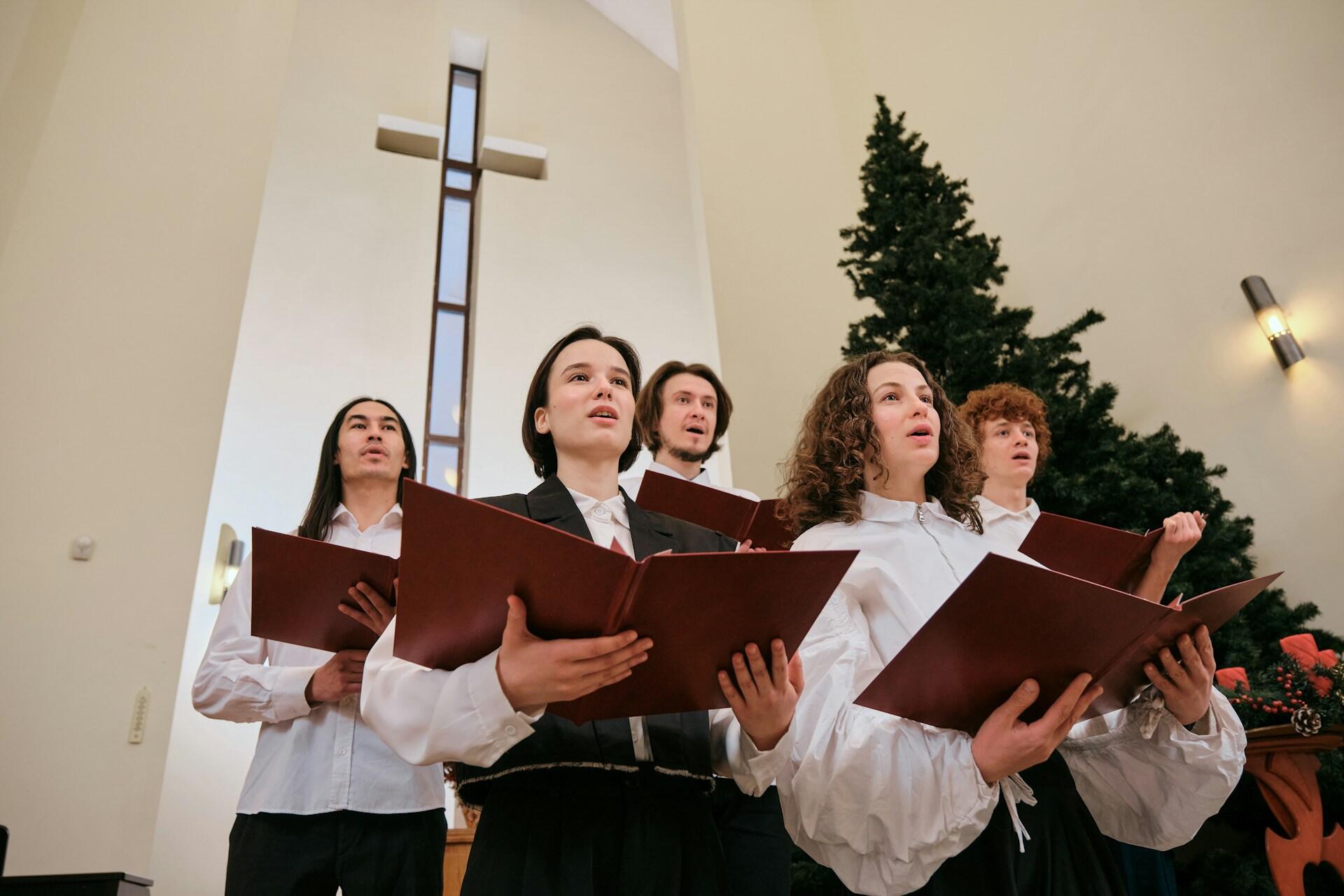
Top Recommended Songs for School Choirs
Certain types of music work especially well for school choirs. In the choral classroom, teachers need to choose pieces that engage learners (who may quickly become bored), teach new skills, and allow singers to succeed. It’s a delicate balance that requires teachers to relate to their particular group of students.
Folk Songs
Folk songs are popular because they were typically initially developed to be easily sung in a group; they are melodic and easy to pick up. Many of them also contain stories, tales, or ideas that are interesting and relatable to learners, allowing them to connect emotionally.
Some popular choir folk tunes are:
- “Shenandoah”
- “Scarborough Fair”
- “This Little Light of Mine”
- “Danny Boy”
- “Swing Low, Sweet Chariot”
Singing in a choir is an absolutely unique experience. It is one of the most important things in the world. Where else do you have everyone doing the same thing at the same time without the use of special equipment and for a greater purpose, and no one is sitting on the bench?
Ian Loeppky
Pop Songs and Other Modern Arrangements
Choosing popular, modern, and contemporary songs is a great way to engage singers and audiences. Music arrangers are quick to adapt contemporary works, including top tunes you’ll hear on the radio and movie musical numbers. Modern tracks in the past 30-40 years are full of great-sounding classics.
Some of the most popular contemporary choices for choruses include:
- “I Feel Alive” from A Minecraft Movie
- “Hawaiian Roller Coaster Ride” from Lilo & Stitch
- “Puttin’ on the Ritz” arranged by Kirby Shaw
- “Die with a Smile” arranged by Mark Brymer
- “For Good” from Wicked by Stephen Schwartz, arranged by Roger Emerson
- “Country Roads” by John Denver
Classical Songs
Classical pieces introduce more structure and harmony. They teach students traditional arrangements and techniques. Plus, students can feel a grand sense of accomplishment when it all comes together, since classical pieces are enduring for their incredible sound!
Some popular classical choral songs include:
- “Canons” by Mozart (adapted versions)
- “Gloria” by Vivaldi (selected movements)
- “Sicut Cervus” by Palestrina (simplified arrangements)
- “Welcome, Welcome Ev’ry Guest” from The Sacred Harp
- “She Walks In Beauty” by Eric Barnum
- “The Seal Lullaby” by Eric Whitacre

Holiday and Christmas Songs
Christmas songs are always a big hit for winter performances. Almost any religious or secular winter song has a specific, special sound that just brings joy and satisfaction to performers and listeners. You can’t go wrong with holiday tunes!
These winter tunes are some of the most popular:
- “White Christmas”
- “We Wish You a Merry Christmas”
- “Joy to the World”
- “Silent Night”
- “Where Are You Christmas?” from How the Grinch Stole Christmas
Benefits of Singing in a Choir
Singing in a choir is fulfilling in many ways. Like any group activity, it offers opportunities for personal growth and learning how to connect with others for a common goal. Being part of a choir means you become open to multitudes of potential experiences, such as:
Musical and Vocal Skills Development
Classes teach students how to use their voices safely. They acquire breathing techniques, vocal warm-ups, and proper posture. Additionally, the class teaches students how to hone their vocal performance with diction, projection, and tone production.
Vocalists also develop:
- Pitch accuracy
- Rhythm awareness
- Sight-reading ability
- Listening skills
All the foundational skills required for further study and appreciation of music.
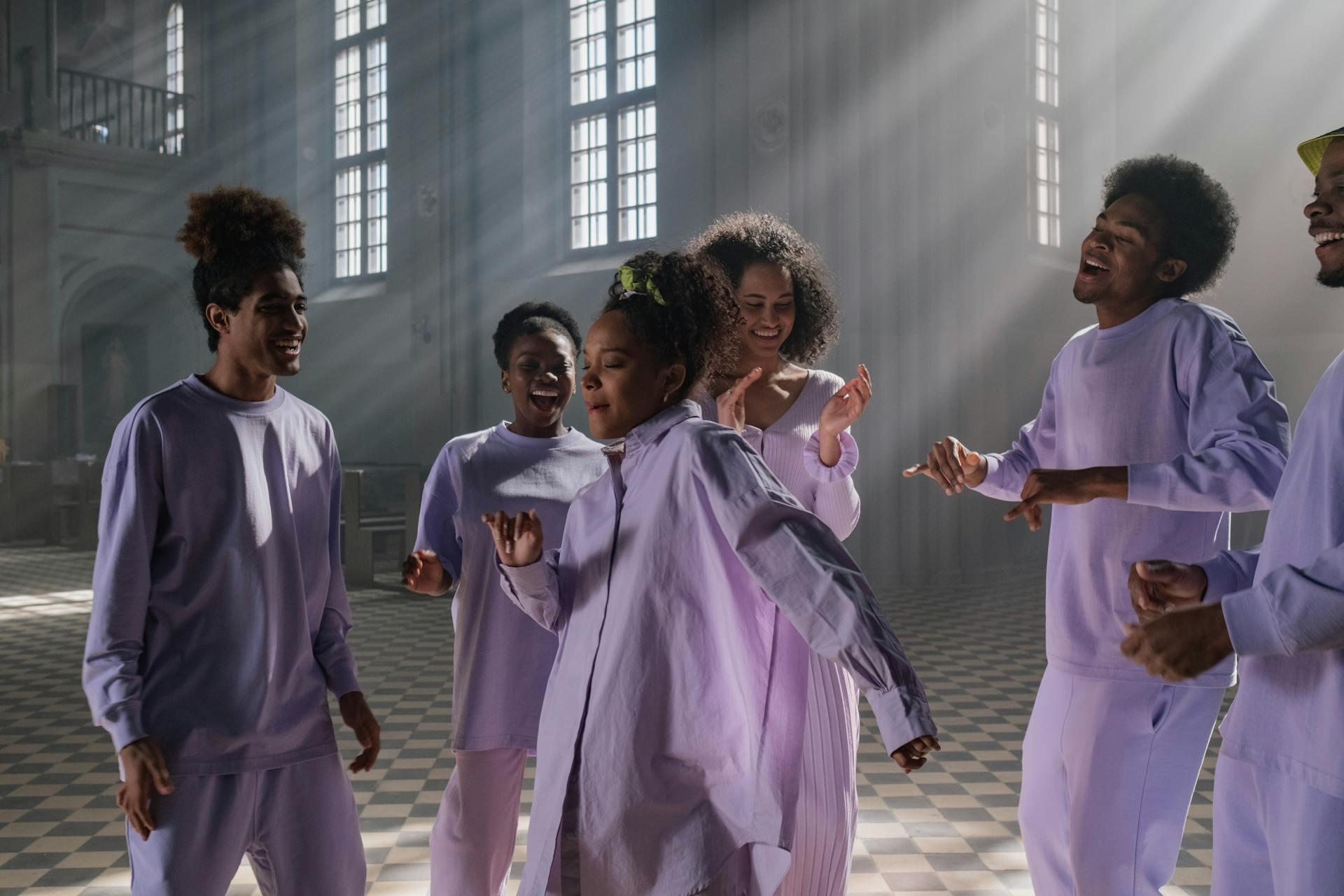
Academic and Cognitive Benefits
Research shows that music education and practice support memory, focus, and pattern recognition. Studying music requires sustained concentration, a skill that is desperately needed in today’s distractible world. Students learn how to manage multiple things at once, juggling hitting the right notes, remembering lyrics, staying on rhythm, reading music, and noticing the conductor’s cues.
The act of singing is even beneficial for the brain, body, and emotional health and well-being. The hands-on, active nature of learning music is engaging and satisfying in ways few other activities are.
Choir actually changed my life and taught me how to dedicate myself to a collective and settle for nothing less than excellence.
Lindy West, "Shrill"
Social and Emotional Growth
Choir creates a strong sense of community. The group progresses together, and every singer contributes to the final sound. This shared responsibility encourages cooperation and makes each participant feel like they are part of something bigger than themselves.
It can help reduce fear of public speaking and give students practice in managing their nervous energy in a healthy way.
Adult groups give the out-of-school crowds a way to find connection, which can be difficult after graduation. Many adults join community choirs after many years to meet others with shared interests and find new friends.
Joining a group at any age is a great idea for fun, musical education, personal development, and being part of a group. For many, it becomes an activity in life that brings lots of fulfilment and wonderful, lasting memories.
Summarize with AI:
Did you like this article? Leave a rating!

 Loading...