
When taken as a whole, famous paintings and painters create a commentary of the human experience that spans centuries, continents, and movements. From the Lascaux cave paintings to the abstract canvases of the 20th century, humans have always had a need to create; and a few extraordinary individuals have left a mark that the world has never forgotten. Here are 17 of the most famous painters and their paintings, from the Renaissance masters to the icons of modern art. 🎨
| Painter | Dates | Movement | Most Famous Works |
|---|---|---|---|
| Leonardo da Vinci | 1452–1519 | Italian Renaissance | Mona Lisa, The Last Supper |
| Michelangelo | 1475–1564 | High Renaissance | Sistine Chapel ceiling, The Creation of Adam |
| Raphael | 1483–1520 | High Renaissance | The School of Athens |
| Caravaggio | 1571–1610 | Baroque | Judith Beheading Holofernes |
| Artemisia Gentileschi | 1593–c.1656 | Baroque | Judith Slaying Holofernes |
| Rembrandt van Rijn | 1606–1669 | Dutch Golden Age | The Night Watch, Self-portraits |
| Johannes Vermeer | 1632–1675 | Dutch Golden Age | Girl with a Pearl Earring |
| Francisco Goya | 1746–1828 | Romanticism | Saturn Devouring His Son, The Third of May |
| Édouard Manet | 1832–1883 | Realism / Impressionism | Olympia, Le Déjeuner sur l'herbe |
| Claude Monet | 1840–1926 | Impressionism | Water Lilies series, Impression Sunrise |
| Paul Cézanne | 1839–1906 | Post-Impressionism | The Card Players, Mont Sainte-Victoire |
| Vincent van Gogh | 1853–1890 | Post-Impressionism | The Starry Night, Sunflowers |
| Pablo Picasso | 1881–1973 | Cubism | Guernica, Les Demoiselles d'Avignon |
| Salvador Dalí | 1904–1989 | Surrealism | The Persistence of Memory |
| Frida Kahlo | 1907–1954 | Magical Realism / Symbolism | The Two Fridas, Self-Portrait with Thorn Necklace |
| Georgia O'Keeffe | 1887–1986 | American Modernism | Jimson Weed, Black Iris |
| Jackson Pollock | 1912–1956 | Abstract Expressionism | No. 5, Convergence |
Let's go!


1. Leonardo da Vinci (1452–1519)
Leonardo da Vinci, who billed himself as anything but a painter, not only left behind remarkable insights into his mind but also his visions of the future... and two of the world's most famous works of art.
From the painter who embraced his destiny to the one who struggled to find his, we now travel about 450 years back in time, to a period when being a painter was absolutely the best job anyone could have.
The circumstances surrounding Leonardo da Vinci’s arrival in the world were certainly not auspicious; being illegitimate held certain stigmas, especially in Italy, the seat of Catholicism.
Leonardo knew nothing of all of this; he was shielded from the worst society could heap on a person by being treated like every other legally-begotten child.
He lived in his father’s house – a man of good social standing, received the requisite education and, when the time came, was apprenticed to a local artist’s workshop.
Teenage Leonardo was both handsome and talented; it is commonly accepted that he posed for several works and also that he lent a hand with some of his mentor’s paintings. He learned how to draw and paint alongside Botticelli, Perugino and other great names of the Early Renaissance period.
Perhaps the most famous painting in the world is the Mona Lisa.
Widely attributed — the Mona Lisa (c.1503–1519) hangs in the Louvre, Paris
It wasn’t long before word got out about da Vinci’s extraordinary painting skills; soon he was dodging commissions left and right – meaning that he would accept the commission, start working on it and get distracted, leaving the work incomplete.
Still, there were a few paintings that he did not shirk from, among them:
- The Annunciation (Uffizi Gallery), oil and tempera on poplar
- Madonna and the Carnation (Munich), oil and tempera on poplar
- The Adoration of the Magi (Uffizi Gallery), oil on wood
- Lady with Ermine (National Museum of Art, Kraków), oil on walnut
The two most famous paintings of da Vinci’s bear special mention.
The Last Supper was commissioned by his patron, the Duke of Sforza, to adorn the newly-built refectory on his compound. As he was living in the duke’s court, he could not neglect this assignment lest the duke expel him.
2. Michelangelo (1475–1564)
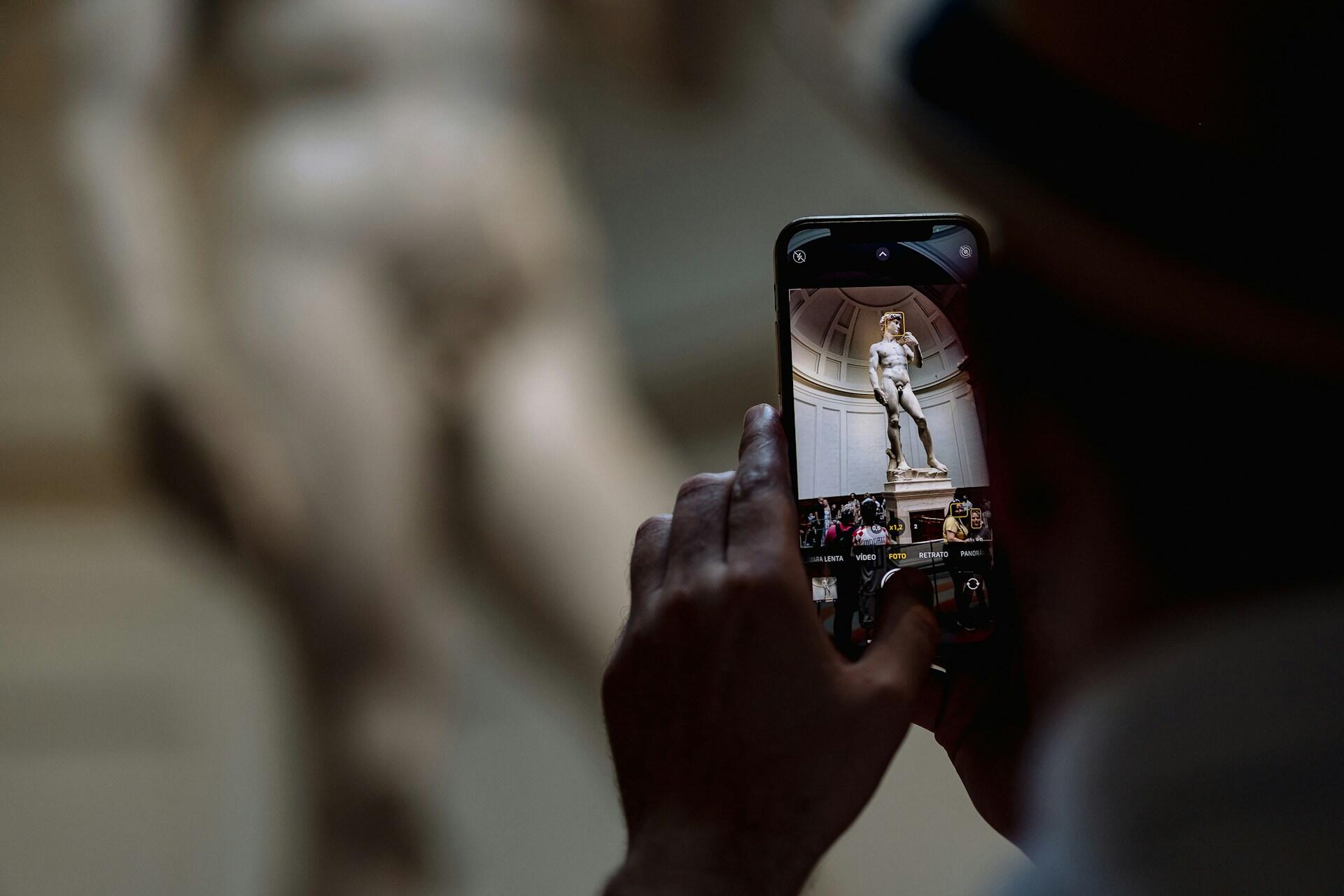
Michelangelo is perhaps the only artist in history whose fame rivals that of Leonardo da Vinci. Though he considered himself primarily a sculptor (his David and Pietà remain among the most celebrated works in marble ever created) it is his painting that most of the world knows best. Pope Julius II commissioned him to paint the ceiling of the Sistine Chapel in Rome, a project Michelangelo accepted reluctantly and completed between 1508 and 1512.
The ceiling depicts scenes from Genesis, culminating in the iconic Creation of Adam (the image of God reaching toward Adam's outstretched finger) which has become one of the most reproduced images in Western art. Michelangelo returned to the Sistine Chapel in his later years to paint The Last Judgment on the altar wall, a vast and turbulent composition completed in 1541. Only Michelangelo's Creation of Adam, on the ceiling of the Sistine Chapel, rivals the Mona Lisa in fame.
3. Raphael (1483–1520)
The third of the great High Renaissance trinity alongside Leonardo and Michelangelo, Raphael achieved in his 37 years what most artists could not manage in a lifetime. He was celebrated for the clarity, grace, and harmony of his compositions; qualities that made him the most sought-after painter in Rome during the height of his career.
His most celebrated work, The School of Athens (1509–1511), painted for the Vatican's Stanza della Segnatura, depicts the great philosophers of antiquity gathered in a grand architectural space, with Plato and Aristotle at the center. It is widely regarded as the definitive expression of Renaissance ideals. Raphael died on his 37th birthday, leaving several works unfinished, and was mourned throughout Rome as a singular loss to the art world.
4. Caravaggio (1571–1610)
Caravaggio revolutionized Western painting with a technique so radical that it divided the art world of his time as sharply as it defined the century that followed. His use of chiaroscuro (extreme contrasts of light and shadow) gave his figures a physical immediacy that no painter before him had achieved. His subjects were drawn from everyday life: dirty-footed saints, muscular soldiers, and ordinary people cast in sacred roles.
His life was as dramatic as his canvases. He killed a man in a brawl in Rome in 1606 and spent the rest of his life as a fugitive, moving between Naples, Malta, and Sicily while continuing to paint at a furious pace. He died at 38, possibly of lead poisoning from his own pigments. Yet his influence on Rembrandt, Rubens, and generations of painters after him was immeasurable.
5. Artemisia Gentileschi (1593–c.1656)
Artemisia Gentileschi was unusual for being female in the male-dominated world of Italian Renaissance and Baroque art; and remarkable for the quality of her work, which stands comparison with any painter of her era. She was the first woman to be admitted to the Accademia delle Arti del Disegno in Florence, and she became one of the most accomplished practitioners of Caravaggio's dramatic style.
Her most famous work, Judith Slaying Holofernes (c.1614–1620), depicts the biblical heroine with extraordinary force and physicality. It is widely considered a more powerful treatment of the same subject than Caravaggio's version. Long overlooked by art historians, Artemisia has been reclaimed as one of the great masters of the Baroque period and is now among the most celebrated famous painters and their paintings in survey courses worldwide.
6. Rembrandt van Rijn (1606–1669)
Rembrandt is widely regarded as the greatest Dutch painter and one of the greatest painters in the history of European art. During the Dutch Golden Age, he produced an extraordinary body of work across portraits, biblical scenes, and landscapes, but it is his mastery of light (inherited from Caravaggio and made entirely his own) that defines his legacy.
The Night Watch (1642), now in Amsterdam's Rijksmuseum, is arguably the most famous painting in Dutch history. His series of self-portraits, numbering around 80 across his career, is the most sustained self-examination by any artist before the modern era, charting his life from confident young master to an elderly man of profound psychological depth. He died in poverty in 1669, but his influence on the art of portraiture has never faded.
7. Johannes Vermeer (1632–1675)
Vermeer painted relatively few works (only 34 to 36 are attributed to him with confidence) yet he is considered one of the supreme masters of the Dutch Golden Age. His paintings are celebrated for their extraordinary luminosity, their quiet domestic scenes, and the almost photographic quality of light entering a room through a window from the left.
Girl with a Pearl Earring (c.1665) is his most celebrated work and is sometimes called "the Mona Lisa of the North" for the arresting gaze of its subject. Its enigmatic quality (who is the girl? why is she turning?) has captured the imagination of millions. Vermeer died in debt, largely forgotten, and was only rediscovered by the art world in the 19th century.
8. Francisco Goya (1746–1828)
Francisco Goya occupies a unique position in art history as the last of the Old Masters and the first of the modern painters. He began his career as a court painter to the Spanish royal family, producing elegant portraits and tapestry designs, but the horrors of the Napoleonic invasion of Spain transformed his work permanently.
The Third of May 1808 (1814) (depicting the execution of Spanish civilians by Napoleon's forces) is considered one of the first great anti-war paintings and a direct ancestor of Picasso's Guernica. His late "Black Paintings," including the nightmarish Saturn Devouring His Son (1819–1823), painted directly on the walls of his farmhouse, are among the darkest and most psychologically disturbing works in the history of Western art.
9. Édouard Manet (1832–1883)
Édouard Manet is often credited as the bridge between traditional painting and the Impressionism that would follow him. His refusal to idealize his subjects (depicting a nude woman alongside clothed men in Le Déjeuner sur l'herbe (1863) and presenting a naked woman with a direct, challenging gaze in Olympia (1863) scandalized the Parisian art establishment and laid the groundwork for a revolution in painting.
Despite his rejection by the academic Salon on multiple occasions, Manet remained central to Parisian art life and was a significant mentor to the Impressionists, though he himself always resisted being labeled one. His loose, visible brushwork and his commitment to depicting modern urban life made him one of the essential links in the chain of famous paintings and painters that connects the 19th century to the 20th.
Now learn about the father of impressionism...
10. Claude Monet (1840–1926)
Claude Monet is the painter most closely associated with Impressionism; the movement that took its name from his painting Impression, Sunrise (1872). His commitment to painting light and atmosphere rather than precise form, and his practice of working outdoors (en plein air) to capture fleeting conditions, defined a new way of seeing that influenced virtually every painter who came after him.
In the last decades of his life, Monet created his most ambitious project: the Water Lilies series, painted in the garden he designed at Giverny. More than 250 canvases depict the surface of his lily pond at different times of day and in different weathers. The largest of these, installed as eight enormous murals in the Orangerie in Paris, are considered among the greatest achievements in Western painting.
11. Paul Cézanne (1839–1906)
Paul Cézanne was so prolific that he painted more than 1,300 canvases across his career, yet struggled to find recognition in his own lifetime. His methodical, almost geometric approach to depicting form and space (reducing objects to their essential shapes) made him the crucial bridge between 19th-century Impressionism and the Cubism that Picasso and Braque would develop in the early 20th century.
Paul Cézanne painted more than 1,300 canvases in over 40 years as an artist
He struggled to sell his work in his lifetime but is now recognized as the 'father of modern art'
Picasso called Cézanne 'the father of us all'
His Card Players series (1890–1895) is considered his masterpiece of figure painting. His repeated studies of Mont Sainte-Victoire near his home in Provence (more than 80 canvases in total) are among the most rigorous explorations of landscape painting in history. Picasso acknowledged his debt to Cézanne directly; without him, the entire trajectory of modern art would have been different.
12. Vincent van Gogh (1853–1890)
Born into a devoutly religious family, this Dutch painter failed to make any positive impression on the art world until after his death. Indeed, he initially didn’t see himself as having any future in art; he came to the discipline accidentally. Vincent was a quiet child who liked to draw; his mother gently encouraged him but by no means treated him as the prodigy Picasso’s parents cultivated.
First as an art dealer and then a missionary; as a teacher, a suitor and a painter, narratives all tell the same story: Vincent started out enthusiastic and energetic but things soon went awry. Vincent had three saving graces: his brother Theo, the comfort he found in people at the lower end of social ranks, and painting. It was art that finally provided him with an outlet for self-expression.
I put my heart and my soul into my work, and have lost my mind in the process.
Vincent van Gogh, from a letter to his brother Theo van Gogh
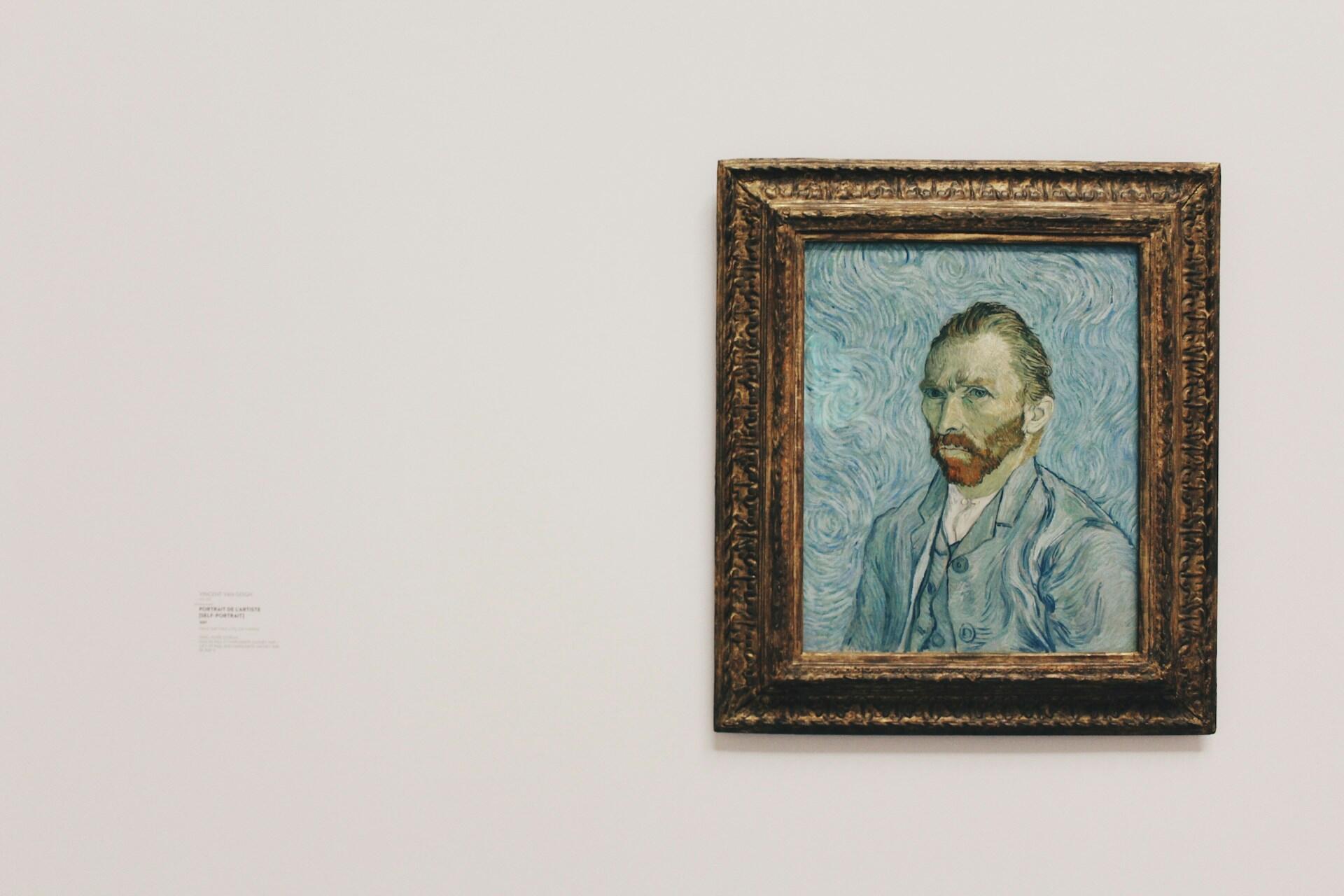
Virtually untrained in everything from wielding a brush to mixing colors, the last 10 years of Vincent van Gogh’s life were nothing if not productive: he turned out more than 900 impressionistic canvases. Unable to afford models, he painted the people and scenes around him. As his madness grew and he was confined to an institution, he painted what he saw out of his window. The Starry Night (1889), painted from his room at the Saint-Paul-de-Mausole asylum in Saint-Rémy-de-Provence, is his most celebrated work and among the most recognized paintings in the world.
13. Pablo Picasso (1881–1973)
Born into a middle-class family in Malaga, Spain, little Pablo had as great a sense of destiny as he had a need to draw. His father was a museum curator and a painter of wildlife and landscape art. When the boy turned seven, his Dad started giving him lessons in drawing and painting techniques. So driven was Picasso that his work soon surpassed anything painted by his father.
We all know that art is not truth. Art is a lie that makes us realize the truth — at least the truth that is given to us to understand.
Pablo Picasso, interview with Christian Zervos, Cahiers d'Art, 1935
Once on the Parisian art scene, Pablo Picasso moved easily among the various circles, impressionist and expressionist alike. It was the Demoiselles D'Avignon (a large oil on canvas that scandalized the art world) that most decried as vulgar and ugly. Picasso claimed that this work liberated him in some fundamental way, permitting him to create an original style of art. With Picasso and Braque as its fathers, the Demoiselles gave birth to Cubism.
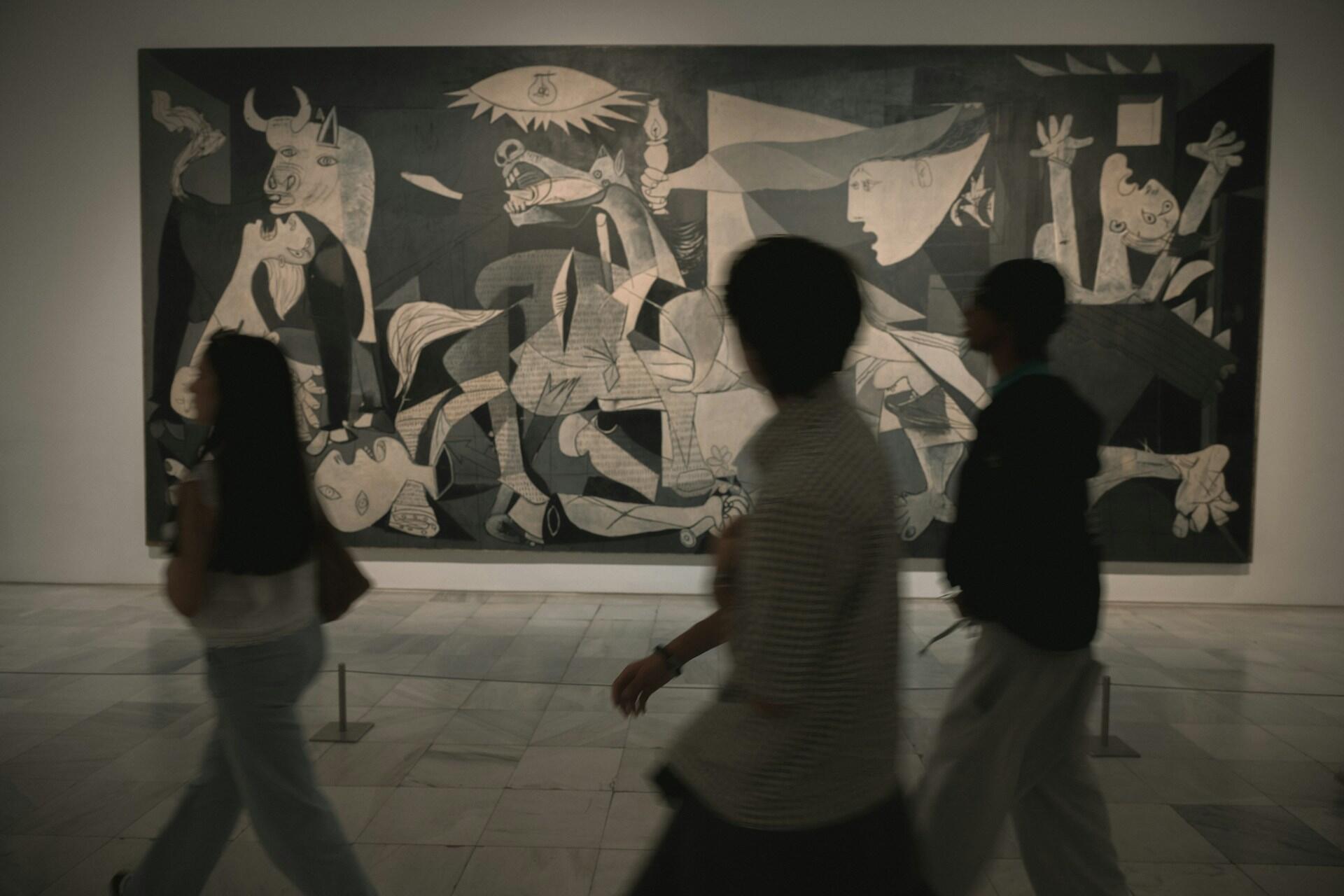
His most politically significant work is Guernica (1937), an enormous monochrome canvas depicting the bombing of the Basque city of Guernica by Nazi and Fascist forces during the Spanish Civil War. It remains one of the most powerful anti-war statements in the history of art and is now housed in the Museo Reina Sofía in Madrid.
14. Salvador Dalí (1904–1989)
Salvador Dalí was the most famous and flamboyant figure of Surrealism, the movement founded on the idea that art should give visual form to the imagery of dreams and the unconscious mind. His extraordinary technical skill (he was a precise and accomplished draughtsman trained in the academic tradition) gave his impossible dreamscapes a disturbing photographic clarity.
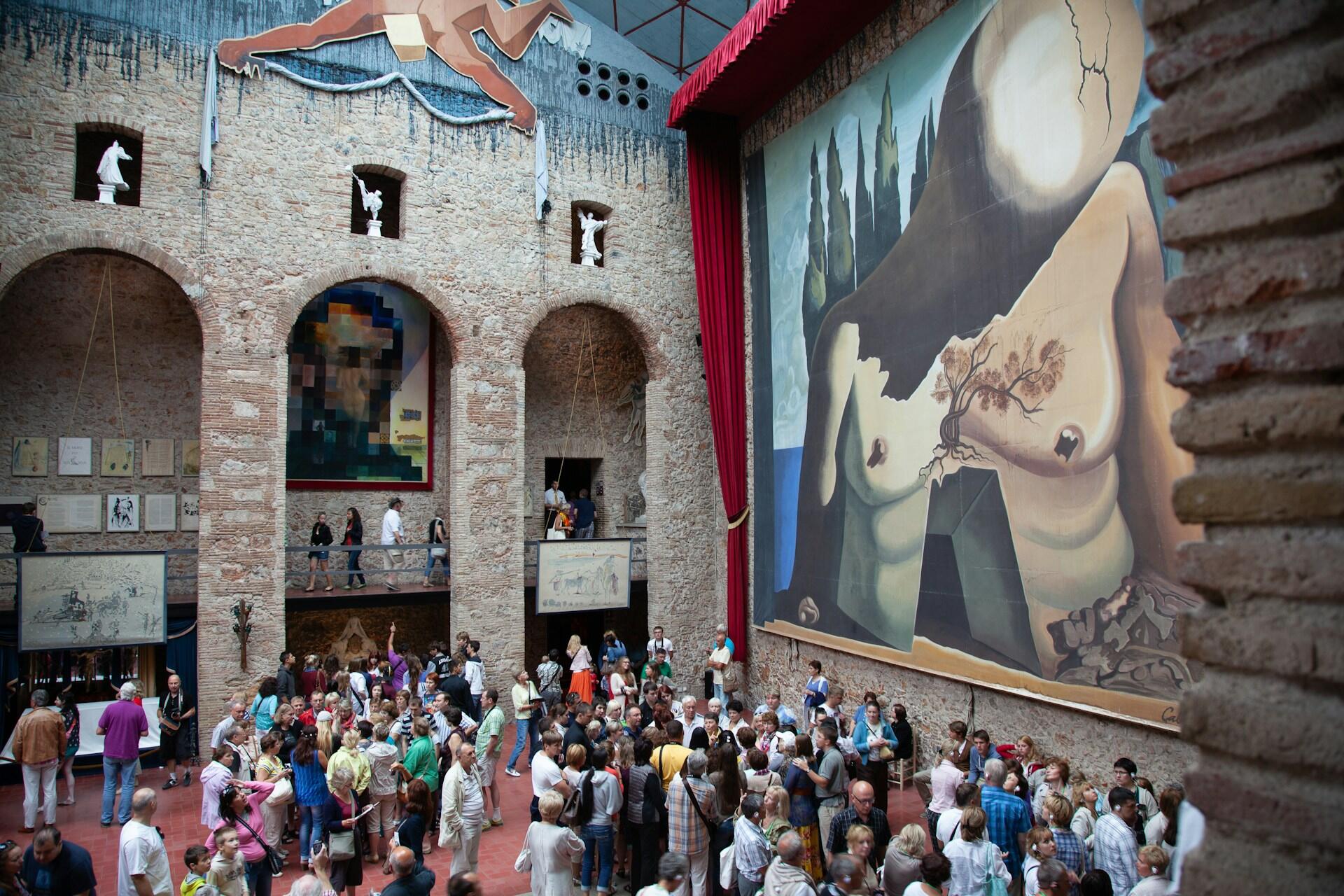
The Persistence of Memory (1931), with its melting clocks draped over a surreal landscape, is one of the most instantly recognizable images in 20th-century art. Dalí was as much a performer as he was a painter; his theatrical public persona, his waxed moustache, and his deliberately provocative statements made him one of the first truly celebrity artists. He and his wife Gala, who appears in many of his works, are buried beneath the Dalí Theatre-Museum he designed in Figueres.
15. Frida Kahlo (1907–1954)
Frida Kahlo is one of the most celebrated and widely recognized artists of the 20th century, along with Henri Matisse, remarkable both for the intensity of her self-examination and for the fact that she largely taught herself to paint while recovering from a devastating bus accident at the age of 18. She completed around 55 self-portraits in her lifetime; an extraordinary act of sustained autobiographical painting that was rooted in physical pain, political belief, and a fierce sense of Mexican identity.
Her work is deeply personal and often disturbing: The Broken Column (1944) depicts her own spine as a crumbling classical column, referencing the spinal injury that left her in lifelong pain. The Two Fridas (1939), one of her largest canvases, was painted in the aftermath of her divorce from Diego Rivera and shows two versions of herself with exposed, connected hearts. Long overshadowed by her husband's fame, Kahlo has emerged as one of the most significant and influential painters of her era.
16. Georgia O'Keeffe (1887–1986)
Georgia O'Keeffe is the most celebrated American woman artist of the 20th century and a defining figure of American Modernism. She is best known for her monumental close-up paintings of flowers (enlarged to the scale of landscapes) and for her paintings of the New Mexico desert, where she spent much of her later life. Her flower paintings, including Black Iris (1926) and Jimson Weed/White Flower No. 1 (1932), combine intimate observation with an almost abstract grandeur.
O'Keeffe was deeply independent, both artistically and personally. She resisted critical attempts to frame her work in psychological or sexual terms, insisting instead that her paintings were about color, form, and the fundamental shapes she found in the natural world.
Jimson Weed/White Flower No. 1 sold at auction in 2014 for $44.4 million; the highest price ever paid for a painting by a female artist at that time.
17. Jackson Pollock (1912–1956)
Jackson Pollock was the most famous and controversial figure of Abstract Expressionism, the movement that shifted the center of the art world from Paris to New York after World War II. His "drip paintings" (created by pouring, flinging, and dripping paint onto canvases laid flat on the floor) were unlike anything that had come before. He called his technique "action painting," emphasizing the physical act of creation as much as the finished work.
No. 5, 1948 sold at auction in 2006 for $140 million, making it one of the most expensive paintings ever sold. Pollock died in a car accident in 1956 at the age of 44, but his influence on subsequent generations of painters (from the color field painters to the street art movement) has been profound and lasting. He remains one of the most debated and studied of all famous painters and their paintings.
Summarize with AI:
Did you like this article? Leave a rating!

 Loading...